Pennsylvania Shrubs With Roots Less Likely To Damage Foundations
Tree and shrub roots rarely crack solid foundations on their own, yet they happily exploit cracks that already exist. Extension experts say the bigger trouble often comes from thirsty roots drying out clay soil under the house.
That shrinking clay can let a slab settle unevenly, especially during long summer dry spells. I have to admit, learning this made me rethink every shrub I had squeezed right against my porch.
You can still enjoy lush greenery near your walls without inviting expensive surprises down the road. Pennsylvania gardeners have plenty of native shrubs with calm, polite root systems that behave well near siding.
Personally, I love finding plants that look generous above ground while staying modest below it. Which seven made my list for Pennsylvania homes, and could one of them already be growing in your yard?
1. Inkberry Holly
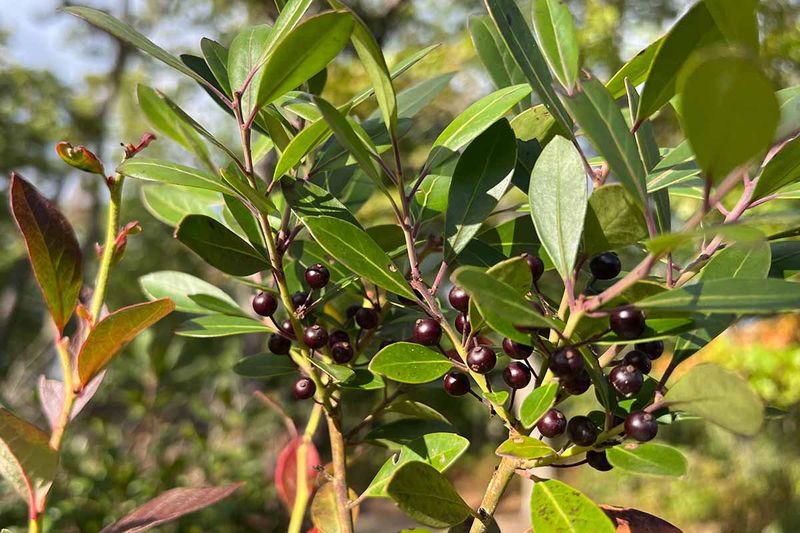
Glossy leaves that stay green through January make this native holly feel like a loyal friend during gray winter weeks. I like how its small black berries dangle on female plants after the bright fall colors have faded away.
Inkberry Holly, or Ilex glabra, grows in USDA Zones 4 to 9, which covers the whole state comfortably. Its roots spread slowly by suckers, but you can snip those shoots easily when you want a tidier shape.
Most plants reach five to ten feet tall, so compact cultivars like Shamrock suit tight spaces near walls. Shamrock usually stays around three to five feet, which keeps windows clear and leaves room for air flow.
You need acidic soil with good drainage, because soggy or alkaline ground can lead to root rot problems. Mixing in compost at planting time helps clay soils drain better while holding enough moisture for young plants.
Small greenish white flowers appear in late spring, and bees visit them more often than most people notice.
Remember that berries form only when a male plant grows somewhere nearby, so plan your shopping list with care.
Deer and rabbits mostly leave this shrub alone, which feels like a small miracle in many suburban Pennsylvania yards.
Light pruning in early spring keeps older plants from looking leggy, and established shrubs handle short dry spells quite well.
2. Virginia Sweetspire
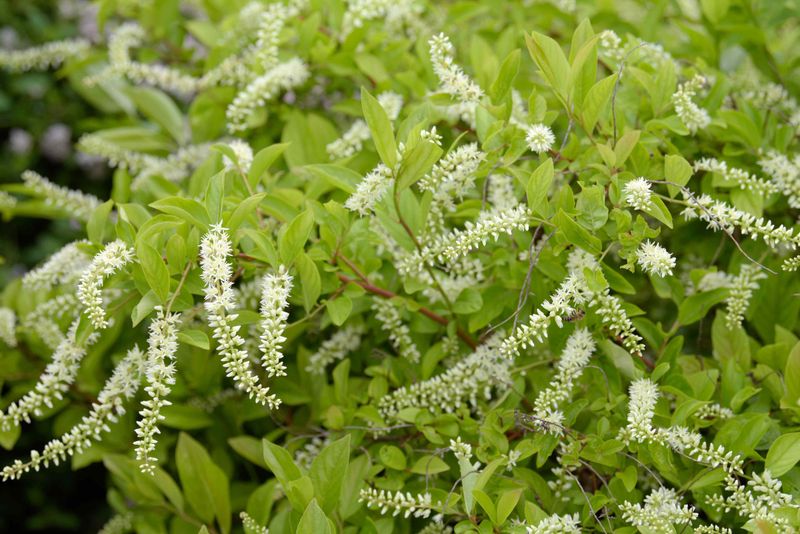
Sniff the air near this shrub in late spring, and you will catch a sweet perfume drifting from arching branches. Fuzzy white flower spikes droop like tiny bottlebrushes, and bees and butterflies seem to find them within minutes.
Virginia Sweetspire, known as Itea virginica, thrives in USDA Zones 5 to 9 across most gardens here.
Its fibrous roots help hold soil on banks, which shows they grip rather than bulldoze through hard surfaces nearby.
What surprises me most is how gracefully it handles soggy clay, the very soil many foundation beds contain.
It also tolerates drought once established, so a forgotten watering session rarely causes lasting trouble for healthy, settled plants.
Plants usually grow three to five feet tall, with an equal or slightly wider spread over several seasons. Give it a little extra elbow room, since slow suckers gradually form an open thicket that fills empty space nicely.
Autumn turns the glossy leaves into shades of red, orange, and burgundy that often linger for weeks. Four to six hours of sunlight bring the best blooms and color, though it accepts shadier corners with grace.
Pruning is mostly optional, apart from removing broken or damaged stems whenever you spot them during garden walks.
Deer tend to ignore it too, which makes it a relaxed choice for busy homeowners wanting reliable seasonal beauty.
3. Smooth Hydrangea
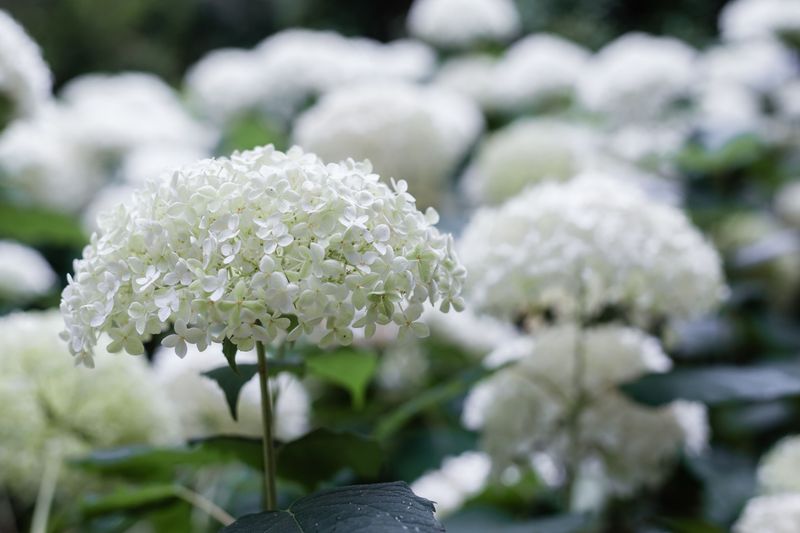
Snowball-sized white blooms on a plant that grows wild in our own woods still make me grin every summer.
Smooth Hydrangea, or Hydrangea arborescens, handles brutal cold too, growing happily in USDA Zones 3 to 9 statewide.
Its roots stay shallow and spread outward, so smart placement matters more here than with some other picks.
Planting about three to four feet away from the foundation gives roots space while keeping maintenance simple for years.
Most plants reach three to five feet tall, and dwarf cultivars help reduce any crowding near the house.
Flowers open in early summer and often hang on into fall, drawing bees and butterflies throughout those warm months.
You need steady moisture, because this hydrangea sulks and wilts quickly in hot, dry, sunny spots without water. Morning sun with afternoon shade works beautifully, and a layer of mulch helps keep the root zone cool.
Blooms form on new wood, so pruning in late winter or early spring rarely costs you any flowers.
Some Pennsylvania gardeners cut stems nearly to the ground, and the shrub bounces back with fresh growth and big clusters.
Harsh winters may knock top growth back, yet sturdy new shoots usually appear again once spring warms up.
Older branches sometimes show peeling bark too, which adds a quiet touch of texture after the leaves have dropped.
4. Dwarf Fothergilla
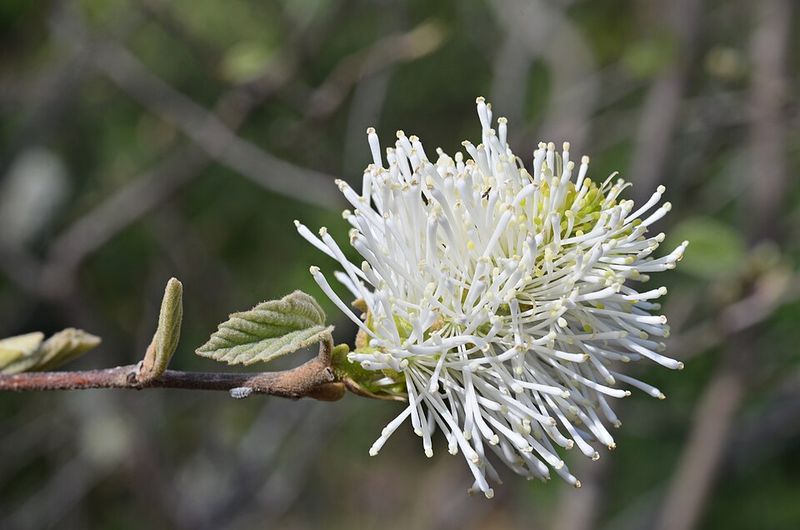
Honey-scented puffs that look like tiny bottle brushes appear before the leaves even open on this charming shrub.
I can’t imagine a more cheerful sight in mid-spring, especially when bees start buzzing around the fuzzy white blooms.
Dwarf Fothergilla, or Fothergilla gardenii, grows in USDA Zones 5 to 8, with some cultivars reaching Zone 4. Its compact, slow growth means roots stay modest, which makes it a safe neighbor for walls and walkways.
Most plants top out around two to four feet tall and wide, perfect beneath low windows. You can tuck several along a foundation without worrying about trimming them back every single summer to keep views clear.
Fall might be its real showtime, since leaves blaze with yellow, orange, and scarlet on the very same branch.
Full sun brings the richest colors and heaviest blooms, as long as the soil stays evenly moist through summer.
Acidic soil with plenty of organic matter suits it best, ideally with a pH between five and six. Avoid spots where water puddles in winter, because waterlogged roots can struggle and weaken the plant over time.
Maintenance is wonderfully light, and deer usually walk right past it on their way to tastier treats.
A layer of shredded bark mulch helps hold moisture, and occasional light shaping after flowering keeps it looking neat.
5. Ninebark
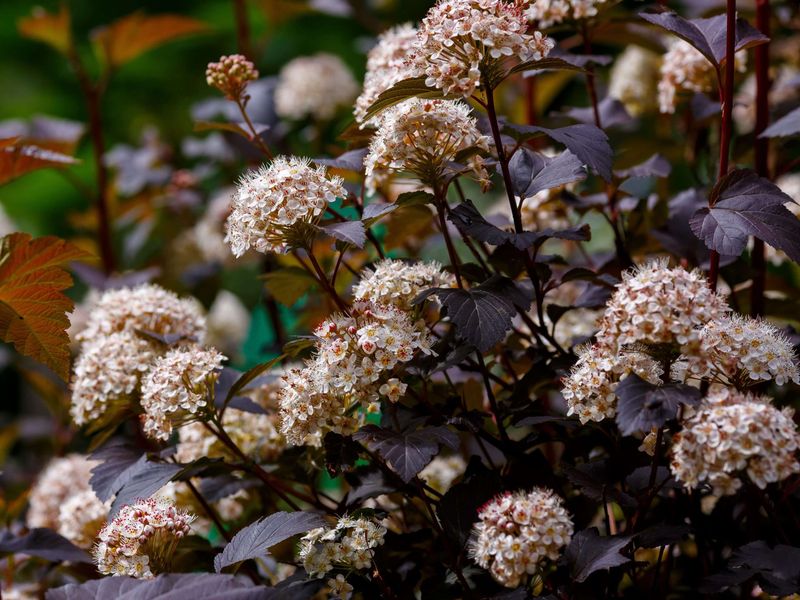
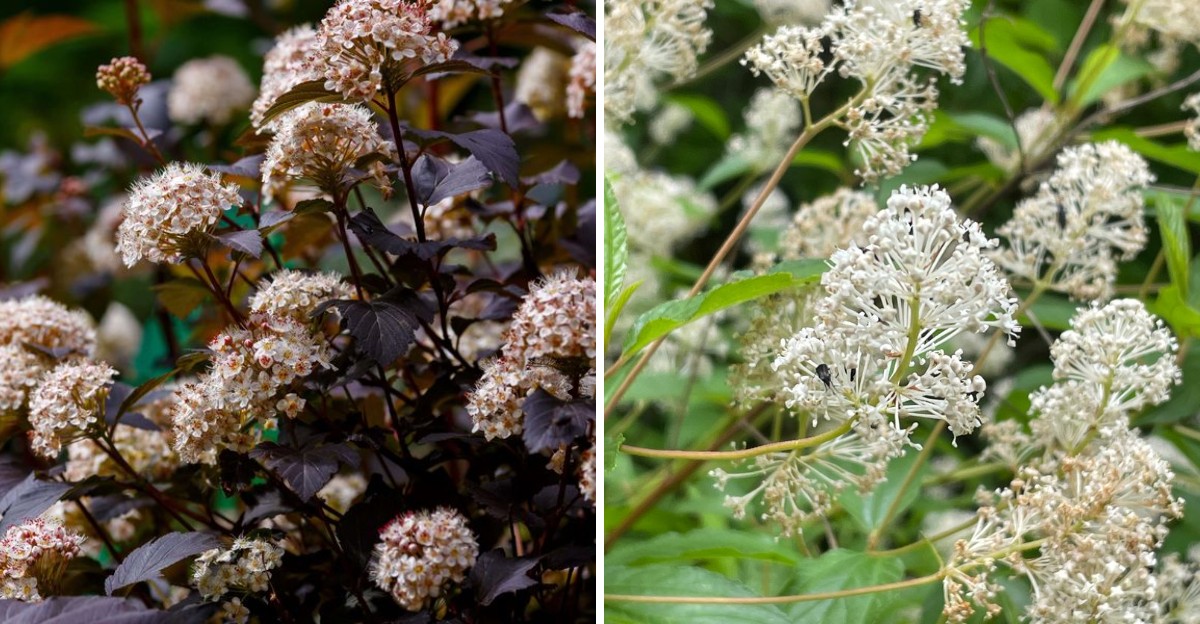
Peeling bark that flakes off in papery layers gave this tough native its quirky name, and winter shows it off. Ninebark, or Physocarpus opulifolius, survives in USDA Zones 2 to 8, so cold snaps barely bother it here.
Fibrous roots make it a favorite for erosion control, binding soil instead of pushing hard against nearby structures.
You might notice how quickly it fills a bare spot, yet the roots stay well behaved around patios and walls.
Size varies widely, with many plants growing three to eight feet tall and four to six feet wide. Smaller cultivars work best beside a house, and the plant tag usually lists the expected mature height and spread.
Foliage choices are half the fun, ranging from deep green to burgundy, bronze, and warm amber shades. Full sun brings out the richest leaf colors, especially on darker cultivars that can look muddy in heavy shade.
White to pale pink flower clusters open in late spring, and native bees love visiting for nectar.
Reddish seed capsules follow and often linger into winter, giving birds something to inspect when gardens look sleepy.
Clay, sandy, or rocky soil rarely slows it down, and established plants tolerate drought quite well. Late winter pruning keeps it tidy, and you can even cut older stems to the ground for a fresh start.
6. Mountain Laurel
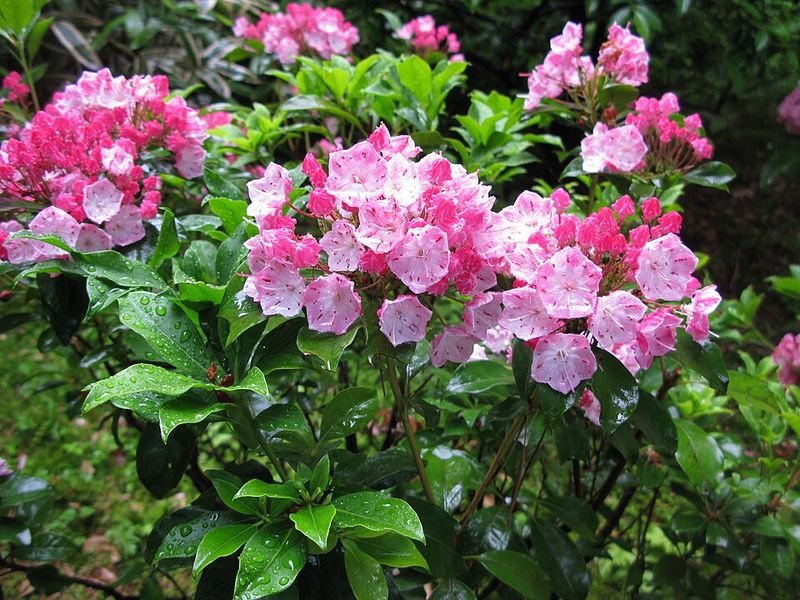
Our official state flower hides a clever trick inside every cup-shaped bloom, flinging pollen when insects land.
Tiny stamens bend back under tension, then spring forward suddenly, dusting visiting bees like a little garden catapult.
Mountain Laurel, or Kalmia latifolia, grows in USDA Zones 5 to 9 and fits woodland gardens beautifully. Its roots are sensitive rather than aggressive, preferring loose, cool soil over forcing their way into hard surfaces.
I believe its biggest demand is drainage, since heavy clay and soggy ground can cause root rot quickly.
Raised beds or amended soil with plenty of humus give it a much better chance near foundations with compacted fill.
Acidic soil between pH five and six works best, so skip spots near concrete that may raise alkalinity. Partial shade suits it nicely, though deep shade often reduces flowering and leaves the plant looking a bit sparse.
Growth is slow, but older plants can reach six to twelve feet tall and wide over many years. Place it farther from walls than smaller shrubs, giving its evergreen branches plenty of room to stretch out gracefully.
All parts of the plant are toxic if eaten, so keep curious kids and pets in mind. Light pruning right after blooming maintains its shape, and deer usually leave the leathery leaves alone for the season.
7. New Jersey Tea
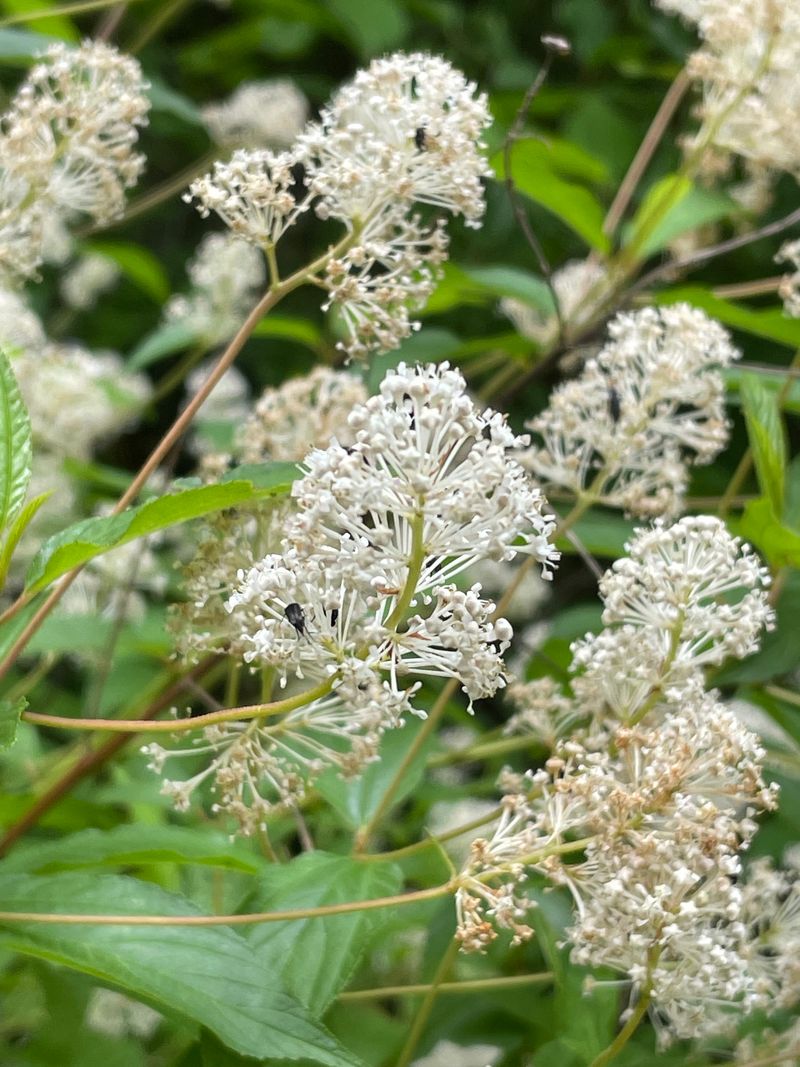
Colonial families reportedly brewed these leaves as a tea substitute during the American Revolution, which explains the unusual name. You’re in for a big surprise below ground too, since this small shrub sends roots downward with real determination.
New Jersey Tea, or Ceanothus americanus, grows in USDA Zones 3 to 10 and handles our climate easily. A sturdy taproot dives deep instead of spreading sideways, which makes it a thoughtful choice for foundation plantings.
That deep root habit also means transplanting gets tricky later, so pick a permanent spot from the beginning. Most plants stay two to four feet tall and wide, forming neat mounds that sit nicely below windows.
Fluffy clusters of creamy white flowers cover the shrub in late spring and early summer, smelling lightly sweet.
Butterflies use it as a larval host plant, and many other pollinators visit the blooms throughout the flowering season.
Poor, dry, sandy, or rocky soil suits it surprisingly well, and drought rarely bothers established plants. Avoid soggy beds and downspout areas, because constantly wet ground can lead to root rot over the long term.
Personally, I love that it fixes nitrogen, quietly enriching the soil around it without extra fertilizer.
A light trim in late winter keeps it bushy, but deer and rabbits often browse it. So, protect young plants with fencing or cages.