How to Water a Christmas Cactus in Arizona’s Dry Indoor Air and Help Reduce Bud-Drop Stress
Few plants make Arizona gardeners as hopeful and as frustrated as a holiday cactus covered in tiny buds. Then the buds start dropping onto the carpet, and the dry indoor air gets the blame.
Watering matters, but it is only one piece of the puzzle. Here is how to water with confidence and check the other likely causes.
Holiday Cacti Need Different Care Than Desert Cacti
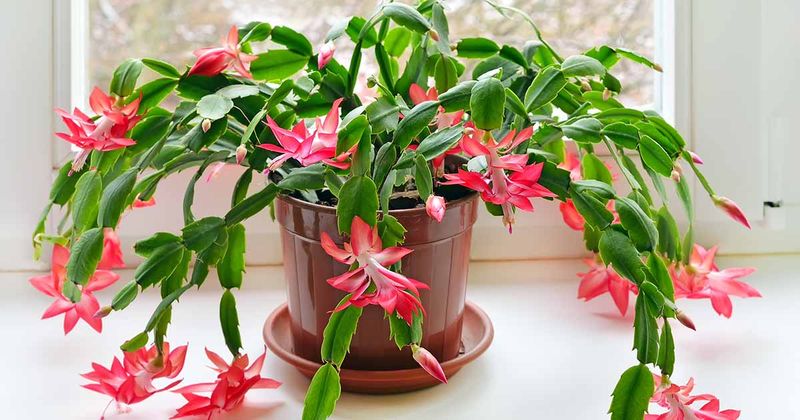
Your holiday cactus began life perched on tree branches in humid Brazilian forests, far from any sunbaked desert. That start explains why it dislikes the treatment a saguaro enjoys.
Rainforest plants sit in loose, airy material where water runs through fast. University of Connecticut guidance describes holiday cacti as plants that want a well-drained growing medium.
In practice, that means a mix that drains freely and a pot with holes. Soggy roots struggle, and a saucer in a warm Arizona room can hold water longer than you expect.
Still, a rainforest plant is not a swamp plant. Letting the root ball turn bone dry for long stretches can stress a plant that is trying to hold buds.
So the sensible target sits between the extremes. Aim for roots that are lightly damp at times, neither soaking wet nor parched for weeks.
One more note: the name Christmas cactus gets stretched over several holiday cacti, including Thanksgiving types and hybrids. Your plant may bloom on a different schedule than a friend’s, so treat timing as flexible.
Use the Potting Mix Instead of a Watering Calendar
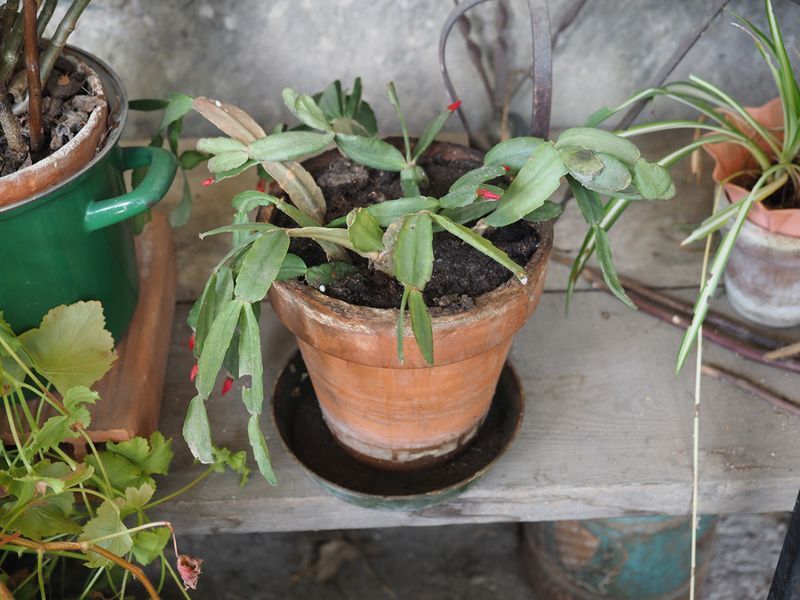
Forget the idea of watering every Sunday, because no calendar knows how fast your pot dries. Your finger is a far better tool.
Check the surface of the mix regularly. When the top inch feels dry, it is time to water, which matches the advice from University of Florida extension specialists.
Extension sources word this a little differently. Iowa State suggests evenly moist soil during budding, while Connecticut says dry but not desiccated.
Blend those ideas by watering once the surface dries and avoiding two extremes. One is a bone-dry root ball, and the other is soil that stays wet day after day.
Drying speed changes with pot size, pot material, the mix, light, and temperature. A small clay pot in a sunny Arizona room may need water far sooner than a big glazed one in a dim corner.
Lift the pot now and then to learn how heavy it feels when wet and when dry. That simple habit tells you a lot, and it adjusts as seasons change.
Water Thoroughly and Let the Pot Drain
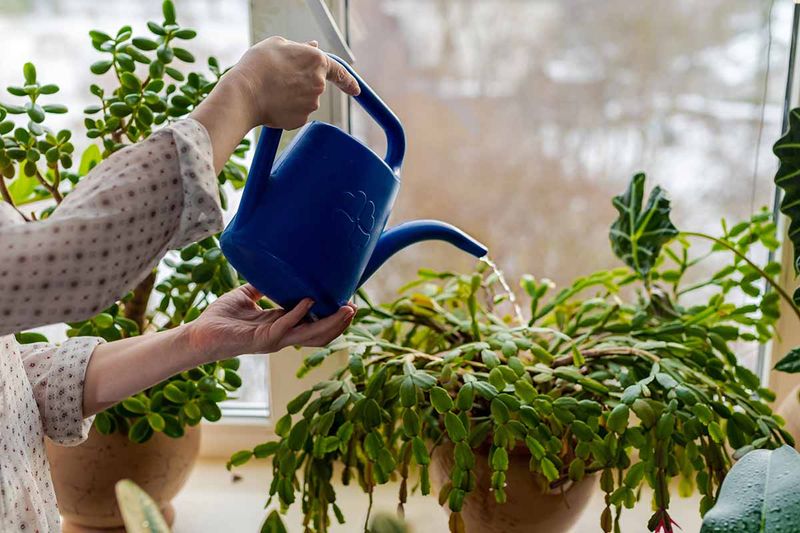
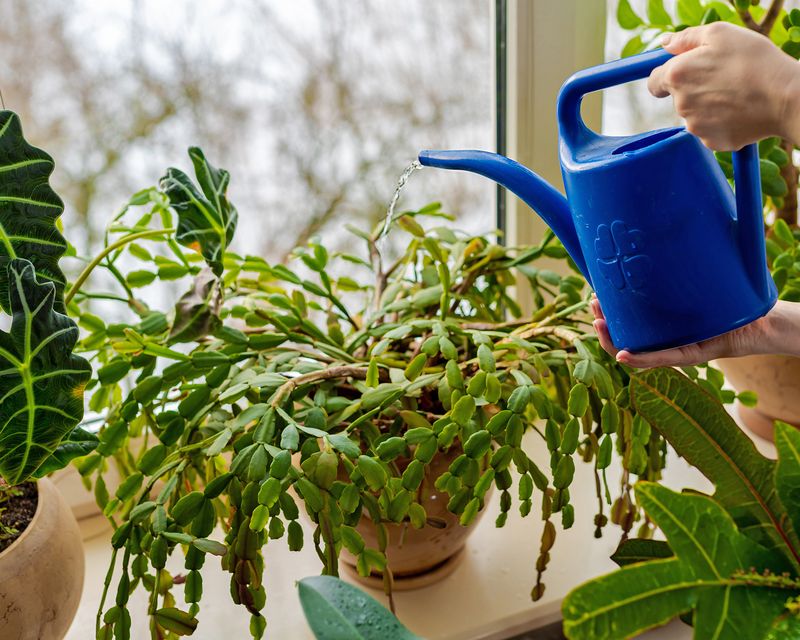
Here is a routine I like: carry the plant to the sink and give it a slow, even soak. Pour until water runs from the bottom holes.
Thorough watering means the whole mix gets wet, not just the top layer. A quick sprinkle leaves dry pockets where roots are waiting.
Then let the pot drip for a while. Empty the saucer afterward, since a pot left standing in runoff keeps roots soggy.
That is also why drainage holes matter so much. Without them, extra water has nowhere to go and the lower mix stays wet.
A well-drained mix does the same job from the inside. Arizona extension guidance on indoor plants backs the basics of a container with drainage and a mix that does not hold water.
Remember that keep it moist never means keep it sitting in water. Moist is a feeling in the mix, not a puddle in the saucer.
Use a Humidifier for Very Dry Indoor Air
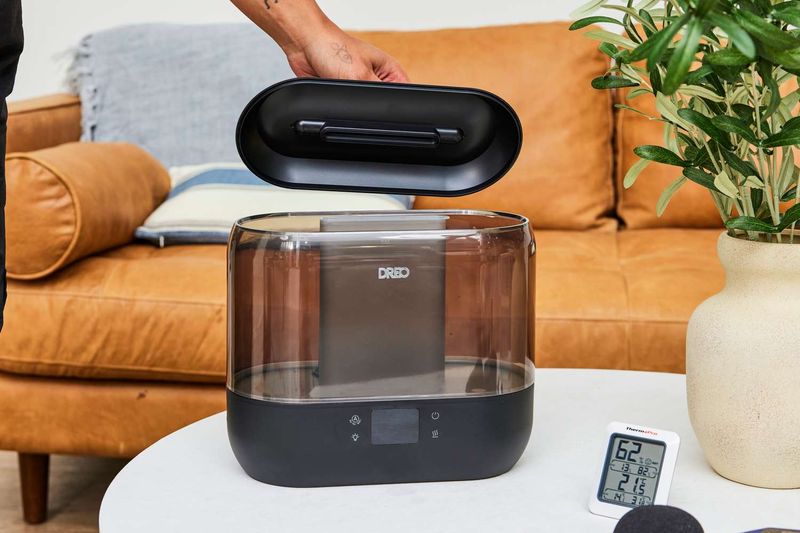
Arizona air can feel like a hair dryer, and indoor air with the AC running is often just as thirsty. Low humidity is one possible stress for budding holiday cacti, but it is rarely the only one.
I would not blame dry air for every fallen bud. Check watering, heat, and drafts too, because the cause is often a mix.
If your rooms feel very dry, a room humidifier is a practical fix. University of Arizona Extension identifies room humidifiers as an effective way to add moisture to indoor air.
No one has pinned down an exact humidity number for these plants, so skip the chase for a magic percentage. Just aim to ease the dryness in the room.
Misting gives only a brief boost, since the moisture dries quickly and you would need to repeat it constantly. Treat it as a short-lived trick, not a plan.
Pebble trays are a disputed idea. Some sources say they raise local humidity, while Penn State says their effect is minimal.
Keep Budded Plants Away From Sudden Changes
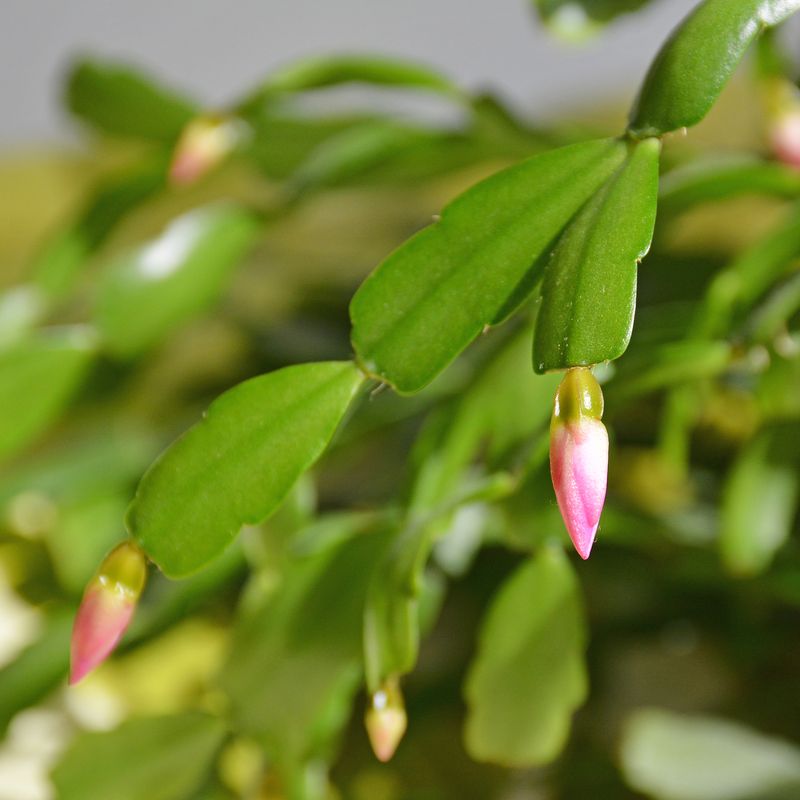
Holiday cacti are fussy about moving day, and buds often show the stress first. Heat, drafts, and sudden shifts in light or temperature can all play a part.
Once buds appear, pick a spot and leave the pot there. Avoid unnecessary relocation, even if the plant looks lovely on the other side of the room.
Keep it clear of heating and cooling vents. A blast of hot or icy air can be rough on tender buds, and Arizona homes run the AC for a long season.
University of Arizona Extension also notes that heat and too much light can contribute to bud drop. A hot west window is a poor place for a budding plant.
Bright, indirect light suits a flowering holiday cactus. A spot near a window with a sheer curtain often works nicely.
Stable placement helps lower stress, but it cannot promise that every bud will stay. Think of it as one helpful step among several.
Check Several Causes When Buds Drop
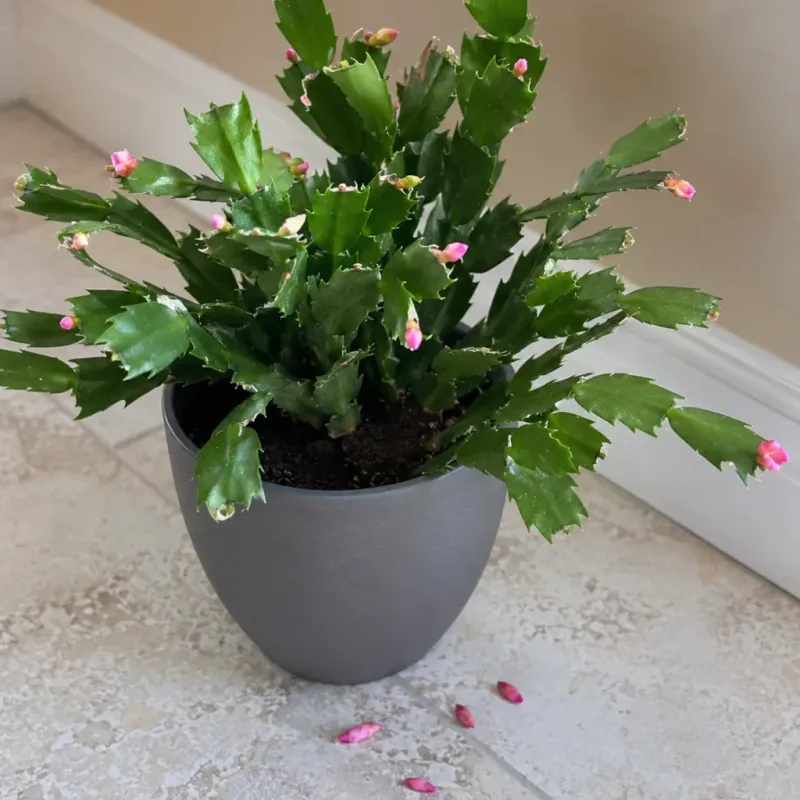
A pile of buds on the floor feels personal, but it is really just a symptom. Many things can cause it, and dry air is only one suspect.
Start with watering. Ask whether the mix has been bone dry or staying wet, and whether the pot drains freely.
Next, look at the room. Low humidity, heat, drafts, and weak light are all listed by university extensions as possible causes of bud drop.
Then think about recent changes. A new spot, a thermostat shift, or a move from the porch can all upset a budding plant.
Sometimes the plant is simply pruning itself. A holiday cactus can carry more buds than it can support, so a few may fall even in good conditions.
Because so many factors overlap, no single adjustment will stop every drop. Change one thing at a time and watch what happens.
If Buds Never Form, Consider Flowering Conditions
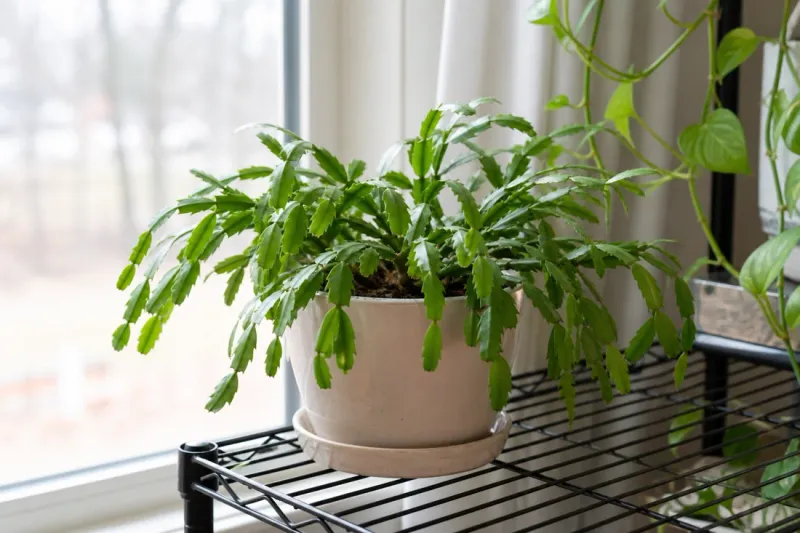
Dropping buds and never forming buds are two different problems. If you saw no buds at all, the cause is probably not your watering can.
Holiday cacti set buds in response to day length and temperature. University of Arizona Extension offers specific guidance, though other sources use somewhat different thresholds.
Because those numbers vary, treat them as a general pattern. Longer nights and cooler temperatures in fall encourage buds, while constant bright artificial light in the evening can interfere.
Arizona homes are often warm and brightly lit at night, so a plant may need a cooler, darker spot. Changing the watering alone will not fix that.
Meanwhile, keep the basics steady. Check the mix, water when the surface dries, and let the extra drain away.
Bloom is never a promise, but good habits give your plant a fair chance.