The Black Spots On Fallen Indiana Maple Leaves Are A Good Reason Not To Leave Them On The Lawn
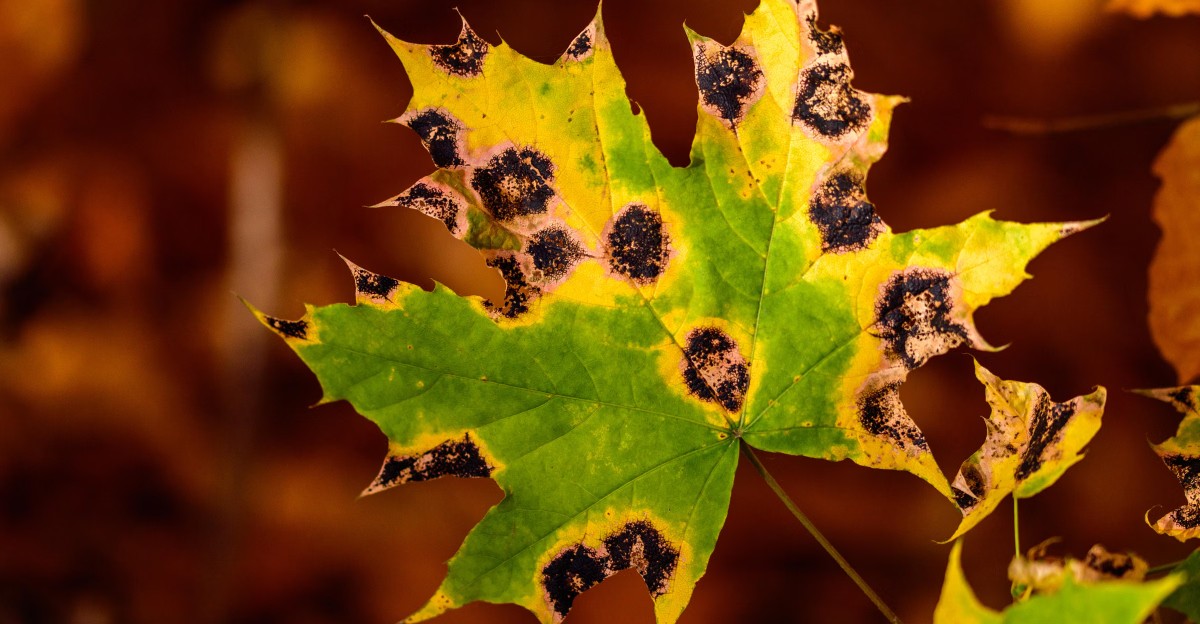
Some of the black blotches on fallen leaves can grow up to an inch and a half wide. They look like someone flicked hot road tar across the yard. Not going to lie, the first time I saw them, I tried to scrape one off with my thumbnail.
Those spots are not stains at all. They are tiny living structures, packed and waiting for spring. Each glossy patch sits slightly raised, almost like a scab on the leaf.
I used to think fall cleanup was only about looks, but this changed my mind. Across Indiana, these marks show up on lawns, sidewalks, and park paths every autumn. You have probably crunched right over them on a morning walk.
Now, what do those spotted leaves do while they sit on the grass all winter? The answer explains why your trees keep wearing the same ugly polka dots year after year.
Those Tar-Like Blotches On Maple Leaves Are Alive
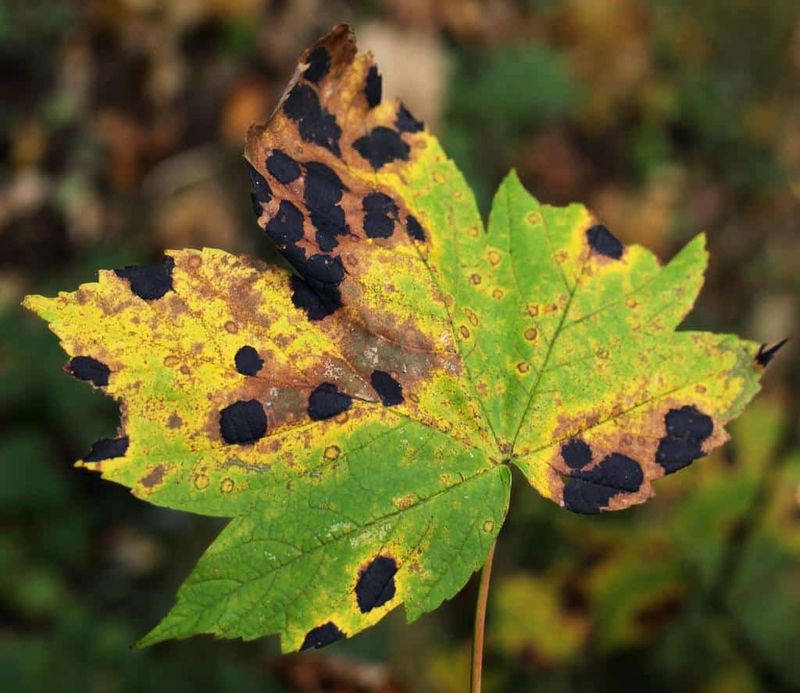
Scrape at one of those shiny black spots and you will learn fast that it is part of the leaf. I tried it once and felt a little silly. The spot is a fungal structure, built right into the leaf tissue.
Plant scientists call this disease tar spot. It comes from fungi in the genus Rhytisma, mostly Rhytisma acerinum and Rhytisma punctatum. The name fits, since the blotches really do look like dribbles of driveway sealer.
Early in summer, the marks start as small pale yellow or light green specks. By late summer, black, raised patches form in the middle of those specks. Purdue University experts note that the biggest spots can reach about 1.5 inches across.
Here is the part that surprised me most. The black spot is not the end of the story for that fungus. It is more like a packed suitcase, getting ready for a trip next spring.
Inside that glossy crust, the fungus keeps developing even after the leaf drops. So the crunchy brown leaf on your lawn is still doing a job for the disease. Once you know that, raking starts to feel less like a chore and more like smart defense.
Spotted Leaves Left On The Grass Restart The Cycle Every Spring
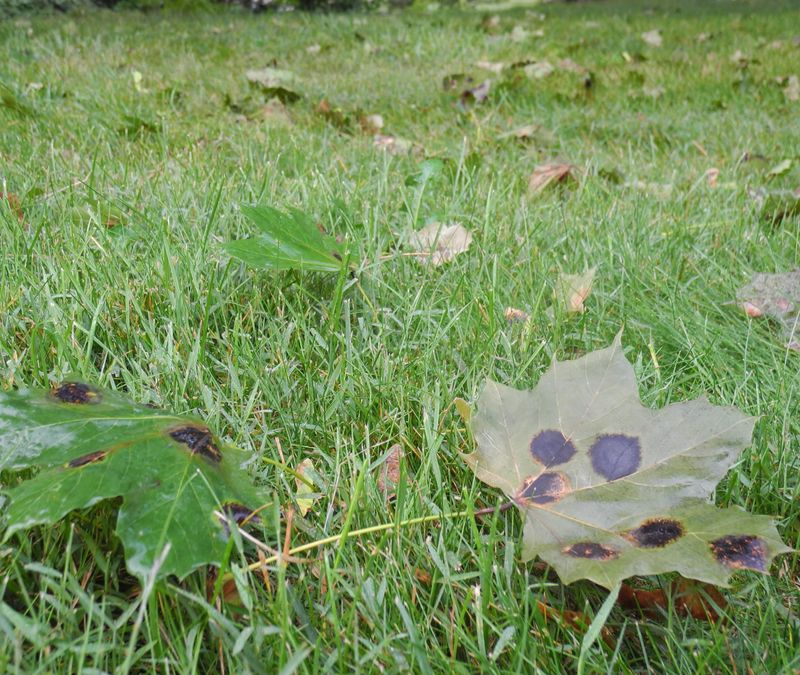
Winter does not stop this fungus. It simply rests inside the fallen leaves, tucked into those black patches right on your lawn.
When spring arrives and new maple leaves start to unfold, the fungal crusts ripen. They split open and release tiny spores into the air. Wind and rain splash carry those spores up to the fresh, tender leaves overhead.
Cool, wet spring weather makes the problem worse. Rainy Aprils and Mays give the spores the moisture they need to infect young leaves. That is why some years look much spottier than others.
So that soggy mat of old leaves acts like a launch pad. Every spotted leaf you leave behind is a possible source of next year’s infection. The tree basically gets reinfected by its own litter.
I learned this the slow way. I left leaves under my silver maple one fall, thinking they would break down. The next summer, that tree looked like it had chicken pox.
Removing the leaves weakens the chain. You cut down how much fungus is sitting right below the branches when spring growth begins. It is one of the easiest disease controls a homeowner can use, and it costs nothing but a little time.
Rake And Bag Those Maple Leaves Before Snow Flies
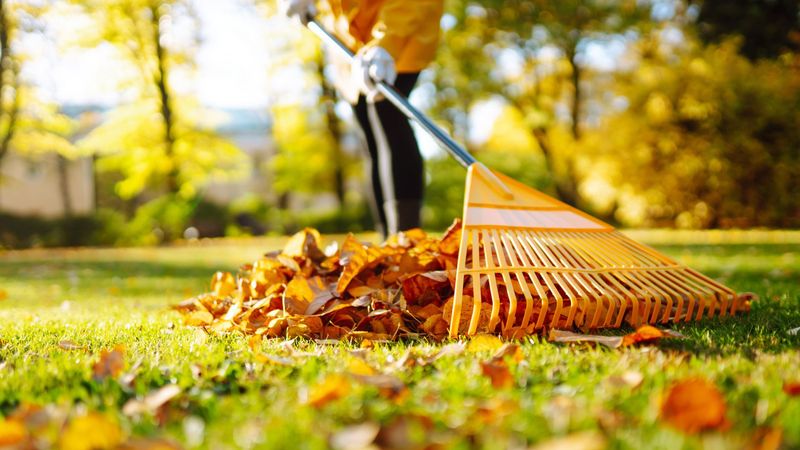
Grab the rake, a few paper yard bags, and maybe a warm cup of cider. Fall cleanup is the single most useful step against tar spot, according to Purdue Extension.
Try to collect fallen maple leaves as they drop, instead of waiting for one big weekend. A few short sessions keep leaves from matting down in rain. Matted leaves are harder to rake and can smother your grass, too.
Bagging works well if your town offers yard waste pickup. Many Indiana cities collect leaves in fall, and large municipal compost sites often get hotter than backyard piles. Check your local public works page for pickup dates and bag rules.
A mulching mower can help as well. Chopping leaves into small bits speeds up breakdown, though it does not remove all the fungus. For trees with heavy spotting, removing leaves is the safer choice.
Do not forget the corners. Leaves love to pile up along fences, flower beds, and the foundation of the house. Those hidden drifts can hold plenty of spores.
Burning leaves is not a good fix. Many communities restrict open burning, and the smoke irritates lungs. Stick with raking, bagging, and city pickup.
Your Backyard Compost Pile Might Not Get Hot Enough
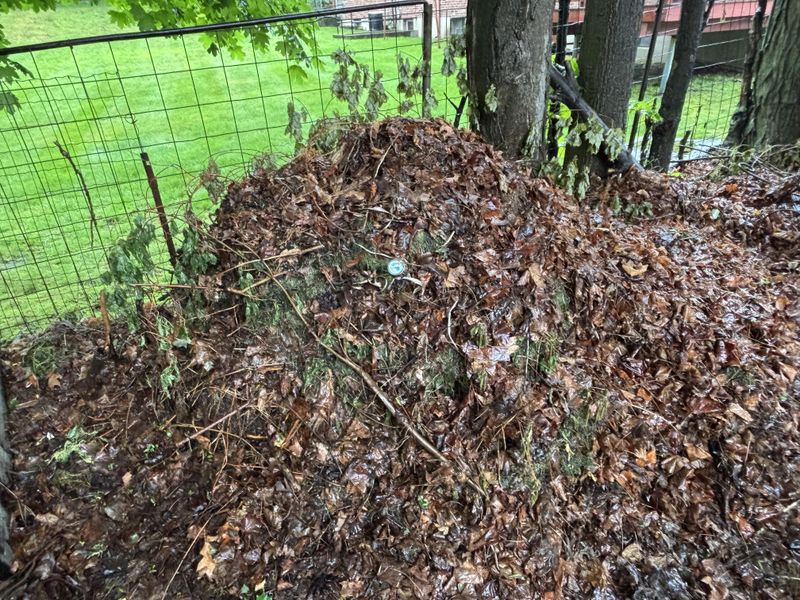
Composting feels like the responsible move, and I love a good leaf pile. Still, tar spot leaves need a little extra care before they go in the bin.
Hot composting can help break down the fungus, but most home piles do not get hot enough. Small piles and piles made mostly of dry leaves are especially unlikely to get hot enough. Cool spots near the edges can let spores survive.
A compost thermometer is a cheap, handy tool for checking. If your pile barely feels warm, assume the fungus is still alive in there.
You have a couple of choices. Cover the pile through spring so spores cannot easily blow out.
Another option is to place your compost far from your maples. Distance gives the spores less chance to land on new leaves. Some gardeners simply send spotted leaves to city pickup and compost only clean ones.
Fun fact for compost lovers: mixing green material, like grass clippings, with brown leaves helps a pile heat up. That balance of carbon and nitrogen feeds the microbes doing the hard work.
Norway, Silver, Red, And Sugar Maples Wear The Spots Differently
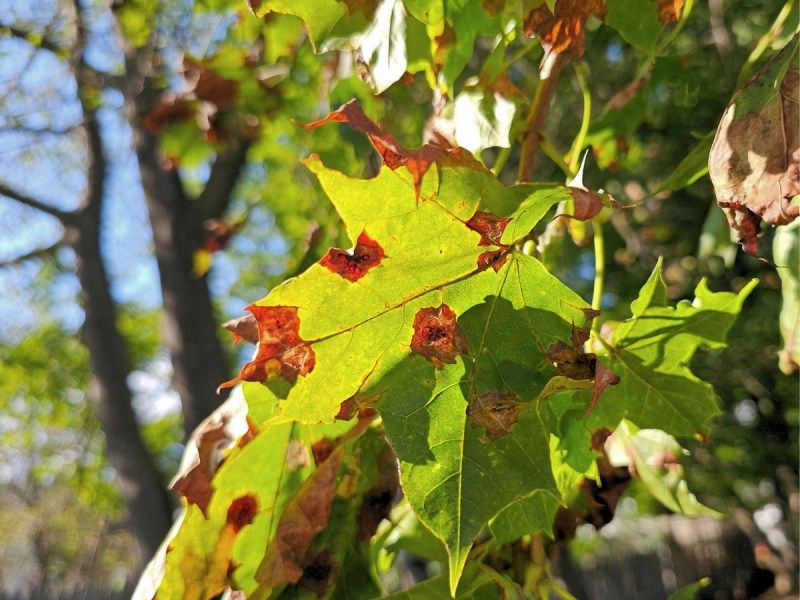
Walk down almost any Indiana street in September and you can play a game of spot the maple. Some trees look lightly freckled, while others look splattered.
Norway maples often show the big, bold blotches. Rhytisma acerinum creates the giant spots, the ones near an inch or more wide. Norway maple is also considered invasive in many areas, so it is not a tree worth planting new.
Silver and red maples can show either the large blotches or clusters of tiny black dots. Rhytisma punctatum causes clusters of tiny black dots, sometimes called speckled tar spot. Up close, it looks like someone sprinkled pepper on the leaf.
Sugar maples can get tar spot, too, though often less dramatically. Your favorite fall color tree might show only a handful of marks.
Good to know, these fungi are picky. Tar spot of maples stays on maples, so it will not spread to your tomatoes, roses, or lawn grass. The tar spot that farmers worry about on corn is a separate fungus.
If you plan to plant a new shade tree, ask a local nursery about native maples and other natives. Mixing species also means one leaf disease cannot spoil the whole street view.
Spotted Maple Trees Usually Bounce Back Just Fine
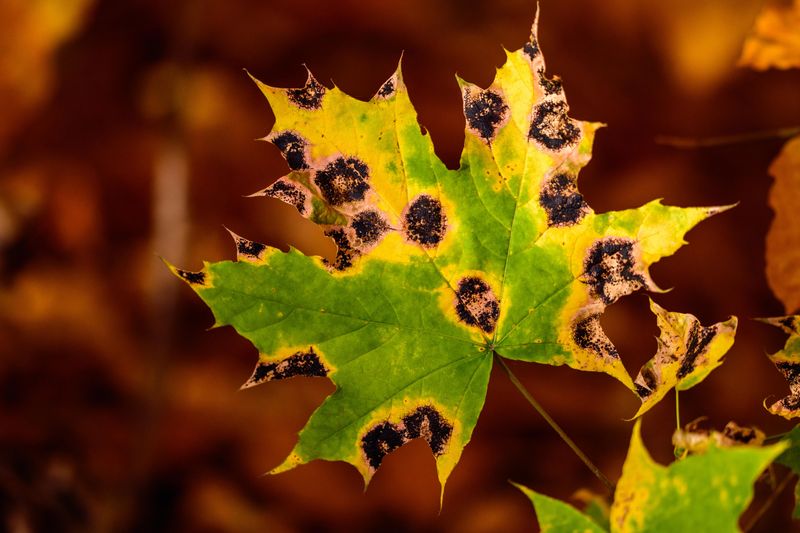
Take a deep breath, because tar spot looks much worse than it acts. For established maples, extension experts call it mostly a cosmetic problem.
The leaves do most of their work by late summer, before the spots grow big. Even heavily spotted trees still make plenty of food for the season. In bad years, leaves may drop a bit early, and that is about it.
Next spring, the tree leafs out normally. I have watched a badly speckled maple come back green and full every single year.
Because of this, fungicide sprays are rarely recommended. Spraying a tall shade tree is costly, and timing has to match spring leaf growth exactly. Purdue experts point out the benefits rarely justify the cost.
Young trees or ones already stressed by drought or root damage deserve a closer look. Several years of early leaf drop can add to other troubles.
Water young maples during dry spells and spread mulch a few inches deep, keeping it away from the trunk. A tree with steady water and healthy roots handles minor leaf diseases much better. If something looks off beyond spots, call a certified arborist.
Team Up With Neighbors For Cleaner Maple Leaves Next Fall
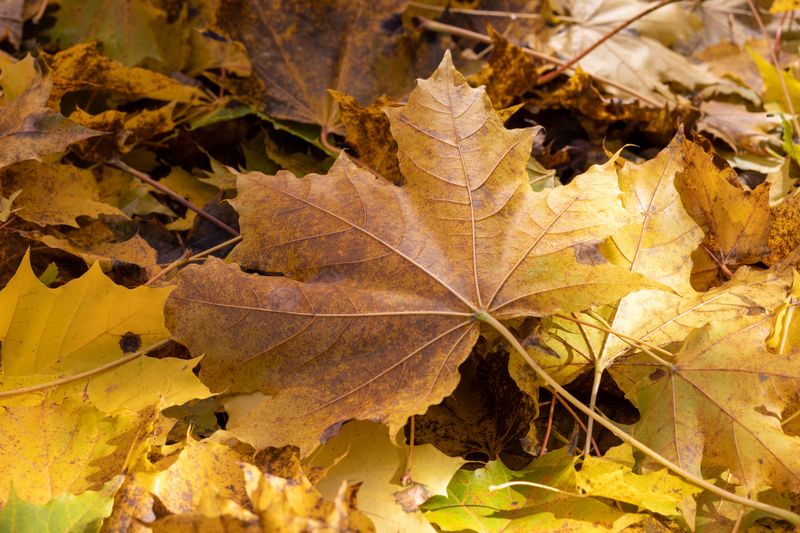
Raking your own yard spotless is great, but spores do not care about property lines. A breeze can carry them in from the maple next door.
That is why fall cleanup works best as a neighborhood project. If the whole block clears spotted leaves, spore levels drop for everyone. Share what you have learned with the folks next door, maybe over the fence while you rake.
Expect some spots to appear anyway. Rainy springs can still bring a fresh round, even after careful work. Cleanup lowers the amount of disease, but it rarely erases it in a single year.
Keep a quick note each fall about how spotted your trees look. Over a few seasons, you will see whether your efforts and the weather are making a difference.
Here in Indiana, the leaves usually come down from October into November. Plan your raking around that window and your town’s pickup schedule.
My favorite takeaway is simple. Those black spots are a clue, not a crisis. A few afternoons with a rake, a smart choice about compost, and some friendly neighbors can give your maples a cleaner, prettier look next fall.