10 Best Foods for Your Bird Feeder as Winter Visitors Arrive in Florida
Every winter, American Goldfinches drift into Florida wearing drab olive coats instead of their famous lemon-yellow feathers. Many birders miss them because they look like plain little sparrows until they flash those black and white wings.
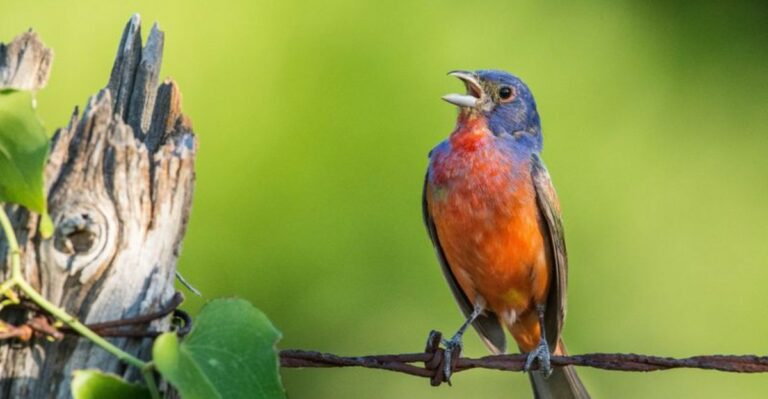
Gray Catbirds also arrive from northern states, mewing from shrubs like grumpy kittens hiding under your hedges. Painted Buntings slip into central and southern Florida too, and one glimpse feels like spotting a flying paint box.
I have to admit that my coffee goes cold whenever a new visitor lands on the feeder outside. You might notice the same thing, because these travelers bring fresh energy to quiet winter mornings in the yard.
Each guest has its own taste, and some turn up their beaks at the cheap mix many people buy. Get the menu right, and your morning coffee may never stay hot again.
1. Black Oil Sunflower Seeds Bring In The Crowd
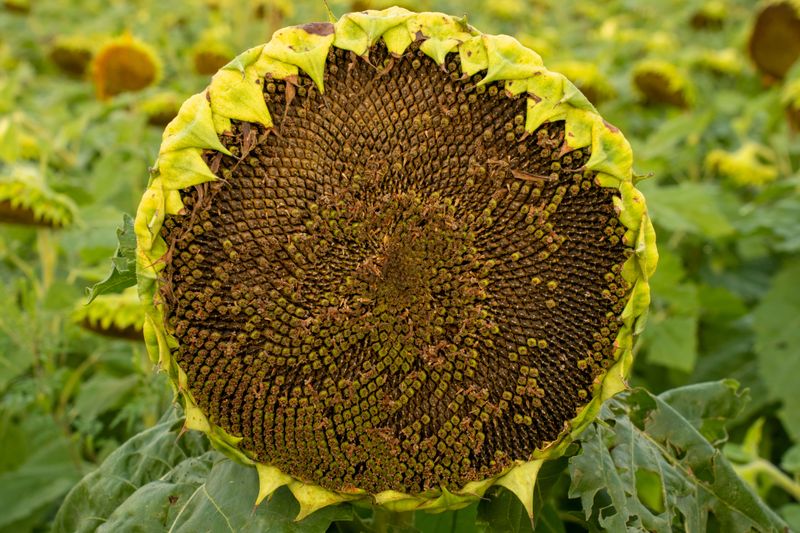
Bird researchers often call black oil sunflower the most popular seed, and my feeder crowd agrees every single morning. Cardinals crack the thin shells with a satisfying snap that I can hear from my porch chair.
Those slim black seeds hold more oil than the striped kind, so birds get extra calories per bite. Smaller beaks also manage the thin hulls easily, which opens the menu to chickadees and titmice.
Winter brings American Goldfinches and Pine Siskins in some years, and both happily share a tube feeder of sunflower. Carolina Chickadees and Tufted Titmice grab one seed at a time and fly off to a branch.
Personally, I like a hopper feeder for this seed because cardinals prefer a steady perch over a dangling tube. Hang it near shrubs, giving shy birds a quick escape route when a hawk cruises past overhead.
Fallen hulls pile up fast, and they can smother grass or patio plants beneath the feeder over time. Hulled sunflower chips solve that problem, although they cost more and spoil faster in damp weather.
Humidity is the real challenge here, so buy smaller bags and store seed in a sealed metal can. Moldy clumps can sicken birds, so toss anything that smells musty or looks gray and fuzzy.
Squirrels adore sunflower too, so a baffle on the pole saves you plenty of money and frustration. Once your feeder becomes a regular stop, you might count a dozen species before lunch on busy days.
2. No-Melt Suet Cakes Feed Hungry Woodpeckers
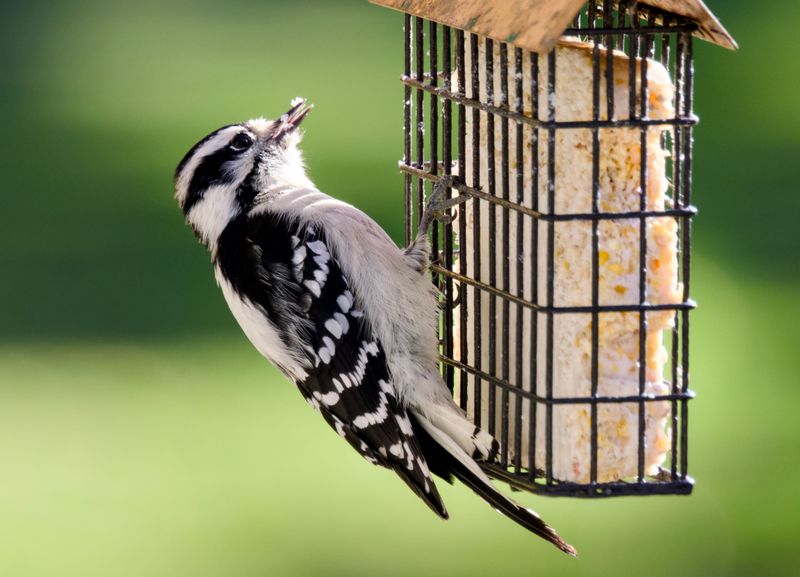
Few things make me grin like a Downy Woodpecker hanging upside down on a suet cage, tail braced for balance. That little acrobat is chasing pure fat, and fat is fuel for a bird burning energy all day.
Suet started as raw beef fat around kidneys, but most store cakes now mix rendered fat with seeds and corn. Rendering removes impurities, so the cakes keep far longer than raw fat hung from a tree branch.
Insects slow down during cooler months, so suet fills a gap for birds that usually hunt bugs. Red-bellied Woodpeckers and Carolina Wrens visit, and wintering Pine Warblers often join the line too.
Our warm afternoons create a sticky problem, because soft suet can smear onto feathers and spoil quickly. Look for packages labeled no-melt or dough-style, which hold their shape when temperatures climb past seventy degrees.
I hang my suet cage in full shade on the north side of an oak trunk. Woodpeckers feel right at home there, since they naturally cling to bark while searching for hidden insects.
Starlings and grackles can gobble a whole cake in an afternoon, which gets pricey in a hurry. An upside-down suet feeder helps, because woodpeckers handle the awkward angle much better than those bigger birds.
Check the cake every few days and remove any piece that turns rancid or smells strangely sour. Fresh suet keeps your clinging visitors coming back, and you get front-row seats to their clever gymnastics.
3. Raw Peanuts Win Over Blue Jays
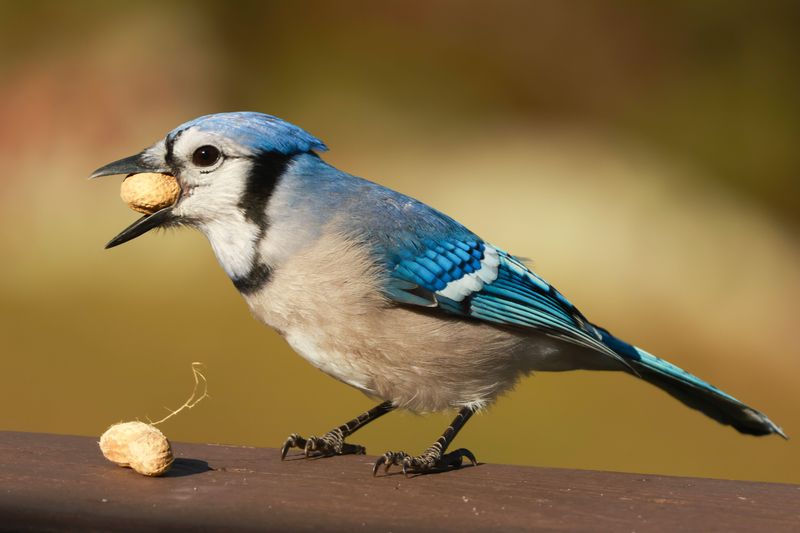
Blue Jays can remember where they bury hundreds of nuts, and they treat a peanut feeder like a bank. I watch one jay stuff its throat pouch with several peanuts before flying off to hide them.
Peanuts pack protein and fat together, which helps birds stay strong through chilly nights and long foraging days. Woodpeckers and nuthatches love them, while titmice and chickadees carry off small pieces to eat in private.
Choose raw, unsalted peanuts meant for birds, since salted or flavored snacks are a poor fit for small bodies. Roasted unsalted peanuts work too, but skip anything coated in seasoning or sugary candy shells.
Moisture is the hidden worry, because damp peanuts can grow molds that produce aflatoxin, a toxin harmful to birds. Buy from trusted brands that test for aflatoxin, and store the bag somewhere cool and sealed tight.
A mesh peanut feeder makes birds work for small bits, which reduces choking risks during nesting season later. Whole peanuts in the shell suit jays perfectly, and watching them carry two at once is pure comedy.
Personally, I offer only what disappears in a day or two during humid stretches between cool fronts. Leftovers that sit in rain or dew become soggy fast, so clean the tray before adding fresh nuts.
Squirrels will try every trick to reach peanuts, so a weight-activated feeder or sturdy baffle helps a lot. Once the jays find your setup, expect loud announcements every morning that breakfast is officially served.
4. Nyjer Seed Brings Goldfinches To Tube Feeders
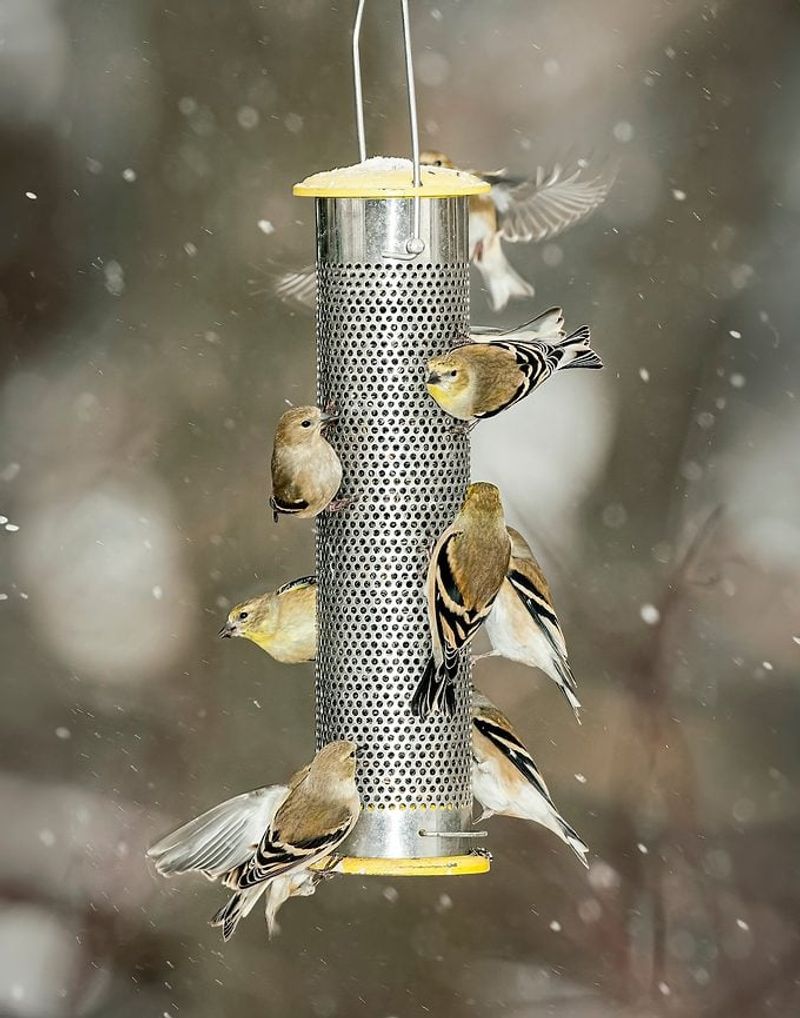
That tiny black seed people call thistle is actually nyjer, grown mostly in Africa and India, not a thistle. Suppliers heat-treat it before sale, so spilled seed rarely sprouts and should not become a weedy problem.
American Goldfinches are the main reason to buy it, since they arrive in their muted winter plumage. Their twittery chatter sounds like a group of kids giggling, and I love hearing it on cool mornings.
Nyjer is rich in oil, and finches pull the meat out with beaks shaped like small tweezers. Pine Siskins sometimes join them during irruption years, though their visits vary a lot from winter to winter.
Use a tube with tiny feeding ports or a mesh sock, because regular feeders spill this seed everywhere. Socks let several goldfinches cling at odd angles, and their upside-down posing makes for adorable photos.
Freshness matters more here than with almost any other seed, because finches often ignore stale or dried-out nyjer. Squeeze a few seeds between your fingers, and fresh ones should leave a light, oily smear behind.
Rain can turn nyjer into a moldy clump inside a sock, especially during our muggy winter warm spells. Shake the feeder after storms, and replace soggy seed instead of waiting for the finches to complain.
Goldfinches usually head north again by spring, so enjoy their company while the season lasts here. Fill the feeder only halfway at first, then add more once the flock discovers your yard.
5. Safflower Seed Keeps Cardinals Happy
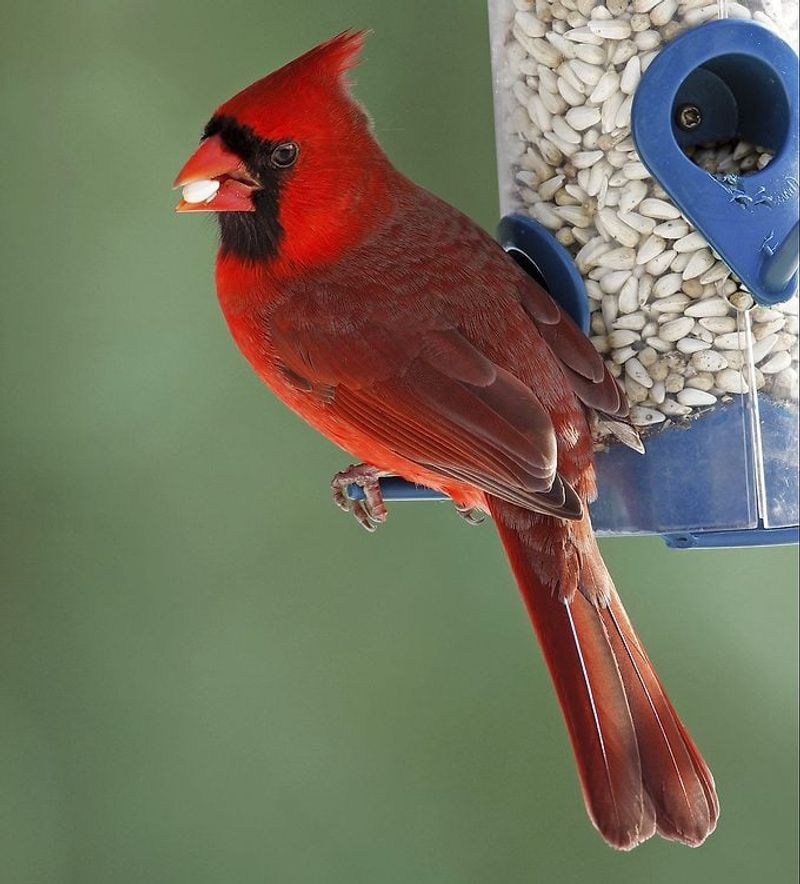
Northern Cardinals treat safflower like a favorite candy, while many grackles and squirrels act like it tastes awful. That picky split makes this white seed one of my favorite tools for calmer feeder mornings.
The seeds look like small white teardrops, and they carry plenty of oil beneath a tough shell. Cardinals crack them with powerful beaks, rolling each seed around before the hull pops open with ease.
Tufted Titmice and Mourning Doves eat safflower as well, so you rarely lose good visitors by switching. Some House Finches warm up to it slowly, but they usually come around after a week or two.
Squirrels are less fond of the bitter flavor, though a truly hungry squirrel may still sample it. No seed is squirrel-proof, but safflower often slows them down enough to make a real difference.
I have to admit, birds sometimes ignore safflower at first if they are used to sunflower. Try mixing the two together, then slowly increase the safflower until it fills the whole feeder.
A hopper or platform feeder suits safflower best, because cardinals prefer to sit facing their meal. Keep platform trays covered or drained, since wet seed clumps and spoils quickly in warm, humid weather.
Safflower costs a bit more per bag, but less waste and fewer bullies often balance out the price. Watching a pair of cardinals share seeds beak to beak toward late winter feels like a sweet reward.
6. White Proso Millet Draws Painted Buntings
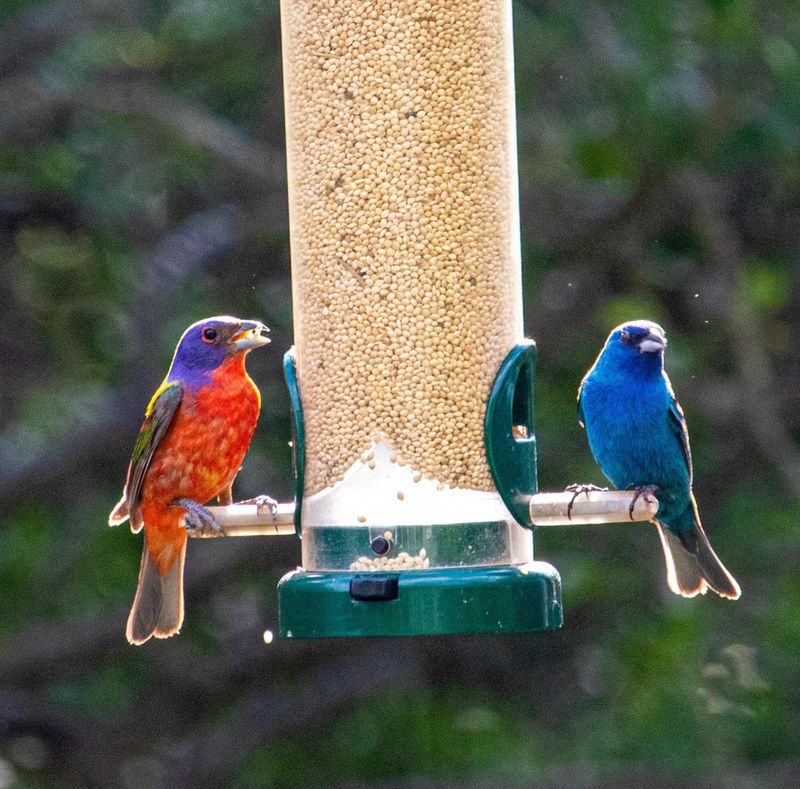
Male Painted Buntings look like a kid colored them with every marker in the box, and millet helps attract them. Many winter in central and southern Florida, and backyard feeders give birders a real chance to spot one.
White proso millet is a small, round, pale seed that ground-feeding birds find easy to handle. Chipping Sparrows and Mourning Doves scratch around for it, and buntings join when shrubs sit nearby.
Personally, I skip cheap mixes loaded with red millet or milo filler that many birds simply kick aside. Pure white proso costs a little more, but far less seed ends up wasted on the ground.
Painted Buntings prefer cover, so place a feeder within a few feet of dense shrubs or tall grasses. Many birders use tube feeders with a wire cage that lets small birds in but keeps larger ones out.
Ground scattering works too, although millet left on bare soil invites rats and draws more pigeons than you want. Offer only a small handful at a time, and rake up leftover seed before evening rolls around.
A low platform tray with a screened bottom drains rainwater and keeps millet from turning moldy too quickly. Clean that tray weekly, because droppings and damp hulls build up faster than most people realize.
Buntings typically leave by late spring, heading back toward nesting grounds farther north along the Atlantic coast. Until then, a steady supply of millet might reward you with a rainbow bird on your patio.
7. Cracked Corn Feeds Doves And Ground Birds
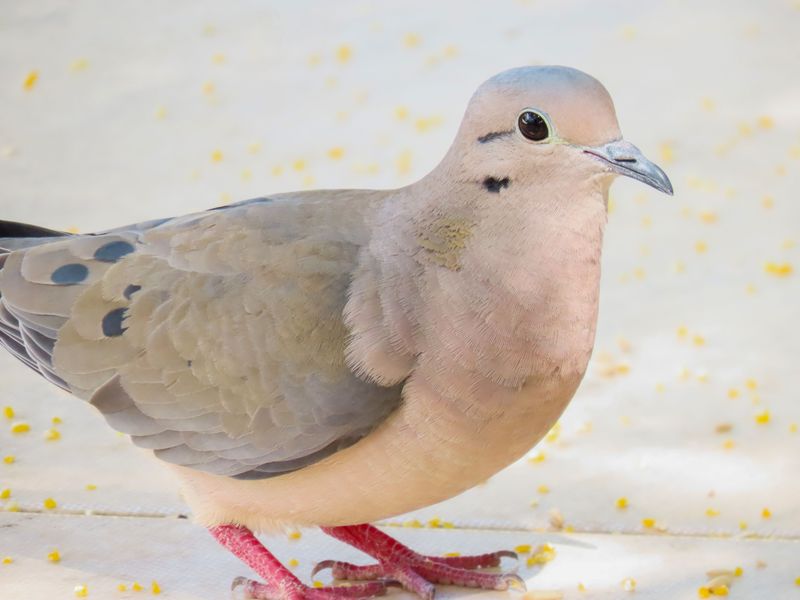
Mourning Doves waddle under my feeders like retirees on a morning stroll, pecking at every bit of cracked corn. Corn is cheap and filling, which makes it a popular base for many backyard ground feeding stations.
Cracking breaks whole kernels into smaller pieces, so doves and sparrows can swallow them with less effort. Northern Bobwhite may visit rural yards near open fields, though they usually stay shy and hidden nearby.
Common Ground Doves also love it, and these tiny doves look almost like sparrows with scaly chests. I like how they flash rusty wing patches when they flutter up into a nearby hedge.
Corn spoils quickly in humid air, so moisture is the biggest risk for this simple food. Wet corn can develop aflatoxin, a mold toxin that harms birds even in small amounts over time.
Offer only what your visitors eat in a day, and spread it on a tray instead of bare ground. Keep it dry and swap it often, and you avoid most of the problems that come with corn.
Large piles can attract raccoons and noisy grackle flocks, so a little goes a long way here. Many birders scatter corn far from seed feeders, which pulls bossy birds away from smaller guests.
Avoid buttered or seasoned popcorn kernels and sweet corn from the pantry, since plain feed corn works best. With a light hand, cracked corn turns a bare patch of yard into a busy dove diner.
8. Orange Halves And Berries Lure Catbirds And Orioles
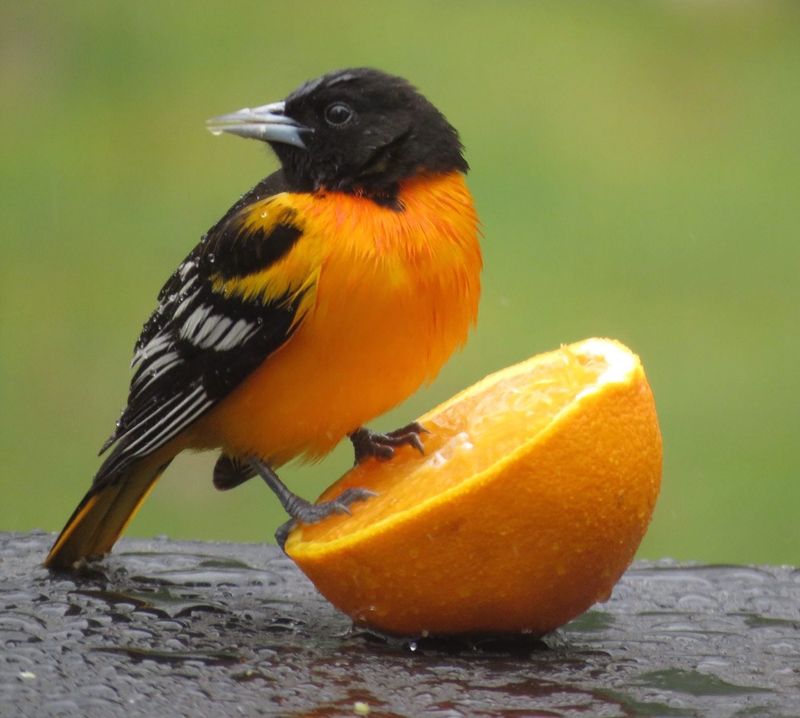
Baltimore Orioles flash bright orange in South Florida winters, and a halved orange might bring one to your yard. I still remember my first oriole visit, because I nearly spilled my coffee watching it probe the fruit.
Fruit appeals to birds that skip most seeds, so it expands your guest list in a delightful way. Gray Catbirds and Northern Mockingbirds sample oranges and apples, while Red-bellied Woodpeckers dig into the soft centers.
Spot-breasted Orioles, an established specialty around southeast Florida, sometimes visit fruit too, though they stay fairly local. Many birders spot them around Miami and Fort Lauderdale neighborhoods with plenty of tall trees and flowering shrubs.
Push orange halves onto a nail or spike, cut side out, so birds can reach the juicy pulp. Raisins and currants work better if soaked in warm water first, which softens them for smaller beaks.
Warm days ferment fruit quickly, and sour, sticky leftovers attract swarms of ants and fruit flies. Swap out fruit daily or every other day, and rinse the tray before adding fresh slices.
Planting native fruiting shrubs adds lasting value, and beautyberry or firebush can feed birds through many seasons. Personally, I think natural fruit plus a feeder makes the most balanced menu for your feathered visitors.
Grape jelly attracts orioles too, but offer only a spoonful because large amounts are mostly sugar. A small dish keeps things tidy, and you get bright color without turning your yard into a sticky mess.
9. Sugar Water Feeders Help Wintering Hummingbirds
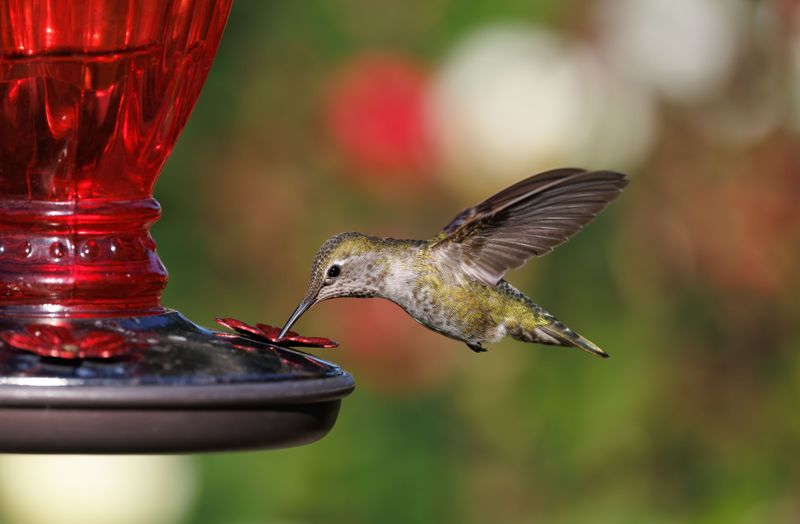
Hummingbirds in winter surprise plenty of newcomers, yet Ruby-throated Hummingbirds regularly spend the cool months in southern Florida. A few Rufous Hummingbirds also wander east each year, and birders in northern counties get thrilled by them.
Making nectar at home takes only one part white sugar mixed into four parts water, nothing else. Skip red dye, honey, and brown sugar, since plain table sugar most closely matches flower nectar.
I like to boil the water briefly, which helps sugar dissolve and slows bacteria for a little while. Cool it fully before filling the feeder, and store extra sugar water in the fridge for about a week.
Warm afternoons spoil nectar fast, so change it every two to three days, or more often during heat. Cloudy liquid or black specks mean mold, and that feeder needs a hot water scrub right away.
Pick a small feeder you can take apart easily, because cleaning matters more than fancy decorations. Red parts attract hummingbirds naturally, while yellow flower ports can draw bees and wasps to the feeding holes.
Hang it in partial shade near native blooms like firebush or coral honeysuckle for extra natural nectar. Those plants offer real flowers, and you might notice tiny insects that hummingbirds also hunt for protein.
Male hummingbirds often guard a feeder fiercely, chasing rivals in dizzy loops around your yard and porch. Placing a second feeder out of sight gives quieter birds a fair chance to sip in peace.
10. Mealworms Bring Bluebirds Closer
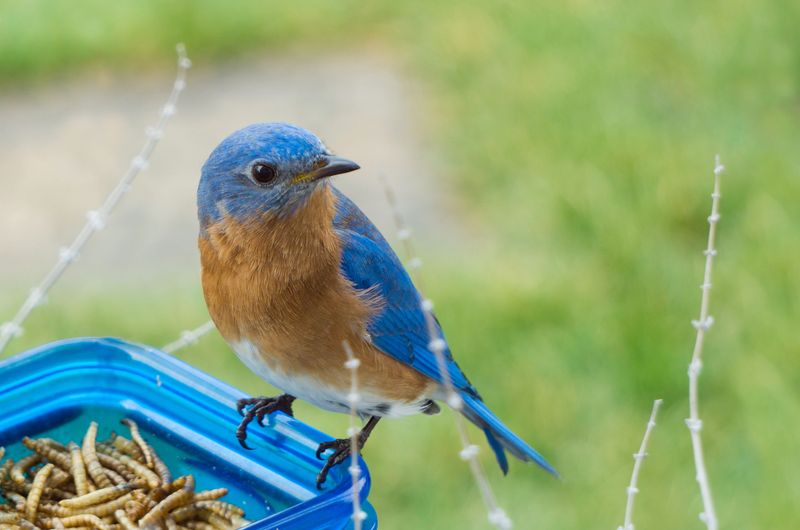
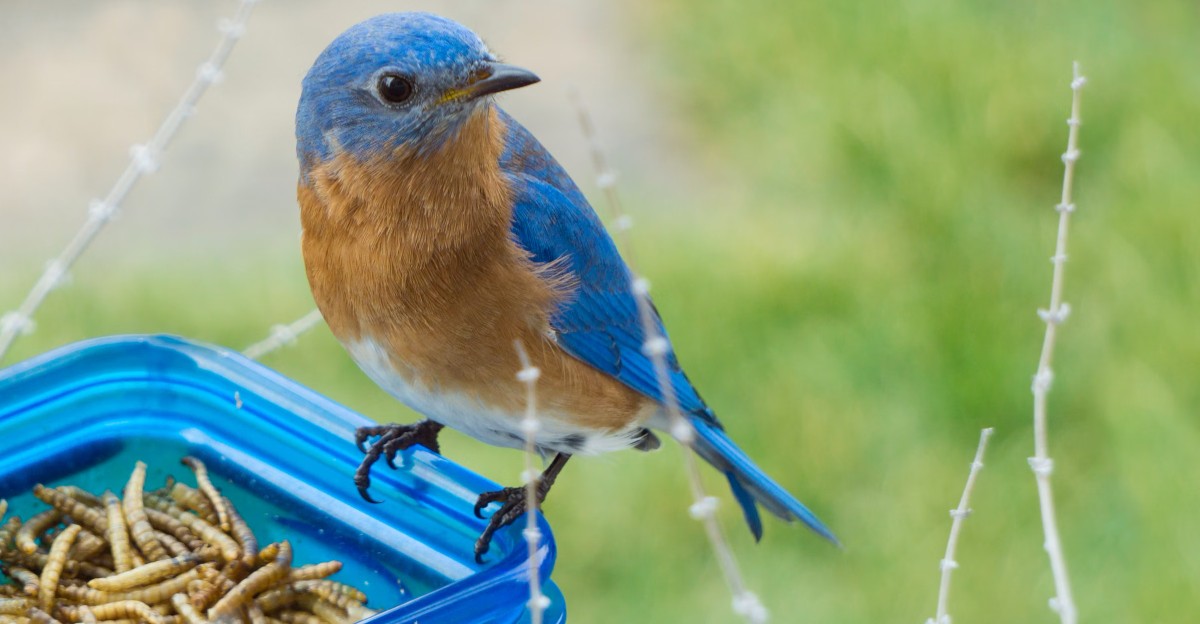
Eastern Bluebirds can spot a single beetle larva from a fence post yards away, so a mealworm dish gets noticed. I love how they swoop down for a wriggler and then flutter back to the wire like blue arrows.
Mealworms are the larvae of a darkling beetle, not true worms, and they carry plenty of protein. Insect-eating birds struggle more when bugs slow down, so this offer can fill a useful gap.
Wintering Yellow-rumped Warblers and Ruby-crowned Kinglets may sample them, along with Carolina Wrens and Eastern Bluebirds. Chickadees join the party too, though they usually grab one piece and dash away to eat elsewhere.
Live mealworms draw the most attention because movement catches a bird’s eye almost instantly from a distance. Dried mealworms store longer, and soaking them in warm water briefly makes them more appealing to birds.
Use a shallow dish with slick, steep sides so the mealworms cannot crawl out and escape. Personally, I set mine near a bluebird box, though a sunny spot with a nearby perch works fine.
Treat mealworms as a snack instead of a full diet, offering a small handful once or twice daily. Too many can attract mockingbirds that bully smaller birds, so keep portions modest and timing consistent each day.
Store live mealworms in the fridge with oats or bran, and add a slice of carrot for moisture. Before long, you might find bluebirds waiting on your fence each morning like customers outside a bakery.