How to Overwinter Fuchsia in North Carolina So You Don’t Need New Plants Next Spring
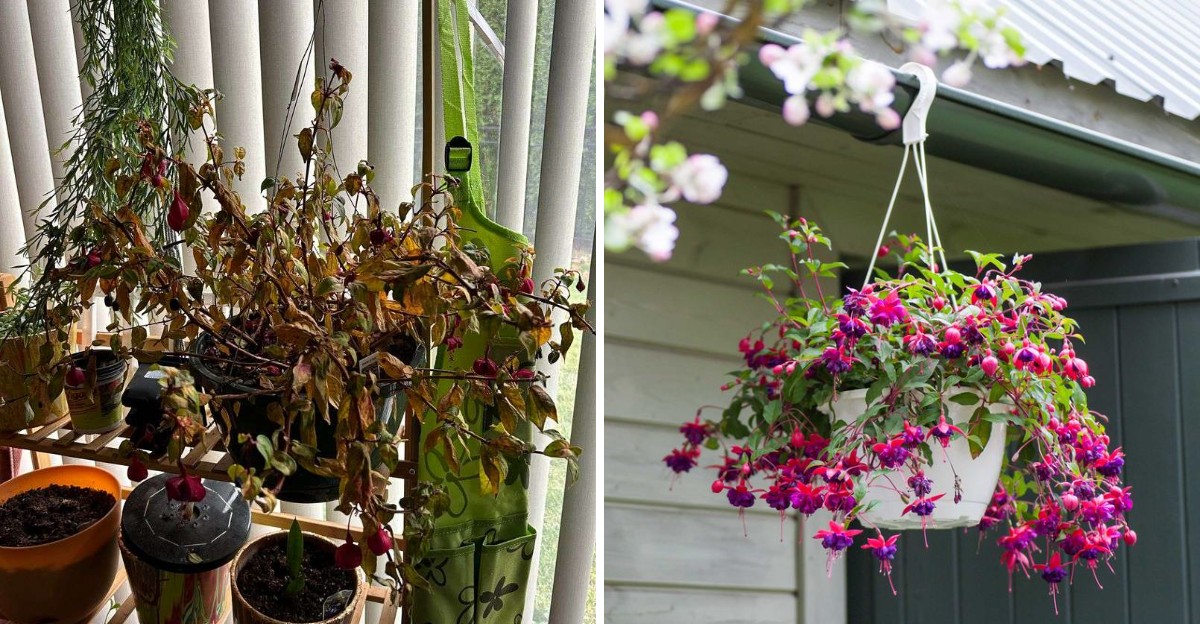
Hummingbirds can spot red flowers from far away, and one hanging basket on your porch may have fed dozens of them all summer. Those tiny visitors loved the dangling, two-toned blooms as much as you did.
Here’s something you might not expect. That basket is not really an annual at all. In its native mountains of Central and South America, the plant grows for years and can even become a woody shrub.
I know how frustrating it can be when the first frost turns a gorgeous basket into a sad, droopy mess. Most of us in North Carolina just toss it on the compost pile and buy another one in April. That habit gets expensive fast.
The real question is whether your plant could sleep through winter and wake up ready to bloom again. I tend to think it deserves that chance, and it might be easier than you think.
1. That Fuchsia Basket Is Tougher Than Its Dainty Blooms Suggest
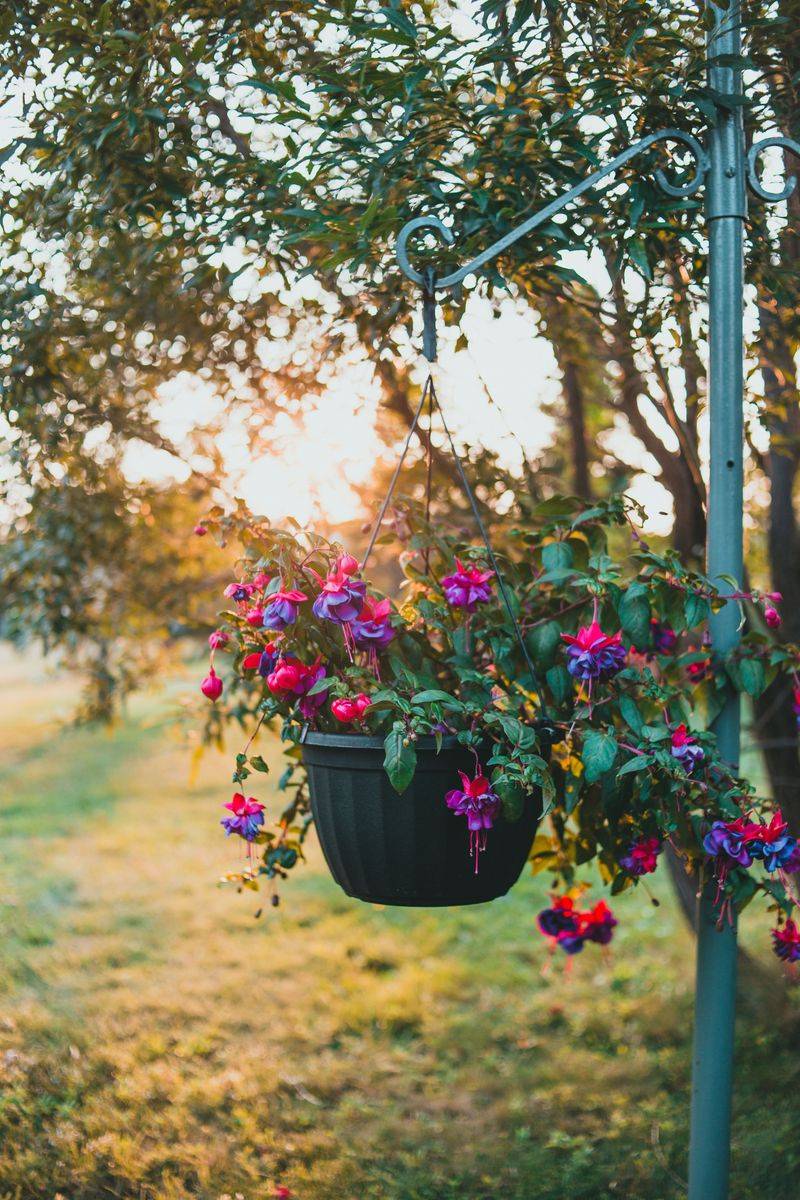
Those ballerina-shaped flowers look fragile, but the plant behind them is a tender perennial. Most fuchsias sold in hanging baskets are hybrids that live for years when frost stays away from their roots and stems.
Cold is the real problem. A hard freeze damages the soft tissue, and the plant collapses outdoors in most of the state. Garden centers sell them like annuals because it is simple, not because the plant is built to last one season.
Fuchsias also dislike heat. Piedmont and Coastal Plain summers often stress them, so many baskets look tired by August. A plant that struggled through July can still bounce back after a winter rest and a fresh trim.
Did you know? The first fuchsia was described by a French monk named Charles Plumier around 1700. He named it after Leonhart Fuchs, a German botanist from the 1500s.
So before you toss that basket, look closely at the stems. If they are firm and slightly woody near the base, you have a good candidate for saving. Healthy roots and a few sturdy branches are all you need to carry the plant into next spring with a real head start.
2. Bring Fuchsias Indoors Before Nights Dip Below 50 Degrees
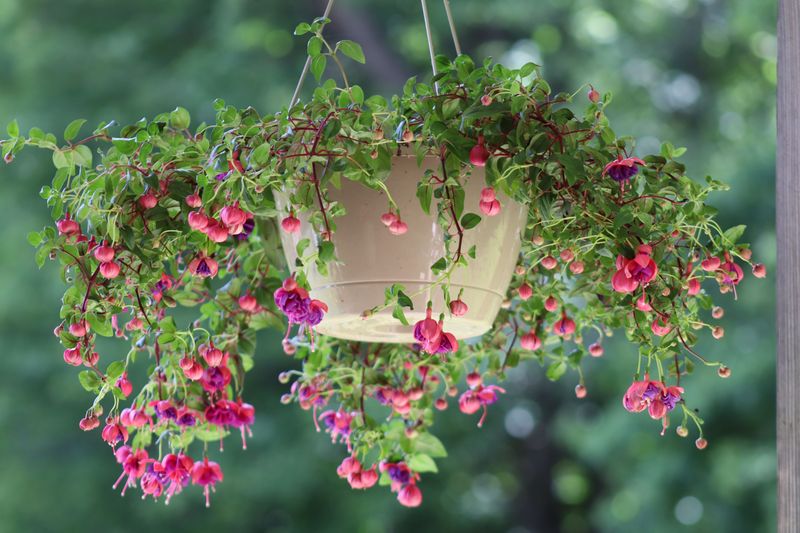
Timing makes or breaks this whole project. Aim to move your plants inside once nighttime temperatures start sliding toward 45 to 50 degrees, and well before the first frost.
North Carolina covers USDA zones from about 6a in the high mountains to 8b and even 9a along parts of the coast.
That spread changes your calendar quite a bit. Folks near Boone may need to act in late September, while gardeners in Wilmington can often wait until late October or November.
Check your local forecast instead of the calendar alone. One surprise frost can undo months of care in a single night. A cheap outdoor thermometer near the basket helps you watch those early morning lows.
Before the move, hose off the leaves and stems. Look under leaves for whiteflies, aphids, and spider mites, which love to ride indoors and multiply in warm rooms. A spray of insecticidal soap can help reduce them.
Also stop fertilizing by early September. Feeding late in the season pushes soft new growth that has a harder time settling into rest. You want the plant slowing down naturally as the days shorten and the air cools.
3. A Hard Prune Helps Fuchsia Stems Rest Easy
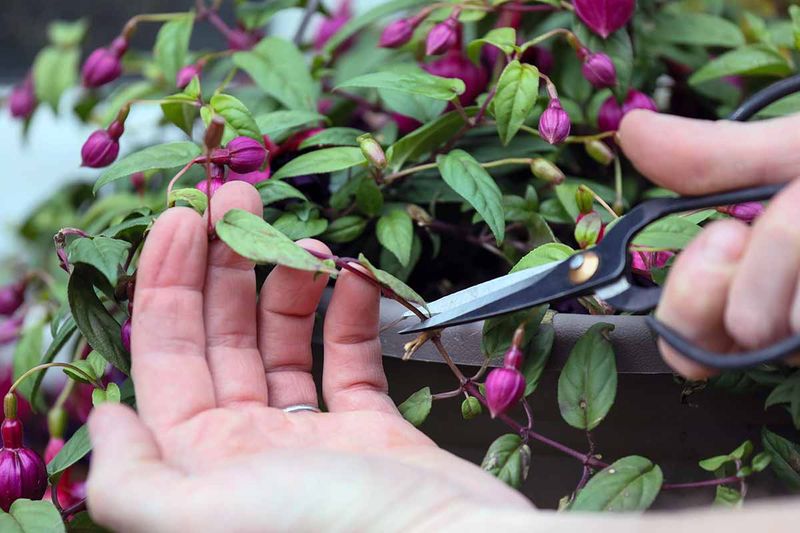
Grab your pruners and take a deep breath. Cutting a fuchsia back feels harsh, but the plant handles it well.
For the dormant method, trim stems down to about 4 to 6 inches, or cut them back by at least half. Make each cut just above a pair of leaf nodes. Those little bumps are where fresh shoots will appear in spring.
Next, pull off the remaining leaves and any flowers or seed pods. Bare stems are less likely to hide pests and less likely to rot in storage. Pick up fallen leaves from the soil surface too, since they can grow mold in a cool, dark room.
I like to clean my blades with rubbing alcohol before starting. It takes ten seconds and helps keep disease from spreading between plants.
Fun bonus: those trimmings can become new plants. Soft green tips about 3 inches long often root in moist potting mix within a few weeks. Keep a couple in a bright window as backup insurance.
If your main plant struggles over winter, you still have young fuchsias ready to fill your baskets next year without spending a dime.
4. Cool, Dark Basements and Garages Make Cozy Fuchsia Hideouts
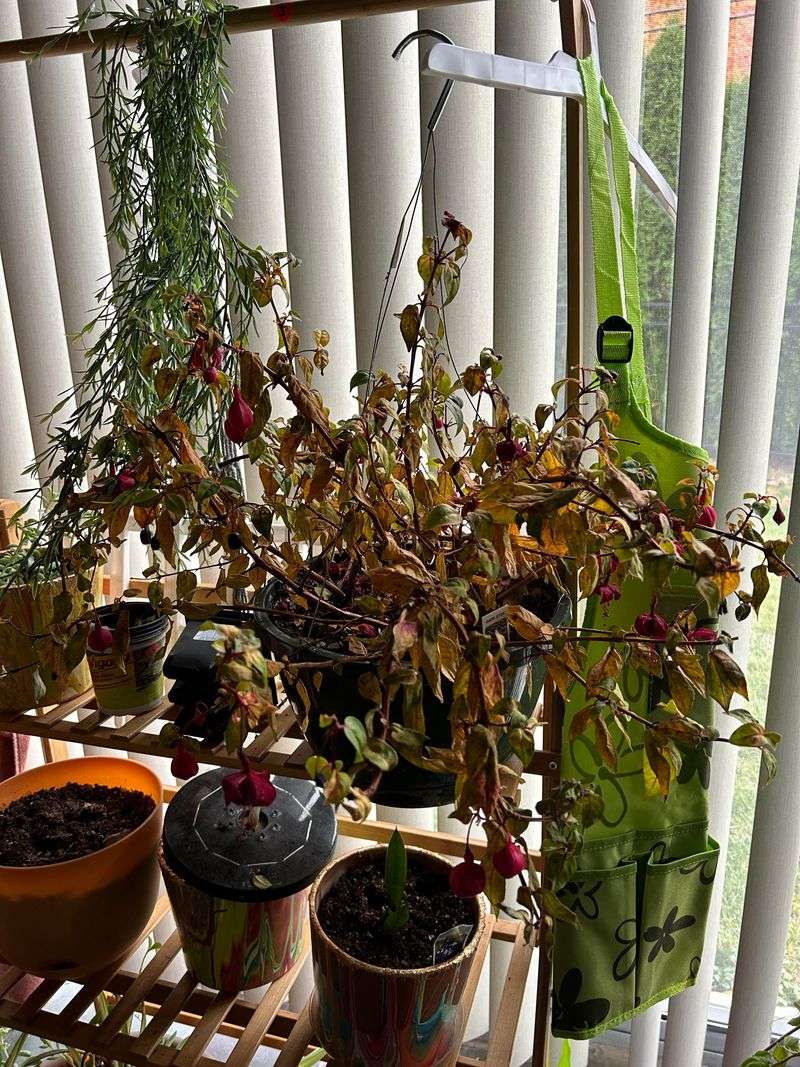
Your dormant fuchsia wants a spot that feels like a chilly cave. Temperatures between about 40 and 50 degrees work best, and the space must stay above freezing.
Many gardeners use an unheated basement, an attached garage, a crawl space, or a cool closet against an outside wall.
Light is not very important during dormancy because the plant is barely growing. In fact, too much warmth with low light causes pale, stretched shoots that look weak.
Garages can be tricky in western North Carolina. Mountain cold snaps sometimes push garage temperatures below freezing. Placing pots against the house wall or wrapping them in an old blanket on frigid nights helps a lot.
In coastal areas, the opposite happens. Some garages stay too warm in mild spells, so the plant wakes up early. A basement or a north-facing room might suit you better.
Set a simple min-max thermometer near your pots. It records the coldest and warmest readings, so you know what happened overnight. That little tool takes the guessing out of the process and helps you adjust before small problems turn into big ones.
5. Thirsty Fuchsia Roots Need Only a Small Sip in Winter
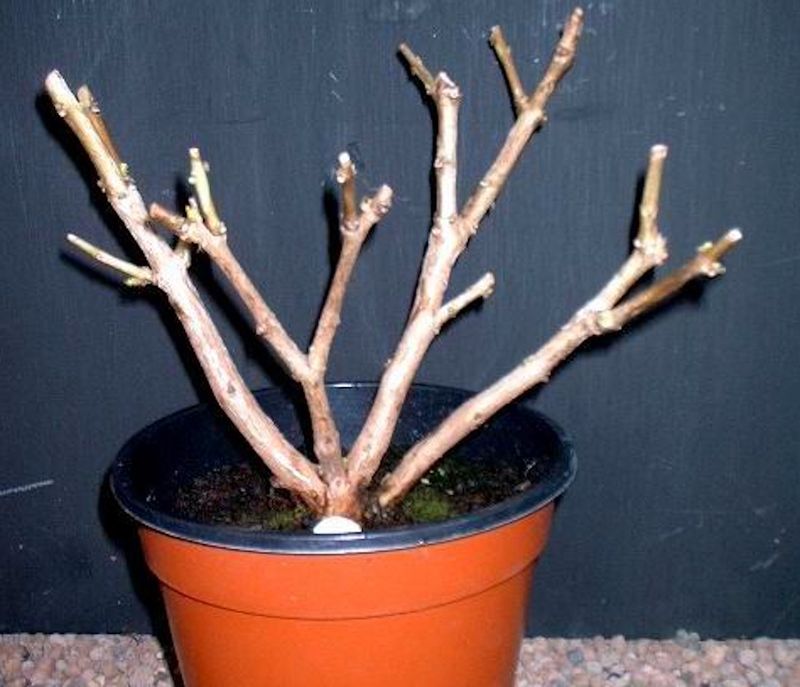
Water is where most overwintering plans go sideways. A sleeping fuchsia uses very little, and soggy soil invites root rot fast.
Check the soil about every two to four weeks. Push a finger an inch or two into the mix. If it feels dry, give a light drink, just enough to keep the roots from shriveling.
The goal is barely moist, not wet. Let excess water drain out, and empty any saucer underneath. Cool temperatures slow evaporation, so pots stay damp much longer than they did in July.
A quick way to judge is lifting the pot. A light pot often means dry soil, while a heavy one still holds plenty of moisture. After a few weeks you will get a feel for it.
Watch the stems too. Firm, slightly flexible stems are a healthy sign. If you scratch a stem lightly with a fingernail, green tissue underneath means the plant is alive and resting.
Brown and brittle wood near the tips is normal, but mushy stems at the base usually point to too much water. Cut back on watering right away if you notice that softness.
6. Prefer Fuchsia Flowers All Winter? Try a Sunny Window
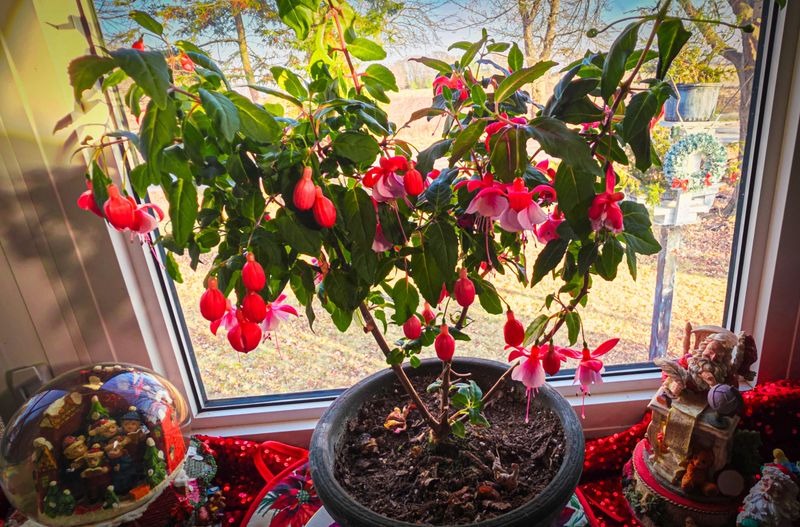
Some people cannot stand a bare stick in a pot for months. If that sounds like you, keep your fuchsia growing as a houseplant instead.
Choose a spot with bright, indirect light, like an east-facing window. Cooler rooms around 55 to 65 degrees suit the plant better than a toasty living room. Keep it away from heating vents, which dry out the leaves quickly.
Trim the plant back by about a third before bringing it in. Water when the top inch of soil feels dry, and skip fertilizer until late winter. Growth will be slow, and you may see only a few blooms, but the plant stays leafy.
Dry indoor air is a real challenge. Setting the pot on a tray of pebbles with a little water raises humidity around the leaves. Grouping houseplants together helps a bit too.
Keep an eye out for whiteflies. They flutter up like tiny specks of dust when you touch the leaves. Yellow sticky cards and regular rinsing in the sink help keep them in check.
This method takes more attention, but you get greenery and the occasional flower during gray months.
7. Fresh Fuchsia Buds in March Mean It Is Time to Wake Up
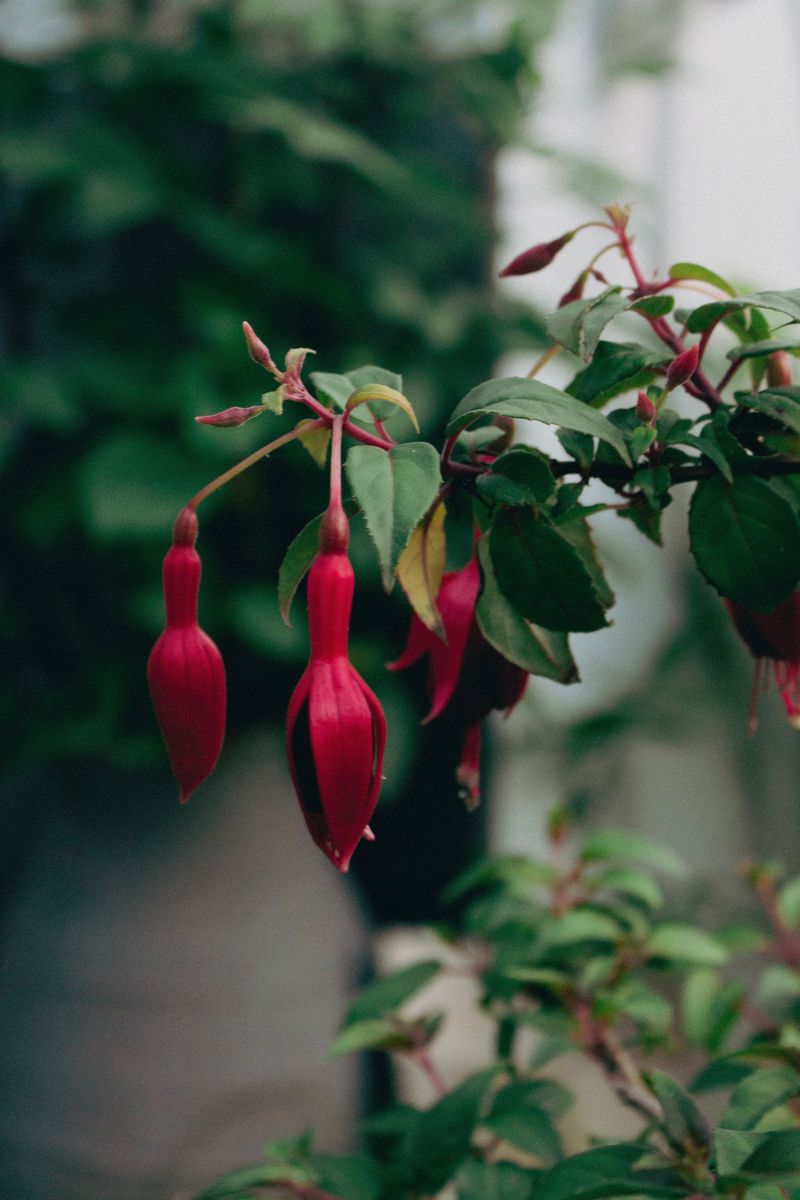
Few garden moments beat spotting tiny green buds on stems that looked lifeless in January. In much of the state, that wake-up window falls around late February through March.
Move the pot into brighter light and slightly warmer temperatures. Prune again, cutting woody stems back to a healthy pair of buds. This encourages bushy growth and more branches, which means more flowers later.
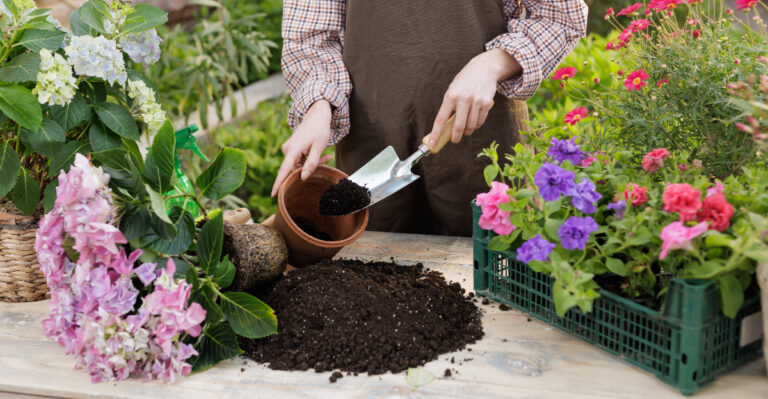
Now is a great time to repot. Gently loosen the root ball, trim any brown or mushy roots, and replant in fresh potting mix. Use the same size pot or one just slightly larger.
Increase watering slowly as leaves appear. Start feeding with a diluted balanced fertilizer every couple of weeks once growth picks up.
Pinching is the secret trick experienced growers use. After new shoots form three or four sets of leaves, pinch off the tips. Each pinch makes two new branches.
It delays blooming a little, but the final plant looks fuller and more beautiful. Stop pinching about six to eight weeks before you want a big show of flowers on the porch.
8. Ease Your Revived Fuchsia Back Onto the Porch Slowly
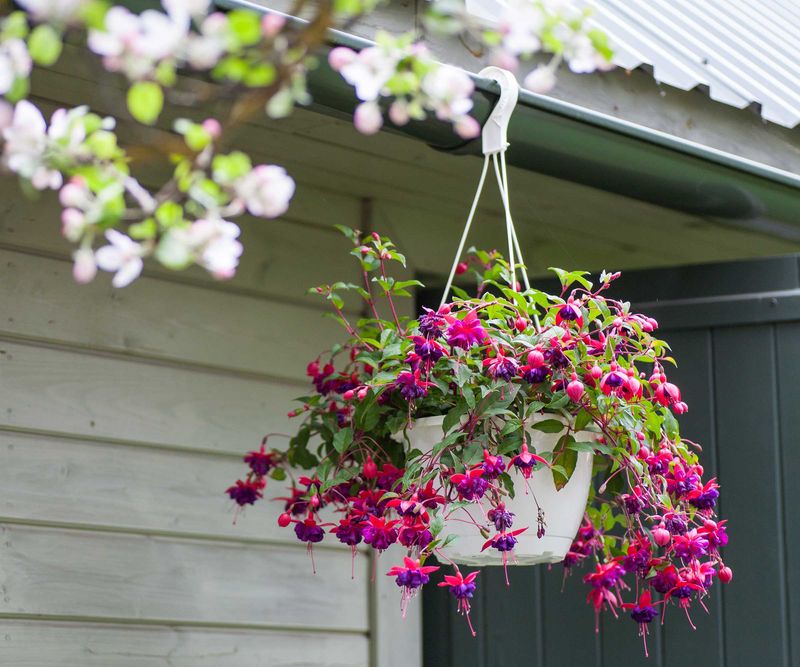
After months indoors, your fuchsia needs a gentle reintroduction to the great outdoors. Skipping this step can scorch tender leaves in a single afternoon.
Wait until frost danger has passed. That is often early to mid April in the eastern parts of the state and later in May for the mountains. Then start hardening off by setting the plant outside in shade for a few hours each day.
Over about a week or two, lengthen the time outside. Bring it in if a cold night sneaks back into the forecast.
Placement matters for summer success. Fuchsias prefer morning sun and afternoon shade, especially in the hot, humid Piedmont and coast. A covered porch or the north side of the house often works beautifully.
Hardy types like Fuchsia magellanica can sometimes stay in the ground with heavy mulch in milder spots. Still, be aware it has spread aggressively in some regions, so check local guidance before planting it.
Once your basket starts blooming again, the reward feels huge. You saved money, kept a plant you love, and the hummingbirds get their favorite snack bar back. Repeat this routine each fall and one basket can last for years.