What Ohio Hydrangeas Need Right Now for Bigger Blooms Next Spring
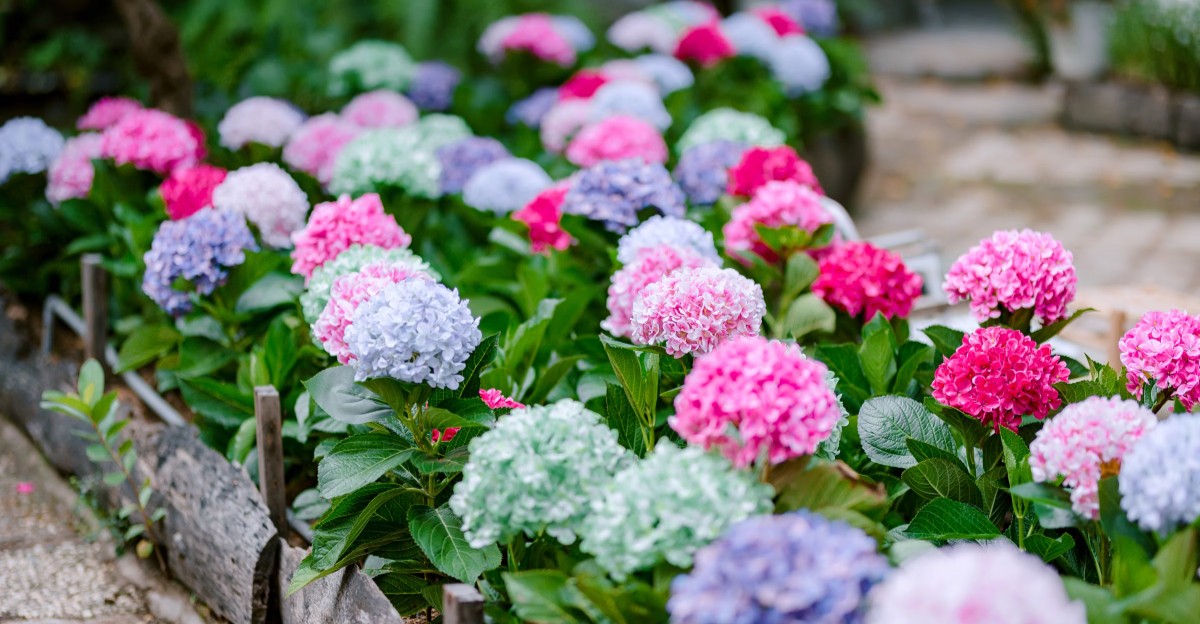
Next June’s flowers on many shrubs already exist right now. They sit as tiny, tucked-away buds inside brown stems that look like plain sticks.
I find that wild, honestly. A plant that seems to be shutting down for winter has already packed its bags for summer.
Here in Ohio, winter gets a real vote in how those buds turn out. Cold wind, sudden thaws, and a sharp freeze can quietly erase a whole season of color before you ever see a leaf. My own wake-up call came from a lush green shrub that rewarded a whole year of care with exactly three flowers.
You have more control than you think, and most of it costs little or nothing. A few small choices this month can separate a sad leafy bush from one loaded with blooms.
Surprisingly, some of the smartest moves involve doing less, not more.
Those Hydrangea Stems Are Already Holding Next Summer’s Flowers
Grab a bare stem on a bigleaf hydrangea and look at the tip. That fat, pointed bud is not just a leaf waiting to happen.
It often holds next season’s flower cluster, already formed back in late summer.
Bigleaf hydrangeas, which include mopheads and lacecaps, set their buds on old wood. Oakleaf hydrangeas do the same, and so do climbing hydrangeas.
Those buds must survive the whole winter before they can open into flowers.
Ohio State University Extension notes that bigleaf types are the ones most likely to skip blooming in our area. The reason is usually simple.
Winter cold or a late spring freeze damages the buds, so the shrub leafs out but has nothing to show.
Bigleaf hydrangeas are typically hardy in zones 5 to 9, while Ohio sits mostly in zones 6a and 6b, with some colder pockets in the northeast snowbelt. That puts the plant near its comfort limit here.
The roots handle it fine, but the stem buds can struggle.
So the main job this season is clear. Protect those top buds, avoid cutting them off, and help the plant go into dormancy healthy.
Every tip that follows comes back to that one goal.
Figure Out Whether Your Shrub Blooms on Old Wood or New Wood
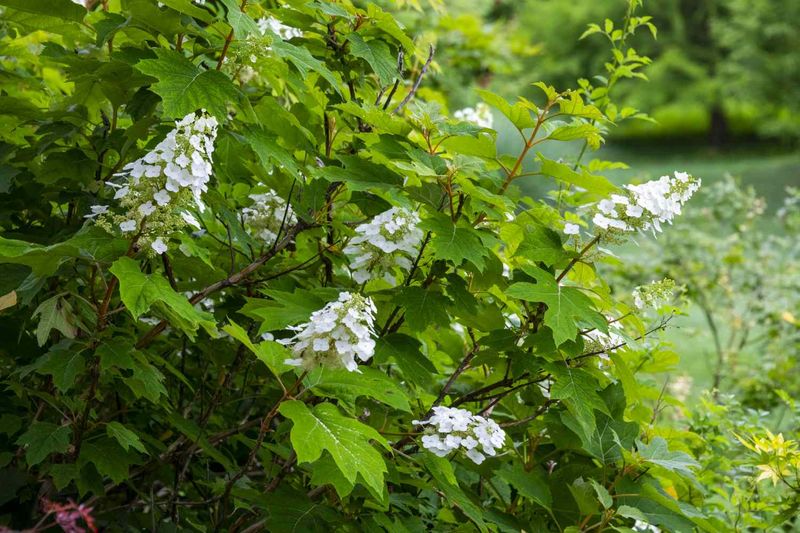
My first big hydrangea mistake was treating every shrub the same. One plant flowered like crazy, and the other gave me nothing but leaves.
The difference came down to the kind of wood each one blooms on.
Old-wood bloomers make flower buds on stems that grew last year. In Ohio gardens, that group includes bigleaf, mophead, lacecap, oakleaf, and climbing hydrangeas.
Cut or freeze those stems, and you lose the flowers.
New-wood bloomers form buds on fresh growth in spring. Smooth hydrangeas like ‘Annabelle’ and ‘Incrediball’ belong here.
So do panicle types like ‘Limelight’, ‘Quick Fire’, and ‘Bobo’, which are tough enough to shrug off our coldest winters.
Rebloomers such as ‘Endless Summer’ and ‘Let’s Dance’ can flower on both. They still give their earliest and often biggest show from old-wood buds, so they deserve the same winter care.
Not sure what you have? Check the leaves and flowers.
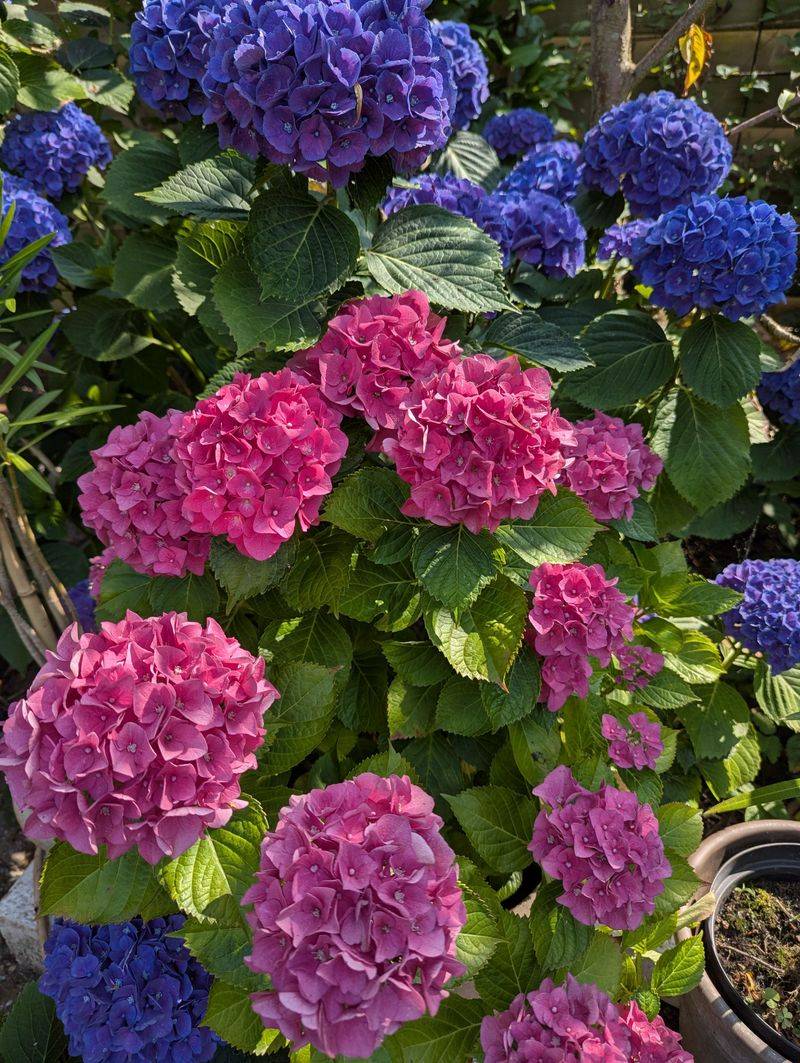
Large glossy leaves with round or flat blue and pink blooms usually mean bigleaf. Cone-shaped flowers suggest panicle, while huge white snowballs on thin stems point to smooth.
Oak-shaped leaves give the oakleaf away.
Put the Pruners Down Near Your Bigleaf and Oakleaf Hydrangeas
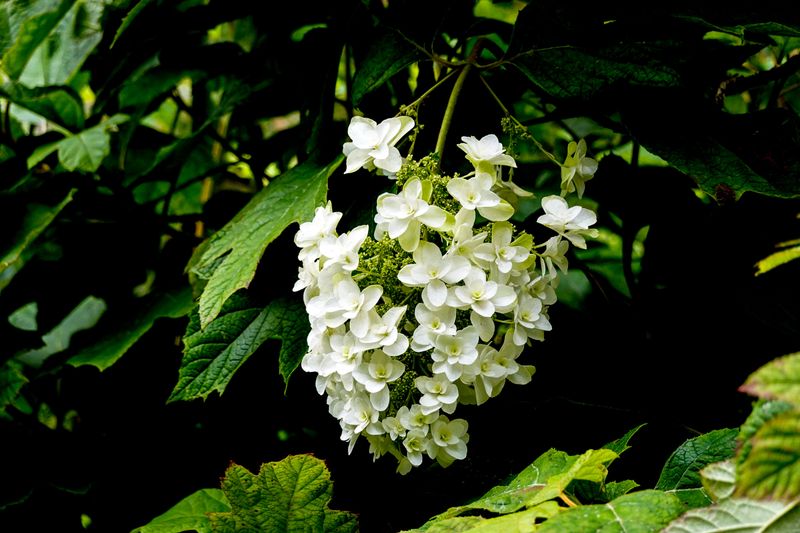
Fall cleanup fever is real. The yard looks messy, and those brown flower heads seem to beg for a trim.
Hold off, because a hard cut on old-wood hydrangeas now removes next summer’s buds.
Bigleaf and oakleaf hydrangeas are best pruned right after they finish flowering in summer. By fall, the buds are set and waiting.
Shortening the stems this late is like tossing out a gift before you open it.
If you really want a tidier look, snip only the spent flower head. Cut just below the bloom, above the first set of healthy buds.
Leave the rest of the stem alone.
Personally, I leave the dried flowers on all winter. They catch frost and snow in a lovely way, and many gardeners feel they offer a little shelter to the buds below.
Either way, they cause no harm.
Spring is the time for a closer look. Once buds start to swell, you can spot which stems came through winter.
Remove the brown, brittle tips that show no green, and cut out a few of the oldest canes at the base to refresh the shrub.
Annabelle and Limelight Hydrangeas Can Take a Bigger Trim
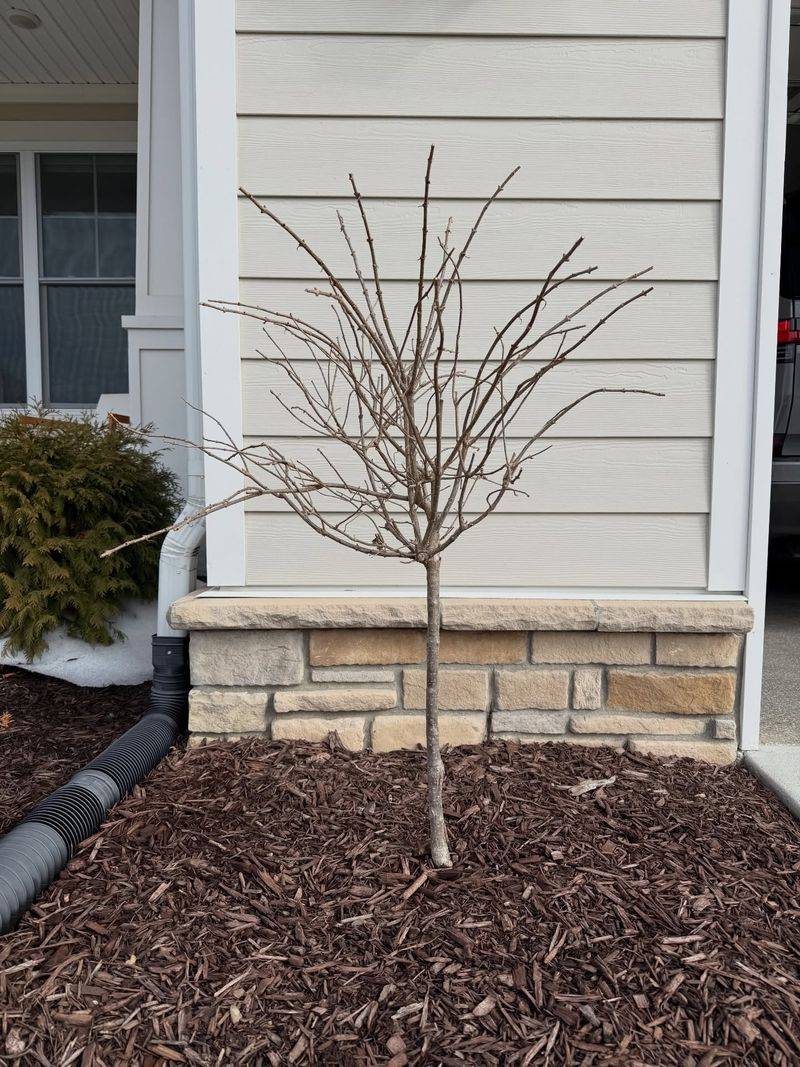
Smooth and panicle hydrangeas are the easygoing cousins of the family. They build fresh flower buds on spring growth, so a winter trim will not cost you any blooms.
Smooth hydrangeas like ‘Annabelle’ can be cut back hard once they go dormant. Many gardeners take them down to around 6 to 12 inches, or even close to the ground.
Some prefer leaving 18 to 24 inches so the new stems have a sturdier frame and flop less under heavy flowers.
Panicle types need a lighter hand. Remove about one-third of the height, take out weak or crossing branches, and shape the shrub.
That encourages thick stems that hold big cone-shaped flowers upright.
Timing is flexible here. Late fall after leaf drop works, but late winter or very early spring is often better, since the dried flowers add winter beauty and you can see storm damage before cutting.
Fun fact: the original ‘Annabelle’ was found growing wild near Anna, Illinois. It is a selection of our native smooth hydrangea, which grows naturally in Ohio woods.
That local toughness explains why it handles our winters so well.
Skip the Fertilizer Bag Until Your Hydrangeas Wake Up
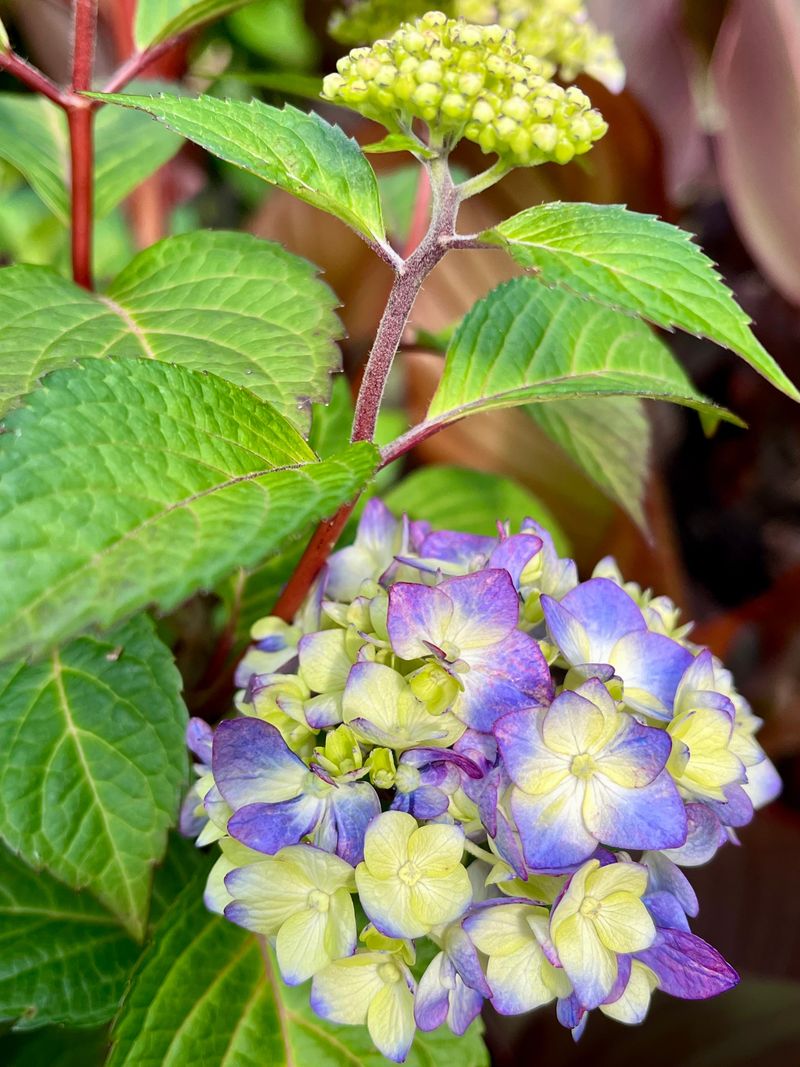
Feeding plants feels like a kind gesture. In late fall, though, fertilizer sends hydrangeas the wrong message at the worst moment.
Nitrogen pushes soft new growth. Hydrangeas need to slow down, harden their stems, and settle into dormancy before hard freezes arrive.
Tender shoots that pop up in November rarely toughen in time, and cold damage can reach the buds you are trying to save.
Wait until spring, when new leaves begin to unfold. A light application of a balanced slow-release fertilizer is usually plenty.
Too much nitrogen can lead to a big leafy plant with fewer flowers, which is the opposite of what you want.
A soil test is a smart move before you buy anything. Ohio State University Extension offices can point you to testing options, and the results show what your soil truly lacks.
Many Ohio yards already have enough phosphorus.
Hoping to change bloom color on bigleaf types? Soil acidity matters more than fertilizer.
Acidic soil tends to give blue flowers, while alkaline soil leans pink. Adjusting pH takes time, so plan amendments based on test results rather than guesswork.
A Deep Drink Before the Ground Freezes Helps Hydrangea Roots
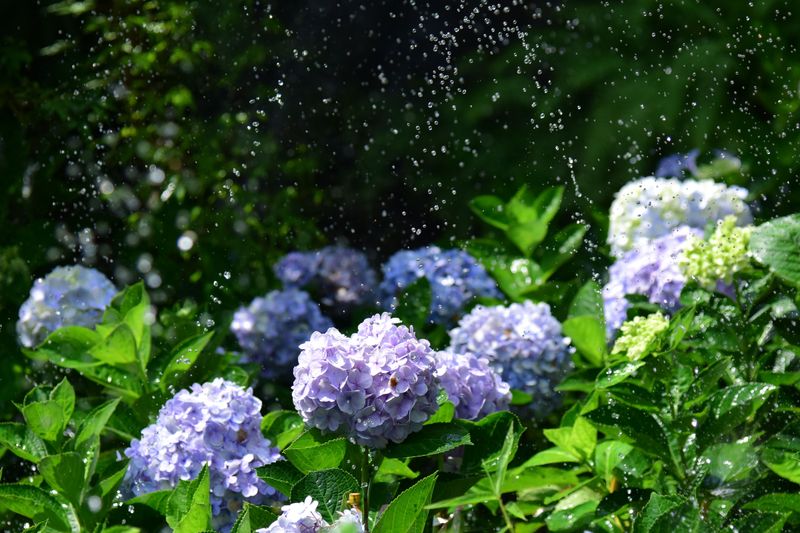
Hydrangeas got their scientific name from water. The word comes from Greek roots meaning water vessel, and these shrubs live up to it.
They wilt fast in summer heat, and they still need moisture as fall winds down.
Winter wind and sun pull water from stems even while plants rest. If the soil is dry going into a freeze, the roots cannot replace that loss.
Stems and buds can dry out and fail by spring.
Check the soil a few inches down. If it feels dry and fall rain has been scarce, give each shrub a slow, deep soak.
A hose trickling at the base for a while works better than a quick spray over the leaves.
Water during a mild stretch when temperatures sit above freezing, ideally earlier in the day. Stop once the ground freezes solid, since the water cannot soak in.
Pay extra attention to hydrangeas planted this year. Their roots are still small and shallow.
Shrubs near south-facing walls, under roof overhangs, or in containers also dry out faster than you might expect.
Shredded Bark Mulch Keeps Hydrangea Roots Cozy
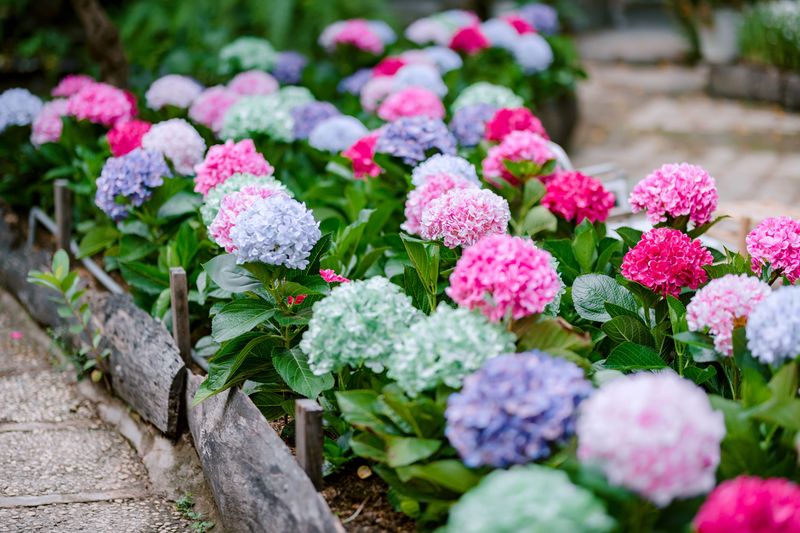
Mulch might be the easiest winter help you can give. It costs little, takes minutes, and improves the soil as it breaks down.
Ohio winters love to swing. One week brings hard freezes, and the next brings a sunny thaw.
Those ups and downs can stress roots and even heave young plants out of the ground. A mulch layer evens out soil temperatures and holds moisture.
Spread shredded bark, chopped leaves, pine needles, or compost around the base once the ground has cooled, usually late November or early December. Aim for 2 to 4 inches over the root zone.
Many gardeners mound a bit more around tender bigleaf types for extra crown protection.
Keep mulch a few inches away from the stems themselves. Piling it against the bark holds dampness and invites rot and chewing critters like voles.
Those fallen leaves on your lawn make wonderful free mulch. Run them over with a mower first so they do not mat into a soggy layer.
Oak leaves are especially handy because they break down slowly and stay fluffy. Come spring, pull back any extra cover once new growth starts.
Wrap Tender Bigleaf Hydrangeas in a Burlap and Leaf Cage
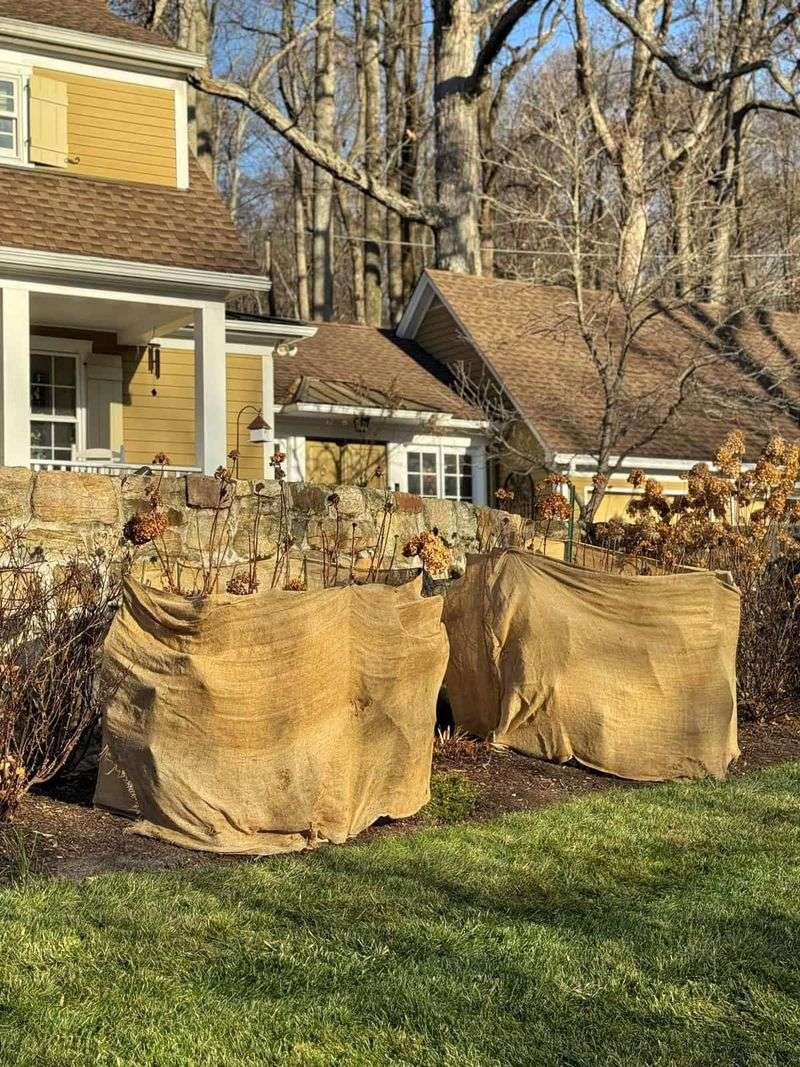
Gardeners in colder parts of Ohio swear by this trick. A simple cage turns a vulnerable shrub into a well-insulated bundle that holds onto its flower buds.
Wait until the plant is dormant and the leaves have dropped, usually late November. Push a few stakes into the ground around the shrub, then wrap chicken wire around them to form a loose cylinder.
Fill the cage with dry shredded leaves or clean straw so the stems are buried up to the tips. Wrap burlap around the outside to block drying wind.
Skip plastic, because it traps heat and moisture and can cause more trouble than it solves.
Some gardeners also use anti-desiccant sprays on stems. Research on their value for hydrangeas is mixed, so think of them as optional extras, not a must.
Unwrap in spring once the worst cold has passed, often in April. Keep an old sheet handy, since a late frost can still nip swelling buds.
Toss it over the shrub on chilly nights.
Not up for wrapping every year? Try planting panicle or smooth hydrangeas, which bloom reliably here with far less fuss.