Do Newly Planted North Carolina Trees Really Need Stakes?
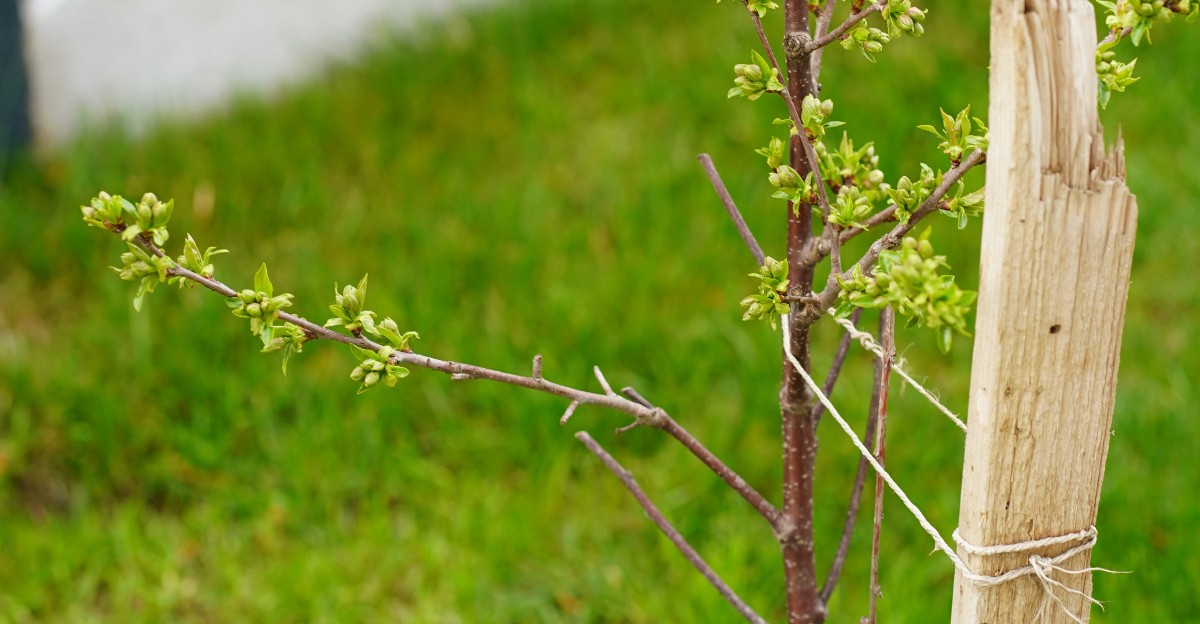
A young tree that gets jostled by wind for just a few seconds a day can grow a thicker, sturdier trunk than one held perfectly still. Scientists even have a name for it, thigmomorphogenesis, and yes, I had to say it out loud three times.
I’ll admit it, I used to tie every new sapling to a post like it was a nervous puppy on a leash. It felt responsible. It looked tidy.
Then a few of my staked trees started leaning the moment I freed them, while an unstaked redbud across the yard stood proud. That stung a little.
Here in North Carolina, we plant trees in sandy coastal lots, red clay subdivisions, and windy mountain slopes. So who actually needs that extra support, and who would do better without it? The answer surprised me more than I expected.
That Swaying Young Tree Trunk Is Up To Something
Watch a fresh sapling during a breezy afternoon and you’ll see it bob and bend like it’s dancing. That motion isn’t a problem to fix. It’s actually training.
When wind flexes a young trunk, the tree responds by building extra wood near its base. Researchers call this response thigmomorphogenesis, and it creates something arborists love to see, called taper. A tapered trunk is wider at the bottom and narrower toward the top, just like a sturdy fishing rod.
Roots join the effort too. Movement up top encourages roots to spread wider and grip the soil more firmly. A tree that sways a bit early on usually ends up better anchored for storms later.
Here’s what gets me about this. Our instinct says a wobbly tree needs help, but a little wobble is how the tree learns to stand on its own. Holding it rigid is a bit like keeping a kid in a stroller long after they can walk.
So before you grab a stake, give your new tree a gentle push. If the trunk bends and the root ball stays put, that tree is in great shape. Let it move and let it grow stronger.
Most Healthy Container Trees Stand Fine Without Stakes
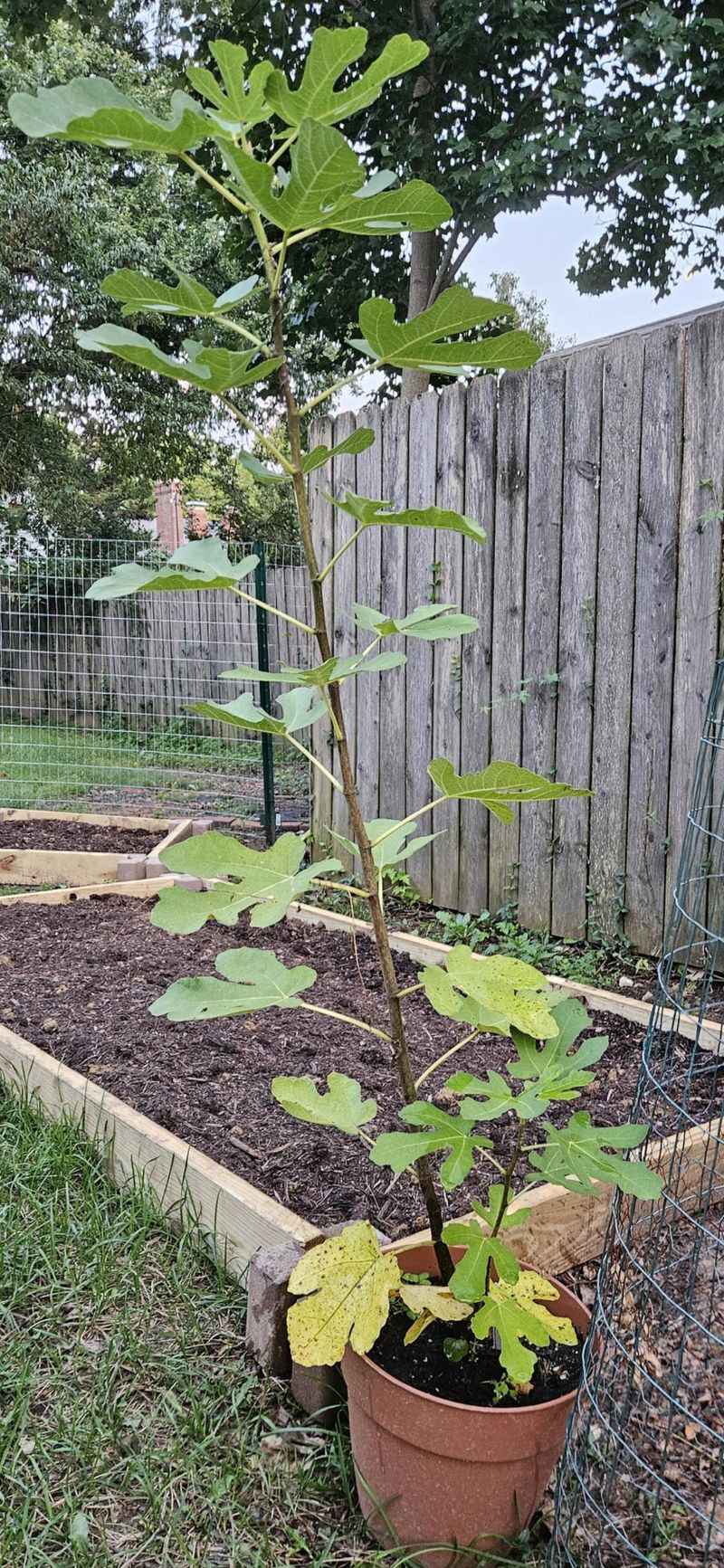
Short answer time. Most newly planted trees in North Carolina do not need stakes, and NC State Extension along with many university programs agree on that point.
A healthy container-grown or balled-and-burlapped tree with a solid root ball usually holds itself upright after planting. Studies from places like Purdue and the University of California show unstaked trees often build stronger trunks and roots faster than staked ones. Staking became a habit for many gardeners, not a rule trees asked for.
So what makes a tree ready to go solo? Look for a firm root ball that doesn’t rock in the hole. Check that the trunk can hold itself up without flopping over when you let go.
Nursery trees are sometimes tied tightly to bamboo canes for shipping. Those canes should come off at planting, because they keep the trunk stiff and can rub the bark.
Trust me on this one, skipping stakes also saves you a chore later. No ties to loosen, no posts to pull, and no forgotten wire slowly cutting into bark. For a typical small to medium tree planted in decent soil, the best support plan is often no support at all.
Windy Coastal Lots And Mountain Slopes Can Change The Rules
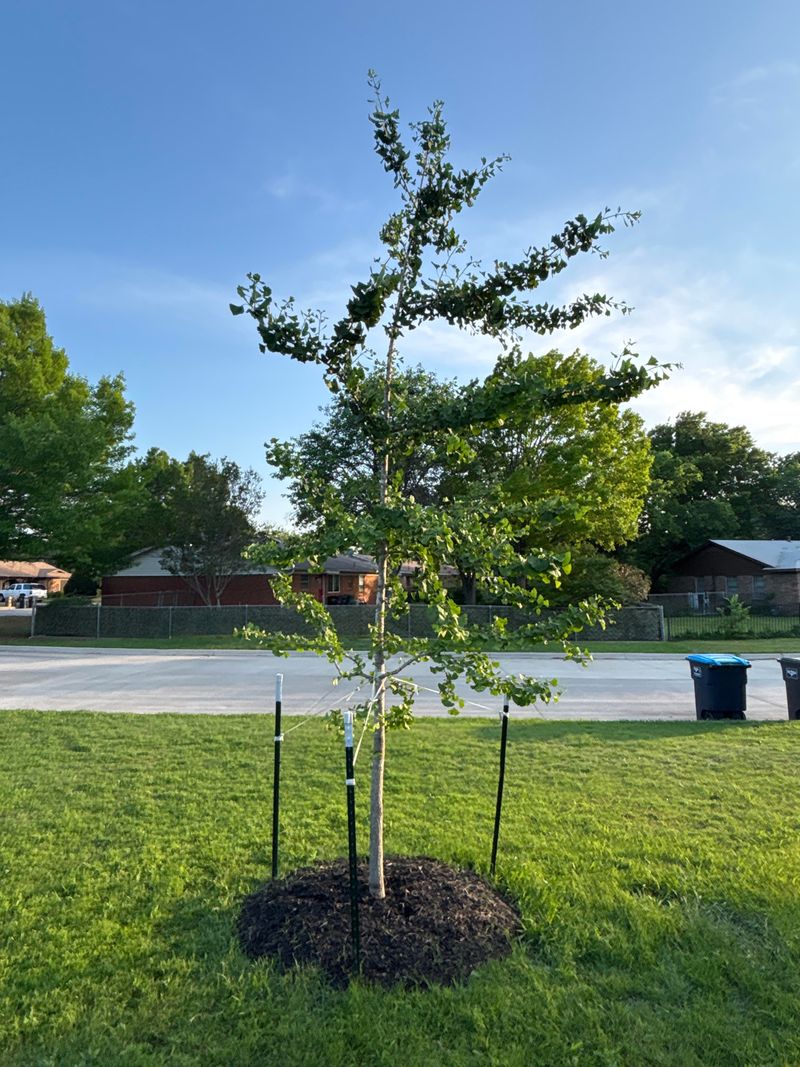
Exceptions exist, and North Carolina has plenty of spots that earn them. A gusty Outer Banks yard plays by different rules than a sheltered Piedmont backyard.
Sandy coastal soil drains fast and holds roots loosely, so a new tree can tip before it settles in. Steep mountain slopes in the western counties raise similar concerns, since gravity and wind team up against a fresh planting. Open sites with constant wind also make staking reasonable.
Tree type matters too. Bare-root trees have no soil ball to anchor them at first. Trees with a big leafy canopy on a small root ball can act like sails in a storm.
Busy areas are another case. Stakes can act like a little fence, keeping mowers, string trimmers, and kids on bikes from bumping a young trunk. In that situation, the stakes protect rather than hold.
I get it, hurricane season makes everyone want to tie things down. Even so, the goal is temporary help, not permanent bracing. A tree on a windy lot still needs some movement to build strength, so stake only when your site truly calls for it.
Wide Soft Tree Straps Beat Wire And Old Garden Hose
Picking the wrong ties can hurt a tree faster than skipping stakes. I learned that after spotting a thin rope that had rubbed a raw ring into a cherry trunk.
Bare wire and narrow cord concentrate pressure on one small strip of bark. As the trunk grows, that strip can sink in and choke the flow of water and nutrients, a problem arborists call girdling. The old trick of threading wire through garden hose still leaves plenty of risk.
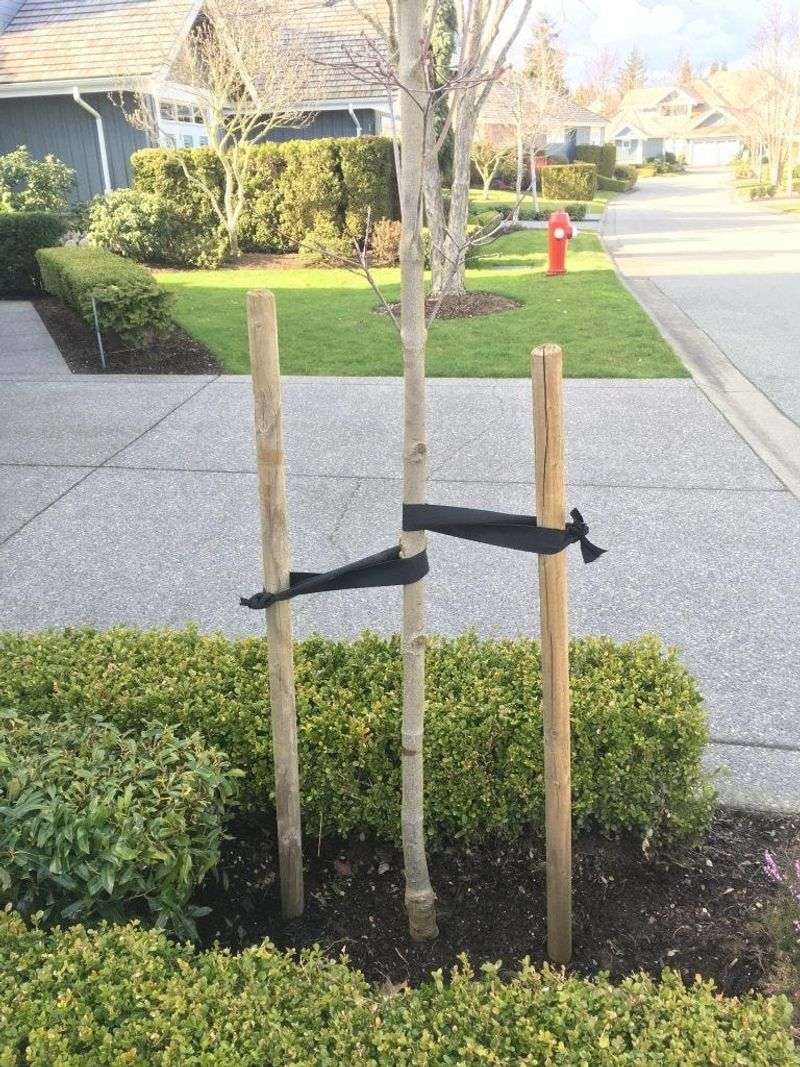
Better choices are wide and flexible. Look for flat nylon webbing, rubber tree straps, canvas strips, or commercial arbor ties. They spread pressure out and stretch a little as the tree moves.
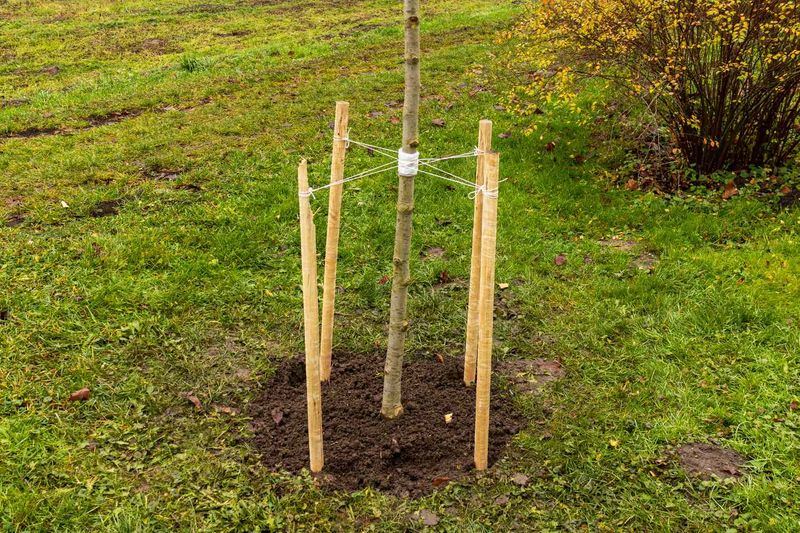
For the posts, sturdy wood stakes or metal T-posts work well. Two stakes on opposite sides of the tree are common, set just outside the root ball so you don’t stab through roots. On very windy sites, some folks use three.
Fun fact, many arborists prefer stakes driven into undisturbed soil beyond the planting hole. That firmer ground holds the posts steady while the loose backfill settles. Good gear costs a few dollars more, but your bark will thank you.
Loose Ties Low On The Trunk Let Your Sapling Still Flex
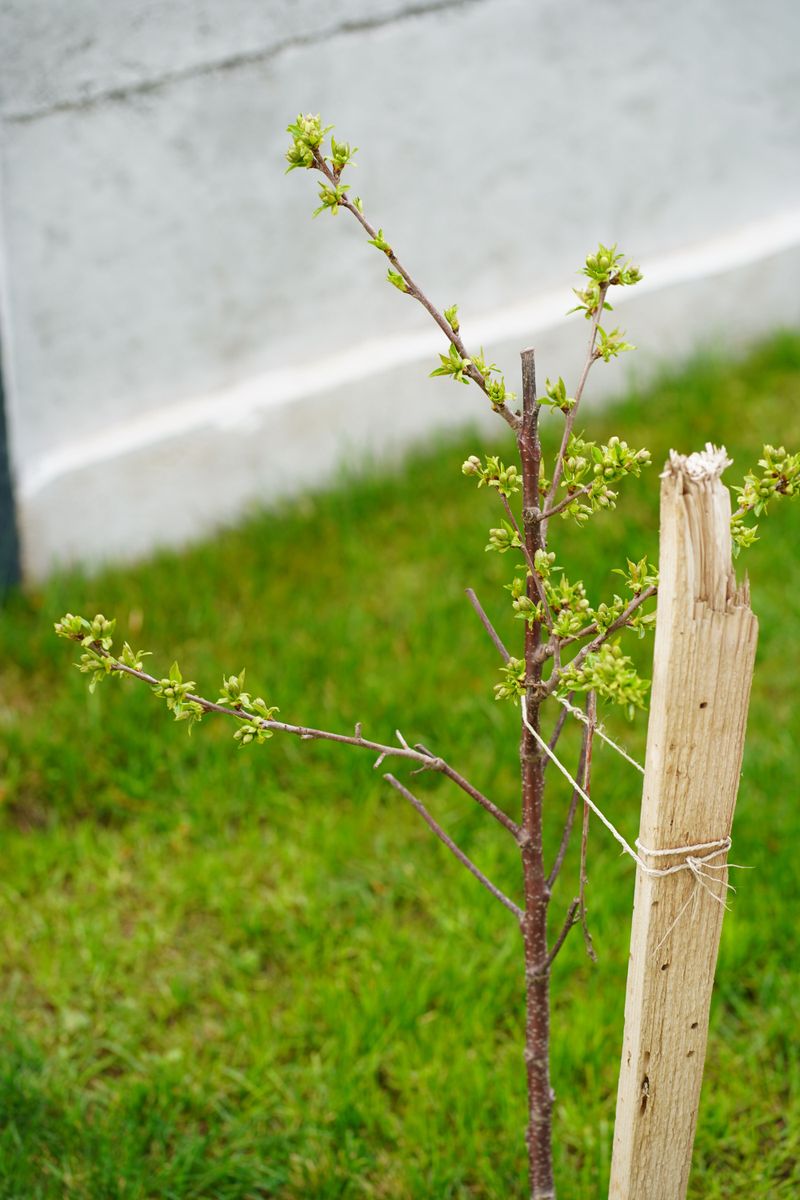
Tight is not right when it comes to tree ties. A snug, rigid hold defeats the whole purpose of letting the trunk build strength.
Aim for slack. Many extension guides suggest leaving enough room for the trunk to move an inch or two in any direction. A figure-eight loop between stake and trunk works nicely, because it keeps the tie from rubbing against the post.
Height matters as much as tension. Place ties as low as possible while still keeping the tree upright. To find that spot, hold the trunk with one hand and slide up until the top stops flopping, then tie just above.
Tying too high creates a stiff upper trunk that may bend or snap later. Lower ties let the top half sway and develop.
Not going to lie, it feels odd to leave a tie loose on purpose. But that small bit of play is the secret ingredient. Check the ties every few weeks, especially after storms, and adjust any that have slipped or tightened. A quick glance takes seconds and prevents long-term bark trouble.
Pull Those Tree Stakes After One Growing Season
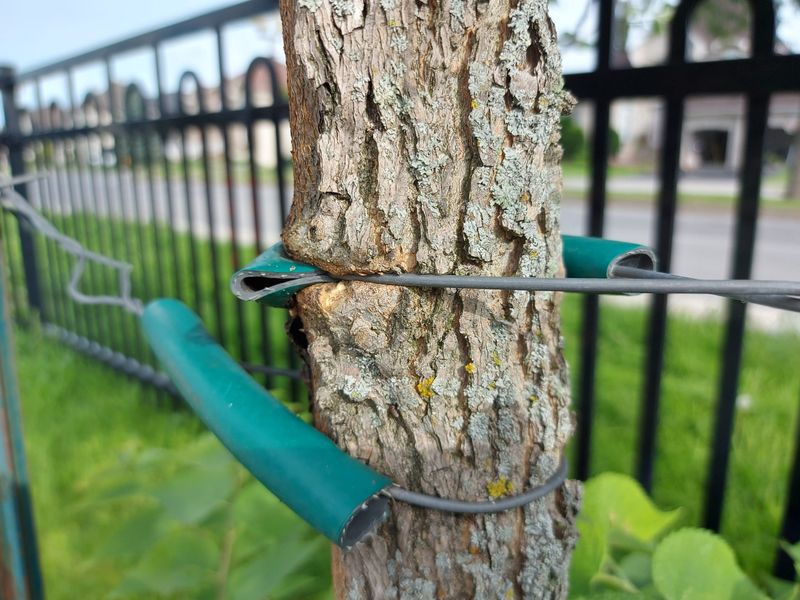
Guilty as charged, I once left stakes on a pear tree for three summers. When I finally cut the ties, the trunk had a dent where the strap had pressed in.
Stakes are training wheels, not lifelong partners. For most trees, one growing season is enough, usually somewhere between six months and a year. Larger trees or very windy spots might need a little longer, but rarely more than two years.
Testing readiness is easy. Loosen the ties on a calm day and push gently on the trunk. If the tree stands upright and the root ball doesn’t shift in the soil, it’s ready to go solo.
Many North Carolina gardeners plant in fall, which is a great season for root growth here. That means stakes added in October or November can often come off by the following fall.
When you remove everything, take the ties, posts, and any rubber pads. Leftover materials hide in mulch and can still rub bark or trip up mowers. Write a removal date on your calendar the day you stake, so the job doesn’t slip your mind.
Smart Planting Depth Gives Your New Tree Natural Support
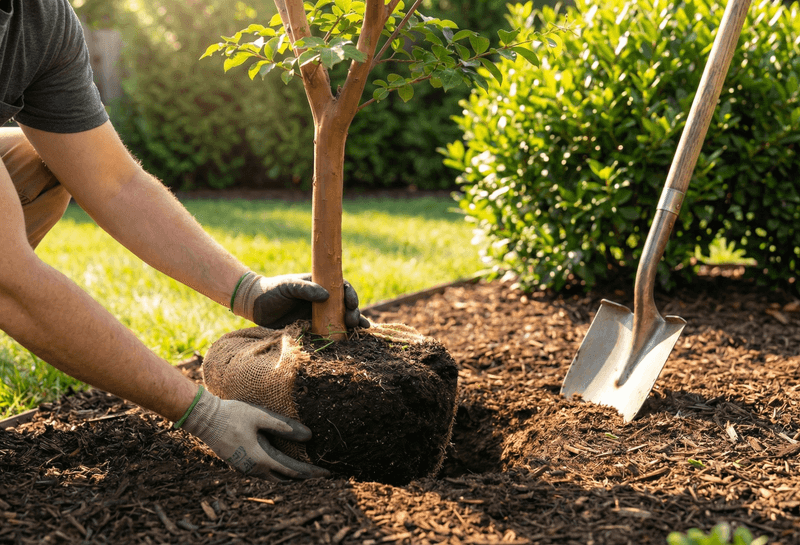
Ask any arborist for the real support system, and they’ll point straight at the ground. Good planting often does more for stability than a stake.
Start with the root flare, the spot where the trunk widens into roots. It should sit at or slightly above soil level. Burying it too deep is one of the most common planting errors, and it can lead to weak roots and decline over time.
Dig the hole two to three times wider than the root ball but no deeper. In heavy North Carolina clay, that wide, shallow hole helps roots spread into surrounding soil instead of circling in a cramped pocket. Backfill with the native soil you dug out, since rich amendments can keep roots from venturing outward.
Remove burlap, wire baskets, and twine from the top of the root ball. Tease apart any circling roots on container trees.
Finish with two to three inches of mulch in a wide ring, keeping it a few inches off the trunk. Water deeply and regularly through the first year. Plant it right, let it sway, and your young tree will likely stand tall without much help from you.