12 Prickly Pear and Agave Varieties for a Texas Xeriscape
My hose sat coiled and dusty for most of August, yet my front yard still looked sharp and green. The secret sits in a handful of tough, spiny plants with thick skin and zero interest in sprinklers.
Texas summers test every gardener. And October is a perfect window for planting these sturdy desert stars. The soil stays warm for weeks, and cooler nights help fresh roots settle in before winter.
I picked twelve favorites for this list, including a few native beauties and some clever imports from nearby deserts. One changes color like a mood ring, and another blooms just once in its long, patient life.
Your pollinators will thank you, and your Texas yard will gain bold shapes worthy of a sculpture garden. A few even produce edible fruit, and your garden might hand you a sweet surprise next summer.
1. Ellisiana Spineless Prickly Pear
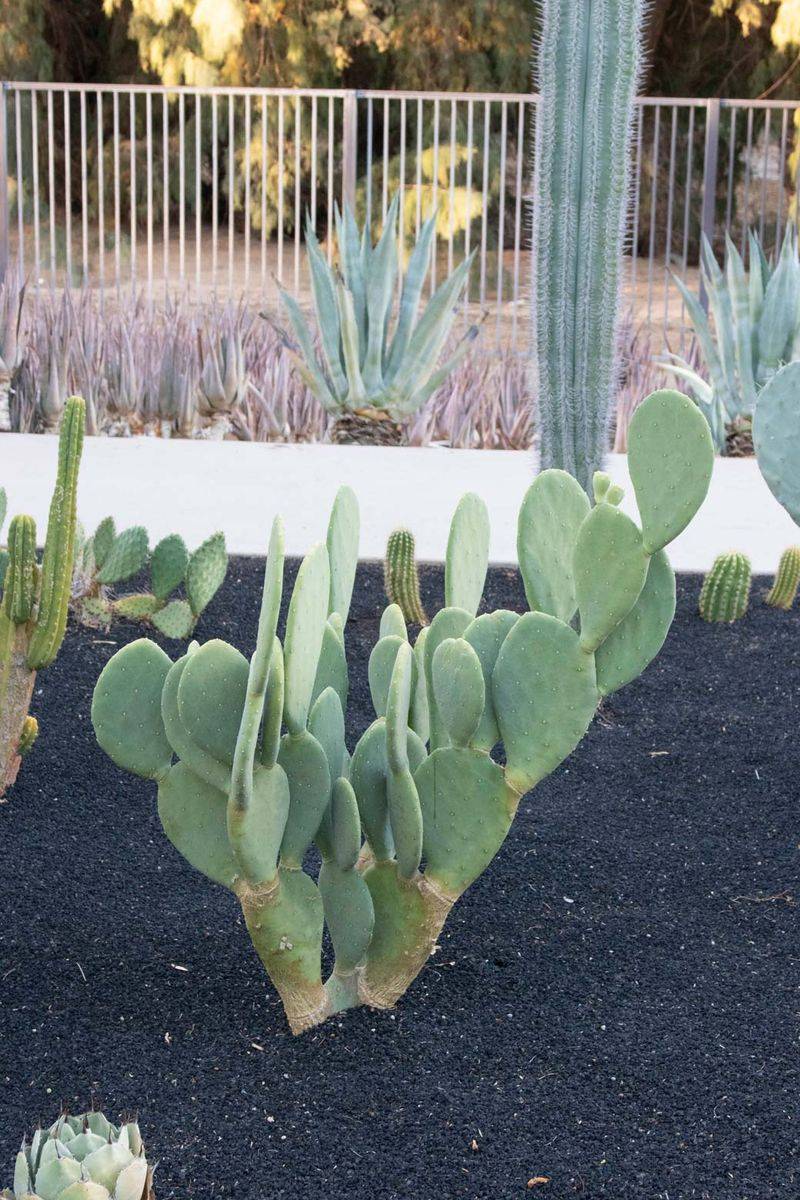
You can actually pat this cactus like a friendly dog without wincing or reaching for the tweezers afterward. Its smooth, oval pads feel almost rubbery, and that friendly texture makes it a favorite near walkways.
Botanists call it Opuntia cacanapa ‘Ellisiana’, and growers usually list it as hardy through USDA Zones 7 to 10. Some nurseries rate it even colder, so it handles most winters in central and southern regions with little fuss.
The pads stay gray-green most of the year, with a slight blush of purple during cold snaps. Mature plants often reach about four feet tall and spread a bit wider in a sunny spot.
Bright yellow flowers open in late spring, and bees tumble around inside them like kids in a ball pit. Reddish fruits follow later in the season, adding a pop of color right into early fall.
I like planting it along paths, since nobody gets snagged walking by with groceries or a wiggly toddler. Keep in mind the pads still carry a few tiny glochids, so gloves remain a smart choice.
October is a great month to plant, because warm soil helps roots spread before the first chilly nights. Pick a spot with full sun and fast drainage, since soggy ground causes rot faster than drought.
Water once after planting, then let rainfall handle most of the work through the cooler months ahead. For more plants, snap off a pad, let it callus for a week, then set it in gritty soil.
2. Texas Prickly Pear
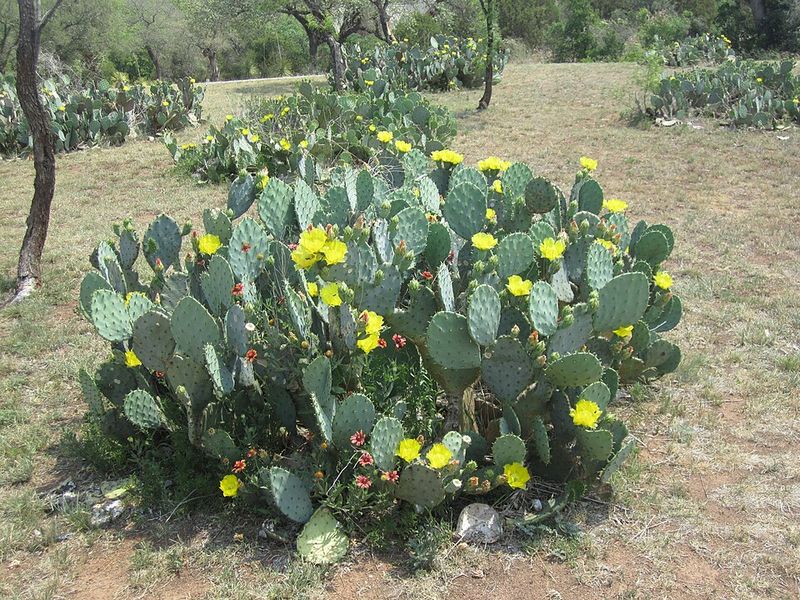
Few plants can claim an official title, but the prickly pear has held the honor of state plant since 1995. Drive any back road out west, and you will spot its wide, blue-green pads catching the sunlight.
Its scientific name is Opuntia engelmannii var. lindheimeri, and it grows well across USDA Zones 7 through 10. Native roots mean it shrugs off heat, poor soil, and the occasional surprise freeze without much drama.
Clumps can sprawl several feet wide, so give it room rather than squeezing it beside a narrow walkway. Sharp spines guard the pads, and tiny glochids hide near them, ready to stick to careless fingers.
Spring brings cup-shaped flowers in yellow, sometimes aging toward orange or red as each bloom slowly fades. By early fall, the plant often carries deep purple fruits called tunas, a favorite snack for birds and wildlife.
People eat those tunas too, turning them into bright pink jelly or syrup after carefully removing the glochids. Young pads, known as nopales, show up in many kitchens across the region as a tasty vegetable.
Personally, I treat this plant as a living fence, since rabbits and wandering dogs rarely push through it. Wildlife loves it as shelter, and quail often tuck themselves beneath the lowest pads on hot afternoons.
Plant new pads this month in a sunny corner with sandy or rocky soil that drains quickly. Skip fertilizer and extra water, because this tough native mostly thrives on benign neglect and sunshine.
3. Blind Prickly Pear
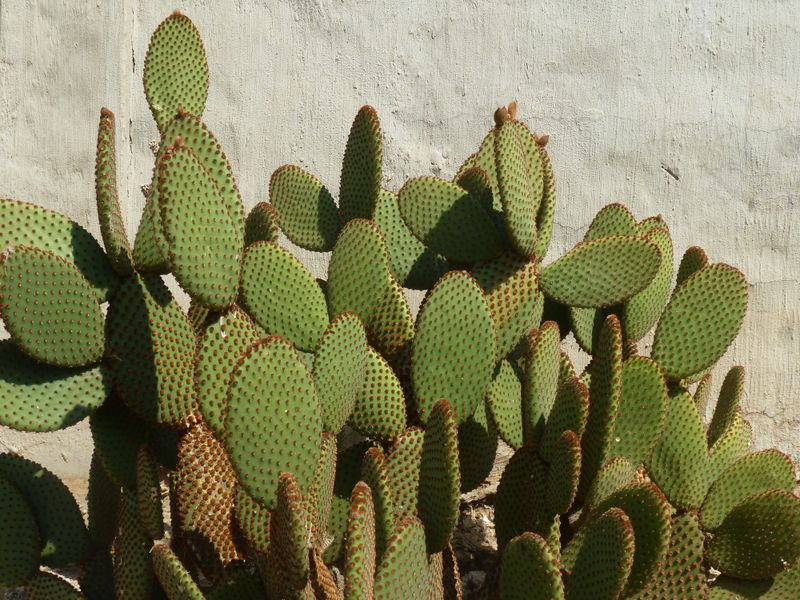
The odd name comes from ranch lore, where its fuzzy glochids reportedly bothered the eyes of grazing livestock. That history sounds rough, yet the plant itself looks soft and velvety from a few steps away.
Opuntia rufida grows wild in the Big Bend region and across the border into northern Mexico. Instead of long spines, each pad wears dotted clusters of reddish-brown glochids that look like tiny polka dots.
You need to respect those cute dots, though, because they detach easily and stick in skin for days. Thick leather gloves and a pair of kitchen tongs make handling much easier when you move or prune.
The pads are round and blue-green, forming a shrubby plant that usually stays under about five feet. Yellow to orange flowers open in spring, and reddish fruits follow, giving the plant a cheerful summer look.
Cold is the main weakness, since this desert native prefers warmer winters than many of its prickly cousins. Most sources suggest USDA Zone 8 or warmer, so northern gardeners should try a pot they can shelter.
I believe it shines in a rock garden, where its polka-dot pads contrast nicely with pale limestone. Pair it with silvery grasses or gray boulders, and the reddish dots suddenly look like deliberate decoration.
Early October planting gives roots several mild weeks to settle, which helps the plant face its first winter. Choose gritty, fast-draining soil, and hold back water once nights start dipping into the chilly forties.
4. Eastern Prickly Pear
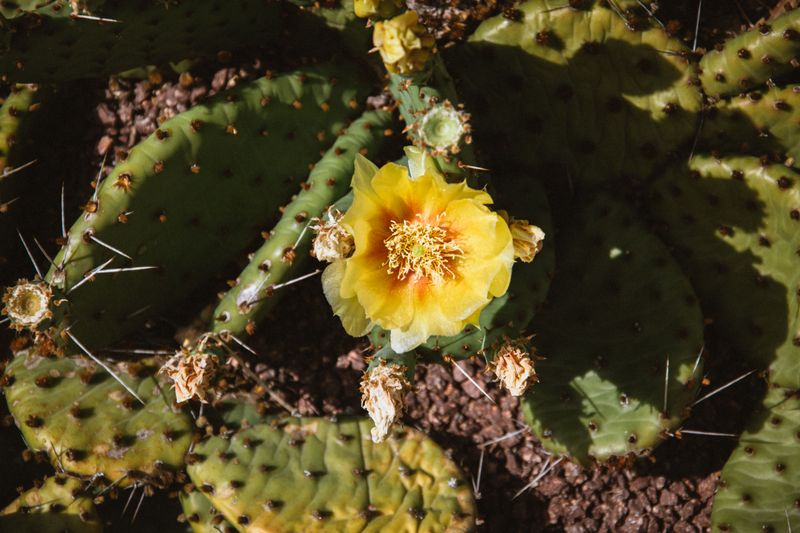
Snow on a cactus sounds wrong, yet this low-growing prickly pear handles icy winters far north of here. It hugs the ground like a spiny green carpet, rarely rising more than a foot tall.
Opuntia humifusa grows naturally across much of the eastern half of the country, including parts of East Texas. Growers often rate it hardy through USDA Zone 4, which makes it one of the toughest cacti around.
Its flat, green pads tend to wrinkle and flop over in winter, which can look alarming at first. Relax, because the pads plump back up in spring once warmth and moisture return to the soil.
Bright yellow flowers, sometimes with reddish centers, appear in late spring and early summer on sunny days. Pollinators adore them, and native bees sometimes rest tucked inside the blossoms after a busy afternoon.
Later, reddish fruits form along pad edges, and they stay edible once the tiny glochids are removed. Birds and small mammals often find them first, so you may need to share the harvest.
I like using it as a groundcover on dry slopes, where it helps hold soil in place. It handles sandy soil better than many cacti, which suits the piney woods and coastal plains.
Plant pads this October in a sunny spot with loose soil, and keep weeds away while roots settle. Mulch with gravel instead of bark, since gravel sheds rain and keeps the pads off soggy ground.
5. Santa Rita Prickly Pear
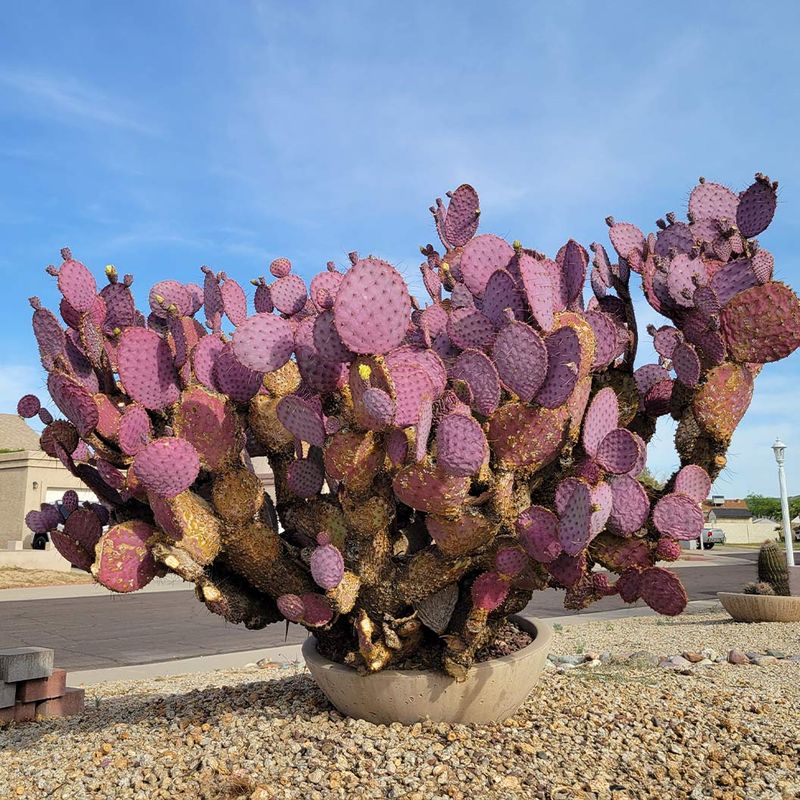
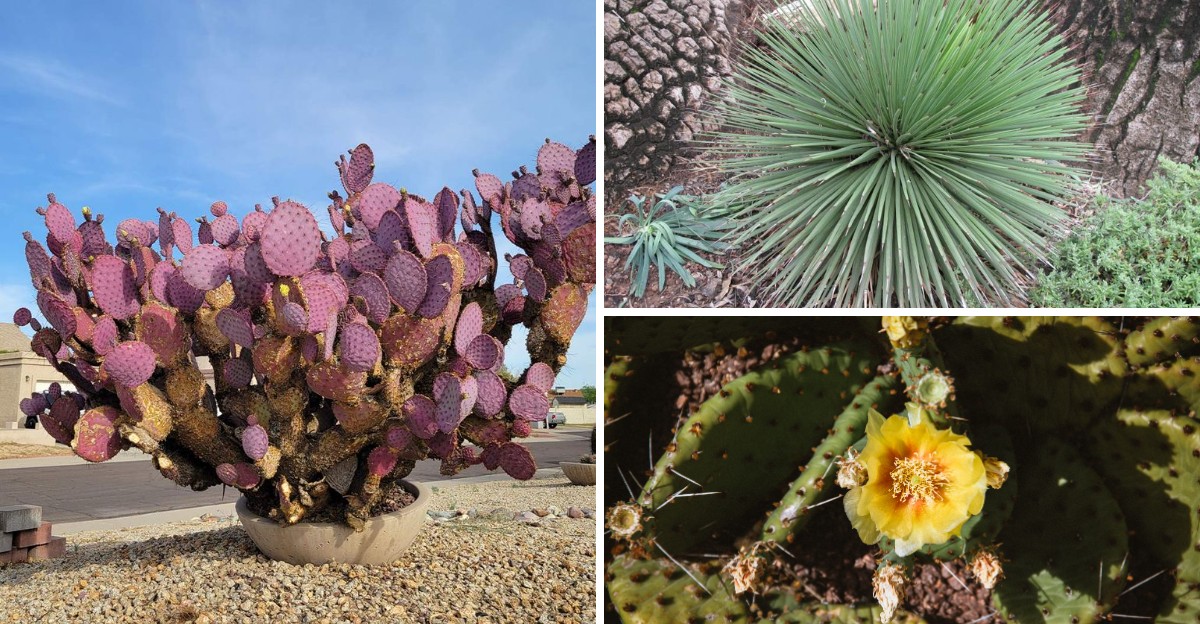
Cold weather turns this cactus into a mood ring, shifting its blue-gray pads to rich violet tones. Drought stress brings out the color too, so a dry fall often makes it look even more stunning.
Opuntia santa-rita comes from southern Arizona and nearby areas, yet it adapts nicely to dry western landscapes. Many growers rate it hardy to about USDA Zone 8, with some success in colder protected spots.
Your best color show arrives from late fall through winter, which makes October planting perfect timing. Watching the pads darken week by week feels a bit like waiting for leaves to change up north.
Spines are sparse on many plants, and some pads carry only a few near the upper edges. Glochids still appear, so treat it with the same respect and gloves you would give any prickly pear.
Bright yellow flowers open in spring, and their color looks almost electric against the purple-tinged pads. Reddish-purple fruits follow later, adding one more layer of color to this already flashy desert plant.
Plants usually reach about four to five feet tall, forming a rounded clump with plenty of personality. I can’t imagine a better front-yard focal point for a gardener who loves bold color without extra water.
Give it full sun and sharp drainage, and skip fertilizer, because rich soil often dulls that famous purple. Lean, rocky ground keeps the plant compact and encourages deeper color as cool weather settles in.
6. Desert Christmas Cactus
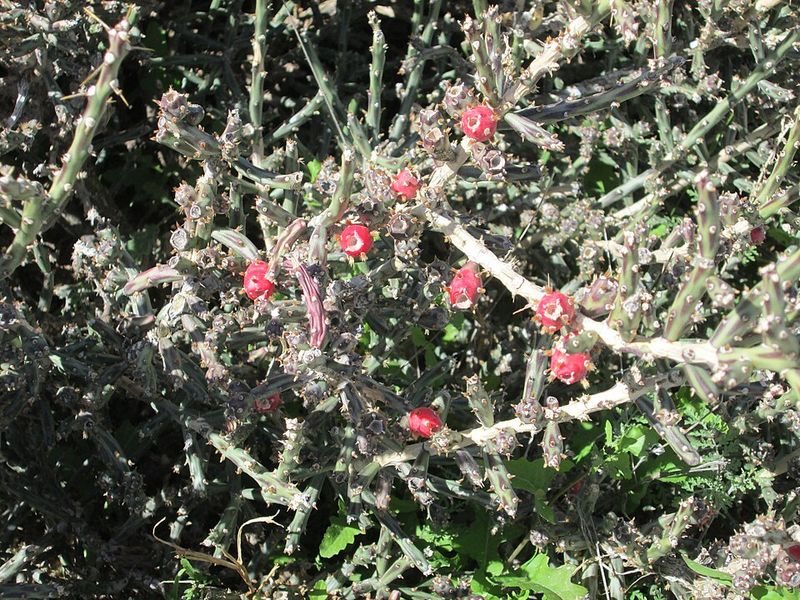
Holiday decorations grow right on this cactus, as tiny red fruits brighten its thin stems through winter. Most plants are still green and sleepy then, so those little red beads really grab your attention.
Cylindropuntia leptocaulis is a slender cholla found across much of the Southwest, including many local roadsides. It is a close cousin of prickly pears, sharing the same family and the same tricky glochids.
Stems stay pencil-thin, branching into an airy shrub that usually reaches two to four feet tall. Long spines poke out along the joints, so plant it away from paths and curious little hands.
Small greenish-yellow flowers appear in late spring and summer, often opening late in the warm afternoon. They are easy to miss, yet bees seem to find them quickly and get busy right away.
Fruits ripen to bright red by late fall and often hang on through the holiday season. Birds like quail and cactus wrens snack on them, which turns your yard into a winter buffet.
Personally, I tuck it into wildlife corners, where its tangled stems give small birds a safe hiding spot. The open shape blends nicely with native grasses, creating a loose and natural look along back fences.
Hardy in roughly USDA Zones 8 through 10, it handles heat and drought with almost no help. Plant it this month in lean soil, and watch for the first red fruits to color up soon.
7. Century Plant Agave
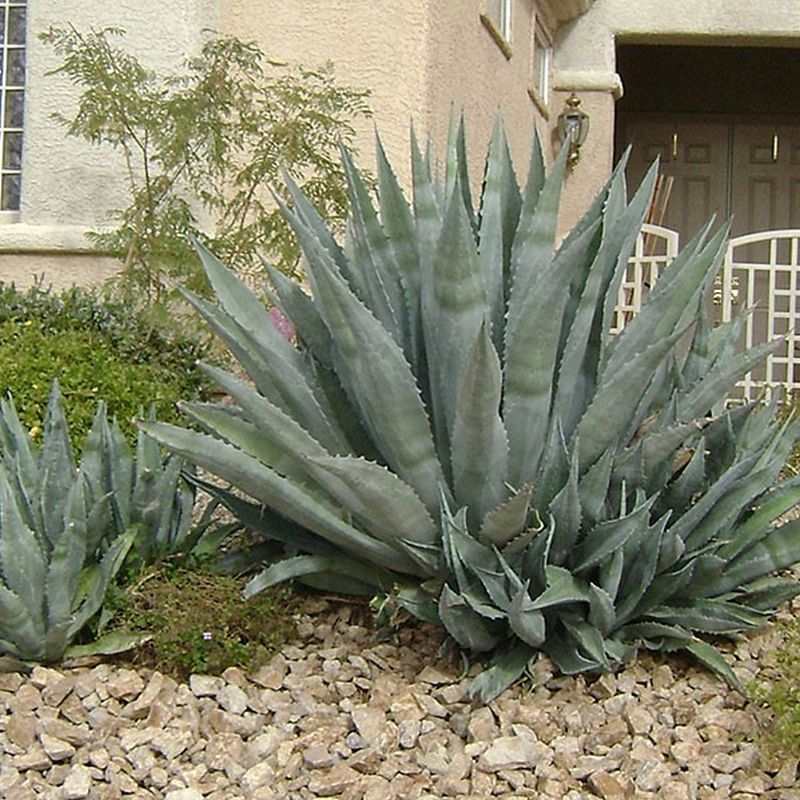
The name exaggerates a little, since this giant agave usually blooms after ten to thirty years, not a hundred. When that moment arrives, a flower stalk shoots skyward fast, sometimes reaching more than twenty feet tall.
Agave americana forms massive rosettes of blue-gray leaves, often six feet tall and even wider across. Every leaf ends in a needle-sharp tip, and hooked teeth line the edges like a saw blade.
It grows best in USDA Zones 8 through 11, handling heat with ease and light freezes reasonably well. Hard freezes can scar the leaves, so northern gardeners may want a sheltered spot near a warm wall.
The bittersweet part arrives after flowering, because the mother rosette slowly declines after its single big bloom. Thankfully, dozens of baby pups usually surround the base, ready to carry on the family show for years.
You need to plan for its size, since a small pup can swallow a whole flower bed eventually. Leave at least eight to ten feet of space, and keep it well away from sidewalks and play areas.
I believe it works best as a single dramatic centerpiece, surrounded by gravel and low, soft groundcovers. That contrast makes the spiky leaves pop, especially when low October sunlight hits them from the side.
Fall planting suits it well, as long as drainage is excellent and roots stay out of puddles. Wear long sleeves and eye protection while handling it, because those leaf tips can puncture skin easily.
8. Havard’s Agave
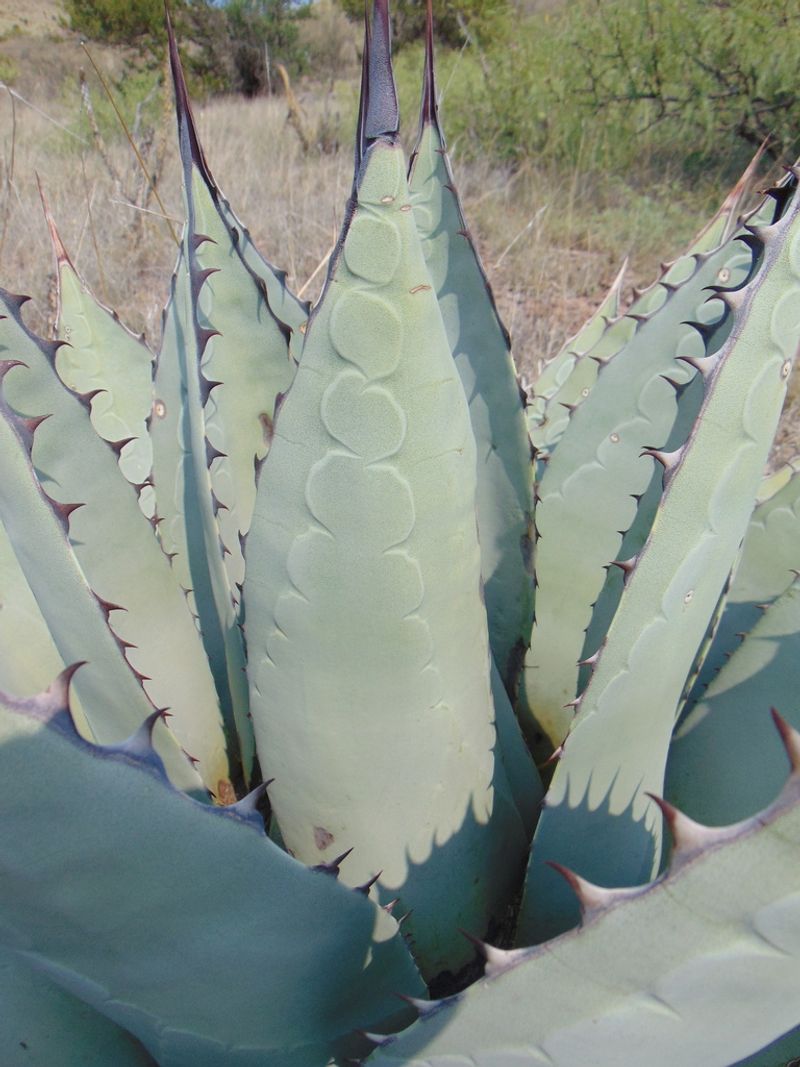
Out in Big Bend country, this agave shrugs off winter cold that would bruise many of its cousins. Some growers report it surviving temperatures near zero, which earns it serious respect among desert gardeners.
Agave havardiana is native to the Chihuahuan Desert of far West Texas and nearby parts of northern Mexico. It usually forms a single tidy rosette, roughly two to three feet tall and somewhat wider across.
Thick, gray-blue leaves curve upward, each one edged with reddish-brown teeth and a long, dark terminal spine. Leaf imprints often decorate the surfaces, left behind as tightly packed leaves unfold from the center.
Growers often list it as hardy to USDA Zone 7, and some report success in Zone 6. That toughness makes it a smart pick for the Panhandle and other chilly high plains areas.
After many years, it sends up a tall branched stalk topped with clusters of yellow flowers. Hummingbirds visit eagerly, and nectar bats also feed on these blooms in their desert home range.
I like how one plant can anchor an entire bed, especially paired with low grasses or wildflowers. Its compact size fits small yards far better than the huge century plant from the previous entry.
Plant it this month in full sun, using a raised mound or slope for extra drainage. Water lightly until new growth shows, then let natural rainfall handle most needs through winter and beyond.
9. Whale’s Tongue Agave
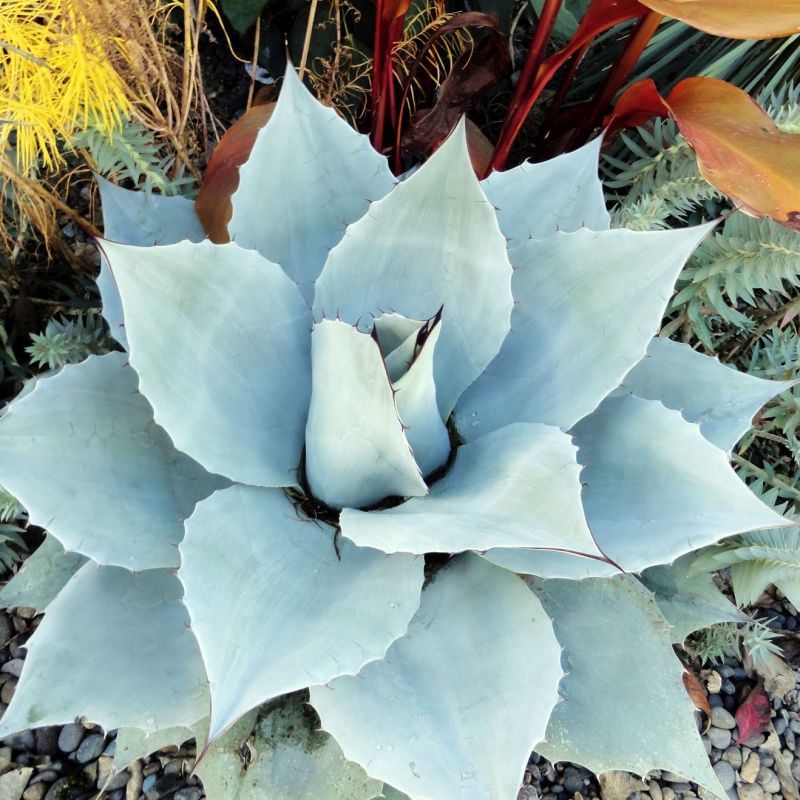
One look at those wide, cupped leaves explains the name, since they truly resemble a giant whale tongue. Each leaf looks broad and powdery blue, almost like it was carved from a block of soft stone.
Agave ovatifolia hails from the mountains of Nuevo Leon in northeastern Mexico, not far from the border. Plant scientists formally described it only in 2002, so it remains a fairly new star in gardens.
Mature rosettes often reach four to five feet tall and wider, forming a symmetrical bowl of foliage. Small teeth line the leaf edges, and a stout terminal spine finishes each tip with a sharp point.
Most sources rate it hardy to around USDA Zone 7b, and it has handled hard freezes well. That cold tolerance makes it a favorite for Austin and San Antonio gardens with unpredictable winter weather.
You’re in for a big surprise during rainy spells, since this agave tolerates more moisture than many relatives. Good drainage still matters, so avoid low spots where water collects after a heavy fall storm.
After many years, it sends up a tall stalk with greenish-yellow flowers, and the rosette then fades. Unlike many agaves, it rarely produces pups, so growers often raise new plants from collected seed instead.
I find it looks stunning against dark mulch or purple foliage, which makes the blue leaves glow. October planting gives it time to root deeply before winter, setting up a strong start next year.
10. Parry’s Agave
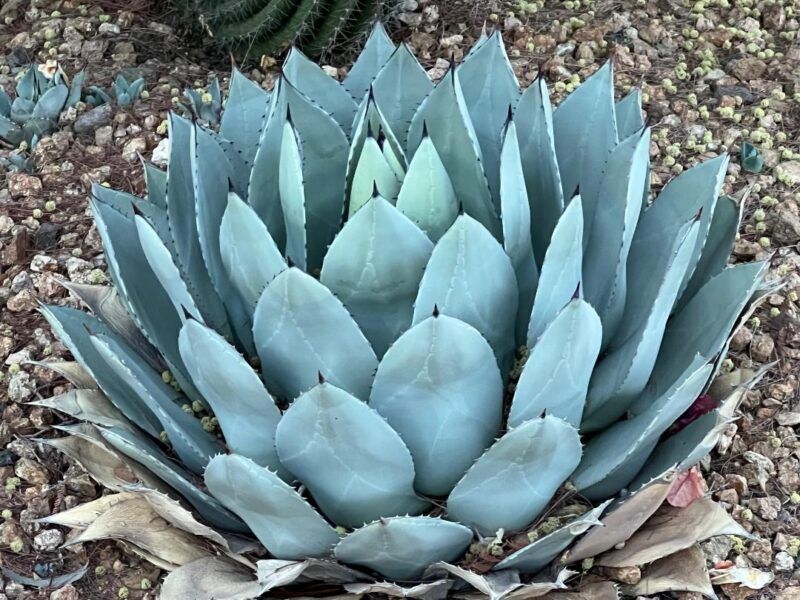
Artichoke lovers, take note, because this agave looks almost exactly like a giant gray-blue artichoke. Its tightly packed leaves form a neat, rounded ball that seems shaped by careful hands rather than wild weather.
Agave parryi grows wild in high, rocky mountain areas of the American Southwest and northern Mexico. That high-country upbringing gives it impressive cold hardiness, often rated down to USDA Zone 5 or 6.
Rosettes usually stay around two feet tall and wide, a size that fits small yards and containers. Each leaf ends in a dark spine, and smaller dark teeth line the edges for a crisp outline.
I like how it slowly forms a colony, as small pups appear around the base over several years. Gently dig and replant those pups in fall, and you will have free agaves for friends and family.
Patience pays off after a decade or longer, when a towering stalk rises roughly twelve to fifteen feet. Clusters of golden-yellow flowers open near the top, and they pull in hummingbirds along with plenty of hungry bees.
Like most agaves, the flowering rosette fades afterward, though its pups continue the colony without missing a beat. That cycle feels a bit sad, yet the bloom itself makes a truly memorable backyard event.
Plant it now in gritty soil with full sun, especially in the Panhandle or Hill Country. Skip heavy clay and rich compost, since too much moisture around the crown invites rot during winter.
11. Hedgehog Agave
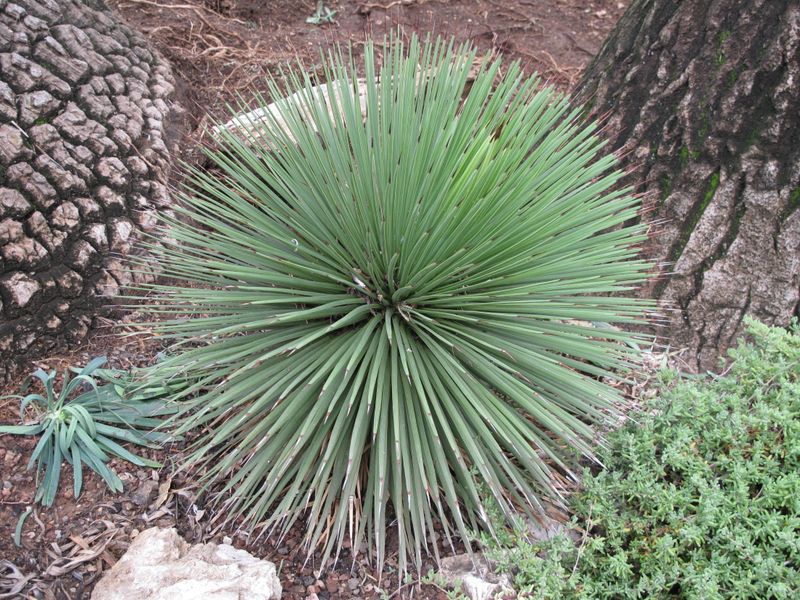
Spiky and round, this little agave looks like a hedgehog curled up for a nap in the garden. Dozens of thin, stiff leaves radiate outward from the center, forming a nearly perfect ball of green.
Agave stricta comes from Puebla and Oaxaca in southern Mexico, where it grows on dry rocky slopes. Its narrow leaves have fine serrated edges and a sharp tip, so handle it with real care.
This agave prefers warmth, with most sources rating it reliable in about USDA Zones 9 through 11. Gardeners in the Rio Grande Valley or along the coast will have the easiest time growing it outdoors.
Colder regions can still enjoy it in a large pot that moves into a garage during hard freezes. I believe container growing actually shows off its rounded shape better, especially in a simple clay bowl.
Unlike many agaves, older plants can branch and form several heads, building a cluster of spiky globes. Each globe usually stays under about two feet tall, keeping the plant tidy in small spaces.
Eventually, a tall slender spike appears, carrying reddish-purple flowers that look surprisingly delicate for such a prickly plant. The head that blooms slowly declines afterward, yet other heads or pups keep the plant going.
Plant it this month in very sharp drainage, mixing in plenty of gravel or crushed granite. Water sparingly through the cooler months, letting the soil dry fully between drinks to prevent root rot.
12. Thorn-Crested Agave
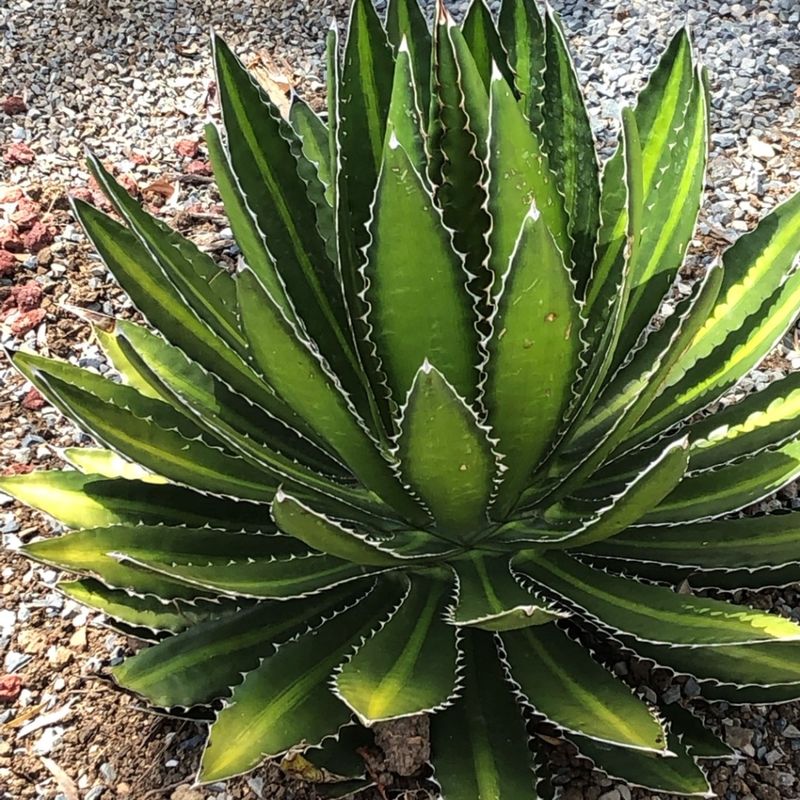
Down in the Rio Grande Valley, this scrappy native agave spreads into dense clumps that look like spiky green fountains. Each rosette sports a pale stripe down the middle of every leaf, giving it a sleek, tailored look.
Agave lophantha is one of the few agaves native to this side of the border, mainly in far southern counties. Some botanists now prefer the name Agave univittata, so you may see either label at nurseries.
Rosettes stay fairly small, often one to two feet tall, while the whole clump spreads much wider. Dark green leaves carry sharp teeth along their edges, and each one finishes with a stiff terminal spine.
Personally, I love how quickly it fills a dry bank, sending out pups that pack in tightly. That habit makes it great for erosion control, and it slowly crowds out weeds along sunny slopes.
Most growers rate it hardy in about USDA Zones 8 through 11, handling heat and humidity quite well. Light freezes rarely bother it, though a hard freeze may scar outer leaves until fresh growth replaces them.
After many years, a tall unbranched spike rises, often ten feet or more, packed with greenish-yellow flowers. Bees and other pollinators swarm the blooms, and the parent rosette then fades while its pups carry on.
October is ideal for dividing crowded clumps, since cooler weather eases stress on freshly moved pups. Plant them in sandy or rocky soil with full sun, and they will settle in by spring.