Thanksgiving Cactus vs. Christmas Cactus: How Georgia Gardeners Can Tell Which They Have
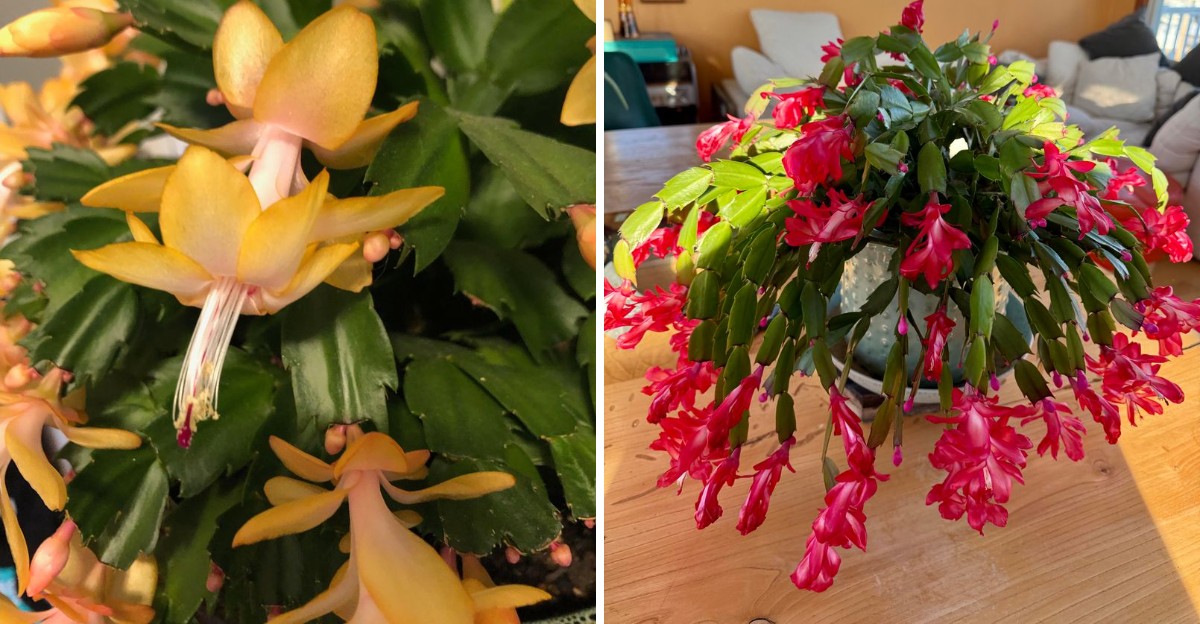
Many plants sold every December with Christmas labels are really a different species from cool, misty mountain forests. The true holiday namesake is an older hybrid, and it has quietly become harder to find on store shelves.
Both plants grow on trees and rocks in cool misty mountain forests, not in hot sandy deserts. Their flattened green stems hold small clues that tell them apart once you learn where to look.
I’ve made this mistake myself, mixing them up for years on my own Georgia porch. You might notice the same mix-up at garden centers, where tags often blur the line between the two.
Georgia growers enjoy a sweet advantage, since our mild autumn nights help set flower buds naturally outdoors each year.
The little details on those green stems might reveal that the holiday cactus sitting on your windowsill isn’t the one you thought it was.
1. Pointed Thanksgiving Cactus Stems Versus Smooth Christmas Cactus Stems
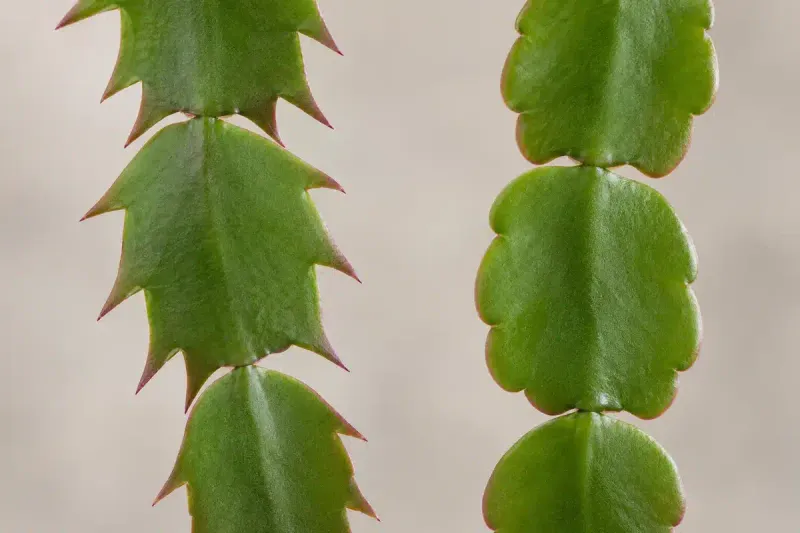
Run a fingertip along a Thanksgiving cactus stem, and you will feel little pointed teeth like a crab claw. Those hooked tips earned the plant another popular nickname, the crab cactus, among many longtime houseplant fans.
A true Christmas cactus feels much softer, with rounded scalloped edges that look like gentle ocean waves.
I love how this quick touch test works in any month, even when no flowers are showing.
Those flat green pads are not leaves at all, but modified stems that handle the job of photosynthesis. Each segment links to the next one at a narrow joint, which is where new growth and buds appear.
Count the bumps on each segment edge for another clue that rarely fails in a mixed collection. Thanksgiving types usually show two to four sharp points, while Christmas types show smooth rounded lobes instead.
Bring your plant to a bright window before checking, because shadows can hide small details on the edges. Older segments near the soil sometimes turn woody and brown, so focus on fresh green growth up top.
Once you know the edge shape, you can sort plants at a garden center in a few seconds. That skill comes in handy when tags are missing or simply list holiday cactus without any helpful details.
Personally, I check the edges before buying, since care needs match closely but bloom timing differs quite a bit.
A quick look today saves you from wondering later why your holiday flowers arrived weeks ahead of schedule.
2. Thanksgiving Cactus Blooms Weeks Before Christmas Cactus
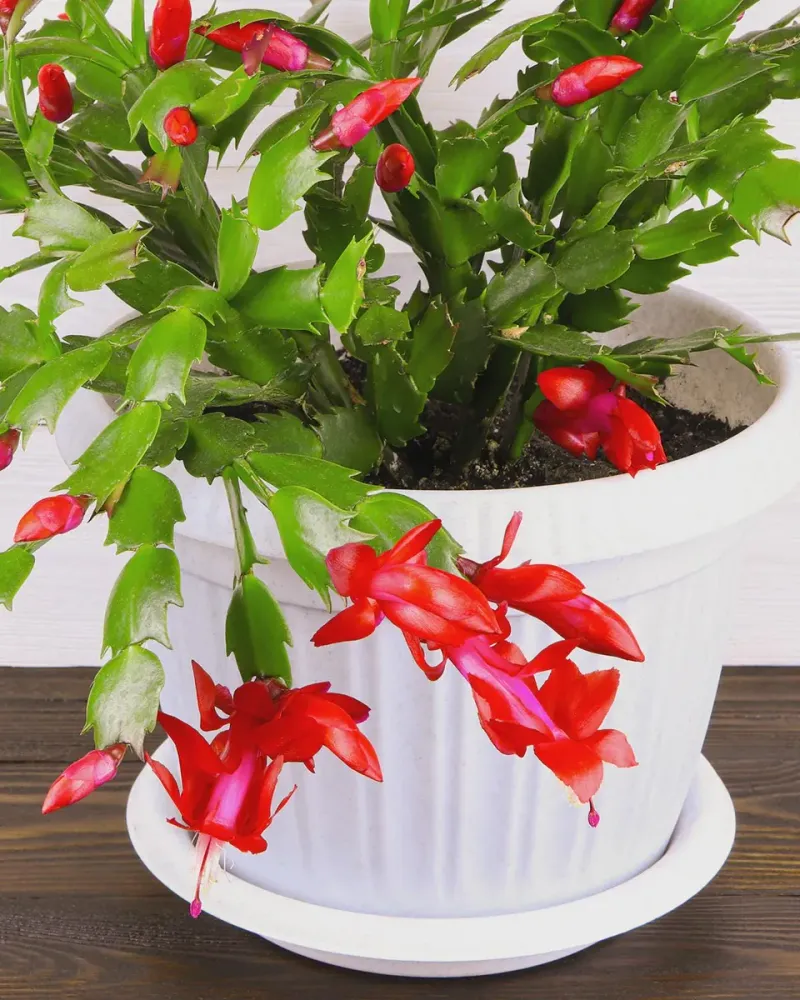
Flower buds on a Thanksgiving cactus often show up just as the turkey planning begins in late October. Those bright blooms usually peak through November, giving your table a burst of color before the leaves finish falling.
A true Christmas cactus takes its time and usually opens flowers in December, sometimes lasting into January.
I like how owning both types can stretch cheerful holiday color across nearly three months indoors.
Bloom timing is triggered by shorter days and cooler nights rather than by the calendar itself. Both plants set buds best with about twelve to fourteen hours of steady darkness for several weeks.
Here in Georgia, many growers leave pots on a shady porch through early fall to catch natural cues. Bring them inside once nights dip toward fifty degrees, because frost can badly damage the tender stems.
Indoor lamps can confuse the schedule, so a spare room or closet at night often works wonders. Even a porch light or television glow may delay buds on a plant that sits nearby every evening.
If your so-called Christmas cactus flowers before Thanksgiving dinner, it is most likely a Thanksgiving type in disguise.
Growers sometimes nudge timing in greenhouses, so a plant bought in bloom may shift its schedule next year.
Each flower lasts several days, and the whole show can carry on for weeks with steady care. Keep the plant away from heating vents, since warm dry air can cause buds to drop early.
3. Thanksgiving Cactus Flowers Point Outward While Christmas Cactus Flowers Droop
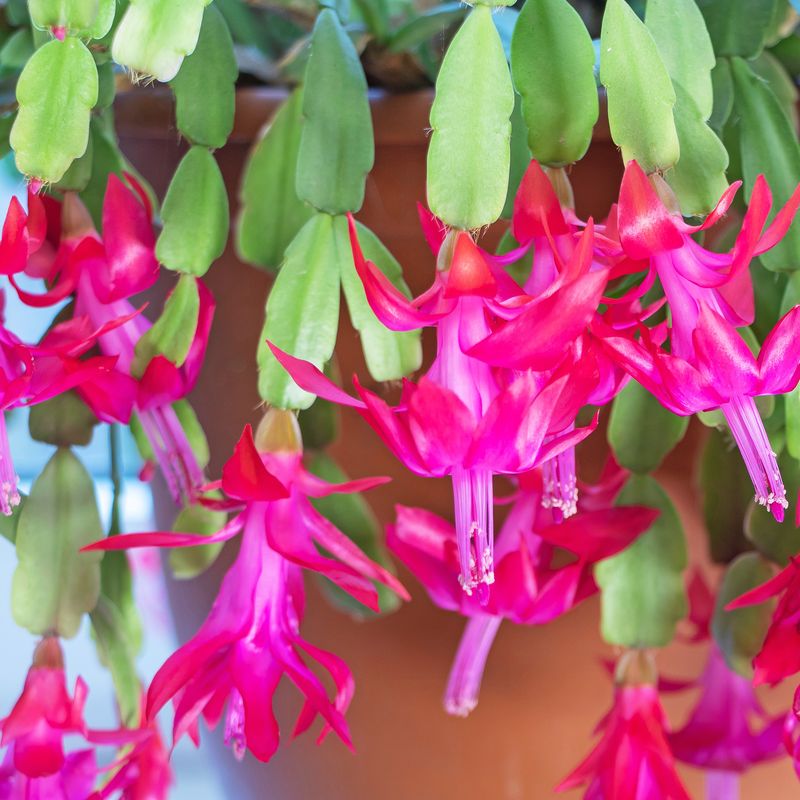
Thanksgiving cactus blossoms stick out sideways or tilt slightly upward, almost like tiny trumpets ready to announce dinner.
Each one is lopsided in shape, with petals that look different from top to bottom when viewed sideways.
Botanists call that lopsided form zygomorphic, meaning the flower can be split evenly in only one direction. What surprises me most is how clearly you can see it once someone points it out to you.
Christmas cactus flowers behave differently, hanging downward from the stem tips like little pink lanterns on a string.
Their shape looks more even and balanced, giving the plant a softer and more relaxed holiday appearance overall.
Flower position makes a handy second test when the stem edges look a bit unclear or worn. Some modern hybrids blur the lines, so compare several clues before you settle on a final answer.
Pick a spot where you can view the blooms at eye level, such as a shelf or tall stand. Drooping Christmas flowers look especially lovely in hanging baskets, where you can admire them from underneath.
Try not to move the pot much once buds form, because sudden changes in light can cause bud drop. Rotating the plant during bud set often leads to disappointment, so pick a good spot and leave it.
Hummingbirds pollinate these flowers in their Brazilian home, which helps explain the long tubes and colorful petals. You probably will not see that happen indoors, but it makes the shape far more interesting.
4. Yellow Pollen Versus Pink Pollen On Holiday Cactus Flowers
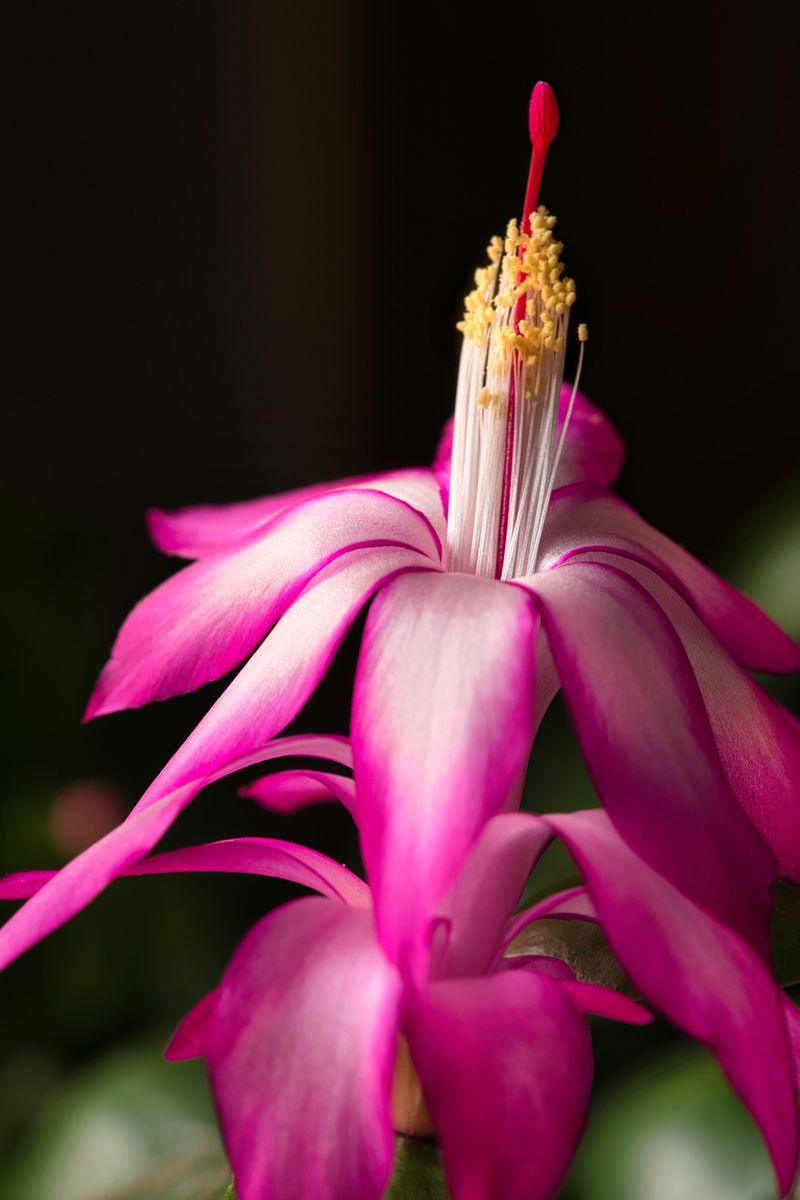
Grab a magnifying glass for this one, because the tiniest clue sits right in the center of each flower. Pollen color can reveal which holiday cactus you own, even when the leaves and blooms seem confusing.
Thanksgiving cactus flowers carry yellow pollen on their anthers, the small tips at the ends of the stamens.
Christmas cactus flowers usually show pink or purplish brown pollen, which looks surprisingly dark against the bright petals.
I have to admit this test feels a bit like detective work, and I enjoy it every season. Kids love it too, so invite a young helper to peek inside the blooms with you this year.
Gently tap a flower over a white paper towel if the anthers are too small to see clearly. A light dusting of color should appear, giving you an easy answer without harming the plant in any way.
Fresh flowers give the clearest results, since older blooms may lose pollen or fade as they age. Check within the first day or two after a flower opens for the most reliable color reading.
Hybrids between the two types can show mixed traits, so pollen works best alongside other clues mentioned here.
Combining pollen color with stem shape gives you a far more confident identification overall.
Pollen is harmless for people and pets, and holiday cacti are listed as nontoxic by the ASPCA. That makes these plants a friendly choice for homes with curious cats, though chewing may still upset stomachs.
5. Upright Thanksgiving Cactus Versus Trailing Christmas Cactus Growth
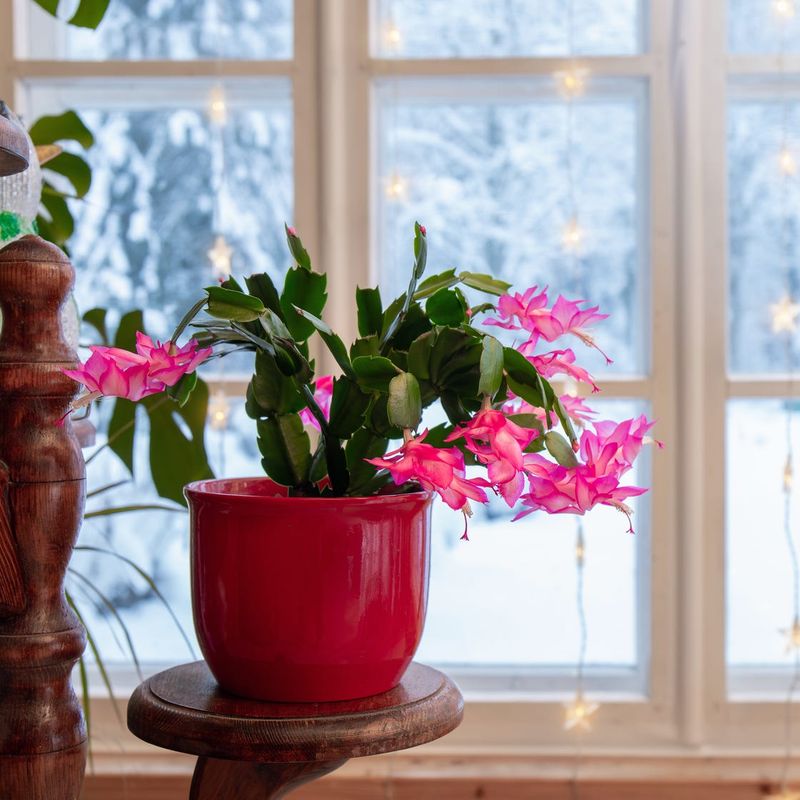
Young Thanksgiving cactus stems tend to reach upward first, then arch outward as they grow heavier with segments.
The result is a fuller, sturdier mound that looks tidy on a tabletop or a wide windowsill.
Christmas cactus stems prefer to spill and dangle, draping over pot edges like a green waterfall in slow motion. Older plants can trail a long way, making them lovely stars for hanging baskets and tall stands.
You might notice that very old Christmas cactus plants handed down through families often have this graceful drooping shape.
Some of those heirlooms have lived for decades, passing from grandparents to grandchildren with plenty of stories attached.
Choose your container with the growth habit in mind, since a tippy pot can topple under heavy trailing stems. A wide clay pot adds weight and allows the roots to breathe between waterings much better than plastic.
In Georgia, many gardeners hang these plants under a covered porch from late spring until chilly nights. Bright shade suits them best there, because strong afternoon sun can bleach stems a reddish or yellow color.
Pinching off a segment or two after blooming encourages branching and gives both types a bushier, fuller shape. Those trimmed pieces root easily in moist potting mix, so share them with friends who admire your plant.
I believe matching the plant to its natural shape makes care easier and the display far more attractive. Let a trailing type trail and an upright type stand proud, and both will reward your patience.
6. Schlumbergera Truncata Versus The Hybrid Schlumbergera Buckleyi
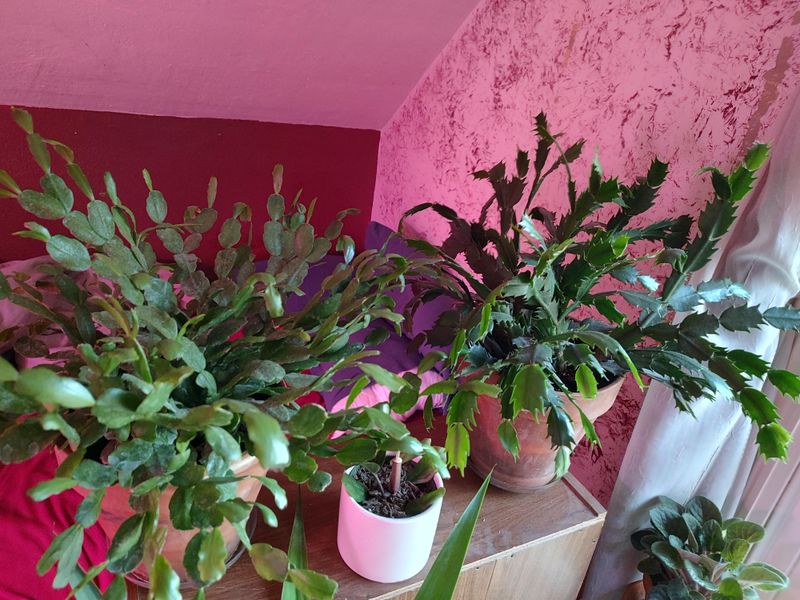
Behind those cheerful common names hide two very different family stories, and one of them involves a clever English gardener.
The Thanksgiving cactus is a true species called Schlumbergera truncata, native to coastal mountain forests in southeastern Brazil.
The word truncata means shortened or cut off, which neatly describes the squared tips on each stem segment. In the wild, it grows on tree branches and mossy rocks, soaking up moisture from humid mountain air.
The Christmas cactus is a hybrid named Schlumbergera x buckleyi, created by crossing two Brazilian species in England. Its parents were Schlumbergera truncata and Schlumbergera russelliana, crossed by a gardener named William Buckley in the 1840s.
I can’t imagine how thrilling it must have felt to watch those first hybrid flowers open nearly two centuries ago.
That old lineage explains why many heirloom plants passed down through families turn out to be true Christmas types.
Garden centers often lump both under one common name, so scientific labels offer far more reliable information. Look for the species name on tags, or ask staff if the grower provided any details.
Some tags may also mention Schlumbergera bridgesii, an older name still used for the Christmas cactus in some places. Knowing these names helps you find accurate care guides from university extension services and botanical gardens online.
Neither plant is a desert cactus, so skip the gritty dry treatment you might give a prickly pear. Rich, well-drained potting mix with some bark or perlite suits their tree-dwelling roots much better than heavy soil.
7. Thanksgiving Cactus Flowers Come In More Colors Than Christmas Cactus
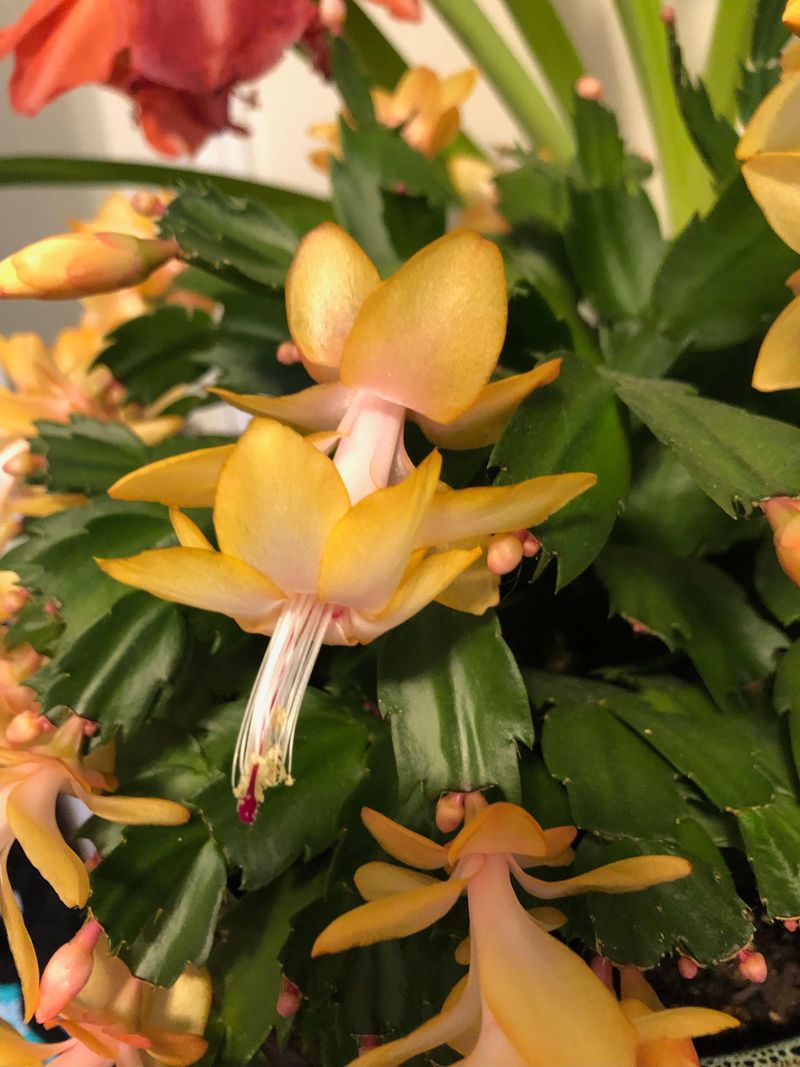
Walk past a holiday plant display, and you will spot blooms in shades ranging from snowy white to sunset orange.
Most of that color variety comes from Thanksgiving cactus cultivars, which breeders have worked on for many years.
Thanksgiving types now come in pink, purple, salmon, and even soft yellow shades thanks to careful breeding. I love how a single windowsill can hold a whole sunset of these blooms by mid November.
True Christmas cactus plants show a smaller range, often sticking to rosy pink or magenta red flowers. Those classic colors feel old-fashioned in the nicest way, like a holiday card from a beloved grandmother.
Cooler temperatures can deepen or shift some colors, especially in white and yellow Thanksgiving cactus varieties.
White flowers may blush pink when buds develop under nights cooler than roughly fifty-five degrees Fahrenheit.
Pick plants with plenty of tight buds at the store, since those will open over several weeks at home. Avoid plants with many fallen buds in the pot, which can signal stress from shipping or dry soil.
Water whenever the top inch of soil feels dry, and keep moisture steady once flower buds appear. Soggy soil leads to root rot, so empty saucers promptly after watering and use pots with drainage holes.
Your plant may not repeat its exact store color next year if greenhouse growers used special cooling tricks. Personally, I find those small surprises part of the fun, since every season brings a slightly different show.
8. Thanksgiving Cactus Fills Store Shelves While Christmas Cactus Hides
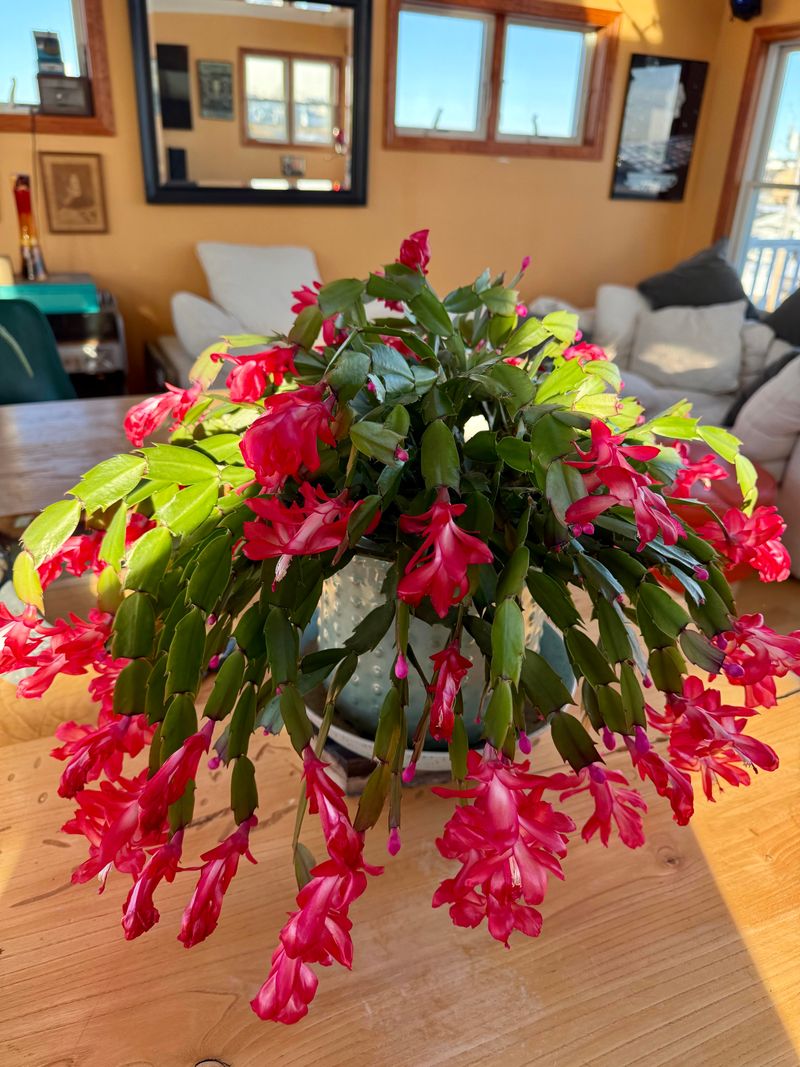
Visit almost any big box garden center in November, and most holiday cacti on display are Thanksgiving types. Growers favor them because they flower earlier and arrive in stores just in time for the holiday rush.
Many of those plants still carry Christmas cactus tags, which explains the widespread mix-up among home gardeners.
I have bought a few mislabeled pots myself, and each one bloomed right on Thanksgiving schedule.
True Christmas cactus plants often come from family collections or specialty nurseries rather than seasonal store displays. Asking around your garden club or a local plant swap may turn up a cutting from an old heirloom.
Cuttings root quickly in spring or early summer, and Georgia warmth gives them a fast start outdoors in shade. Let each cut piece dry for a day before tucking it into slightly moist potting mix.
Both plants handle the same basic care, so owning one of each adds very little extra work. Feed with a half-strength houseplant fertilizer during spring and summer, then stop once late summer arrives.
Plan to bring them indoors before frost, since temperatures below about fifty degrees can slow growth and bud development, but brief exposure to cool, frost-free conditions does not necessarily damage the stems.
Georgia frost arrives anywhere from mid October in the mountains to late November near the coast.
You’re in for a treat if you grow both, because the holiday color simply keeps rolling for months. Few houseplants reward a little detective work and patient care with such a cheerful winter performance.