Buck Moths Appear In Georgia During Fall And Their Caterpillars Have Venomous Spines
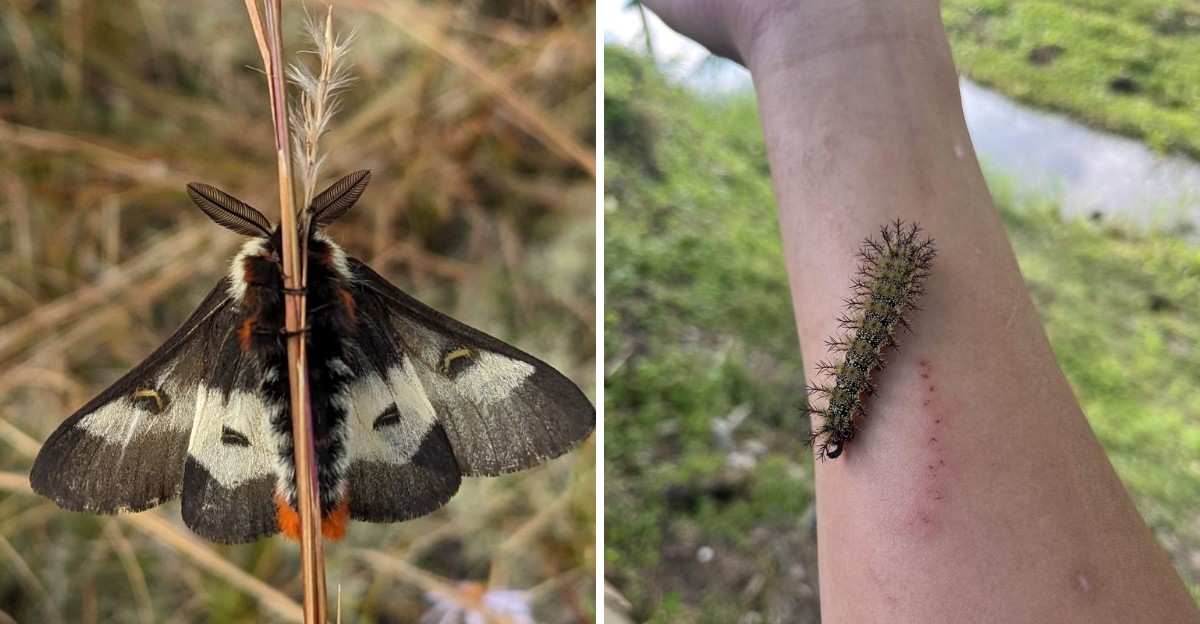
Some moths show up after the leaves start turning and fly in bright afternoon sunshine. Even stranger, the adults are born without working mouthparts, so they never eat a single bite.
I love a good garden mystery, and this one has a sharp twist. Across Georgia, these bold black and white fliers zip around oak trees from late fall into early winter.
They look almost like butterflies that took a wrong turn on the calendar.
The moths themselves are harmless to you and your plants. Their babies are another story, though, because they carry a sting that many people compare to a wasp or bee.
I’ve always appreciated how knowing what you are looking at makes every walk under the oaks a little more fun. You can admire the show and still keep your hands safe.
Those flashy flyers are also leaving something behind on your favorite oak twigs, and it’s worth knowing what to look for.
1. Those Black And White Moths Fluttering Around Oaks Are Up To Something
Spotting a moth in broad daylight feels a little backward, right? Buck moths break the usual rules by flying on warm, sunny afternoons in autumn.
In Georgia, you can often see them from about October into December.
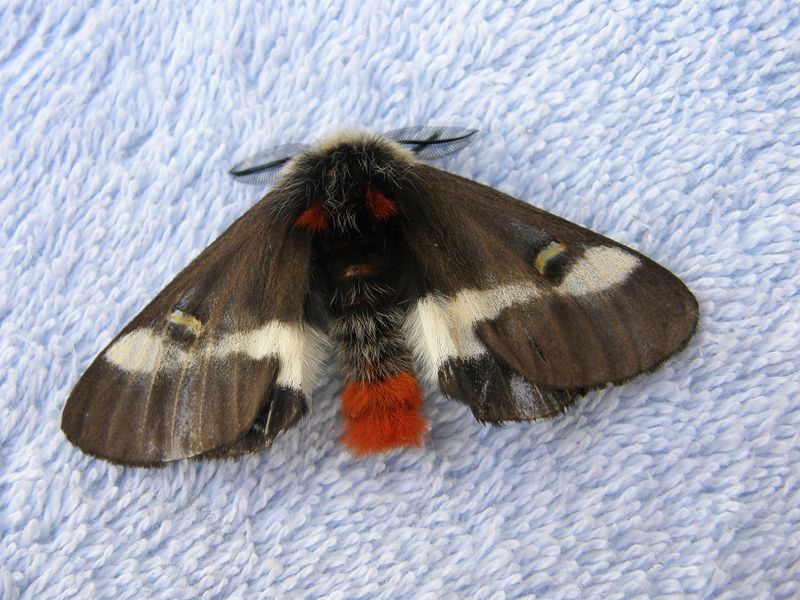
The adults are easy to recognize once you know the look. Their wings are dark gray to nearly black with a wide white band and a small eyespot on each wing.
Wingspans run roughly 2 to 3 inches, so they catch your eye fast.
Males usually have a rusty red tip on the abdomen, while females are mostly dark. Males also have feathery antennae, which help them track the scent females release.
That is why you may see several males patrolling the same oak area in quick, zigzag flights.
The name comes from an old story. These moths often appear during deer season, when hunters are out looking for bucks.
I find that little bit of history charming.
The adults cannot sting, bite, or harm your plants. Their short lives focus on finding mates and laying eggs.
So go ahead and enjoy the show, because what they leave behind matters much more.
2. Spiny Buck Moth Caterpillars Pack A Sting Like A Bee
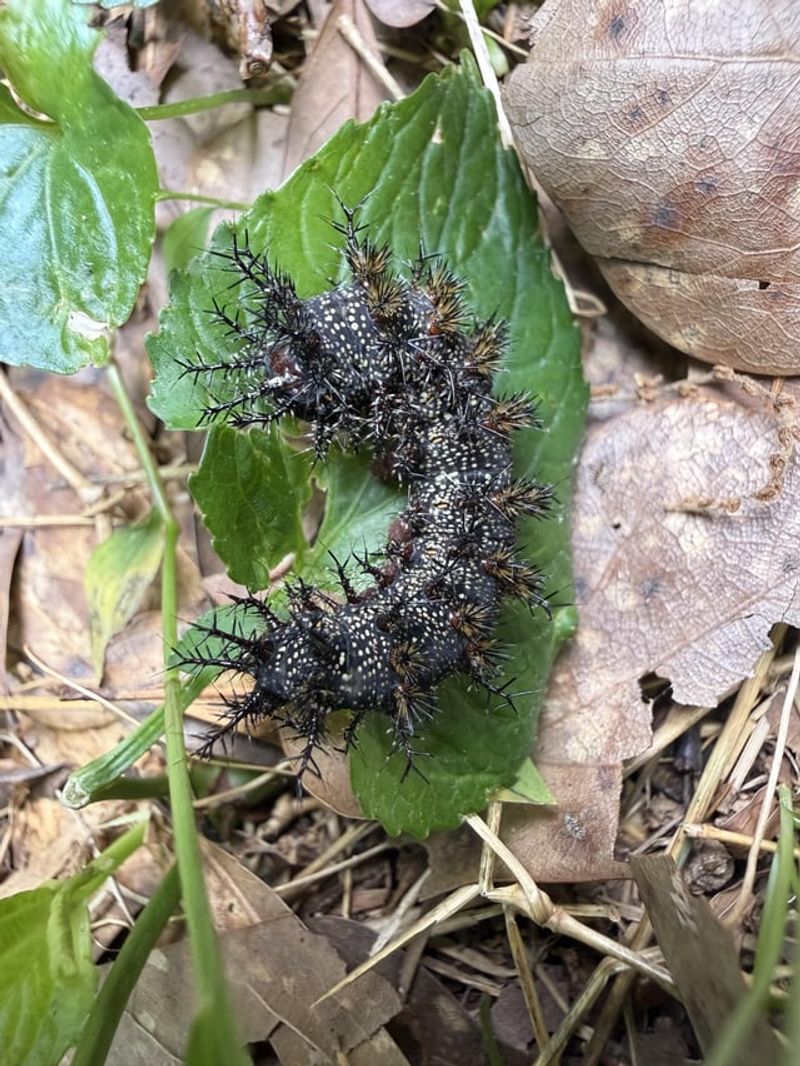
Here is the twist in this story. The fluffy-looking babies of these moths are covered in branched, hollow spines, and each spine connects to a venom gland.
One light brush can leave your skin burning within seconds.
University extension experts describe the pain as similar to a bee sting. Redness, swelling, itching, and raised welts often follow.
The burning may last a day or longer, and welts can linger for several days.
Sensitive people sometimes feel nausea or more intense swelling. Anyone with a history of strong allergic reactions should be extra careful around these caterpillars.
Kids are at special risk because the caterpillars look interesting enough to pick up.
The timing surprises a lot of folks. Even though the adults fly in fall, the caterpillars show up in spring and early summer, usually around April through June.
So the fall moths are basically your early warning system.
Personally, I treat every spiky caterpillar on an oak as a no-touch zone. You can admire one from a safe distance, snap a photo, and move on.
Your fingers will thank you later.
3. Those Spiral Egg Rings On Oak Twigs Tell You What Comes Next
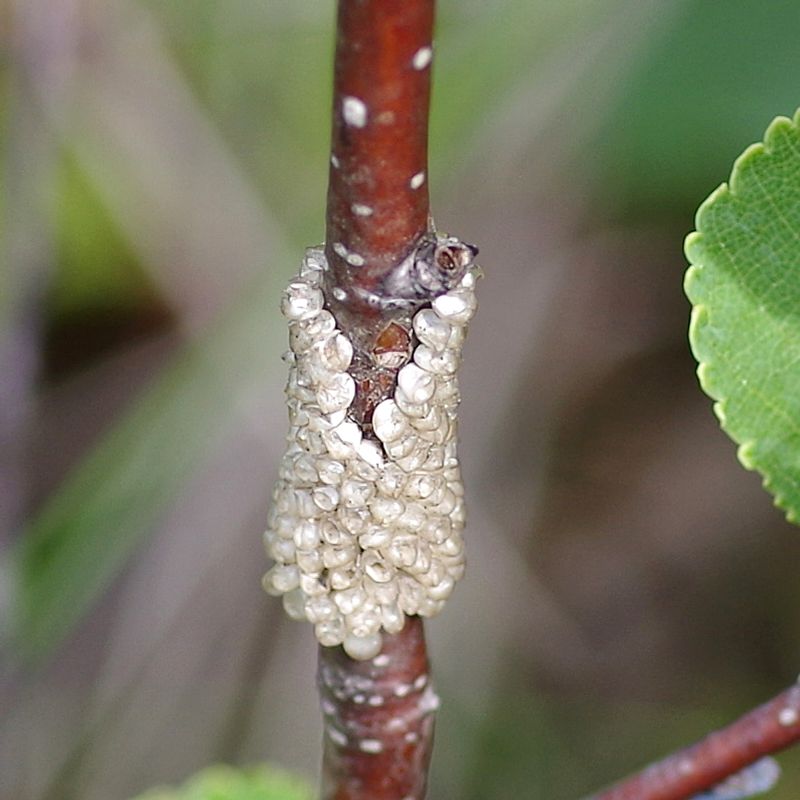
After mating, a female buck moth gets to work on oak branches. She lays her eggs in a neat, tight ring that wraps around a twig.
A single cluster can hold around 100 to 200 eggs.
Those egg rings stay put all winter long. They handle cold snaps and winter rain without much trouble.
When spring warms up and fresh oak leaves open, the tiny caterpillars hatch right on time for dinner.
You can actually look for these clusters on low branches during winter walks. They look like a small brownish collar hugging the twig.
Once you spot one, you will start noticing them more often.
If an egg ring sits on a low branch near a play area, patio, or path, you can clip that twig off. Prune it carefully and toss it in the trash.
Doing this in winter is an easy way to reduce stings next spring.
I like this tip because it is simple and needs no sprays. Higher branches are fine to leave alone, since those caterpillars rarely bother anyone.
A little winter scouting goes a long way.
4. Live Oaks And Other Oak Trees Are Their Favorite Snack Bar
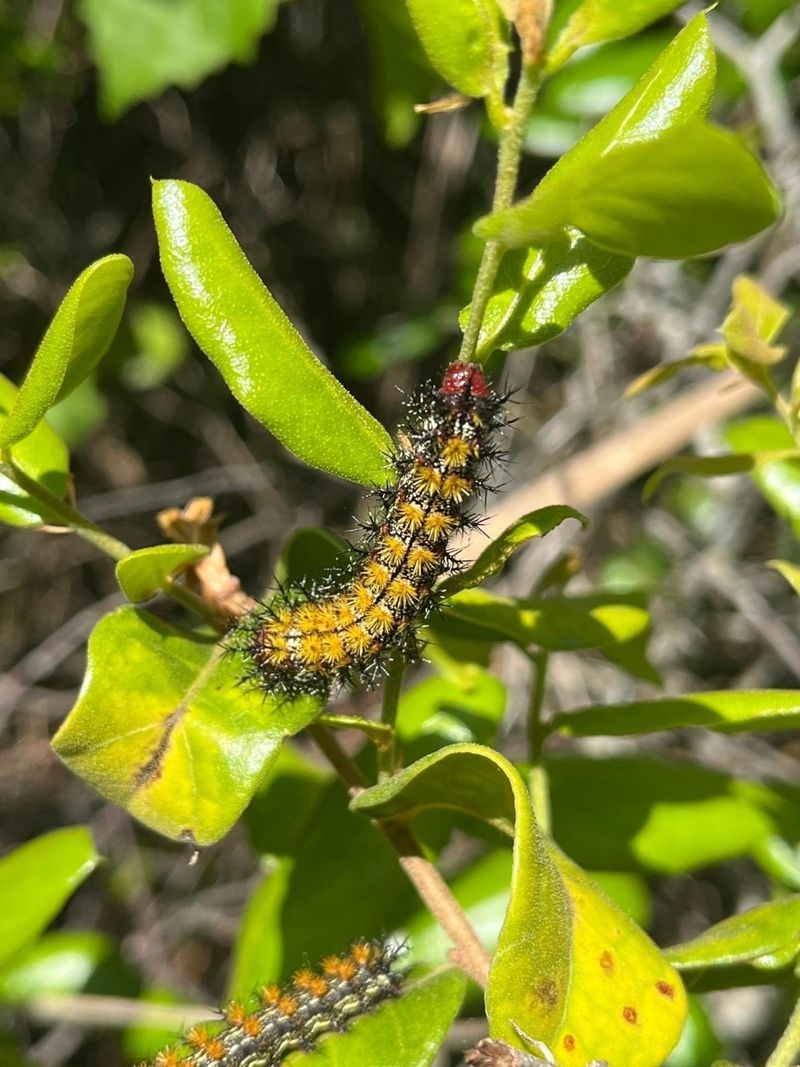
Oaks are the main menu for buck moth caterpillars. Live oak, laurel oak, water oak, white oak, blackjack oak, and scrub oak are all common hosts.
Georgia neighborhoods with big shade oaks often have plenty of these caterpillars.
Young caterpillars usually feed in groups. You might find a whole cluster munching side by side on the same leaf.
As they grow, they spread out and wander more on their own.
That wandering is where trouble starts. Older caterpillars often crawl down trunks to find a place to pupate in the soil.
Along the way, they end up on sidewalks, fences, lawn furniture, and swing sets.
Now and then they nibble other plants too, such as willow or wild cherry. Still, oaks are where you should focus your attention.
A quick look at low branches and trunks in spring can save you a nasty surprise.
Fun fact for you: young caterpillars are mostly black, while bigger ones can look speckled or lighter. Every stage keeps those spines.
So color is not a safety guide, and spines are the clue that matters most.
5. Got Stung By A Spiky Caterpillar? Grab Some Tape First
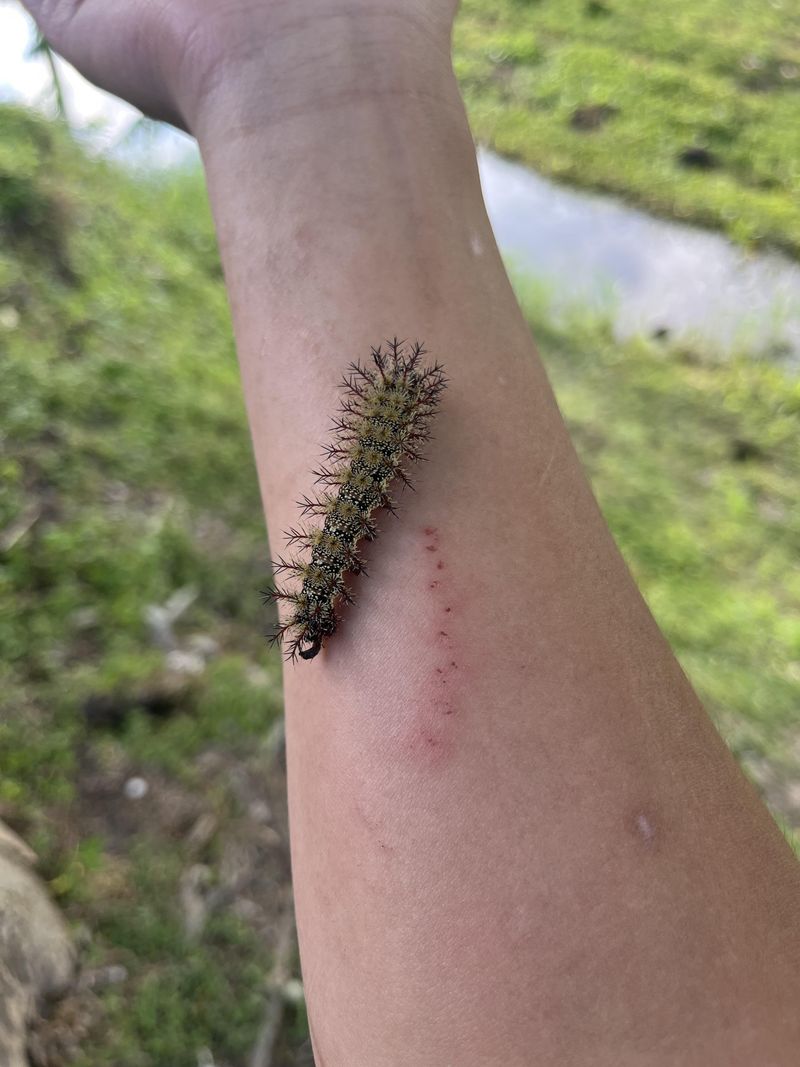
Ouch moments happen, even to careful gardeners. If a buck moth caterpillar gets you, quick first aid can make a real difference.
Resist the urge to rub or scratch, because that can push spines deeper.
First, flick the caterpillar away with a stick or a piece of cardboard, not your bare hand. Next, press a strip of tape, like duct tape or packing tape, onto the area and peel it off.
Repeat a few times to pull out broken spines.
Then wash the spot well with soap and water. A cold pack or ice wrapped in a cloth can help ease swelling and burning.
Many people also find relief with a baking soda paste, hydrocortisone cream, or calamine lotion.
An over-the-counter antihistamine may help with itching, and pain relievers can calm the ache. Follow package directions, especially for children.
I keep a small kit with tape and cream in my garden shed during spring.
Call a doctor if swelling spreads, symptoms feel severe, or the sting is near the eyes. Seek emergency help right away for trouble breathing.
Those signs need fast care.
6. Gloves And Long Sleeves Make Spring Oak Chores Way Safer

Spring yard work under oaks comes with one extra rule. Cover up before you start raking, pruning, or pulling weeds near those trees.
A little gear keeps a pleasant afternoon from turning painful.
Wear sturdy gloves, long sleeves, and long pants when working near oak trunks and low limbs. A wide-brimmed hat helps too, since caterpillars sometimes drop from branches.
Closed shoes beat sandals every time.
Look before you grab. Check tree trunks, fence rails, lawn chairs, and the handles of tools left outside.
Caterpillars love to crawl onto surfaces you touch without thinking.
Teach kids what buck moth caterpillars look like. A simple rule works well: if it is fuzzy or spiky, leave it alone.
Pets usually avoid them, but keep an eye on curious pups sniffing around oak roots.
After working outside, shake out gloves and clothes before bringing them indoors. Spines can stick to fabric and cause a surprise sting later.
I learned that trick from an extension handout, and it has saved me more than once.
7. Your Oak Trees Can Handle Buck Moth Caterpillars Just Fine

Take a deep breath, oak lovers. In most home landscapes, buck moth caterpillars cause only light leaf chewing.
Healthy, established oaks usually bounce back without any help.
Big outbreaks do happen in some places from time to time. Even then, trees often leaf out again later in the season.
Experts mostly treat these caterpillars as a people problem rather than a tree problem.
Because of that, broad pesticide sprays in yards are rarely needed. Spraying tall oaks is tough to do well and can harm helpful insects.
Birds, wasps, and other natural predators already help keep numbers in check.
If caterpillars gather in one spot near a door or play set, you have simple options. You can carefully knock them into a bucket of soapy water using a stick or gloved tool.
Clipping off small infested twigs also works.
For heavy problems in large trees, talk with your county extension office or a certified arborist. They can suggest targeted options suited to your yard.
I prefer that calm approach over reaching for a sprayer first.
8. Fall Buck Moth Sightings Are Your Reminder To Plan For Spring
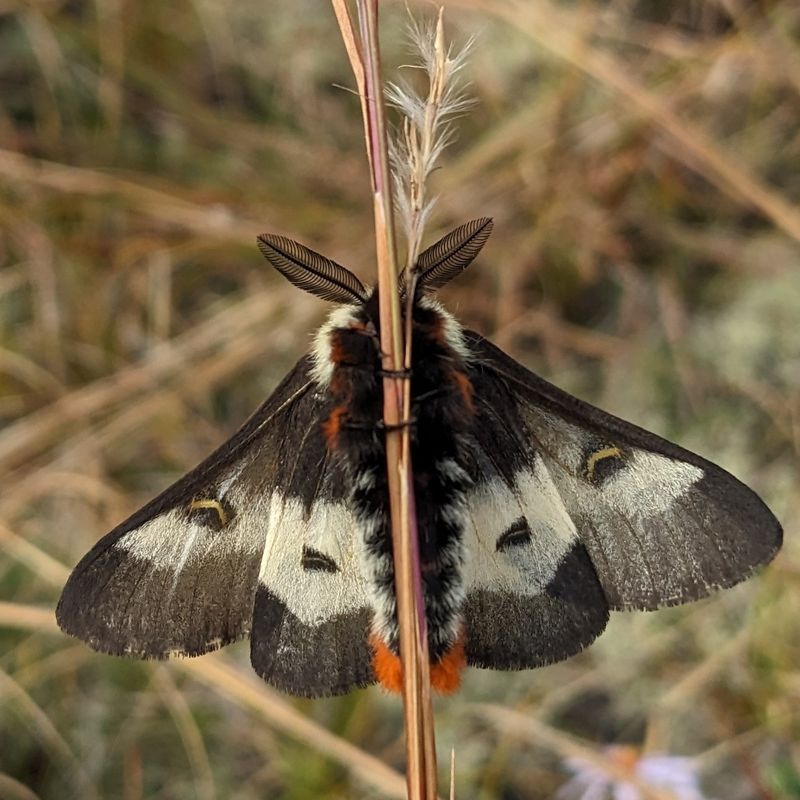
Every flashy moth you see in fall is a little note from nature. Those flights mean egg rings are going onto oak twigs nearby.
Next spring, caterpillars will likely hatch in the same area.
So use the season wisely. Make a mental note of which oaks had the most moth activity.
Mark trees near patios, driveways, and play spaces for a winter twig check.
Buck moths are native insects across much of the eastern United States, including Georgia. They are part of the oak woodland food web.
Birds and other wildlife benefit from them, even if we keep our distance.
Here is a simple yearly plan. Watch for moths in fall, clip low egg rings in winter, and wear protective gear under oaks in spring.
That rhythm keeps your family safer without much work.
I honestly enjoy seeing these moths now that I understand them. They turn a quiet November afternoon into a small nature show.
With a bit of know-how, you can welcome them back each year and still keep your hands sting-free.