Why Eastern Kingbirds Spend More Time In Georgia Yards During Summer
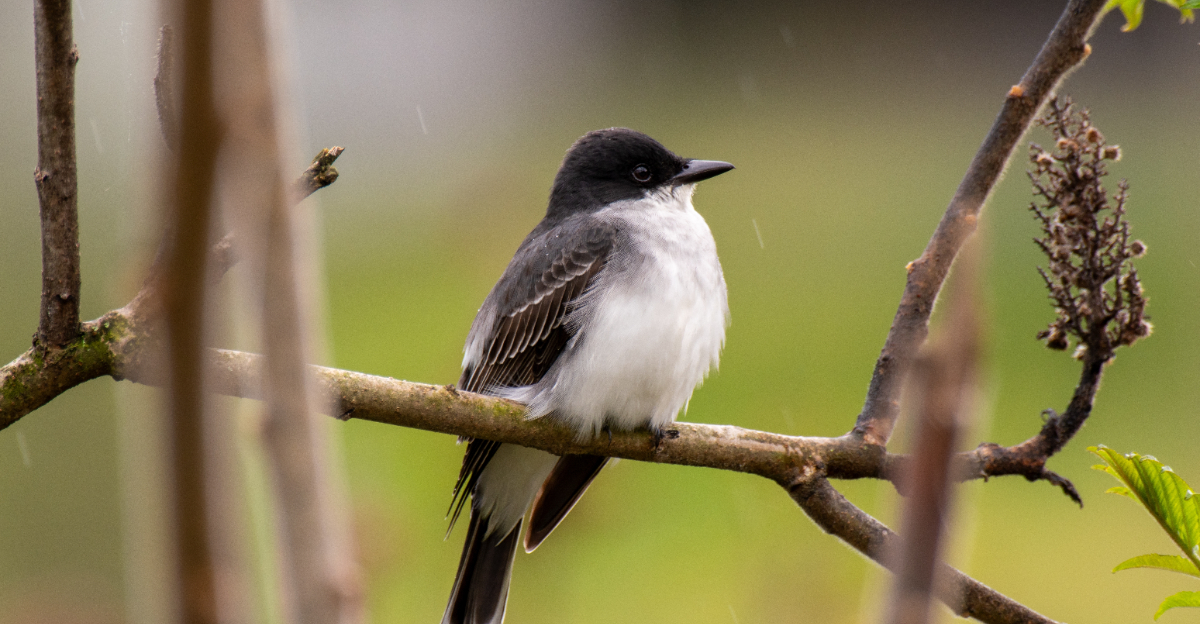
Georgia yards often become unexpected hunting grounds for one confident summer bird. If a bold black-and-white visitor keeps claiming the same fence or branch, don’t assume it’s just passing through.
Eastern Kingbirds return again and again because your landscape can offer easy access to flying insects and reliable lookout spots.
Once you understand what draws them in, you’ll start noticing their behavior instead of wondering why they never seem to stay away.
Watching them dart after insects from a favorite perch becomes much more interesting when you recognize the pattern. Small details like repeated flights and quick returns reveal they’re working, not wandering.
You’ll appreciate every visit a little more after learning what keeps these energetic birds coming back throughout the season to the same familiar hunting areas each day.
1. Flying Insects Reach Their Seasonal Peak
Summer in the South is basically a buffet for Eastern Kingbirds. Insect populations explode between June and August, and these birds are built to take full advantage of that timing.
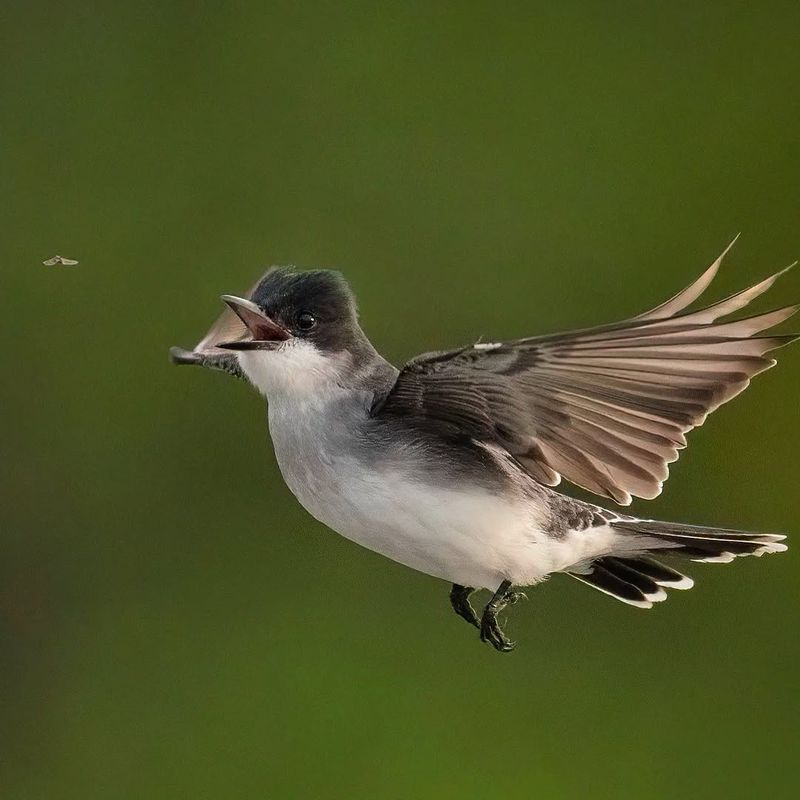
Eastern Kingbirds are aerial hunters. They spot a bug from a perch, launch into the air, snatch it cleanly, and return to the same spot in seconds.
Beetles, wasps, bees, and dragonflies are all fair targets.
Yards with flowering plants, unmowed patches, or standing water nearby tend to attract far more flying insects. More insects means more hunting opportunities, which keeps Kingbirds visiting longer.
Warm Georgia summers push insect activity into overdrive. Longer days give Kingbirds more hours to hunt, and the heat keeps bugs airborne well into the evening.
If you notice a Kingbird returning to the same perch repeatedly, it has likely found a reliable insect corridor nearby. A shrubby border, a compost area, or even a vegetable garden can create exactly that kind of hotspot without any extra effort on your part.
If you notice a Kingbird returning to the same perch repeatedly, it has likely found a reliable insect corridor nearby.
An open lawn, a flowering meadow, or the edge of a garden often produces the steady stream of flying insects these birds hunt throughout the day.
2. Fence Posts Create Ideal Hunting Perches
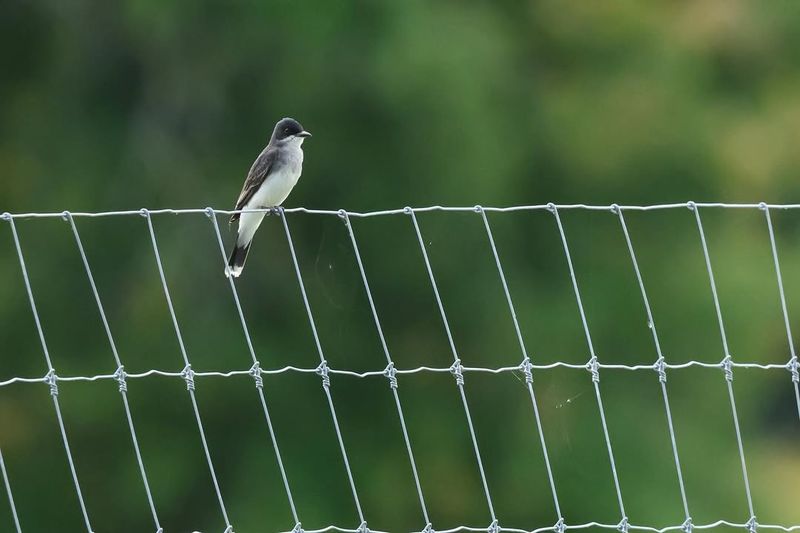
A bare fence post might look plain to you, but to an Eastern Kingbird it is prime real estate. Elevated, open, and surrounded by airspace, it offers exactly the vantage point these birds prefer.
Kingbirds hunt using a sit-and-wait strategy. They need a clear sightline in multiple directions so they can spot movement quickly.
Fence posts along yard edges deliver that perfectly.
Wooden posts work especially well because they are easy to grip. Metal or vinyl fencing can work too, though rough-textured surfaces give birds a more secure footing during quick launches.
Yards with long fence lines running parallel to open lawn give Kingbirds multiple perch options. Spacing matters less than visibility.
A post with a wide, unobstructed view beats a taller one buried in foliage.
Adding a few simple wooden stakes or T-posts to a garden border can make a noticeable difference in how often Kingbirds patrol your yard.
Your Georgia Garden Changes Every Week. Your Plan Should Too.
Gardening in Georgia changes quickly throughout the season. Every Friday you’ll receive a simple weekly plan showing exactly what to plant, prune, fertilize, harvest, and protect so you never miss the right timing.
It sounds almost too simple, but these birds respond quickly to new perch opportunities, especially during peak hunting hours in the morning and late afternoon.
3. Birdbaths Attract More Insect Activity
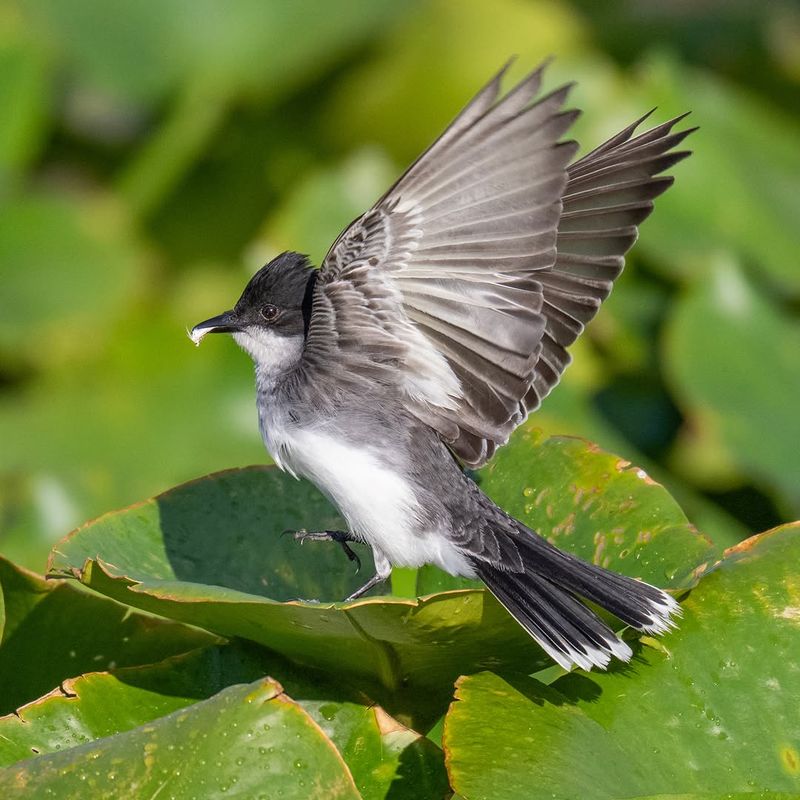
Standing water does more than quench thirst. Birdbaths create small zones of insect activity that Eastern Kingbirds find surprisingly attractive during summer months.
Mosquitoes, midges, and other small flying insects gather around still water to breed and feed.
That concentration of bug activity near a birdbath essentially creates a hunting zone that Kingbirds learn to patrol regularly.
Shallow birdbaths with rough interiors tend to draw more insect traffic than deep, smooth ones.
Adding a few small rocks or pebbles gives insects landing spots and makes the water more visible to birds flying overhead.
Placement matters quite a bit. Birdbaths set in open areas with nearby perches, like a low branch or fence rail within ten feet, make it easy for Kingbirds to swoop down and hunt without much risk.
Changing the water every two to three days keeps it fresh and reduces mosquito breeding, which is worth doing regardless. In Georgia’s summer heat, stagnant water warms fast and can get murky quickly.
A clean, well-placed birdbath can quietly become one of the most productive spots in your entire yard for watching Kingbird behavior up close.
4. Mature Trees Provide Reliable Nesting Sites
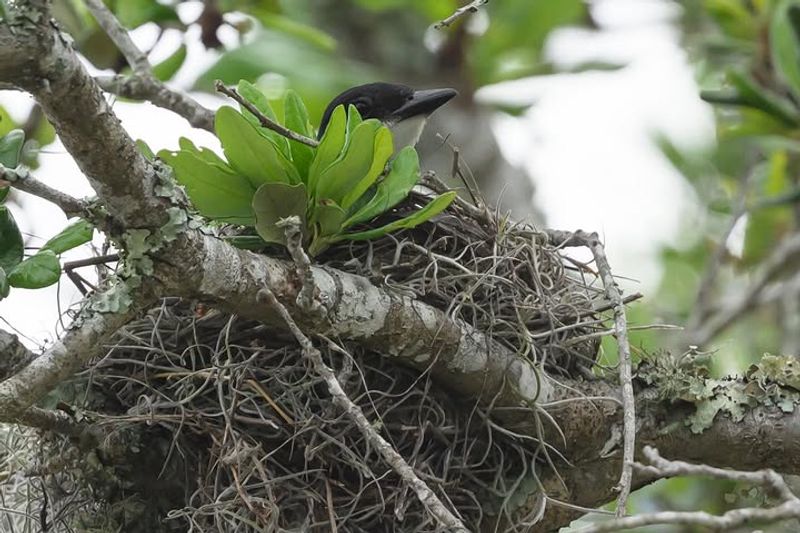
Not every yard earns a nesting pair, but those with mature trees stand a much better chance. Eastern Kingbirds prefer horizontal branches with good visibility and moderate height, usually between ten and thirty feet off the ground.
Oaks, pecans, and sweet gums are common choices in Georgia yards.
Kingbirds tend to build near the outer ends of sturdy branches, where the nest sits exposed but stable enough to handle summer storms.
Nests are compact and cup-shaped, built from plant fibers, bark strips, and grass.
Both parents contribute to construction, which typically happens in late May and June before eggs are laid.
Once a nest is established, the pair stays close. Mature trees anchor the birds to a specific yard for the entire breeding season, which can last well into August depending on how many broods the pair attempts.
Trimming large branches or removing mature trees during summer can disrupt active nests, so it is worth checking carefully before any yard work. If a pair has chosen your yard, giving them space pays off.
You get weeks of close-up behavior to observe, including aggressive nest defense that is genuinely impressive to watch.
5. Parents Stay Busy Feeding Growing Chicks
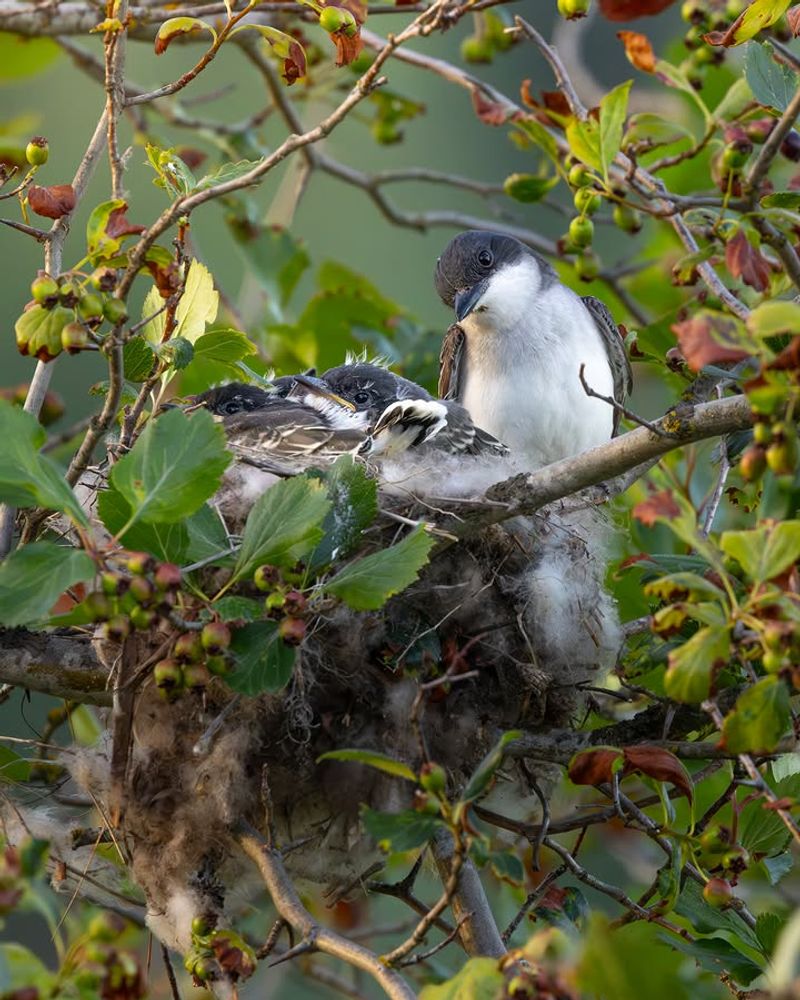
Once eggs hatch, the pace in a Kingbird yard shifts dramatically. Parent birds make dozens of food trips per day, turning a quiet yard into a constant stream of aerial activity.
Chicks grow fast and need protein-rich food. Flying insects make up nearly all of their early diet.
Parents hunt close to the nest, which means your yard gets visited repeatedly if it sits within that foraging radius.
Both parents share feeding duties fairly equally.
Watching them coordinate, one hunting while the other guards, is one of the more entertaining summer behaviors you can observe without binoculars.
Peak feeding intensity usually falls between late June and mid-July for first broods in warmer regions. Activity levels drop briefly between broods but can pick back up if the pair attempts a second nest.
Keeping your yard insect-friendly during this window makes a real difference. Avoid broad pesticide applications near areas where Kingbirds are actively hunting.
Pesticides can reduce the insect supply that chicks depend on, and that can push parents to forage farther from your yard.
Letting a small patch of lawn grow slightly longer or leaving a brush pile in a corner adds insect habitat with almost no effort at all.
6. Established Territories Keep Pairs Nearby
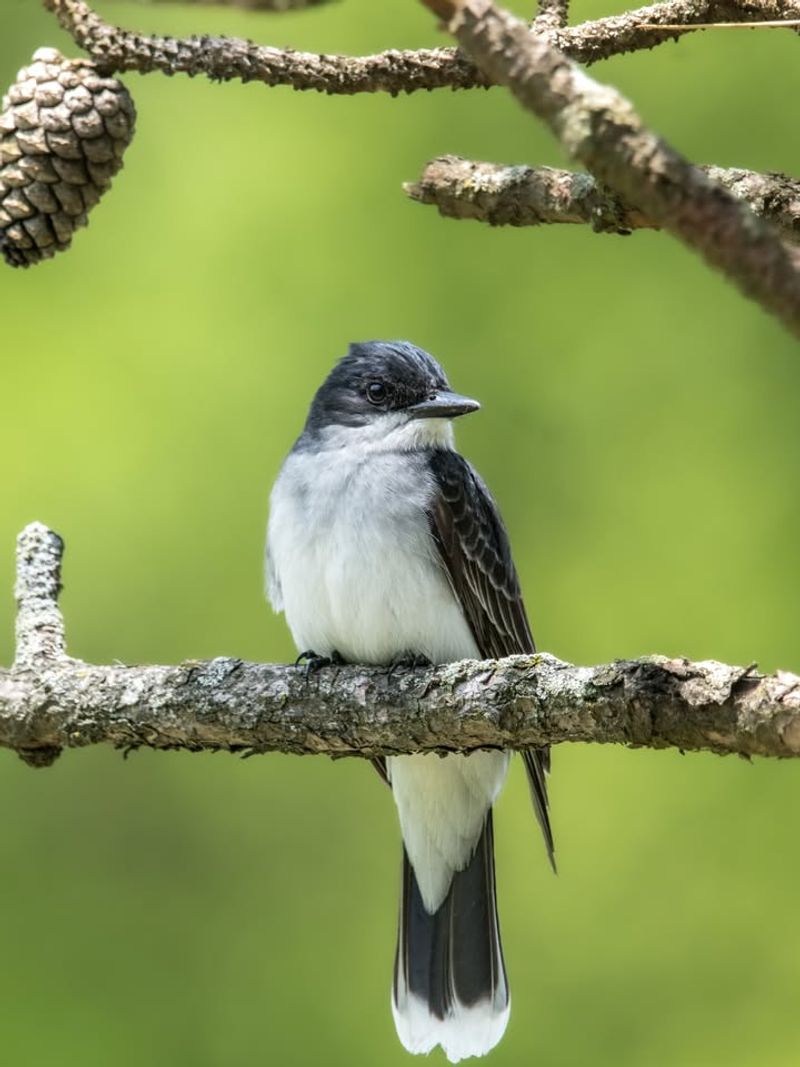
Eastern Kingbirds do not wander randomly.
Once a pair claims a territory, they defend it with real intensity and tend to stay within its boundaries for the full breeding season.
Territories in suburban settings are often smaller than in rural areas, sometimes covering just a few adjacent yards.
That means a single nesting pair might visit your property multiple times an hour if it falls inside their range.
Defense behavior is one of the most striking things about this species. Kingbirds will confront birds much larger than themselves, including crows, hawks, and even herons.
Watching a Kingbird chase off a Red-tailed Hawk is genuinely surprising the first time you see it.
Pairs that nested successfully in a yard one year often return to the same location the following summer. Territorial memory appears to play a role, though exact site fidelity can vary between individuals.
Supporting that territory means keeping the yard hospitable. Consistent food availability, reliable perches, and minimal disturbance near the nest all contribute to a stable home range.
Yards that offer those conditions tend to hold Kingbird pairs longer into the season compared to yards that are frequently disturbed or heavily maintained during peak nesting weeks.
7. Yards Near Open Spaces Offer Better Foraging
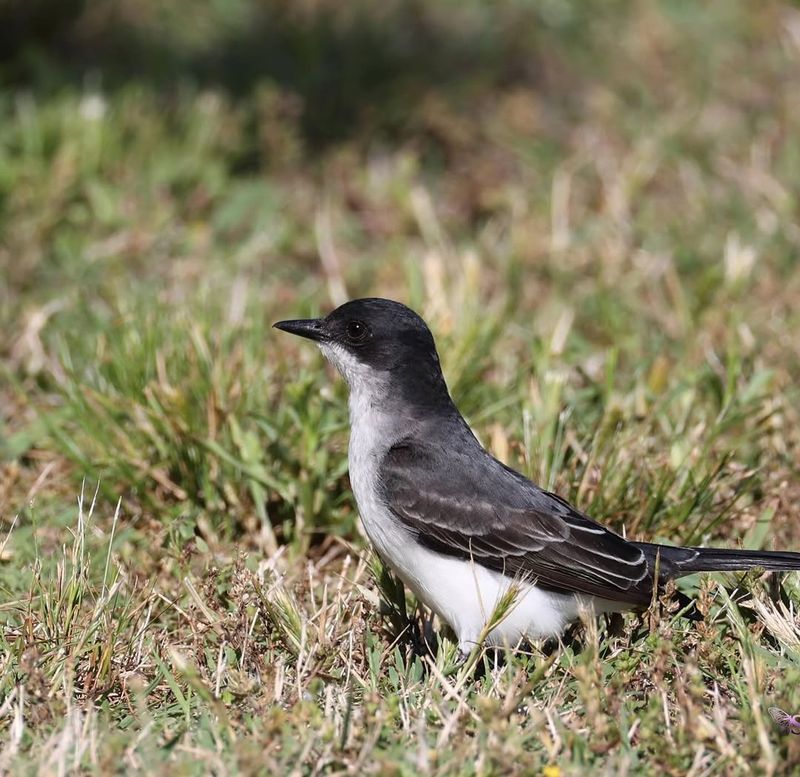
Location within a neighborhood matters more than most people realize. Yards that border open fields, meadows, or unmowed utility corridors give Eastern Kingbirds a serious foraging advantage.
Open spaces concentrate flying insects in ways that dense suburban blocks cannot match.
Grasshoppers, beetles, and large flies are far more abundant in low-cover areas, and Kingbirds exploit those zones heavily during summer.
A yard that sits at the edge between mowed lawn and taller vegetation essentially acts as a transition zone. Kingbirds hunt these edges efficiently because prey density is higher where habitat types meet.
Backing up to a retention pond, a golf course rough, or even a vacant lot with weedy growth can dramatically increase how often Kingbirds use your yard as a base. Edge habitat is genuinely productive for them.
If your yard does not naturally border open space, creating a small unmowed strip along a fence line or property edge can mimic that effect in a modest way.
Even a ten-foot-wide patch of tall grass and wildflowers adds insect diversity.
Georgia’s long, warm summers give that kind of habitat plenty of time to establish and start drawing in the insects that keep Kingbirds hunting nearby all season long.