Should You Stake Young Trees In Virginia Before Winter Storms Arrive?
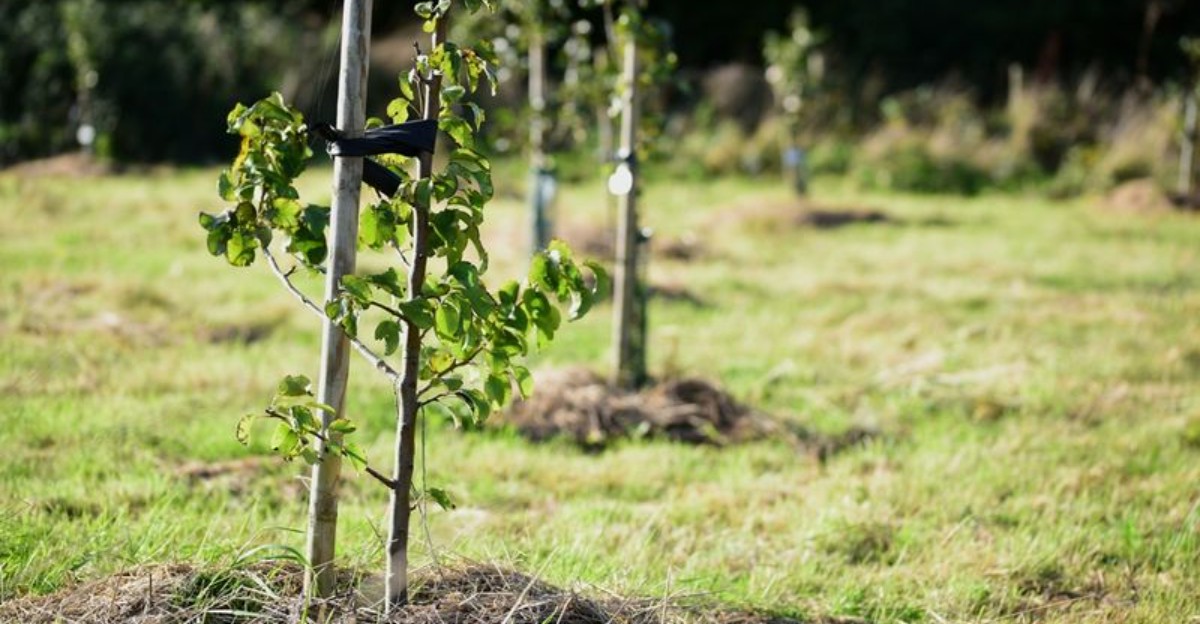
A young tree that never sways in the wind can grow a thinner, weaker trunk. Scientists even have a name for how trees respond to being bent and shaken.
They call it thigmomorphogenesis, and I love that a tongue twister explains why trees get tougher.
Every fall, I watch neighbors rush out with rope and metal posts as the forecast turns ugly. I get it, because nobody wants to find a favorite sapling flat on the lawn after an ice storm.
Here in Virginia, winter can bring wet snow, freezing rain, and gusty nor’easters in the same month.
Still, that urge to tie everything down deserves a second look. Extension experts at schools like Purdue and LSU point out that support can help or hurt, depending on how it’s done.
The right choice depends on your tree, your soil, and your wind.
Your little tree might need a brace to handle winter weather, or it might grow stronger with a little breathing room. Knowing the difference can save you from making a well-meaning mistake.
1. That Swaying Sapling Trunk Is Doing Important Work
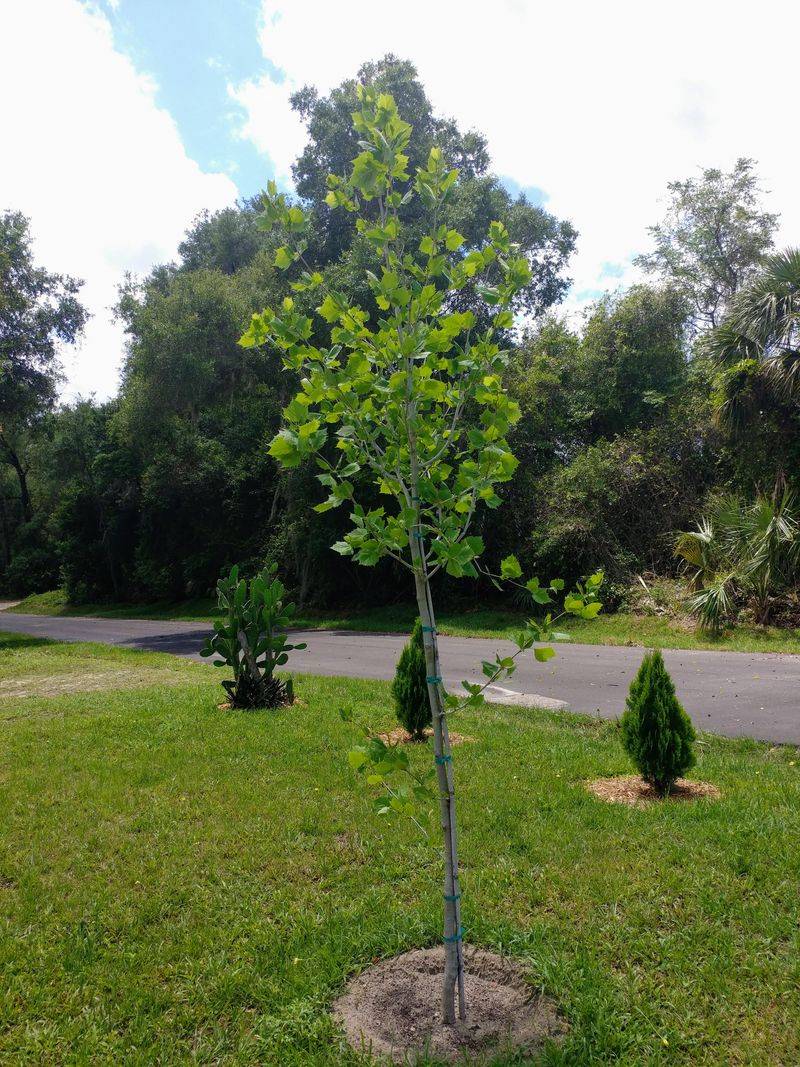
Watch a skinny sapling on a breezy November afternoon and you’ll see it bob like a fishing rod. That wobble is not a weakness.
It’s a workout.
When wind bends a trunk, the tree responds by adding more wood near the base. Over time, the trunk thickens and develops a natural taper, wider at the bottom and narrower at the top.
Roots also spread farther and grip the soil more firmly.
Researchers have tested this idea for decades. Trees held rigidly in place often grow taller but skinnier, with less taper and smaller root systems.
When the support finally comes off, those pampered trees can bend over or snap more easily than ones that moved freely from the start.
So the honest answer to the big question is this. Most young trees in your yard don’t need stakes before winter, as long as they were planted well and have a healthy root ball.
University extension services, including Purdue and LSU, agree that staking is the exception rather than the rule.
I find that oddly freeing. Instead of fussing with ropes, you can spend that energy on things that matter more, like mulch, water, and checking for loose soil around the roots.
2. Some Young Trees Really Do Need A Temporary Stake This Winter
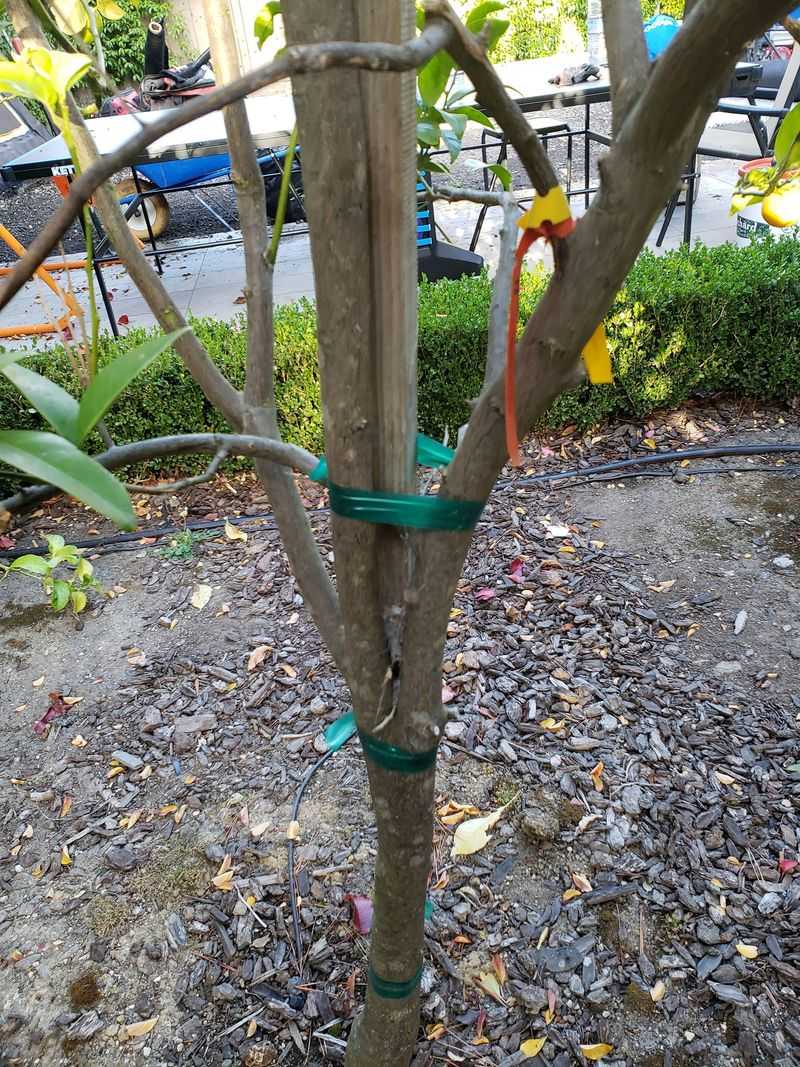
My own lesson came from a bare-root redbud I planted on a hill one October. After a gusty January week, it was leaning like it had somewhere better to be.
Some trees honestly need help.
Staking makes sense in a few clear situations. A tree with a small root ball compared to its leafy top can rock in the soil, tearing tiny new roots.
Bare-root trees and tall, top-heavy evergreens fall into this group too.
Location matters as well. Trees on exposed slopes, open fields, or the windy edges of a property may need short-term support.
Loose, sandy soil, common in parts of the Coastal Plain, can also let a root ball shift after heavy rain.
Here’s a quick test. Grab the trunk low and give it a gentle push.
If the trunk bends but the root ball stays put, skip the stake. If the whole root ball moves in the soil, a brace is a smart idea.
Stakes can also act like a fence, protecting thin trunks from lawn mowers, string trimmers, and playful dogs. That kind of protection is a fair reason to set posts, even when wind isn’t the worry.
3. Soft, Wide Tree Straps Beat Wire Every Single Time
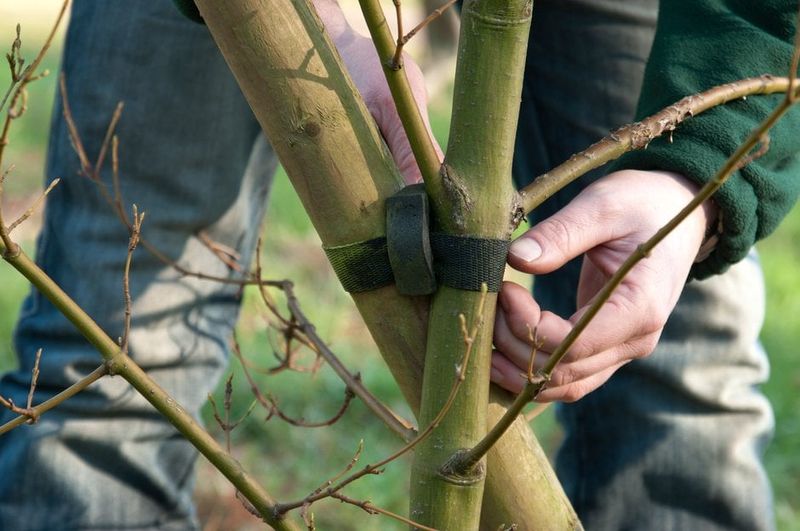
Let’s talk setup, because a good brace looks almost lazy. It should hold the tree steady at the roots while letting the top move.
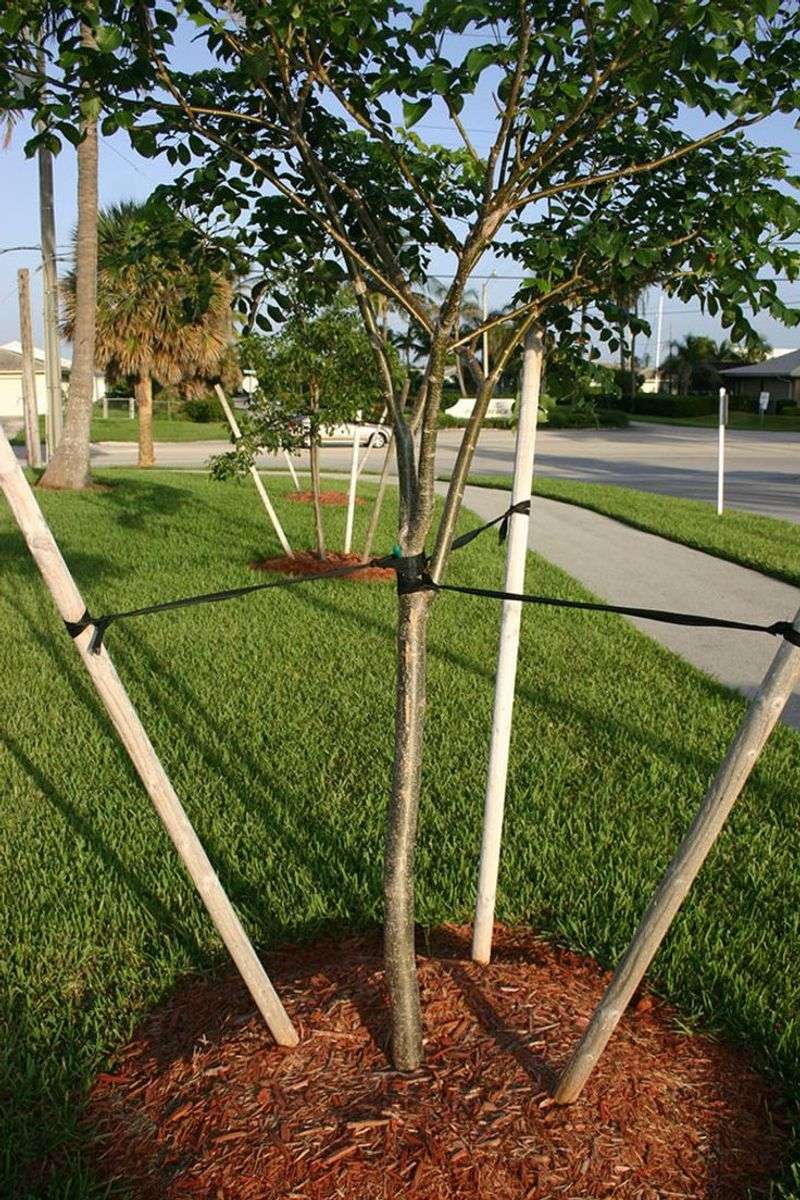
Use two or three sturdy wooden stakes. Drive them into firm, undisturbed soil just outside the root ball, roughly 16 to 24 inches deep.
Pushing stakes through the root ball can damage the roots you’re trying to protect.
Next, pick the right ties. Wide, flexible materials like canvas strapping, rubber webbing, or old nylon stockings spread pressure over the bark.
Thin wire, even inside a piece of garden hose, can still bite into a growing trunk.
Attach the ties low, usually about one-third of the way up the trunk, and only as high as needed to keep the tree upright. Leave enough slack for the trunk to sway an inch or two in every direction.
Picture a loose hug, not a tight grip. A well-staked tree should still wiggle on a windy day.
If it stands stiff as a flagpole, loosen things up.
Write the install date on a garden calendar or a tag on the stake. You’ll thank yourself next spring when it’s time to check.
4. Tight Tree Ties Can Strangle A Growing Trunk
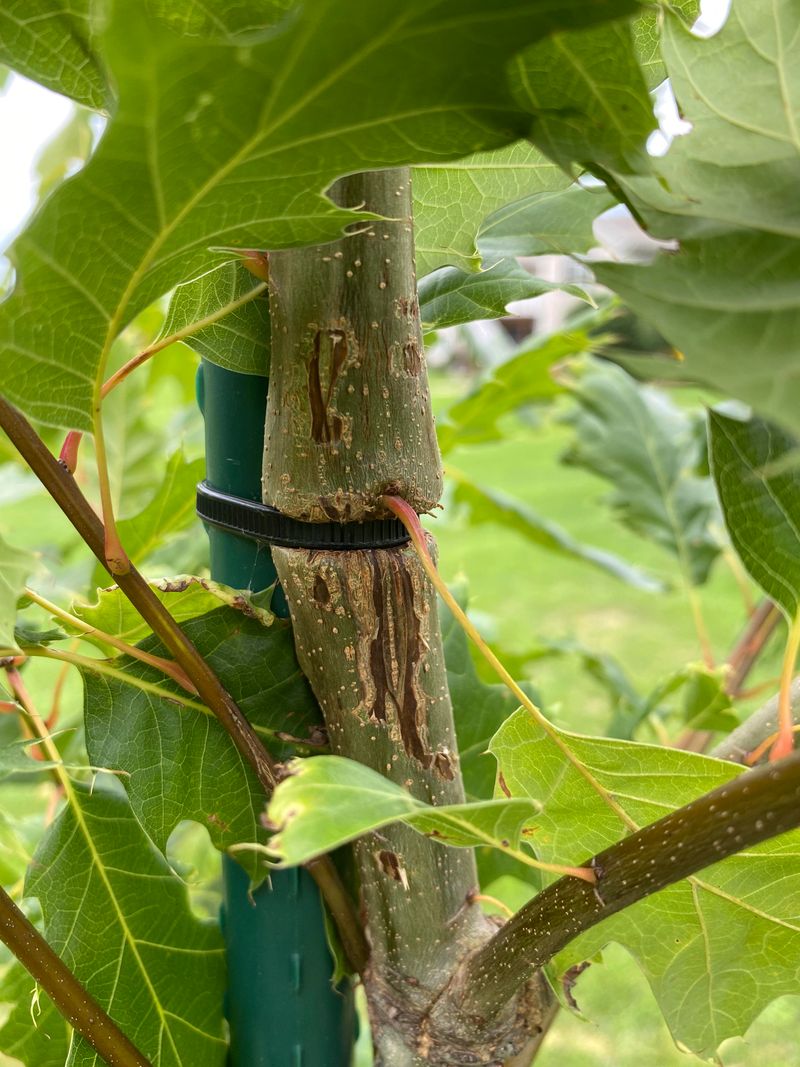
Ever worn a belt that fit in summer and pinched by the holidays? Trunks feel the same squeeze, and they can’t loosen the notch themselves.
Just under the bark sits a thin layer of living tissue that carries water and sugars up and down the tree. A tie that’s too snug can press into that layer as the trunk widens.
Arborists call this girdling, and it can slowly starve the top of the tree.
Warning signs are easy to spot if you look. Watch for bark swelling above the tie, rubbed or scraped spots, or a groove forming in the trunk.
Sometimes the trunk even snaps right at the tie during a strong storm.
Rubbing causes trouble too. If a stake sits too close, the trunk can grind against it in the wind, leaving open wounds that invite insects and decay.
Overstaying is the sneakiest problem. Stakes left on for years keep a tree from building its own strength, so it may lean or topple once they’re gone.
A quick monthly check through winter takes about thirty seconds per tree. Loosen anything snug and shift straps slightly if bark looks worn.
5. That Thin Bamboo Nursery Stake Should Come Off At Planting
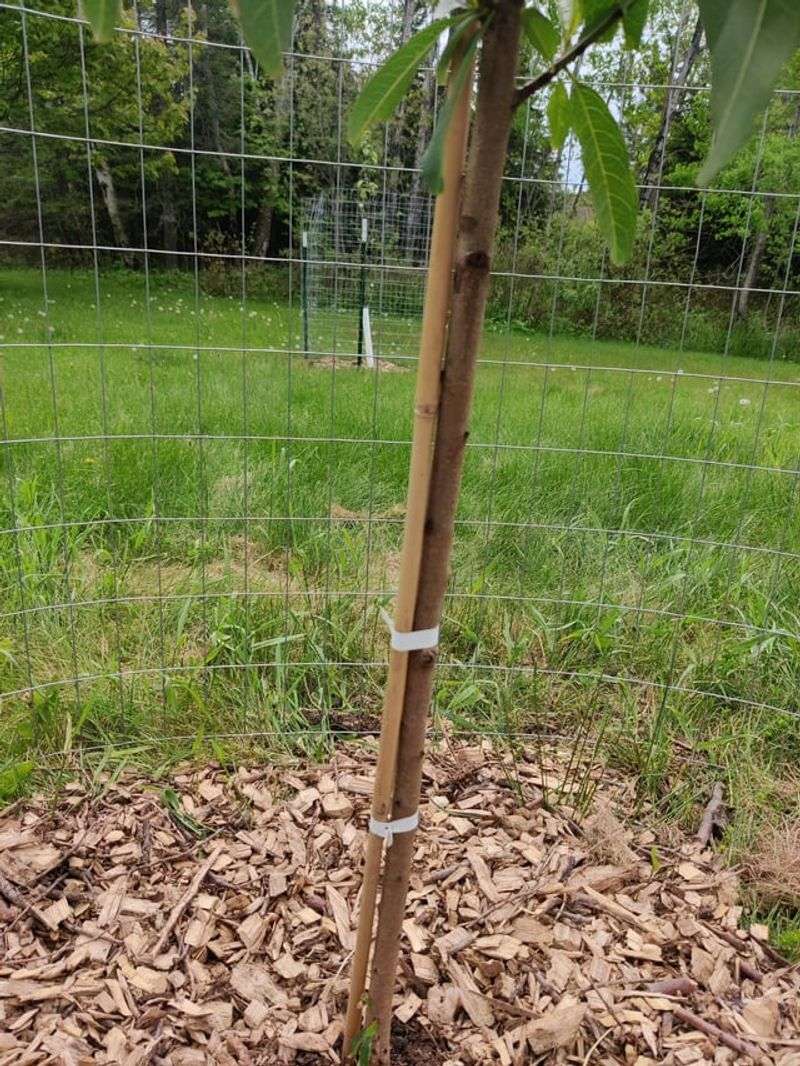
Funny thing about nursery trees. Many come home with a skinny bamboo or metal rod taped to the trunk, and plenty of folks assume it’s part of the package.
That little stake has one job. It keeps the tree straight in a crowded nursery row and during the bumpy ride to your yard.
Once the tree is in the ground, its job is done.
Leaving it on causes problems quickly. Tape and plastic ties tighten as the trunk grows, and the rigid rod keeps the trunk from flexing the way it should.
I’ve found old nursery tags wired so tightly they’d sunk into the bark.
So snip it all off during planting. Remove the stake, any tape, plastic ties, and those wire-hung plant labels.
Check the lower trunk for hidden twine as well, especially on burlap-wrapped trees.
Then give the tree the push test I mentioned earlier. If it stands up on its own with a steady root ball, you’re finished.
If it flops or the roots shift, set up a proper loose staking system instead.
Clearing that clutter takes two minutes, and it gives your new tree a clean, healthy start before the cold arrives.
6. Pull Those Tree Stakes After One Growing Season
Knowing when to let go may be the trickiest part. Staking is meant to be a short visit, not a permanent move-in.
Most extension guidance says stakes should come off after one growing season, often within six months to a year. A tree planted this fall and staked for winter can usually stand alone by late spring or summer.
Larger trees on very windy sites might need a little longer, but rarely more than two years.
Spring is a great check-in time. New roots grow actively as the soil warms, and by summer many trees have anchored themselves well.
Untie the straps first and watch how the tree behaves for a day or two.
Try the push test again. If the root ball holds firm and the trunk springs back after bending, pull the stakes.
If the roots still shift, retie loosely and check again in a few months.
Don’t panic over a slight lean once support is gone. Young trees often straighten themselves as they grow toward the light.
I like to mark stake removal on the same calendar I use for spring planting. It keeps the job from slipping through the cracks.
7. Mulch And Deep Watering Protect Young Trees Better Than Rope
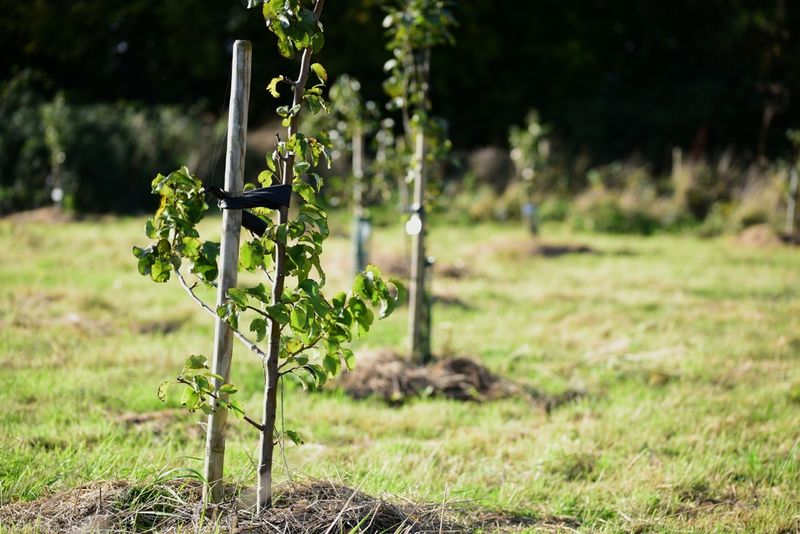
Honestly, the best winter prep for a young tree often has nothing to do with stakes. Healthy roots are your strongest storm insurance.
Start with mulch. Spread a two to four inch layer of shredded bark or wood chips over the root zone, out toward the drip line if you can.
Keep it a few inches away from the trunk, because piled-up mulch volcanoes trap moisture and invite rot and rodents.
Watering matters more than people expect. Virginia falls can turn dry, and evergreens keep losing moisture through their needles all winter.
Give new trees a deep soak during dry spells whenever the ground isn’t frozen.
Thin-barked trees like young maples and fruit trees can suffer from sunscald on cold, sunny days. A light-colored tree wrap from late fall to early spring helps, and a wire guard keeps rabbits and voles from nibbling bark.
After an ice or snow storm, resist the urge to whack loaded branches. Let ice melt on its own, and gently brush off soft snow from below.
Then walk your yard and check stakes and ties.
Put it all together, and your young trees will greet spring sturdy, rooted, and ready to grow.