Neat Rows Of Tiny Holes In Indiana Tree Bark Were Drilled By A Bird That Comes Back For The Sap
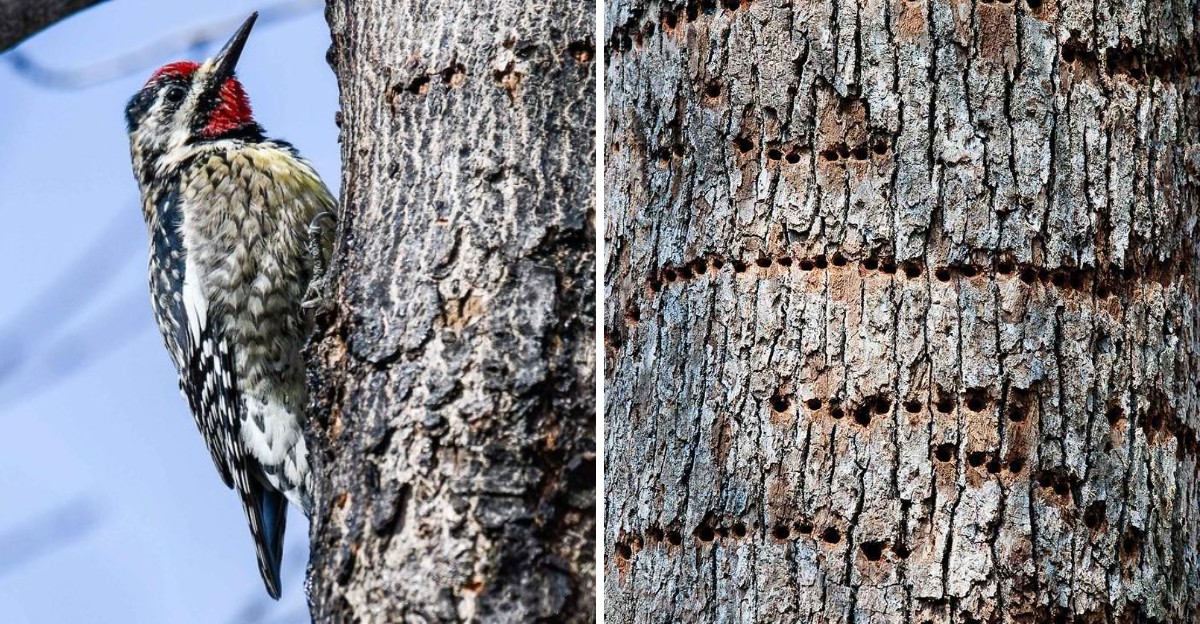
One small bird in the eastern woods drills holes so neat they look like a row of buttons sewn onto a tree. Those holes are not random. They are little sap taps, and the bird returns again and again to sip from them.
The first time I spotted those tidy rows on a maple in my Indiana backyard, I blamed a bored kid with a drill. Then I noticed the holes were all about the same size, roughly a quarter inch across.
Here’s what gets me. Hummingbirds, bats, and even squirrels sneak in to share the sweet drips. One busy bird basically runs a snack bar for the whole neighborhood.
So who is this tiny tree tapper, and should you worry about your favorite maple? The answer surprised me more than I expected, and it might change the way you look at the bark outside your window.
Those Tidy Rows Of Holes In Your Maple Have A Feathered Owner
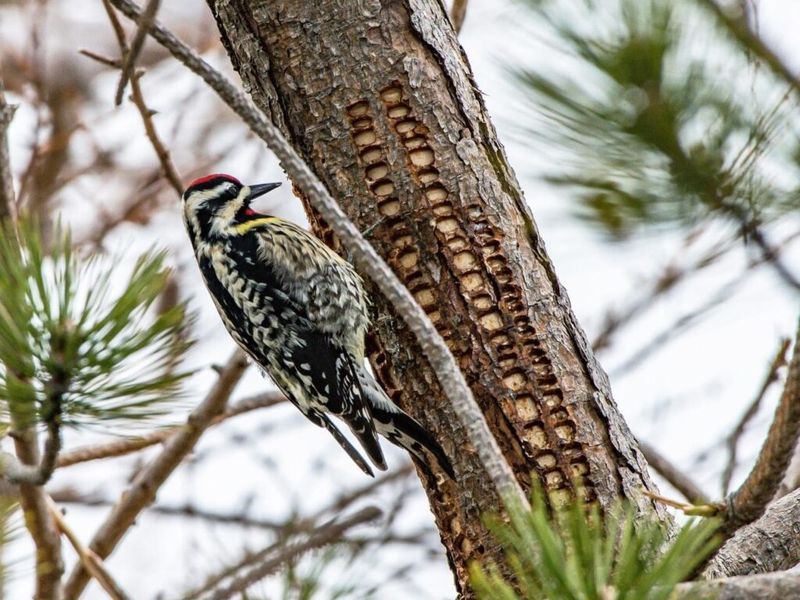
Woodpeckers usually leave messy, scattered holes while hunting bugs. The culprit behind the neat rows is different. It is the Yellow-bellied Sapsucker, a migrating woodpecker that feeds mostly on tree sap.
You can spot one by its black and white mottled pattern and bright red cap. Males also wear a red throat patch. Look for a long white stripe on the folded wing, plus a soft, pale yellow wash on the belly that gives the bird its name.
Experts note that this is the only sapsucker species found in the eastern United States, and it taps trees on purpose for sap. Other woodpeckers mostly chip away for insects hiding in wood. Their holes look random and uneven by comparison.
So if the holes on your tree line up like stitches on a quilt, you are almost certainly looking at sapsucker work. The rows can run sideways, up and down, or both, forming a grid over time.
Fun fact for your next backyard chat. Scientists have recorded sapsuckers drilling on hundreds of different tree species across North America. That is a pretty impressive menu for a bird about the size of a robin.
Yellow-Bellied Sapsuckers Run Their Own Sap Taps
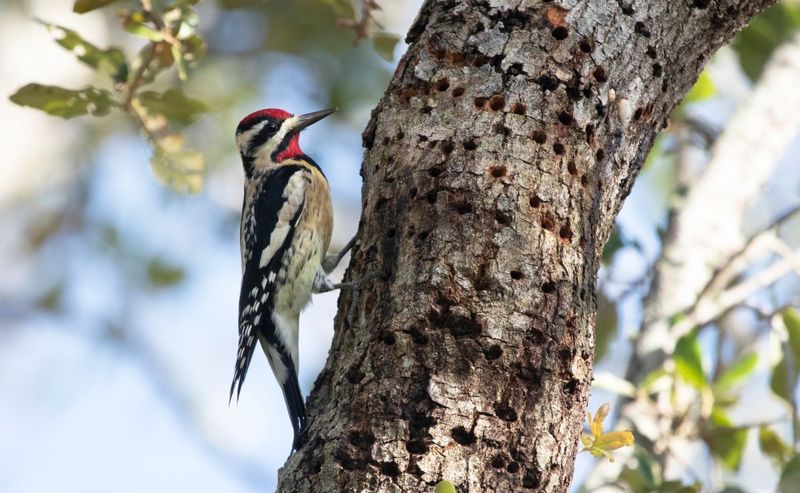
A sapsucker works a lot like a person tapping a maple for syrup. It drills small holes called sapwells, waits for sap to ooze, and then comes back to drink it. The bird keeps these wells open by visiting them often.
Here is the clever part. Sapsuckers make two kinds of holes. Deeper, round holes reach the xylem, the wood layer that carries sap upward in early spring before leaves open.
Once trees leaf out, the bird switches to shallow, rectangular holes in the phloem. That layer carries sugary sap downward from the leaves. The rectangular wells get stretched and reused, which is why older patches look like little grids.
The sapsucker does not just sip sap. It also eats the soft cambium layer under the bark. Bugs that get stuck in the sticky drips become a handy bonus snack, too.
Watching one at work is a treat. The bird will hop between wells, lick sap with a brushy tongue tip, and defend its favorite tree from rivals. If you see the same bird circling the same trunk all morning, it is guarding its private snack station.
Spring And Fall Are Prime Drilling Season In Indiana
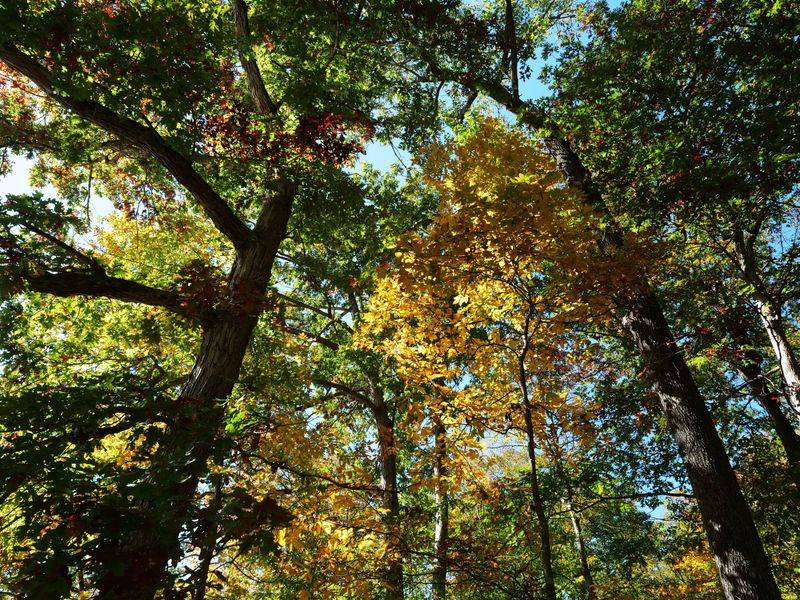
Timing tells you a lot. Most sapsuckers pass through Indiana during spring migration, usually April to May. They come back through again in fall, mostly September and October.
Summer finds them nesting farther north in Canada and the northern United States. Winters are spent in the Southeast, down into Central America and the Caribbean. Some birds may linger in southern Indiana during milder winters, so a cold-season visitor is not unheard of.
I learned the hard way that fresh holes show up fast. One April weekend my birch looked fine, and by Monday it had a brand new row of wells. A migrating bird had stopped to refuel.
This seasonal pattern is useful for gardeners. You can focus your watching and any protection efforts during these migration windows. Outside those months, activity often drops off.
Keep a simple notebook or phone note of when you see new holes. After a year or two, you will likely notice the birds arriving around the same weeks. That little record makes planning much easier, and it is fun to track the return of a familiar seasonal guest each spring.
Sweet Maples And Birches Top The Sapsucker Menu
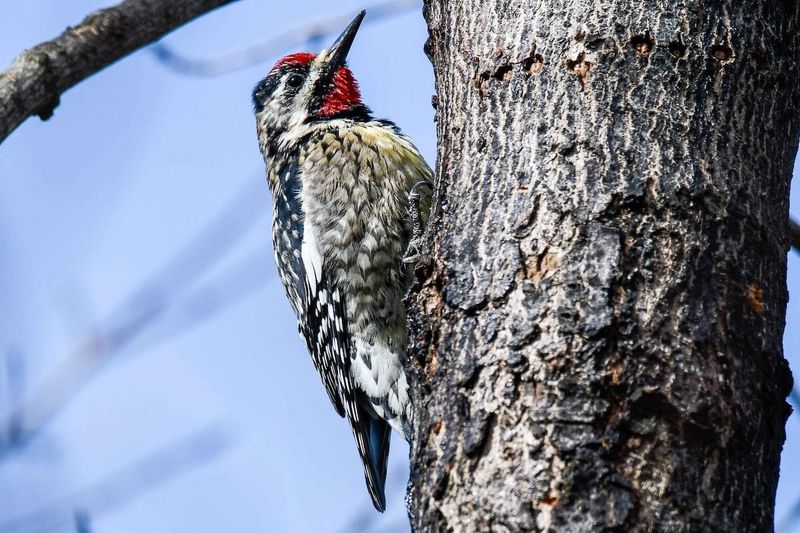
Sapsuckers have taste. They favor thin-barked trees with sugary sap, and maples are near the top of the list. Birch, aspen, hickory, pine, spruce, and fruit trees like apple are common picks, too.
Thin bark makes drilling easier, and high sugar means a better meal. That is why a sugar maple or river birch in your yard might get attention while a nearby oak stays mostly untouched.
Research also suggests sapsuckers sometimes choose trees that are already stressed or weakened. A tree fighting drought, root problems, or injury may produce sap that is extra appealing. So a heavily tapped tree could be a hint to check its general health.
Not going to lie, I find it kind of flattering when they pick my maple. It means the tree is producing good sap. Still, it pays to know which of your trees are on the menu.
Take a slow walk around your yard and look closely at the trunks of maples, birches, and fruit trees. Old rows of healed holes often show which trees the birds prefer. Those favorites are the ones to watch most closely next migration season.
Hummingbirds And Bats Line Up At The Sapwells
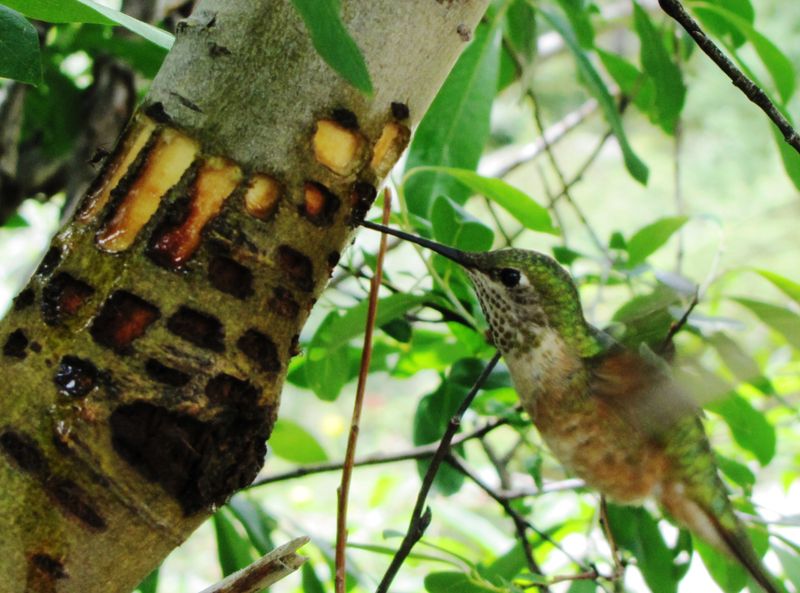
Sapsuckers are generous hosts, whether they mean to be or not. Their sapwells feed more than 40 other animal species. The guest list includes hummingbirds, warblers, bats, squirrels, and plenty of insects.
Ruby-throated Hummingbirds are the stars of this story. In early spring, few flowers are blooming yet. Hummingbirds are known to time their northbound trip with sapsucker arrival so they can sip from those sweet taps.
Think of it as a roadside diner open before the flower season starts. Sap provides sugar energy when nectar is scarce. Bugs drawn to the drips also feed hungry warblers.
Here is something I love. Next spring, stand quietly near a tree with fresh wells. You may catch a hummingbird darting in, or a squirrel licking the bark like a lollipop.
This is why many biologists see sapsuckers as an important link in the forest food web. A few holes in one tree can support a surprising number of creatures. Before you get annoyed at the damage, remember how many neighbors are quietly benefiting from that busy little driller.
Rings Of Holes Around A Young Trunk Deserve A Closer Look
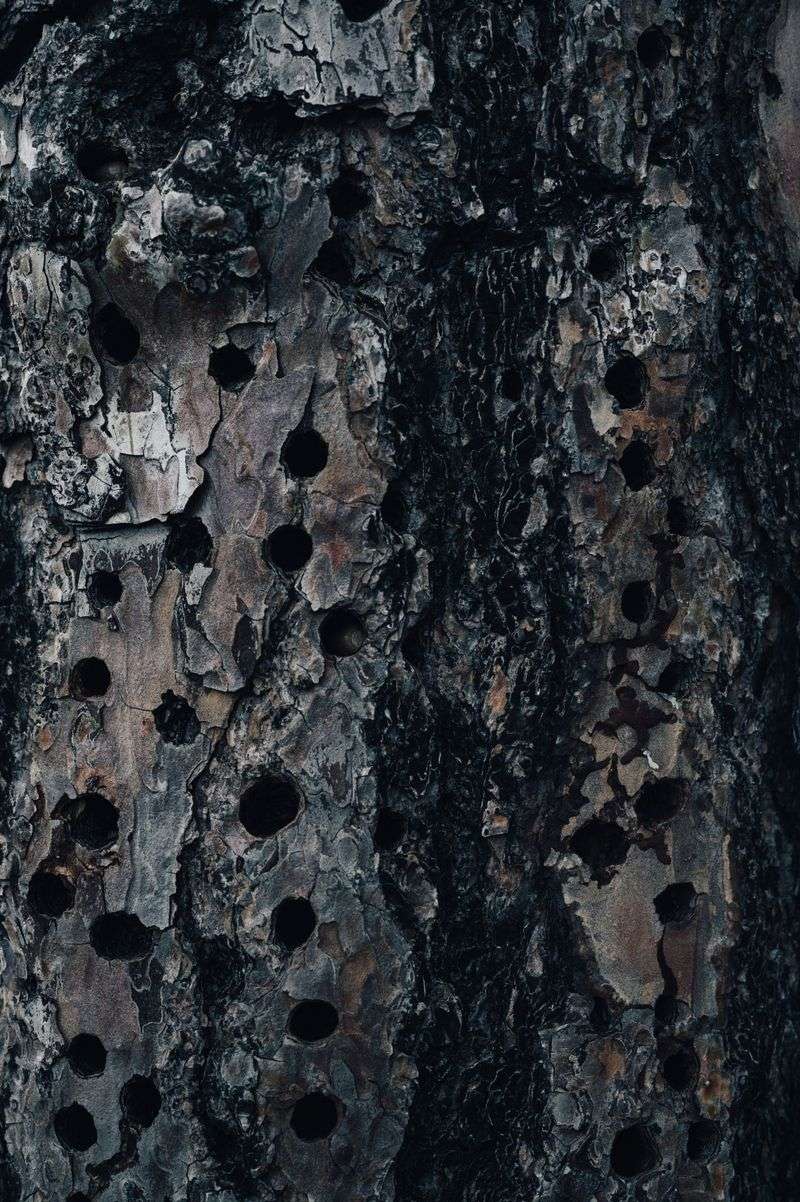
Most healthy, mature trees shrug off a few rows of holes. The bark heals, and life goes on. Trouble starts when feeding becomes heavy or circles the whole trunk.
When holes ring a trunk all the way around, it is called girdling. That ring can cut off the flow of water and food through the tree. Young trees and already stressed trees are most at risk of decline from this kind of damage.
Open wounds can also let in fungi, bacteria, and insects that cause decay. Ohio State and USDA sources point out this secondary damage may matter more than the holes themselves. Woodworkers even have a name for the stains sapsuckers leave in lumber, called bird peck.
So how do you know if you should worry? Check whether holes wrap fully around the trunk or a main branch. Watch for thinning leaves, branch dieback, or oozing that does not slow down.
If your tree looks rough, call a certified arborist. They can judge whether the problem is sapsuckers, disease, or something else. Catching trouble early gives a valuable tree its best shot at recovery.
Burlap Wraps And Shiny Strips Keep Sapsuckers Moving
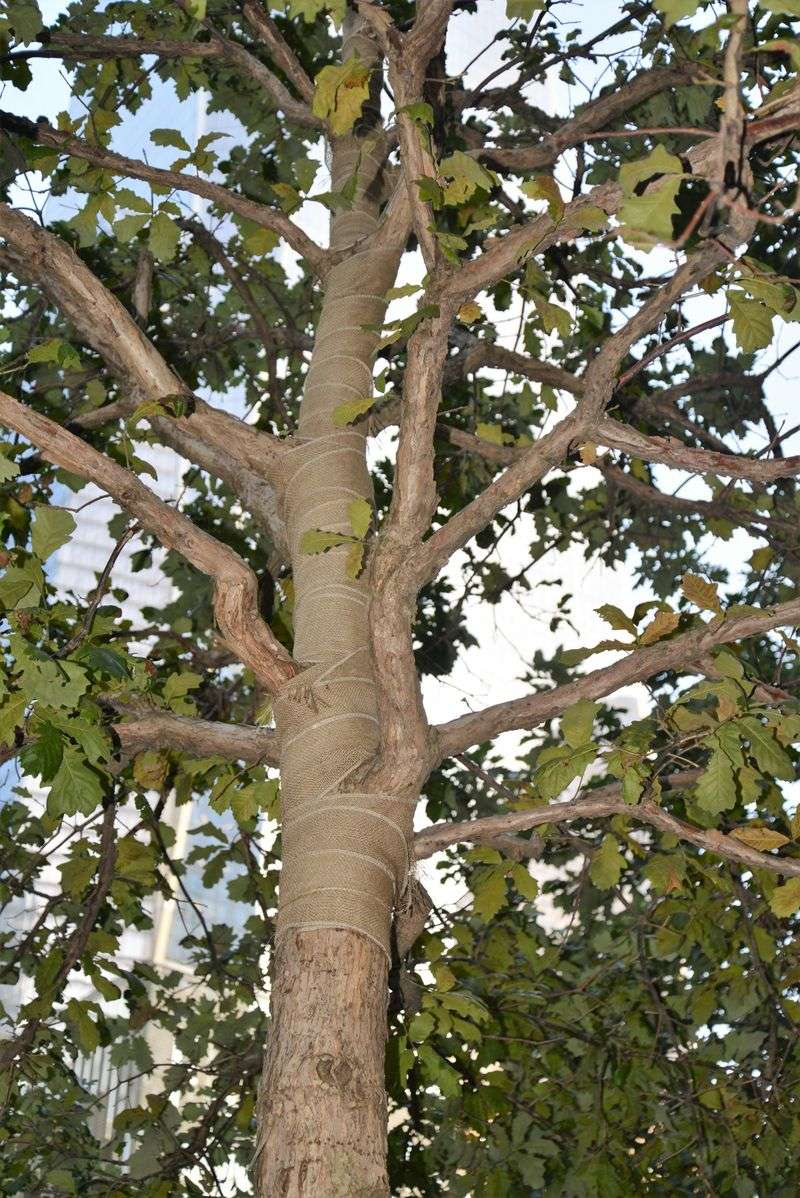
Fair warning before anything else. Yellow-bellied Sapsuckers are protected under the federal Migratory Bird Treaty Act. Harming them is illegal, so all control has to be gentle and humane.
The most reliable trick is a physical barrier. Wrap the trunk area where holes appear with burlap or hardware cloth during spring and fall migration. Take the wrap off in summer so it does not trap moisture or rub the bark.
Scare tactics can help, too. Hang mylar strips, old CDs, or pie tins near the target tree. The flash and movement often make birds uneasy.
A plastic owl or hawk can work for a short time. Move it every few days, because birds quickly figure out a decoy that sits still. Loud noises or clapping when you spot the bird may also nudge it along.
Here is a tip some gardeners swear by. Leave one favorite tree for the sapsucker and protect the rest. A bird with a reliable feeding spot may focus there instead of spreading out. It is a fair trade that keeps both you and the wildlife reasonably happy.
Skip The Hole Patches And Give Your Tree Some TLC Instead
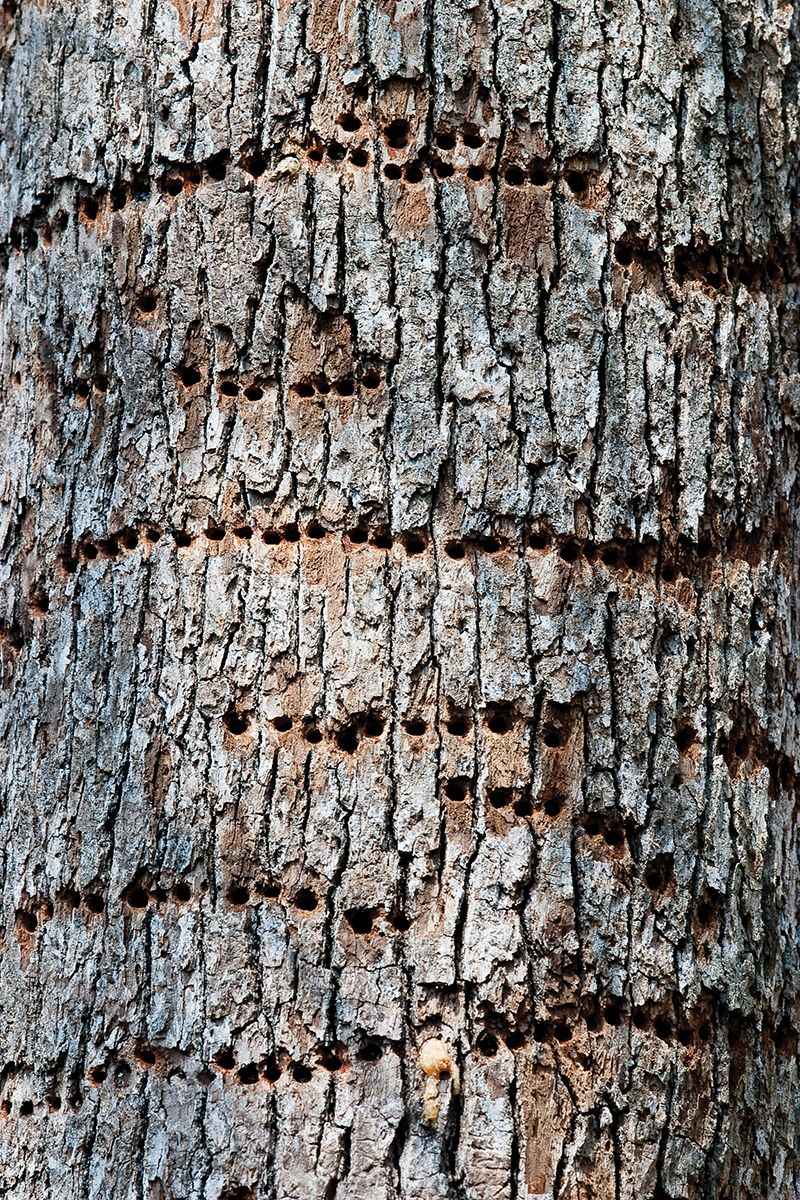
Call me stubborn, but my first instinct was to fill every hole with putty. Turns out that is a bad idea. Experts advise against plugging or painting sapsucker holes.
Trees heal by growing callus tissue over wounds. Sealants can trap moisture and slow that natural process. Leaving the holes alone usually works best.
Your real job is keeping the tree strong. Water deeply during dry spells, especially in late summer. Spread mulch two to four inches deep in a wide ring, keeping it a few inches away from the trunk.
Avoid mower and string trimmer bumps on the bark. Those small injuries add stress that a sapsucker may notice. Prune only when needed, and skip heavy fertilizing unless a soil test shows a need.
A healthy Indiana tree with a few rows of holes is often a sign of a living, working backyard ecosystem. Watch it each season, protect young or struggling trees, and enjoy the parade of hummingbirds and warblers that follow. Next time you spot those tidy little rows, grab binoculars and see if the red-capped driller is nearby, ready for another sip.