This Venomous Resident Is Moving Into Your Texas Shed Before Winter
This spider carries venom that some experts rank among the most potent of any North American spider. To my surprise, that tiny powerhouse may already be tucked behind the fertilizer bags in your shed.
As fall nights cool off across Texas, this shy resident looks for dark, dry, quiet corners. It does not truly hibernate. It simply slows down, hangs on, and waits for spring.
I used to grab old flower pots without a second glance. Now I check every stack first, because the spot I trust most is often the spot this visitor likes best too.
The most interesting part? This tenant would rather hide from you than meet you face to face.
1. Those Quiet Shed Corners Are Calling A Shy Web Builder
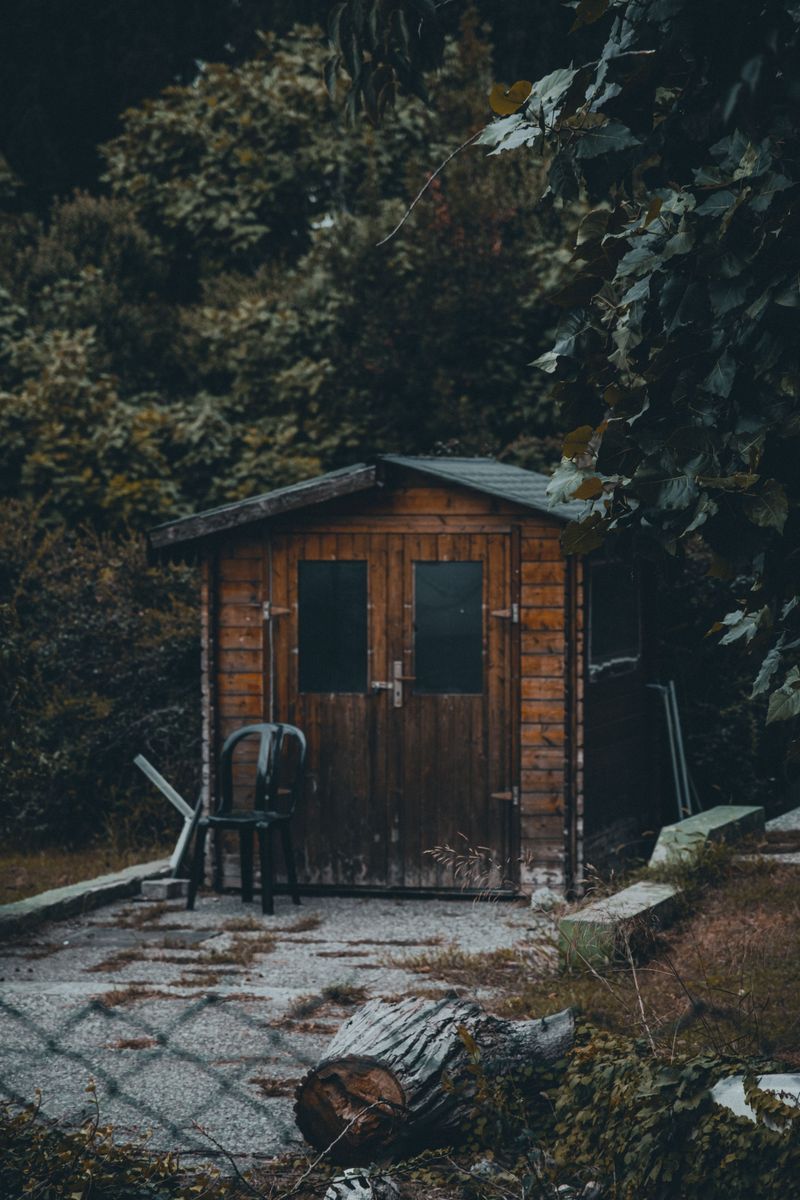
Cooler fall air sends a lot of backyard critters looking for a better address. In Texas, one of the most common shed tenants this time of year is a spider that loves calm, cluttered, forgotten spaces.
Spiders are cold-blooded, so their activity slows as temperatures drop. Some species enter a resting state, while others stay active on mild days.
A shed gives them shelter from wind, rain, and sudden cold snaps, which are common across much of the state.
Your shed also offers something they value even more than warmth. It stays undisturbed for weeks at a time. Once the summer gardening rush ends, those back shelves and lower corners go quiet.
Personally, I think of fall as the season when my shed switches from busy workshop to sleepy storage room. That change is exactly what a hiding spider is waiting for.
Insects that wander inside also give spiders a steady snack supply. Crickets, beetles, and moths often slip under doors as nights get chilly.
So the setup is simple. Shelter, quiet, and food all in one place make your shed look like a five-star retreat. Knowing who is checking in helps you stay a step ahead before you reach into that pile of pots.
2. The Shiny Black Widow With A Red Hourglass Is Your Likely Roommate
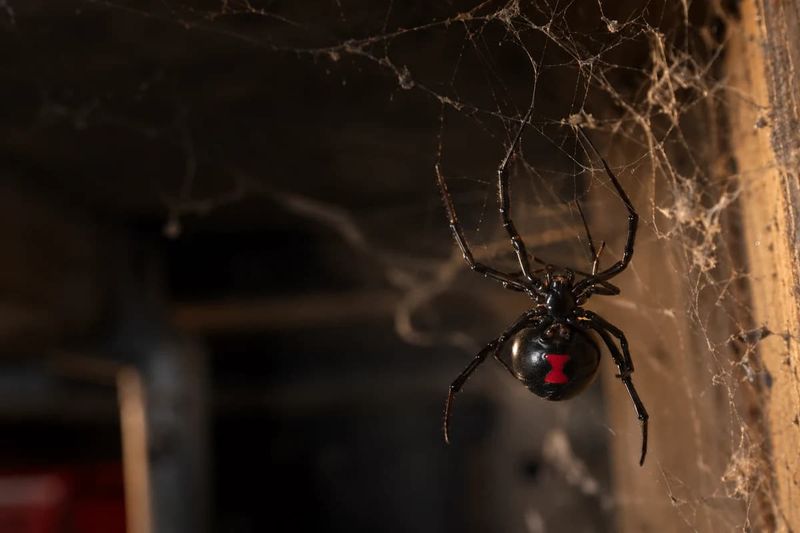
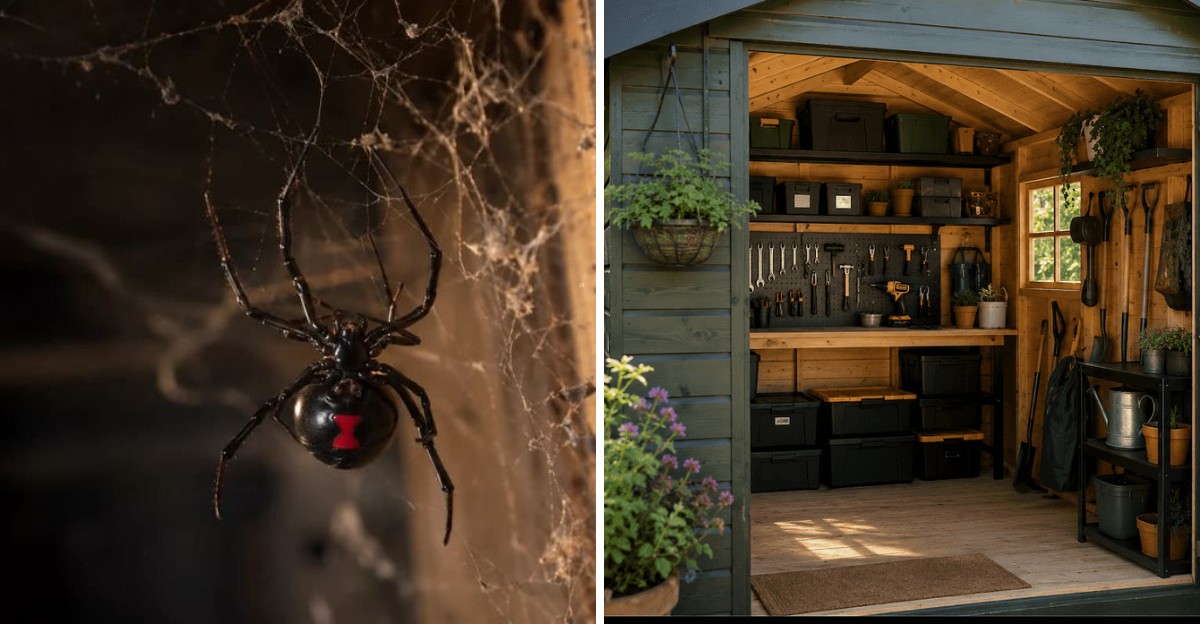
Glossy, jet-black, and round as a pea, the female black widow is hard to mistake once you know the look. Flip her over and you will usually spot a red or orange hourglass on her belly.
Texas is home to several widow species. The southern black widow and western black widow are the ones gardeners most often meet.
Texas A&M AgriLife Extension notes they favor dark, dry, sheltered places like sheds, woodpiles, and water meter boxes.
Males and young spiders look quite different. They are smaller, often brownish or striped, and they are rarely a concern for people. The adult female is the one with the medically important bite.
Here is a fun bit of trivia. The name comes from the old belief that females always eat their mates, but in the wild that happens far less often than the legend suggests.
You may also notice her egg sacs. They look like small, tan or cream paper balls tucked into the web, and each one can hold hundreds of eggs.
Once you can recognize her, you can stop guessing. Every dark web in your shed is not a threat, but this shiny lady deserves your full respect.
3. Messy Tangled Webs Low In The Shed Give Her Away
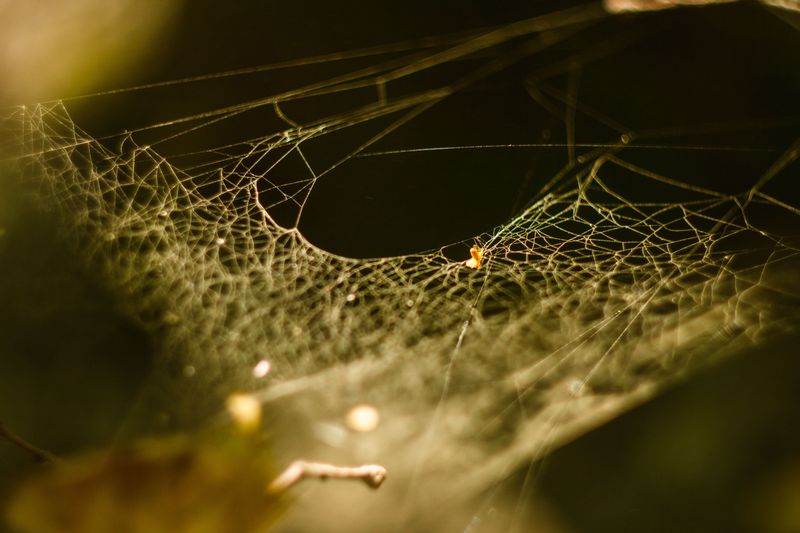
Forget the tidy, wheel-shaped webs you see on garden fences. A black widow builds a scruffy, tangled mess that looks like someone dropped a handful of fishing line.
The silk feels surprisingly strong and a little sticky when you brush it. You will usually find these webs close to the ground, in corners, under shelves, behind boxes, or beneath stored lawn equipment.
My favorite trick is a flashlight check after dark. Widows often hang upside down in the center of the web at night, which makes that hourglass easy to see without getting close.
During the day, she usually hides in a small retreat at the edge of the web. That might be a crack in the wood, the inside of a pot, or a gap under a bag of mulch.
Look for a few other clues too. Small insect husks caught in the silk and round egg sacs are strong hints that a widow has settled in.
Take a slow walk around your shed with a light and a long stick. Ten quiet minutes can tell you more than a whole season of guessing and nervous reaching.
4. Thick Gloves And A Long-Handled Broom Keep Your Hands Safe
Black widows are timid, and that is worth remembering. Most bites happen when a hand or foot presses a spider by accident, not because the spider came looking for trouble.
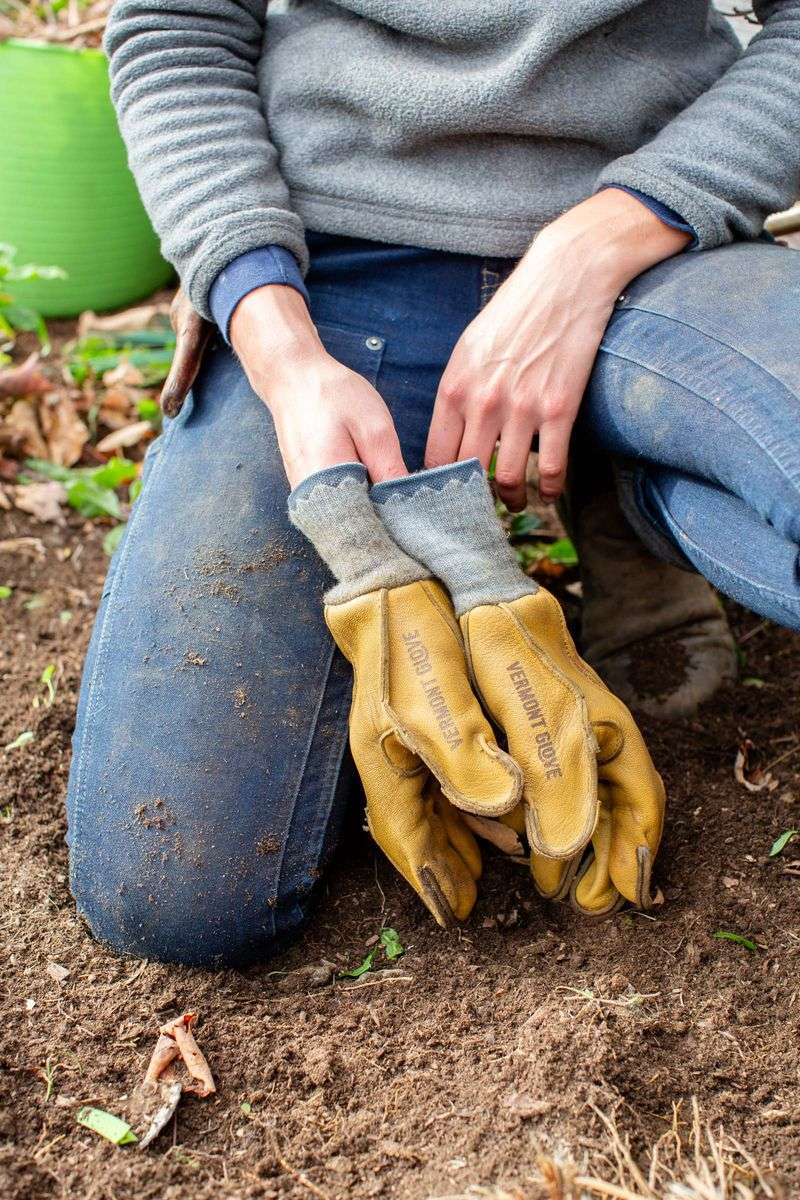
Your best defense is simple gear. Wear thick leather or canvas gloves, long sleeves, and closed shoes whenever you move stored items in your shed.
Shake out gloves, boots, and jackets before you put them on. I keep my work gloves in a sealed bin now, because a pair left on a shelf all winter can become a cozy hideaway.
For a single spider, a long-handled broom or vacuum works well. Sweep away the web, the spider, and any egg sacs, then empty the vacuum bag into a sealed trash bag outdoors.
Avoid reaching blindly into dark spaces. Use a flashlight to check under shelves, inside pots, and behind boxes before your fingers go anywhere.
Lift items toward you slowly so you can see what is underneath. That small habit gives a spider time to scramble away instead of getting pinned.
Little changes like these take seconds. They also turn a risky chore into a routine you can handle with confidence all season.
5. A Black Widow Bite Calls For Quick Medical Help
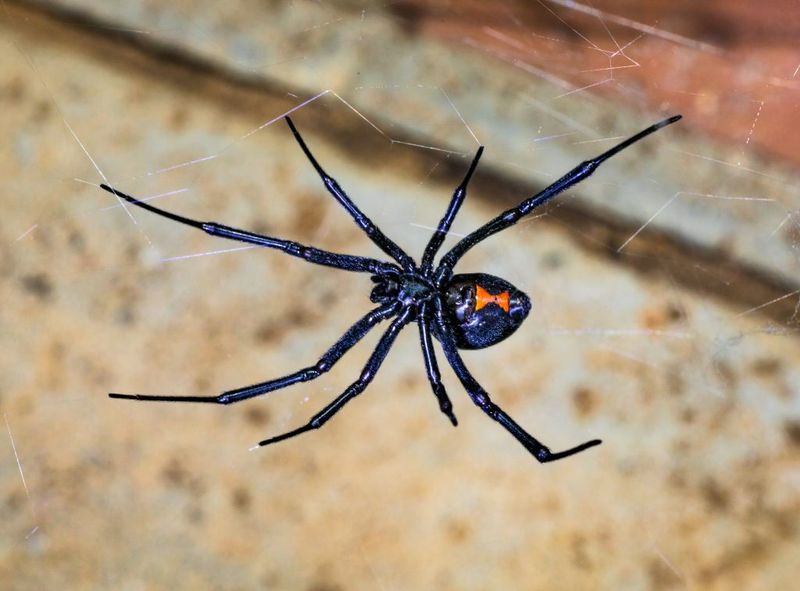
Venom from a black widow affects the nervous system, and that is why a bite deserves real attention. Serious outcomes are rare, but the symptoms can be very uncomfortable.
Many people feel a small pinprick at first. Within an hour or so, pain may spread, along with muscle cramps in the belly, back, or chest.
Other signs can include sweating, nausea, headache, and a fast heartbeat. Children, older adults, and people with heart or health conditions may react more strongly.
If you think you were bitten, stay calm and wash the area with soap and water. A cool pack can help ease pain and swelling.
Then call the Texas Poison Center Network at 1-800-222-1222 or seek medical care right away. If breathing becomes hard or symptoms feel severe, call 911.
Try to safely capture or photograph the spider if you can. Doctors find it helpful to know what caused the bite.
I believe a little preparation goes a long way here. Save that poison center number in your phone today, so you are not searching for it with a throbbing hand later on.
6. Bark Scorpions May Share The Same Cozy Shed Spaces
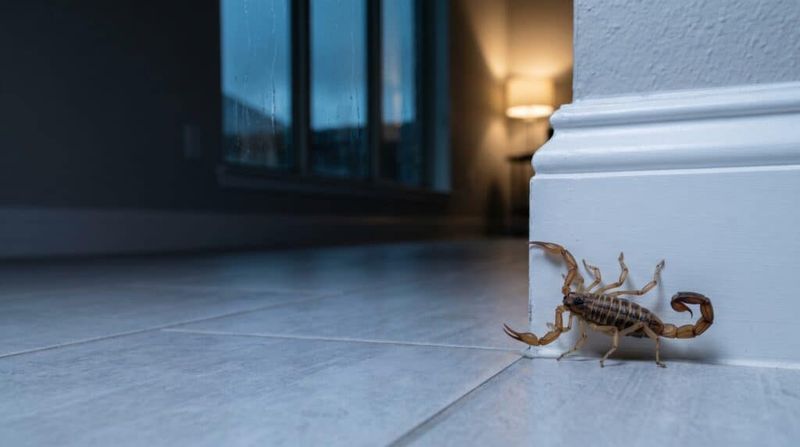
Spiders are not the only venomous tenants that appreciate your shed. In much of Texas, the striped bark scorpion likes the same dark, sheltered spots.
This tan scorpion has two dark stripes along its back and grows to roughly two to three inches long. It hides under boards, rocks, firewood, and stored items during the day.
Its sting is painful and can cause swelling and tingling. For most healthy adults, it is not considered life threatening, though young children and people with allergies should get medical advice.
Believe it or not, scorpions glow under ultraviolet light. A small UV flashlight makes them shine a pale blue-green at night, which turns a shed check into a strange little treasure hunt.
Scorpions also climb well, so they can slip into gaps in walls and roof edges. They follow the same insects that attract spiders.
The same habits that protect you from widows work here too. Gloves, careful lifting, and shaking out gear handle both critters at once.
Knowing both residents keeps you from being caught off guard. One careful routine covers your whole shed, from the floor to the rafters.
7. Sealed Bins And Caulked Gaps Make Your Shed Less Inviting
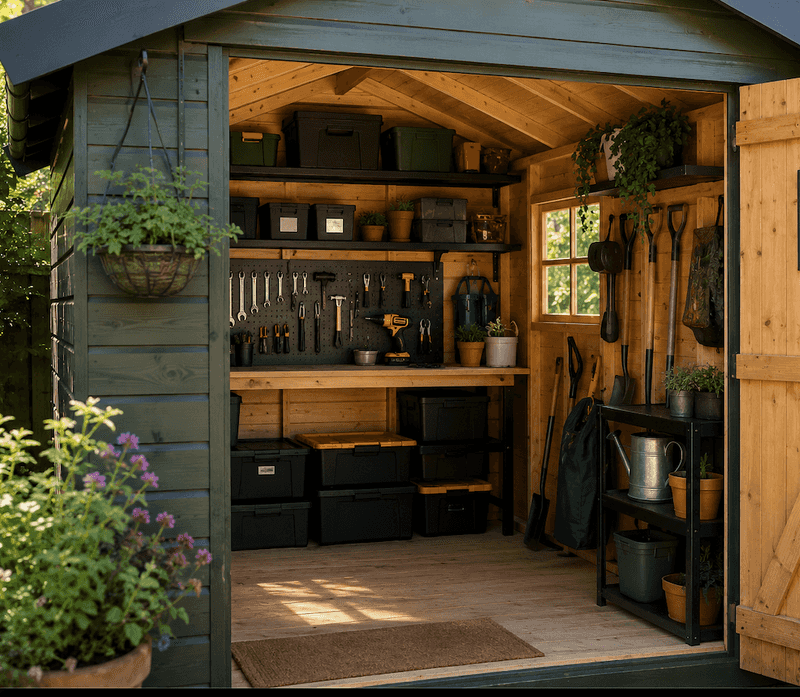
Clutter is basically a welcome mat for spiders. Every cardboard box, loose tarp, and stack of pots creates another quiet hiding place.
Swap cardboard for sealed plastic bins with snug lids. Cardboard gives spiders easy shelter and collects moisture that draws other insects.
Next, walk around the outside of your shed. Seal cracks along the foundation, walls, and window frames with caulk, and add weatherstripping or a door sweep to close the gap under the door.
Move firewood, lumber, and old tires away from the shed walls. Keeping them a few feet away and off the ground removes a favorite highway into your storage space.
Trim back weeds, vines, and tall grass growing against the building. That vegetation shelters insects and gives spiders an easy path indoors.
Lighting matters more than you might expect. Bright outdoor bulbs pull in moths and beetles at night, and those insects bring hungry spiders and scorpions right behind them.
Yellow bug lights or motion-sensor fixtures help a lot. You will love how much easier your shed feels once it is organized. Fewer hiding spots mean fewer surprises, and finding your trowel gets simpler too.
8. Regular Shed Checks And A Pest Pro Keep Winter Worry Free
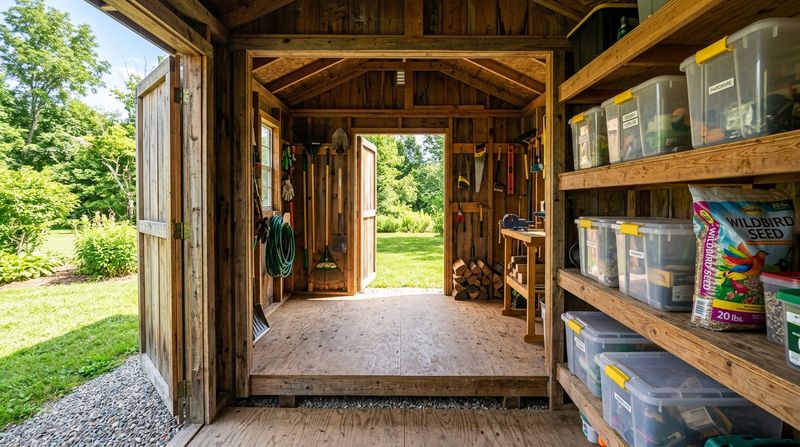
A quick monthly look around your shed beats a big cleanup in spring. I like to pick a mild afternoon, grab a flashlight, and check the corners before I start any winter projects.
Vacuum old webs and egg sacs whenever you see them. Removing egg sacs matters most, since each one can produce hundreds of spiderlings when the weather warms.
Sticky traps placed along walls and corners can help you track activity. They show which areas need extra attention without spraying anything.
Broad pesticide sprays often do little against spiders hiding in webs, and they can harm helpful insects. Texas A&M AgriLife Extension recommends cleanup and exclusion as the first line of defense.
Some situations call for expert help. If you keep finding widows, notice many egg sacs, or have small children or pets using the shed, a licensed pest professional can target problem spots safely.
Remember that most spiders in your yard are helpful insect hunters. The goal is not to clear every spider from your property, only to keep the risky ones out of reach.
A tidy, sealed, regularly checked shed lets you work with peace of mind all winter.