What Might That Cloud of Tiny Flies After an Arizona Storm Be?
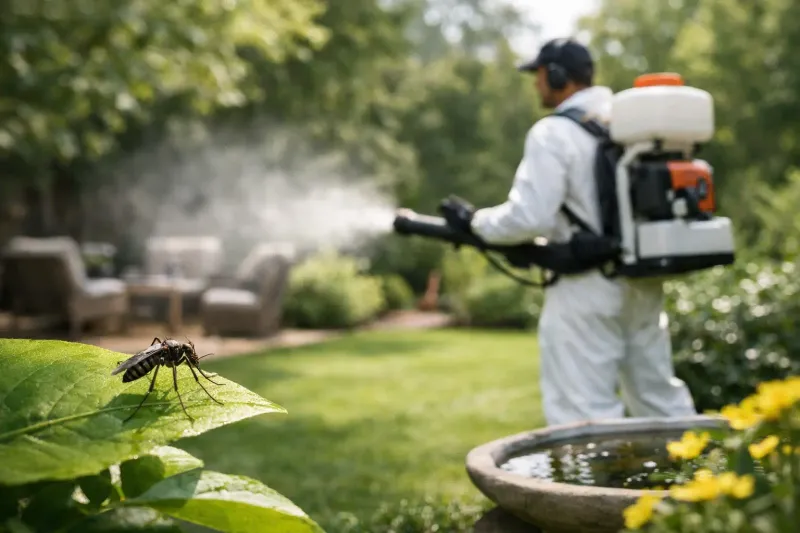
A dusty patch of Arizona desert can sit dry for months and still hold mosquito eggs. I find that wild, because those eggs may be waiting for a good soaking.
After a storm, you might spot a hovering cloud of tiny flies near the patio. Let’s sort out what it could be, and what you can do about it.
Could Floodwater Mosquitoes Explain the Cloud?
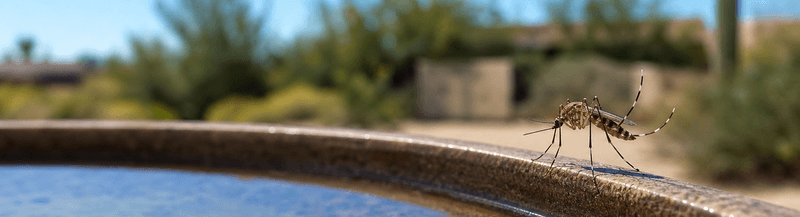
Some Arizona mosquitoes play a long waiting game. According to University of Arizona Extension, floodwater mosquito eggs can stay dormant in soil until flooding covers them.
When water arrives, development can start together across a whole area. That can produce a sudden jump in adults, though only after the young stages have grown in the water.
Timing is not the same for every mosquito. A University of Arizona monsoon article gives about seven days from egg to adult for one urban mosquito in Sonoran Desert summer heat.
That figure is not a rule for all species or every storm.
One documented floodwater species, Aedes vexans, bites around sundown and may swarm. So mosquitoes are a plausible explanation for a patio cloud.
They are not proof that a particular storm caused the one you are looking at.
A Swarm Cannot Identify Itself
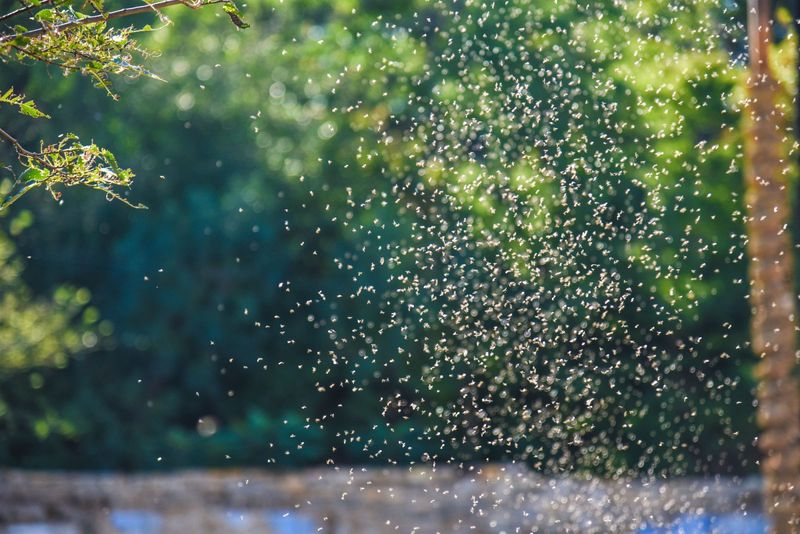
A dense, hovering cloud feels like it should be easy to name. Sadly, a swarm is a poor ID card.
Maricopa County’s mosquito toolkit says the mosquito species common in its cities generally do not swarm. Many flying insects do, so a swarm leans away from those urban mosquitoes.
Yet University of Arizona Extension, in the guide mentioned earlier, documents swarming in a floodwater mosquito. Both statements can be true because they describe different species.
Neither source can tell you what is over your patio. Look at when the cloud shows up, whether anything bites, and where the insects gather.
Jot notes or snap a photo, and ask your county vector control or Extension office for help if the problem continues.
“Gnat” Covers More Than One Kind of Fly
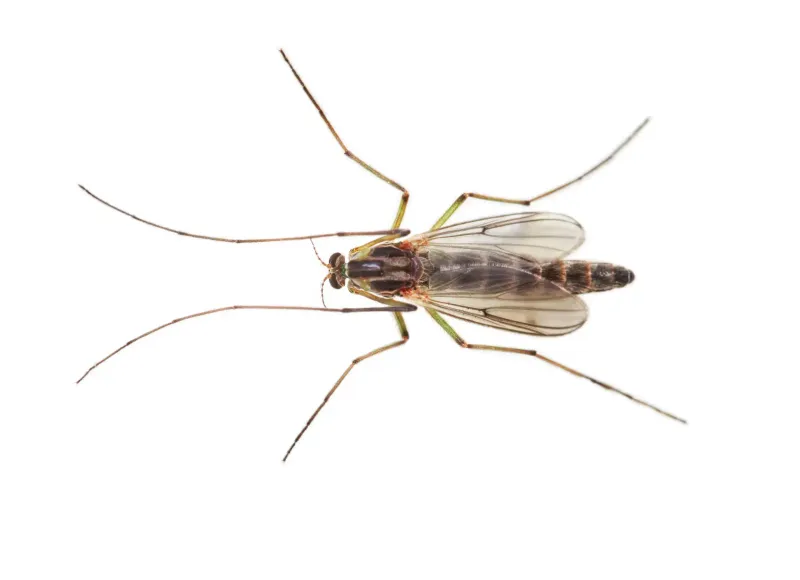
Gnat is a loose nickname, not a species. Folks use it for almost any tiny flier that bugs them.
Non-biting midges can look like mosquitoes, gather in big numbers, and often live near water. Virginia Cooperative Extension notes they do not bite or spread disease.
That describes these midges in general, not proof about your swarm.
Arizona also has biting midges, often called no-see-ums. University of Arizona Extension describes them as small biting flies, and some blood-feeding kinds can carry pathogens.
So midge does not mean harmless. Without an identification, avoid assigning a disease risk to the cloud outside your door.
After Rain, Check for Standing Water

Grab a cup of coffee and take a slow lap of the yard after a storm. Water collects in odd places, and small pools can matter.
Start with the obvious containers: buckets, kids’ toys, plant saucers, wheelbarrows, and birdbaths. Dump the water, then scrub or turn items over so they stay dry.
Stored water needs a tight cover. CDC guidance recommends emptying and scrubbing water-holding items and covering water storage containers securely.
Next, scan low spots, clogged gutters, and tarps that sag and hold puddles. Repeat the check at least weekly during wet spells, and fill or regrade spots that keep pooling.
Damp Landscaping Can Suit No-See-Ums

Containers are only half the story. Some tiny biters favor soil, not buckets.
University of Arizona guidance lists damp, organically rich sites as possible breeding habitat for no-see-ums. Over-irrigated landscaping is one example.
Walk the yard and look for beds that stay soggy long after the sprinklers shut off. Check for leaking drip lines, heavy mulch that stays wet, and spots where runoff lingers.
Fixing a leak or trimming back irrigation can help, and it saves water too. None of this proves a wet bed caused your swarm, but it is a sensible place to look.
Protect Yourself Without Guessing or Blanket Spraying

Start by watching. Do the insects bite, and at what time of day?
That simple note tells you more than a guess.
Meanwhile, cut down likely breeding spots with the container and damp-soil checks above. Long sleeves and pants can help when the flies are out.
If you need repellent, choose one labeled for the insect in question and follow its directions. EPA advice says to apply only as directed and not to spray directly onto the face.
For suspected biting midges, University of Arizona guidance suggests protective clothing and repellents labeled for mosquitoes.
Skip blanket spraying of the yard. Careful observation and targeted prevention beat guesswork, and the cloud may simply drift away by morning.