What Virginia Hydrangeas Need Before Winter to Bloom Noticeably Bigger Next Year
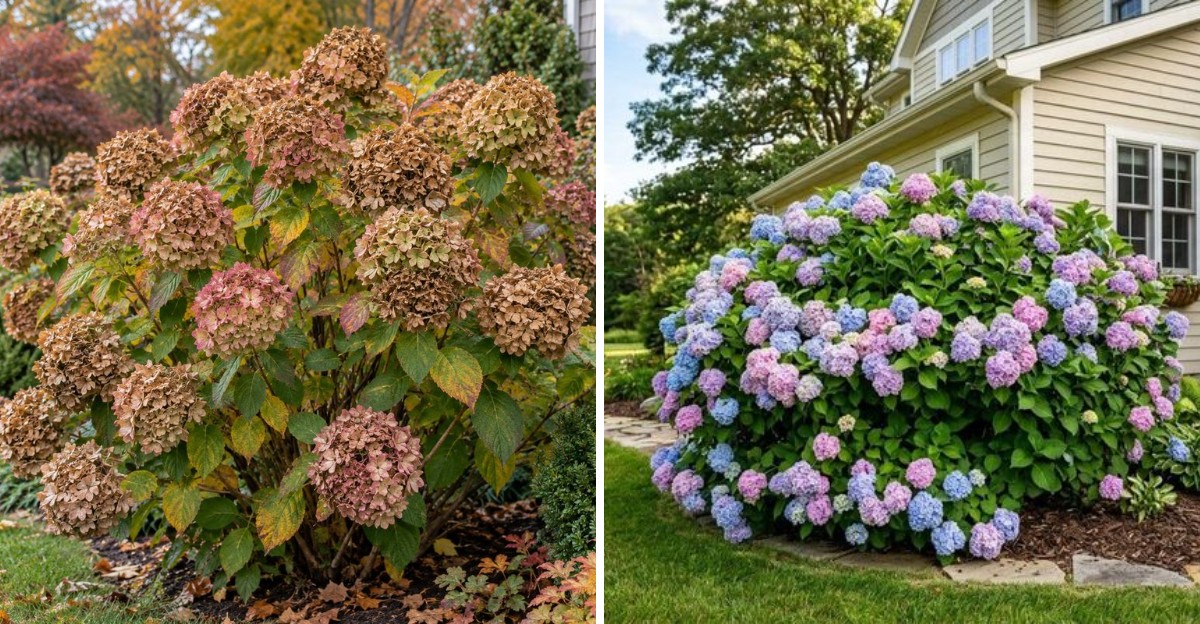
Next summer’s flowers on many of my favorite shrubs are already sitting on the branches right now. They are tiny, tucked inside fat buds, and waiting out the cold like a secret.
Confession time. I once tidied my whole yard in November and felt very proud of myself. The following June, I got gorgeous green leaves and almost zero flowers.
Here in Virginia, our winters swing wildly. A mild week in January can fool plants, and then a hard freeze rolls in overnight. Those swings are tough on buds that formed back in late summer.
So what separates a so-so show from big, heavy flower heads that make neighbors slow down on the sidewalk? Most of it comes down to a few small choices made in fall. Some of them might surprise you, and one of them is sitting in your garage right now.
Those Fat Buds on Bare Hydrangea Stems Are Next Summer’s Flowers
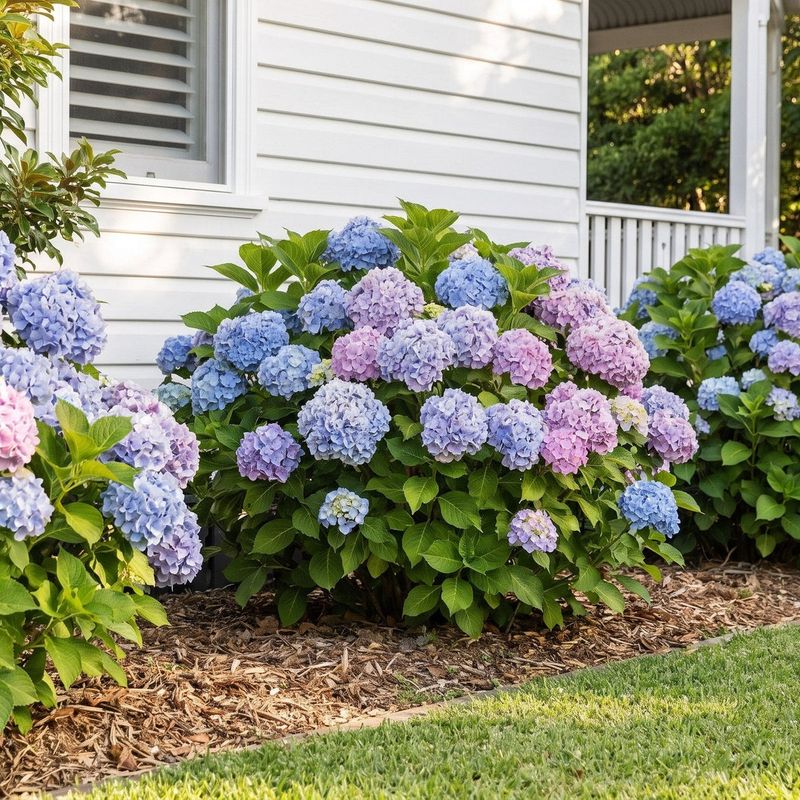
Run your fingers along a bigleaf hydrangea stem in October. Those plump little bumps near the tips are not random knobs.
They hold next year’s flowers, already formed and waiting.
Bigleaf and oakleaf hydrangeas set their buds in late summer and early fall. Gardeners call this blooming on old wood.
Those stems need to make it through winter in good shape, or the flowers inside them simply will not show up.
Mountain hydrangeas and many bigleaf types behave the same way. When a June shrub looks leafy but flowerless, the cause is usually one of three things.
Someone pruned in fall, a hard freeze hit the buds, or the plant got too much shade.
In my own yard, I’ve noticed the top buds are the real prizes. The terminal bud at the stem tip usually makes the largest flower head.
Side buds lower down often give smaller blooms, or none at all.
So the goal before winter is simple. Protect those stems and those buds.
Nearly every tip in this article circles back to that single idea, so keep it in mind as you walk your garden this fall.
Once you start spotting the buds, you will see your shrubs differently.
Put Down the Pruners Near Your Mophead Hydrangeas This Fall
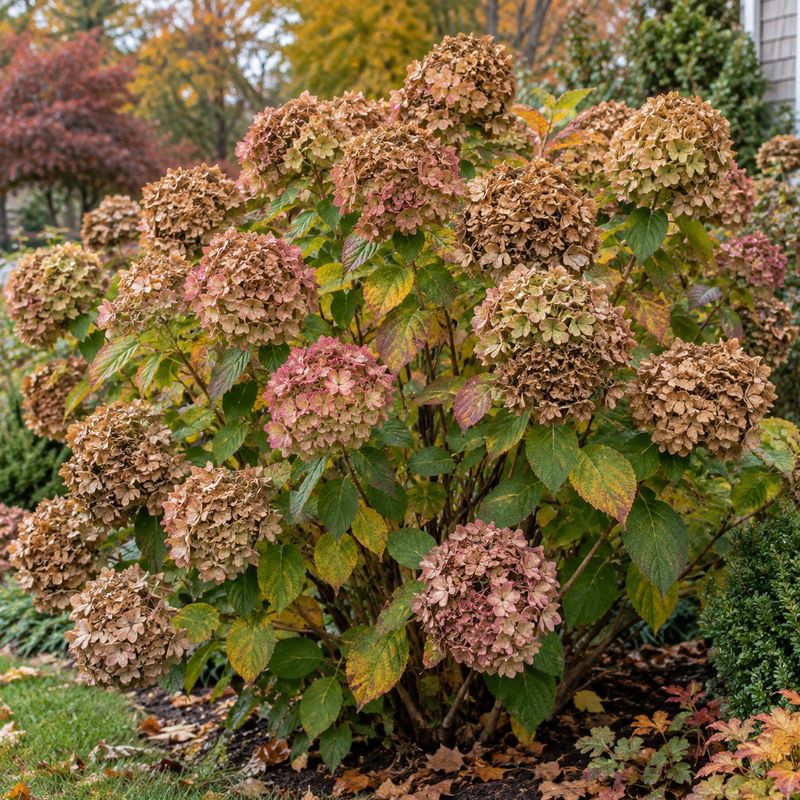
Take it from someone who learned the hard way. Fall pruning is the fastest way to lose next year’s mophead flowers.
Every stem you cut back takes its buds with it.
Virginia Cooperative Extension advises pruning old-wood hydrangeas right after they finish blooming in summer. For most of us, that means June or July.
After about mid-August, it is best to leave bigleaf and oakleaf shrubs alone until spring.
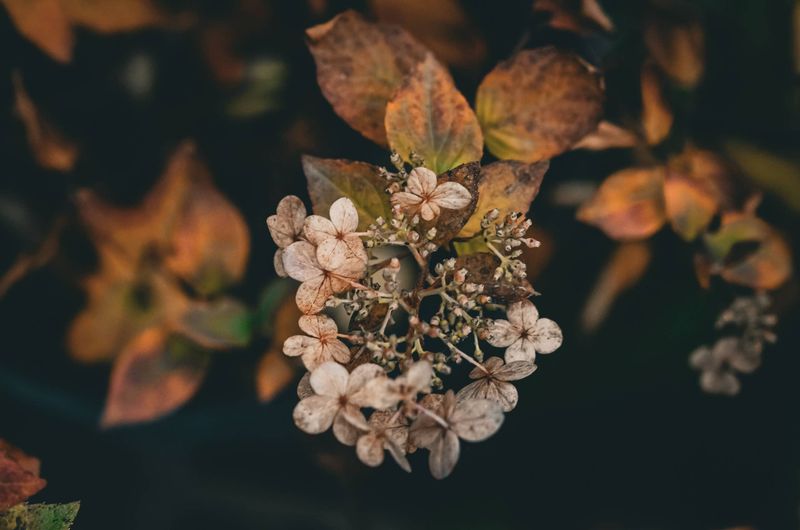
What about those papery brown flower heads? Leave them on through winter.
Many gardeners believe the old blooms give a little shelter to the buds just below them, and they look lovely dusted with frost.
In spring, wait until buds swell and green up. Then you can clearly see which stems made it.
Snip off old flower heads just above the first healthy pair of buds.
Thinning is fine at that point too. Remove one or two of the oldest, weakest canes at ground level to let in light and air.
That opens space for strong new canes that bloom well in later years.
Patience feels odd when the garden looks messy. Still, a slightly shaggy shrub in December often means a far bigger show in June.
Panicle and Smooth Hydrangeas Play by Different Rules
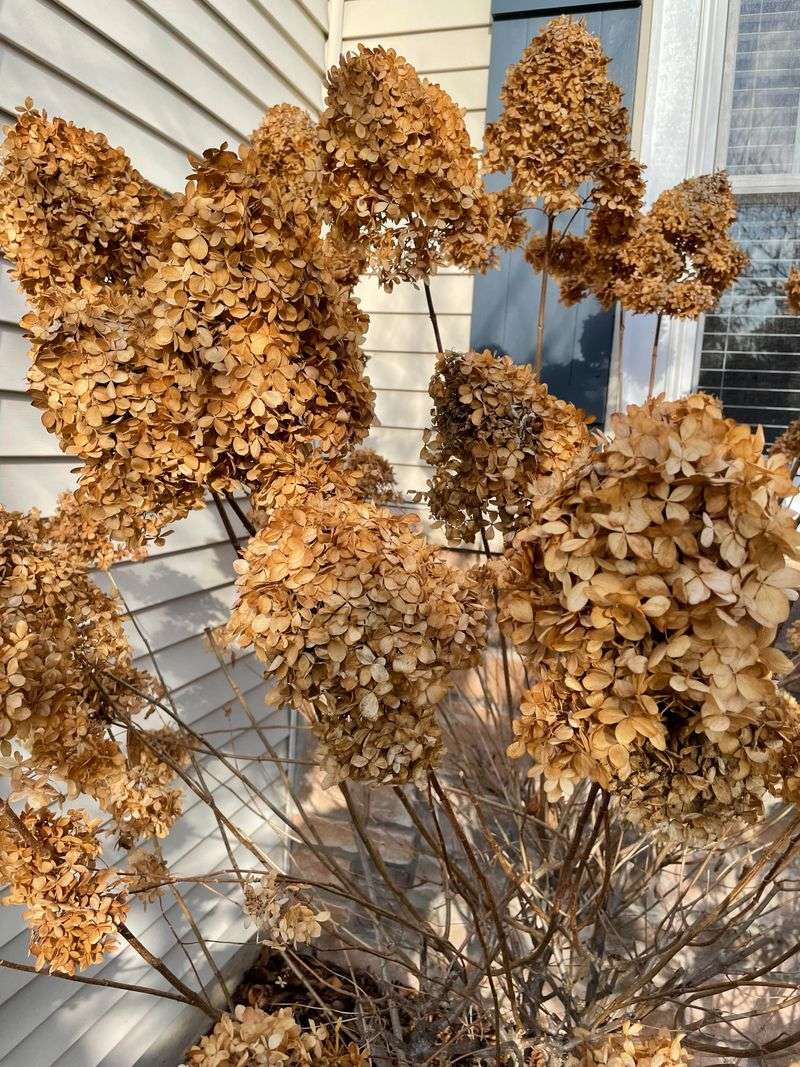
Here’s a twist that makes life easier. Panicle hydrangeas and smooth hydrangeas like Annabelle bloom on new wood.
Their flower buds form on stems that grow in spring.
That means winter cold rarely ruins their flowers. It also means you can prune them without stress.
Late winter or very early spring, before new growth starts, is the sweet spot.
Smooth hydrangea is actually native to Virginia woodlands. It can be cut back hard, to about 12 to 18 inches, and it usually rebounds fast.
Panicle types like a lighter trim, removing about a third of their height and any thin or crossing branches.
Want bigger flower heads on these? Cutting back harder often gives fewer stems, but each one tends to carry a larger bloom.
Lighter pruning gives more flowers that run a bit smaller. One heads-up with Annabelle is that huge blooms can flop, so sturdier cultivars are worth a look.
For what it’s worth, I leave their dried flowers up all winter. They catch snow beautifully and give birds a perch.
Not sure which type you have? Check the plant tag or ask your local extension office.
A quick ID saves a lot of guesswork.
A Deep Fall Soak Keeps Hydrangea Roots Ready for Cold
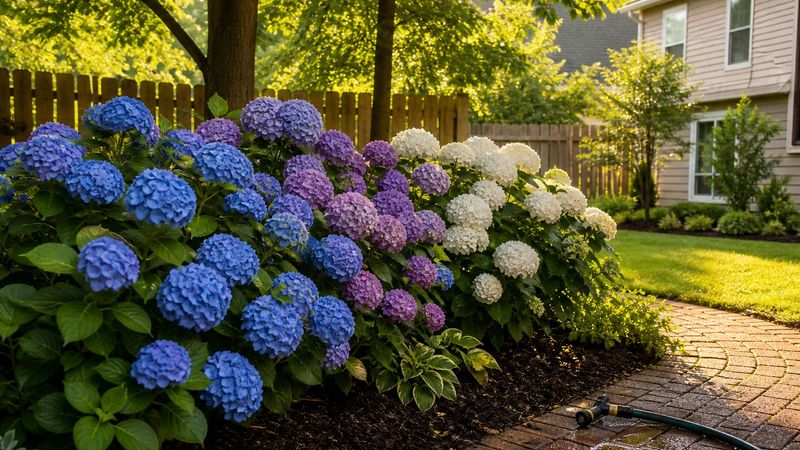
Hydrangeas got their scientific name from water, and it fits. The name roughly means water vessel.
These shrubs drink a lot, even as they head toward dormancy.
Dry autumns happen often in Virginia. When roots go into winter thirsty, stems and buds can dry out during cold, windy weather.
That kind of damage shows up later as weak or missing blooms.
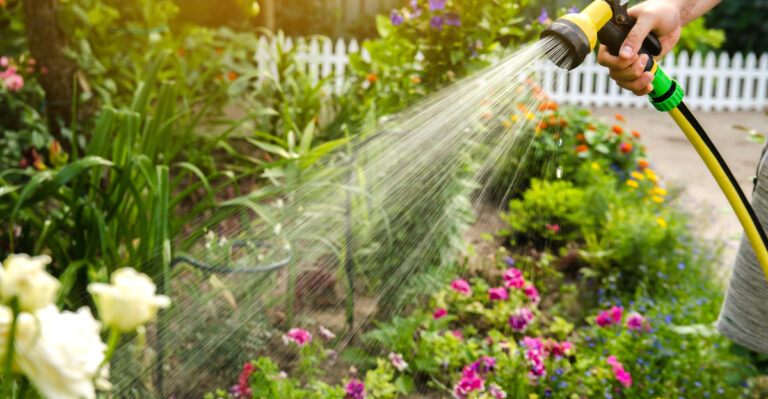
Before the ground gets cold, give each shrub a slow, deep drink. Let a hose trickle at the base for a while, or use a soaker hose.
Aim for soil that stays moist several inches down, not just on top.
A good rule of thumb is about an inch of water per week during dry spells. Keep checking into late fall if rain is scarce.
Push a finger into the soil, and if it feels dry two inches down, water again.
Don’t make my mistake of flooding them daily, though. Soggy soil can lead to root rot, especially in heavy clay.
Steady, deep watering beats frequent splashes.
Once the soil starts to freeze, you can stop. A well-watered plant heads into winter with plump stems and buds that are far more likely to survive.
A Thick Ring of Mulch Around Hydrangea Roots Makes a Big Difference
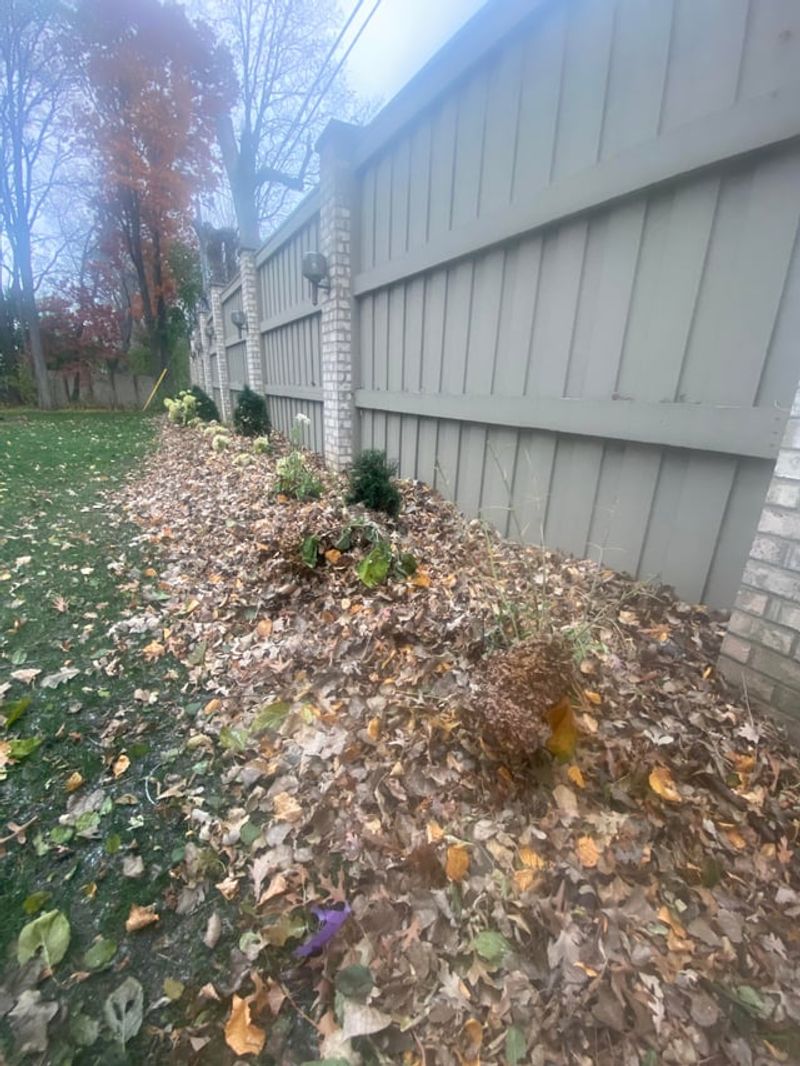
Shredded leaves are my favorite free gift from fall. Run them over with a mower, and you have perfect hydrangea mulch.
A layer two to four inches deep keeps soil temperatures steadier. That matters a lot in Virginia, where freeze and thaw cycles can heave roots and stress plants.
Mulch also holds moisture and slowly adds organic matter as it breaks down.
Spread it in a wide ring, out toward the edge of the branches. Keep it pulled back an inch or two from the stems.
Piling mulch against the bark can invite rot and give rodents a cozy hiding spot.
Pine straw, shredded bark, and leaf mold all work well. Pine needles break down slowly and look tidy, too.
If you want blue flowers, pine bark and oak leaves won’t hurt, but soil chemistry matters far more than mulch for flower color.
Timing is flexible. Many gardeners mulch after the first hard frost, once the plant has slowed down.
Others add it in October and top it up later.
If you ask me, this one job gives the most return for the least effort. Ten minutes with a rake now can mean healthier shrubs and bigger blooms by June.
Burlap Wraps Can Save Bigleaf Hydrangea Buds in Colder Spots
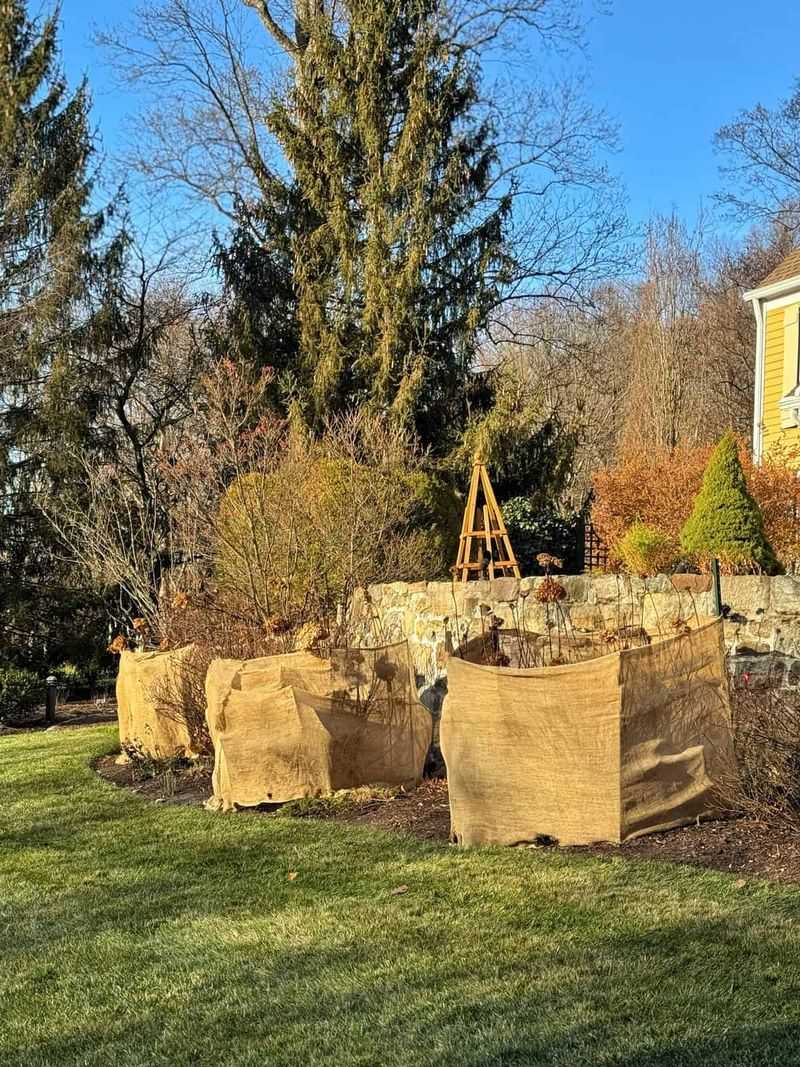
Western Virginia gardeners know cold air means business. Parts of the Blue Ridge and Shenandoah Valley dip into USDA zone 6, with a few higher pockets colder still.
Coastal and Tidewater gardens sit closer to zone 8.
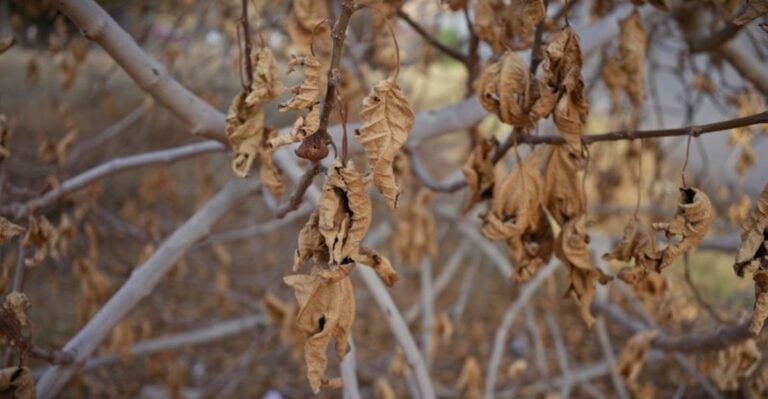
Bigleaf hydrangea buds are the most tender of the bunch. A hard freeze or a late spring cold snap can brown them out.
Then you get leaves but few flowers.
In colder or windy spots, a simple cage helps. Push three or four stakes into the ground around the shrub.
Wrap burlap around the stakes, then loosely fill the inside with dry leaves.
Keep the top open so air and moisture can move. Avoid plastic, which traps heat on sunny days and can harm the plant.
Frost cloth is handy for surprise freezes once buds start breaking in spring.
Let’s just say a naked shrub on a windy hill has a tough job. Shelter really helps.
Gardeners in Richmond, Norfolk, or Virginia Beach often skip wrapping altogether. Still, keep frost cloth nearby for April surprises.
Remove wraps gradually in spring once the worst cold has passed, so buds can adjust without shock.
Skip the Fertilizer Bag Once Hydrangea Leaves Start Turning
Feeding plants feels like kindness. With hydrangeas in fall, though, it can backfire.
Fertilizer high in nitrogen pushes soft, leafy growth. Late in the season, that tender growth does not have time to toughen up before the first freeze.
Cold damage then follows, and it can reach the buds you are trying to protect.
Most experts suggest stopping fertilizer by midsummer to late summer. Finishing up by about August is a safe target.
Bigleaf hydrangeas in particular usually need only light feeding in spring.
In fact, too much nitrogen can lead to big leaves and fewer flowers. A light hand often works best.
A soil test through Virginia Tech’s lab is inexpensive and tells you what your soil actually needs.
Fall is a smart time to send that sample, by the way. Results come back before spring, so you can plan feeding ahead.
The test also shows soil pH, which affects whether bigleaf flowers turn blue or pink.
Between you and me, my most flower-packed shrub gets compost and almost nothing else. Rich soil and steady moisture count for more than any bag of granules sitting on a garage shelf.
Morning Sun and Good Soil Set Up Hydrangeas for a Bigger Show
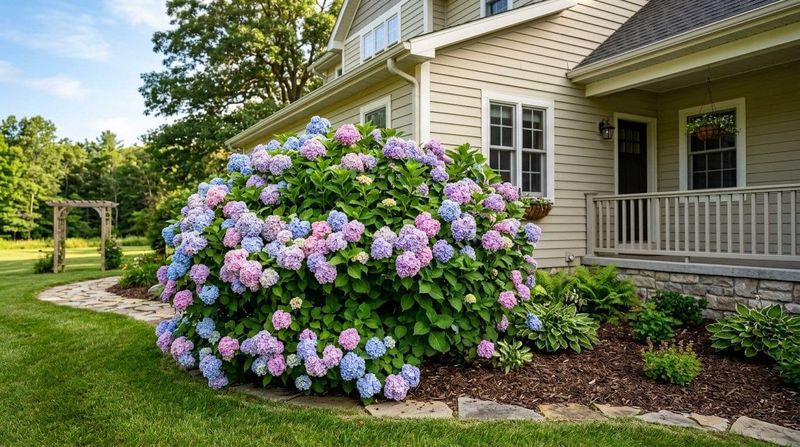
My garden taught me that winter prep only works if the location is right. A hydrangea in deep shade will struggle, no matter how well you tuck it in.
Most hydrangeas bloom best with morning sun and some afternoon shade, especially in hot summers. Panicle types handle more sun than bigleaf shrubs.
Oakleaf hydrangeas are native to the Southeast and do fine in part shade.
Soil matters, too. Hydrangeas like moist, well-drained ground rich in organic matter.
Heavy clay is common across much of the state, so mixing in compost when planting helps a lot.
Fall is actually a great time to move a struggling shrub. Transplant after leaves drop, while the soil is still workable.
Water it in well and mulch it right away.
Shopping for new plants? Look for reblooming bigleaf types that flower on both old and new wood.
They give some insurance if a cold snap catches the buds.
Here’s my simple fall checklist. Leave old-wood shrubs unpruned, water deeply, mulch well, protect tender buds in cold areas, and skip late feeding.
Do those five things, and next summer’s flowers stand a much better chance of being the biggest yet.