The Fall Gardening Mistake That Can Keep Newly Planted Texas Trees From Establishing
A young tree can sit in the ground for years and grow almost nothing, all because of a few inches of extra soil. Arborists even have a name for the fix, and it involves digging around the trunk to find where it actually starts.
What I find interesting is how innocent the mistake looks. The tree goes in on a cool autumn weekend, the yard looks tidy, and everyone feels proud of the work.
Fall really is prime planting season across Texas. Extension experts at Texas A&M point out that roots keep growing in warm soil long after the leaves slow down, giving trees a head start before summer heat returns.
So why do so many fall-planted trees sulk, lean, or fade by their second summer? The answer sits right at ground level, and you have probably walked past it a hundred times.
1. That Hidden Spot Where the Trunk Meets the Roots Matters Most
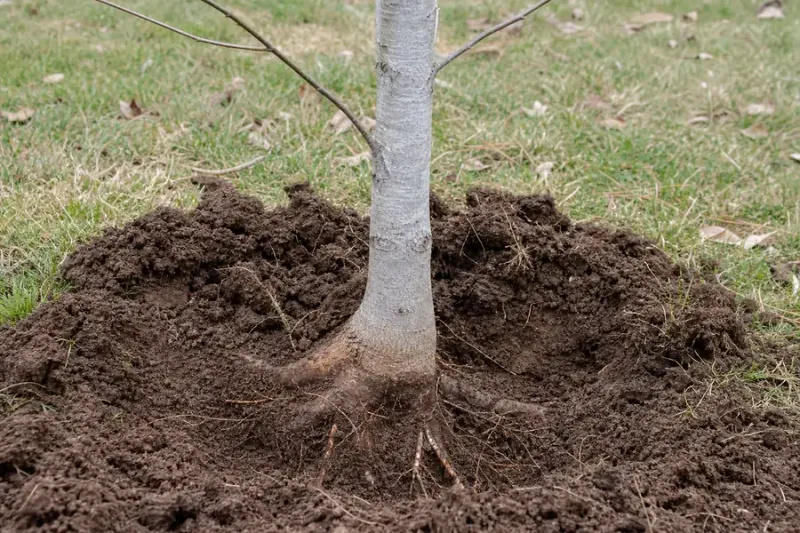
Most struggling new trees share one sneaky problem. They were planted too deep, and the root flare ended up buried under soil.
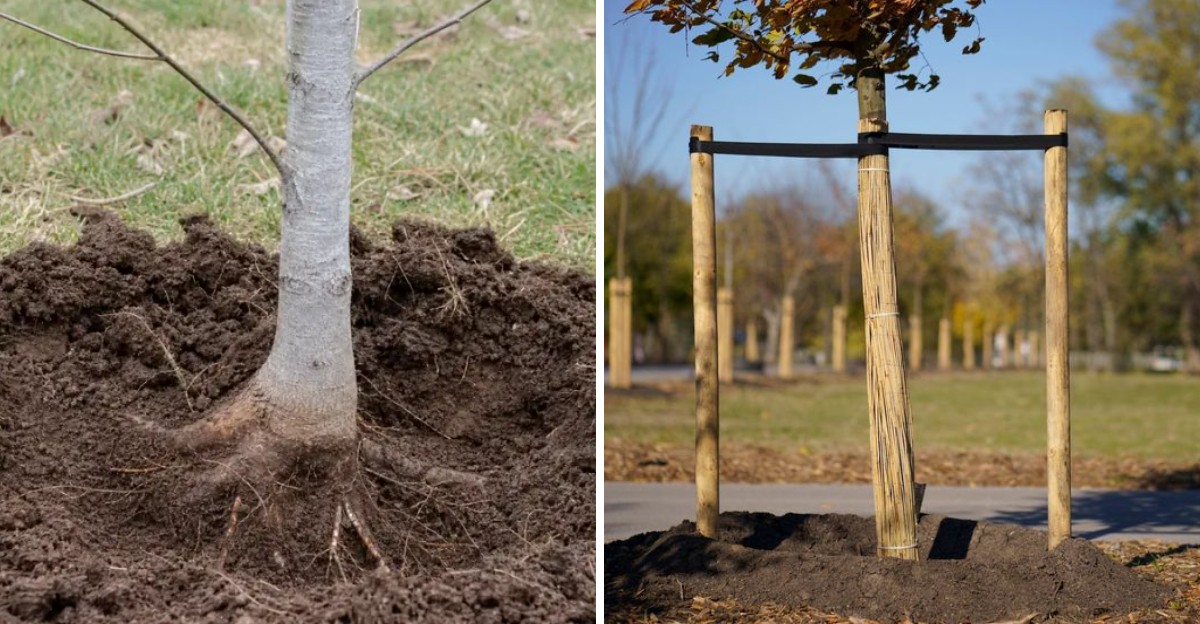
The root flare is the spot where the trunk widens as it turns into roots. On a healthy tree, you can see it flare out like the base of a candlestick right at the soil surface.
Texas A&M Forest Service and other extension experts point to deep planting as one of the most common reasons young trees fail to establish. It often happens without anyone noticing.
Nursery containers and burlap balls are part of the trouble. Growers sometimes add extra soil on top of the root ball, so the flare is already hidden when you bring the tree home.
Then a gardener digs a deep, generous hole, drops the tree in, and buries the trunk a few more inches. It feels like you are tucking the tree in safely.
Sadly, the tree does not see it that way. Roots that sit too low get less air, and bark that stays buried can soften and decay over time.
Before you plant, gently scrape away soil from the top of the root ball until you find the first main roots. That point should sit at or slightly above the surrounding ground.
A few minutes of checking can save years of slow, frustrating growth.
2. Buried Tree Roots Can Run Short on Air
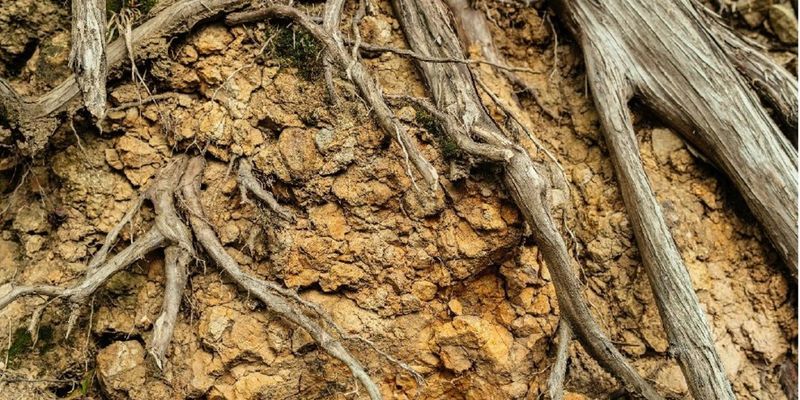
Roots breathe. That surprises a lot of folks, but tree roots need oxygen from tiny air spaces in the soil to grow and take up water.
Most of a tree’s feeder roots live in the top foot or so of soil. Put them too deep, and they sit in a zone where air is scarce.
Heavy clay, common across Central and North Texas, makes the problem worse. Clay holds water tightly and drains slowly, so a deep hole can act like a bathtub after a fall rain.
When roots sit in soggy, airless soil, they stop growing outward. The tree may leaf out in spring, then look thin, pale, or stressed once summer heat hits.
Buried trunks can also send out new roots that circle around the stem. Over years, these girdling roots can squeeze the trunk and slow the flow of water and nutrients.
Here’s a simple habit worth adopting. Dig the hole two to three times wider than the root ball but no deeper than the root ball’s height.
Set the root ball on firm, undisturbed soil so it does not sink later. In tight clay, many arborists suggest planting the flare an inch or two above grade.
Wide and shallow beats narrow and deep nearly every time.
3. That Mulch Volcano Around Your New Tree Needs to Go
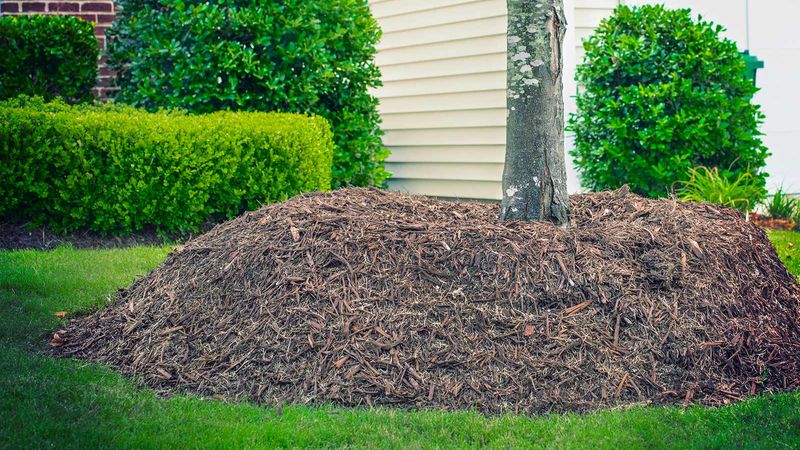
You have seen them in parking lots and front yards. Tall cones of mulch piled against tree trunks, like little brown volcanoes.
They look neat and finished, which explains why the habit spreads so fast. Unfortunately, a mulch volcano creates the same trouble as planting too deep.
Mulch pressed against bark holds moisture right where the tree needs to stay dry. That damp spot invites rot, fungal disease, and insects that love tender, stressed wood.
Thick piles can also block air from reaching the roots below. Some trees even start growing roots up into the mulch, where they dry out fast in a Texas summer.
Mulch itself is wonderful for new trees. It cools the soil, slows evaporation, and keeps grass and weeds from competing for water.
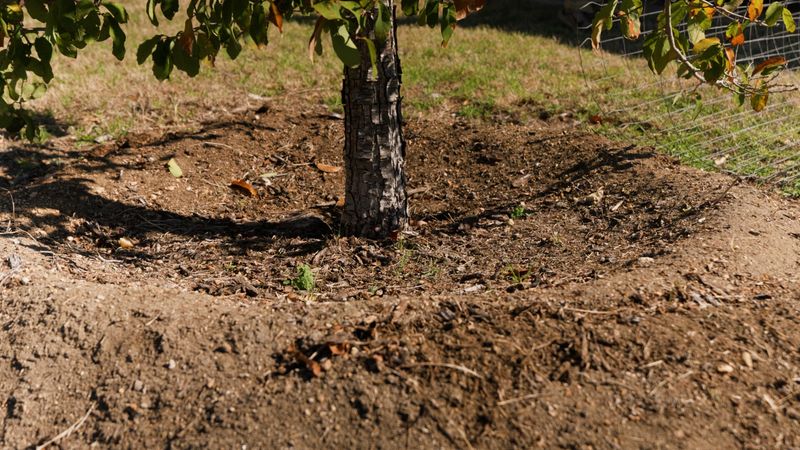
The trick lies in the shape. Spread a layer two to four inches deep in a wide ring, like a donut, and keep it a few inches away from the trunk.
Shredded hardwood, pine bark, or native mulch from local tree crews all work well. Many cities give away free mulch, so check with your local recycling center.
If you inherited a volcano, pull it back gently with your hands. Your tree will thank you quietly for years.
4. Watering a Fall-Planted Tree Takes a Gentle Rhythm
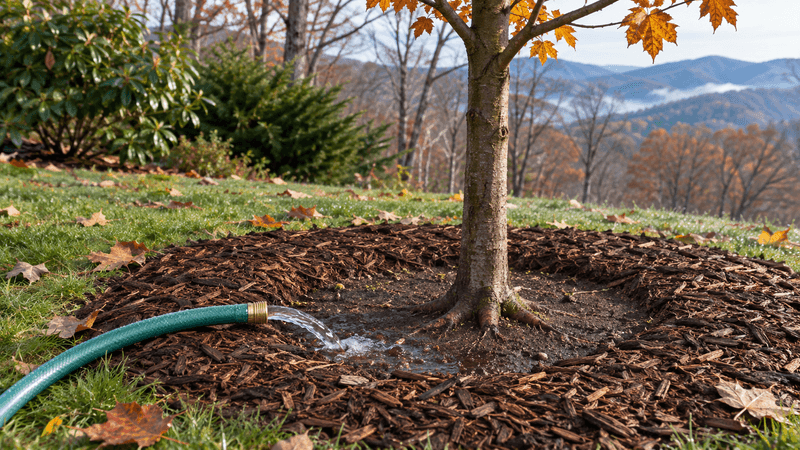
Cool weather fools a lot of gardeners. The air feels pleasant, the leaves slow down, and the watering can stays in the shed.
Roots, though, keep working through fall and much of a mild Texas winter. A new tree has only its original root ball to drink from, and that small ball can dry out surprisingly fast.
The opposite mistake happens too. Daily sprinkling in clay soil can leave roots sitting in mud, short on oxygen and slow to spread.
Texas A&M AgriLife experts generally recommend deep, slow watering that soaks the root ball and the soil just around it. Then let the top few inches dry slightly before watering again.
A simple test helps. Push a finger or a long screwdriver into the soil near the root ball, and water only when the top couple of inches feel dry.
In fall, that might mean once or twice a week, depending on rain and soil type. Sandy East Texas soils dry faster than the heavy clays around Dallas or Austin.
Lawn sprinklers rarely do the job well. A slow-dripping hose or a tree watering bag sends moisture straight to the roots.
Keep up this steady care for the first year or two, especially through summer.
5. Plain Native Soil Often Beats Fancy Backfill in the Planting Hole
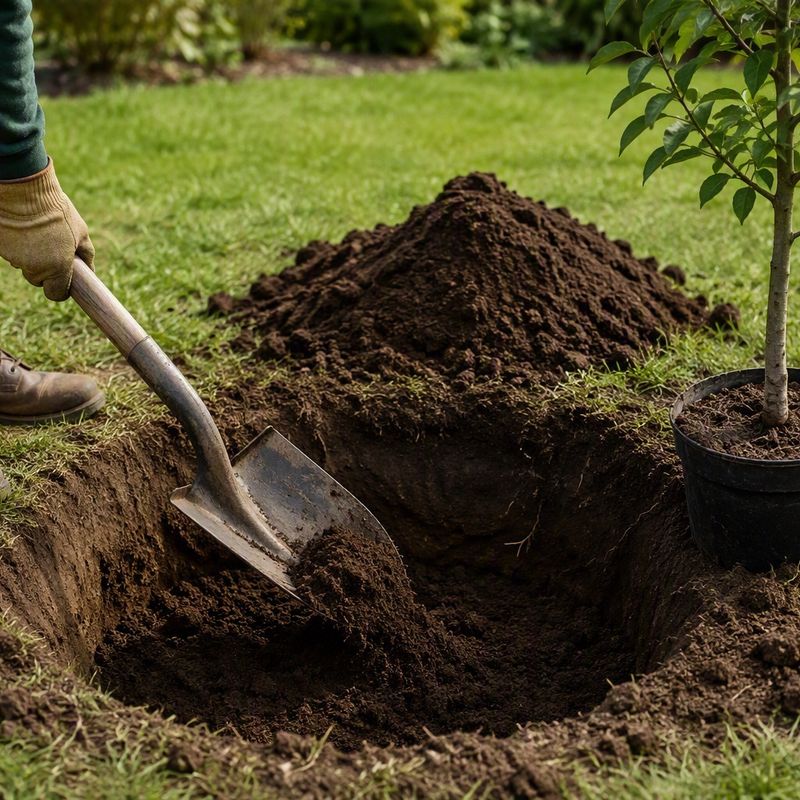
Bagged planting mix feels like a gift. Rich, dark, fluffy, it seems like the perfect welcome for a new tree.
Research tells a different story. Many university extension services, including Texas A&M, suggest backfilling with the same soil you dug out of the hole.
When the hole holds soft, rich soil, roots often stay inside that comfy pocket. They may circle around instead of pushing into the tougher native ground.
Water behaves oddly in amended holes too. In clay, water can flow into the loose pocket and pool there, leaving roots soggy.
Native soil, even rocky caliche or sticky blackland clay, teaches roots to spread from day one. A tree that reaches outward early stands firmer and handles drought better later.
Break up large clods as you backfill, and lightly firm the soil to remove big air pockets. Skip heavy stomping, which packs clay too tight.
Hold off on strong fertilizer at planting time as well. Extra nitrogen pushes leafy growth when the tree should be focused below ground.
Save the compost for the top layer, where it can work in slowly with your mulch. Plain dirt might not look exciting, but it gives roots a real reason to explore.
6. Tight Tree Stakes Can Leave a Young Trunk Weak
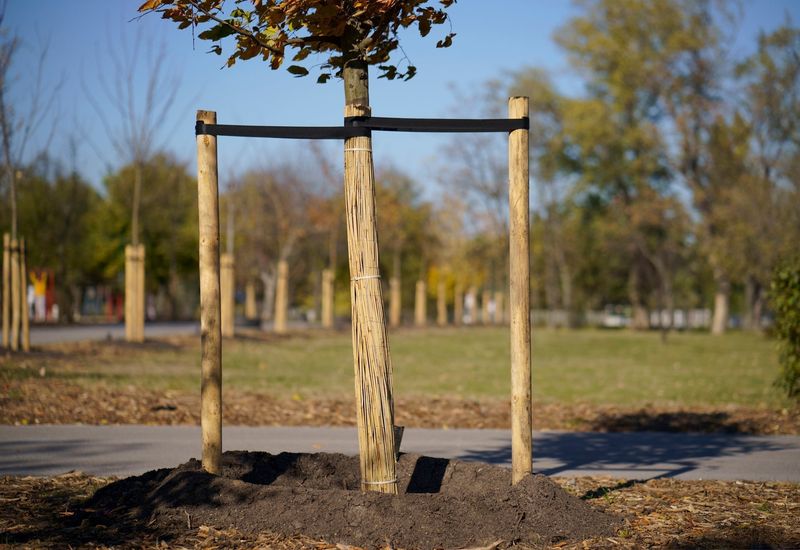
Trees are a bit like kids learning to ride bikes. A little wobble is how they build strength.
When a young trunk sways in the wind, it responds by growing thicker and stronger wood near the base. Roots also anchor more firmly as they respond to that movement.
Tight staking takes away that natural workout. Trees held rigid for too long often end up with skinny trunks that bend or snap once the stakes come off.
Wires and ties can also rub or cut into bark. Forgotten ties sometimes girdle the trunk, cutting off the flow of water and nutrients.
Most small nursery trees with solid root balls need no stakes at all. Staking makes sense for tall trees, very windy West Texas sites, or loose sandy soil.
If you do stake, use two or three stakes with wide, soft straps placed low on the trunk. Leave enough slack so the top can move gently.
Check ties every few weeks, especially after storms. Then remove everything within about one growing season, once roots have grabbed hold.
A quick tug test helps decide. If the root ball stays put when you gently push the trunk, the stakes can come off.
7. A Smart Fall Planting Checklist Keeps Your New Shade Tree on Track
Getting a tree off to a strong start feels wonderful. Watching it actually take off two summers later feels even better.
The good habits fit on a sticky note. Find the root flare, plant it at or slightly above grade, and dig wide instead of deep.
Backfill with native soil, then water slowly to settle everything. Spread mulch in a flat donut that stays clear of the trunk.
Water deeply when the soil starts to dry, through fall, winter dry spells, and especially summer. Skip heavy fertilizer and stake only when truly needed.
Choosing the right tree helps just as much. Natives and well-adapted trees like cedar elm, bur oak, Shumard oak, and Mexican plum handle Texas heat and soils better than many imports.
Timing counts as well. Across most of the state, October through early winter gives roots months of growth before heat returns.
Keep an eye out during the first year. Wilting, scorched leaf edges, or sudden leaf drop usually point to watering trouble or a planting depth problem worth checking.
Your local county Extension office and Master Gardener groups offer free advice on soil and tree choices. A little care now builds a shade tree for decades.