Emerald Green Or Green Giant? The Arborvitae That Actually Holds Up In Ohio
A hungry deer can strip a six-foot evergreen hedge bare in a single snowy week. I have seen it happen, and the leftover trunks look like sad green popsicle sticks.
One of the two most popular privacy trees in Ohio ranks near the top of the winter deer menu. The other grows faster, handles winter weather well, and is generally less appealing to hungry deer.
Same family, very different story.
I believe picking the right one matters more than any fertilizer or fancy pruning trick. You need a screen that still looks full in March, not one that looks chewed, bent, and lopsided.
Heavy wet snow, clay soil, and wandering deer all test these trees here. Choosing between them comes down to which one can handle the toughest conditions without leaving your fence line exposed.
1. Those Arborvitae Hedges Get Chewed For A Surprising Reason
Deer in Ohio love the native eastern arborvitae, Thuja occidentalis, and Emerald Green is a selection of that very species. Its other name is Smaragd, which means emerald in Danish.
To a hungry deer in January, though, it mostly means lunch.
Wildlife experts at several university extensions list eastern arborvitae as a plant deer browse heavily. When snow covers acorns and grasses, the soft, flat sprays of foliage become an easy target.
Deer can reach roughly five to six feet up, so a young hedge can lose almost all of its green in a few cold weeks.
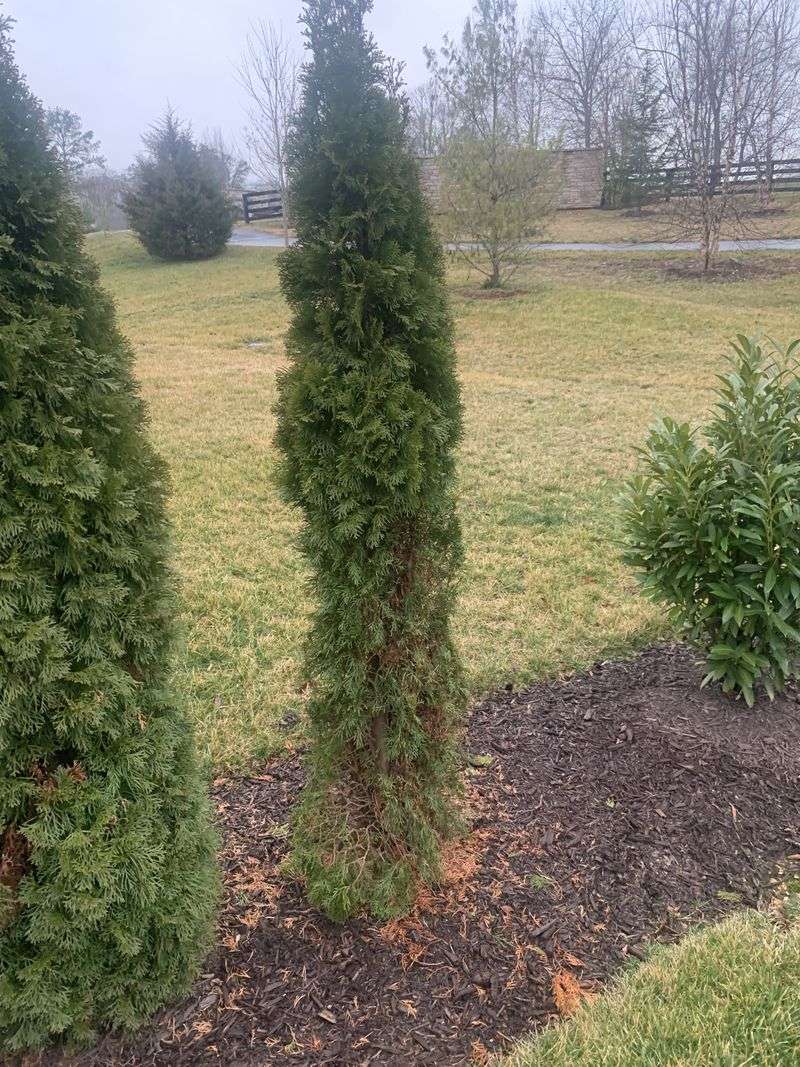
The damage has a telltale look. You will notice a clean browse line where everything below a certain height is stripped, while the tops stay full.
Arborvitae also struggles to push new growth from bare, older wood, so badly chewed sections may stay thin for years.
I find it a little ironic that the tree sold as a perfect privacy plant can turn see-through by spring. Rural and suburban yards near woods, creeks, and parks tend to see the worst of it.
If deer cross your yard even occasionally, that history should shape your choice before you dig a single hole.
2. Green Giant Arborvitae Is The Tougher Pick For Most Ohio Yards
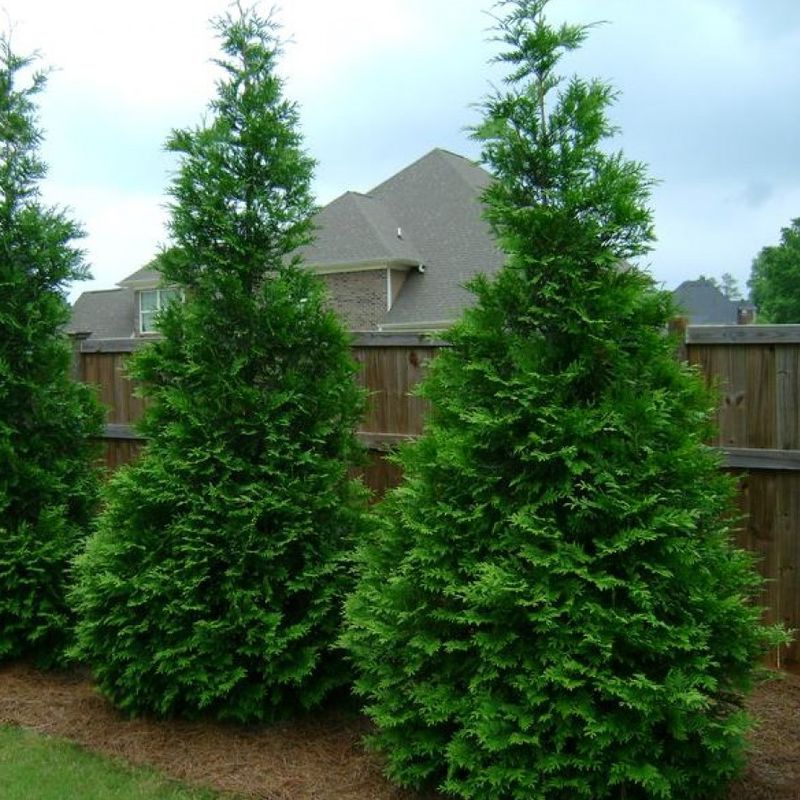
For most homeowners with room to spare, Green Giant wins this matchup. This tree is a hybrid, usually listed as Thuja standishii x plicata, combining a Japanese arborvitae with the western redcedar.
That different family tree matters. Nursery growers and extension sources describe Green Giant as browsed much less often than Emerald Green.
It also shrugs off snow, handles a range of soils, and grows quickly into a thick wall of green.
Notice the wording, though. Deer resistant is not the same as deer proof.
A starving herd in a rough winter may sample almost anything, especially young plants fresh from the nursery. Still, your odds improve a lot when you start with a plant deer usually skip.
Green Giant fits USDA zones 5 through 7, which covers all of Ohio. That includes the colder northeast snowbelt near Lake Erie and the milder river valleys near Cincinnati.
Personally, I think of it as the low-drama choice. You plant it, water it well for two summers, and let it do its thing.
The main catch is size, and that is a big catch, which brings us to the next point.
3. That Fast Growing Green Giant Gets Seriously Huge
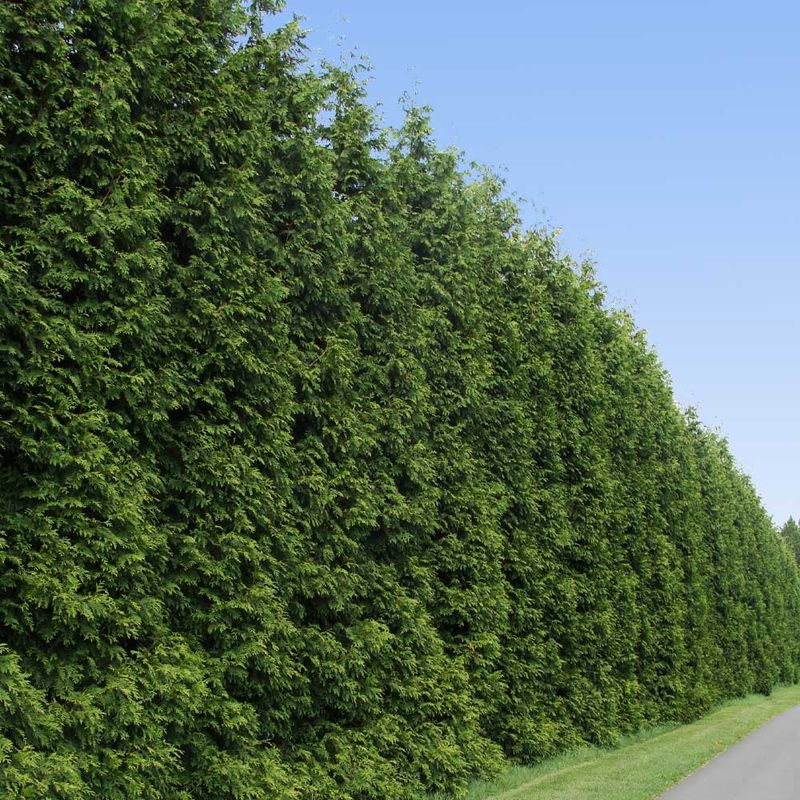
Here is a number that surprises plenty of new buyers. Green Giant can reach 40 to 60 feet tall and spread 12 to 20 feet wide at maturity.
Once settled in, it often grows two to three feet per year in good conditions, and sometimes more. That speed sounds wonderful when you want to block a neighbor’s deck fast.
It sounds less wonderful when the tree swallows your walkway and leans over the driveway.
Spacing is where most people go wrong. For a solid screen, plant Green Giant about 5 to 8 feet apart, measured center to center.
For a looser, more natural look, go 10 to 12 feet apart. Keep it at least 8 to 10 feet back from fences, houses, and property lines.
Look up before you plant, too. Power lines and this tree do not mix well, and utility crews prune hard when branches get close.
A quick backyard test helps. Grab a tape measure and mark out a 15-foot-wide strip where you plan to plant.
If that strip crowds your patio or lawn, you may want a smaller tree. Size is the honest tradeoff for all that toughness and speed.
4. Slim Emerald Green Arborvitae Still Shines In Tight Spaces
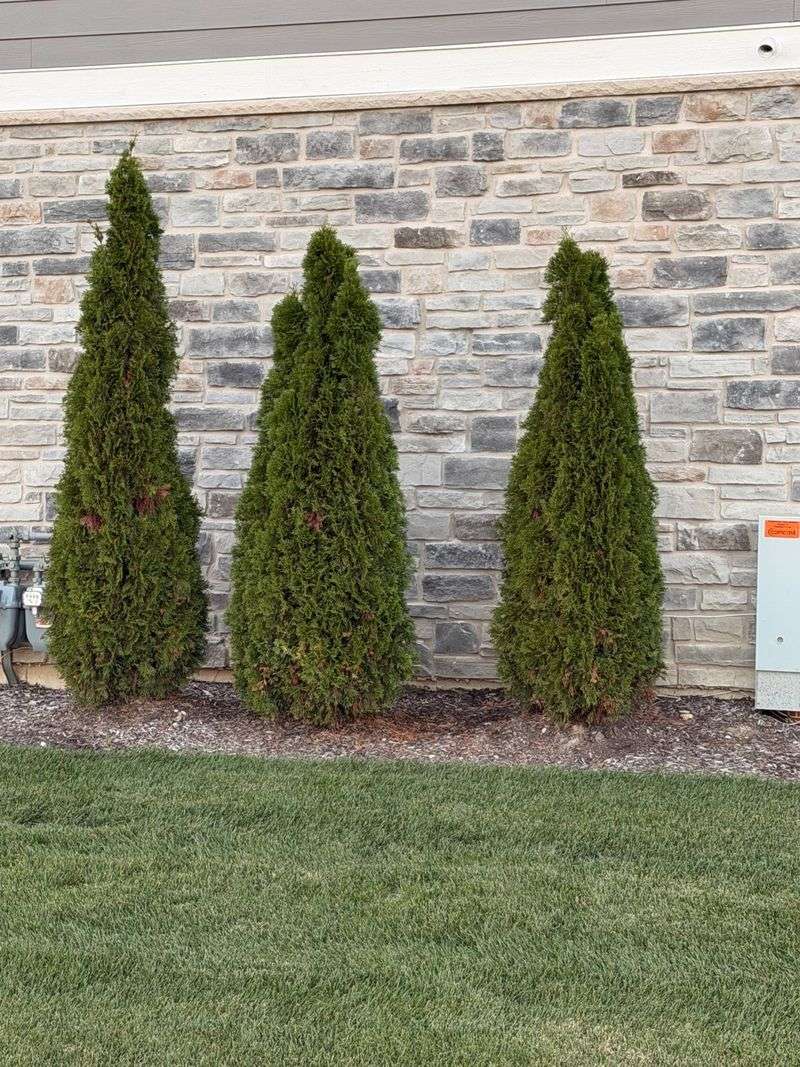
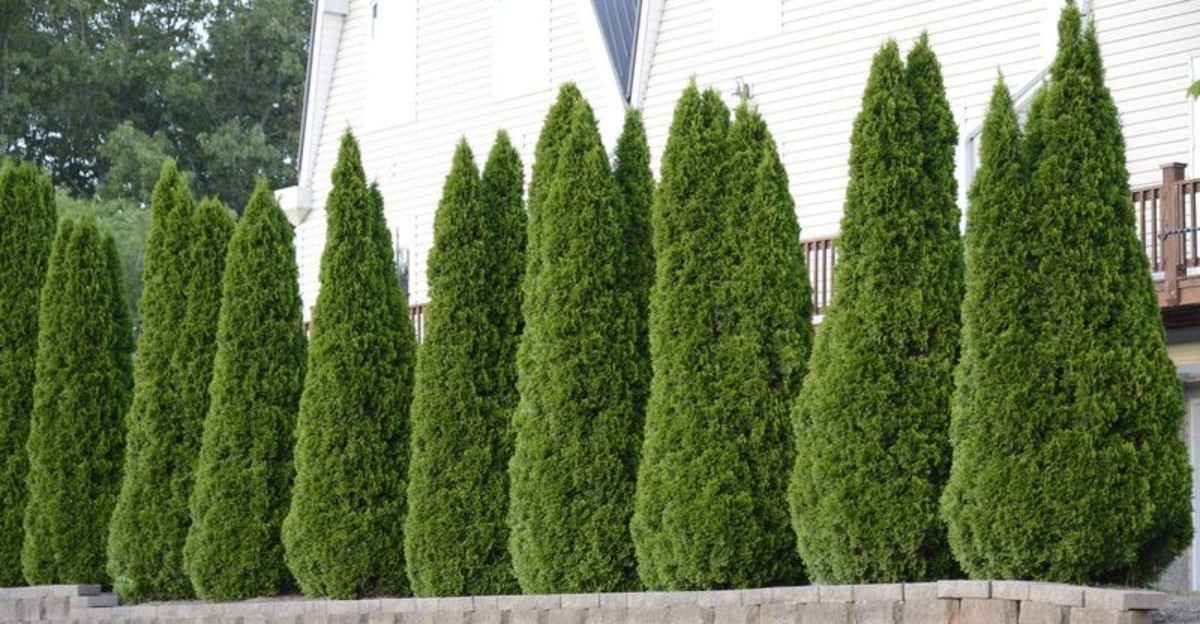
Small lots have different needs, and Emerald Green handles them nicely. It usually tops out around 12 to 15 feet tall and only 3 to 4 feet wide.
That narrow, tidy column fits places a Green Giant would overrun. Think side yards, the strip between two driveways, a pool fence, or a formal entry.
It grows slowly, often less than a foot per year, so it rarely needs pruning to stay neat.
Its color is another perk. The foliage keeps a bright, glossy green through winter better than many older arborvitae types, which can turn brownish in cold weather.
So when does it make sense in Ohio? I would choose it for fenced yards, city lots, and neighborhoods where deer rarely wander.
Courtyards and spaces close to the house also see less browsing pressure.
Plant these about 3 feet apart for a continuous hedge. Expect patience, since a short nursery plant may take several years to become a true screen.
If you need quick privacy, start with larger plants rather than cramming small ones closer together. Crowding only leads to thin, shaded interiors later, and arborvitae does not refill bare inner branches easily.
5. Heavy Ohio Snow Can Splay Emerald Green Branches Apart
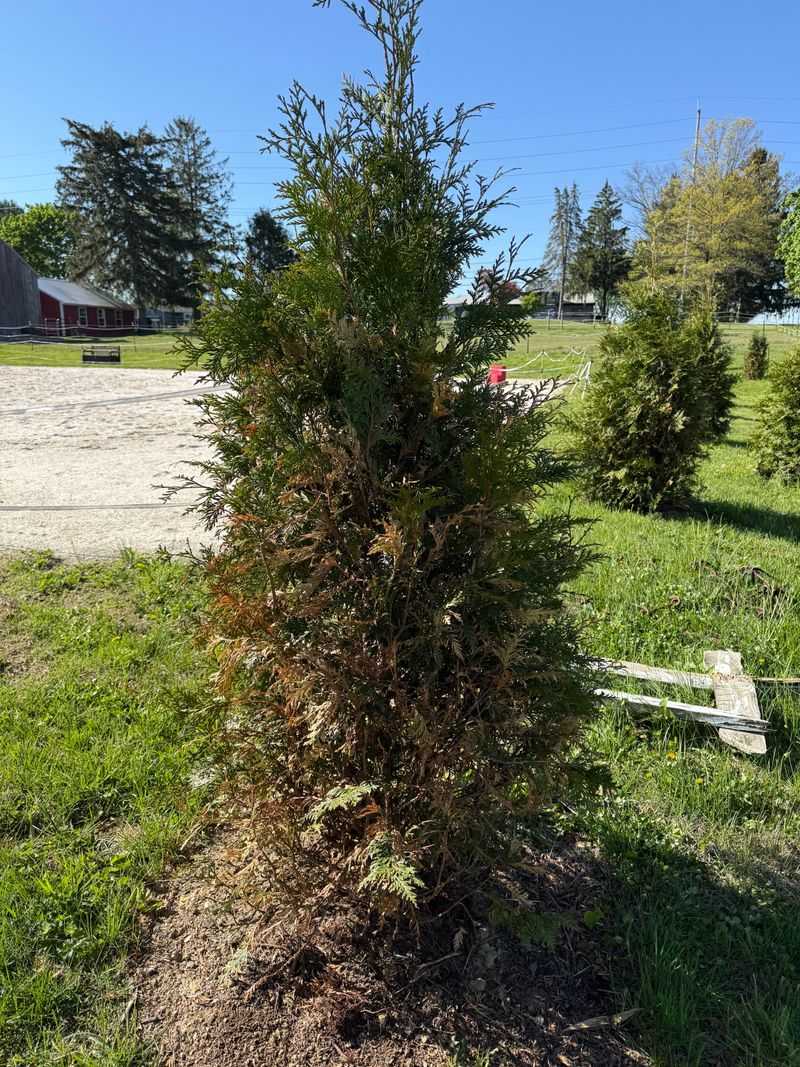
After one heavy, wet March storm, a perfectly upright hedge can look like a bunch of flowers someone dropped. Emerald Green has several upright leaders, and snow or ice can push them apart.
Once those stems bend for too long, some stay bent. Others can crack where they join.
Ohio, especially the Lake Erie snowbelt in the northeast, gets plenty of this kind of heavy snow.
Green Giant handles snow loads better. Its branching is sturdier, and growers often point to its strength in ice and snow as a major selling point.
You can still protect Emerald Green with a few simple habits. Gently brush snow off with a broom, sweeping upward so you do not snap branches.
Skip shaking frozen, icy branches, since that can cause breaks. Let ice melt on its own instead.
Many gardeners also tie their arborvitae loosely before winter. Soft garden twine or wide tree tape wrapped in a gentle spiral keeps the stems together.
Remove it in spring so it does not rub or girdle the bark. Avoid planting under roof edges, where sliding snow can flatten a hedge in seconds.
6. Clay Soil And Soggy Spots Can Trouble Both Arborvitae
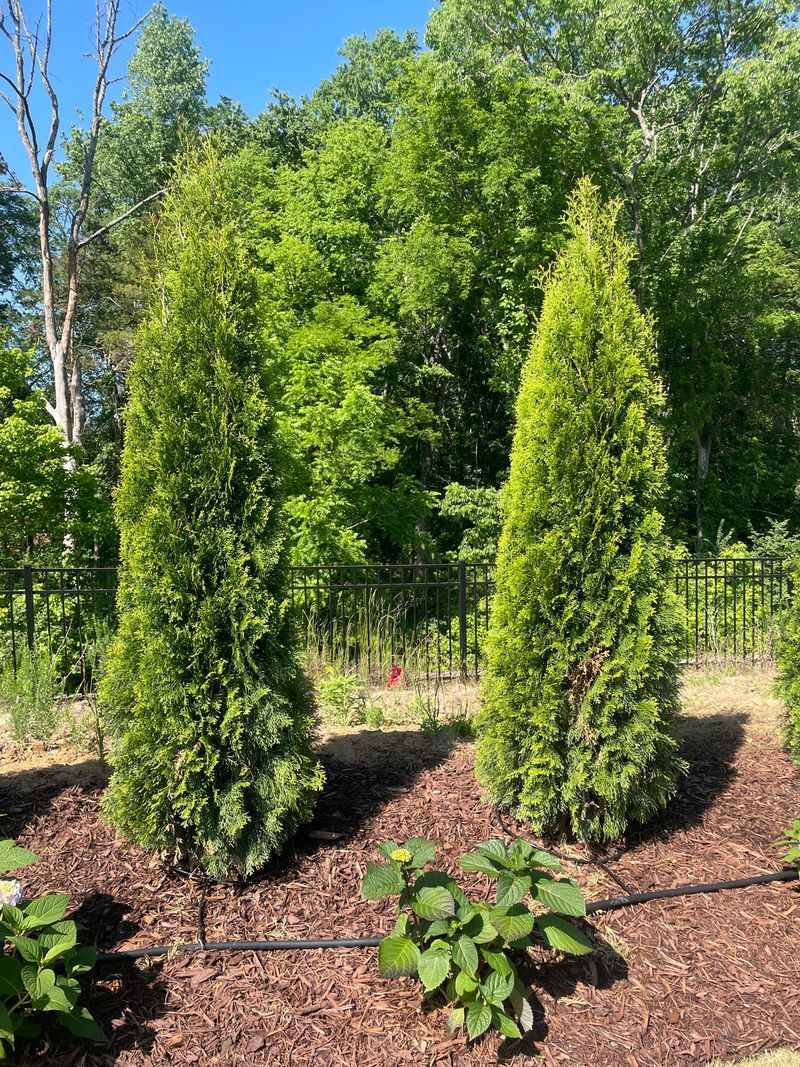
Much of Ohio sits on heavy clay, and that sticky soil shapes how well either tree performs. Both handle clay better than many evergreens, but neither enjoys standing water.
Roots sitting in wet soil for long periods can rot. Watch low spots, downspout areas, and places where puddles linger after rain.
Do a simple drainage test by digging a foot-deep hole, filling it with water, and timing it. If water is still there the next day, pick another spot or build a wide, raised planting area.
When planting, dig a hole two to three times wider than the root ball but no deeper. The top of the root ball should sit at or slightly above ground level.
Fill with the native soil rather than rich bagged mix, which can hold water like a bathtub.
Add two to three inches of mulch, keeping it a few inches off the trunk. During the first two summers, water deeply about once a week when rain is scarce.
Emerald Green also likes a little relief from hot afternoon sun in southern Ohio. Green Giant handles dry spells better once established, though young plants still need steady moisture.
7. Deer Fencing And Netting Can Save A Struggling Emerald Green Hedge
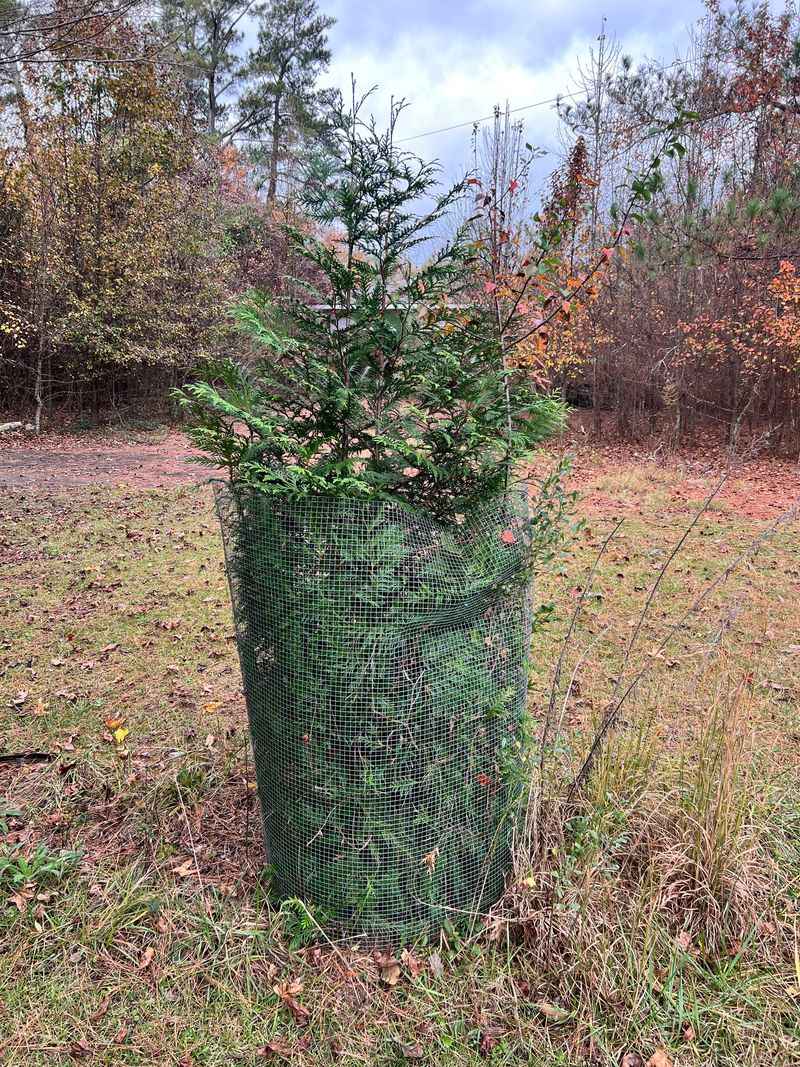
Already planted a row of Emerald Green and noticed deer tracks in the snow? No need to panic.
A little winter armor goes a long way.
Physical barriers work best. Black plastic deer netting wrapped around each plant from late fall to early spring is cheap and nearly invisible from the street.
For larger plantings, a fence at least eight feet tall keeps deer out reliably, since they jump surprisingly high.
Burlap screens are another choice. They block deer and also reduce winter windburn, which can brown the foliage on exposed sides.
Leave some space between the burlap and branches so air can move.
Repellent sprays can help when deer pressure is light. Rotate between products every few weeks, since deer get used to one scent.
Reapply after heavy rain, and know that sprays work less well in hard, hungry winters.
Timing matters a lot. Set up protection by November, before snow covers other food.
Damage that has already happened will not grow back from bare wood, but protecting the remaining green helps the plant fill in from the top and sides over time.
8. Your Best Arborvitae Match Depends On Deer, Space, And Snow
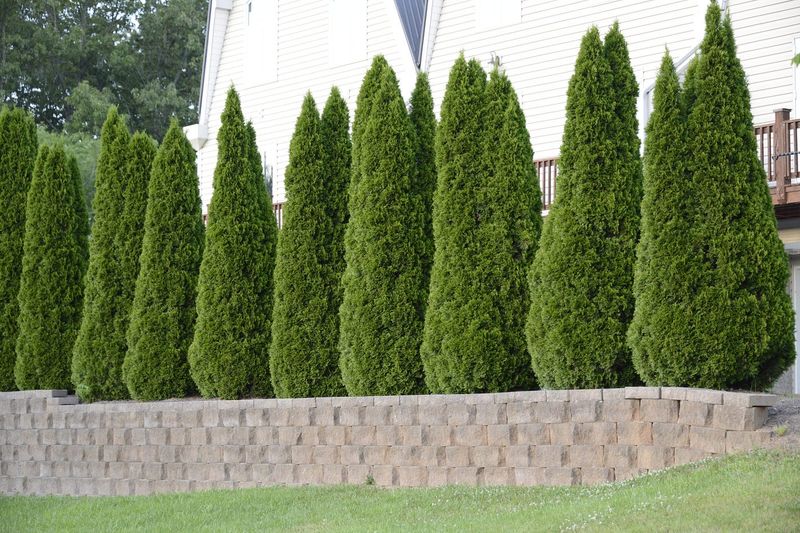
Picking between these two trees comes down to three questions. Do deer visit?
How much room do you have? How much heavy snow lands on your yard?
If deer roam through and you have space for a big tree, Green Giant is the stronger long-term bet in Ohio. It grows fast, handles snow, and gets browsed far less often.
If your yard is small, fenced, or close to town, Emerald Green can be lovely. Just plan on winter protection whenever deer appear.
Variety also helps. A mixed screen tends to hold up better than one long row of the same plant.
Consider pairing arborvitae with Ohio natives like eastern red cedar, white spruce, or American holly. Mixing reduces the risk that one pest, disease, or hungry herd wipes the slate clean at once.
Before buying, check the tag for the plant name and ask your local nursery what grows well in your county. The Ohio State University Extension office also offers free help.
A little planning now gives you a green wall that still looks full when spring finally arrives.