Have a Backyard Pond? These 8 Florida Snakes May Be Hunting Around It This Fall
One pond hunter in Florida wiggles a bright yellow tail tip like a worm to lure hungry frogs close. Another can climb twenty feet up a tree and nap on branches hanging over the water below.
What I find fascinating is how a quiet backyard pond becomes a buffet once the evening frogs start calling. Fish and tadpoles draw in scaly visitors that most homeowners rarely notice, even after years of pond care.
Fall weather in Florida stays warm enough that many of these reptiles keep hunting well past summer.
I wouldn’t necessarily call that a problem, since most of them are harmless and help balance the pond.
You might be surprised by how many look alike, which explains why harmless ones often get mistaken. So which slithery neighbors could be sharing your water lilies, and how can you tell them apart?
1. Green Watersnakes Lurk Among Floating Pond Plants
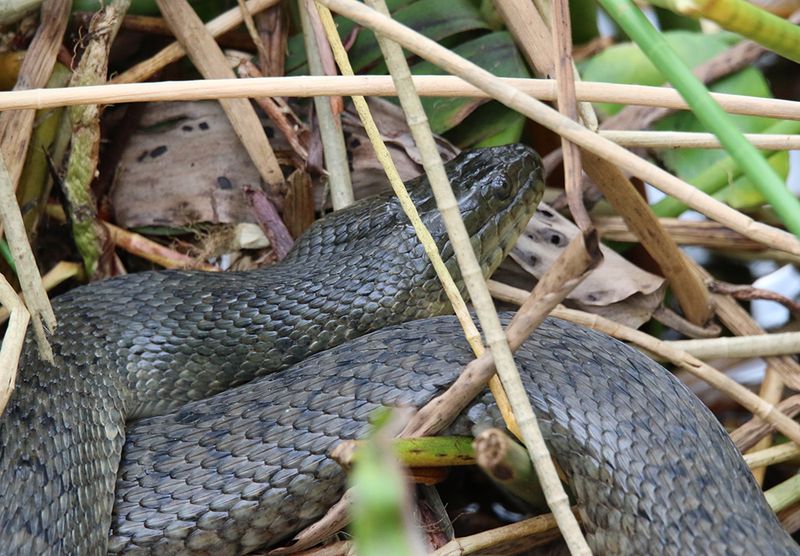
Few pond visitors look as bulky as this olive-brown hunter, which can stretch longer than four feet. I love spotting one draped across floating plants, soaking up sun like it owns the whole pond.
The Florida green watersnake, Nerodia floridana, ranks among the largest watersnakes in North America, with heavy bodies and faint speckles. Most have plain pale bellies, though some southern individuals show reddish tones underneath that surprise people.
These snakes favor calm, shallow water packed with vegetation, so a planted backyard pond feels like home to them. They hunt fish and frogs by grabbing them with their jaws and swallowing them whole without any squeezing.
In the southern part of the state, they often stay active year-round thanks to the mild winter weather. Farther north, they slow down during cold snaps but still come out to bask on bright, sunny afternoons.
When a person walks up, most green watersnakes slide quietly into the water and vanish beneath the lily pads. Cornered snakes may bite hard and release a stinky musk, so give them space and keep your hands back.
Many folks confuse them with cottonmouths, but a few clues help you tell the two apart quickly. Green watersnakes have round pupils, and their eyes are easy to see when you look down from above.
If you want fewer visits, keep the grass trimmed around your pond and remove brush piles near the water. I prefer to let them stay, since they help keep frog and fish numbers from getting out of hand.
2. Banded Southern Watersnakes Bask Along Pond Edges
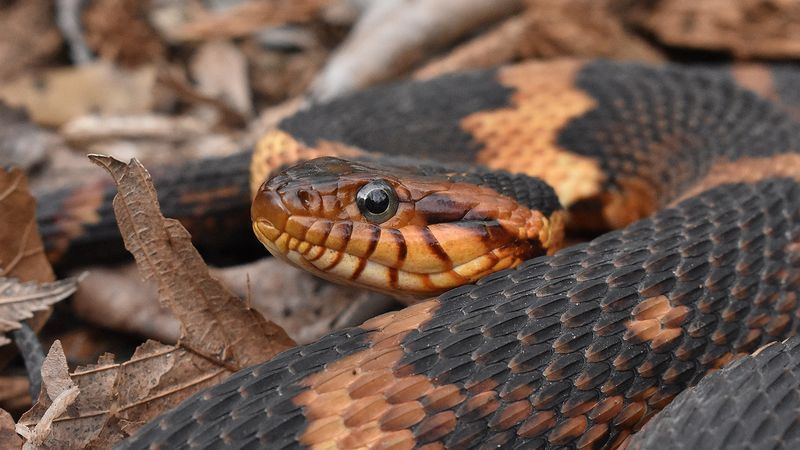
Some snakes wear stripes, but this one sports bold dark crossbands that sometimes glow a rich brick red. Seeing one stretched across a sunny log makes me smile, even if my visiting cousins scream a little.
The southern watersnake, Nerodia fasciata, often shows a dark stripe running from the eye back to the jaw corner. Older adults can turn so dark that their bands fade, which makes the eye stripe a helpful clue.
These adaptable reptiles move into nearly any shallow freshwater spot, including ditches and retention ponds in busy neighborhoods. Your backyard pond might attract one simply because it offers easy meals and plenty of sunny resting places.
Fish and frogs make up most of their diet, and they hunt by sight and smell around the shoreline. They do much of their foraging at night, though you can often catch them basking during the daytime.
Approach too fast, and the snake usually plops into the water with a splash and swims out of view. If grabbed, it may strike several times and smear a smelly musk that lingers on your skin for hours.
Plenty of these harmless snakes get mistaken for cottonmouths, which is unfortunate because they pose no real risk. Cottonmouths have vertical pupils plus a small heat-sensing pit between each eye and nostril on the face.
I suggest keeping a phone handy for quick photos, since a clear picture makes later identification much easier. Local extension offices and wildlife groups can help confirm the species if you feel unsure about your visitor.
3. Brown Watersnakes Sunbathe On Branches Above The Water
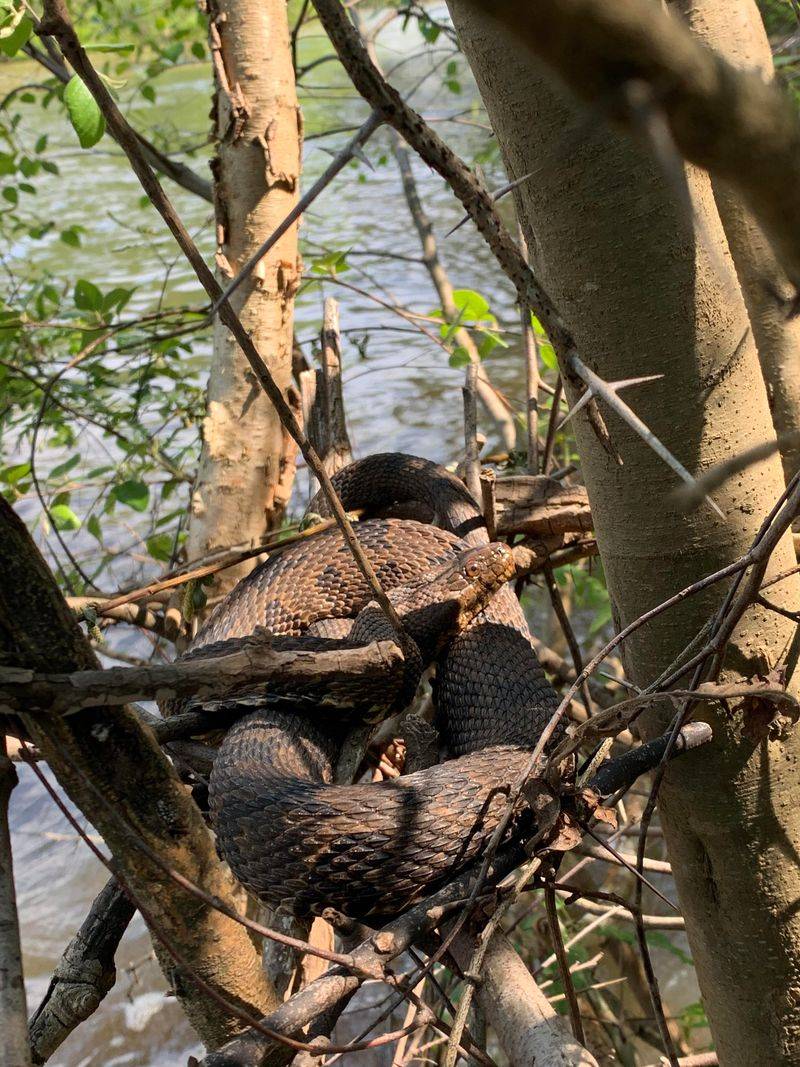
Glance up instead of down near the water, because this hefty snake loves sunning itself on overhanging branches. Folks often mistake one for a thick vine until it slowly lifts its head and slides away.
The brown watersnake, Nerodia taxispilota, usually grows 30 to 60 inches long, with squarish dark blotches on tan skin. Its head looks somewhat triangular, which unfortunately adds to the confusion with venomous species around ponds and lakes.
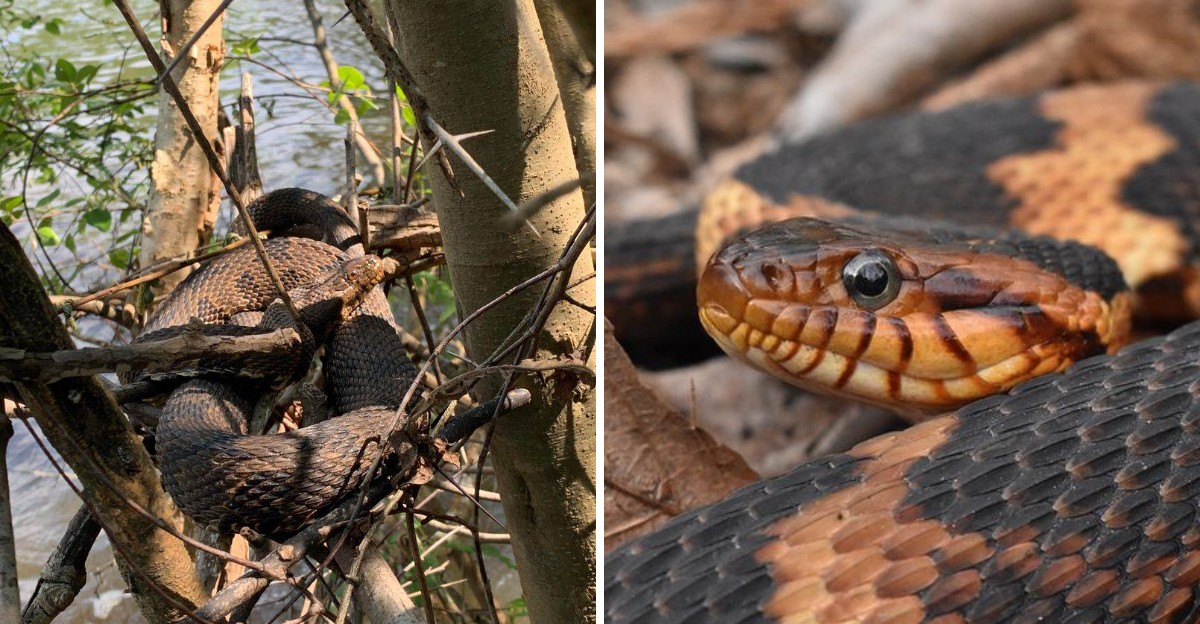
Rivers and cypress swamps suit this snake well, yet it also visits backyard ponds near larger waterways. Some individuals bask as high as twenty feet up, dropping into the water at the first sign of trouble.
Catfish rank as a favorite meal, and the snake often drags its catch to shore before swallowing it. It tends to wait in ambush rather than chase, making a fish-stocked pond an attractive hunting spot.
During spring and fall, brown watersnakes are mostly active by day, which means sunny branches get busy now. Summer heat usually pushes them toward nighttime activity, so autumn offers some of the best viewing chances.
Cottonmouths tend to float high with their bodies resting on the surface, while watersnakes usually swim lower. Brown watersnakes also have round pupils and no heat-sensing pits, though you should check from a distance.
If you stock your pond with fish, consider adding netting or deeper hiding spots to reduce easy snacking. Otherwise, enjoy the show, because watching one bask overhead is a pretty memorable moment for any backyard naturalist.
4. Venomous Cottonmouths Flash A White Mouth Warning
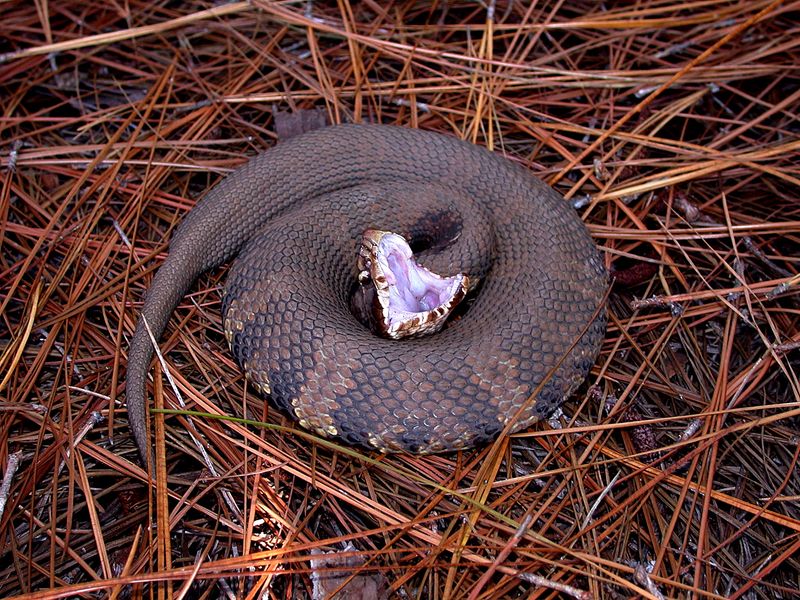
Startle this snake, and it may gape wide to show a mouth as white as cotton candy. That pale display is a warning, and I suggest you take the hint and slowly step back.
In most of Florida, the species is the Florida cottonmouth, Agkistrodon conanti, and cottonmouths live in wetlands statewide. Adults usually measure 30 to 48 inches and range from olive to dark brown or nearly black.
A dark stripe crosses each eye like a mask, and older snakes often lose their crossband pattern. Young ones show bright yellow tail tips, which they wiggle to lure frogs within striking range.
Cottonmouths eat almost anything they can catch, including fish, frogs, small mammals, and even other snakes. Heat-sensing pits on their faces help them find warm-blooded prey in the dark, especially on warm nights.
Unlike watersnakes, they often hold their ground instead of fleeing, sometimes vibrating their tails as a warning. Their venom can cause serious injury, so call for medical help right away after any bite.
Most bites happen when people try to handle or remove the snake, so leave that job to professionals. Keep children and pets away, and contact a licensed wildlife trapper if one settles near your patio.
Clearing tall grass and brush near the pond gives them fewer hiding places close to busy walkways. Wearing boots and carrying a flashlight on evening pond checks is a simple habit that pays off.
5. Slender Ribbon Snakes Zip Through Grassy Shorelines
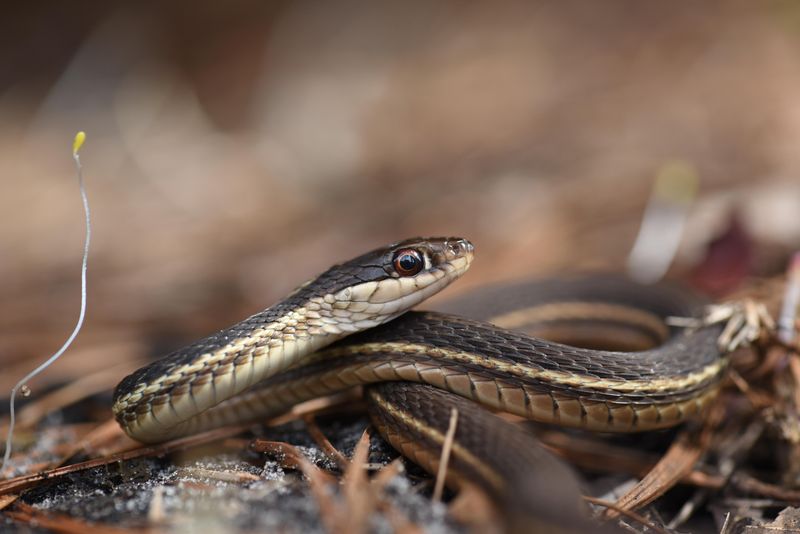
Blink and you might miss it, because this slim striped snake moves through wet grass like a ribbon in wind. I find its long whip of a tail especially charming, since it makes up about a third of its length.
The eastern ribbon snake, Thamnophis sauritus, usually measures 16 to 28 inches and looks impressively skinny for its length. Light stripes run down a dark body, and the peninsula form in Florida often has a faint or missing back stripe.
These semi-aquatic snakes favor grassy pond edges, where they hunt small frogs and tadpoles in shallow water. Small fish also land on the menu, and they grab prey quickly before swallowing it without constricting.
Ribbon snakes mostly hunt during daylight, so a sunny afternoon stroll around your pond might reveal one. They often stay active through fall here, and southern populations may rarely take a true winter break.
When startled, they zip into thick plants or even skim across the water surface to escape. Pick one up, and it may thrash and release musk, but it carries no venom and poses no danger.
Telling them from garter snakes takes a closer look at the side stripes and the lip scales. Ribbon snakes have side stripes on scale rows three and four, plus plain lips without dark bars.
Leaving a strip of native grasses or rushes along the shoreline gives them cover and natural hunting grounds. In return, they help keep frog numbers balanced, which I consider a fair trade for a little shelter.
6. Eastern Garter Snakes Roam Moist Lawns Near Ponds
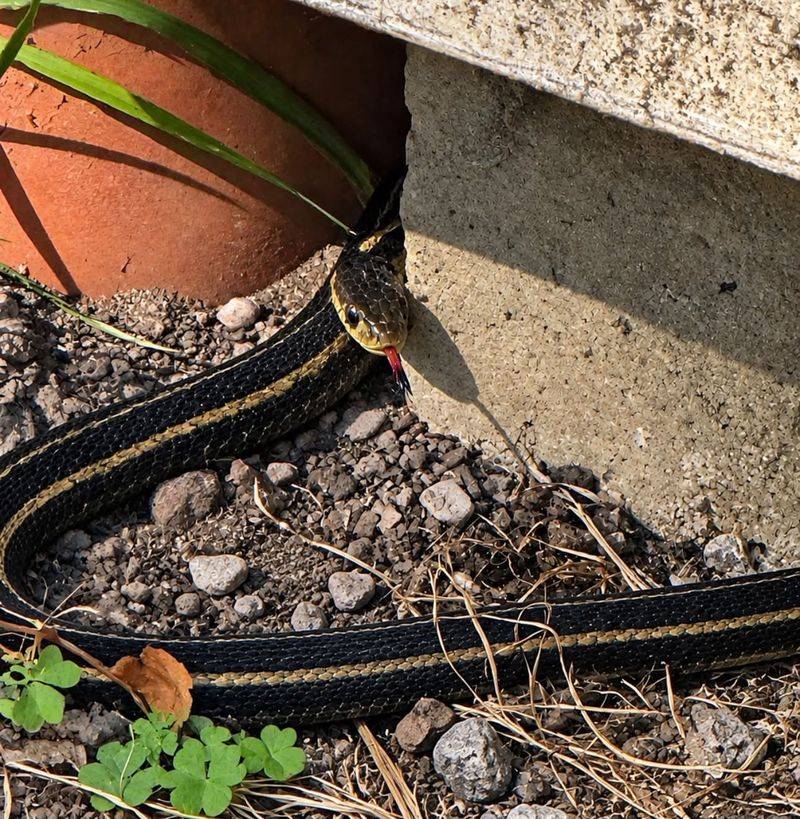
Garter snakes might be the most familiar backyard snakes in the country, and they adapt easily to suburban yards. I love how their bright stripes flash when they slip under a leaf pile or garden stepping stone.
The eastern garter snake, Thamnophis sirtalis sirtalis, usually reaches 18 to 26 inches with a variable background color. Many show three light stripes, while others have a checkered look of dark spots between the stripes.
Their menu leans heavily on earthworms and amphibians, though they also snatch small fish from shallow water. Some garter snakes have mildly toxic saliva that helps subdue prey, but it causes humans little more than mild swelling.
Mild winters let them stay active much of the year, and they often appear on warm winter afternoons. Fall is a fine time to notice them hunting, since frogs and worms stay busy after cool rains.
When approached, they usually race for cover, but a grabbed garter snake may bite and smear smelly musk. The bite is minor, so a quick wash with soap and water is typically all you need.
Compared with ribbon snakes, garter snakes look a bit chunkier and usually have dark vertical bars on their lips. Their side stripes also sit lower, on scale rows two and three, which helps when photos look confusing.
Avoid spraying pesticides near the pond, since garter snakes rely on earthworms and slugs that thrive in healthy soil. A few flat rocks or logs nearby give them sunny basking spots and safe shelter after hunting.
7. Shiny Black Swampsnakes Hide Their Bright Red Bellies
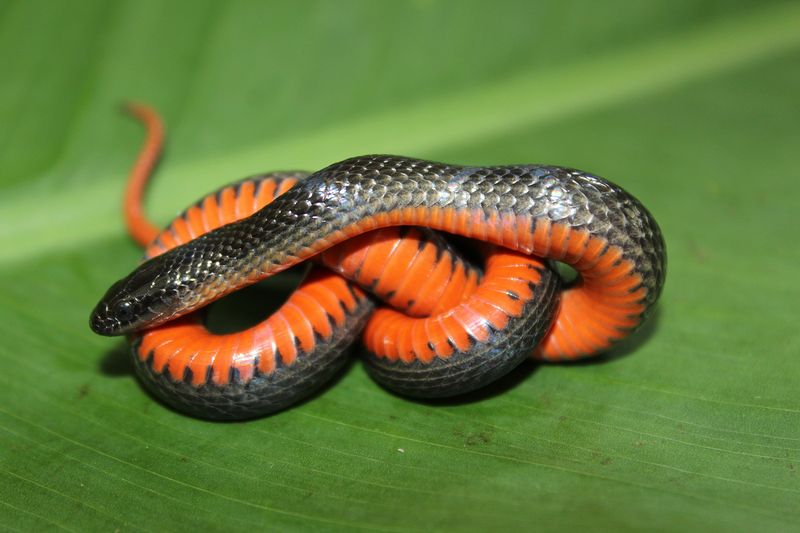
Flip this tiny snake over, and you would find a belly as red as a ripe strawberry. On top, though, it looks glossy black, so it blends right into murky water and soggy leaves.
The black swampsnake, Liodytes pygaea, usually stays just 10 to 15 inches long, making it easy to overlook. Its smooth scales give it a polished shine, and young ones share the same striking colors as adults.
These little snakes are highly aquatic, spending most of their time tangled in thick floating plants and mats. Ponds packed with native plants like pickerelweed can shelter them, especially along shallow edges with soft muck.
They feed on small fish, tadpoles, leeches, and little salamanders hunted among submerged roots and stems. Activity happens both day and night, though their secretive habits mean even experienced naturalists rarely spot them.
Rainy nights sometimes bring them out onto roads, so slow down near wetlands after a heavy storm. I would count spotting one as a real treat, since many people live near them without ever knowing.
Swampsnakes are famously calm and seldom bite, though a handled one may release musk as a defense. Mudsnakes also have red bellies, but their red pattern extends up the sides as bars, unlike swampsnakes.
If you want to support them, skip heavy pond chemicals and leave some floating vegetation in place. A pond that looks a little wild often supports more tiny creatures than one scrubbed spotless and bare.
8. Glossy Eastern Mudsnakes Hunt Sirens In Muddy Water
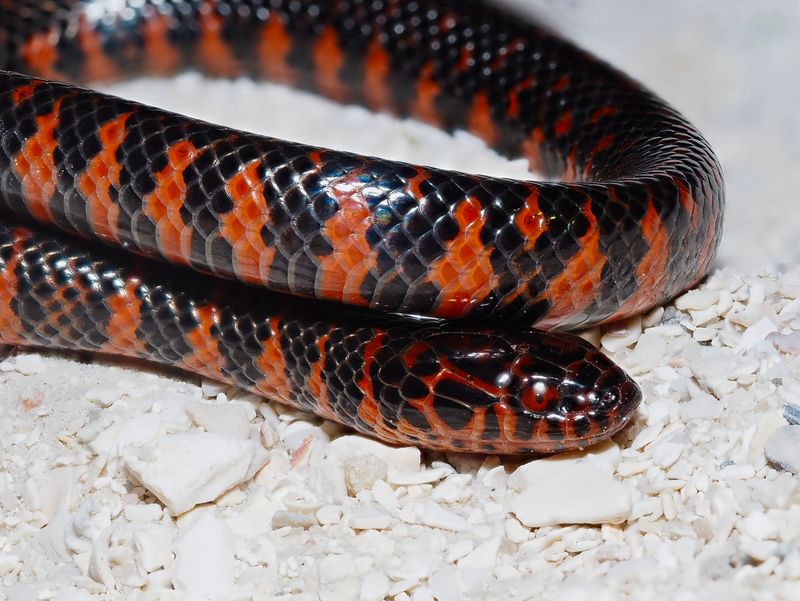
Catch this snake in sunlight, and its black back shimmers with a blue-purple sheen like an oil slick. Underneath, bold red and black bars run up the sides, making it one of the prettiest pond visitors.
The eastern mudsnake, Farancia abacura abacura, is a thick-bodied snake that often reaches 40 to 54 inches. It has a blunt head and small eyes, which suit a life spent pushing through mud and roots.
Mudsnakes eat mostly large aquatic salamanders called sirens and amphiumas, which look a lot like slimy eels. Young mudsnakes may also take tadpoles, but adults stick closely to their favorite slippery salamander meals.
These secretive snakes are mostly nocturnal and spend long hours buried in muck or hidden beneath floating plants. Hatchlings often appear from late summer into early fall, so young ones may be roaming around now.
Heavy rains can trigger more movement, which is when people sometimes spot them crossing yards or roads. Some folks call them hoop snakes, but the old tale about rolling like a wheel is pure myth.
Mudsnakes rarely bite, even when handled, though they may press a pointed tail tip against your skin. That harmless poke gave rise to the stinging snake legend, but the tail carries no venom whatsoever.
Spotting one usually means your local wetlands still support healthy salamander populations, which is a promising sign. Watch quietly from a distance with a flashlight, and let this glossy giant slip back into the dark.