8 Thanksgiving Cactus Care Tips For California Homes This November
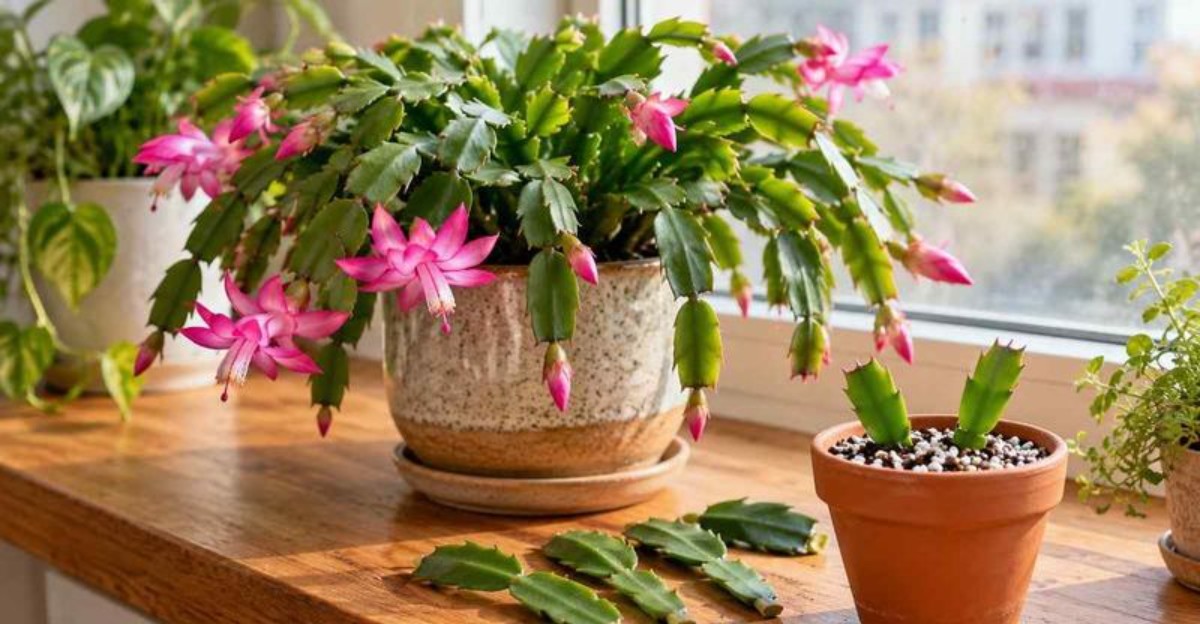
Store tags promising Christmas blooms often sit on the wrong plant entirely. Many of those pots hold an earlier cousin that flowers right around Thanksgiving, and growers favor it because it ships well.
Up close, the stems give the game away. Each flat segment wears little pointed teeth, like a tiny crab claw. Its December cousin has smooth, rounded edges instead. Blooms on the earlier type also stick out sideways rather than drooping.
Mine spends November evenings tucked inside a dark closet, because long nights help set those buds. Household members think I’ve lost the plot. Then the flowers open right on cue, and suddenly everyone wants credit. Cool coastal nights give many California homes a head start too.
These plants can live for decades with steady care. The pot on your windowsill this week could one day become a family heirloom.
1. Check The Crab Claw Teeth On Thanksgiving Cactus Stems
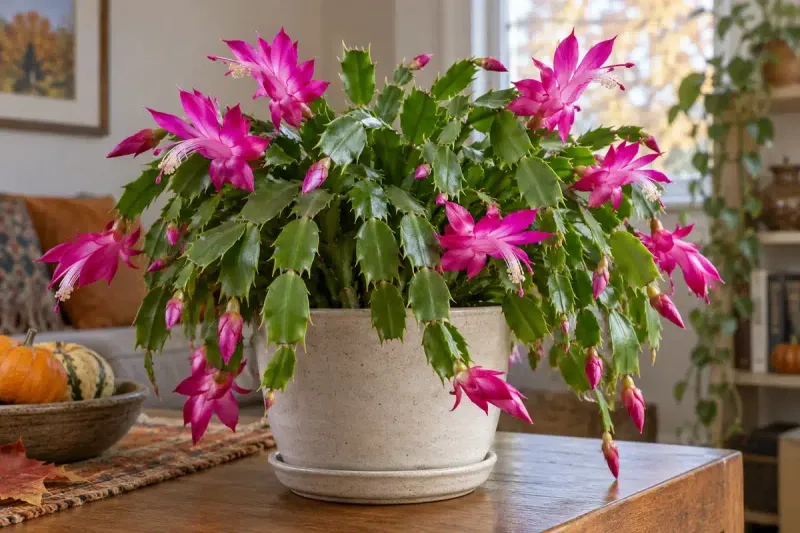
Run your finger along a stem segment, and you will feel two to four pointy teeth on each edge. Those claw shapes earned this plant the nickname crab cactus, and I think it suits the quirky look.
Botanists call it Schlumbergera truncata, and it differs from the true Christmas cactus in several easy ways. Christmas cactus, Schlumbergera x buckleyi, has smooth, rounded scallops along its segments instead of sharp hooked points.
Flowers offer another clue, because Thanksgiving types hold their blooms out sideways at an almost horizontal angle. Christmas cactus flowers tend to droop downward more, like little lanterns hanging from the tips of stems.
Pollen color helps too, with yellow anthers on Thanksgiving cactus and purplish brown anthers on Christmas types. Grab a magnifying glass if needed, since the details are tiny but fun to spot with kids.
Most plants sold as Christmas cactus in stores are actually Thanksgiving cactus that were simply timed differently. Growers favor them because they ship well and bloom earlier, so the mix-up is very common.
Knowing which plant you own matters, because the timing of bud set shifts by about a month. Thanksgiving cactus usually flowers from late October through November, while its cousin follows closer to December.
Personally, I label my pots with masking tape so I remember which plant needs care first each fall. That small habit saves plenty of guesswork when the days get shorter and the buds start swelling.
2. Set Your Thanksgiving Cactus Near A Bright East Window
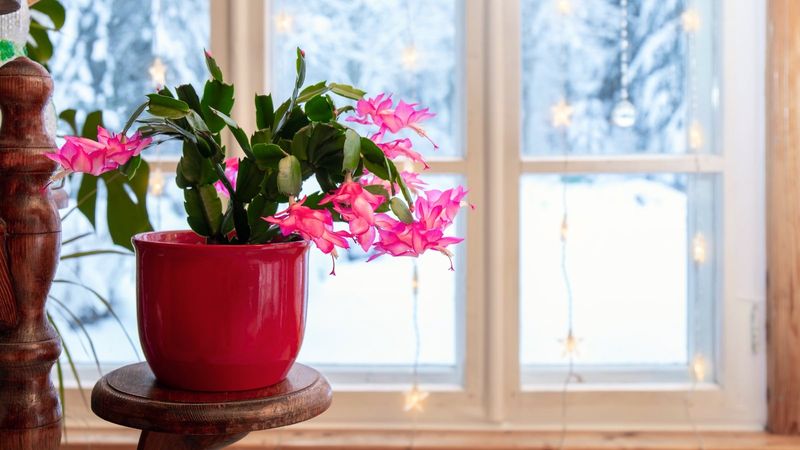
Morning sun streaming through an east window feels like a gentle wake-up call for this rainforest native. In the wild, it grows on tree branches under a leafy canopy that filters harsh midday light.
Bright, indirect light suits it best indoors, so aim for a spot that stays luminous without hot rays. A few feet back from a south or west window works well, especially behind a sheer curtain.
Too much direct sun can bleach the stem segments or tint them a reddish purple color. That color shift is a stress signal, and moving the pot slightly usually helps the green return.
On the flip side, a dim corner often leads to weak stems and very few flower buds. I have to admit my first plant sulked for a year on a shady bookshelf before I moved it.
California sunshine can be intense even in late fall, especially in inland valleys and southern regions. Watch how light moves across your room during the day, since afternoon glare sneaks in through unexpected windows.
Rotate the pot a quarter turn now and then before buds form to keep growth balanced and full. Once buds appear, try to leave the plant facing the same way so the flowers stay put.
Buds often twist toward the light, and constant turning can stress them enough to drop early from the stems. A steady spot with soft brightness gives you the healthiest stems and the most generous holiday display.
3. Count The Dark Hours Your Thanksgiving Cactus Gets Each Night
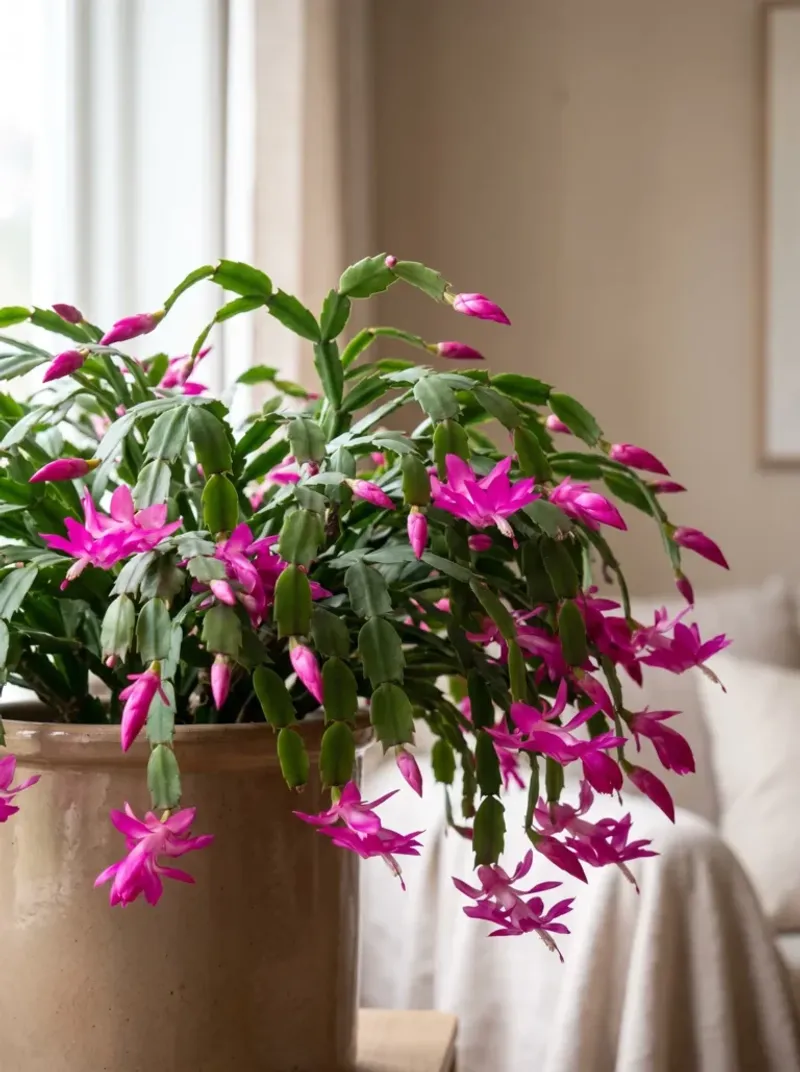
Flower buds on this plant depend on darkness, and a single bright lamp can quietly delay the show. Thanksgiving cactus is a short-day plant, which means long nights trigger the bloom cycle each fall.
University extension guides suggest about twelve to fourteen hours of uninterrupted darkness for roughly six weeks in a row. Cool nights between about fifty and fifty-five degrees can also encourage buds, even with less darkness.
By November, many plants have already set buds, but late bloomers still benefit from extra darkness. Check the stem tips closely, since tiny pink or red nubs mean the process is already underway.
Spare bedrooms and guest rooms often make perfect spots, as long as nobody flips lights on at night. Porch lights shining through windows and bright television screens can also interrupt the plant’s sense of nighttime.
Personally, I slide my pots into a closet at dusk and bring them back out after breakfast. It sounds fussy, but the routine takes less than a minute and the payoff is big.
Many coastal California homes stay naturally cool at night, which gives your plant a helpful head start. Inland homes with warm evenings may rely more on darkness, since the cool trigger is less reliable.
Once buds reach about the size of a pea, you can relax the strict darkness schedule. Normal household light is fine at that stage, so place the plant wherever you can enjoy it most.
4. Water Thanksgiving Cactus When The Top Inch Feels Dry
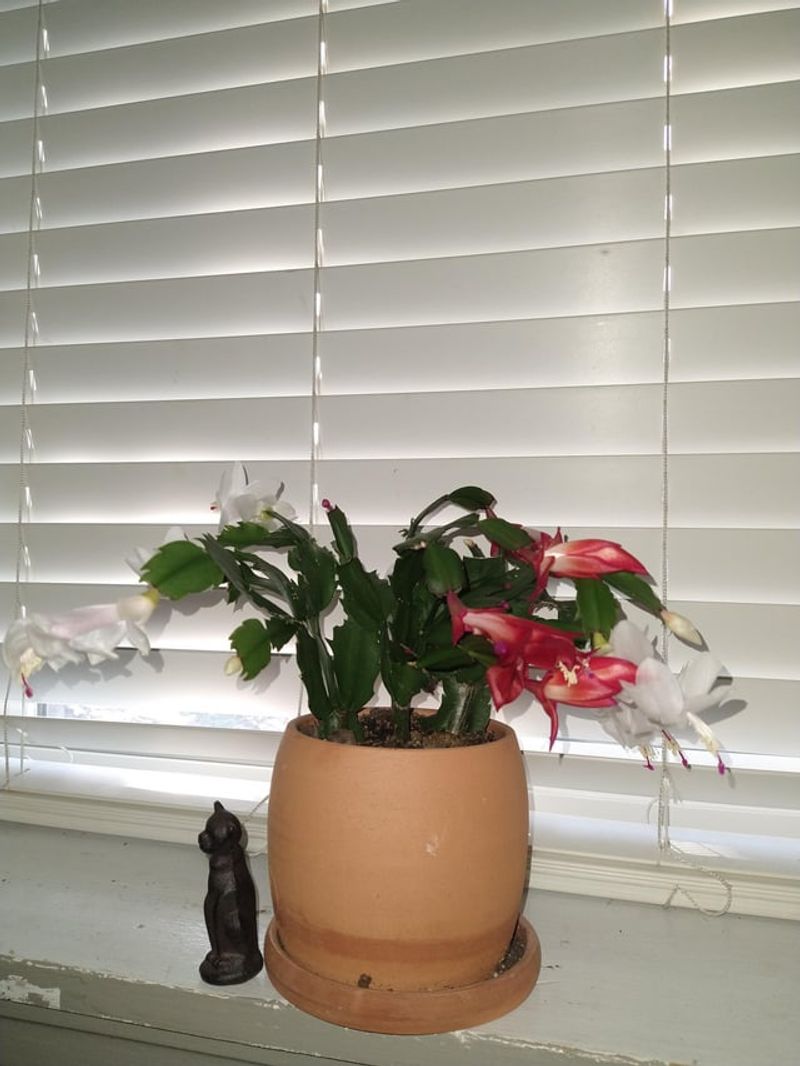
Poke a finger into the potting mix, and the soil will tell you more than any calendar. This cactus comes from humid Brazilian forests, so it wants more moisture than desert cousins like barrel cactus.
Water thoroughly when the top inch feels dry, letting the extra drain freely out of the bottom holes. Empty any saucer afterward, because roots sitting in standing water can rot quickly and decline fast.
During bud and bloom, keep the mix lightly moist rather than letting it go bone dry for long. Sudden drought at this stage is a common reason buds fall off just before they open.
I like using room-temperature water, since an icy splash from the tap can shock sensitive roots in fall. Rainwater or filtered water also helps if your local supply is very hard and leaves white crust.
Many California cities have hard water with lots of minerals, which can build up in the pot. Flushing the soil with plenty of water every few months helps rinse out that salty residue.
Limp, wrinkled segments can mean too little water, but they can also signal roots damaged by rot. Check the roots gently if the soil is soggy and the stems still look shriveled and soft.
After blooming ends, let the plant rest by watering a bit less for about a month. That short break mirrors the dry season in its native habitat and prepares it for spring growth.
5. Keep Thanksgiving Cactus Buds Away From Heaters And Drafts
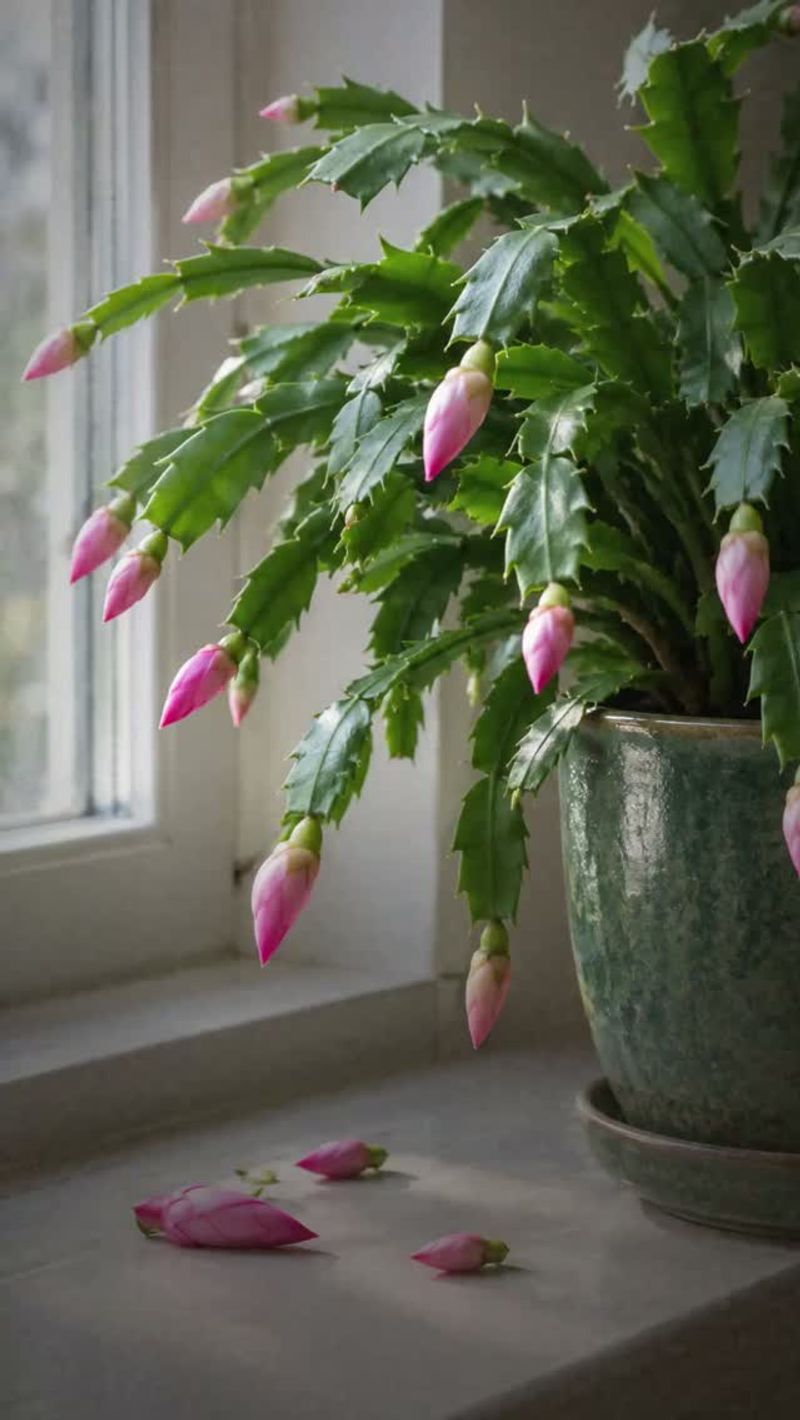
Nothing stings quite like finding a pile of plump pink buds scattered on the windowsill one morning. Bud drop is the classic complaint with this plant, and sudden temperature swings are often the reason.
Aim for comfortable daytime temperatures around sixty-five to seventy degrees, with slightly cooler nights while buds develop. That steady range keeps the plant relaxed and focused on opening each flower in its own time.
Heating vents and fireplaces blast dry, hot air that can shrivel buds within just a few days. Keep pots several feet away from these spots, even if the cozy corner looks tempting for display.
Drafty front doors cause trouble too, especially when guests come and go during busy holiday gatherings. A chilly gust each time the door opens can stress buds more than you might expect.
Many California homes have single-pane windows that get surprisingly cold against the glass on clear nights. Slide the pot back a few inches from the pane so leaves and buds do not touch it.
Moving the plant around also counts as stress, so pick its holiday spot early and leave it there. I learned this lesson after carrying mine to three different rooms and losing nearly half the buds.
Once flowers open, cooler rooms help each blossom last longer, sometimes for several days at a time. A steady, comfortable spot gives you the longest and brightest display right through the holiday weekend.
6. Add Gentle Humidity Around Your Thanksgiving Cactus Pot
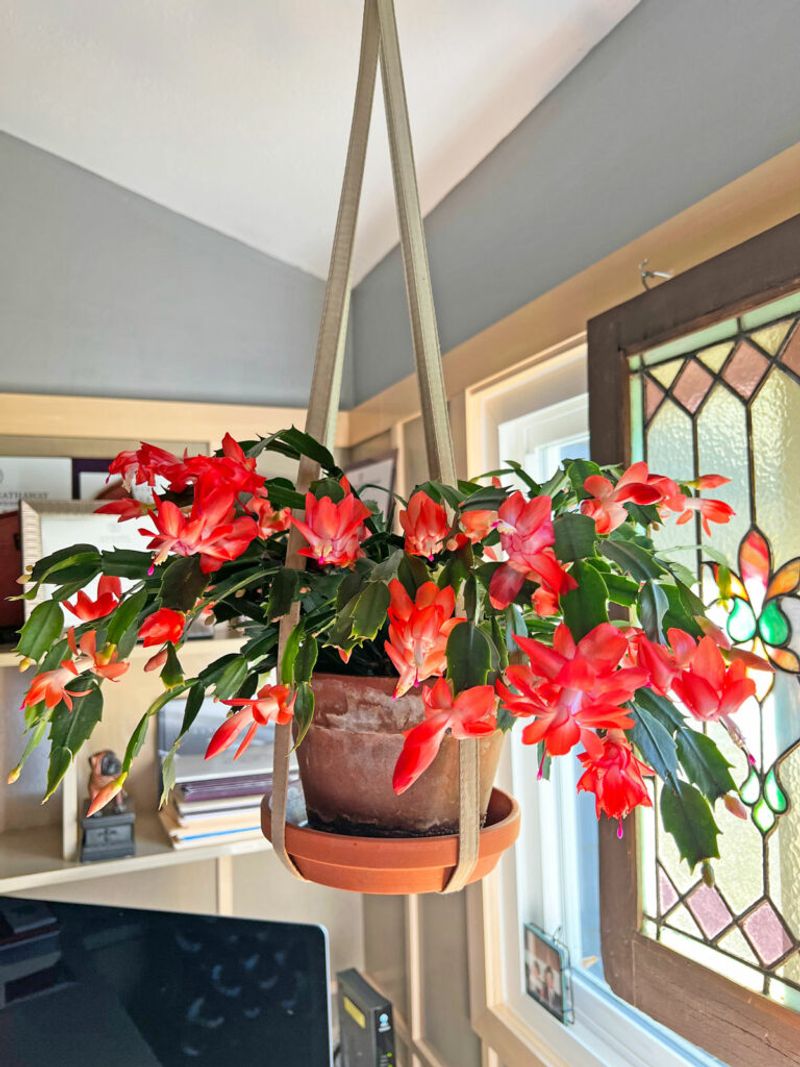
Rainforest air feels thick and soft, quite different from a heated living room on a crisp autumn evening. Your plant notices that difference, and dry air can leave segments looking thin and buds looking tired.
Many plant experts recommend moderate humidity, roughly forty to sixty percent, for healthy stems and strong flowering. An inexpensive hygrometer from a hardware store shows you how dry your indoor air really gets.
Santa Ana winds can drop humidity sharply in Southern California during fall, and indoor air follows along. Dry spells like that are a great time to give your plant a little extra moisture nearby.
A pebble tray works well, with water filling the gaps but staying below the bottom of the pot. As the water evaporates, it creates a small pocket of moist air right around the plant.
Grouping several houseplants together also helps, because their leaves release moisture that lingers in the shared space. I love how a little cluster of pots on a table looks cheerful and helps everyone stay happy.
A small room humidifier is another option, especially in bedrooms where the cactus rests at night. Keep it a few feet away so water droplets do not collect on the stems or flowers.
Misting is popular, but its effect fades within minutes and wet flowers can develop spots or mold. Steady background humidity does far more good than a quick spray from a bottle once a day.
7. Pause Fertilizer While Thanksgiving Cactus Flowers Open
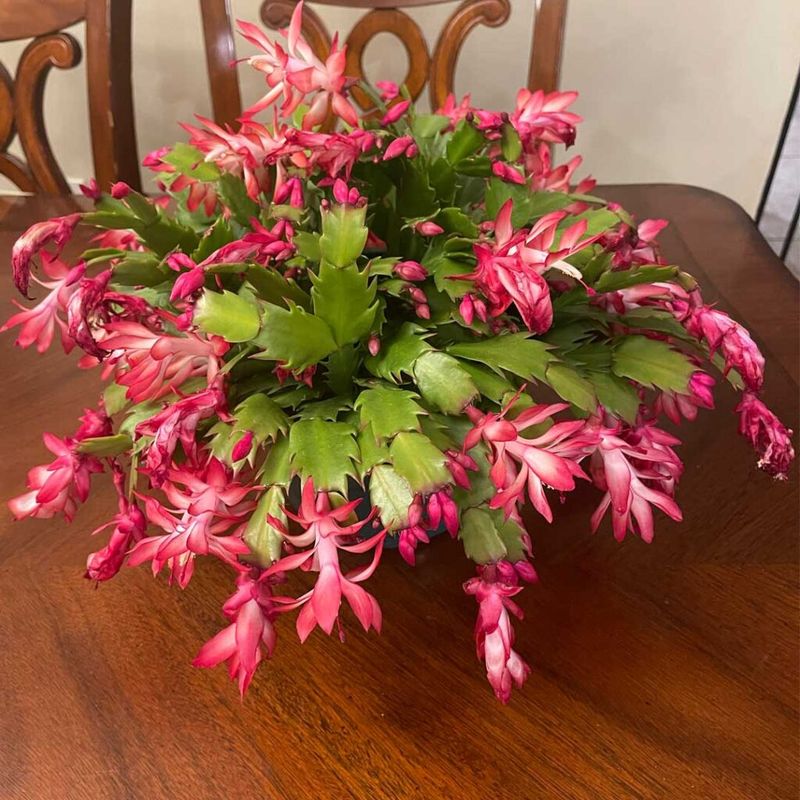
Feeding a plant in full bloom sounds generous, yet this cactus prefers a quiet break from fertilizer. Its energy is going toward flowers right now, and extra nutrients can push leafy growth instead.
Most extension guides suggest feeding from spring through summer with a balanced houseplant fertilizer at half strength. Many growers stop by late summer or early fall, giving the plant time to shift into bloom mode.
Too much fertilizer can leave mineral salts in the soil, which may burn roots and brown the segment tips. A white crust on the pot rim or soil surface often signals that salts are building up.
Personally, I mark my calendar in spring so I remember when to start and stop feeding each year. That simple reminder keeps me from grabbing the fertilizer bottle out of habit during the holidays.
Wait until blooming ends and fresh green segments appear, usually in late winter or early spring. New growth is the plant’s way of saying it is ready for a nice meal again.
Some gardeners add a little magnesium during the growing season, since these plants seem to use plenty of it. Ask a local nursery before trying it, and follow label rates closely to avoid overdoing it.
A plant that rests now often rewards you with sturdy stems and plenty of buds next autumn. Patience feels hard when you love your plant, but skipping fertilizer is a simple gift right now.
8. Twist Off Thanksgiving Cactus Segments After The Blooms Fade
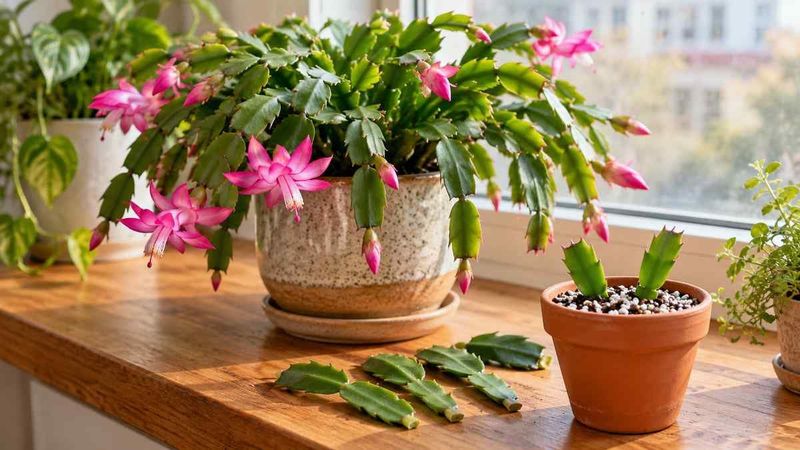
Snapping off a stem segment feels a little bold, but this plant actually responds with bushier growth. Each removed joint encourages new branches, and more branch tips usually mean more flower buds next fall.
Hold off on pruning while buds and blooms are present, since you could remove future flowers by accident. Late winter or early spring, after the last blossom fades, is the ideal window for shaping.
Gently twist segments apart at the joints instead of cutting, which leaves a clean break that heals quickly. If you must tidy up now, remove only broken or damaged pieces and leave healthy stems alone.
Those trimmed pieces make easy new plants, and I can’t resist sharing them with friends and neighbors. Let each cutting dry for a day or two, then tuck it into slightly moist cactus mix.
Roots often form within a few weeks, especially in warm, bright spots without harsh direct sun. Plant several cuttings together in one pot for a fuller look that fills out much faster.
Repotting can wait as well, because this cactus likes being a bit snug in its container. Every few years after blooming, move it to a pot only one size larger with fresh, fast-draining mix.
Thanksgiving cactus plants can live for decades with steady care, and many families pass them down for generations. Your own pot might become a cherished heirloom that blooms on someone else’s holiday table someday.