8 Trees in Virginia That Could Get You Fined If You Don’t Remove Them
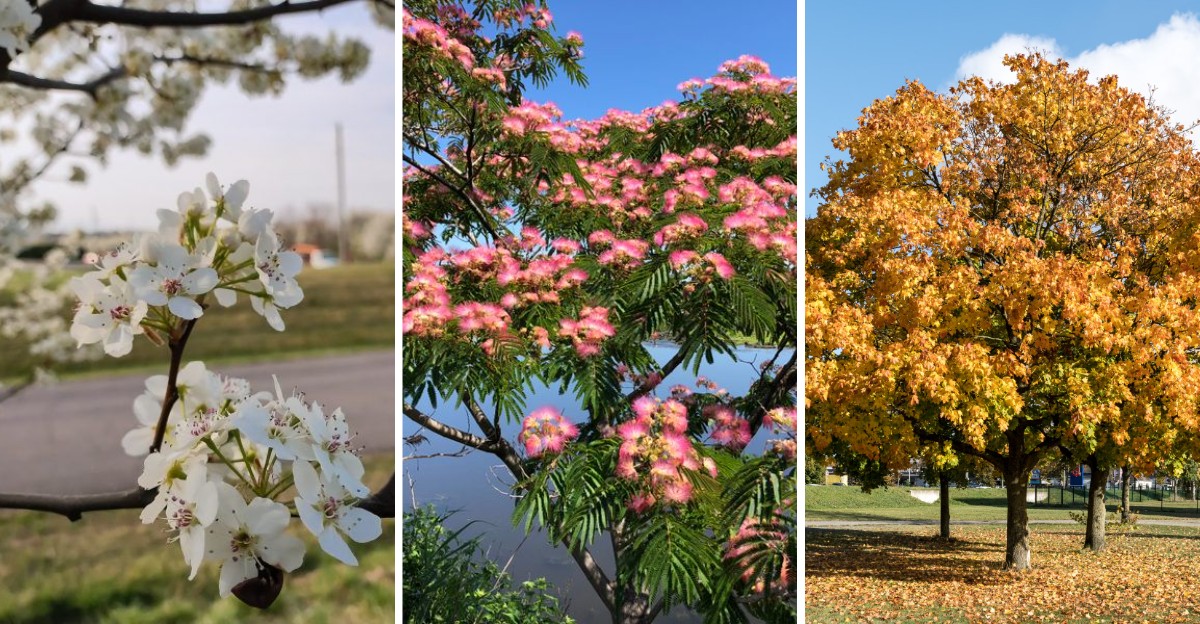
A single leafy cane sneaking under a fence can earn a homeowner an official county violation notice in Virginia. Several localities now treat certain spreading plants as neighborhood problems, and penalties can climb when owners ignore warnings.
State lawmakers have also tightened rules on selling invasive species, so garden centers must label many risky plants. Some trees that once lined suburban streets are now officially considered troublemakers by foresters and extension experts.
Take it from someone who once admired a sweet little sapling until it started popping up everywhere in my beds. Between you and me, the most beautiful trees sometimes cause the biggest headaches for gardeners and their neighbors.
Fines usually come from local ordinances, not statewide bans, so the details depend heavily on where you live. So which familiar trees deserve a second look before a code officer or an annoyed neighbor notices them first?
1. Running Bamboo

Technically a giant grass, running bamboo earns the top spot because it carries the clearest fine risk on this list. Fresh shoots can rocket upward several inches in a single spring day, and that speed surprises almost everyone.
State code lets localities pass ordinances requiring owners to keep running bamboo from spreading onto neighboring land or public property. Fairfax County adopted one, and owners who ignore violation notices can face civil penalties that grow with repeat offenses.
Golden bamboo, Phyllostachys aurea, is a common culprit, though several other Phyllostachys species behave much the same way. Underground stems called rhizomes travel sideways under fences, driveways, and garden beds, then send up canes far from the original clump.
Looking back, I wish my first house had come with a warning label about the pretty screen planted along the fence. Clumping bamboo stays fairly tidy, but running types treat property lines like polite suggestions rather than real boundaries.
Containment starts with a sturdy plastic root barrier buried roughly 30 inches deep, with a few inches left above ground. Check that exposed lip each summer and snip any rhizome trying to sneak over the top of the barrier.
For full removal, cut canes to the ground and keep mowing new shoots so the rhizomes slowly run out of energy. Extension experts note that this process often takes several years, and herbicides on regrowth can speed things along.
Bag removed rhizomes for the trash instead of composting them, since small pieces can root again. Chat with neighbors early, because a friendly plan costs far less than a county notice taped to your door.
2. Tree-Of-Heaven
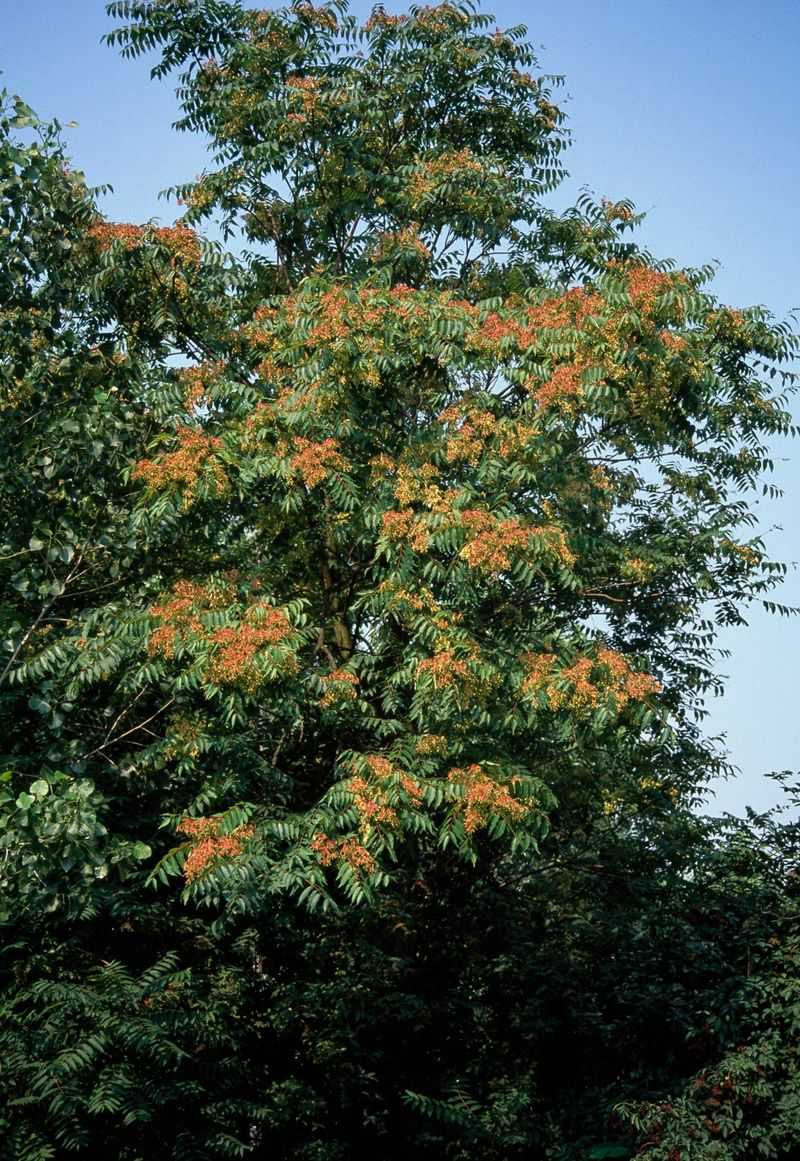
Crush one leaf from this tree and you get a whiff often compared to rancid peanut butter or burnt popcorn. Such a lovely name for a plant that smells like a forgotten lunchbox still makes me laugh every time.
Ailanthus altissima arrived from China centuries ago and now grows along highways, alleys, and backyard fences across the region. A single large female tree can release hundreds of thousands of winged seeds in one year.
Virginia lists tree-of-heaven as a regulated noxious weed, which restricts selling and moving it within the state. Even worse, it serves as a favorite host for the spotted lanternfly, a sap-sucking pest that troubles vineyards and orchards.
Look for long compound leaves with small rounded notches near the base of each leaflet. Smooth gray bark that resembles cantaloupe skin helps separate it from look-alikes like native sumac and black walnut.
My own yard taught me that cutting this tree down only sparks a frustrating army of root sprouts nearby. Penn State Extension recommends treating the living tree with herbicide first, then cutting it once the roots have weakened.
Midsummer through early fall is often the best window for the hack-and-squirt method on larger trunks. Tiny seedlings can be hand-pulled after rain, but you must grab the whole root or it simply returns.
Fines aimed at homeowners for this tree are uncommon, yet hazard trees near roads or neighbors can raise code concerns. Removing it early protects your wallet and gives native trees a better chance to settle in.
3. Callery Pear
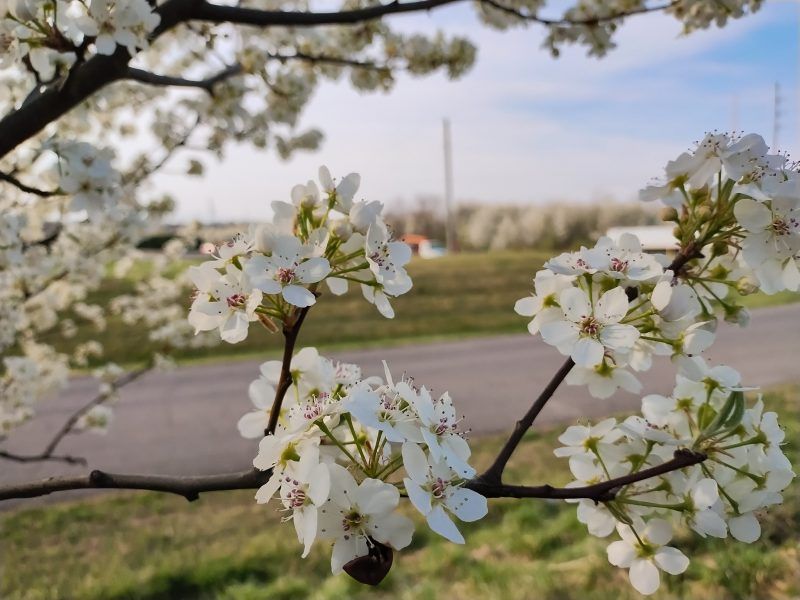
Every early spring, clouds of white blossoms burst across roadsides, and many folks pause to admire the snowy show. Then the breeze shifts, and that fishy aroma makes everyone wonder who forgot their garbage outside.
Pyrus calleryana, including the famous Bradford pear, was planted widely for decades because it grew fast and bloomed reliably. Sadly, different cultivars cross-pollinate, and birds spread the small fruits into fields, forest edges, and highway medians.
Wild offspring often grow sharp thorns and form thickets that crowd out native shrubs and young hardwoods. The Virginia Department of Forestry and Virginia Cooperative Extension both encourage replacing these trees with native choices.
Structural weakness is the other big worry, because tight branch angles make the trunk likely to split in storms. I once watched half a neighbor’s pear crash across their driveway during a breezy thunderstorm, and nobody enjoyed that cleanup.
Many local codes and homeowner associations can require removal of hazardous trees threatening sidewalks, roads, or nearby homes. A cracked pear leaning over a public path can quickly turn into a costly notice or insurance problem.
Seedlings pull out easily from soft soil, but cut stumps on larger trees resprout unless treated with an approved herbicide. Painting the fresh cut right away gives the best results and saves you from chasing sprouts for years.
Native serviceberry or flowering dogwood make cheerful replacements with spring blooms and berries for birds. Both offer stronger wood and a far more pleasant fragrance drifting across your yard in April.
4. Princess Tree
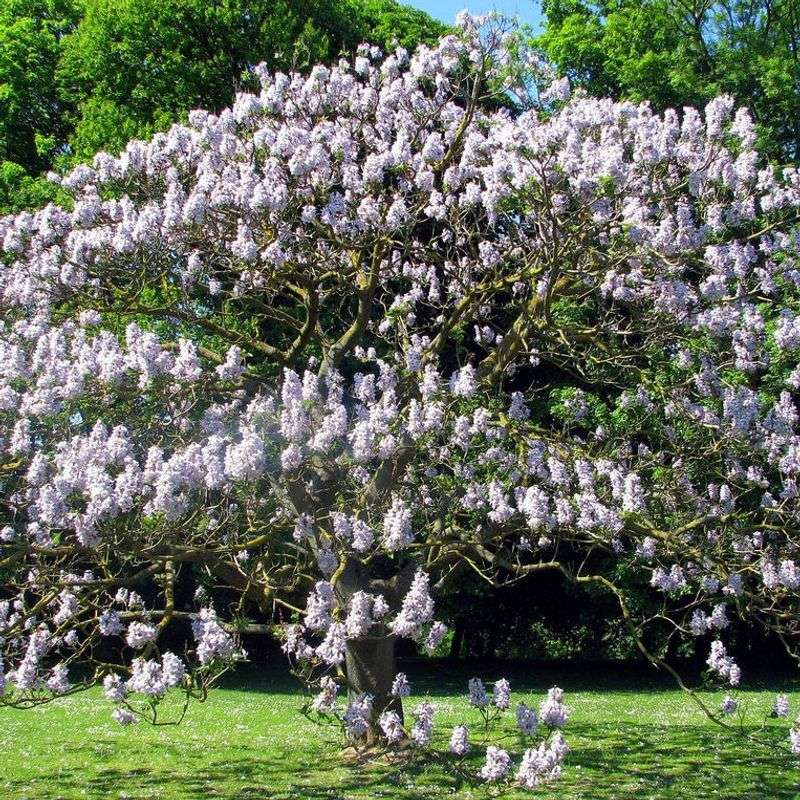
Lavender blossoms shaped like foxgloves hang from bare branches every spring, and the fragrance reminds me of grape candy. No wonder so many people ask me where they can buy one for their yard.
Paulownia tomentosa, also called royal paulownia or empress tree, comes from China and grows astonishingly fast in sunny spots. Young sprouts can produce enormous heart-shaped leaves bigger than a dinner plate during their first summer.
Each woody seed capsule holds roughly 2,000 tiny winged seeds, and a mature tree can carry thousands of capsules. Wind and water scatter them widely, so seedlings appear along roadsides, stream banks, and even rocky cliff faces.
Virginia’s Department of Conservation and Recreation lists princess tree as an invasive species that threatens natural areas. Its seedlings thrive after soil gets disturbed, which makes new construction sites and freshly cleared lots especially vulnerable.
For what it’s worth, fast growth also brings brittle limbs that can snap during heavy wind or ice storms. Hazardous trees near streets or property lines may draw attention from local code staff, especially after storm damage.
Pull small seedlings by hand once the soil is moist and loose after a soaking rain. Bigger trees resprout from stumps and roots, so experts suggest treating cut surfaces with herbicide right after cutting.
Fringetree or native redbud can fill that spring flowering spot without sending seeds into nearby woods. Your neighbors will still stop to admire the show, minus the surprise seedlings popping through their garden beds.
5. Mimosa Tree
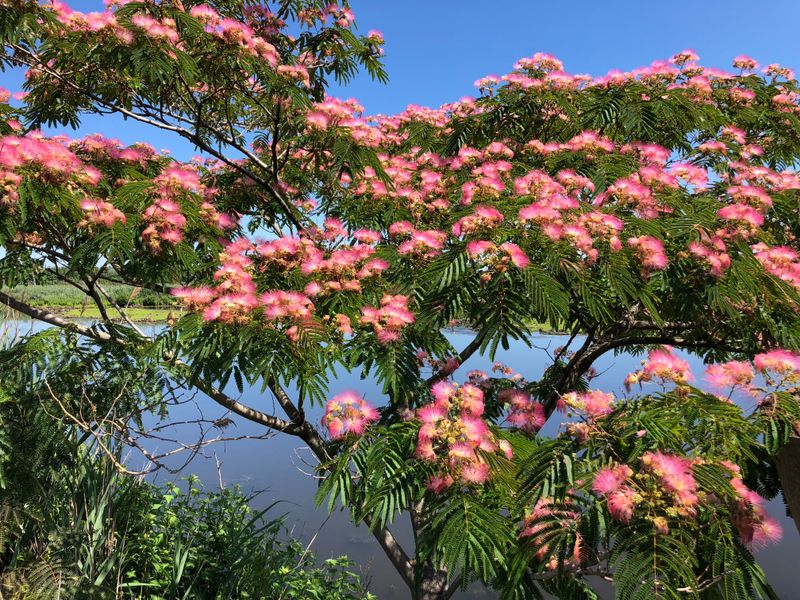
Fluffy pink pom-poms dusting the branches in early summer make mimosa look like something from a storybook. Hummingbirds and bees adore those blossoms, and honestly, I understood the appeal for years before learning more.
Albizia julibrissin, often called silk tree, came from Asia as an ornamental during the 1700s. Its feathery leaves fold up at night, which delights kids who spot the trick on summer evenings.
Trouble begins with the flat brown pods, each packed with hard seeds that can stay viable in soil for years. Mimosa readily colonizes roadsides, stream banks, and forest edges, where it shades out native plants that need sunlight.
Don’t make my mistake of tossing old pods into a compost pile and hoping for the best. Dozens of seedlings showed up the next spring, and pulling them became my least favorite weekend chore.
Direct fines for growing mimosa are rare, but neglected trees can raise property concerns when limbs fail. Many mimosas also suffer from vascular wilt disease, which weakens branches and leaves trees leaning awkwardly over sidewalks.
Hand-pull seedlings while they are small, making sure to remove as much root as possible. Larger trees sprout back after cutting, so extension guides recommend herbicide on the cut stump or along the lower bark.
Snipping off seed pods before they ripen can slow the spread while you plan a full removal. Native buttonbush offers round summer blooms that pollinators love, giving you a similar look without the worry.
6. Autumn Olive
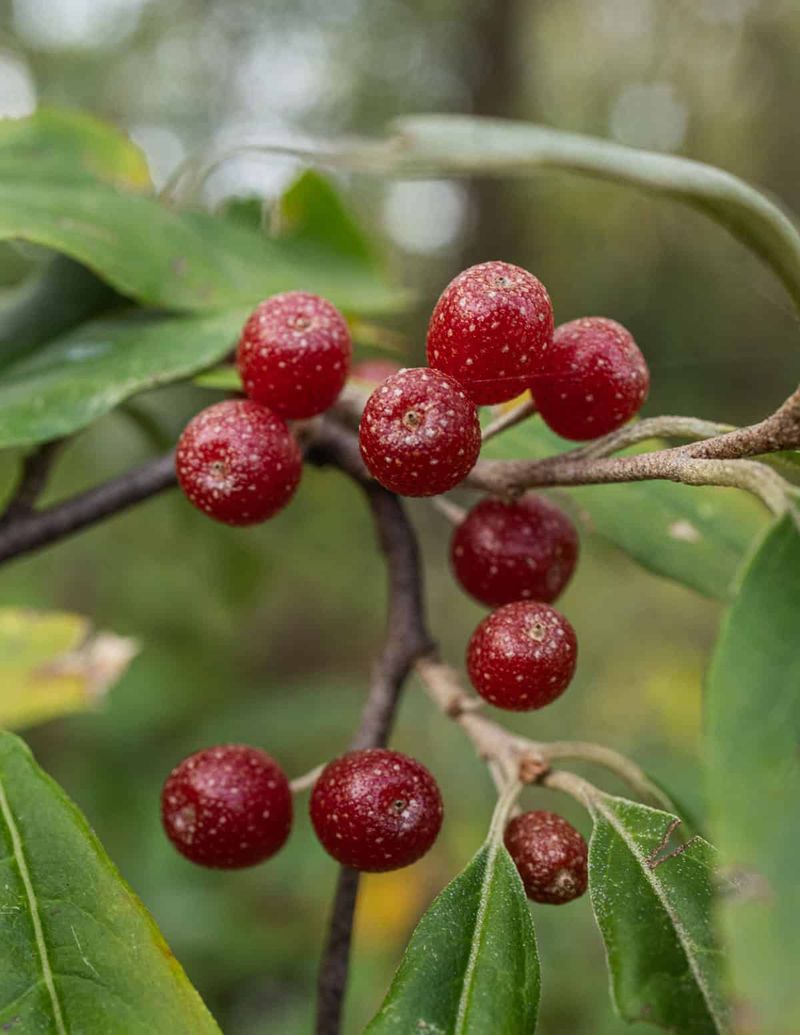
Flip over a leaf on this shrubby tree and you’ll find a shimmering silver underside that sparkles in sunlight. Come fall, branches sag under countless red berries freckled with tiny silver dots.
Elaeagnus umbellata was once planted for wildlife cover and erosion control, especially on old farm fields and strip mines. Birds gobble the fruit and scatter seeds widely, which helped it spread far beyond those original plantings.
Autumn olive can reach around 20 feet tall and forms thick stands that block sunlight from native seedlings. Its roots also fix nitrogen, changing soil conditions in ways that can favor weedy plants over native wildflowers.
If you ask me, the berries taste surprisingly sweet and tart, and some foragers turn them into jam. Still, eating the fruit doesn’t make up for the thickets spreading along fence rows and meadow edges.
Like other trees here, autumn olive rarely triggers a direct homeowner fine on its own. Overgrown thickets blocking roads, sight lines, or easements, however, can draw complaints and local maintenance requirements in some communities.
Young plants pull up easily with a weed wrench, especially when the ground stays soft after rain. Cutting larger stems leads to bushy regrowth unless you treat the stump promptly with a labeled herbicide.
Late summer and early fall work well for herbicide treatments because plants move energy down to their roots. Native elderberry or chokeberry can replace it and still feed the birds that visit your yard.
7. Siberian Elm
Each spring, piles of papery round seeds drift across sidewalks and pile up in gutters like confetti after a parade. Such a mess usually means a Siberian elm is lurking somewhere close by.
Ulmus pumila hails from northern China and Siberia, and it handles drought, poor soil, and harsh winters with ease. Planters once valued it for windbreaks because it grew quickly and resisted Dutch elm disease.
Those quick-sprouting seeds now produce seedlings in cracks, fence lines, and garden beds, crowding out native plants. Experts across the Mid-Atlantic consider it invasive in natural areas, especially open woodlands and disturbed sites.
Here’s what caught my attention years ago: a big limb cracked off during a mild breeze. Siberian elm wood tends to be brittle, so mature trees can drop branches onto cars, roofs, or power lines.
Many local property codes give officials power to require removal of hazardous trees threatening public areas. A cracked Siberian elm hanging over a street or sidewalk could lead to a notice if left unattended.
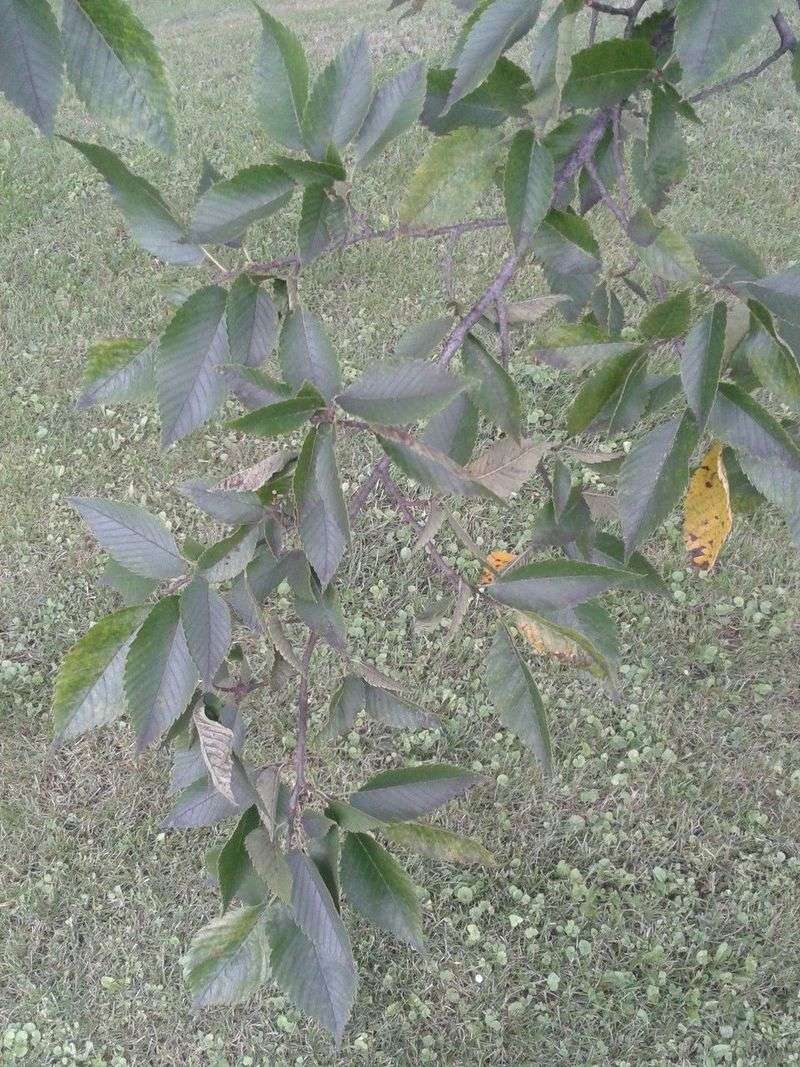
Small leaves, about one to three inches long, with simple teeth help separate it from native American elm. Grayish bark becomes rough and furrowed with age, and the tree often leafs out earlier than neighbors.
Pull seedlings while young, and call a certified arborist for older trees near structures. Native hackberry offers similar toughness with sturdier wood and fruit that feeds songbirds through winter.
8. Norway Maple
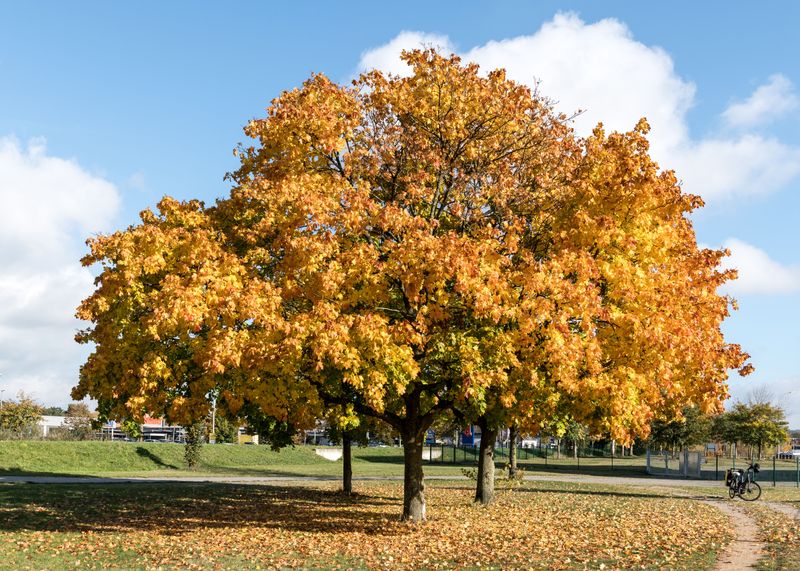
Snap a leaf stem from this maple and a bead of milky white sap appears, almost like a magic trick. That simple test helps gardeners tell it apart from native sugar maple in seconds.
Acer platanoides came from Europe and became a favorite street tree because it tolerated pollution and compacted soil. Its dense canopy casts heavy shade, so lawns and wildflowers underneath often struggle to grow at all.
Virginia’s Department of Conservation and Recreation includes Norway maple on its invasive plant list. Winged seeds spin away in the wind, and the shade-loving seedlings spread easily into nearby woods and parks.
Let’s just say I learned about its shallow, crowded roots while trying to plant hostas under one. My trowel kept hitting a mat of roots, and the poor hostas sulked all summer long.
Older Norway maples sometimes develop girdling roots that wrap the trunk and weaken the tree over time. A leaning, declining tree near sidewalks or neighboring houses may prompt local hazard tree requirements in some areas.
Fall is a great time to spot this tree because it often holds green leaves later than native maples. Leaves eventually turn a buttery yellow rather than the fiery orange and red many people expect.
Pull seedlings early and hire an arborist for large trees close to homes or power lines. Native red maple or blackgum makes a lovely replacement with brilliant fall color and healthier shade underneath.