Yellow Hosta Leaves Usually Come Down to One of These 8 Causes
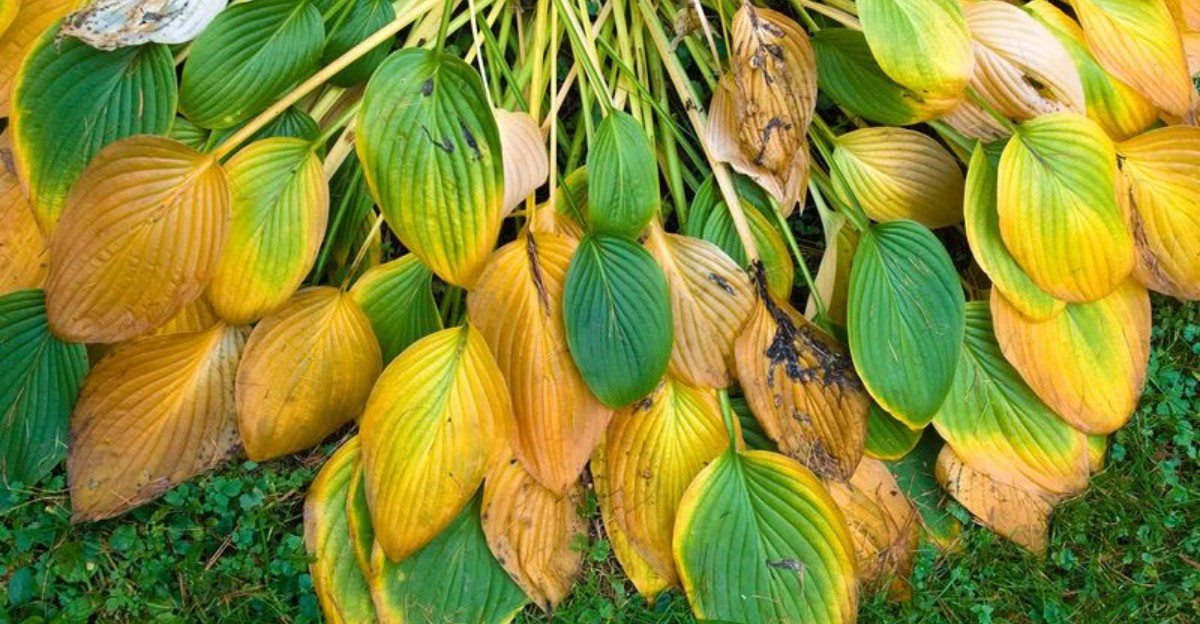
The bright gold on a fading leaf was hiding there all summer, buried under green chlorophyll like paint under wallpaper. When that green breaks down, the yellow simply shows itself, and gardeners start to worry.
Shade lovers with big pleated leaves seem tough, yet they send this yellow signal for many different reasons. Some reasons are harmless and seasonal, while others point to soggy soil or tiny hidden pests.
I learned the hard way that panic is a bad gardening tool, because I fed a plant that wanted rest. Truth is, reading the pattern on the leaf tells you far more than staring at the color alone.
Edges, veins, timing, and smell all leave clues for any patient gardener willing to look really closely. So which of these eight culprits is quietly turning the leaves in your shady corner gold?
1. Soggy Or Bone Dry Soil Turns Hosta Leaves Yellow
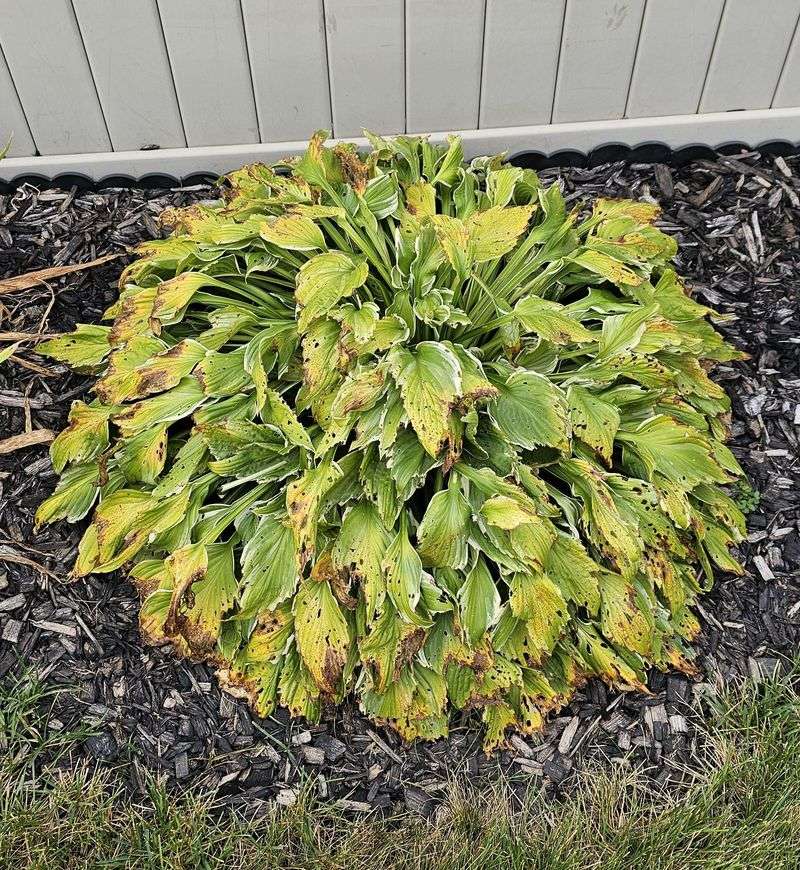
Water trouble sits at the top of my suspect list, because it is one of the most common causes of yellow hosta leaves. Funny enough, too much and too little water can both make the same plant look sad and pale.
Overwatered hostas often show soft, almost see-through yellow leaves that droop like wet tissue paper on a rainy afternoon. The soil may feel soggy or packed down, and sometimes it even gives off a sour smell.
Roots sitting in water can struggle to breathe, so they stop pulling nutrients up into the leaves. Leaf stalks may turn mushy near the base, which is a warning sign you should take seriously and soon.
Underwatered plants look different, with dull, leathery yellow leaves that feel dry and crispy when you touch them. Yellowing usually starts at the tips and edges, and the soil stays dusty several inches below the surface.
Before you grab the hose, push a finger two or three inches into the soil and simply feel it. I do this every time now, because guessing has fooled me more than once over the years in my garden.
For soggy beds, stop watering and let things dry, then loosen compacted soil gently around the plant. Potted hostas may need fresh, well-draining mix, with any mushy roots trimmed away using clean, sharp pruners first.
Thirsty hostas want deep, steady drinks, especially new transplants that have not grown strong roots yet this season. Aim for soil that feels like a wrung-out sponge, moist but not dripping, and your leaves should thank you.
2. Hot Afternoon Sun Scorches Hosta Leaves
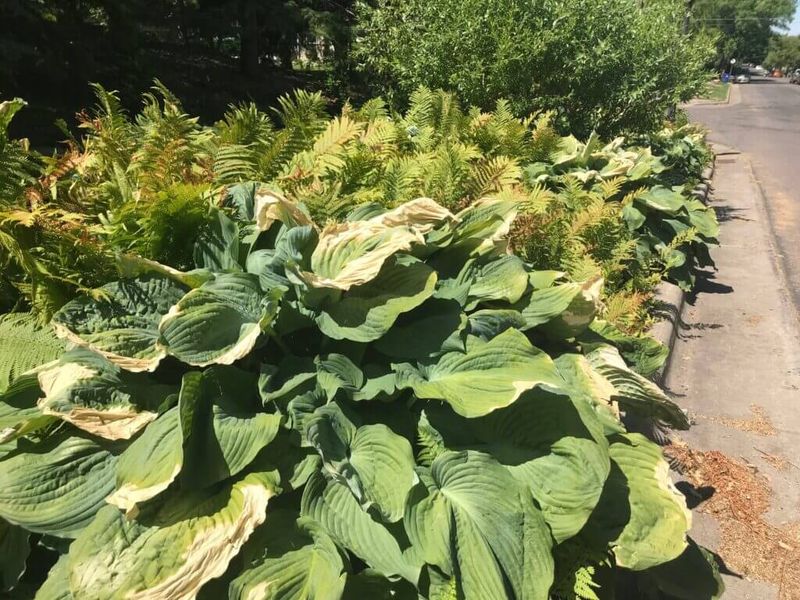
Bleached, crispy leaves on a hosta tell me one thing right away, which is that the sun found it. These woodland plants grew up under trees in East Asia, so harsh afternoon rays feel like a sunburn to them.
Sun scorch shows up as yellow leaves with brown, papery edges or tips that crunch between your fingers. You may also notice pale, washed-out patches on the parts of the leaf that face the sky most directly.
Scorch happens when leaves lose water faster than roots can replace it during long, hot afternoons. Dry winds and drought make it worse, so a sunny, breezy spot can turn a lush plant ragged in days.
Blue hostas are extra touchy, because heat can melt the waxy coating that gives them that frosty color. Dark green types are usually more sun-tolerant than blues but still do best out of hot afternoon sun, while many gold varieties enjoy a little gentle morning light.
I’m the first to admit I once planted a big blue hosta beside my sunny driveway on purpose. By midsummer, it looked like toast, and I moved it under a maple tree that same fall season.
Relocating your plant to a spot with morning sun or dappled light is the best long-term fix. During a heat wave, a patio umbrella or shade cloth gives quick relief until cooler weather finally arrives.
Deep watering and a layer of mulch help keep roots cool and moist through the hottest weeks of summer. You can snip off badly scorched leaves too, since they rarely recover and only distract from healthy new growth.
3. Hungry Or Overfed Hosta Roots Show Up In The Leaves
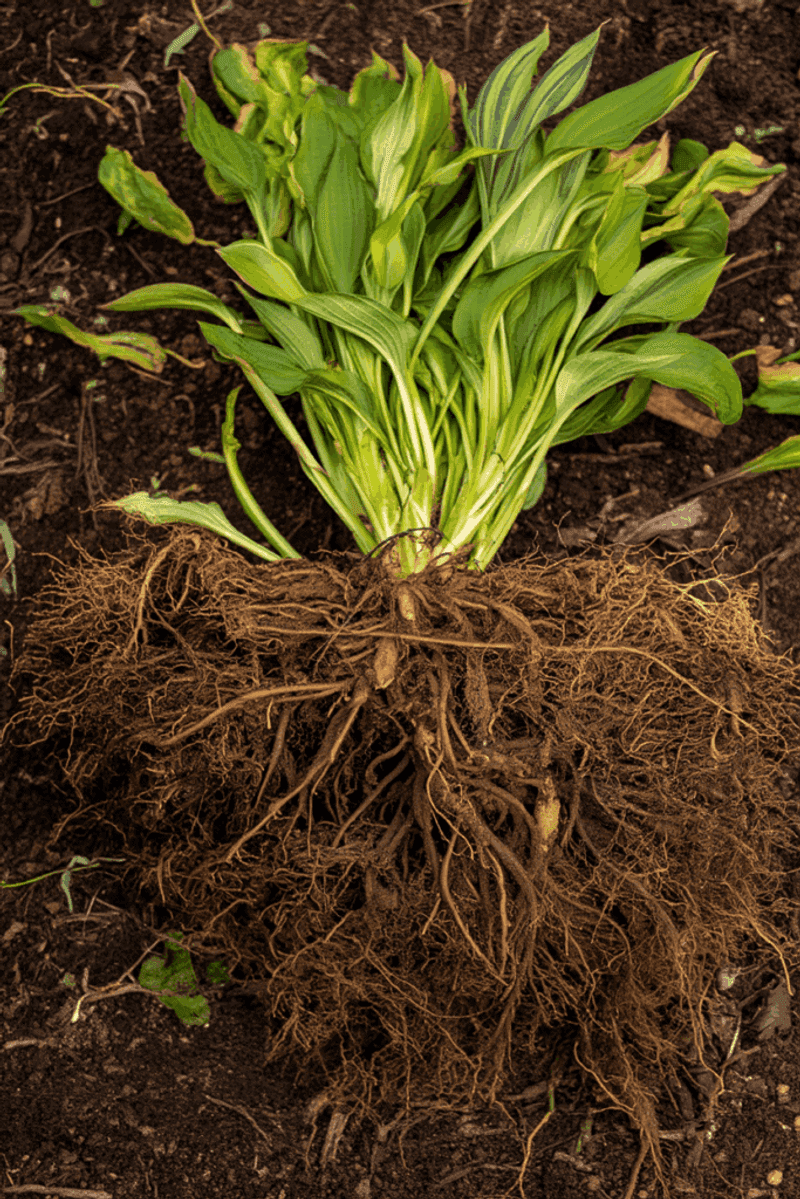
Leaves act like a report card for what is happening underground, and hostas grade their soil pretty honestly. A plant short on food looks pale and slow, while an overfed one can look burned around the edges.
Nitrogen shortage often shows as even yellowing on older, lower leaves first, since the plant moves nitrogen to new growth. Those leaves may fade to pale green before turning fully yellow, which can happen slowly over several weeks.
Iron shortage looks different, with yellow tissue between veins that stay green, mostly on younger upper leaves. Magnesium shortage causes a similar pattern, but it usually starts on the older leaves near the bottom of the clump.
Guessing gets expensive, so I like testing soil before adding anything, and many county extension offices offer affordable kits. A test tells you exactly what is missing, instead of letting you pour fertilizer on a problem that is not there.
Overfeeding causes trouble too, because extra fertilizer builds up salts that make it hard for roots to absorb water. Watch for pale leaves with brown, burnt tips and sometimes a white crust sitting on top of the soil.
Flush overfed soil with deep, slow watering, and scrape away any crust you can see on the surface. Skip feeding a stressed plant for now, since more fertilizer can push already damaged roots into deeper trouble.
For most hostas, one helping of balanced slow-release fertilizer in early spring is plenty for the whole season. Mixing compost into the bed each year also builds richer soil, and honestly, hostas seem to love that treatment.
4. Fall Dormancy Turns Hostas Gold On Purpose
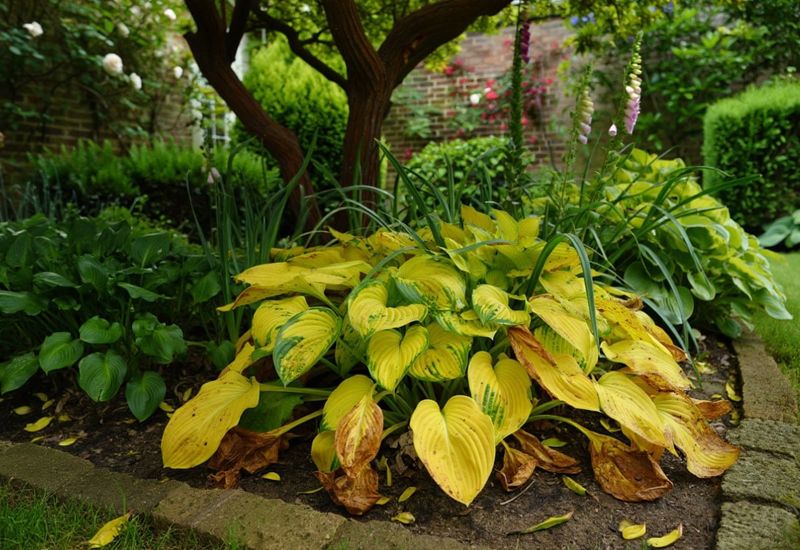
Every fall, my whole hosta bed glows butter yellow for a week or two, and I’ve learned to enjoy the show. Nothing is wrong at all, because this is the plant tucking itself in for a long winter nap.
Hostas are herbaceous perennials, which means their leaves fade each autumn while the roots and crown rest underground. Shorter days and cooler soil trigger the change, so the timing shifts a little depending on your local weather.
As chlorophyll breaks down, hidden yellow pigments finally show through, just like they do on many maple leaves. Meanwhile, the plant pulls useful nutrients down into its crown and roots, saving them for a strong spring comeback.
This yellowing usually happens evenly across the whole clump, which helps you tell it apart from disease or pests. Some blue varieties even look greener for a bit before the gold arrives, which surprised me the first time.
Hostas actually need this cold rest period to grow well, and gardeners call that the chilling requirement. A very dry fall can push plants into dormancy a little early, so do not be shocked by an early fade.
Once leaves collapse into limp, mushy piles after a hard frost, you can rake them away from the bed. Clearing that old foliage removes cozy winter hiding spots for slugs and snails, which gives you a cleaner spring start.
Resist the urge to fertilize or water heavily during this stage, since the plant is slowing down on purpose. Just let nature handle things, then watch for those tightly rolled shoots poking up when the soil warms again.
5. Mushy Hosta Stems Point To Rot Diseases
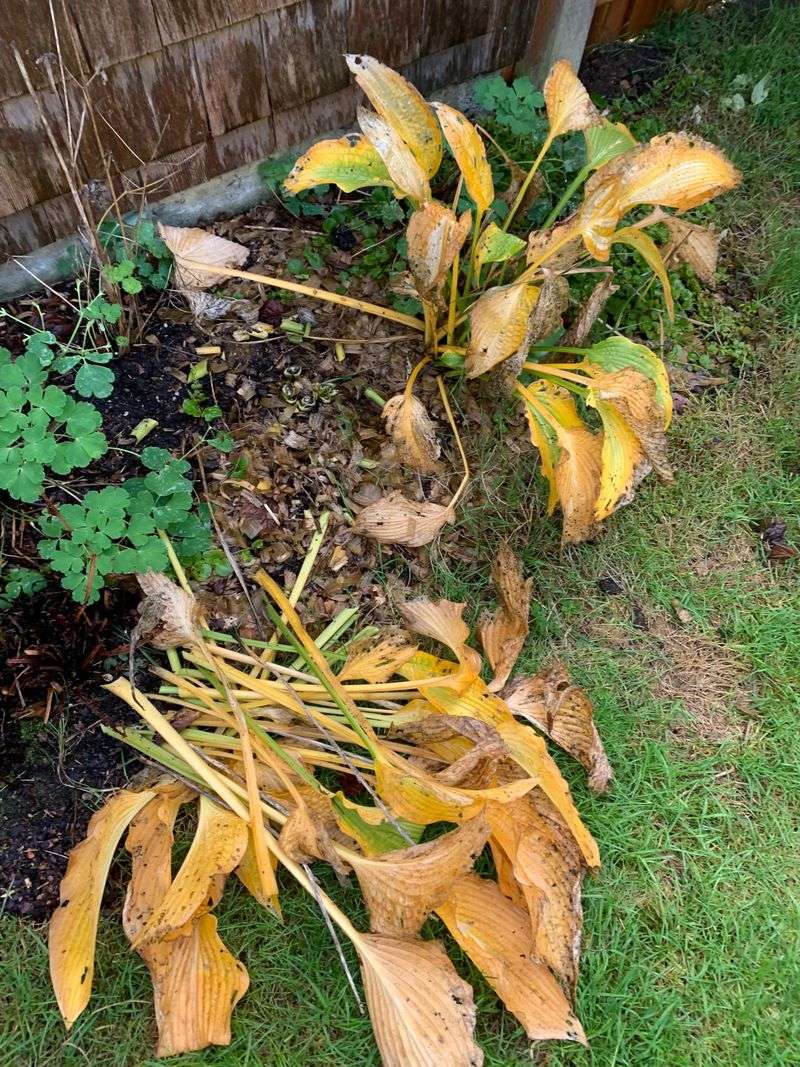
Tug gently on a yellow hosta leaf, and if it pops right off with a mushy base, pay attention. That soft, slippery stalk often points to rot, which is one of the more serious reasons for yellow leaves.
Petiole rot, caused by the soil fungus Sclerotium rolfsii, loves hot, humid weather in the eighty to ninety degree range. Look for white, fan-shaped fungal threads and tiny tan balls that resemble mustard seeds scattered around the base.
Bacterial soft rot announces itself with your nose, because rotting tissue gives off a strong smell like spoiled vegetables. The bacteria usually sneak in through wounds from dividing, planting, or frost injury, and warm, wet weather speeds things up.
Fusarium root and crown rot behaves differently, leaving dry, brown to black decay near the soil line instead. Infected plants often emerge late in spring, grow slowly, and lose their vigor gradually over a season or two.
Not going to lie, this is the cause I dread most, because home gardeners rarely have a cure. The usual advice is to dig out the infected plant along with several inches of surrounding soil and trash it.
Clean your tools afterward with a disinfectant, since spores and bacteria can hitch a ride to healthy plants easily. Avoid replanting hostas in that same spot, especially after Fusarium, because those fungi can linger in soil for years.
Prevention matters most, so inspect new plants closely and keep mulch pulled back from the crown a few inches. Good airflow and careful watering help too, since soggy, crowded conditions give these rot problems their favorite playground.
6. Mottled Hosta Leaves May Carry Hosta Virus X
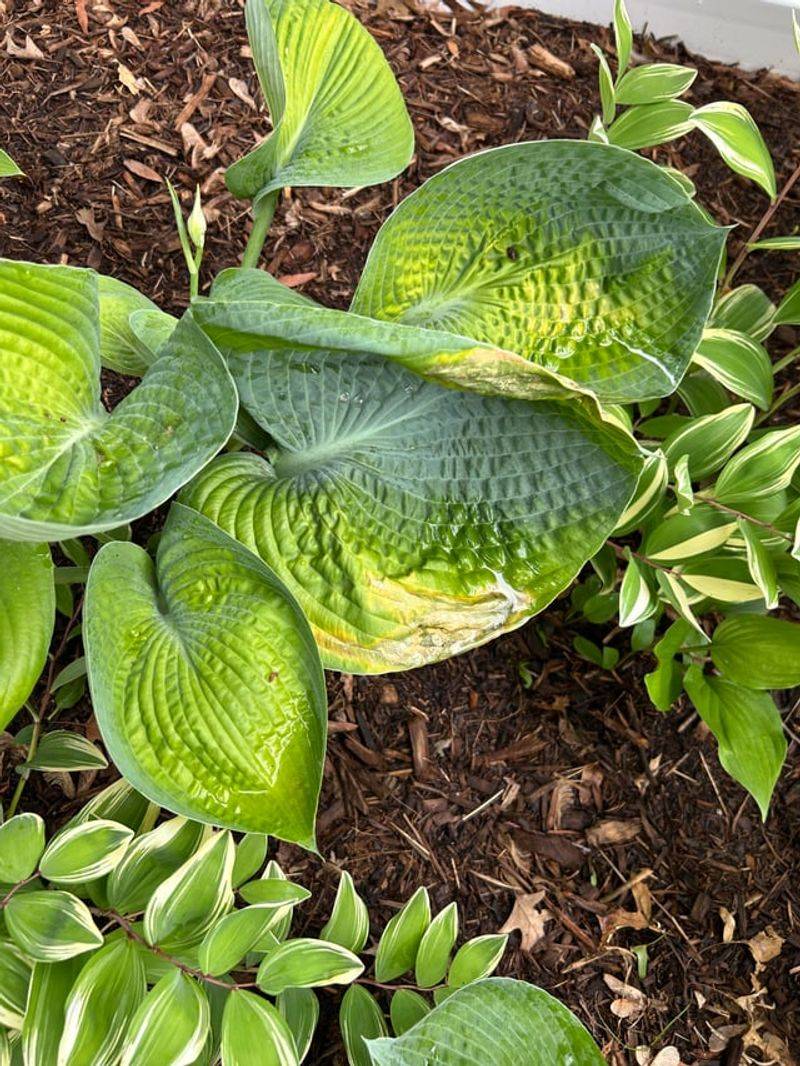
Some yellow patterns look so pretty that people once sold infected hostas as brand new, fancy cultivars. That bit of garden history still makes me shake my head, because the culprit was a sneaky virus called Hosta Virus X.
Symptoms vary a lot, but watch for blotchy yellow or green mottling, streaks, and odd puckering on the leaves. A classic clue is the ink-bleed look, where color seems to seep outward from the veins like spilled marker.
Some infected plants show nothing for years, which makes this virus tricky to catch before it spreads around. Ringspots, sunken tissue, and twisted leaves can appear too, depending on the cultivar and how long it has been infected.
HVX moves mostly through sap, entering healthy plants through wounds made by pruners, shovels, knives, or even your hands. Insects are not considered the main carriers, so your own garden habits matter more than any bug spray ever could.
Once a hosta is infected, there is no cure, and it stays infected for the rest of its life. Dig it up, bag it, and send it out with the trash rather than tossing it onto your compost pile.
Clean tools between plants, especially when dividing or cutting back old foliage, and wash your hands as you go. I keep a little spray bottle of disinfectant in my garden bucket, and it has become a habit now.
Buy plants from reputable sellers, and skip any hosta with strange streaks or blotches, no matter how unusual it looks. If you are unsure, a plant diagnostic lab can test a leaf and give you a real answer.
7. Brown Streaks Between Hosta Leaf Veins Often Point To Foliar Nematodes
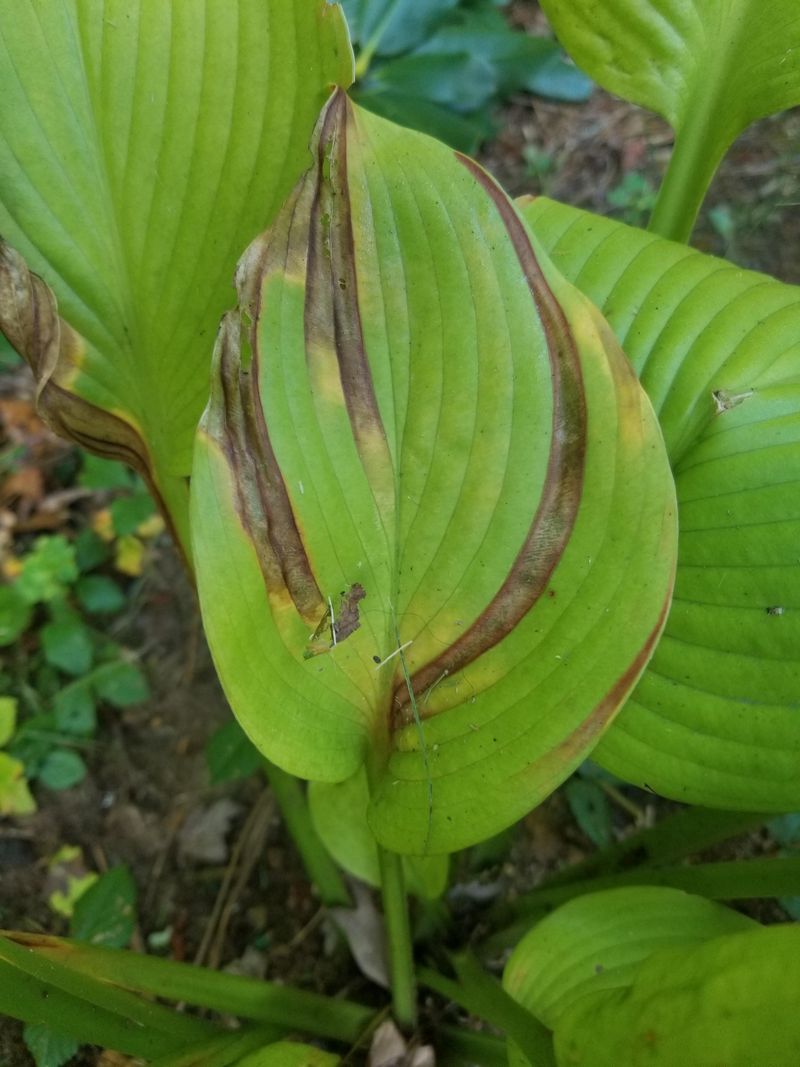
Microscopic roundworms living inside hosta leaves sound like science fiction, yet foliar nematodes do exactly that in many gardens. They are far too small to see, but their damage leaves a pattern that is surprisingly easy to spot.
Yellow patches often show up around late June, then turn into chocolate-brown streaks, wedges, or bands later on. The giveaway is that the damage stays neatly boxed in between the major veins, like stripes painted with a ruler.
Older, lower leaves usually look worst, while the newest leaves near the top stay healthy for a while longer. Discoloration can appear on both the front and back of the leaf, and badly affected plants may look weak overall.
Want proof before you act? Cut a damaged leaf into pieces and soak them in a shallow dish of water for a few hours or overnight, then check closely.
Under a magnifying glass or microscope, you may see tiny white threads wriggling around in the water like little commas. I tried this with my nephew once, and he was thrilled, even though I felt a bit horrified myself.
Nematodes need moisture to travel, so splashing rain and overhead sprinklers help them hop from leaf to leaf. Switching to drip irrigation and spacing plants so leaves do not touch makes their journey much harder.
No home spray removes them without harming the hosta, so cleanup does most of the work here. Remove infected leaves or whole plants, clear old foliage each fall, and check new nursery plants carefully before planting them.
8. Early Fall Frost Turns Hosta Leaves Yellow Overnight
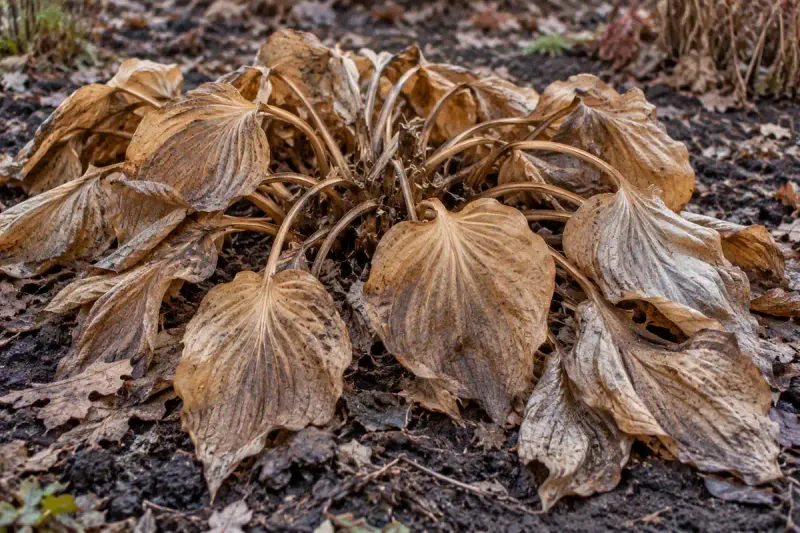
Hostas can look perfectly fine one evening and ragged the next morning, because the first hard frost of the season rarely sends a warning. Unlike the slow, even fade of natural dormancy, frost damage shows up suddenly, often after a single cold, clear night.
Frost-damaged leaves often look dark, water-soaked, or translucent at first, almost like they were briefly boiled. Within a day or two, they usually turn yellow or brown, then collapse into limp, slippery piles around the crown.
Cell walls inside the leaf burst when the water in them freezes, which is why the tissue goes soft and mushy instead of drying out crisp. Tender leaves that are still green and actively growing suffer the most, while leaves that have already started fading tend to show less damage.
Hostas are hardy in roughly USDA zones three through nine, so the roots and crown usually shrug off winter cold just fine. A frost-blackened clump is not a dead plant, and it is simply heading into dormancy a little ahead of schedule.
Potted hostas are the exception, because roots above ground have much less insulation than roots in a garden bed. Moving containers to a sheltered spot, like beside a wall or into an unheated garage, helps protect them from deep freezes.
Once the leaves have collapsed, cut them back to a few inches above the crown and clear the debris away from the bed. Removing it also takes away a sheltered spot where pests can overwinter, so spring growth starts out cleaner.
After the ground cools down, a two to four inch layer of mulch around the crown helps insulate roots and keeps freeze and thaw cycles from pushing the plant up out of the soil. Skip fertilizer now, since the plant is resting, and let it wake up on its own when the soil warms.