The Tiny Orange Salamander On New York Trails Carries The Same Toxin As A Pufferfish
A creature small enough to fit in the palm of your hand carries the same nerve toxin found in Japanese fugu. I found that out after nearly stepping on one during a soggy hike in New York.
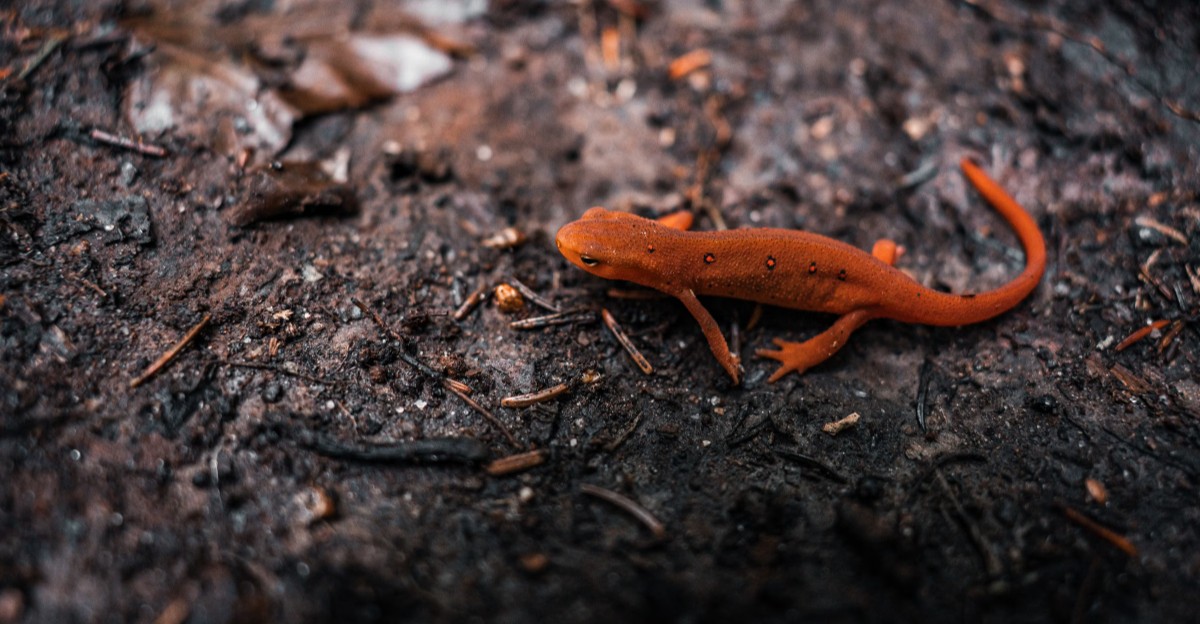
It was bright orange, almost glowing against the wet leaves. It did not run or hide. It just kept strolling along like it owned the trail, and honestly, in the damp woods of upstate New York, it kind of does.
You might notice these little wanderers most after a summer rain, when the woods smell like moss and mushrooms. Many hikers mistake them for lizards or even toy figures dropped by a kid.
I am surprised how few people know what that slow, confident walk really means. Bright color in nature often sends a message to anything hungry. So what exactly is this tiny trail walker warning the world about?
That Bright Orange Trail Walker Is Not a Lizard
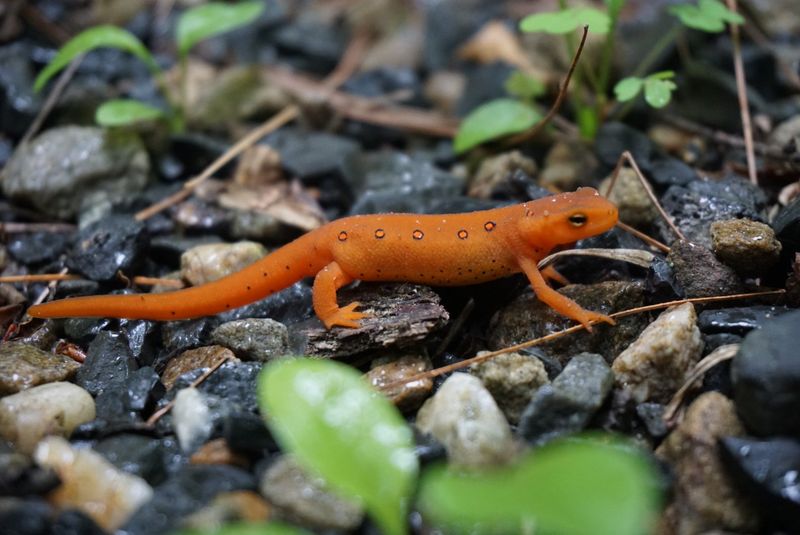
Plenty of hikers call it a lizard, and I did too for years. That little orange walker is actually a red eft, the young land stage of the eastern newt, a salamander native to New York.
Lizards have dry scales and claws on their toes. Efts have soft, bumpy skin with no scales and no claws at all. They also move slowly, while most lizards dart off in a flash.
The eastern newt has one of the most unusual life stories in the woods. It hatches in a pond as a tiny gilled larva. Then it crawls onto land as a red eft and wanders the forest for roughly two to seven years.
Later, it heads back to water and turns into an olive-green adult with a flat tail made for swimming. Same animal, three very different looks.
You can spot an eft by its orange body and the row of small red spots ringed in black along its back. Those spots stay with the newt into adulthood.
Next time you see one, take a moment to look closely. You are watching a teenager on a long road trip between ponds.
Tetrodotoxin Links This Little Newt to Pufferfish
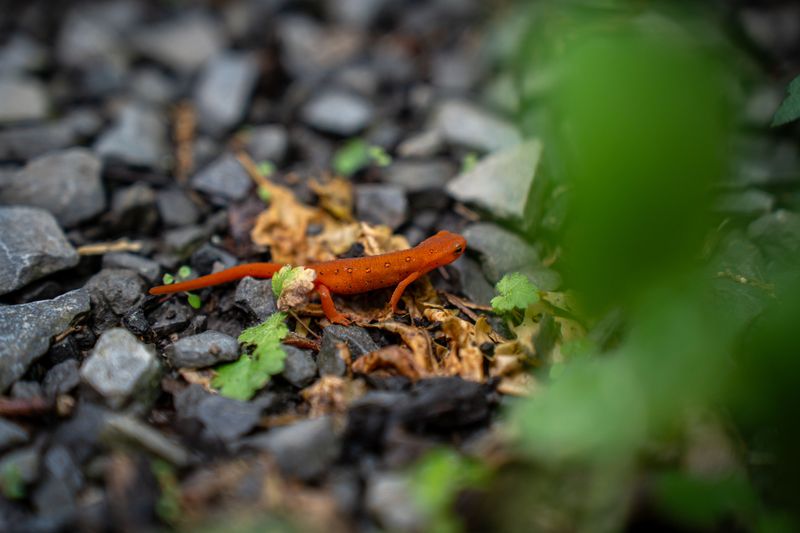
Here is the part that made my jaw drop. Red efts carry tetrodotoxin, often shortened to TTX, which is the same nerve toxin found in pufferfish.
Chefs in Japan train for years to prepare fugu safely because of this one compound. Meanwhile, a tiny salamander in a New York forest packs it right in its skin.
TTX works by blocking signals in nerves, which can stop muscles from working properly. Even a small dose can cause serious harm to an animal that tries to eat a newt.
Scientists still study where the toxin comes from. In pufferfish, bacteria and diet play a big role.
In newts, research suggests the animals may make it themselves, though the full picture is still being worked out.
That bright orange color acts like a warning label. Biologists call this aposematism, which simply means looking flashy so predators learn to stay away.
Birds, snakes, and other hungry hunters often skip efts after one bad taste. A few, like some garter snakes in other regions, have built up resistance over time.
So that relaxed stroll across the trail is not careless. It is pure confidence backed by chemistry.
Holding a Red Eft Is Mostly Safe If You Wash Up
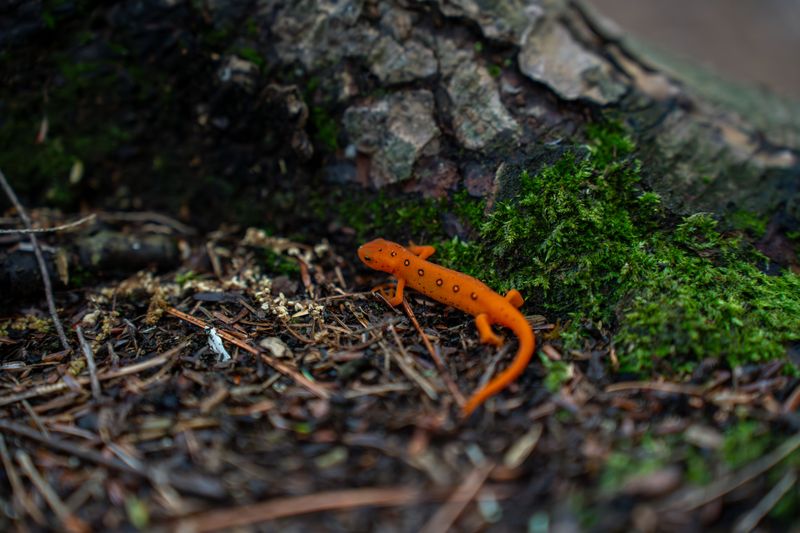
Good to know before you scoop one up: touching a red eft is generally not harmful to people. The toxin sits in the skin, and it does not soak through healthy, unbroken human skin.
Trouble starts when it reaches your mouth, eyes, or a cut. So the main rule is simple. Wash your hands with soap and water after any contact.
Kids love these newts, and I get it. They are calm, colorful, and easy to catch. Just make sure little ones keep their fingers away from their faces until hands are clean.
Pets need watching too. A curious dog that licks or chews an eft may drool, paw at its mouth, or act sick. If that happens, call your vet right away.
Swallowing a newt is a different story, and that is where real danger shows up. There are rare reports of serious poisoning in people who ate newts, usually on a dare.
Honestly, the best approach is looking more than touching. Your hands carry oils, sunscreen, and bug spray that can bother a newt’s sensitive skin. A quick photo makes a better souvenir anyway.
Young Red Efts Pack More Toxin Than Adult Newts
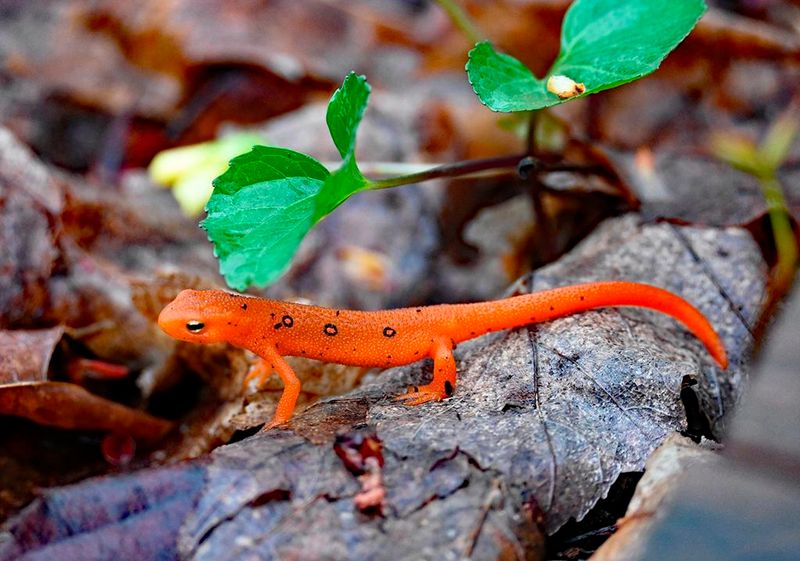
Teenagers can be a handful, and red efts prove it in the wild. Studies have found the land-dwelling eft stage often carries much more toxin than the green adults living in ponds.
Some research reports eft toxin levels around ten times higher. Levels also vary a lot from one population to another, so not every newt is equally potent.
Why would youngsters need extra protection? Think about their lifestyle. Efts travel across open forest floors in daylight, sometimes for years, with nowhere quick to hide.
Adult newts live in water, where they can sink into mud or plants to stay safe. Their dull green color also blends in, so they rely less on a loud warning.
This shift shows how well matched the newt is to each stage of life. Bright and toxic on land. Camouflaged and calmer underwater. I find it oddly comforting. Nature gave the most exposed stage the strongest shield.
If you ever spot both forms, compare them side by side in your mind. It is hard to believe they are the same species, just at different ages.
Rainy Summer Days Bring Red Efts Out on Forest Trails
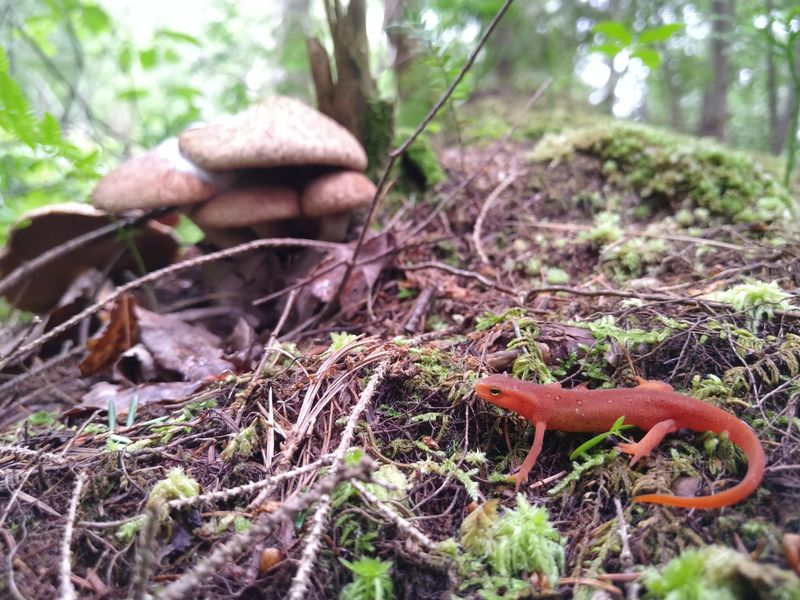
My best eft day happened after a warm downpour in July. I counted over a dozen on one short loop trail, all glowing like dropped candy.
Red efts love moisture. Their skin needs to stay damp, so they mostly come out during or right after rain, on foggy mornings, or in cool, shady woods.
In New York, you can find them from late spring into fall. Summer and early autumn tend to be the peak, especially in the Adirondacks, Catskills, and other forested parts of the state.
Dry, sunny afternoons usually send them hiding under logs, rocks, and leaf litter. That is why some hikers never see one, while others see many on the same trail.
Want better odds? Walk slowly through mixed hardwood or conifer forests after a rain and scan the trail edges. Look near mossy logs and damp patches of leaves.
Watch your feet too. Efts move slowly and blend in better than you would expect once they step into orange fall leaves. A gentle pace, sharp eyes, and a wet day often lead to a great sighting.
Shady Garden Corners Can Welcome a Wandering Eft

Gardeners near woods sometimes get a surprise visitor. A red eft might show up under a fern, beside a stone path, or in damp mulch after a storm.
That is a sign your yard is doing something right. Efts need moist, shaded spots and healthy soil life, so a visit suggests your garden supports local wildlife.
They also earn their keep. Efts eat tiny invertebrates like springtails, mites, small insects, and little snails. They will not solve a slug problem alone, but every bit helps.
You can make your space friendlier without much work. Leave some leaf litter in shady beds, add a fallen log or a few flat rocks, and grow native plants like ferns and wild ginger.
Skip heavy pesticide use, since amphibians absorb chemicals through their skin. A small pond or nearby wetland can help adult newts, too.
If you need to move an eft out of a mowing path, wet your hands first. Then set it gently in a shady spot heading the same direction it was traveling. Keep the lawn mower blade a bit higher near woodland edges after rain.
Eastern Newts Need Ponds and Forests Working Together
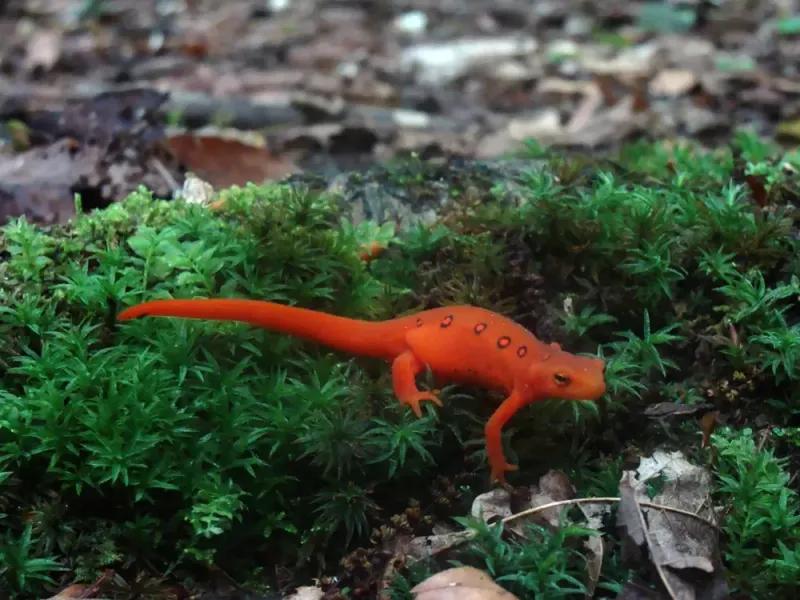
One habitat is not enough for this little traveler. Eastern newts need clean ponds for breeding and young larvae, plus moist forests for the long eft stage.
That makes them a great example of why connected landscapes matter. A pond surrounded by parking lots will not support efts, and a forest without water leaves adults nowhere to go.
Eastern newts are still common across much of New York, which is encouraging. Still, amphibians everywhere face pressure from habitat loss, roads, pollution, and disease.
Scientists keep a close eye on a fungal disease called Bsal, which has harmed salamanders in Europe. It has not been found in the United States, and rules limit importing certain salamanders to help keep it out.
You can help in simple ways. Never release pet amphibians outdoors, and clean muddy boots between different wetlands.
On rainy spring nights, many amphibians cross roads to reach breeding pools. Some New York communities run volunteer crossing programs, and the state’s Hudson River Estuary Program organizes one.
Small actions add up. Protecting one pond and its forest edge can support generations of newts.
Let That Orange Newt Keep Walking Its Own Path
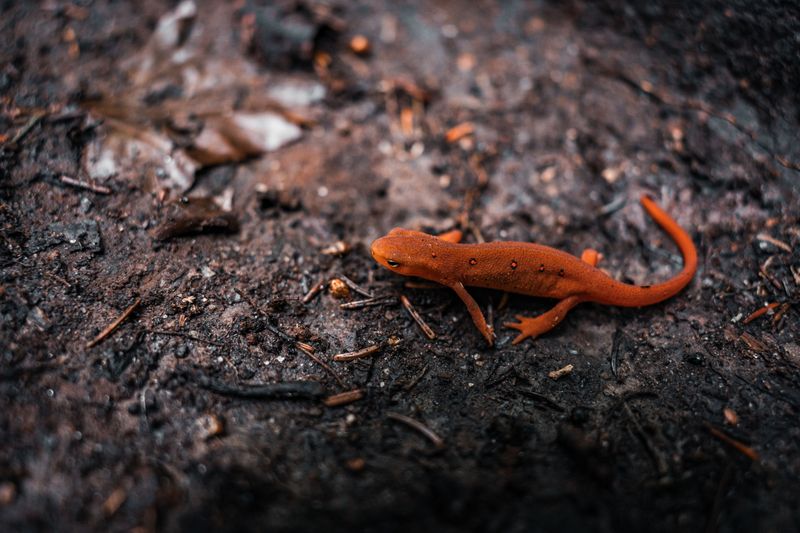
The best gift you can give a red eft is space. Watch it, admire it, snap a photo, and let it carry on.
Collecting efts as pets is a bad idea. They need specific care, and removing them pulls them out of a life cycle that depends on reaching the right pond. Check NYSDEC rules before ever handling wildlife beyond a quick rescue.
Sharing your sightings is a fun alternative. Apps like iNaturalist let you upload photos, and your records can help researchers track where newts live and how populations change.
Teaching kids about efts is another win. Once a child learns that tiny creature shares a toxin with pufferfish, they rarely forget to wash their hands again.
I think about efts every time I walk a wet trail now. They remind me that wild surprises hide in plain sight, often right beside the path.
So next rainy day, lace up your boots and head into the woods. Keep your steps light and your eyes low. That little orange spark might be waiting just ahead, calm and fearless.