8 Protected Creatures Ohio Law Says Homeowners Are Not Allowed To Remove
A tiny cup of twigs and mud on your porch light can be protected by federal law. I learned that lesson the hard way after reaching for my broom one spring morning in Ohio.
Plenty of wild neighbors in our yards carry real legal protection that surprises even seasoned backyard gardeners like me. Some flutter through the dusk sky, while others slide quietly through soggy meadows near the water’s edge.
You might notice a few of them already, nesting in your shrubs or tucked behind loose siding. Removing them on a whim can bring hefty fines and headaches, so a little knowledge goes a long way.
These days, every surprise visitor gets treated like a guest until I know where it stands under Ohio law. A few of your uninvited roommates might have more legal standing than you’d ever expect.
1. Bats Roosting In Your Attic Are Protected
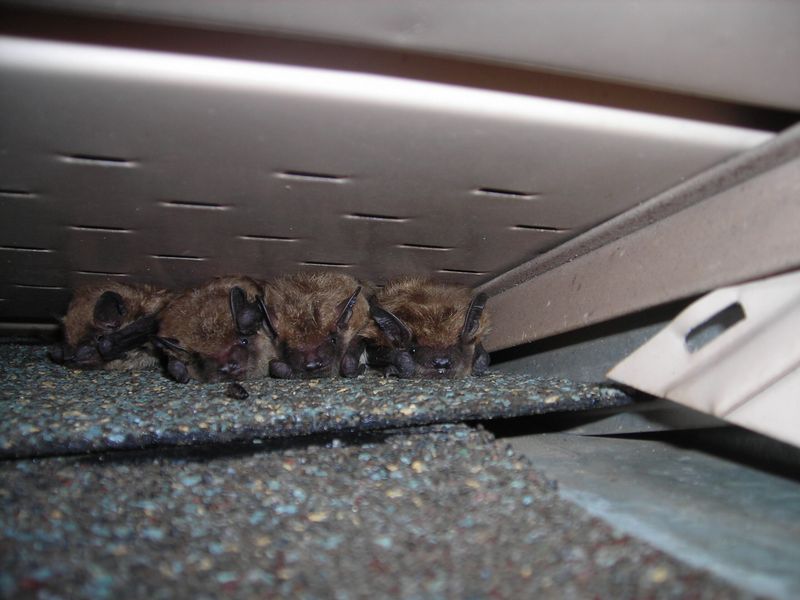
Every summer evening, tiny hunters zip over my garden and snap up moths before they reach my tomato plants. Those fliers are bats, and every species found in Ohio is protected under state wildlife rules.
Two of them, the Indiana bat and the northern long-eared bat, are also federally listed as endangered. That extra layer means harming them or wrecking their roosts can trigger serious state and federal penalties.
So what happens when a colony settles into your attic or behind a loose shutter on the porch? You cannot trap them, poison them, or seal the holes while bats are still tucked inside.
The legal path is exclusion, which uses one-way devices that let bats leave but block their return. Netting or tubes go over the main exit, and the remaining gaps get sealed after everyone has departed.
Timing matters a lot here, because mother bats raise flightless pups inside summer roosts for several weeks. Sealing them out during that window strands the babies, so experts schedule exclusions before or after pup season.
I recommend calling a licensed wildlife control operator who knows the current Division of Wildlife timing rules. They can confirm whether young pups are present and then handle the job without breaking any regulations.
Once your attic is clear, consider mounting a bat house on a sunny pole or building wall. Your nighttime pest patrol stays close by, and you get a much quieter attic in the bargain.
2. Robins And Cardinals Nesting In Your Shrubs
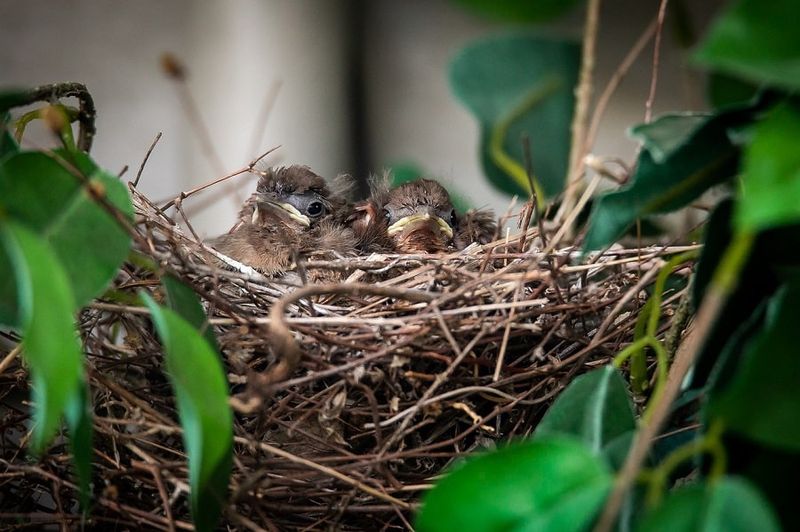
Few sounds beat a cardinal whistling from the lilac at sunrise while I sip my morning coffee. That cheerful red singer, along with robins and wrens, is protected by the federal Migratory Bird Treaty Act.
The law covers nearly every native bird, including the familiar visitors at your feeder each winter. Harming or keeping them without a permit is illegal, and their active nests and eggs are covered too.
Robins love building mud-lined cups on porch lights and front door wreaths, often right where you walk. Once eggs or chicks sit inside, that nest must stay put until the young birds leave.
Fortunately, the wait is shorter than most people expect, often around a month from eggs to fledging. Robin chicks usually leave the nest about two weeks after hatching, hopping clumsily around the lawn afterward.
Northern cardinals, our official state bird, tend to tuck their nests into dense shrubs a few feet up. Hold off on heavy pruning of thick hedges in spring and early summer to avoid disturbing active nests.
Empty nests left over from last season are usually fine to clear out once the birds have moved on. To prevent repeat builders, block favorite ledges with a small piece of mesh before nesting season begins.
Personally, I treat a porch nest like free entertainment and take the side door for a few weeks. Watching those fuzzy chicks grow is worth a minor detour, and the birds repay you by eating garden pests.
3. Drumming Woodpeckers On Your House Siding
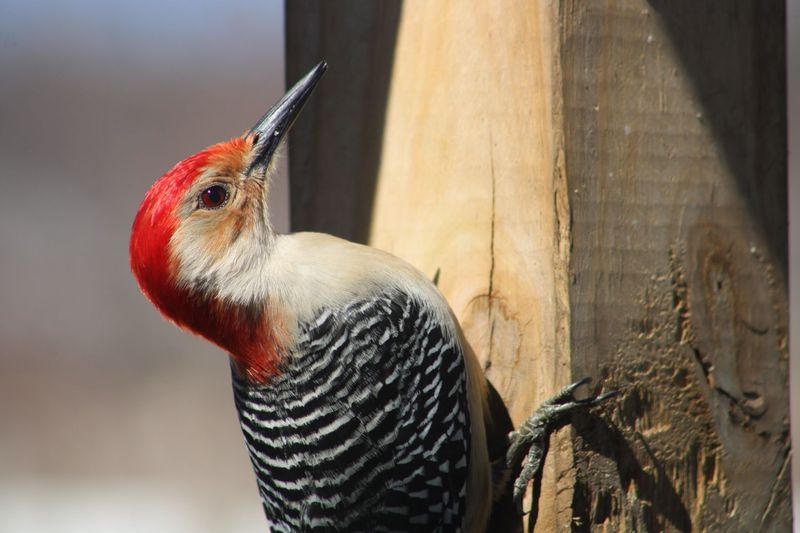
Rat-a-tat-tat at seven in the morning on your cedar siding is a wake-up call nobody ordered. Woodpeckers drum on houses to claim territory or attract mates, and sometimes they are hunting hidden insects.
Annoying as they are, these birds fall under the Migratory Bird Treaty Act like your backyard songbirds. Harming or trapping a woodpecker without a federal permit can lead to fines, even if your siding suffers.
Permits to remove problem woodpeckers are rarely issued and usually require proof that gentler methods failed first. So the smart move is learning why the bird chose your house and making that spot less appealing.
Repeated holes in one area sometimes point to insect larvae, such as carpenter bees, living in the wood. Fixing that insect problem often removes the snack bar and sends the woodpecker back to the trees.
Hanging bird netting a few inches away from the siding blocks access without harming the bird at all. Shiny reflective tape or pinwheels can also startle drummers, especially if you install them as soon as pecking starts.
Red-bellied woodpeckers, with zebra-striped backs and red caps, are frequent visitors in neighborhoods with mature trees. Despite the name, their belly blush is so faint that you may need binoculars to spot it.
I like offering a suet feeder well away from the house to pull hungry woodpeckers toward my yard instead. Leaving a safe standing snag at the back of the property gives them a natural place to drum and nest.
4. Eastern Massasauga Rattlesnakes In Wet Meadows
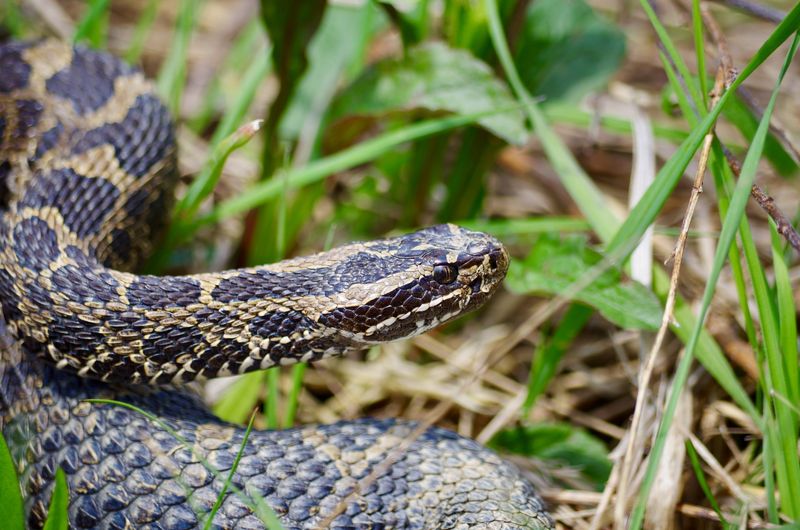
Few Ohio residents ever see one, yet a small rattlesnake quietly hunts mice in certain wet meadows and prairies. The eastern massasauga is shy, chunky, and patterned with dark blotches that blend perfectly with dried grass.
It is listed as endangered by the state and threatened under the federal Endangered Species Act. That means harming or collecting one is illegal, even when the snake turns up on private land near water.
Adults usually measure about two feet long, much smaller than the timber rattlesnake people often picture. They spend winter underground, frequently using crayfish burrows where water stays just below the frost line.
Yes, they are venomous, so you should give one plenty of space and keep pets on a leash. Massasaugas tend to rely on camouflage and retreat rather than strike, and bites are rare when people step back.
If one appears near your home, stay calm and contact the Division of Wildlife or a local wildlife officer. Snapping a photo from a safe distance helps experts confirm the species and track remaining populations.
Their numbers dropped mostly because so many wetlands were drained or paved during the past century. Leaving soggy corners of a rural property unmowed in summer can help these snakes and many other wildlife species.
I find it oddly comforting that such a rare reptile still survives in the quiet edges of farm country. Spotting one would be a story worth telling, as long as you tell it from a respectful distance.
5. Copperbelly Water Snakes Near Ponds And Streams
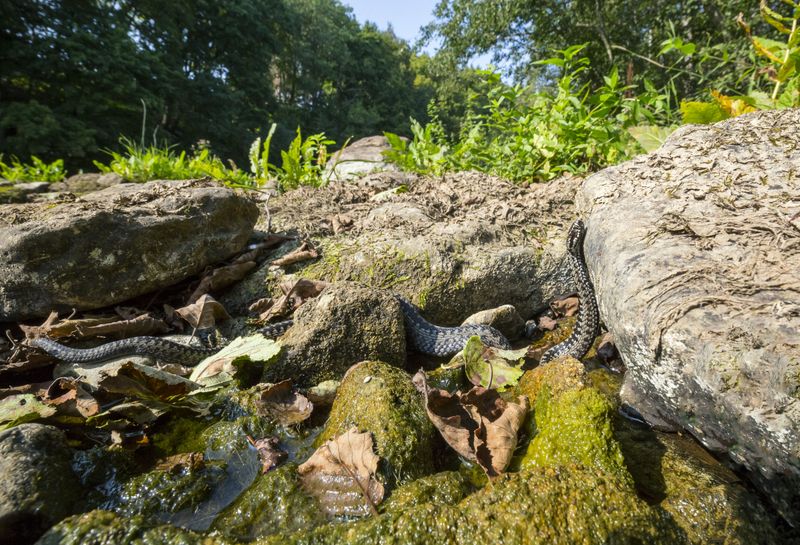
Flip one over in your mind and you would see a belly the color of a new copper penny. The copperbelly water snake has a dark, glossy back that hides that bright orange-red underside until it moves.
Unlike the rattlesnake, this species is nonvenomous, though it may bite or release a smelly musk when handled. Even so, picking one up is a bad idea, since the snake is listed as endangered under state law.
Its northern population, found in only a few spots in the northwest corner, is federally threatened as well. Harming or capturing one without a permit can lead to stiff penalties, so admiring from afar is the rule.
Copperbellies favor shallow wetlands surrounded by woodland, and they often wander between ponds as seasons change. Frogs and tadpoles make up much of their diet, which ties them closely to healthy amphibian populations.
Many people mistake any dark water snake for a dangerous cottonmouth, but cottonmouths do not live in this region. Knowing that single fact can calm your nerves and spare a harmless snake from an unnecessary confrontation.
If you own land near wetlands, keeping buffer strips of tall grass between lawns and water helps them travel safely. Reducing mowing near pond edges during the warm months also lowers the chance of accidental injuries to snakes.
Honestly, I think spotting that coppery flash would be the highlight of any summer walk near the water. Report sightings to wildlife officials, because every confirmed record helps biologists protect the habitats this snake needs.
6. Spotted Turtles With Yellow Polka Dots
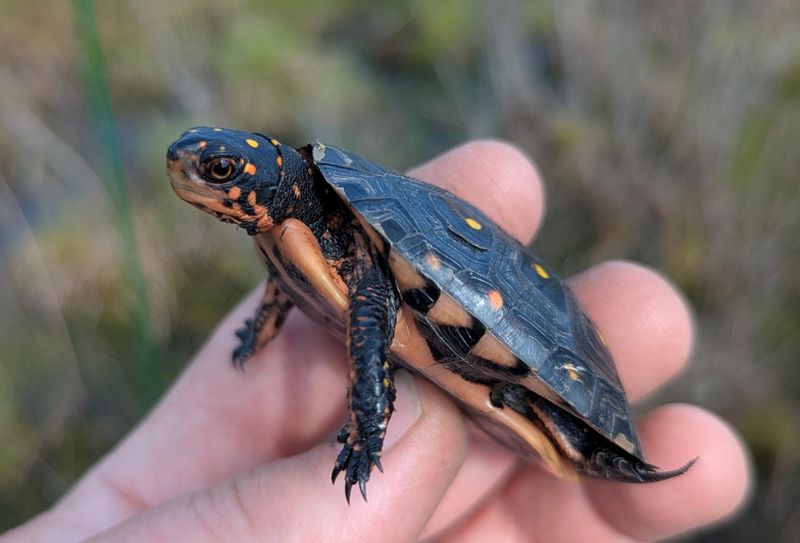
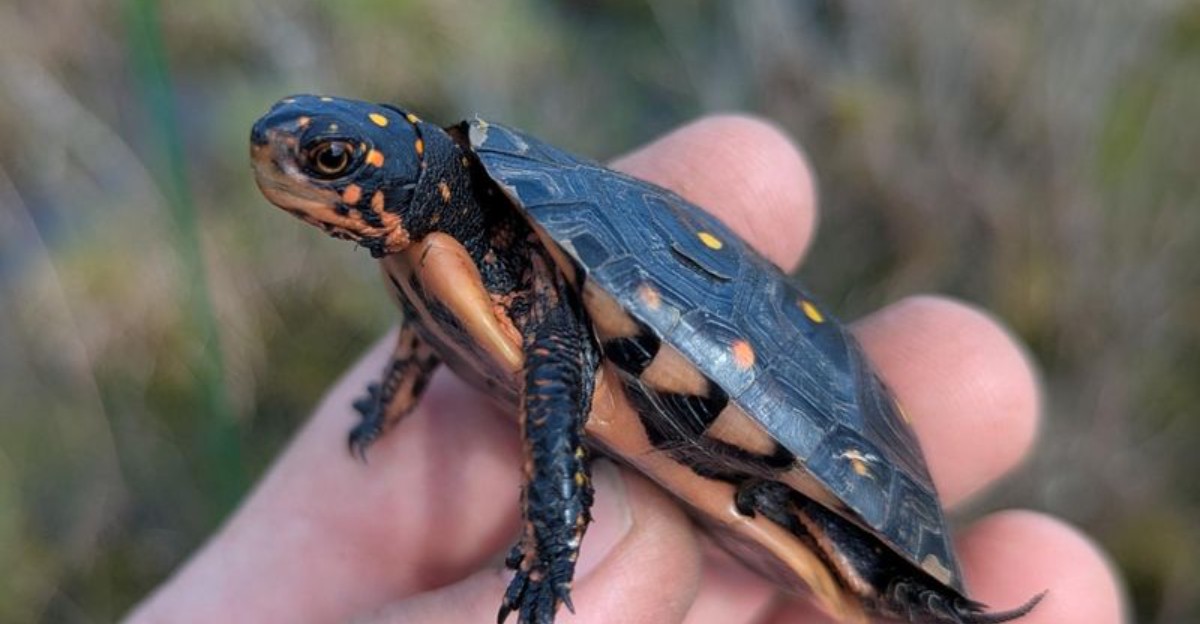
A starry night sky painted on a shell no bigger than your palm sounds like folk art. Spotted turtles really look that way, with bright yellow dots scattered across a smooth black shell.
These little reptiles are listed as threatened in Ohio, so you cannot collect or keep one legally. Their good looks make them a target for the illegal pet trade, which has hurt populations across their range.
Adults usually reach only about three and a half to five inches long, making them easy to overlook. Look for them in shallow, mucky wetlands like sedge meadows and slow, weedy ditches near woods.
They wake up remarkably early, sometimes basking on logs while patches of ice still linger on the water. By the heat of midsummer, many tuck themselves into mud or leaf litter and rest until temperatures drop.
Finding one crossing your driveway feels like winning a tiny lottery, and the urge to scoop it up is real. If it is in danger, you may help it a short distance in the direction it was already heading.
Taking it home, even for a day, breaks the law and removes a breeding adult from a fragile population. Spotted turtles can live for decades, so every individual matters for keeping a local colony going.
I suggest snapping a quick photo and sharing the location with the Division of Wildlife or a local nature center. Protecting small wet spots on your land, instead of filling them, gives these shy turtles a lasting home.
7. Blanding’s Turtles With Bright Yellow Chins
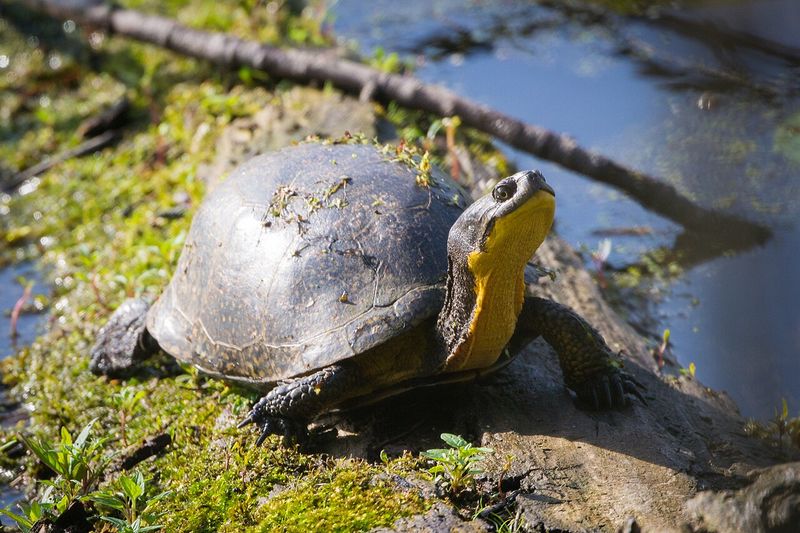
With a permanent grin and a bright yellow chin, the Blanding’s turtle looks like it just heard a good joke. That cheerful face belongs to a reptile that can live more than seventy years in the wild.
Blanding’s turtles are listed as threatened in Ohio, which makes capturing or keeping one illegal without proper permits. Their numbers have slipped as wetlands disappeared, and slow reproduction means losses take a long time to recover.
Look for a high, helmet-shaped shell sprinkled with pale flecks and a hinged lower shell that partly closes. Most sightings happen in marshes and wet prairies, particularly in the northern part of the state near Lake Erie.
Females often trek surprisingly far over land in late spring to find sandy, sunny ground for laying eggs. That journey brings them across roads and lawns, which explains why many people first meet them on pavement.
If one wanders into your yard, resist the urge to relocate it to a pond you think looks nicer. Moving a turtle far from home can confuse it, and it may wander dangerously trying to return.
Their menu leans heavily on crayfish and insects, so a healthy wetland nearby keeps them well fed. Avoid using pesticides near ditches and pond edges, since those chemicals can harm the small creatures they eat.
I make a habit of slowing down on marshy back roads in June, scanning shoulders for that yellow chin. Spotting one safely crossing feels like a small reward for paying attention, and it might become your favorite sighting.
8. Canada Geese Guarding Nests By The Pond
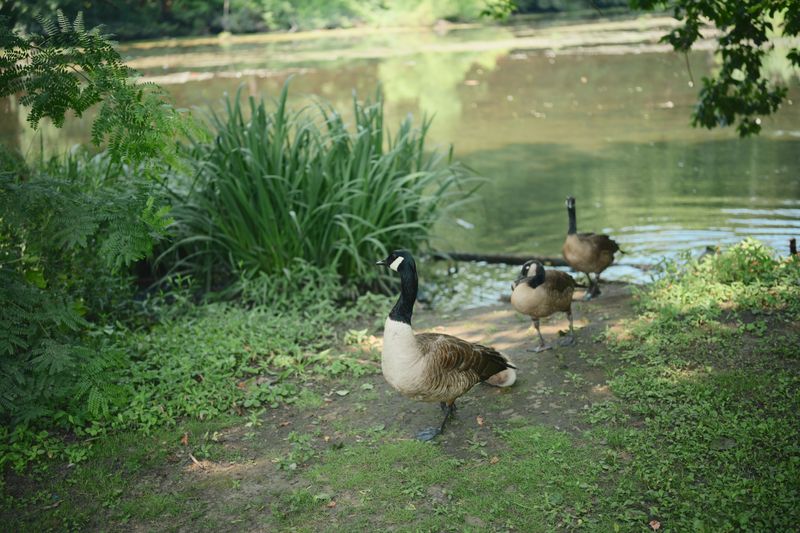
Hissing, wings spread wide, and neck stretched low, a nesting goose can turn a lakeside stroll into a sprint. Canada geese guard their nests fiercely in spring, and many Ohio homeowners near ponds know that look well.
Despite their reputation as lawn pests, these big birds are protected under the Migratory Bird Treaty Act. Harming geese or tampering with active nests and eggs is illegal unless you follow specific federal and state rules.
Property owners can register online with the U.S. Fish and Wildlife Service to manage nests during a set spring window.
That program allows certain egg treatments, but you must follow the guidelines carefully and report what you did.
Rules can shift over time, so check with the Division of Wildlife before touching any goose nest. Messing with nests outside the program, or chasing birds during molting season, can lead to real fines.
Prevention works better than conflict, and it starts with making your yard less inviting to grazing geese. Geese love short, open grass right next to water, because it lets them spot predators from far away.
Planting a strip of tall native grasses or shrubs along the shoreline blocks their easy walking path. Skip feeding them bread or corn, since handouts encourage geese to stay longer and gather in bigger flocks.
Personally, I let my pond edge grow a little shaggy, and the geese mostly wander next door now. Nesting usually wraps up by early summer, so a bit of patience often solves the problem on its own.