How to Care for a Norfolk Island Pine as a Living Christmas Tree in Pennsylvania
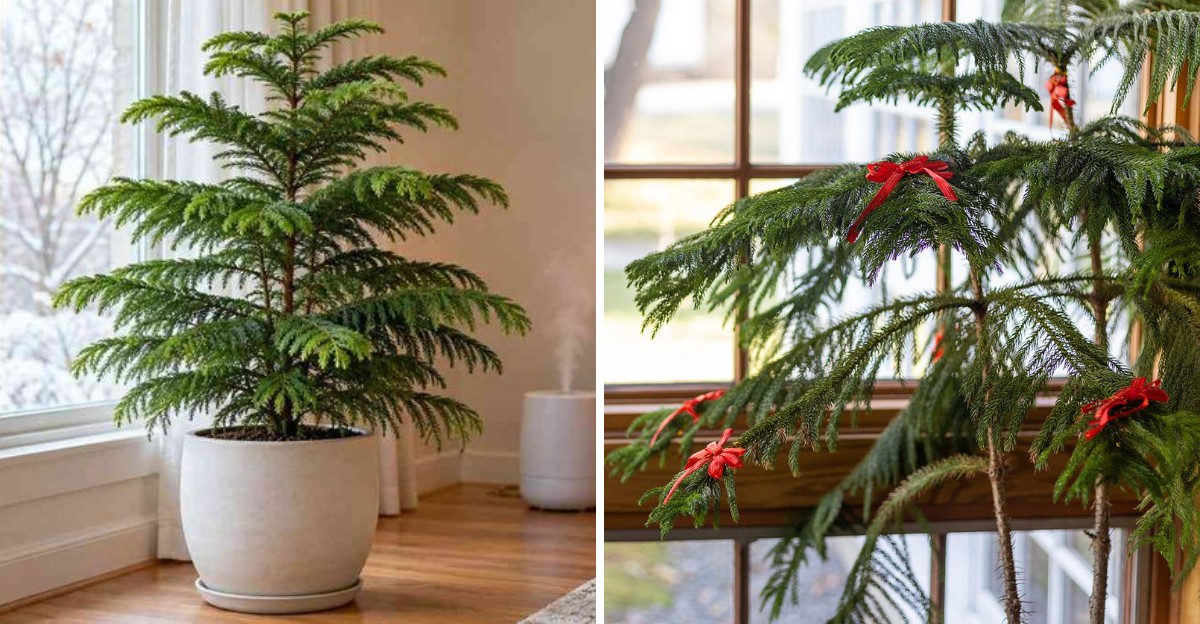
The little tree sold beside the poinsettias every December is not a pine at all. Its wild relatives tower over 150 feet tall on a tiny island in the South Pacific, roughly 900 miles east of Australia.
I find it fascinating that a plant from a frost-free island ends up wearing tinsel in so many living rooms.
Its soft, tiered branches look like they were drawn with a ruler. Captain James Cook spotted the giants in 1774 and hoped they would make great ship masts.
You might be surprised by how many of these holiday trees quietly fade by February.
The cause is rarely bad luck. Most of the trouble comes from dry furnace air, dim winter windows, and a heavy hand with the watering can.
Could a Pennsylvania home give this island traveler what it truly wants, long after the ornaments go back in the box?
1. That Little Tabletop Christmas Tree Comes From a Very Different Climate
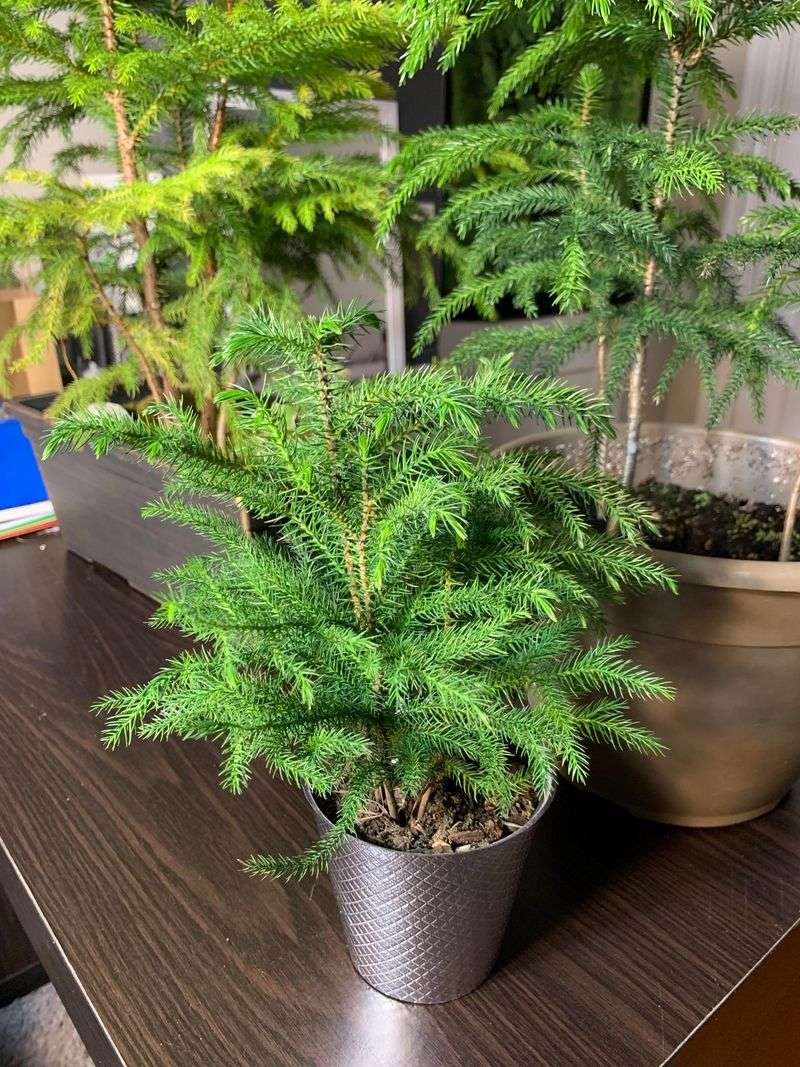
Norfolk Island is a speck of land in the Pacific with mild, humid weather all year. The trees there rarely feel anything close to freezing, and the air stays soft and moist.
Now compare that with a Pennsylvania December. Outside, temperatures drop well below freezing, and inside, the furnace runs for hours and pulls moisture from the air.
Your little tree has gone from island breezes to a dry, warm box with short days. That shift is the main reason so many holiday Norfolk pines start shedding needles by late winter.
Botanically, this plant is Araucaria heterophylla, a cousin of the monkey puzzle tree. It is a conifer, but not a true pine.
Penn State Extension and other university sources treat it as a tropical houseplant, hardy outdoors only in USDA Zones 10 and 11. Pennsylvania falls mostly in Zones 5 through 7, so this tree stays indoors here except for summer outings.
Once you see it as a tropical guest, the care plan gets much simpler. Bright light, steady moisture, extra humidity, and stable warmth cover almost everything it needs.
The rest of this guide breaks each of those down so you can keep your tree happy well past New Year’s.
I love that a small change in thinking can make such a big difference. Treat it like a fern from a rainforest, not a spruce from the woods, and you are already ahead.
2. A Bright Window Keeps Those Tiered Branches Full and Even
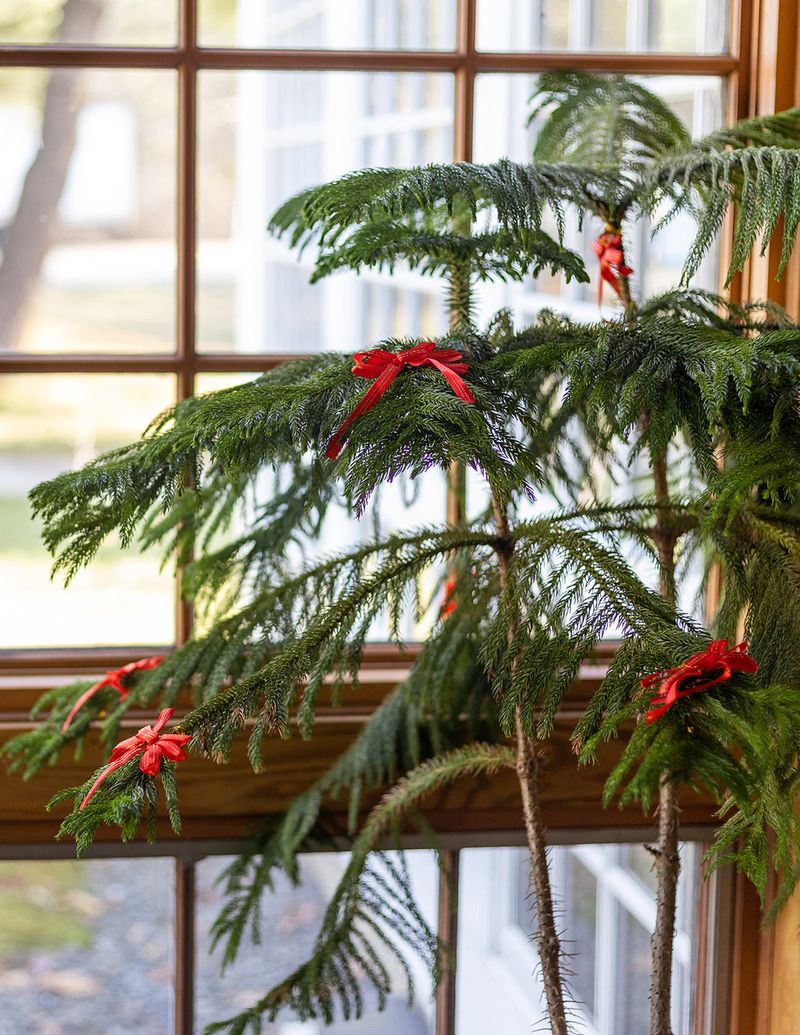
Light is the fuel that keeps a Norfolk pine looking like a postcard. Without enough of it, the branches stretch, thin out, and the lower tiers slowly drop away.
Winter days in Pennsylvania are short, with about nine hours of daylight around the solstice. That makes window choice a big deal.
A south-facing window often works best during these months, while east or west windows are solid options too. Many extension services suggest bright, indirect light for most of the year, with some direct winter sun being perfectly fine because it is weaker than summer sun.
Here is a simple trick that pays off. Give the pot a quarter turn every week or so.
These trees lean toward the light, and regular turning keeps the trunk straight and the shape balanced.
If your home is dim, a basic LED grow light can help. Set it on a timer for 12 to 14 hours a day and keep it a foot or two above the top of the tree.
Watch the new growth at the tip for clues. Healthy tips are bright green and tight.
Long, pale gaps between branch layers usually mean the tree wants more light.
In summer, avoid moving it straight into hot afternoon sun. Gradual changes protect the needles from scorching and keep that tidy, layered look you bought it for in the first place.
3. Your Norfolk Pine Wants a Drink Only When the Top Soil Feels Dry
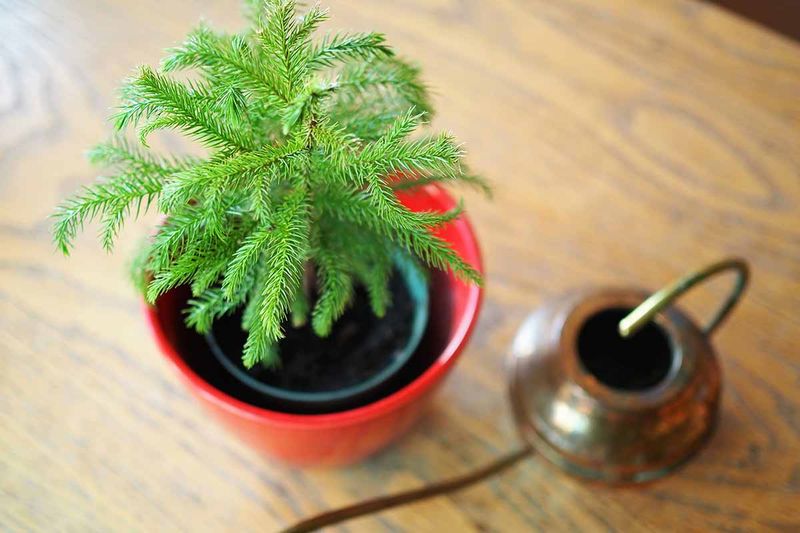
Overwatering is probably the most common way people get into trouble with these trees. Soggy roots run short on oxygen, and root rot can follow fast.
Your finger is the best tool here. Push it into the soil about an inch or two.
If it feels dry, water slowly until extra water runs out the drainage holes. If it still feels damp, wait a few days and check again.
Drainage matters as much as timing. Many holiday Norfolk pines come wrapped in shiny foil, which traps water at the bottom like a hidden puddle.
Poke holes in the foil or slip it off and set the pot on a saucer instead. Empty that saucer about 15 minutes after watering.
Growth slows in winter, so the tree drinks less even though the air is dry. In a heated Pennsylvania home, a weekly check is a good rhythm, but let the soil tell you, not the calendar.
Room-temperature water is kinder than icy tap water. Cold water can shock tropical roots, especially during chilly months.
Underwatering causes problems too. If the whole root ball dries out, needles may brown and drop.
The sweet spot is soil that feels lightly moist below the surface, never swampy and never bone dry. Find that balance, and your tree will reward you with steady, healthy growth.
4. Dry Furnace Air Is Why Norfolk Pine Needle Tips Turn Brown
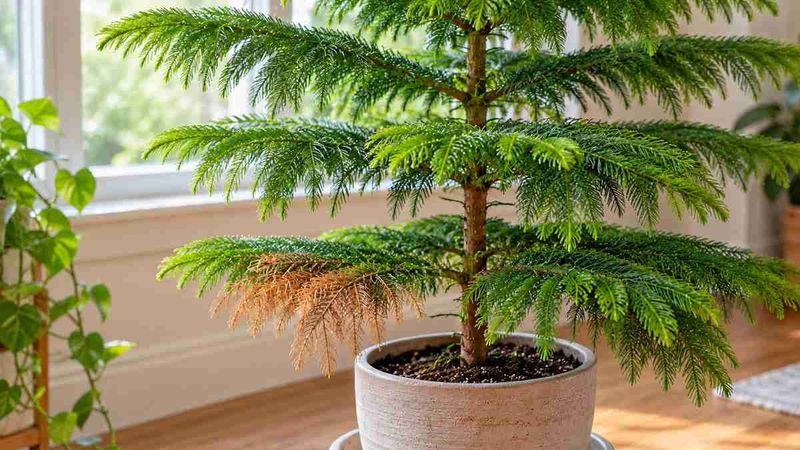
Brown, crispy needle tips are one of the first signs of trouble. In many homes, the culprit is the furnace.
Indoor humidity in winter can drop to 20 or 30 percent. These island trees prefer around 50 percent or more, so they feel the difference fast.
Low humidity can also invite spider mites, which love warm, dry conditions.
A cool-mist humidifier near the tree is the most reliable fix. It helps you too, since dry air is rough on skin and sinuses.
A cheap humidity gauge from a hardware store will show you how much moisture you are actually getting.
Pebble trays offer a small boost. Fill a shallow tray with pebbles and water, then set the pot on top so it sits above the waterline.
As the water evaporates, it adds a little moisture right where the tree needs it.
Grouping plants together also helps, since plants release moisture through their leaves. A cluster of houseplants creates its own mini climate.
Misting is popular, but extension experts note its effect fades within minutes. Treat it as a bonus, not your main plan.
Bathrooms and kitchens with good light can be great winter homes because they tend to hold more moisture. Just make sure the spot is bright enough, since humidity cannot make up for a dark corner.
5. Keep the Potted Pine Away From Drafty Doors and Heat Vents
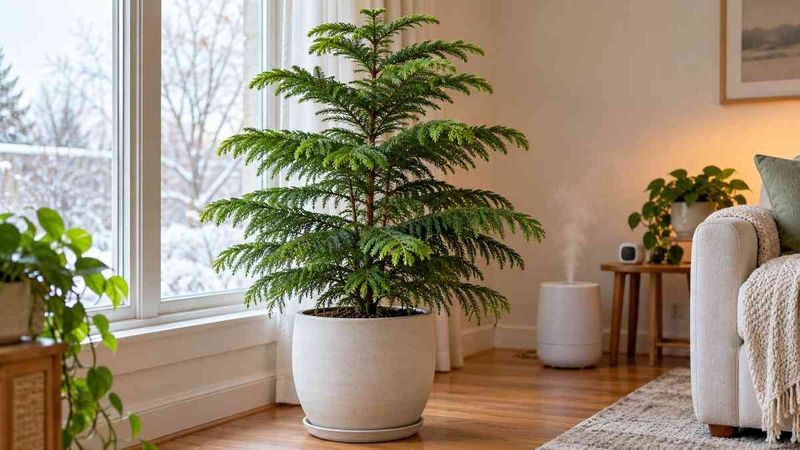
Comfortable for you usually means comfortable for your tree. Norfolk pines are happiest between about 60 and 75 degrees Fahrenheit, with slightly cooler nights.
The danger comes from sudden swings. A front door that opens onto January air can blast a nearby tree with cold.
On the flip side, a heat vent or radiator can bake one side and dry it out in a hurry.
Walk around your home and feel for drafts near windows and doors. Single-pane glass can get very cold at night, so leave a few inches between the needles and the window.
Branches pressed against frosty glass may suffer chill damage.
Bringing a new tree home also needs care. Pennsylvania winters can be rough on tropical plants, even for a short walk from the car.
Ask the store to wrap it in a plastic sleeve or paper, and do not leave it sitting in a cold vehicle while you run errands.
Fireplaces and wood stoves are cozy for people but tough on plants. Set your tree well away from that dry, radiant heat.
Once you find a stable spot, try not to move it around too much. These trees tend to settle in better when light and temperature stay steady.
A calm corner with good light is worth more than the most eye-catching place in the house.
6. Light Ornaments and Cool LED Strands Protect Those Soft Branches
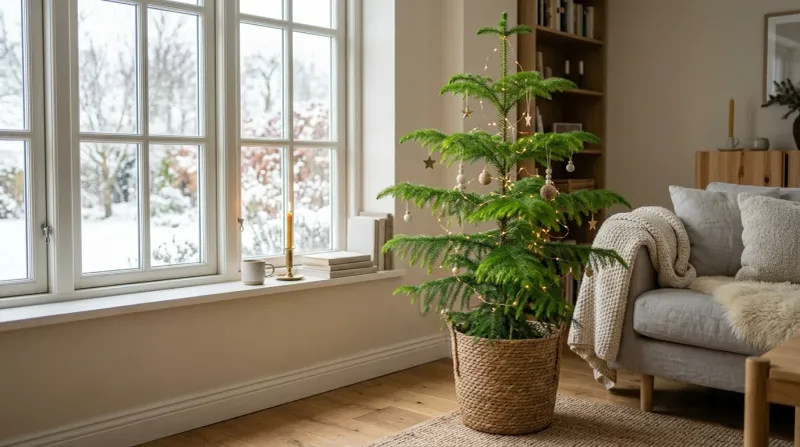
Decorating a living tree is pure fun, as long as you remember the branches are soft and flexible. They were built for island breezes, not heavy glass balls.
Lightweight ornaments work best. Felt shapes, paper stars, small wooden pieces, and tiny pinecones add charm without bending the tiers.
Kids love making paper chains and snowflakes for these trees, and the small size makes it easy for little hands to help.
Lights need some thought too. Mini LED strands stay much cooler than old incandescent bulbs, so they are safer for needles.
Battery-powered fairy lights are another easy choice for tabletop trees. Turn them off at night and whenever you leave the house.
Skip spray-on snow, glitter glue, and anything sticky. These coatings can clog the needle surfaces and make it harder for the tree to breathe and use light.
Watering gets trickier with tree skirts and decorations in the way. Leave the soil visible, or tuck a small saucer under a fabric skirt so you can still check moisture.
A fun bit of history: these trees have been sold as holiday plants in the United States for decades, partly because their branches naturally form neat, star-like layers. Once the holidays end, remove decorations promptly.
Your tree will appreciate the chance to rest without extra weight or warmth hanging from its arms.
7. Feeding and Repotting Your Norfolk Pine Can Wait Until Spring
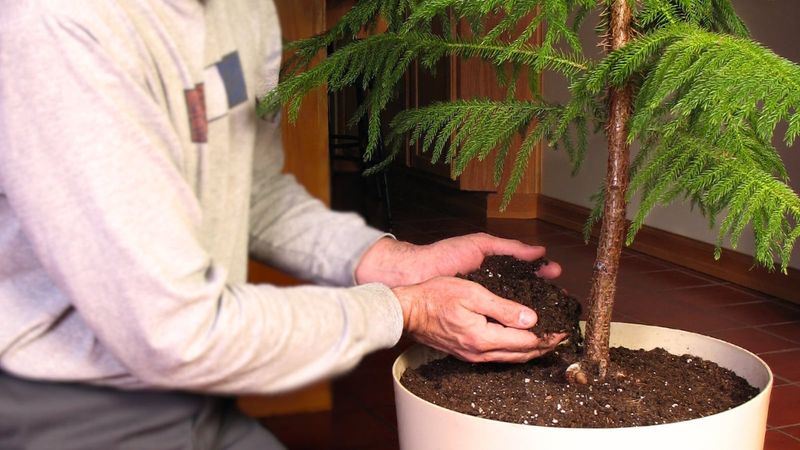
Patience is one of the kindest things you can give this tree in winter. Its growth slows when the days are short, so pushing it with fertilizer or a new pot can do more harm than good.
Save feeding for the active season, roughly March through September. A balanced, water-soluble houseplant fertilizer mixed at half strength every two to four weeks works well.
Too much fertilizer can build up salts in the soil and burn the roots.
Repotting is a once-every-few-years job. Most Norfolk pines are fine moving up every two to four years in spring.
Choose a pot just one or two inches wider, with good drainage holes. A pot that is too large holds extra water around the roots.
The mix matters. Use a quality potting soil that drains well, and add some perlite if it feels heavy.
These trees like a slightly acidic mix, and peat or coir-based blends usually fit the bill.
Many holiday trees are actually several seedlings planted together in one pot. Separating them is risky, so most growers leave the group as is.
One more tip. Avoid cutting the top of the trunk.
A Norfolk pine generally will not grow a new leader, so topping it leaves a flat, stubby look. If a lower branch turns brown, you can trim it neatly at the trunk.
8. A Summer Porch Vacation Turns Your Holiday Pine Into a Year-Round Friend
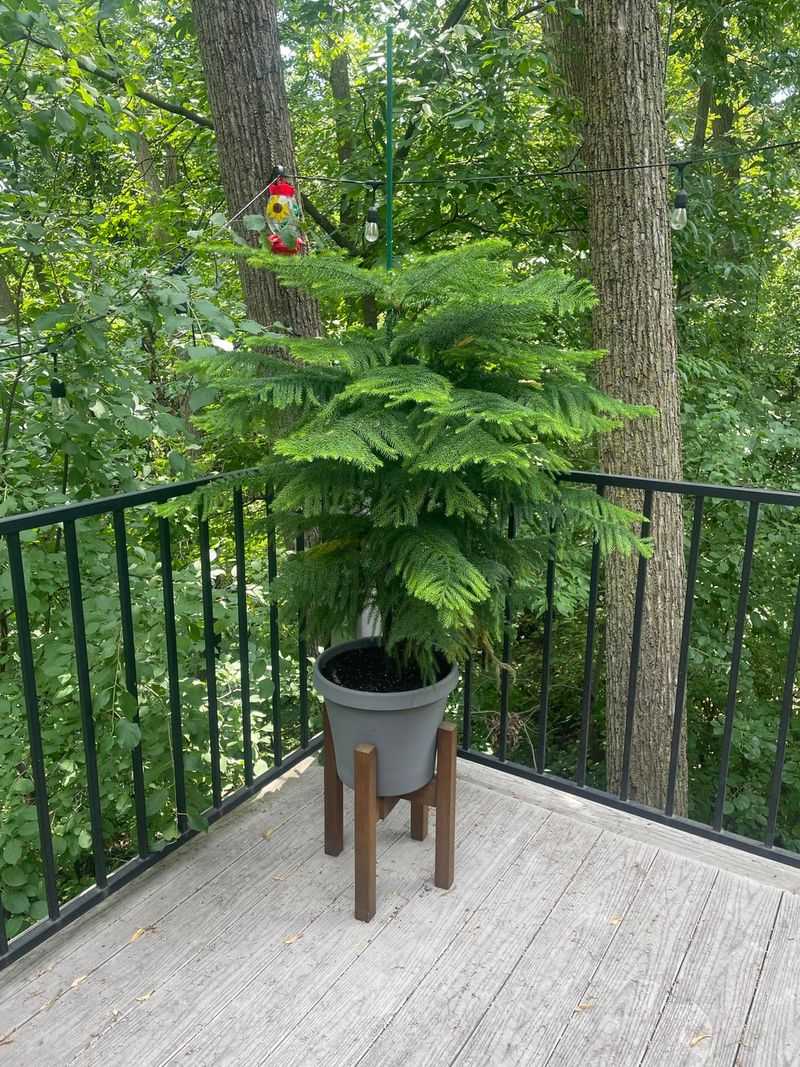
With steady care, a tabletop tree can live for many years and grow several feet tall indoors. Some families bring the same one out every December, adding a few more ornaments as it grows.
Summer is the treat. Once Pennsylvania nights stay above about 55 degrees, usually late May or early June depending on your region, your tree can move outside.
Southeastern areas near Philadelphia warm up sooner, while higher spots in the north and west often lag behind.
Start in full shade for a week or two, then shift it to bright, filtered light. A covered porch or the edge of a leafy tree works nicely.
Sudden full sun can scorch needles that grew up indoors.
Outdoor pots dry faster, so check the soil often during hot spells. Watch for pests like spider mites or mealybugs, and rinse the branches with water if you spot them.
Bring it back inside before nights dip into the 50s again, often in September. Look it over carefully so you are not carrying hitchhiking bugs into the house.
I can see why so many gardeners grow attached to these trees. Each year adds a new tier of branches, almost like a growth chart for your holidays.
Give it light, moisture, and a little patience, and your living Christmas tree can become part of the family story for years.