Should You Stake Young Trees in New York Before Winter Winds Hit?
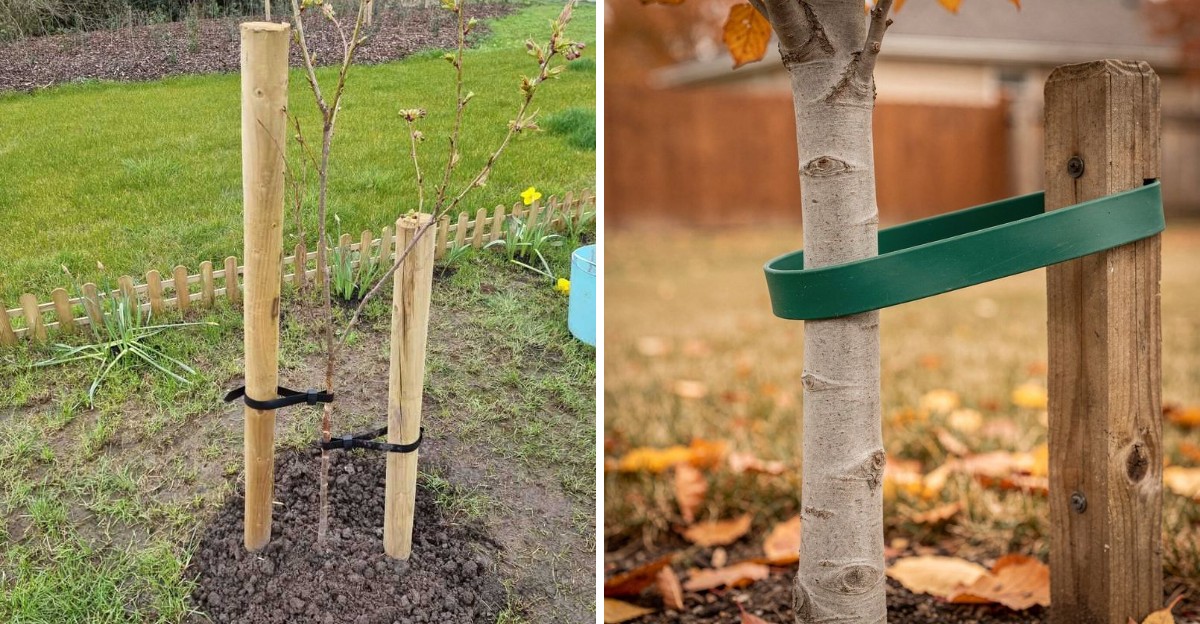
A young tree that gets shaken by the wind often grows a thicker, tougher trunk than one held perfectly still. Scientists even have a name for this, thigmomorphogenesis, which is a mouthful for plants responding to touch.
That still amazes me, because so many of us rush out with stakes and twine the moment a new sapling goes in the ground. It feels like the caring thing to do, yet the movement we’re trying to stop may be exactly the workout that tree needs.
Here in New York, winter gusts can rattle fresh plantings from the Hudson Valley to the shores of Lake Erie.
It’s easy to see why gardeners get nervous when the forecast turns blustery in November, since nobody wants to find their new maple leaning sideways after a storm.
Is that stake really a lifeline, or a crutch your tree would be better off without?
1. That Wobbly New Sapling Might Be Tougher Than It Looks
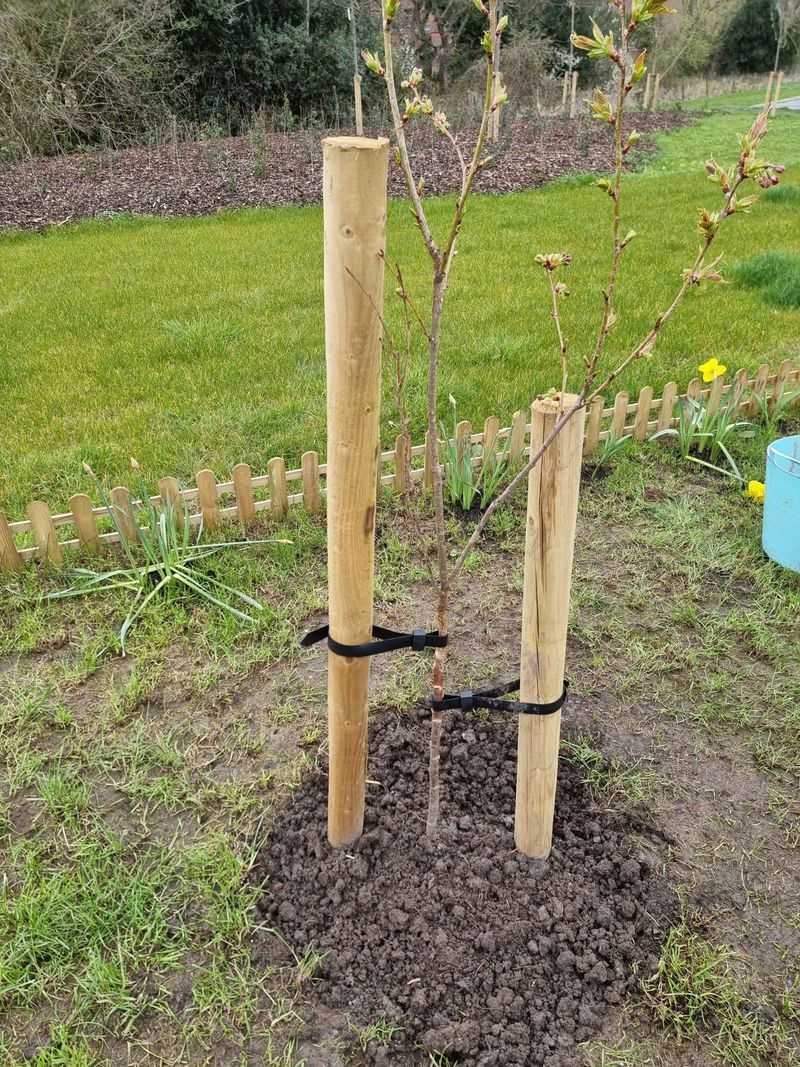
Most healthy young trees planted the right way do not need stakes at all. Cornell Cooperative Extension and many university programs agree on that point, which surprises a lot of first-time planters.
Nurseries often ship trees tied to a bamboo pole for travel. That pole was meant for the truck ride, not for your yard.
I like to cut those nursery ties off on planting day so the trunk can move freely.
So what makes a tree ready to stand alone? A firm, well-formed root ball is the big one.
Container trees and balled-and-burlapped trees with solid soil around their roots usually hold steady once they are set at the right depth and watered in.
Try a simple test after planting. Grab the trunk gently and rock it back and forth.
If the top bends but the root ball stays put in the soil, your tree is anchored well enough to skip the stake.
Planting depth matters here too. Trees set with the root flare showing at the soil line tend to settle better than ones buried too deep.
A wide, shallow hole with loosened sides invites roots to spread out quickly.
For most backyard trees, the best winter prep is not hardware. It is good planting, a layer of mulch, and steady water until the ground freezes.
Give your sapling a fair chance, and it often surprises you with how well it handles a breezy season.
2. A Swaying Trunk Builds Stronger Roots Underground
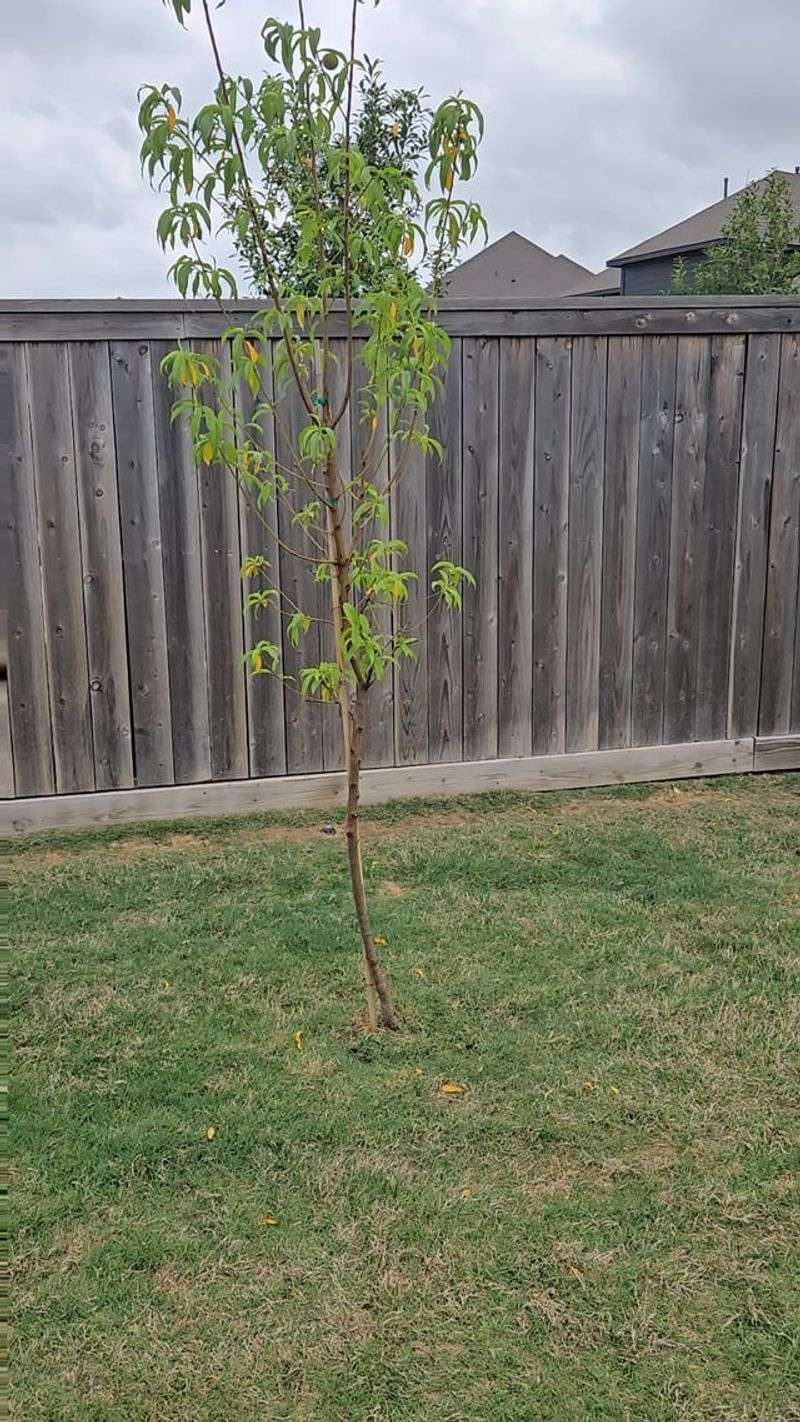
Trees are a bit like people at the gym. A little stress, repeated over time, makes them stronger.
When wind pushes a young trunk back and forth, the tree responds by adding wood where it needs support.
The biggest change shows up at the base. Free-moving trees develop taper, which means the trunk is noticeably thicker at the bottom than near the top.
That shape works like a sturdy pyramid and helps the tree resist bending in future storms.
Roots get the message as well. Movement above ground encourages roots to grow out and thicken, gripping the soil more firmly.
A tree held rigid gets less of that signal, so its roots may stay smaller and its trunk may grow tall and skinny instead.
Researchers have studied this for decades. Trees allowed to flex often end up with better trunk strength and wind resistance than staked trees of the same age.
It is one of my favorite examples of plants quietly adapting to their surroundings.
Knowing this changes how I watch a windy day. Seeing a young linden or serviceberry rock in a gust used to make me wince.
Now I see it as training time.
A little bend is healthy. The goal is not to stop every movement.
It is only to keep the root ball from shifting so much that new roots tear.
3. Bare-Root Trees and Windy Hilltops Often Do Need a Stake
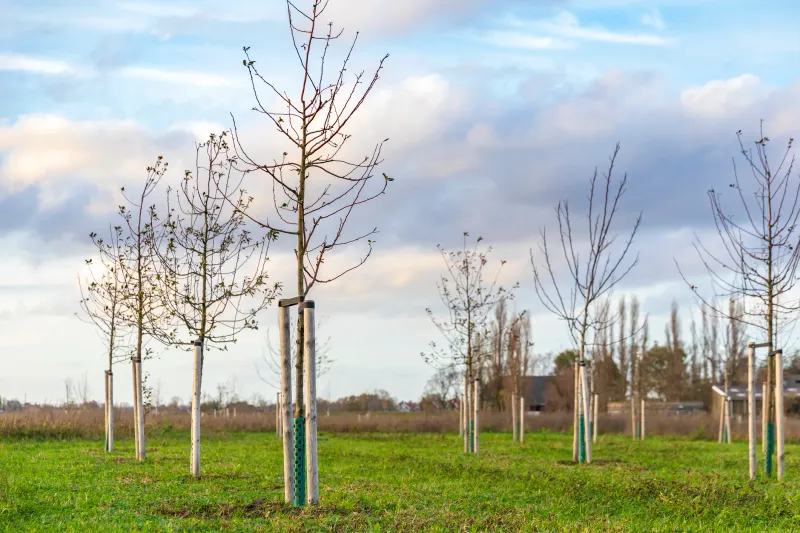
Some trees really do benefit from a helping hand, and it pays to know which ones. Staking is not wrong.
It just works best when there is a clear reason for it.
Bare-root trees top the list. With no soil ball to weigh them down, they can shift easily in loose ground, especially before roots grow into the surrounding soil.
A short period of support helps them settle in.
Location counts too. A tree on an exposed hilltop, an open field, or a lakeside lot near Lake Ontario or Lake Erie can take steady gusts all winter.
In those spots, a loose stake can keep the root ball from rocking.
Watch out for these other situations:
Tall trees with small root balls, top-heavy evergreens that catch wind like a sail, and trees planted in sandy or soggy soil. Spots with heavy foot traffic, curious kids, or mower bumps may also call for protective stakes.
Evergreens deserve extra attention before winter. Their needles stay on all year, so snow and wind have more to grab onto than they would on a bare maple.
Use the rocking test again here. If the whole root ball moves when you push the trunk, staking for one season makes good sense.
If only the top bends, you can likely leave it free.
4. Soft Straps and Low Ties Keep Your Tree Stake Friendly
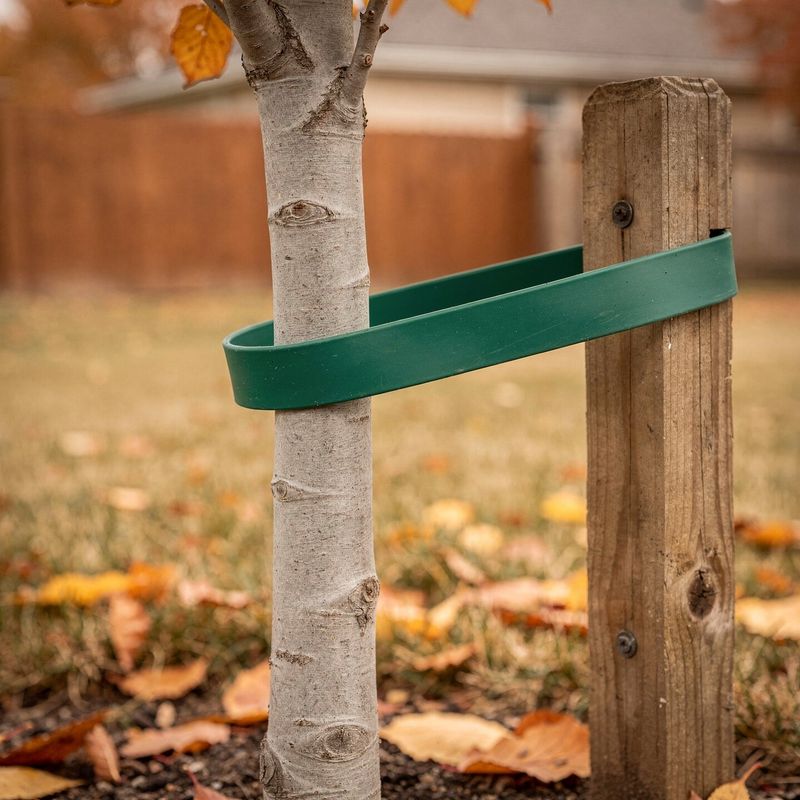
Picking the right ties is where most staking success happens. Wide, soft, flexible material is the way to go.
Tree straps, rubber webbing, or even old nylon stockings all spread pressure gently across the bark.
Skip wire, thin rope, and zip ties. They can rub through bark fast, and the damage may not show until much later.
A garden hose sleeve over wire is an old trick, but it still tends to chafe and hold moisture.
Place the stakes outside the root ball so you do not stab the roots. Drive them into firm, undisturbed soil, often about 16 to 24 inches deep.
One stake can work, set on the side facing the prevailing wind, but two stakes on opposite sides usually give steadier support.
Height matters more than people expect. Attach ties as low as possible while still keeping the tree upright, often about one third of the way up the trunk.
Low ties hold the roots steady but let the upper trunk keep flexing.
Leave some slack in each tie. A tree should be able to sway an inch or two in every direction.
If it cannot move, you have made it a little too comfortable.
Finally, mark your calendar. Stakes are easy to forget once they blend into the yard, and that is when trouble starts.
5. Forgotten Tree Ties Can Choke a Growing Trunk
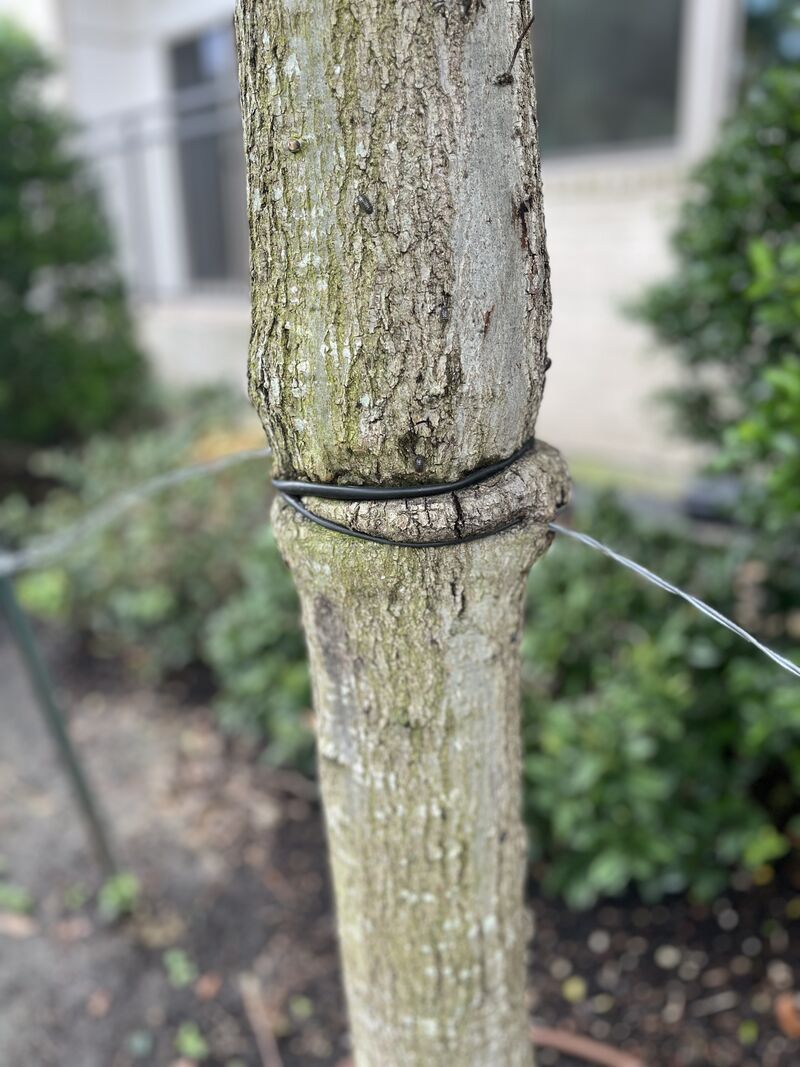
Walk through almost any older neighborhood and you might spot it. A tree with a strange pinched ring on its trunk, where a tie stayed on years too long and the bark grew around it.
That ring is called girdling. As the trunk thickens each year, a tight tie squeezes the living tissue just under the bark.
That layer carries water and food, so cutting it off can weaken the whole tree and make it snap at that spot.
Over-staking brings quieter problems too. Trees held too tightly often grow tall without building enough trunk thickness or root spread.
When the stakes finally come off, some lean or flop over because they never learned to hold themselves up.
Rubbing is another common issue. A trunk that bumps against a stake all winter can end up with scraped bark, which opens a door for insects and disease.
Here are quick warning signs to check:
Bark bulging above or below a tie, a tie that has sunk into the trunk, or bark worn bare where the trunk meets the stake. A tree that leans sharply when you loosen the tie also needs a closer look.
Most of these problems are easy to prevent. A quick check every month or two, plus loosening ties as needed, keeps a short-term helper from turning into a long-term headache.
6. Mulch, Water, and Trunk Guards Protect Saplings Through Winter
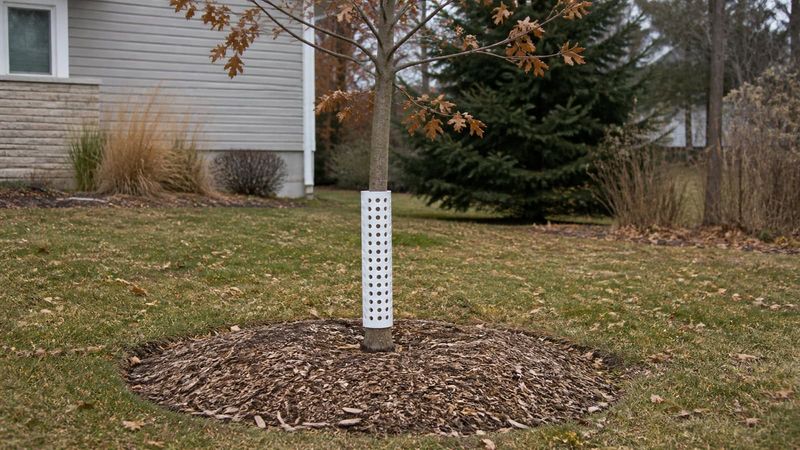
Wind gets the headlines, but winter throws a few other challenges at young trees. A smart cold-season plan covers roots, bark, and moisture, not just stakes.
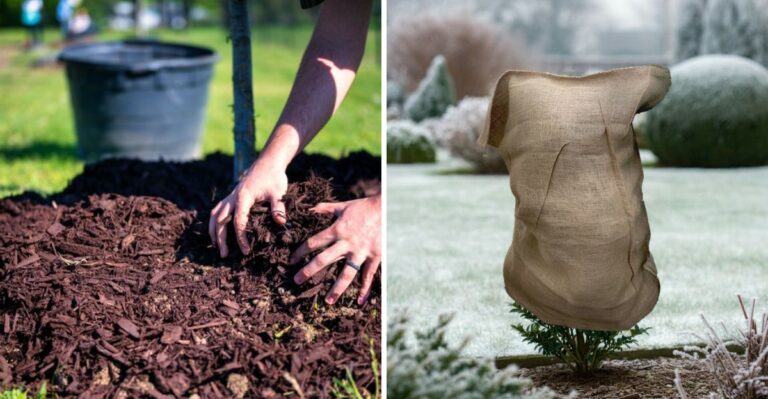
Start with mulch. Spread wood chips or shredded bark about two to four inches deep in a wide ring.
Keep it a few inches away from the trunk, though. Mulch piled against bark, the dreaded mulch volcano, can invite rot and rodents.
Water is next. New trees lose moisture through winter, especially evergreens, which keep their needles.
Give a deep soak during fall dry spells and keep going until the ground freezes, which usually happens later on Long Island and in New York City than in the Adirondacks.
Thin-barked young trees like maples, lindens, and fruit trees can suffer sunscald. Bright winter sun warms the bark on the south or southwest side, then a hard night freeze damages that tissue.
A light-colored trunk wrap or guard can help.
Hungry critters also show up. Rabbits and voles chew bark near the ground, and deer love tender twigs.
A loose cylinder of hardware cloth around the base often does the trick.
Remove wraps in spring so moisture and insects do not hide under them. Each piece of winter gear should come off when the weather warms, just like stakes.
7. Spring Is When Those Tree Stakes Should Come Off
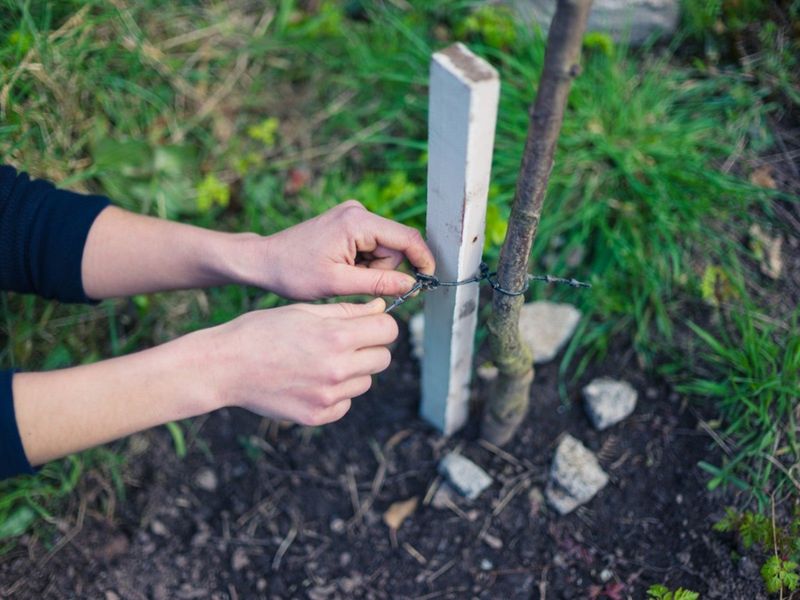
Think of a tree stake as a short loan, not a lifetime gift. Most experts suggest removing stakes after one growing season, and rarely keeping them longer than a year.
For a tree staked in fall, that usually means checking it the following spring or summer. By then, new roots have often grown out into the surrounding soil and the tree can hold its own ground.
Wondering if it is ready? Loosen the ties and give the trunk a gentle push.
If the root ball stays steady and the tree stands upright, pull the stakes and celebrate. If it still rocks, retie loosely and check again in a few months.
While you are at it, look over the bark where the ties sat. Small scuffs heal over time, but deep marks are a sign to keep the tree under watch.
My simplest takeaway goes like this. Plant well, test before you stake, use soft ties set low, and take everything off on schedule.
That approach serves most trees across New York, whether they face lake-effect gusts or city wind tunnels between buildings.
A young tree that learns to sway now is building strength for decades of storms. Giving it that freedom might be one of the kindest things you do for your yard this season.