10 Old-Fashioned Flowers Worth Bringing Back To New York Yards
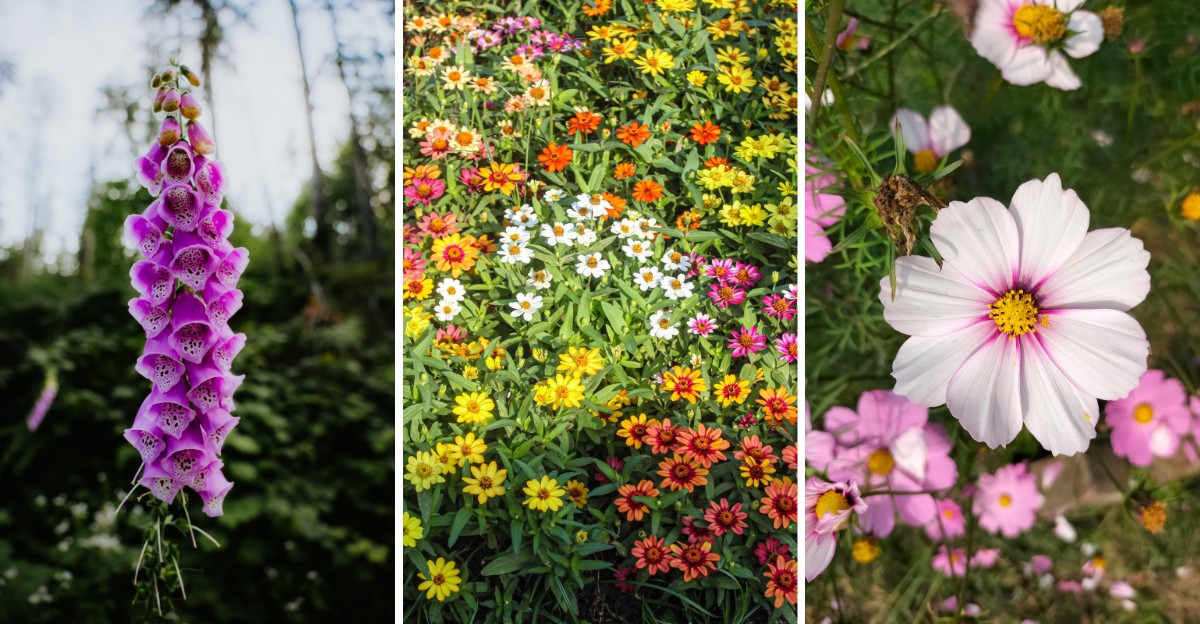
Some flowers make any yard feel like summer at Grandma’s house. Bright petals, sweet scents, and humming bees slow everyone down.
These blooms bring old-time charm to New York yards without a fancy garden plan. Many grow from cheap seeds and keep color coming for months.
Some climb toward the sun, while others make perfect cut flowers for the kitchen table. A few even open on a schedule you can almost set your watch by.
Plant a few, and your yard could carry a little of that old-time magic all summer long.
1. Zinnias For Easy, Rainbow-Bright Bouquets
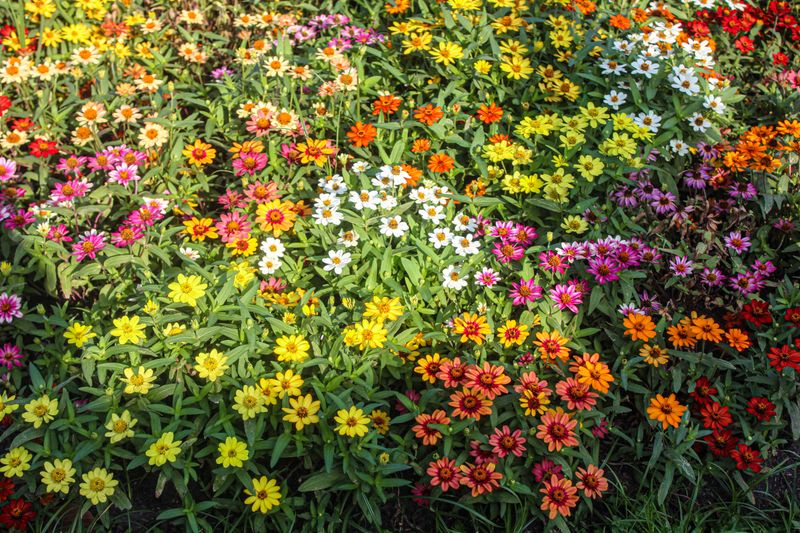
A jar of zinnias can brighten a kitchen table before breakfast dishes are cleared. Their sturdy stems and cheerful colors make homegrown bouquets feel wonderfully easy.
Give zinnias a sunny spot with six to eight hours of direct light. Mix compost into well-drained soil before planting, especially where the ground feels heavy.
In New York, wait until spring frost has passed and nights stay warm. Sow seeds outdoors or set out young plants, leaving room for air between them.
For a cutting patch, space plants about six to twelve inches apart. In larger beds, wider spacing helps leaves dry after rain and improves airflow.
Water deeply at the soil level when the top inch feels dry. Wet leaves can invite powdery mildew, so skip the sprinkler when possible.
Once young plants have several sets of leaves, pinch their tips. One small snip encourages branching, which can mean more stems for vases later.
Cut flowers regularly, choosing blooms with firm stems and nearly open centers. Remove faded flowers too, so plants keep putting energy into fresh color.
Try mixing small flowers with larger ones for a playful, gathered look. Pink, lime green, and orange varieties can make a surprising combination.
Butterflies often stop by sunny zinnia beds, adding movement between the bright petals. Leave a few flowers standing while you fill your jars.
2. Cosmos For Airy Blooms That Sway In The Breeze
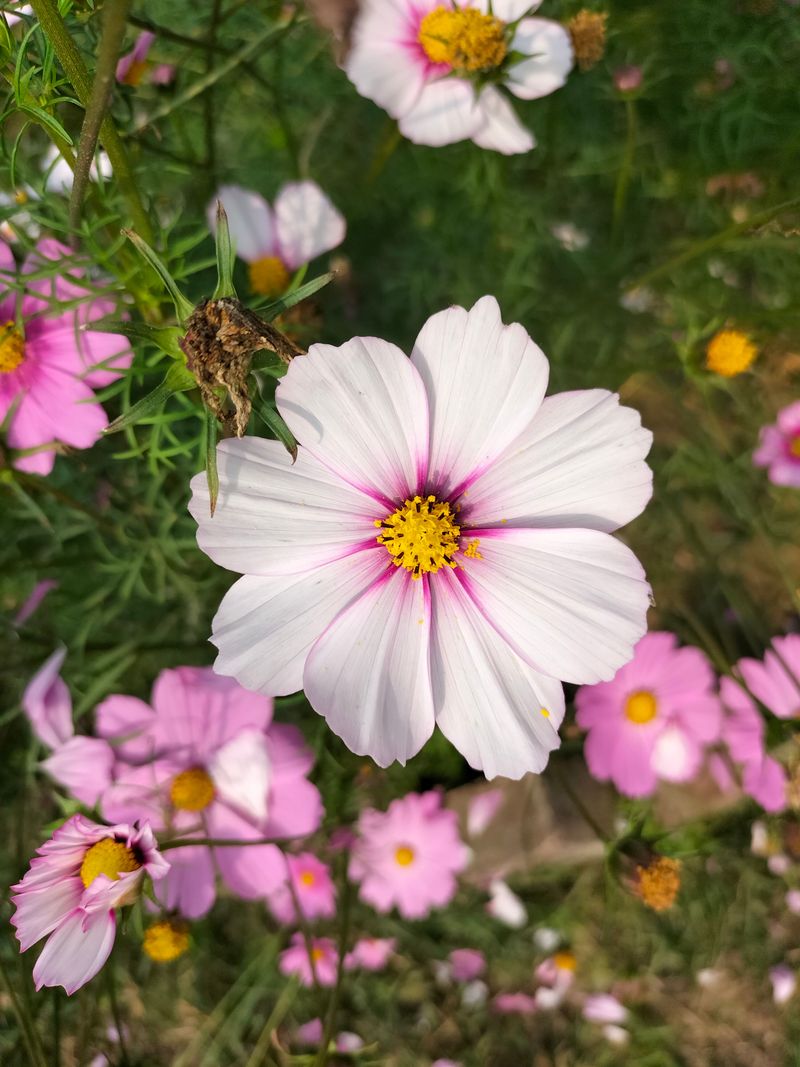
Watch a patch of cosmos on a breezy day, and the whole garden seems to dance. Thin stems lift their simple flowers above soft, feathery leaves.
Cosmos bring height without making a small yard feel crowded. Place them behind shorter flowers or along a path where visitors can brush past.
Choose a spot with six to eight hours of sun and well-drained soil. Ordinary ground suits them better than rich soil packed with fertilizer.
Too much fertilizer can produce lots of leafy growth but fewer blooms. Save the extra plant food for flowers with bigger appetites.
Scatter seeds after the last spring frost, then cover them lightly. Keep the soil gently moist while seedlings get started and develop strong roots.
Once established, cosmos handle dry spells better than many bedding flowers. Water during long stretches without rain rather than soaking them every day.
When plants reach about a foot tall, pinch their growing tips. They may branch out and carry more flowers through summer and into fall.
Your New York Garden Changes Every Week. Your Plan Should Too.
Gardening in New York changes quickly throughout the season. Every Friday you’ll receive a simple weekly plan showing exactly what to plant, prune, fertilize, harvest, and protect so you never miss the right timing.
Snip faded blooms before seeds form to keep the show going. For a relaxed look, let a few seed heads remain near season’s end.
Bees and butterflies visit the open flowers, especially in sunny weather. Cut a handful for a loose bouquet that still leaves plenty outside.
3. Sweet Peas For Fragrant Climbing Color
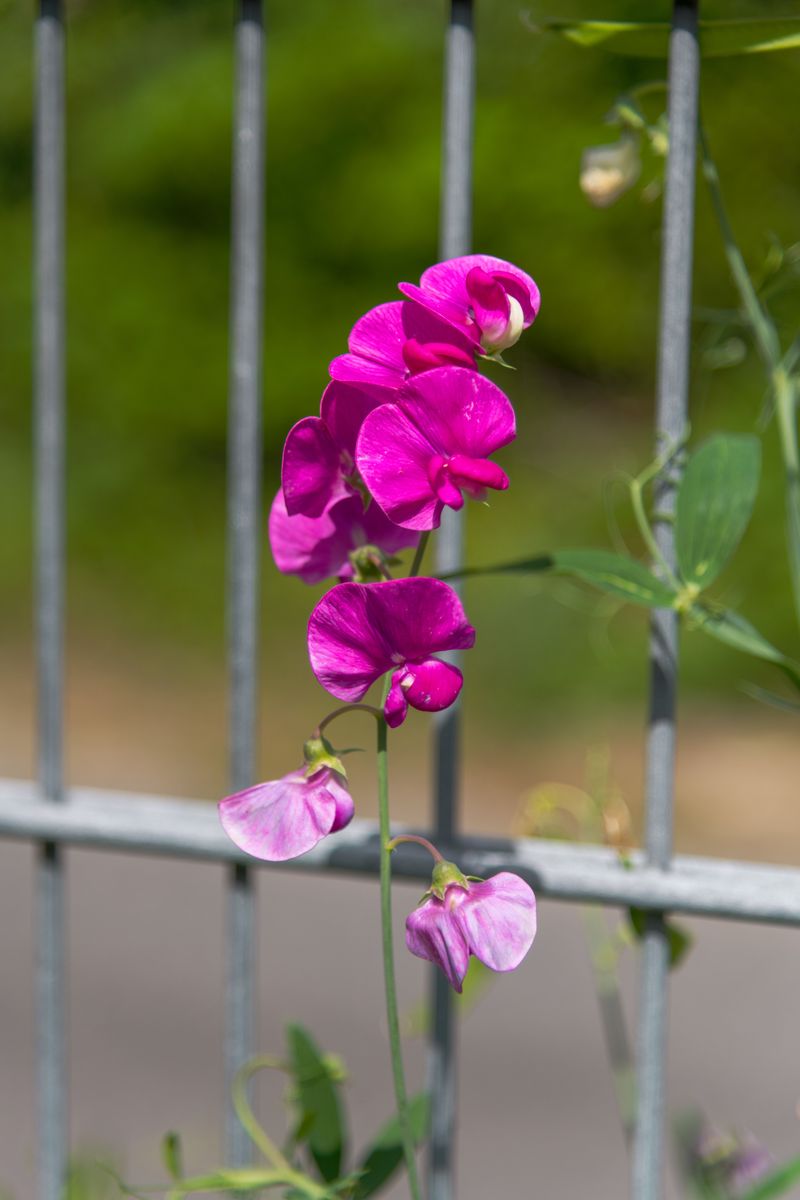
One small bunch of sweet peas can scent a whole room. Their ruffled flowers bring the soft colors and sweet smell of an old garden.
Unlike many summer favorites, sweet peas prefer cool weather. In New York, sow seeds outdoors in early spring when the soil can be worked.
Set up a trellis before the vines begin their climb. Fine mesh or thin strings give their curling tendrils something easy to hold.
Work compost into soil that drains well but stays evenly moist. A layer of mulch can help protect roots when warmer days arrive.
Choose full sun where springs are cool, with afternoon shade in hotter spots. Watch how sunlight moves across your yard before picking a place.
When young plants stand several inches tall, pinch their growing tips. More branches can mean more flowering stems to gather for tiny bouquets.
Water at soil level in the morning, especially during dry weather. Keeping leaves drier may help limit powdery mildew on crowded vines.
Pick flowers often and remove fading ones before seed pods develop. Once plants focus on making seeds, the flow of new blossoms may slow.
Sweet peas climb about four to six feet, so plan for their height. Keep their seeds and pods away from children and pets.
4. Dahlias For Dinner-Plate Drama
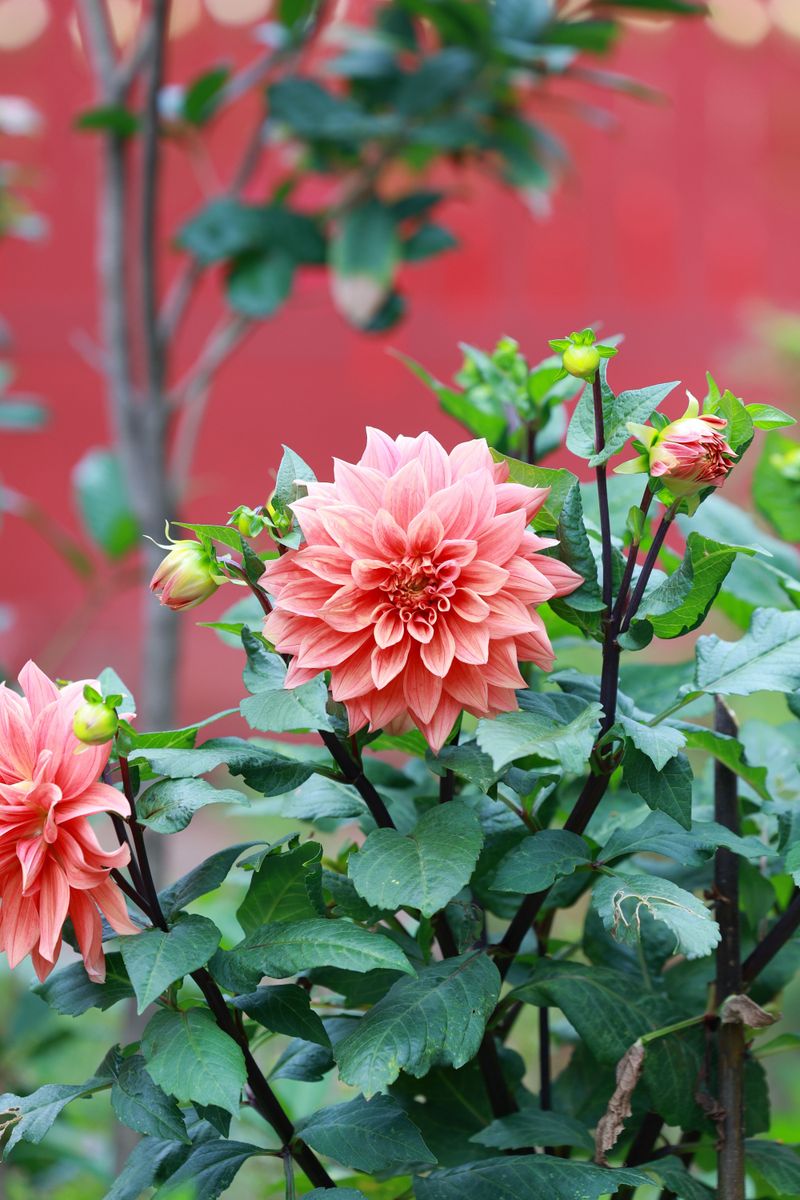
Some dahlias look like they borrowed their size from a serving platter. Others form tidy balls that fit neatly into a small vase.
For bold summer color, plant tubers after frost danger passes and soil warms. Mid-May is a common starting point in many New York gardens.
Pick a place with plenty of sun and loose, well-drained soil. Add compost if the bed needs help holding moisture without becoming soggy.
Set a sturdy stake beside tall varieties when you plant them. Adding support early avoids disturbing the roots once stems begin to grow.
Go easy on water until green shoots appear above the soil. After plants establish, water deeply during dry spells and check the ground regularly.
Large flowers can feel heavy after rain, so tie stems loosely to supports. Soft garden ties leave room for growth without rubbing the stalks.
Cutting flowers encourages you to enjoy their many shapes indoors. For longer vase life, gather blooms in the cool morning with clean tools.
In colder areas, gardeners often lift tubers after fall frost. Let them dry, then store them somewhere cool, dark, and protected from freezing.
Label each clump before storage if you grow several colors. That tiny chore makes next spring’s planting plan much easier to remember.
5. Snapdragons Kids Love To Squeeze Open
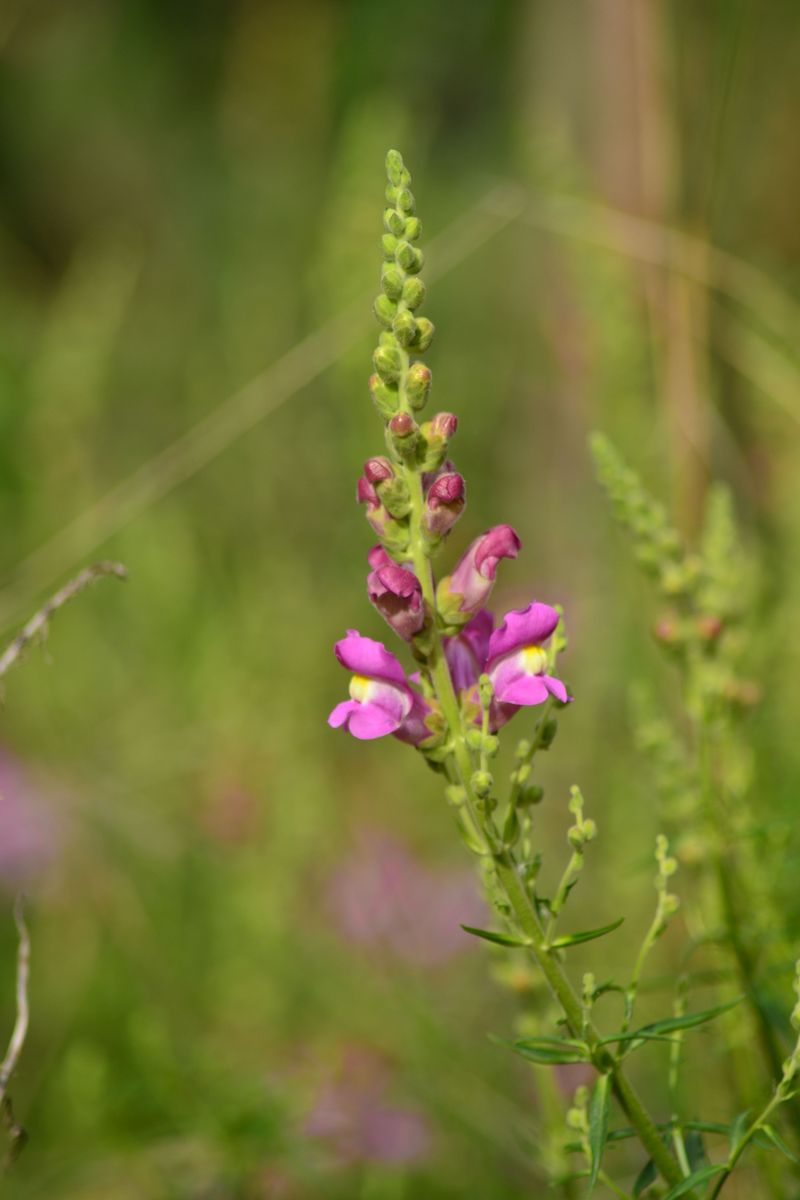
Gently press a snapdragon flower, and its little mouth appears to open. It is the sort of garden trick children remember long after summer.
Snapdragons also earn their place with bright, upright flower spikes. Look for pink, red, yellow, white, or mixed colors at local nurseries.
Cool weather suits them, making spring and fall especially rewarding. Start seeds indoors several weeks before your last frost, or buy sturdy young plants.
Snapdragon seeds need light to sprout, so press them onto the soil surface. Follow the packet for moisture and timing rather than burying them.
Plant in fertile, well-drained soil with sun or light afternoon shade. In summer, shade during hot afternoons can help flowers last.
Pinch young plants when they reach four to six inches tall. The extra branching can create a fuller display of colorful spikes.
Remove spent flowers to encourage another round of blooms. If tall stems lean after rain, give them a small stake or light netting.
Try planting several together rather than placing one here and there. A little group makes their unusual shapes easier for young visitors to spot.
Show children how to handle flowers gently and wash hands afterward. Leave some blooms untouched so bees can visit throughout the day.
6. Four O’Clocks That Open Every Afternoon
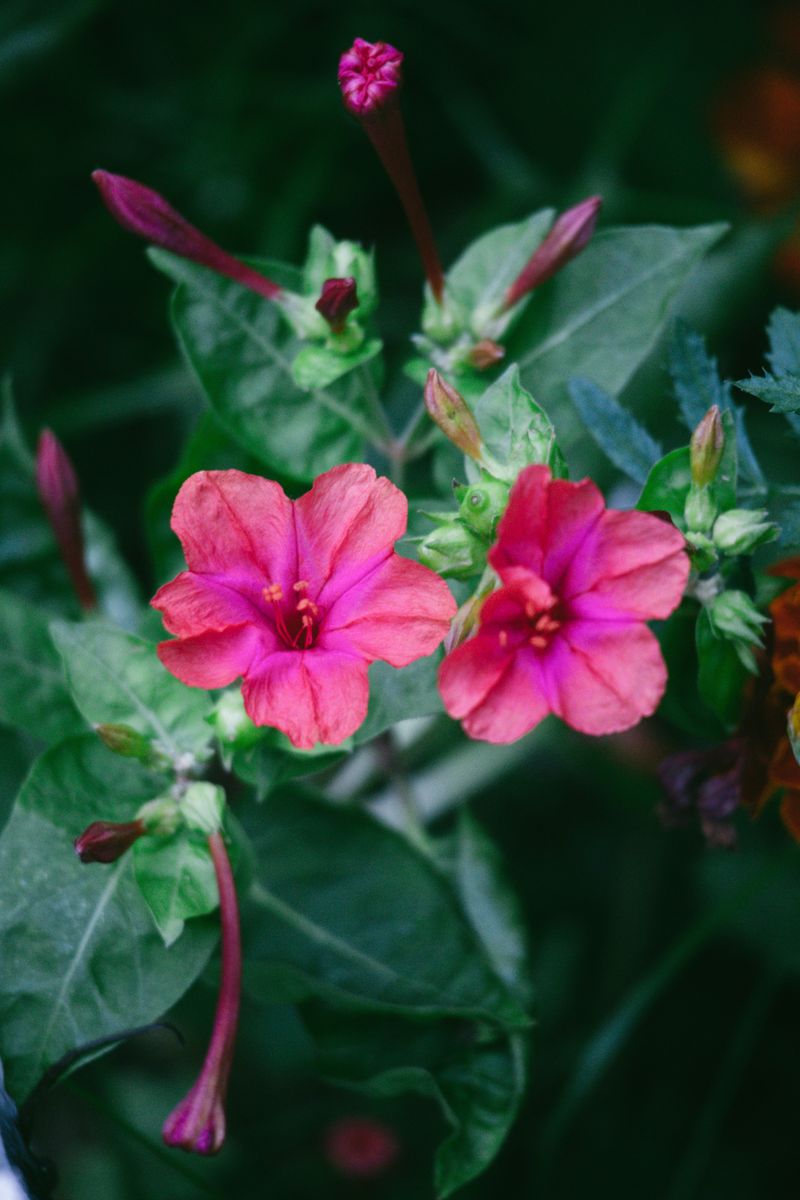
The garden gets a second act when four o’clocks begin opening. Their trumpet-shaped flowers unfold late in the day, just as many people head outside.
Blooms may be pink, yellow, white, or several colors on one plant. Some bring a gentle fragrance that makes evening porch time sweeter.
Start seeds outdoors after frost danger passes and the soil warms. Give these bushy plants space, since some varieties grow several feet tall.
Full sun works well, though light afternoon shade can help in hot spots. Choose well-drained soil and water steadily while young roots settle in.
Once established, check the ground before watering again. A thin layer of mulch helps hold moisture during stretches of warm weather.
Place four o’clocks near a path or sitting area for close-up viewing. Their evening schedule is easy to miss behind a distant fence.
Hummingbirds may visit the colorful flowers, while night-flying moths explore after sunset. Watch quietly for a few minutes when the yard grows calmer.
Gardeners in colder areas usually grow them as annuals. Their tuberous roots can also be lifted and stored where winter frost cannot reach.
Keep children and pets from eating any part of the plant, especially seeds and roots. With a sensible planting spot, their afternoon surprise is easy to enjoy.
7. Morning Glories That Cover Fences Fast
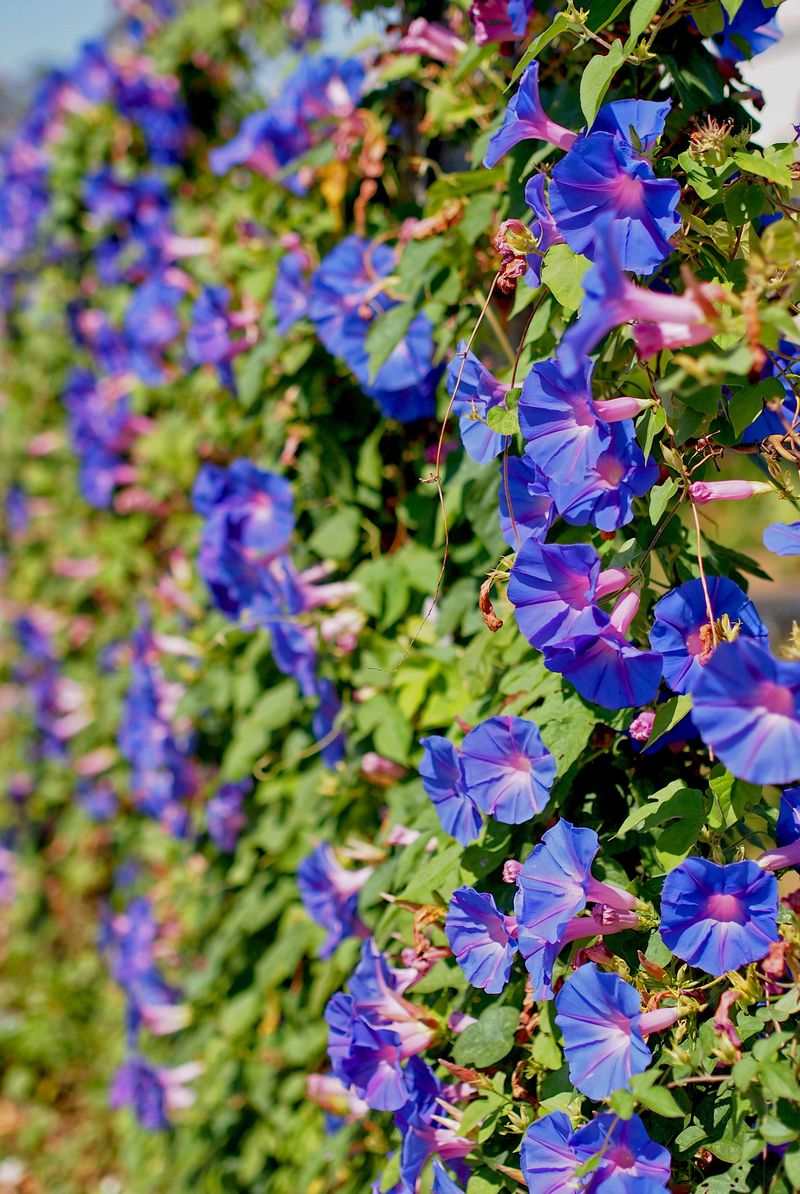
A bare fence can become a wall of color by late summer. Morning glories twist upward quickly, opening their trumpet flowers with the morning light.
Blue and purple are familiar choices, though pink and white varieties exist. Flowers often close later in the day, especially under bright sun.
Plant seeds after spring frost has passed and the ground has warmed. A strong trellis or fence gives the long vines a clear route upward.
Choose full sun and ordinary, well-drained soil for good flowering. Rich fertilizer is usually unnecessary and may favor leaves over blooms.
Keep the seedbed moist while sprouts appear, then water during dry periods. Direct the young vines toward their support before they wander across nearby plants.
Prune stray stems if growth spills over paths or garden beds. Checking the vines once a week makes that small job easier.
Some morning glories scatter seeds and return in unwanted places. Remove seed pods before they mature if you prefer tighter control.
For a New York yard with limited space, grow them vertically. A narrow strip beside a fence can offer plenty of room overhead.
Bees and hummingbirds may stop at the open blooms during morning visits. Enjoy the display over breakfast, when the flowers are often at their best.
8. Bachelor’s Buttons For True-Blue Petals
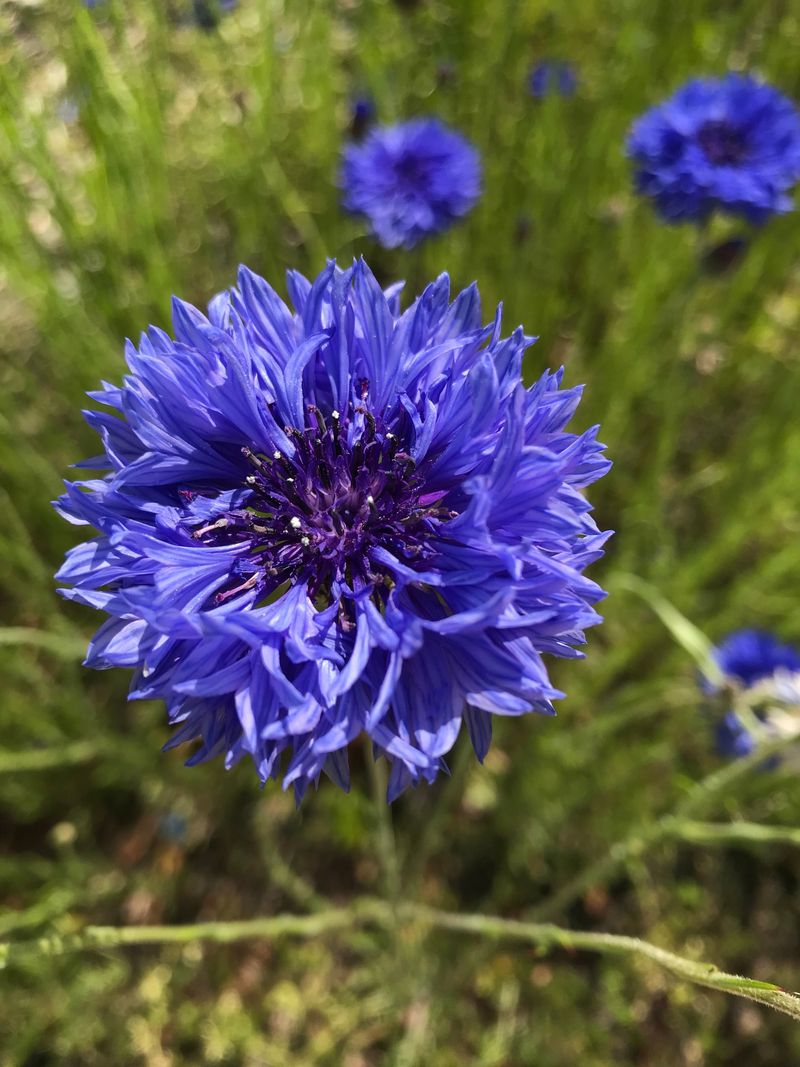
Blue can be surprisingly hard to find in a flower bed. Bachelor’s buttons offer a bright, unmistakable shade on small, fringed blooms.
These old-fashioned annuals also go by the name cornflowers. Long ago, their flowers were tucked into buttonholes, adding charm to a plain coat.
Sow seeds directly into garden soil in spring, following packet directions. A sunny spot with decent drainage gives them a comfortable start.
Thin crowded seedlings so air can move between growing stems. The space also makes it easier to reach flowers when cutting bouquets.
Plant another small batch a few weeks later for more blooms. Staggered sowing can spread the color across a longer part of the season.
Cut flowers when they look fresh and fully colored. Slip a few among daisies or zinnias for a casual, country-style arrangement.
Bees and butterflies also visit these flowers, so share the harvest. Leave some blossoms in place while choosing stems for your table.
If seed heads remain, new plants may appear the following year. Pull seedlings from unwanted spots while they are still small and easy to move.
Although blue gets the attention, pink and white varieties offer other choices. Mix a few shades, or plant blue alone for a striking patch.
9. Foxglove For Tall, Speckled Spires
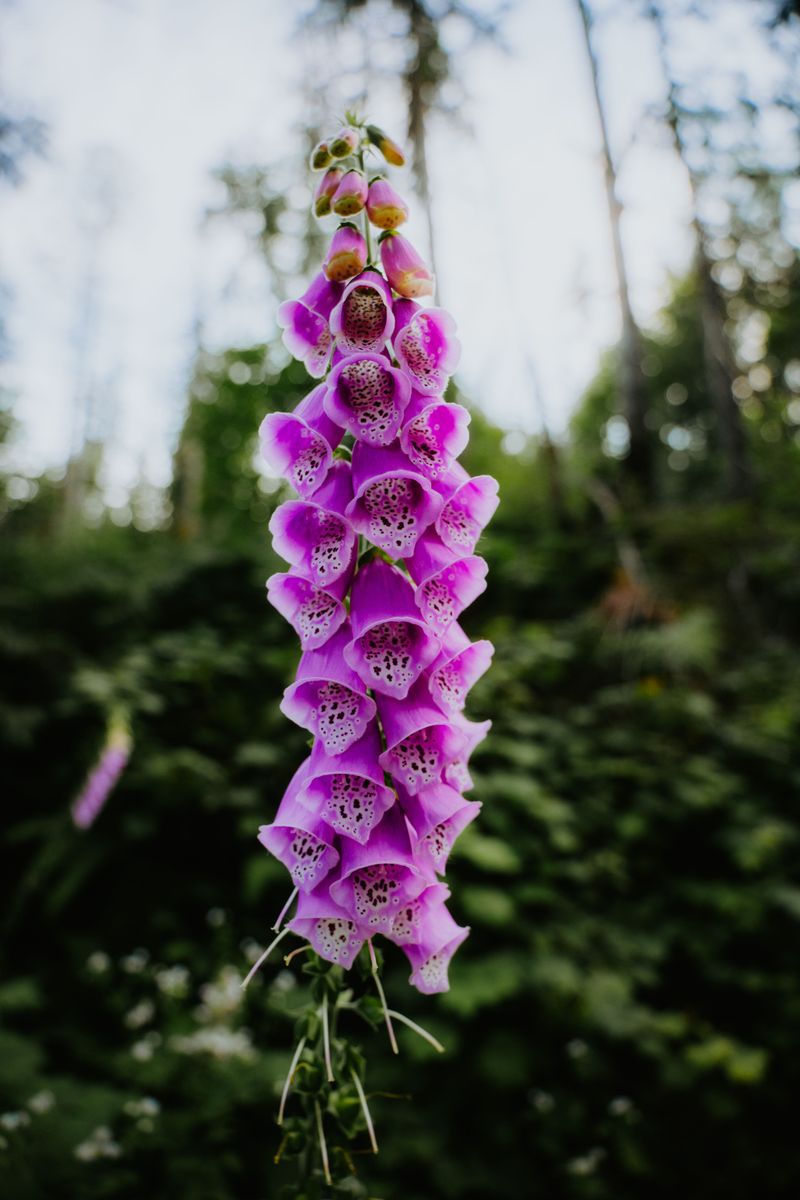
Foxgloves look as though someone stacked tiny spotted bells along tall stems. Their height brings a storybook feeling to the back of a border.
Pink, purple, white, and yellow flowers can brighten lightly shaded spaces. Bees often climb inside the bells while looking for nectar.
Choose a place with dappled light and soil that drains well. Mix in compost to help the ground hold moisture without staying soggy.
Many foxgloves are biennials, meaning they grow leaves first and flower the next year. Sow seeds in different years for a steadier display.
Scatter seeds on the soil surface because they need light to sprout. Press them gently into place instead of covering them with dirt.
Keep young plants moist while their roots become established. In dry weather, water the soil near their base rather than soaking the leaves.
Give tall flower spikes some shelter from strong wind. A quiet spot beside shrubs can offer support without hiding the lovely speckled blooms.
All parts of foxglove are poisonous if eaten, so choose its location carefully. Wear gloves when handling plants, and keep them away from curious children and pets.
For a New York yard with a shady edge, foxglove offers welcome height. Pair it with low ferns for a soft woodland look.
10. Marigolds For Bold Orange Borders
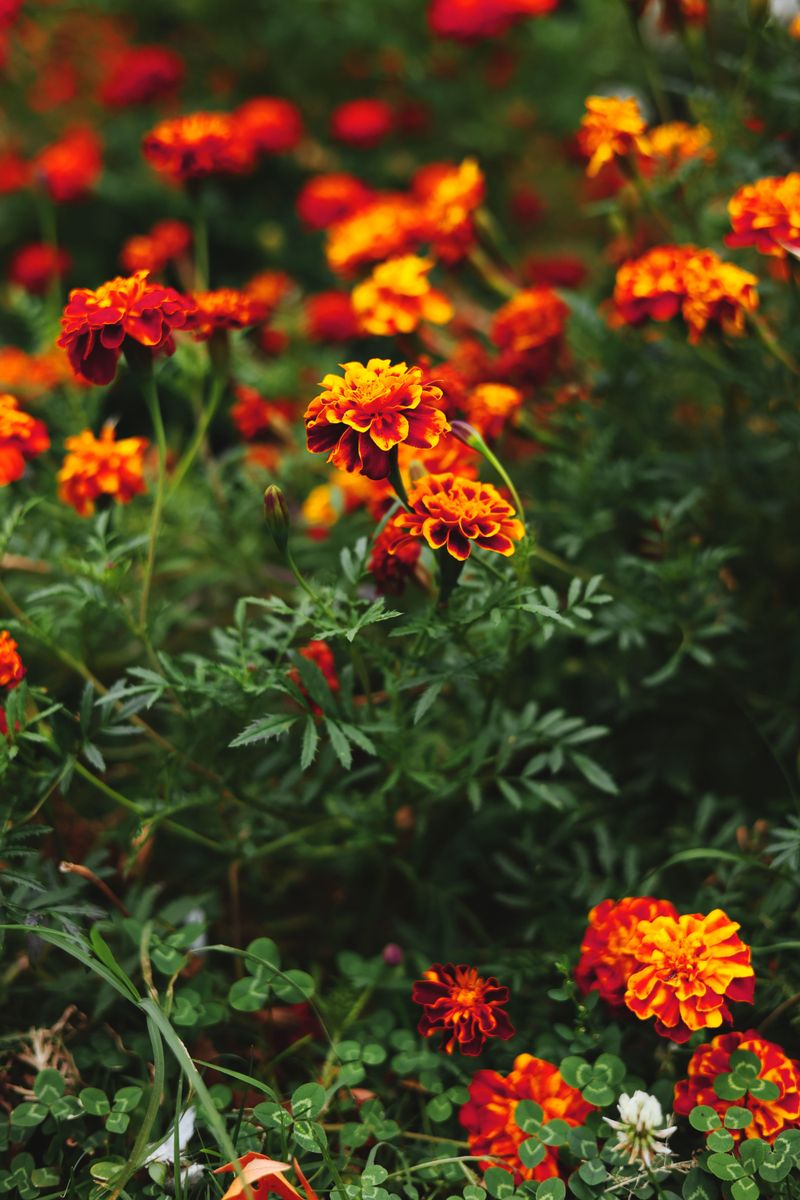
A line of orange marigolds can make a plain garden bed look planned. Their sunny blooms stand out against green leaves and dark soil.
French marigolds stay fairly compact, making them useful beside paths and vegetables. Taller African marigolds offer larger flowers for the back of a bed.
Wait until spring frost has passed before planting either kind outdoors. Choose a spot with at least six hours of direct sunlight.
Set plants in well-drained soil, leaving room between them for airflow. Crowded leaves may stay damp longer after rain or watering.
Water near the base when the ground begins to dry. Once roots settle in, marigolds can handle short dry spells better than many flowers.
Pinch young stems for bushier plants, and remove fading blooms regularly. These quick jobs help keep the border colorful into fall.
Want a tidy edge beside a walkway? Plant one variety in a row, keeping each plant roughly the same distance apart.
For a looser look, mix gold, copper, and orange blooms. Their colors pair nicely with purple flowers and leafy herbs.
Marigolds are sometimes grown in vegetable gardens to help manage root-knot nematodes. That benefit depends on how they are planted, so enjoy their cheerful flowers first.