The Plants New York Gardeners Should Never Prune in November
Next spring’s flowers already sit on many shrubs, tucked inside tiny buds you can feel with a fingertip. Those buds formed back in summer, and they wait quietly through the cold until warm weather wakes them up.
Here in New York, November chores often include raking leaves and fighting a sudden urge to grab the pruners. One tidy afternoon of snipping can quietly erase months of bud development on your favorite flowering plants.
Take it from someone who once trimmed a shrub into a perfect ball and got zero flowers in May. My garden taught me that fall neatness can cost you a whole season of color and fragrance.
Upstate yards and city backyards across the Empire State share the same temptation once the leaves drop. So which plants deserve a pass this month, and what should you do with those shears instead?
1. Bigleaf Hydrangea
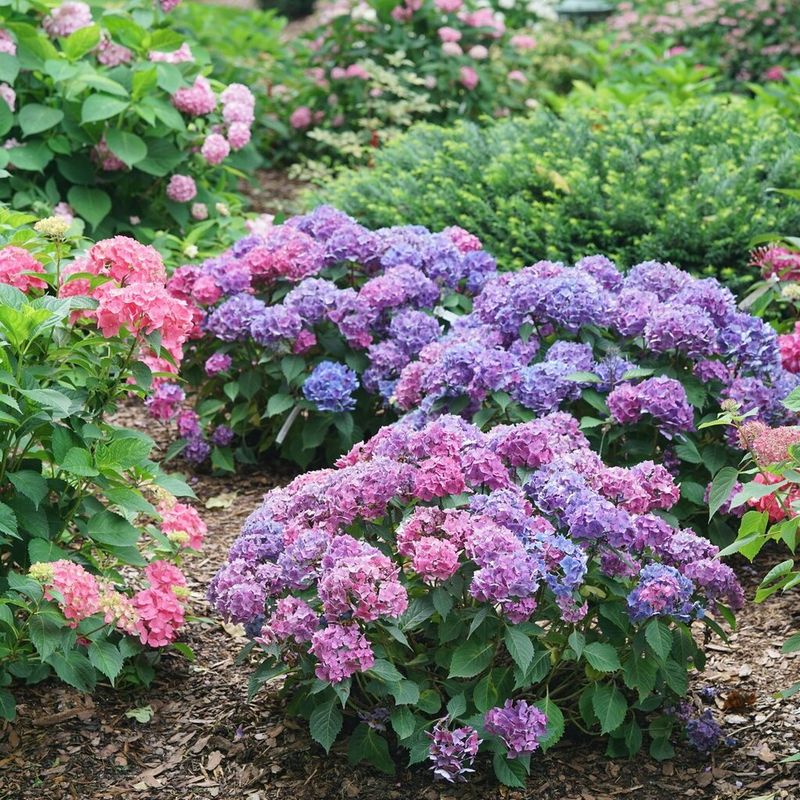
Those giant blue and pink mopheads you admired in July already hold next summer’s flowers inside their fat buds. Bigleaf hydrangea, or Hydrangea macrophylla, forms those buds at the tips of this year’s stems during late summer.
Snip those stem tips in November, and you remove the flowers before they ever get a chance to open. I learned this the hard way, staring at a leafy green bush with not a single bloom on it.
Leave the dried flower heads in place over winter, since they look lovely dusted with frost and snow. Many gardeners believe those old heads also help shelter the buds just below them from harsh winter winds.
Bigleaf types can struggle in colder parts of the state, where buds sometimes freeze before spring arrives. A loose layer of shredded leaves around the base helps protect the lower stems and roots from deep cold.
Reblooming varieties like Endless Summer flower on both old and new wood, which gives you more wiggle room. Even so, cutting them hard now still delays the first and showiest wave of early summer blooms.
The best time to shape these shrubs is right after flowering ends, usually by midsummer at the latest. In early spring, simply remove stems that show no green buds once the plant starts waking up.
Patience feels hard when the garden looks messy, but bigleaf hydrangeas reward the gardener who waits. Your reward next summer could be a shrub so loaded with color that neighbors stop to ask questions.
2. Oakleaf Hydrangea
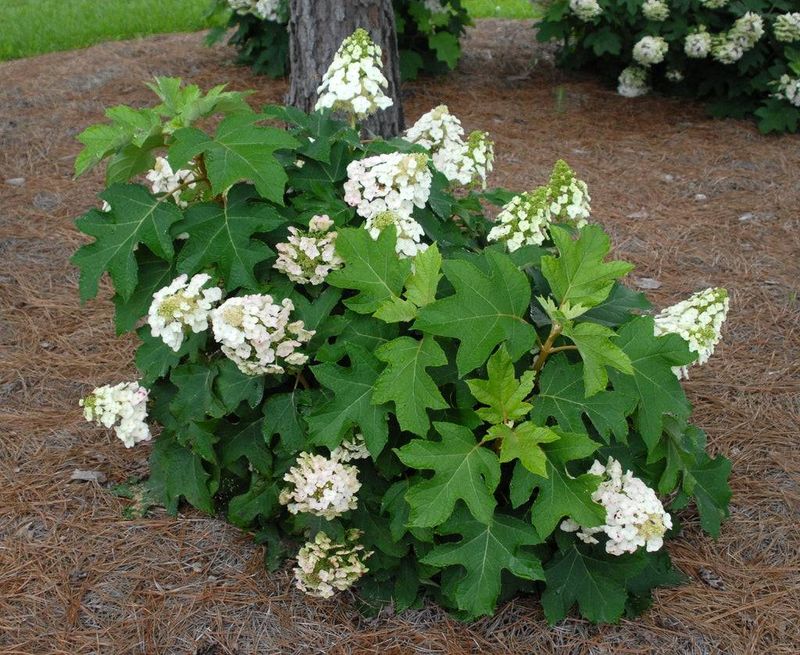
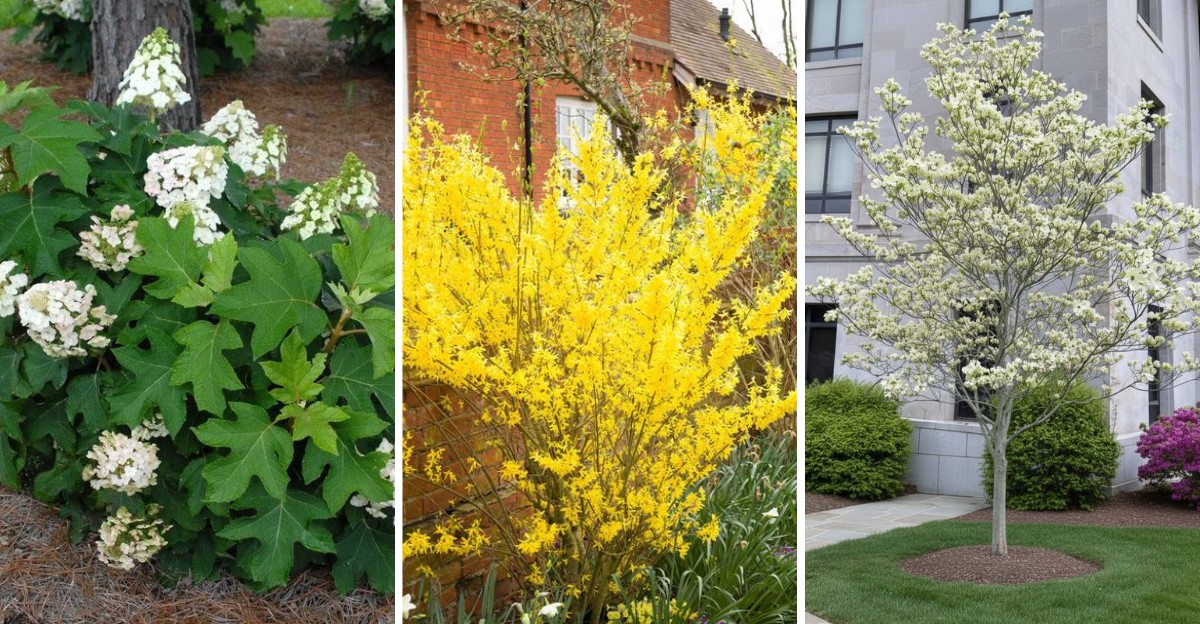
Few shrubs put on a better fall show than oakleaf hydrangea, with leaves turning deep burgundy and bronze. Hydrangea quercifolia gets its name from those big lobed leaves, which really do resemble oversized oak leaves.
Like its bigleaf cousin, this native of the southeastern United States sets flower buds on old wood. Any stem you trim this month likely holds a cone-shaped flower cluster waiting for next June or July.
If you ask me, oakleaf hydrangea is the most underrated winter shrub you could grow in your yard. Its cinnamon-colored bark peels in papery strips, which looks wonderful against a gray winter sky or fresh snow.
Cutting stems now removes that peeling bark show along with the buds, so you lose twice in one snip. The dried flower panicles also hang on for months, turning a soft tan that many gardeners love.
Oakleaf hydrangeas are hardy to about USDA zone 5, so they handle most areas outside the coldest northern regions. In zone 4 gardens, stems may suffer winter injury, so a sheltered spot near a building often helps.
Prune lightly right after flowering if the shrub outgrows its space, removing a few of the oldest stems. Most of the time, though, this plant needs little shaping because its natural mounded form already looks tidy.
Pollinators visit the flowers in summer, and the shrub fits nicely into woodland edges with partial shade. Give it moist, well-drained soil, then put the pruners away and let winter work its quiet magic.
3. Forsythia
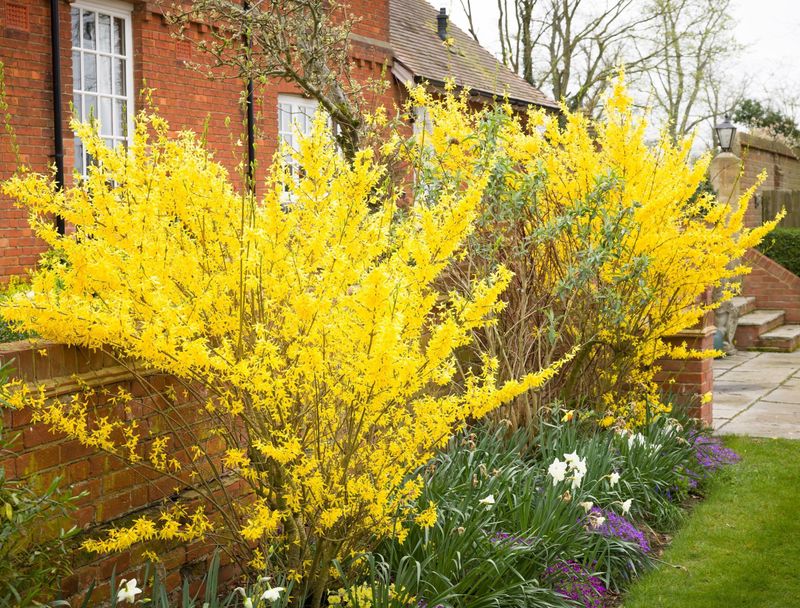
Those first bright yellow branches in March feel like a loud announcement that winter is finally losing its grip. Forsythia blooms before its leaves appear, so every flower bud must already be in place by fall.
Look closely at a stem this month, and you will spot small plump buds lined up along the branches. Each of those buds is a future yellow flower, and a November haircut removes them by the dozen.
Between you and me, forsythia is the shrub most often sheared into a boxy shape at the wrong time. That flat-top look also hides its natural arching form, which is honestly the best part of the plant.
Wait until the flowers fade in spring, then cut about a third of the oldest canes near the ground. Removing old canes this way encourages fresh, vigorous stems that will bloom heavily for years to come.
Forsythia grows fast and can reach eight to ten feet tall, so regular spring thinning keeps it manageable. Arching branches that touch the soil may root on their own, creating new plants you can dig and share.
If your shrub is badly overgrown, a full renovation cut to a few inches tall works in early spring. You will lose one season of flowers, but the plant usually bounces back with healthy new growth.
History fans might enjoy knowing that forsythia is named after William Forsyth, a Scottish gardener from the eighteenth century. Honor his legacy by letting those buds rest quietly through winter and saving your pruning energy for spring.
4. Common Lilac
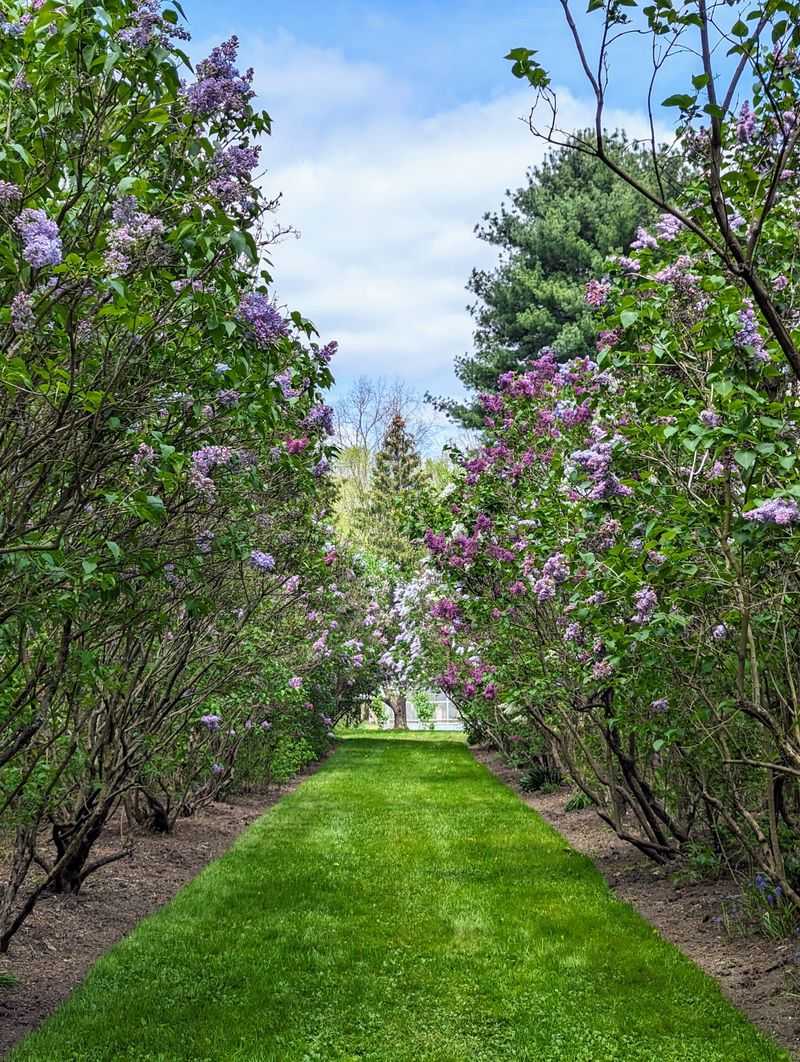
Few scents bring back childhood memories faster than lilac blossoms drifting through an open window in May. Syringa vulgaris has graced northeastern farmhouses for centuries, and it handles cold winters with real toughness.
Lilacs set their flower buds within weeks after blooming, so by November those buds are fully formed. You can spot them in pairs at the stem tips, looking like small green or purplish teardrops.
Trim those tips now, and next spring you get leaves with barely a hint of that famous fragrance. Don’t make my mistake of tidying a lilac hedge in fall and then waiting all spring for nothing.
The right moment to prune is just after flowers fade, ideally within a few weeks of blooming. Snip off spent flower clusters then, cutting just above a pair of healthy leaves or new buds.
Older lilacs often get tall and leggy, with flowers blooming way above your nose where you cannot smell them. Renew them by removing a few of the thickest old stems at ground level each year after flowering.
Lilacs love full sun and well-drained soil, and they thrive across most of New York’s colder regions. Too much shade and too much nitrogen fertilizer both lead to plenty of leaves and fewer blooms.
Powdery mildew may coat the leaves by late summer, but it rarely harms the shrub in a serious way. Good air circulation from proper thinning in spring helps reduce mildew and keeps your lilac looking healthier overall.
5. Rhododendrons And Azaleas
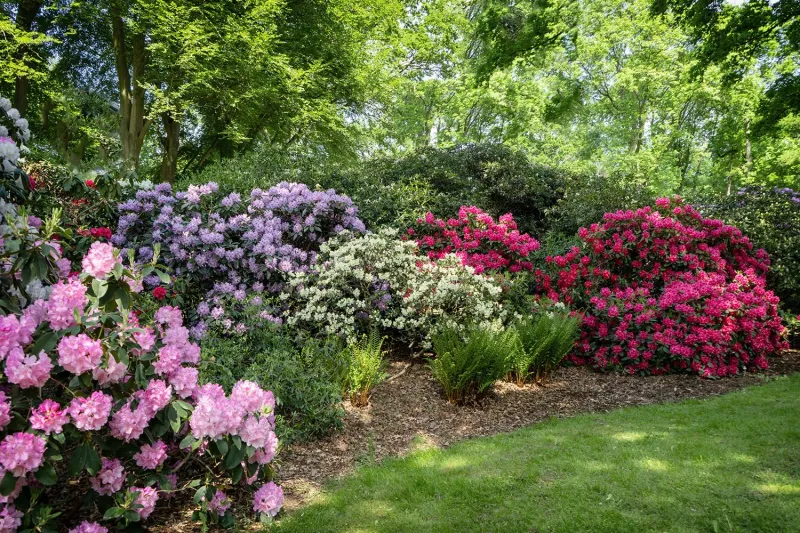
Peek at a rhododendron this month, and you will notice fat, scaly buds sitting proudly at the branch tips. Those chunky buds hold entire clusters of next spring’s flowers, packed tight and ready to burst open in May.
Rhododendrons and azaleas both belong to the genus Rhododendron, and both set flower buds during the previous summer. Cutting branch tips now removes those buds, which means a quiet green shrub instead of a colorful spring display.
Let’s just say I once mistook those plump flower buds for odd growths and nearly snipped them all off. Flower buds are rounder and larger, while leaf buds look slimmer and more pointed at the stem ends.
Prune right after flowering ends, which gives the plant plenty of time to form new buds by late summer. Removing spent flower trusses by hand can also help the plant focus energy on new growth.
Evergreen rhododendrons lose moisture through their leaves in winter, especially on windy and sunny days with frozen ground. Water deeply before the ground freezes, and add a few inches of mulch to protect their shallow roots.
Curled leaves on cold mornings look alarming, but that is a normal response that helps the plant conserve water. Those leaves usually flatten again as temperatures rise, so there is no reason to cut them off.
These shrubs prefer acidic, well-drained soil and some afternoon shade, much like their native woodland homes. Treat them gently through winter, and you will be rewarded with a spring show worth photographing from every angle.
6. Flowering Dogwood
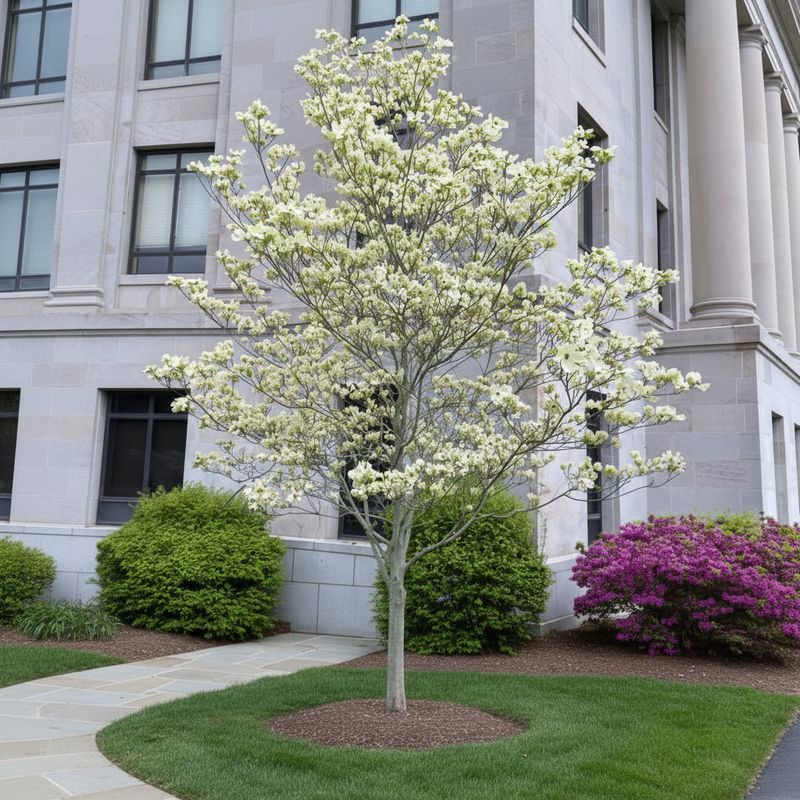
Look closely at a flowering dogwood after its leaves drop, and you will see little buttons perched on branch tips. Those round, onion-shaped buds hold next spring’s blossoms, and they make the tree easy to read in winter.
Cornus florida is a native understory tree, and its showy white or pink parts are actually modified leaves called bracts. The true flowers are tiny and greenish yellow, clustered right in the center of those four petal-like bracts.
Pruning in November removes flower buds, and each cut also creates a wound that the tree cannot heal quickly. For what it’s worth, I treat my dogwood like a fussy houseguest and touch it as little as possible.
Most experts suggest light pruning in late winter while the tree is dormant, or right after spring blooming ends. Avoid pruning from late spring through summer, since fresh wounds can attract dogwood borers looking for an entry point.
You can remove broken or diseased branches at any time to keep the tree healthy and safe. Make clean cuts just outside the branch collar, which is the slightly swollen area where a branch meets the trunk.
Dogwoods also struggle with lawn mower bumps and string trimmer nicks, which open the door to pests and disease. A wide ring of mulch around the trunk protects the bark and keeps roots cool and moist.
Birds love the bright red fruit that ripens in fall, so your patience feeds wildlife at the same time. Robins and other songbirds often strip the berries quickly, giving you a front-row seat from the kitchen window.
7. Japanese Maple
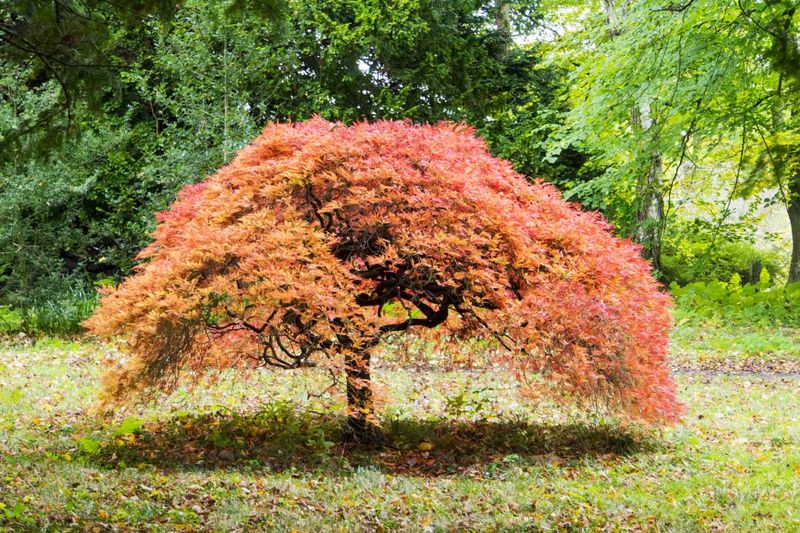
Bare Japanese maple branches can look like elegant sculpture against November skies, which tempts many of us to start editing. Acer palmatum is prized for its graceful shape, and a hasty cut can spoil that shape for years.
Fresh pruning wounds made in fall may not seal well before hard freezes settle in across the region. Those open cuts can lead to withering at branch tips and give decay organisms an easy way inside.
If you ask me, this tree is the worst candidate for a quick fall tidy-up with sharp loppers. Its slow growth means every mistake stays visible for a long time, sometimes for several growing seasons.
Late winter, while the tree is fully dormant, makes the best time for structural pruning of crossing branches. Light thinning in mid to late summer also works, since you can see how the leaves fill each space.
Sap may drip from late winter cuts, but extension experts note this bleeding rarely harms a healthy maple. Keep cuts small, and avoid removing more than a modest portion of live growth in any single year.
Most Japanese maples are hardy to zone 5, so colder upstate gardens need a protected spot or a tougher cultivar. Shield young trees from harsh winter winds with burlap screens, which helps prevent bark splitting and twig damage.
Mulch lightly around the base, keeping it away from the trunk to prevent rot and rodent damage. Then simply enjoy the branching pattern all winter, because that bare silhouette is half the reason we grow them.
8. Mountain Laurel
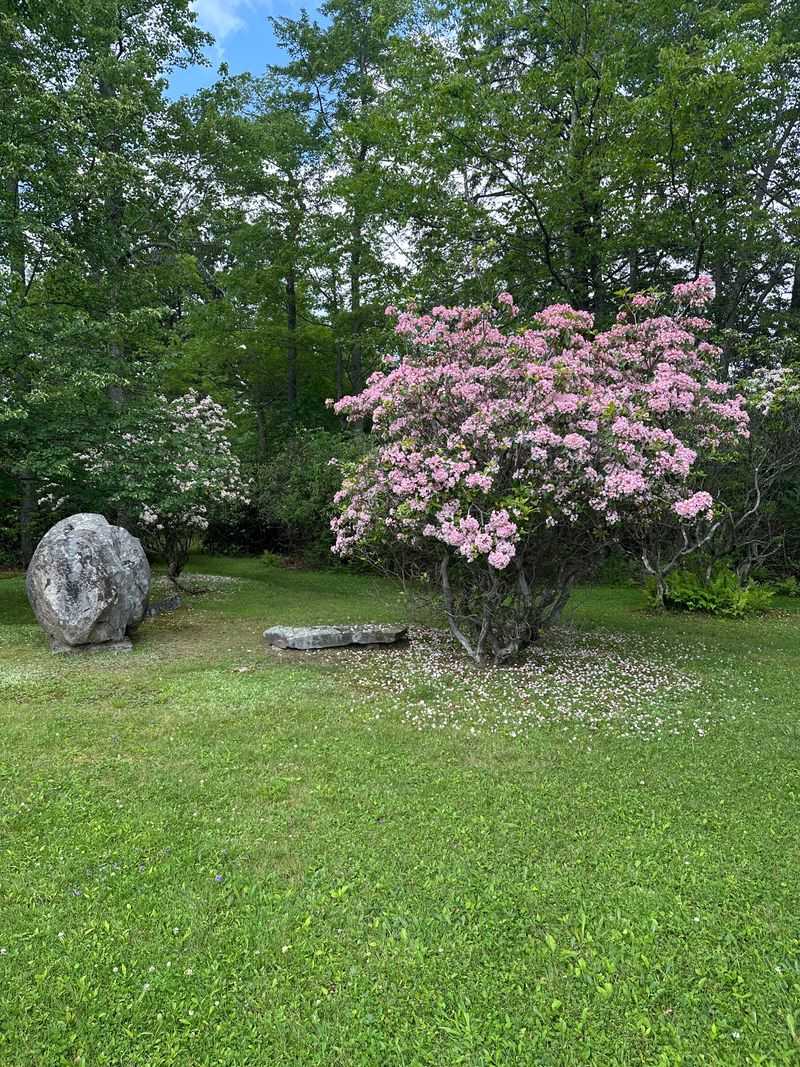
Connecticut and Pennsylvania both claim mountain laurel as their state flower, and it grows wild in many New York forests. Kalmia latifolia is a broadleaf evergreen with glossy leaves that brighten a shady yard all winter long.
Its flower buds form during late summer, clustered at branch tips and ready for a spectacular show in early summer. Snip those tips in November, and you trade those starry pink and white blooms for plain green leaves.
What caught my attention first was how each open flower looks like a tiny pleated cup. The stamens tuck into little pockets and spring loose when a bee lands, dusting it with pollen.
Prune right after the flowers fade, and limit yourself to light shaping or removing a few broken branches. Snapping off spent flower clusters at the same time helps the shrub direct energy into next year’s buds.
Mountain laurel thrives in acidic, well-drained soil with partial shade, much like rhododendrons growing in similar woodland settings. A layer of pine needles or shredded leaves makes a natural mulch that keeps the roots cool and protected.
All parts of this plant are toxic if eaten, so keep curious pets and small children away from it. Wear gloves while pruning in summer, and toss clippings where grazing animals or dogs cannot reach them.
Deer usually leave mountain laurel alone, which makes it a welcome choice for gardens with heavy deer pressure. Give it a quiet winter without pruners, and those buds will open into a show worth waiting for.