The Mulch Depth Mistake That’s Suffocating New York Tree Roots Right Now
Tree roots breathe, and a few extra inches of wood chips can quietly cut off their air supply. I didn’t believe it either until an arborist pointed at my tidy little mound and winced.
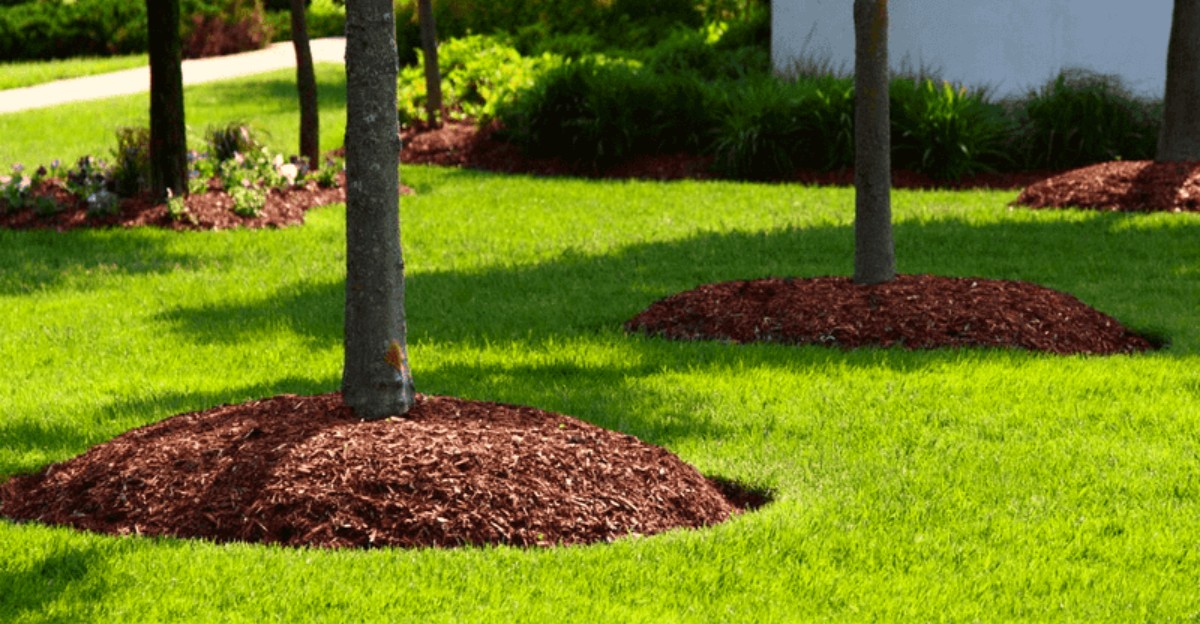
Arborists even have a nickname for those tall piles hugging the trunk. They call them volcanoes, and you can spot them outside banks, schools, and shopping plazas all over New York.
I’ll admit it, I built a few myself. They looked neat and cozy, like a warm scarf for a tree heading into cold weather.
The trouble hides where you can’t see it. Bark stays soggy, roots wander upward, and the tree can slowly lose steam for years before anyone notices a thing.
So how deep is too deep, and what does a happy mulch ring look like? The answer is simpler than you might expect, and it takes about ten minutes with a rake.
That Tall Cone Of Mulch Around The Trunk Is Hiding A Problem
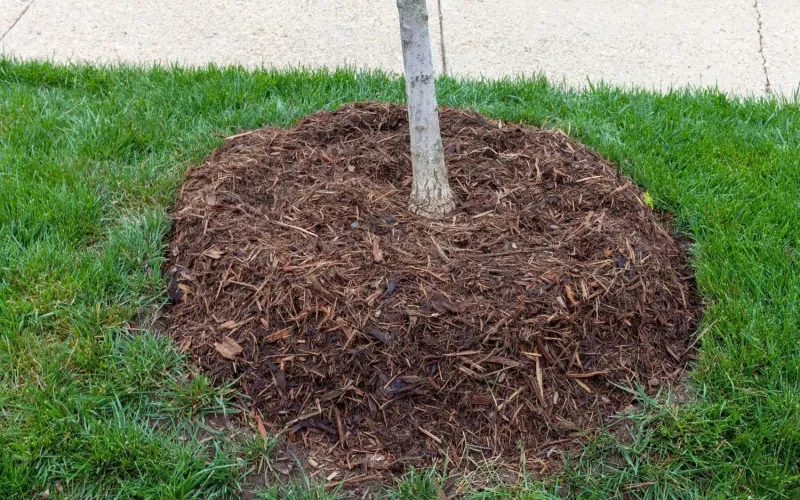
Walk through almost any parking lot in late fall and you’ll spot one. A young tree sits inside a tall, neat cone of shredded bark, piled a foot high against the trunk.
Landscapers sometimes build these mounds because they look tidy and finished. Homeowners copy them because, honestly, they seem like a caring thing to do. I was right there with them for years.
The catch is that trees were not built for this. In a forest, leaves fall loosely and spread out in a thin layer across the ground. Nothing piles up against the trunk like a snowdrift.
Cornell Cooperative Extension and other university programs warn that these mulch volcanoes can stress trees in several ways. They trap water against the bark, limit oxygen in the soil, and invite roots to grow in odd directions.
What makes this sneaky is the timing. A tree under a heavy pile may look fine for two, three, or even five summers. Then the leaves turn small or pale, branches thin out, and the cause is long buried.
So that pretty cone might not be helping at all. The fix, thankfully, is easy, and it starts with knowing the right number of inches.
Two To Four Inches Of Wood Chips Is All Your Tree Wants
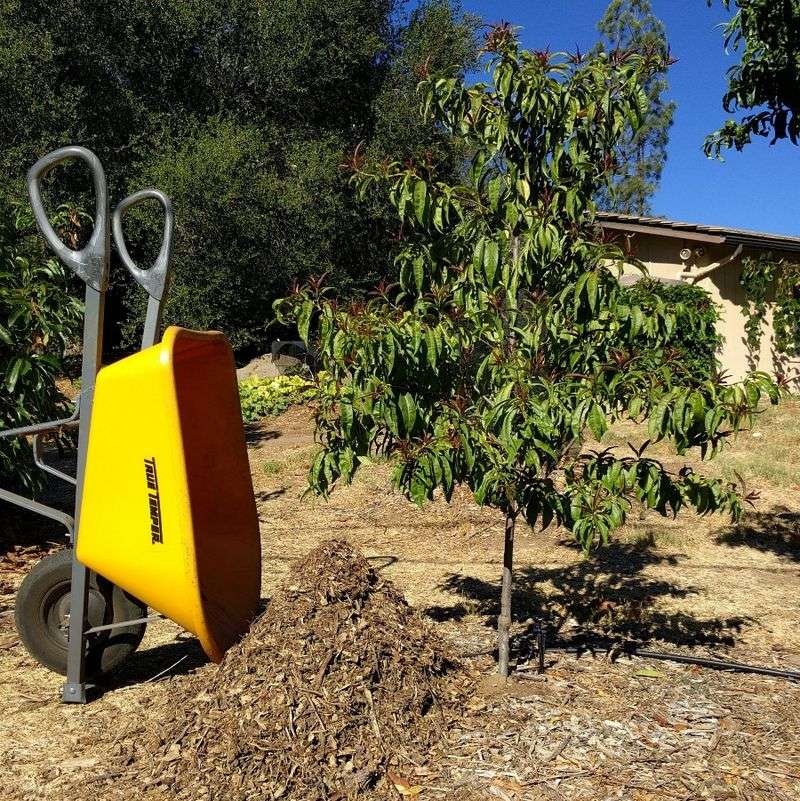
Grab a ruler, because the magic number is small. Most university extensions recommend a layer of 2 to 4 inches of coarse organic mulch, and many experts say 2 to 3 inches suits most yards.
That depth is enough to hold moisture, keep soil temperatures steady, and block plenty of weeds. Go much deeper and the benefits start working against you.
Thick piles can shed light rain before it ever reaches the soil. After a heavy storm, the same pile can stay soggy for days. Both situations stress roots that need a mix of water and air.
Texture matters too. Fine materials like grass clippings or finely ground bark pack down tighter, so keep them closer to 1 or 2 inches. Chunky wood chips allow more airflow, which is why arborists love them.
Here’s a habit worth breaking. Many of us add fresh mulch every spring without checking what’s left from last year. Old layers stack up fast, and suddenly a 3-inch ring becomes 8 inches.
Before topping off, poke a finger or trowel into the existing layer. If you already have 2 to 3 inches, just rake it to freshen the color and skip the extra bag.
Shape It Like A Doughnut, Not A Volcano
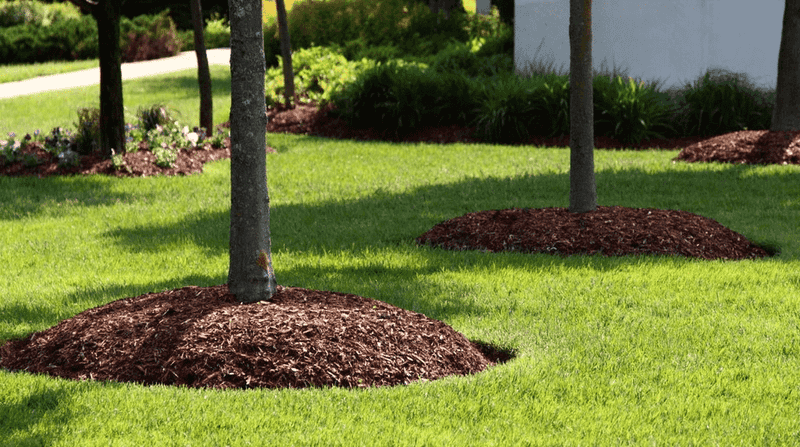
Think breakfast pastry, not mountain. A proper mulch ring looks like a wide, flat doughnut, with an open hole in the middle where the trunk meets the ground.
Keep mulch at least a few inches away from the bark on young trees. For bigger, mature trees, many arborists suggest pulling it back 6 to 12 inches. The goal is to see the trunk flare clearly from your front step.
Now stretch that doughnut outward. Wider is better than deeper. For small trees, aim for a ring at least 3 feet across, and for larger trees, extend it as far toward the drip line as your yard allows.
That extra width does real work. It keeps lawn mowers and string trimmers away from the bark, which prevents a surprising amount of trunk damage in suburban yards.
Choose materials that break down slowly and feed the soil. Shredded bark, arborist wood chips, and composted leaves are all solid picks. Many towns and tree services offer wood chips for free.
Skip dyed mulch if you can, and avoid rubber mulch near trees. Organic materials slowly turn into rich soil, which is exactly the kind of gift your roots appreciate.
The Flared Base Of Your Tree Needs Fresh Air
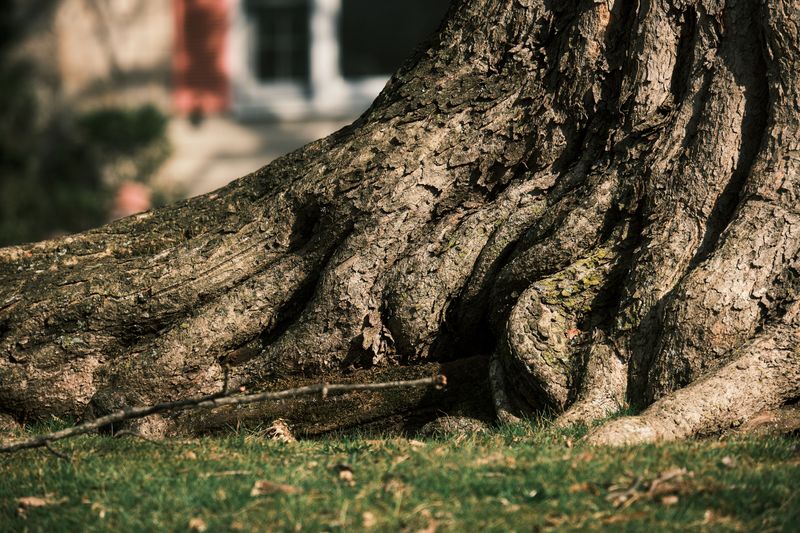
Every tree has a spot that looks a bit like an elephant’s foot. Right where the trunk meets the soil, it widens out into the main roots. Arborists call this the root flare or trunk flare.
That flare is still bark, not root. Bark is designed to handle air and sunshine, while roots are designed to live underground. Mixing up those jobs causes trouble.
When mulch is heaped against the flare, it holds moisture right on the bark for weeks at a time. The bark has tiny pores called lenticels that help with gas exchange, and a soggy blanket blocks them.
Constantly damp bark can soften and decay. It also becomes an easy entry point for fungi and cankers. Rodents like voles enjoy hiding in deep mulch too, and they will happily chew on bark during winter.
Not going to lie, the first time I raked back a volcano, I found a lot of mushy bark underneath. The tree recovered, but it was a wake-up call.
If you can’t see the flare on your tree, that’s a clue. A straight trunk sinking into the ground like a telephone pole often means mulch or soil has buried it.
Roots Gasping Under Soggy Mulch Can Wind Up Strangling The Trunk
Roots need oxygen just as much as leaves need sunlight. They take in air through the soil, using it to grow and to absorb water and nutrients.
Deep mulch, especially on heavy clay or compacted city soil, can keep the ground wet and short on air. Roots in that setting slow down, and the whole tree can lose vigor over time.
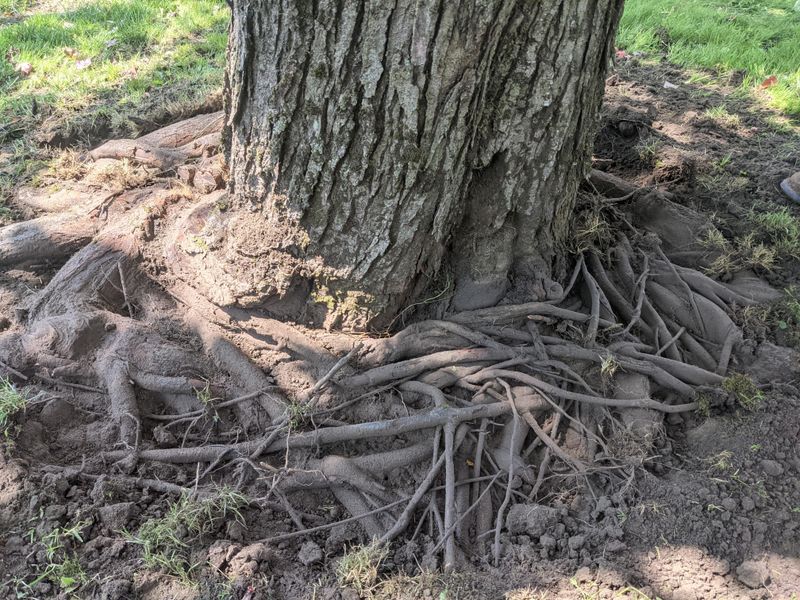
Then something odd happens. Roots start growing upward into the moist mulch itself, chasing water and air. They stay shallow and weak, which makes them easy victims of summer drought.
Some of those wandering roots circle around the trunk instead of heading outward. As both grow thicker, the circling root presses into the trunk. Arborists call these girdling roots.
A girdling root acts a lot like a tight belt. It squeezes the tissue that carries water and food, and the tree slowly starves on one side. Red maples, Norway maples, and lindens are common victims in Northeast landscapes.
Fair warning, this damage can take years to show. Thin canopies, early fall color, or dieback on one side are classic hints. If you spot a root hugging the trunk, call a certified arborist before cutting anything.
Fall Mulching In New York Works Best With A Light Touch
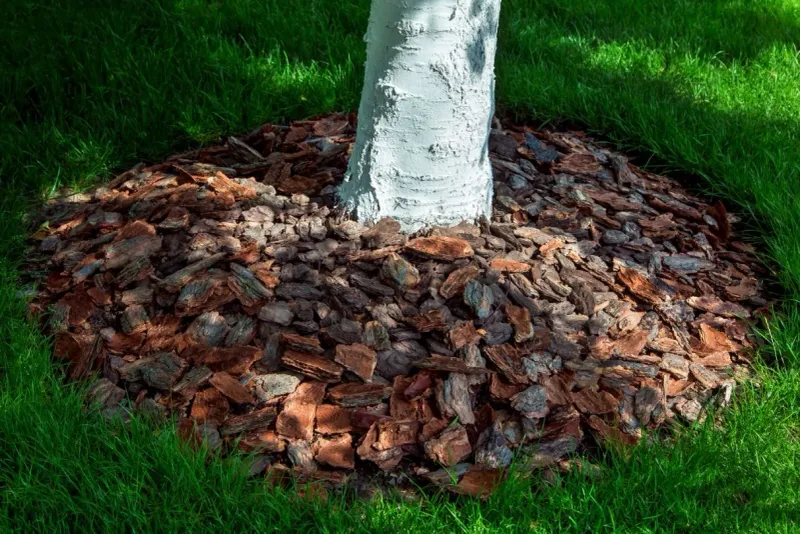
Autumn is a great season to tidy up tree rings across New York. Soil is still workable, the summer heat is gone, and you can actually see what you’re doing.
Mulch helps buffer roots against the freeze and thaw cycles common from Buffalo to Long Island. Those swings can heave soil and expose shallow roots of young or newly planted trees.
Still, winter is not an excuse to pile it on. Keep the same 2 to 4 inches and the same open space around the trunk. Deeper winter piles also give voles a cozy hideout right next to tender bark.
Timing is flexible. Many gardeners add or refresh mulch after the soil cools in late fall, which helps keep ground temperatures steady. In colder upstate areas, that window often arrives earlier than downstate.
I’m a sucker for free materials, so I shred my fallen leaves with the mower. They make a fantastic thin mulch layer, and they break down into rich soil by summer.
One small tip: water newly planted trees well before the ground freezes. A thin mulch layer then holds that moisture in place through dry winter winds.
Pale Leaves And Thin Branches Might Point Back To The Mulch

Trees rarely announce their troubles loudly. Instead, they drop small hints that are easy to shrug off as a bad summer or a dry spell.
Watch for leaves that come in smaller than usual or turn a washed-out yellow. Short twig growth, a thinning crown, and early fall color in August are other common signals.
Bark near the ground can tell a story too. Look for cracks, sunken patches, oozing, or mushrooms growing at the base. Loose or peeling bark under a mulch pile is a strong red flag.
Of course, mulch is not the only possible cause. Drought, construction damage, compacted soil, road salt, and insect pests like emerald ash borer can produce similar symptoms. That’s why it pays to check the base first, then look at the bigger picture.
I get it, nobody wants to play tree detective on a Saturday. But a quick five-minute walk around your trees each season catches a lot.
Snap a photo of each tree once a year from the same spot. Comparing pictures over time makes slow changes in canopy thickness surprisingly obvious, and it gives an arborist useful clues if you ever need one.
Grab A Rake And Rescue That Buried Tree Trunk This Weekend
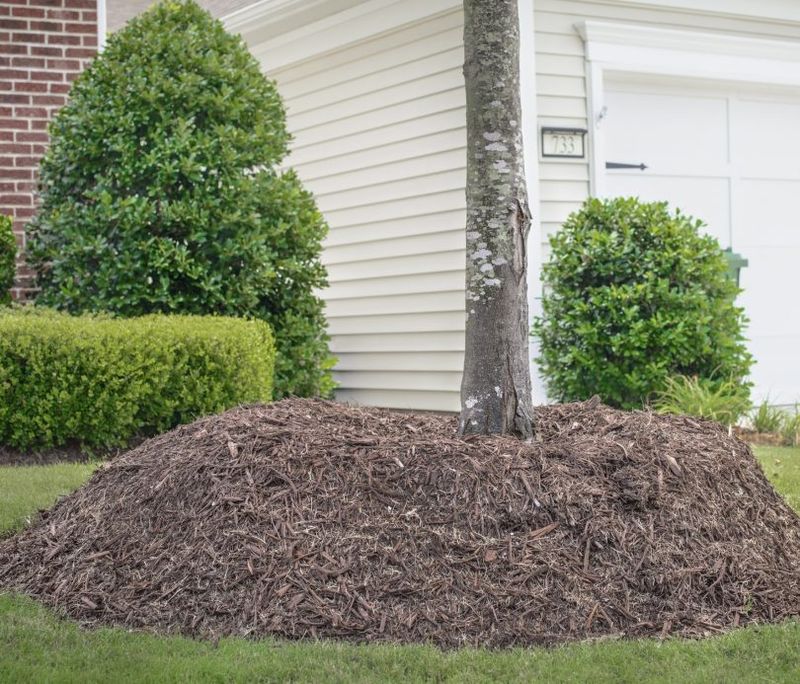
Ready for the satisfying part? Fixing a mulch volcano takes a rake, gloves, and maybe a wheelbarrow. No special tools or expensive products required.
Start by gently pulling mulch away from the trunk. Work slowly with your hands or a small hand rake near the bark, so you don’t scrape it. Keep going until you can see the trunk flare widening into the roots.
Next, spread the extra mulch outward into a wider, flatter ring. Aim for 2 to 3 inches deep with a few inches of open space around the trunk. Leftover mulch can go on flower beds or paths.
Take a good look at the exposed base. Small roots in the old mulch can usually be trimmed carefully, but leave anything thick or circling the trunk to a certified arborist. The International Society of Arboriculture website lists certified pros near you.
Once the ring looks good, add a reminder to check it every spring before you buy new mulch. Little habits like that keep volcanoes from creeping back.
Trust me on this one, the tree will thank you slowly. Expect healthier leaves, stronger growth, and a trunk that finally gets to breathe again.