Why Nursery-Bought Pansies Sometimes Collapse a Week After Planting in North Carolina
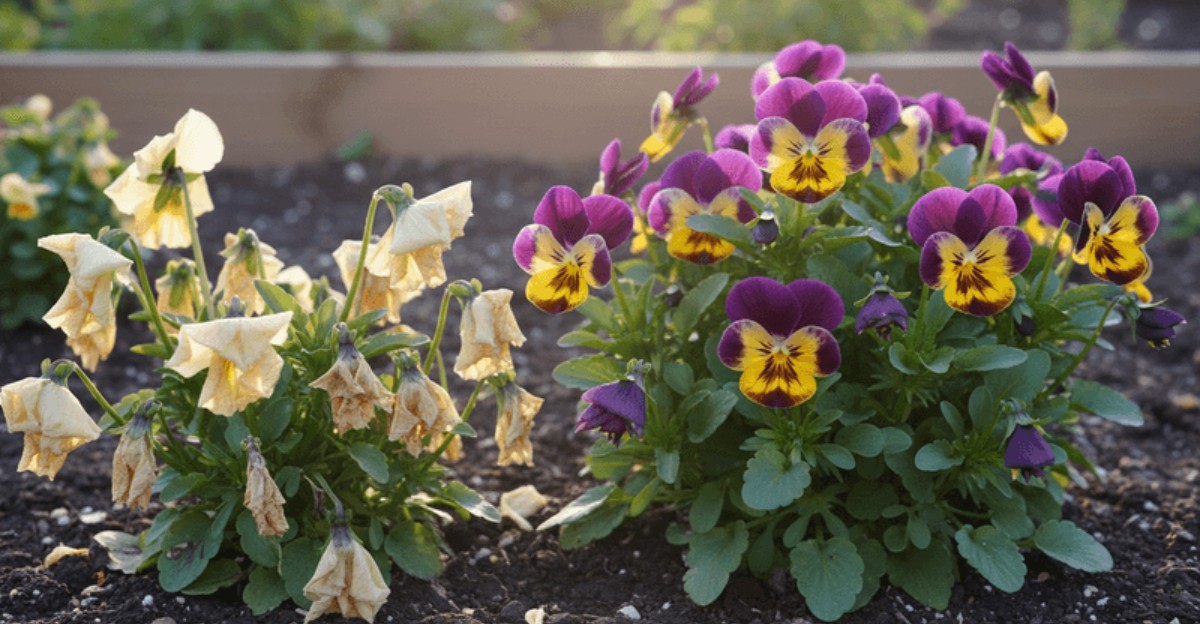
A flower can look flawless at the garden center and still be in trouble before you even reach your car. The problem often hides inside the pot, where roots may circle in a tight, thirsty coil.
Nursery growers raise these cheerful plants in perfect conditions. They get steady water, light, soft potting mix, and careful feeding. Then we drop them into real garden dirt, and the change can hit hard.
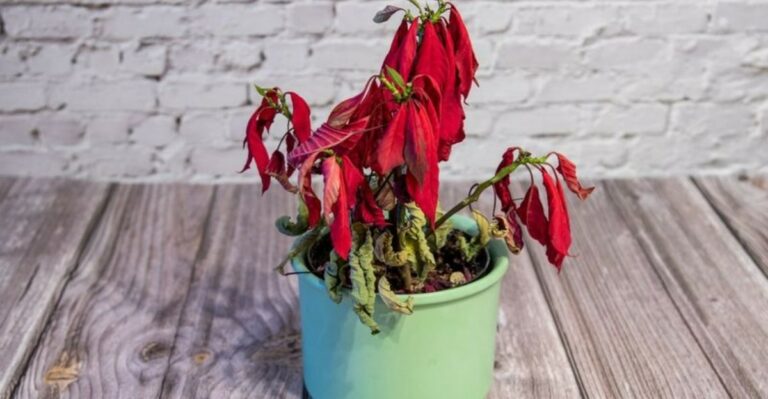
I have watched a whole tray of bright faces slump in my North Carolina beds after one warm week. To be honest, I blamed the weather first. The real story turned out to be underground, and it involved water, soil, and timing.
You do not need fancy tools to stop it. You just need to know where to look. So what is quietly happening below those smiling blooms?
Those Tidy Pansy Root Balls Can Hide a Tangled Mess
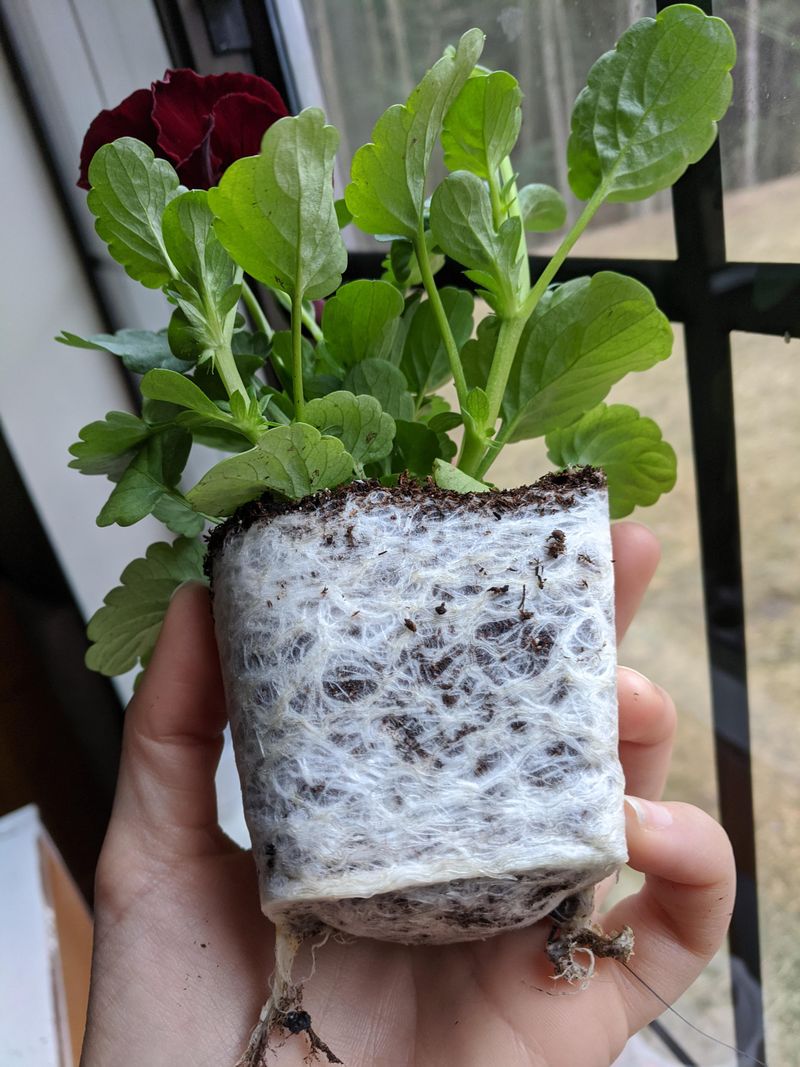
Slide a pansy out of its cell pack and you might find a white web of roots wrapped around and around. Growers call that root-bound, and it is one of the top reasons a new plant flops fast.
Inside a tiny pot, roots hit the wall and turn sideways. After a while, they keep circling instead of reaching outward. Once planted, those roots may stay trapped in their old shape for weeks.
Meanwhile, the leaves and flowers still need plenty of water. A small, crowded root ball cannot pull moisture from the surrounding soil fast enough. On the first sunny, breezy afternoon, the plant wilts hard.
I like to check the roots right at the store. Gently tip a pot and peek at the bottom. A few white tips are fine, but a solid mat is a warning sign.
If you already bought a crowded plant, all is not lost. Use your fingers to tease the outer roots loose before planting. For thick coils, make two or three shallow cuts up the sides with a clean knife.
That small act of tough love nudges fresh roots to grow outward. Within a couple of weeks, the plant can finally start drinking from its new home.
Soilless Potting Mix Dries Out Faster Than Garden Dirt
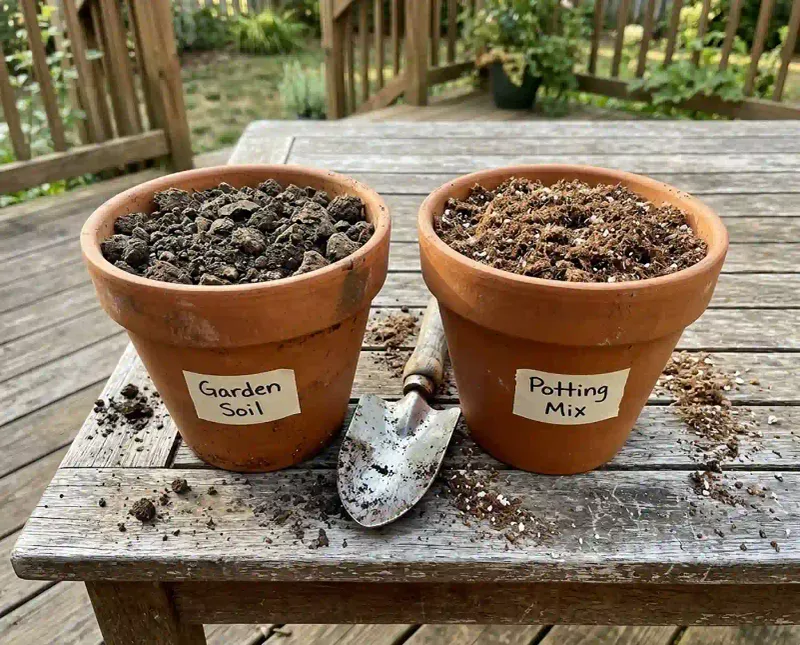
Here is a sneaky detail many gardeners miss. Nursery pansies grow in a light, peat-based mix, and that mix behaves very differently from the soil in your yard.
Peat holds water well inside a pot. In the ground, though, the little plug can dry out much faster than the dirt around it. The surrounding bed may feel damp while the root ball itself is bone dry.
Water also struggles to cross the line between two soil types. Garden soil can wick moisture away from the plug, or rain can run right past it. Either way, the roots sit thirsty.
So how do you beat this? Water the plants thoroughly the moment they go in the ground. Then check them daily for the first week or two by pressing a finger right next to the stem.
Aim for soil that feels like a wrung-out sponge. If it is dry an inch down, give a slow, deep drink at the base of the plant.
Some gardeners blend a bit of the garden soil around the root ball as they backfill. That helps erase the hard edge between the two materials. Roots then move outward more easily, and the plant settles in sooner.
Soggy Pansy Beds Can Rot Roots in Days
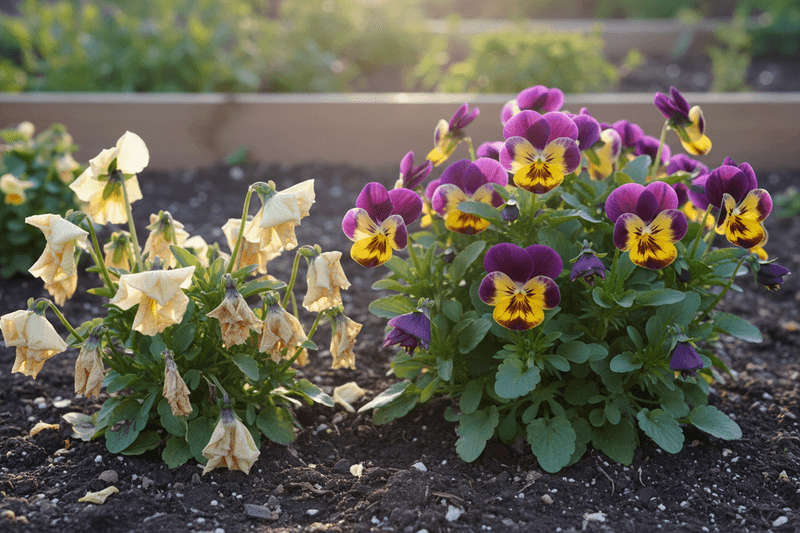
Too much love from the hose can hurt just as badly as too little. Overwatering is a common cause of sudden collapse, and it often looks exactly like drought.
Roots need air as well as water. When soil stays soaked, the tiny air spaces fill up and roots start to suffocate. Damaged roots turn brown and mushy, and the plant can no longer move water to its leaves.
That is the cruel twist. A wilted pansy in wet soil is often thirsty because its roots stopped working. Adding more water only makes things worse.
Heavy clay makes the problem much more likely. Much of the Piedmont region of North Carolina has dense red clay that drains slowly after rain. Low spots in a yard can hold water for days.
Before planting, work a few inches of compost or finely shredded pine bark into the top of the bed. NC State Extension recommends this kind of amendment to improve drainage for bedding plants. Raised beds and containers also help in stubborn clay.
Always feel the soil before you water. If it is still damp, wait. Your pansies will thank you with firm stems and steady blooms instead of a sad, floppy slump.
Planting Pansies in Warm Fall Soil Invites Trouble
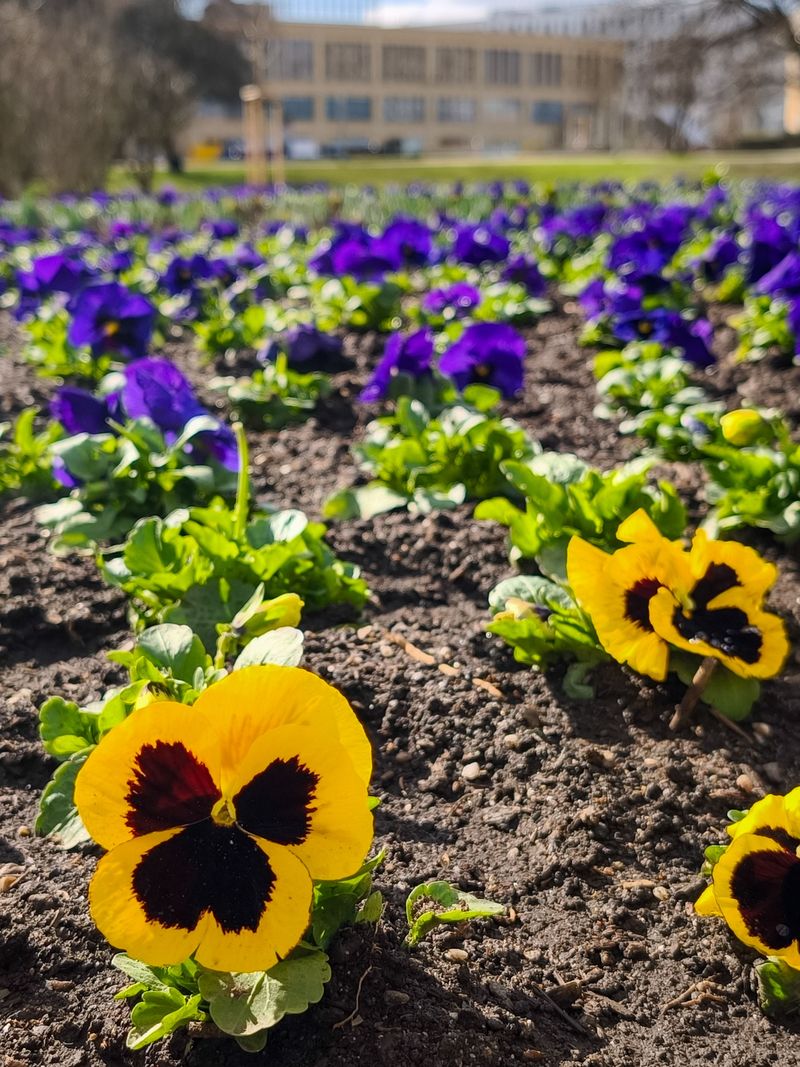
Pansies are cool-season plants, and they quietly hate a hot start. Eager gardeners sometimes plant them in early September, when the soil is still holding summer heat.
Warm soil pushes soft, stretched growth that leans and flops. It also favors root rot organisms that thrive in heat and moisture. A tray planted during a late warm spell may look fine for days, then crash.
Extension experts across the South suggest waiting for cooler weather. Many recommend planting when soil temperatures drop to roughly 45 to 65 degrees. In much of North Carolina, that usually means October, a bit later near the coast and earlier in the mountains.
Spring planting brings its own timing issue. Plants set out late will soon face rising heat, and they often fade once nights stay warm.
A cheap soil thermometer takes the guessing out of the job. Push it about four inches deep in the morning for a quick reading.
If you must plant during a warm stretch, offer a little afternoon shade for the first week. A light layer of mulch also keeps the soil cooler and evens out moisture. Patience here pays off with bushier plants all winter.
How Deep You Set Each Pansy Crown Really Matters
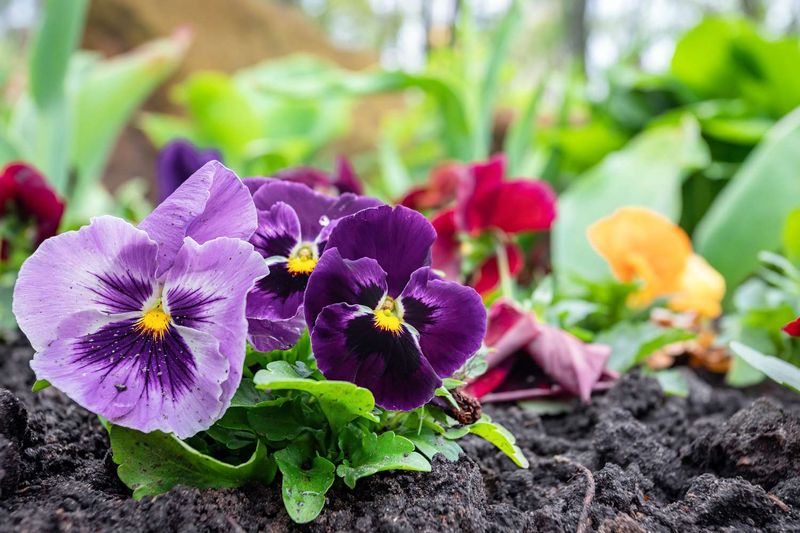
A half inch can make a surprising difference. The crown, where the stems meet the roots, is a touchy spot on a young pansy.
Bury that crown under soil or thick mulch and it stays damp far longer than it should. Moisture against the stems invites crown rot, which can make the whole plant topple at soil level. You may notice dark, soft stems right at the base.
Plant too high, and the top of the root ball sits exposed. That light peat mix then dries out quickly in sun and wind. The roots near the surface get crispy before they can grow.
The fix is simple. Set each plant so the top of its root ball sits level with the surrounding soil. Firm the dirt gently with your hands to remove air pockets, but avoid stomping it down.
Spacing matters too. Most varieties do well about 6 to 10 inches apart, which lets air flow between leaves and helps them dry after rain.
When you mulch, keep it about an inch away from the stems. Personally, I like pine straw for this job. It stays light, lets water through, and does not pack tightly against those tender crowns.
Black Root Rot Loves Pansies More Than Most Gardeners Realize
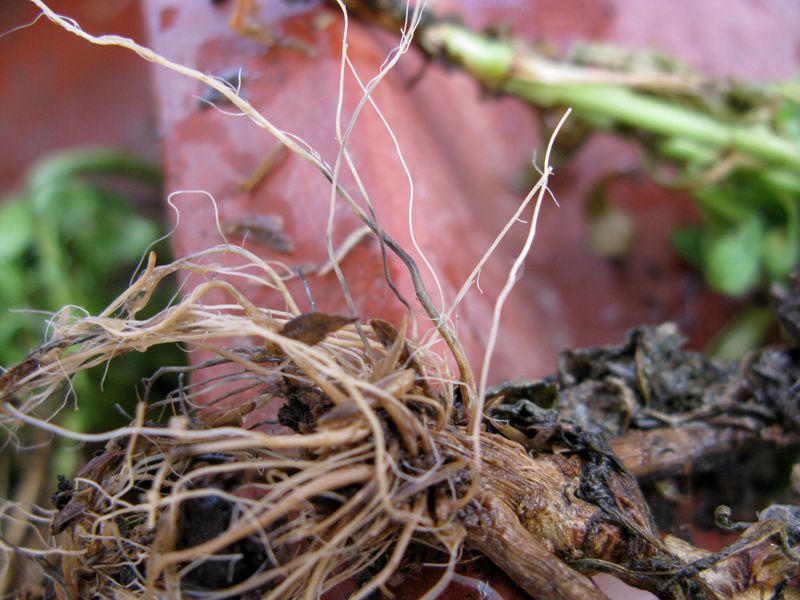
Sometimes the trouble rides home with the plant. Black root rot, caused by a fungus called Thielaviopsis basicola, is a well-known pansy disease in greenhouses and gardens.
Infected roots develop dark, blackened patches. Above ground, the plant may look stunted, yellowish, or slow to grow. Once stress hits, like a hot day after planting, it can wilt badly.
Pythium and Phytophthora root rots are other common culprits. Both thrive in wet, poorly drained soil, which links right back to watering habits. Healthy plants in airy soil resist them much better.
Fun fact: black root rot tends to get worse in soil with higher pH. Pansies prefer slightly acidic soil, around 5.4 to 5.8, so over-liming a bed can backfire.
Shop carefully to lower your risk. Pick compact plants with green leaves and bright white roots. Skip any with yellow lower leaves or dark, thin roots.
If a single plant collapses, pull it up and look at the roots. Remove sick plants along with the soil around them. Avoid planting pansies in that same spot next season, and consider sending a sample to your county Extension office for a firm diagnosis.
A Smart First Week Plan Keeps Your Pansy Faces Smiling
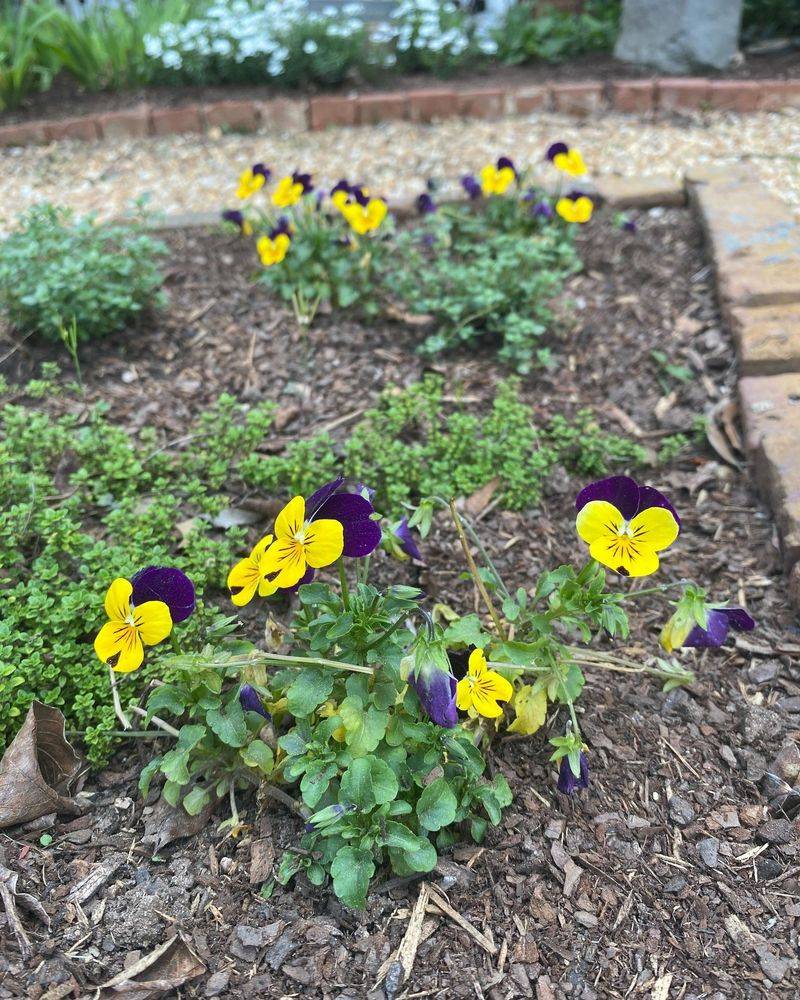
Good news travels slowly in the garden, but it does arrive. Most pansy collapses come from fixable issues, not bad luck or a black thumb.
Start at the store. Choose short, stocky plants with plenty of buds and white roots. Fewer open flowers often means a plant will settle in faster.
Prep the bed before planting day. Mix in compost, check drainage after a rain, and get a soil test through your county Extension office if you can. In North Carolina, those tests are often free for part of the year.
On planting day, loosen circling roots and set each crown at soil level. Water deeply right away. Add a thin layer of pine straw or shredded bark, keeping it off the stems.
For the next seven to ten days, check moisture every morning. Water only when the top inch feels dry. A gentle feeding with a fertilizer made for pansies can start once new growth appears.
If one plant slumps, investigate fast. Feel the soil, peek at the roots, and adjust. With a steady routine, those cheerful faces can bloom through fall, winter warm spells, and well into spring.