The Most Underrated Native North Carolina Vine That Covers Fences Faster Than Anything Else
Fence coverage is one of those garden goals that always seems to take longer than expected, especially when the plants chosen for the job turn out to be slower, fussier, or less suited to local conditions than advertised.
North Carolina has a native vine that solves this problem remarkably well, and it almost never comes up in conversations about fast-growing fence coverage despite being genuinely exceptional at it.
It handles the heat and humidity of a Southern summer without any visible stress, establishes quickly in the clay and sandy soils common across the state, and fills horizontal and vertical space with real speed once it settles in.
Beyond how fast it grows, it brings seasonal interest that non-native alternatives simply cannot match in a garden built around this region.
1. Evergreen Coverage That Never Quits
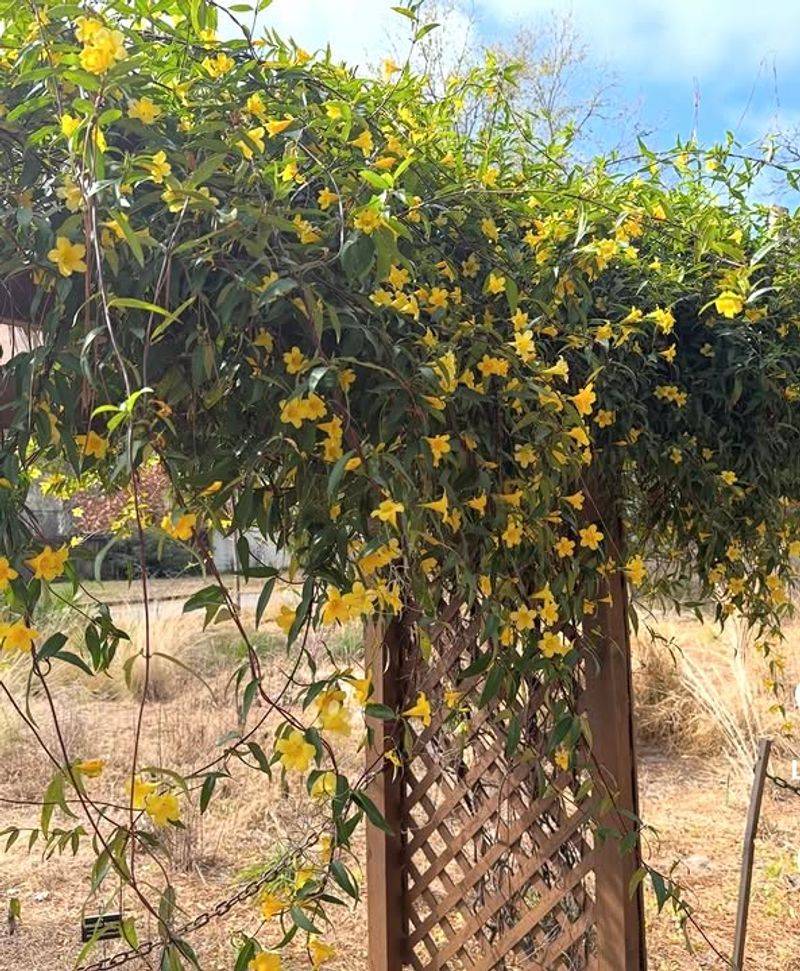
Most vines go bare the moment temperatures drop, leaving your fence looking stripped and sad all winter long. Carolina Jessamine does the opposite.
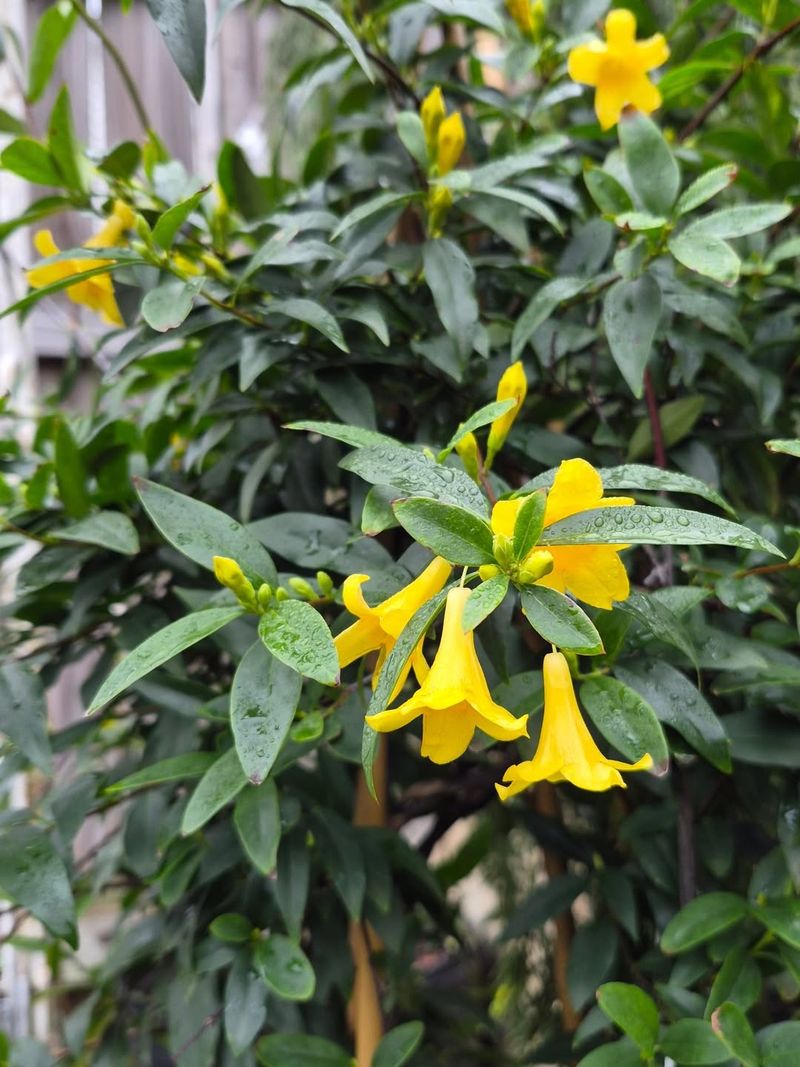
Its glossy, dark green leaves stay firmly attached through the coldest months, giving your yard a full, lush backdrop even when everything else has gone brown and quiet.
That kind of year-round coverage is genuinely rare in a native vine. Homeowners in North Carolina especially appreciate it because winters here can linger longer than expected, and having a green fence line makes a huge difference in how a yard feels.
Privacy does not disappear just because the calendar says December.
The foliage is dense enough to block sightlines from neighbors or the street, making it a natural privacy screen without the cost or upkeep of a fence upgrade. New growth fills in gaps quickly, so thin spots rarely stay thin for long.
Once this vine gets settled into its space, it creates a wall of green that looks intentional, polished, and completely at home in a natural landscape. Minimal pruning keeps everything tidy without a big time commitment.
2. A Growth Rate That Will Genuinely Surprise You
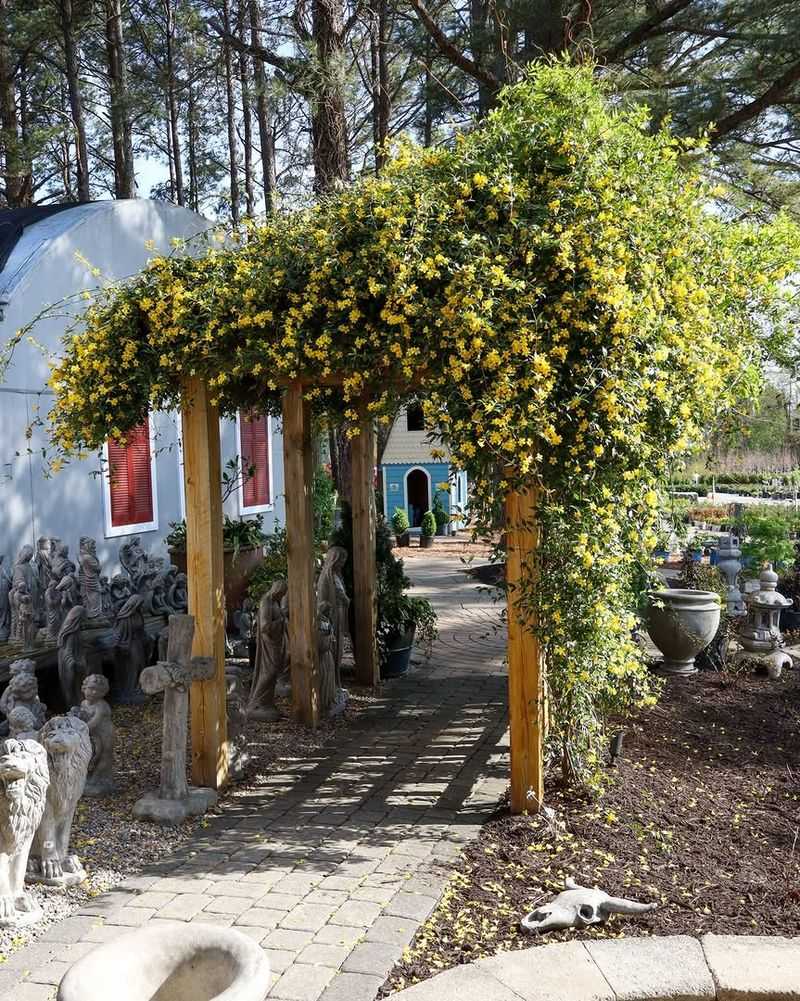
Six to ten feet in a single growing season sounds like an exaggeration until you actually plant one.
Carolina Jessamine is a legitimate speed grower, and under the right conditions, it moves fast enough that you will notice new progress almost every week during spring and summer.
That kind of energy makes it one of the most rewarding vines you can add to a yard.
The flexible, twining shoots are easy to guide in whatever direction you want. Training them along a fence, up a trellis, or across an arbor takes very little effort because the vine naturally reaches toward whatever support it finds nearby.
A few gentle redirects in the first season and the plant takes care of the rest on its own.
Full sun gives the fastest results, though Carolina Jessamine also grows well in partial shade, which is a big bonus for yards with mixed light.
Well-drained soil and regular watering during the first year help it establish strong roots, and once those roots are settled, growth really accelerates.
Gardeners who want fast results without resorting to aggressive non-native species will find this vine hits a sweet spot between speed and good garden behavior. It covers ground quickly without becoming a nightmare to manage.
Your North Carolina Garden Changes Every Week. Your Plan Should Too.
Gardening in North Carolina changes quickly throughout the season. Every Friday you’ll receive a simple weekly plan showing exactly what to plant, prune, fertilize, harvest, and protect so you never miss the right timing.
3. Those Fragrant Yellow Blooms Are Hard To Forget
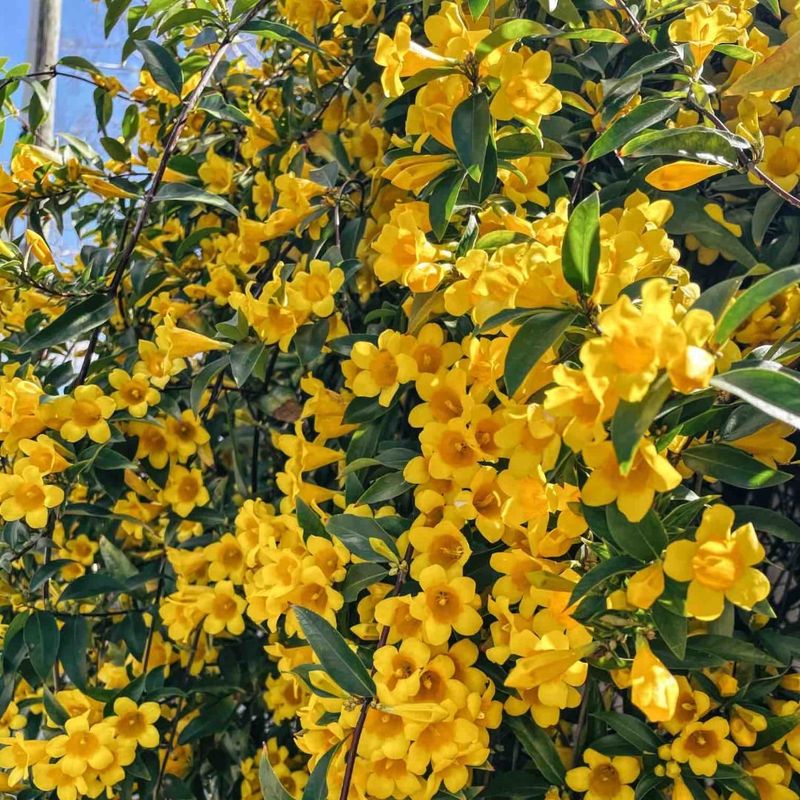
Few things signal the end of winter quite like the sweet, honey-like scent of Carolina Jessamine drifting across a backyard. The blooms arrive in late winter to early spring, often before most other plants have even thought about waking up.
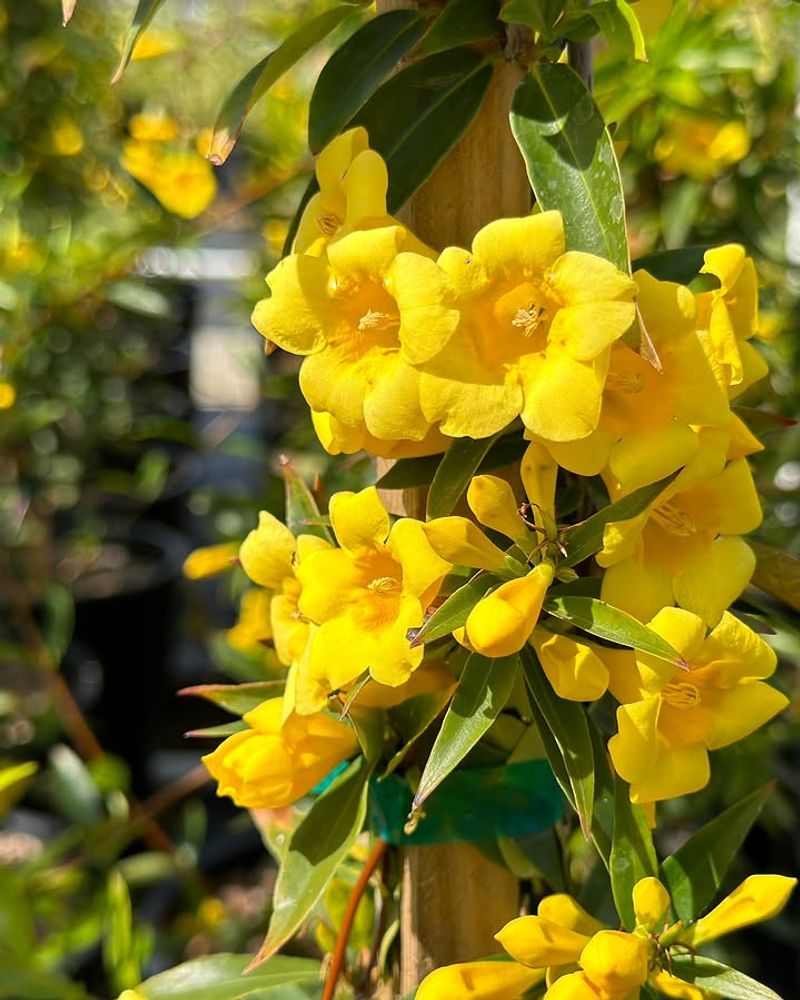
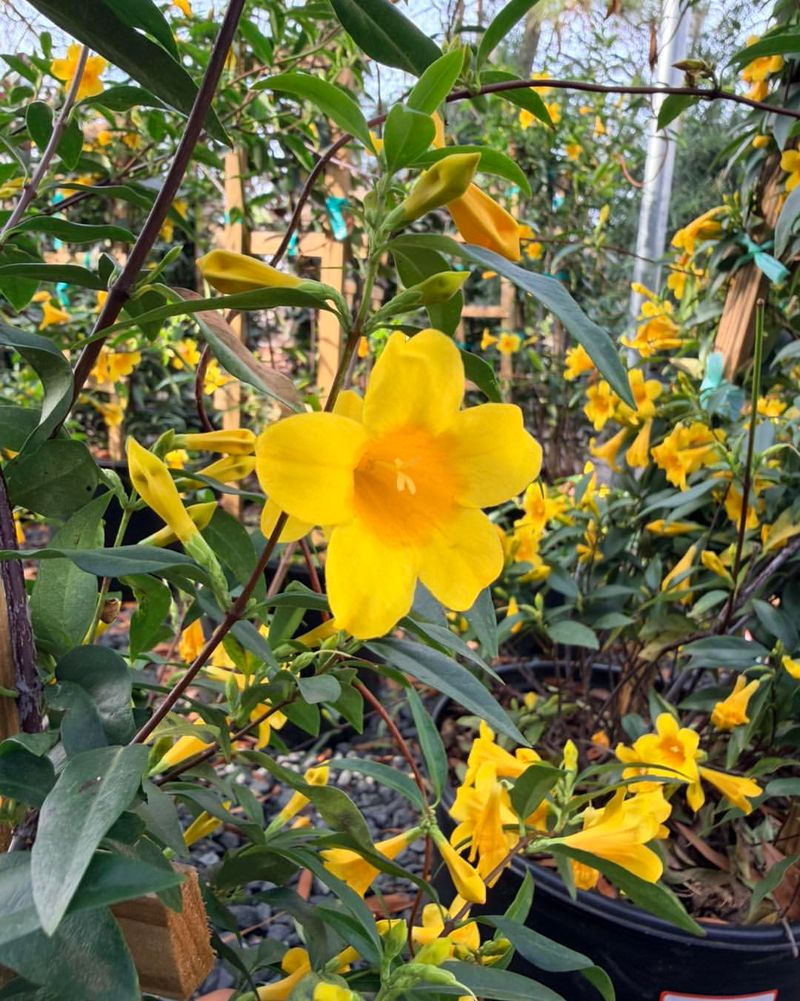
Clusters of trumpet-shaped yellow flowers cover the vine so thickly that the green leaves almost disappear beneath them.
The fragrance is genuinely special. It carries on a breeze and can be detected from several feet away, turning a simple walk through the yard into something that actually feels like spring has arrived.
Gardeners who plant it near patios, porches, or walkways get the full benefit of that scent every time they step outside during bloom season.
Beyond the smell, the visual impact is striking. A fence covered in bright golden yellow against a clear blue sky is the kind of sight that makes people stop and ask what you planted.
Carolina Jessamine blooms at a time when color is scarce in most North Carolina gardens, so it genuinely stands out in the landscape.
The flowers last several weeks, giving you a long window to enjoy them before the vine settles back into its role as a dependable green backdrop. It is a bloom season worth looking forward to every single year.
4. Deer Rarely Touch It And That Is A Big Deal
Anyone who gardens in North Carolina knows the frustration of planting something beautiful only to walk outside and find it nibbled down to nothing.
Deer pressure is real across most of the state, and it changes the way many homeowners approach planting decisions. Carolina Jessamine offers a welcome break from that worry.
Deer generally avoid this vine, which means the dense foliage you work hard to establish actually stays intact through the seasons. That is not a small thing when you are trying to maintain a privacy screen or a decorative fence covering.
Other vines might get browsed back repeatedly, but Carolina Jessamine tends to hold its ground even in areas with heavy deer populations.
The reason deer sidestep it comes down to the plant’s natural compounds, which make it unappealing as a food source for most wildlife. Interestingly, while birds and pollinators interact with the flowers without issue, larger animals like deer simply pass it by.
For North Carolina gardeners dealing with browsing pressure near wooded lots or rural properties, this quality alone makes Carolina Jessamine worth serious consideration.
Pairing it along a fence line means you get fast coverage, year-round greenery, and a plant that protects itself naturally without any sprays or barriers needed.
That kind of low-stress gardening is exactly what busy homeowners are looking for.
5. Low Maintenance Once It Gets Going
Some plants demand constant attention, and honestly, most gardeners do not have time for that. Carolina Jessamine is refreshingly different.
Once it gets through its first year and establishes a solid root system, it largely takes care of itself through the seasons with minimal intervention from you.
The main task on the calendar is a light pruning session right after the spring blooms fade. Trimming back the longest shoots at that point encourages the vine to branch out more densely rather than just stretching in one direction.
That simple step is what keeps the coverage looking full and intentional rather than scraggly and overgrown. The whole job usually takes less than an hour even on a large fence.
Watering needs drop significantly after the first season. Established plants handle dry spells with surprising resilience, especially in the well-drained soils common across much of North Carolina.
Fertilizing is optional since the vine performs well without it, though a light application of balanced fertilizer in early spring gives it a nice boost heading into the growing season.
Compared to high-maintenance garden plants that need weekly care, Carolina Jessamine is a genuine set-it-and-enjoy-it vine.
Busy homeowners, beginner gardeners, and anyone who wants beautiful results without a heavy workload will find this plant fits their lifestyle almost perfectly.
6. It Handles Almost Any Soil You Throw At It
North Carolina soils are famously inconsistent. Drive thirty minutes in any direction and you might go from heavy red clay to sandy coastal plain to rocky mountain soil.
Most plants have strong preferences about what they grow in, which makes finding something that adapts across all those conditions genuinely valuable.
Carolina Jessamine handles sandy soils, clay-heavy soils, and everything in between without much complaint. The one non-negotiable is drainage.
Roots sitting in standing water for extended periods will struggle, so if your yard has low spots that stay wet after rain, raised beds or amended soil can make a real difference. In well-drained ground, though, this vine is remarkably flexible about what it grows in.
A slightly acidic to neutral soil pH, roughly between 5.5 and 7.0, suits it best, which conveniently matches the natural pH range found in most North Carolina garden soils. You typically do not need to do much amending before planting.
Working a little compost into the planting hole gives roots a healthy start, but it is not strictly necessary.
That adaptability means Carolina Jessamine works equally well in a Piedmont backyard with red clay, a coastal garden with sandy ground, or a mountain property with thin, rocky soil.
Fewer plants offer that kind of geographic flexibility while still delivering fast, beautiful results.
7. Pollinators Show Up Early And In Force
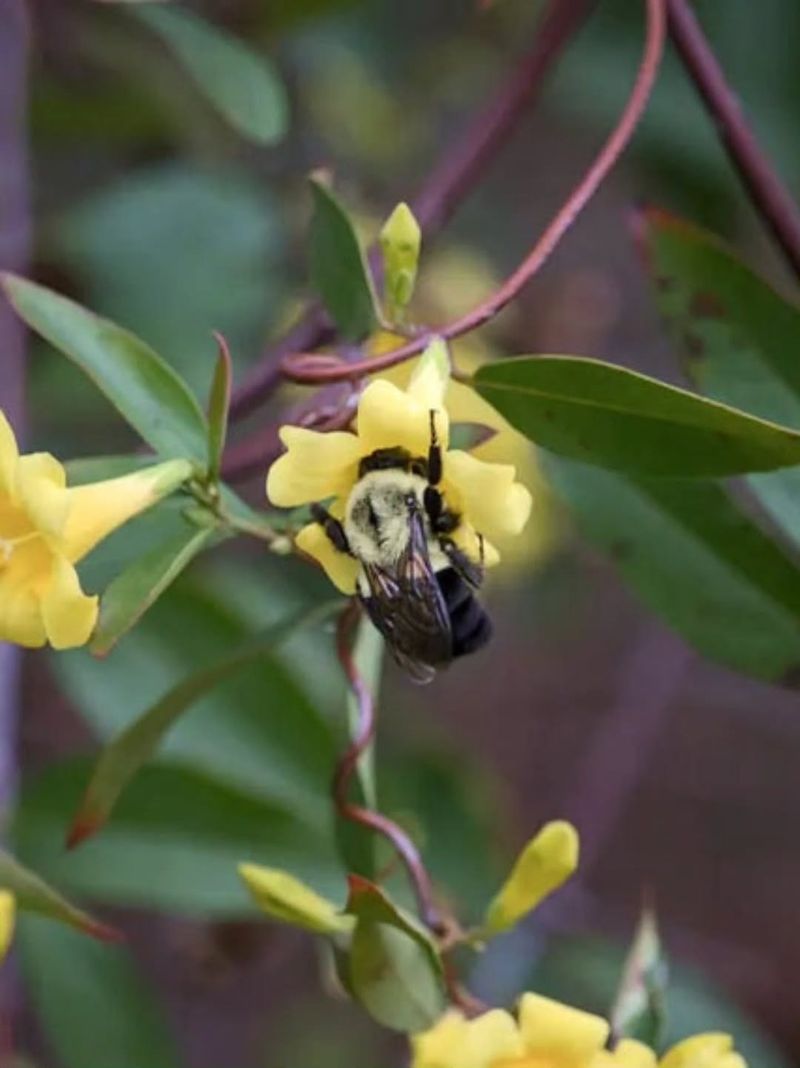
Early spring can feel like a quiet time in the garden from a wildlife perspective. Most flowering plants have not woken up yet, which means pollinators coming out of winter have very few food sources available to them.
Carolina Jessamine blooms right into that gap, offering nectar at exactly the moment when bees, butterflies, and hummingbirds need it most.
Ruby-throated hummingbirds, in particular, are drawn to the tubular yellow flowers in a way that is genuinely exciting to watch from a porch or window.
They hover and feed with focused energy, and seeing them return to the same vine day after day through bloom season is one of those simple garden pleasures that never gets old.
Honeybees and native bees work the flowers just as enthusiastically. Planting Carolina Jessamine is a straightforward way to make your yard more ecologically useful without any complicated planning.
The vine contributes to the local food web just by doing what it naturally does, blooming early and reliably.
Layering it with other native plants that bloom at different times extends that pollinator support through more of the year. Gardeners who care about supporting local wildlife find that Carolina Jessamine pulls more than its weight in that department.
It is functional, beautiful, and genuinely good for the environment all at the same time.
8. Smart Companion Planting Makes It Even Better
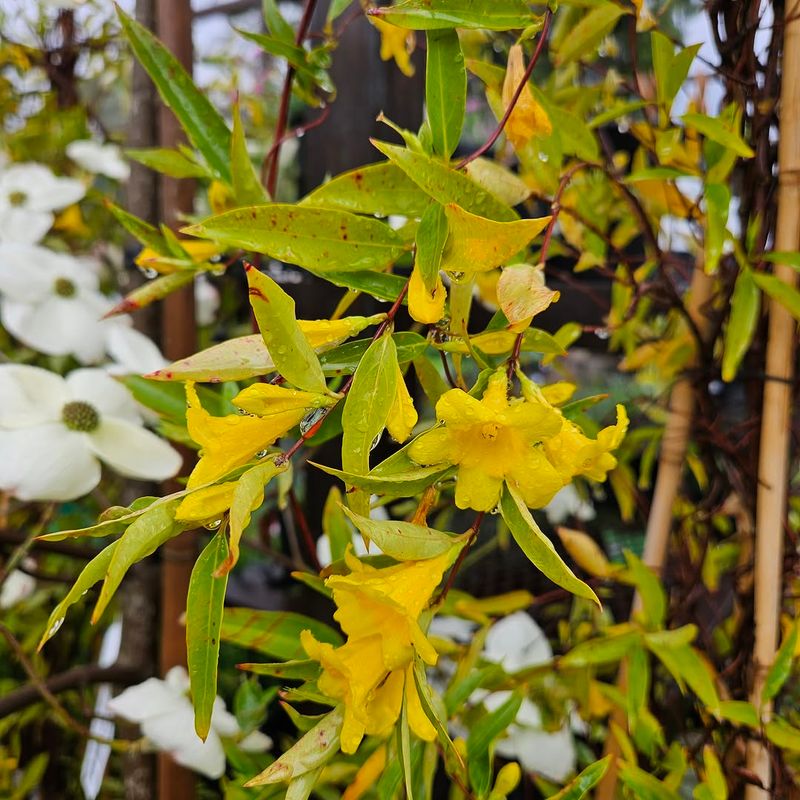
A vine covering a fence is already a great start, but pairing it with the right companion plants turns a simple planting into something that looks genuinely designed and intentional.
Carolina Jessamine plays well with other native plants, and a few smart combinations can dramatically improve how your garden looks across all four seasons.
Oakleaf Hydrangea is a natural partner. Its large, textured leaves and white summer blooms create a beautiful contrast against the fine-textured Jessamine foliage, and both plants share similar moisture and light preferences.
Wild Ginger works beautifully as a low groundcover beneath the vine, filling in the bare soil with lush, heart-shaped leaves that stay green through much of the year. Foamflower adds delicate white blooms in spring, timed nicely to follow the Jessamine’s yellow flowers.
Layered plantings like these do more than just look attractive. They create habitat structure that supports a wider range of wildlife, improve soil health through diverse root systems, and reduce weeding by covering ground more completely.
The biodiversity that comes from mixing native species also makes the whole planting more resilient over time. When one plant has a slow season, another picks up the visual interest.
Building a garden around Carolina Jessamine as the backbone gives you a strong starting framework that you can keep adding to as your confidence and plant knowledge grow.
9. A True North Carolina Native With Deep Roots
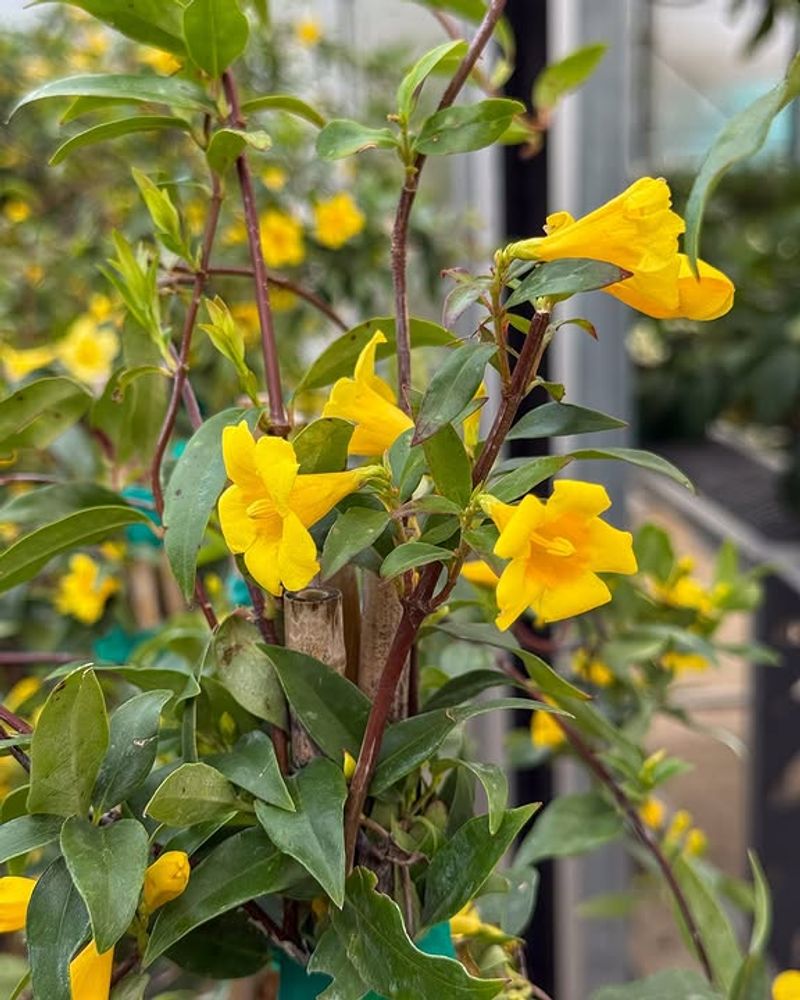
There is something satisfying about planting a species that actually belongs where you live.
Carolina Jessamine, known botanically as Gelsemium sempervirens, is native to the entire Southeast and has been part of North Carolina’s natural landscape for thousands of years.
It grows naturally along woodland edges, roadsides, and forest margins across the state, which tells you a lot about how well it fits into local conditions.
Being a true native means it evolved alongside the local insects, birds, and soil organisms that make up North Carolina’s ecosystem. It is not fighting the climate or struggling to adapt because it already belongs here.
That ecological fit translates directly into better performance in home gardens compared to non-native alternatives that need extra coaxing to thrive.
Choosing native plants is also increasingly recognized as one of the most impactful things a homeowner can do for local biodiversity.
Every Carolina Jessamine planted in a yard is one more piece of habitat restored, one more food source added for early pollinators, and one more step toward a garden that functions as part of the broader natural environment rather than just a decorative feature.
For North Carolina gardeners who want fast coverage, low maintenance, year-round beauty, and a genuine ecological benefit, this vine checks every single box. It is the kind of plant that rewards you more the longer you grow it.