The Toxic Roadside Plant Illinois Residents Mistake For Wild Carrot
A single plant along an Illinois ditch can stand taller than a basketball player and still look as sweet as a bridal bouquet. That lacy white crown hides one of the most toxic plants in North America.
I used to admire those frothy flowers from my car window every June. Then I learned the same plant is linked to the ancient Greek philosopher Socrates. That story stuck with me for weeks.
You might notice it near bike trails, fence lines, and the edges of new subdivisions. It thrives where soil has been scraped, mowed, or disturbed.
University of Illinois Extension experts say it has spread steadily across much of the Midwest over the past few decades.
The tricky part is how ordinary it looks. Kids pick it, dogs brush past it, and gardeners pull it bare-handed. How do you tell the friendly lookalike from the one that deserves a wide berth?
That Tall White Roadside Flower Has a Notorious History
Ancient Athens gave this plant its grim fame. Historians widely believe poison hemlock, Conium maculatum, was used in the brew given to Socrates in 399 BC.
Fast forward a couple thousand years, and the same species is standing in ditches across the Prairie State. It came to North America from Europe, likely as a garden ornamental.
Now it is classified as an invasive weed, and University of Illinois Extension has warned residents about it for years.
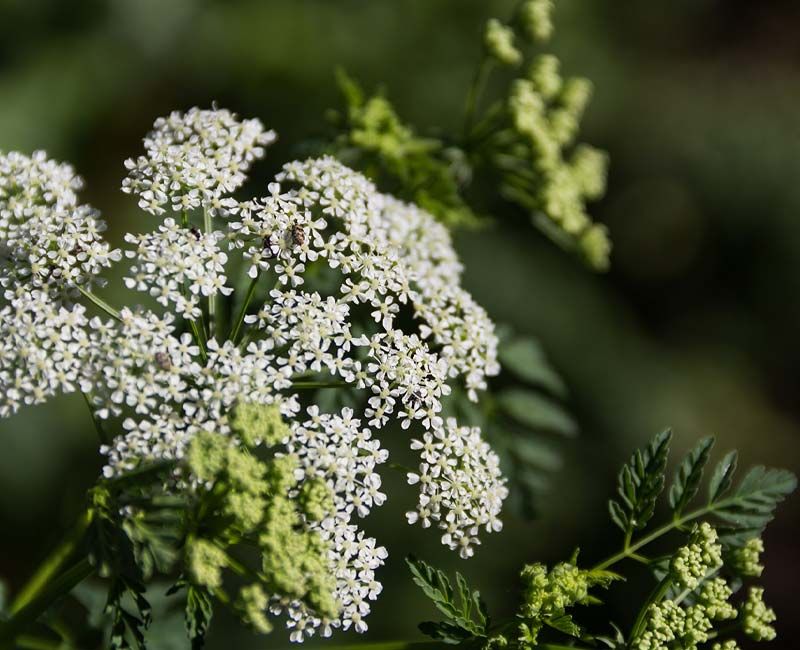
The plant belongs to the carrot family, alongside parsley, dill, and Queen Anne’s lace. That family tie explains the lookalike problem.
Its flowers form flat, umbrella-shaped clusters called umbels, just like its harmless cousins. Poison hemlock is a biennial. In year one, it forms a low rosette of lacy leaves close to the ground.
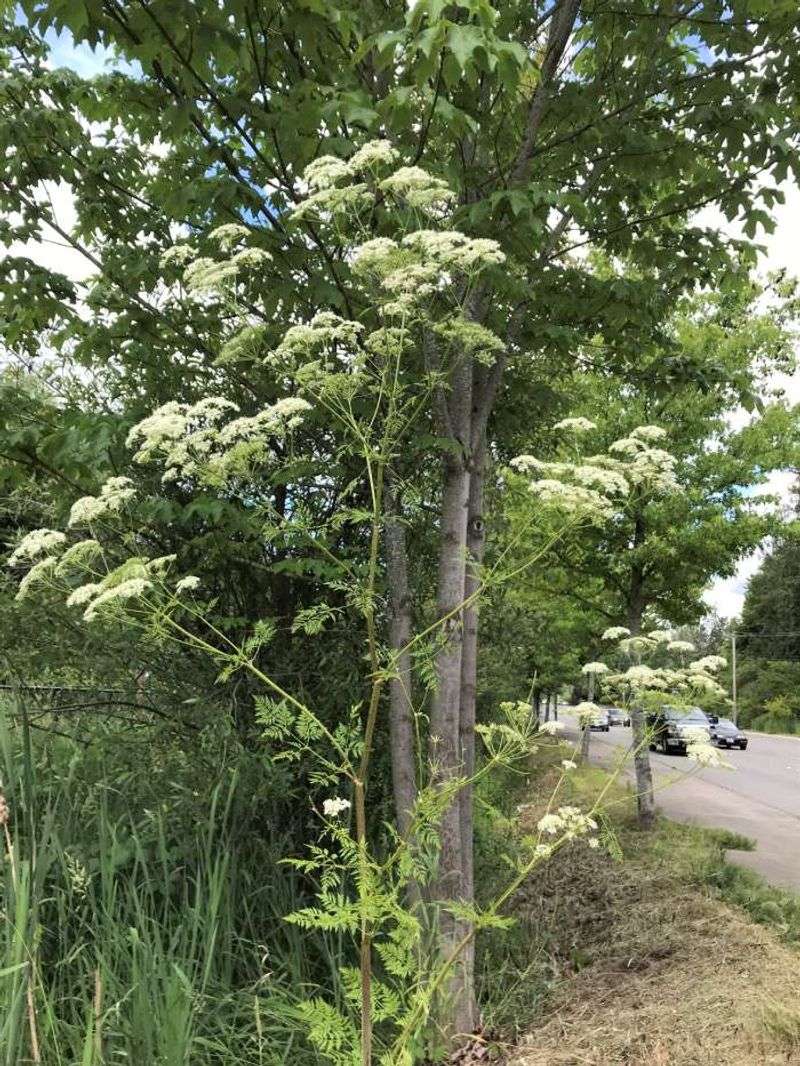
In year two, it shoots up a tall flowering stalk, often 6 to 8 feet high, and sometimes taller. That growth spurt is why people suddenly notice it in late May and June. A plant that seemed like a fern patch in April can tower over a fence by early summer.
Knowing that two-year cycle is the first step toward spotting it before it spreads seed everywhere.
Purple Blotches On A Smooth Stem Give Poison Hemlock Away
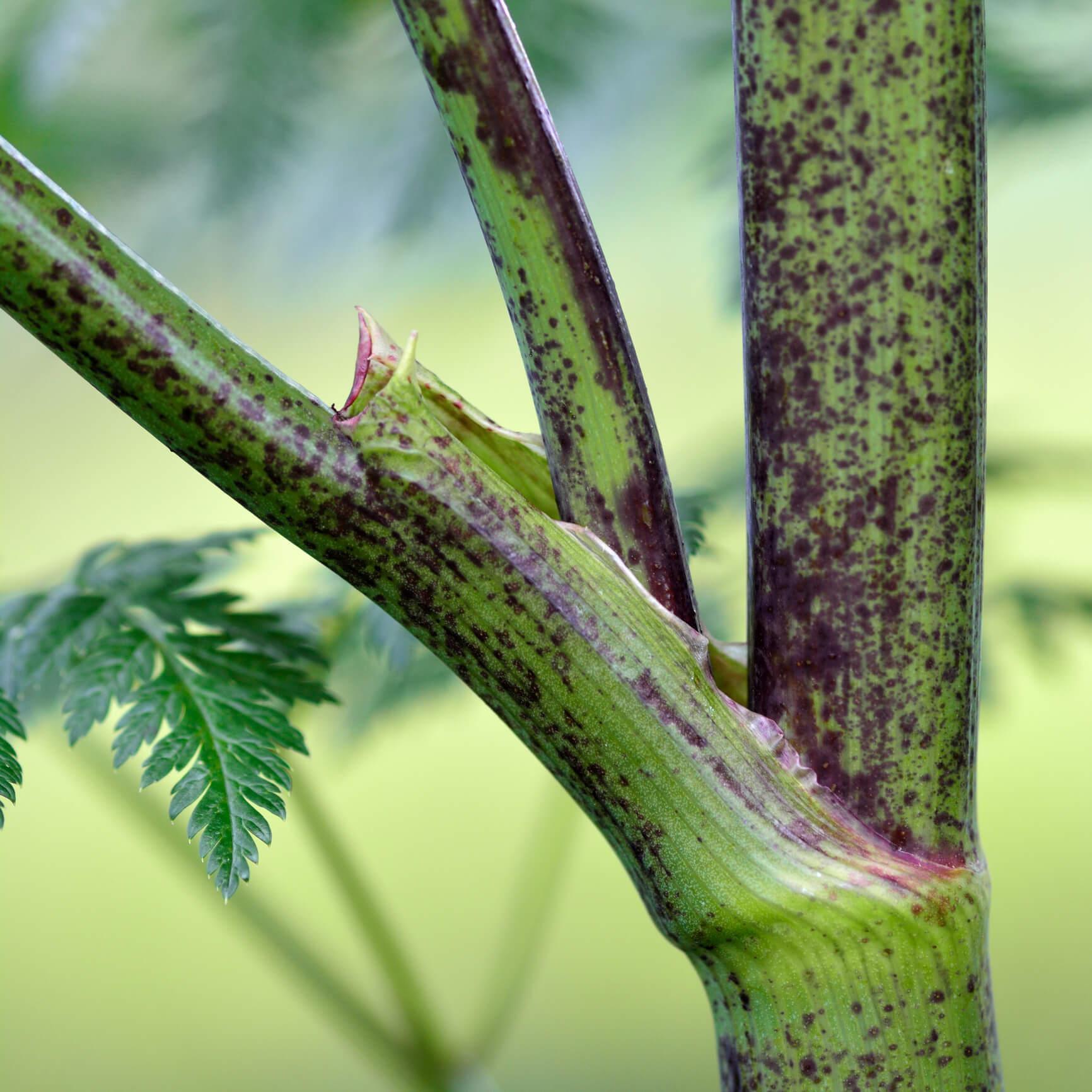
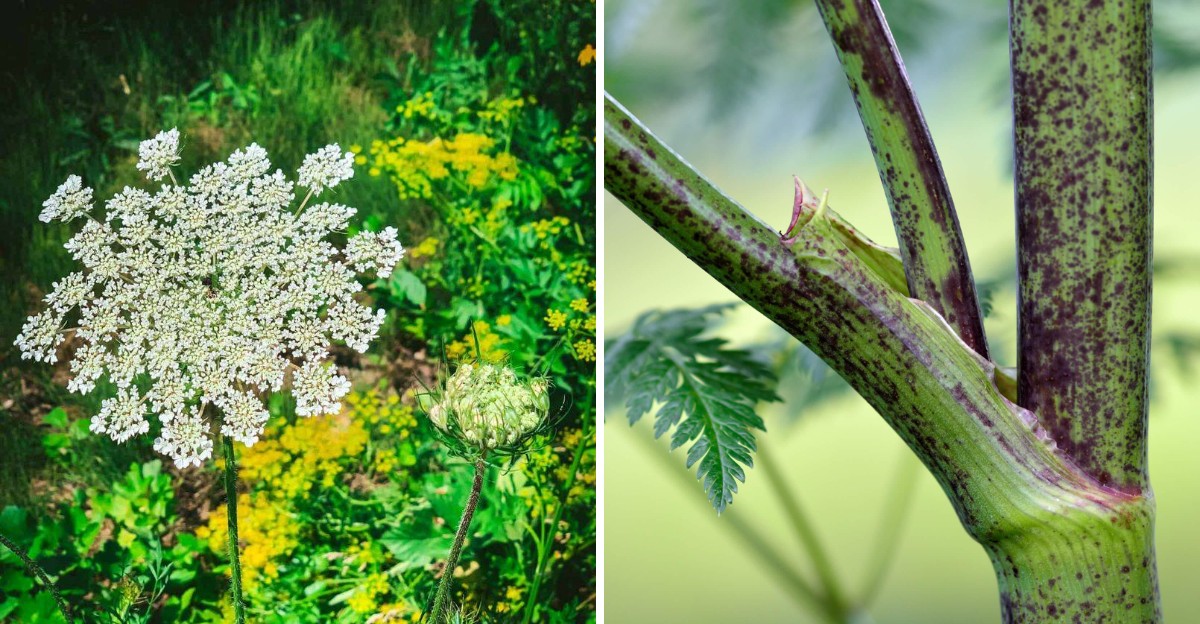
Grab a mental magnifying glass and look at the stem first. Poison hemlock has a smooth, hairless stem splashed with purple or reddish blotches, especially near the base.
Queen Anne’s lace, or wild carrot, tells a different story. Its stem is solid green and covered in fine, bristly hairs. Run your eyes along it, not your fingers, and you will usually see that fuzzy texture.
The stem of poison hemlock is also hollow between the joints and ridged lengthwise. On mature plants, it can be as thick as a broom handle.
That chunky, spotted stalk is hard to miss once you know it. Size is another clue. Wild carrot usually tops out around 2 to 4 feet.
Poison hemlock regularly reaches 6 feet or more, so a giant white umbel above your head along an Illinois roadside is a strong red flag.
Gardeners across Illinois often use a simple memory trick. “Queen Anne has hairy legs” reminds you that the safer plant is the fuzzy one.
Still, the purple spots can be faint on young plants. If you are unsure, treat the plant as hazardous and keep your hands off until you can confirm what it is, and consider asking your Illinois county extension office for help.
Every Part Of The Hemlock Plant Carries Toxins
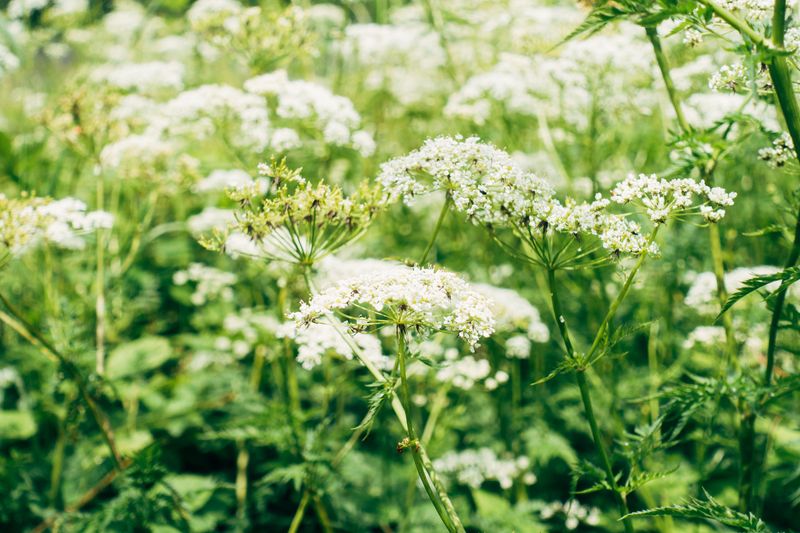
Leaves, stems, flowers, seeds, and roots all contain toxic alkaloids, with coniine being the best known. No part of poison hemlock is safe to eat, and even small amounts can cause serious harm.
Swallowing the plant is the biggest danger. The toxins affect the nervous system and can cause trembling, a slowed heartbeat, muscle weakness, and trouble breathing.
Livestock, pets, and people are all at risk. So what about touching it? Most experts say skin contact is far less dangerous than eating it.
Some people do report rashes or irritation, though, and the toxins can be absorbed through cuts or soaked up if sap gets into your eyes or mouth.
That is why the safest habit is simple. Do not handle it bare-handed, and wash up right after any accidental contact.
Mix-ups cause most poisonings. The roots can resemble wild parsnips, and the leaves look like parsley. Foragers have made tragic mistakes.
If someone swallows any part of the plant, call 911 or Poison Control at 1-800-222-1222 right away. Do not wait for symptoms, since they can appear within 30 minutes to a few hours.
Gloves And Long Sleeves Come First Before You Pull Hemlock
My first instinct with any weed used to be grabbing it barehanded. With poison hemlock, I have learned to suit up like I am handling something sharp.
Start with waterproof gloves, ideally nitrile or rubber. Add a long-sleeved shirt, long pants, and closed-toe shoes. Safety glasses help too, since snapping a hollow stem can flick sap toward your face.
Many extension specialists also suggest a dust mask when working with large amounts of plant material. It keeps bits of dried plant and pollen away from your nose and mouth.
Avoid rubbing your eyes or snacking while you work. Afterward, wash your hands and any exposed skin with soap and water.
Clothes need attention as well. Toss them straight into the washer, and rinse gloves and tools before storing them.
Keep children and pets away from the work area. Dogs love to chew sticks, and a fresh hemlock stalk is not something you want in their mouths.
A few minutes of prep makes the whole job far less stressful. Once you are covered, you can focus on removing the plant instead of worrying about every brush against it.
Digging Out The Hemlock Taproot Works Best In Spring
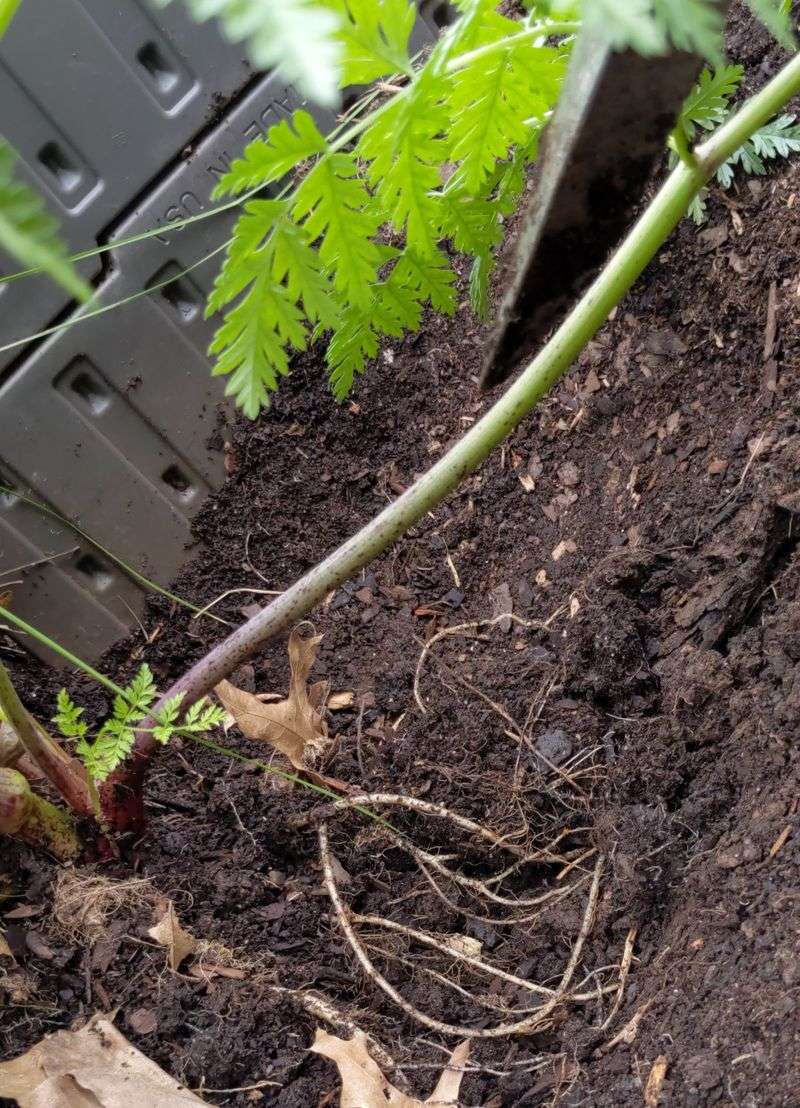
Timing is your secret weapon here. Poison hemlock is easiest to remove while it is still a low rosette in early spring or fall, long before it flowers.
Underneath that leafy cluster sits a white taproot that looks a lot like a skinny carrot. Use a shovel or a sturdy weeding tool to loosen the soil and lift the whole root. Leftover pieces can sprout again.
Moist soil makes the job much easier. Try digging a day after a good rain, when roots slide out with less snapping.
For larger patches, mowing can help, but only before flowers turn into seed. Mowing too late can scatter seeds and spread the problem.
Herbicides are an option for big infestations. Extension sources note that broadleaf products work best on actively growing rosettes in spring or fall.
Read and follow every label carefully, and keep sprays away from desirable plants and waterways.
Patience matters with this weed. Seeds can survive in the soil for several years, so expect new seedlings to pop up.
Check the same spot each spring and fall. Pulling a few small rosettes is far easier than tackling a head-high stand next June.
Bagging Hemlock Beats Burning Or Composting It
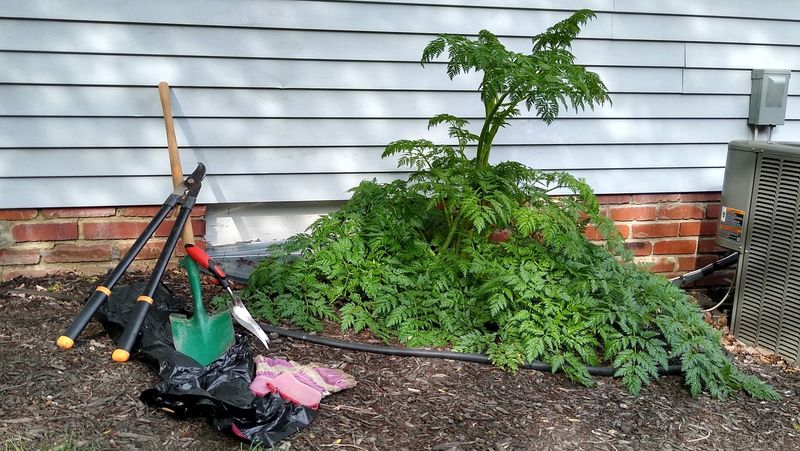
Fire might seem like a quick fix for a toxic weed pile. Please skip it. Burning poison hemlock can release irritating compounds into the smoke, and breathing that smoke is a risk nobody needs.
Composting is also a poor choice. Home compost piles rarely get hot enough to break down seeds reliably, and you could end up spreading hemlock across your vegetable beds next year.
The better plan is wonderfully boring. Put pulled plants into heavy plastic bags, tie them shut, and send them out with your regular trash.
Leaving pulled plants on the ground creates another problem. Toxins remain in dried material, and livestock or curious pets may nibble wilted stems.
If plants have already gone to seed, handle them gently. Cut the seed heads first and drop them straight into the bag before removing the rest of the plant.
Check with your town or county about yard waste rules. Some areas do not want invasive weeds in curbside yard waste programs, so trash bags are usually the safest route.
A tidy bag at the curb is a small victory. It keeps thousands of seeds from finding a new home on your property.
Ditches And Fence Rows Are Prime Hemlock Hideouts
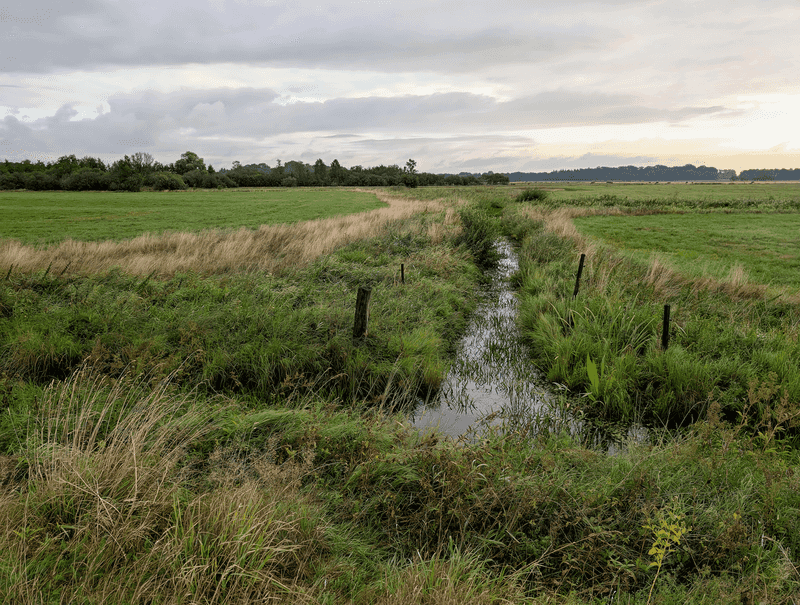
Driving through central Illinois in June, I started noticing tall white umbels in places I had never paid attention to. Ditches, railroad edges, creek banks, and fence rows suddenly seemed full of them.
That pattern makes sense. Poison hemlock loves disturbed ground, moist soil, and sunny or lightly shaded spots. Road construction, mowing, and plowing create exactly the open space it needs.
Seeds travel easily too. They fall near the parent plant, but mowers, vehicles, water, and soil moved during construction can carry them much farther.
It has been recorded in most counties across the state, so it is not just a rural problem. Suburban parks, vacant lots, and trail edges host it as well.
Walking trails deserve extra care. Kids may want to pick the pretty flowers or use the hollow stems as pretend pipes or whistles, and that is a habit worth gently stopping. If hemlock appears on public land, report it rather than tackling it yourself.
Local park districts, township road commissioners, or county highway departments often manage roadside weeds. A quick call can help crews target patches before the next round of seed drops.
Wild Parsnip And Queen Anne’s Lace Deserve A Second Look Too
Once you learn poison hemlock, the whole carrot family starts looking suspicious. Honestly, that awareness is healthy.
Wild parsnip is another roadside trouble-maker. It has flat yellow flower clusters instead of white, and its sap can cause painful blisters when skin is exposed to sunlight.
That reaction is called phytophotodermatitis, and it is often worse than anything hemlock does on contact.
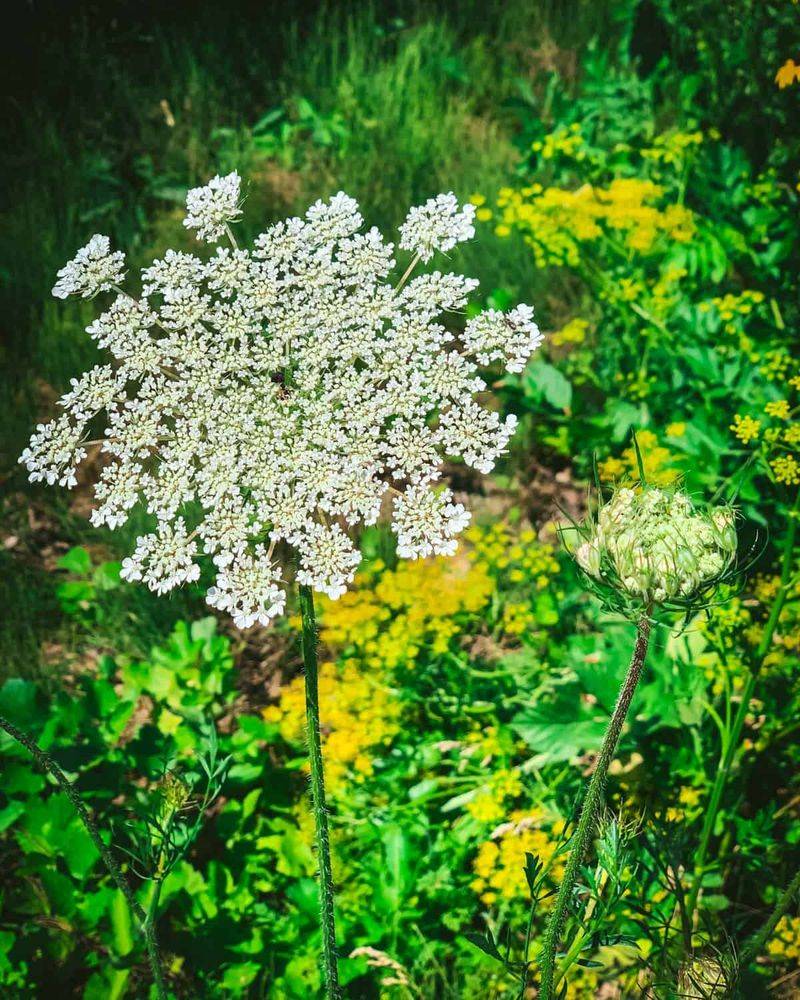
Queen Anne’s lace is mostly harmless to touch, though some people get mild irritation. Look for hairy stems, a lacy collar of forked bracts under the flower, and sometimes a tiny dark purple floret in the center.
Native lookalikes exist too. Water hemlock, a native plant found in wet areas, is even more toxic than poison hemlock if eaten. Leave any white-flowered umbel near water alone unless an expert confirms it.
A simple rule of thumb serves gardeners well. Admire carrot-family plants with your eyes, and keep your hands and mouth away unless you know the species for sure.
When in doubt, snap a photo and send it to your local University of Illinois Extension office. Their staff can help identify plants, and they love curious gardeners who ask before they pull.