What It Means When A Red-Shouldered Hawk Calls Near Your California Home
Blue jays can copy this bird’s scream so well that experienced birders get fooled. That alone tells you how famous the call is in the bird world.
The sound is loud, sharp, and repeated, like a squeaky gate that refuses to quit. It often rings out from a tall sycamore, oak, or eucalyptus right above a quiet street. I love how it cuts through the morning hum of traffic and sprinklers.
Personally, I used to think a noisy raptor meant trouble. Then I learned these birds share many California neighborhoods all year, hunting voles, gophers, and lizards in our yards. You start noticing them on fence posts and power poles once your ears tune in.
So why does this bird keep calling over and over near the same backyard? The answer says a lot about your trees, your garden, and the season outside your window.
That Repeated Kee-Aah From The Treetops Is A Message
Loud and stubborn, the classic call sounds like kee-aah, kee-aah, kee-aah, often five to ten times in a row. Cornell Lab of Ornithology describes it as one of the most vocal hawks in North America. So if your yard feels noisy, you are not imagining things.
Most of the time, that call is about ownership. A red-shouldered hawk uses its voice to tell other hawks that this patch of trees and lawn is taken. Think of it as a loud property line drawn in the air.
Other meanings exist too. Pairs call back and forth while bonding, and a faster, more frantic version often signals alarm. That alarm might be aimed at a crow, a raven, a great horned owl, or a person walking too close to a nest tree.
I find it helpful to listen for patterns. Calls from the same tree at the same time each day usually mean a resident bird. Calls paired with crows diving and squawking often mean a squabble overhead.
The takeaway is simple. A calling hawk near your home is usually a settled neighbor talking, not a lost or sick bird crying for help.
A Nesting Pair May Be Living In Your Tallest Tree
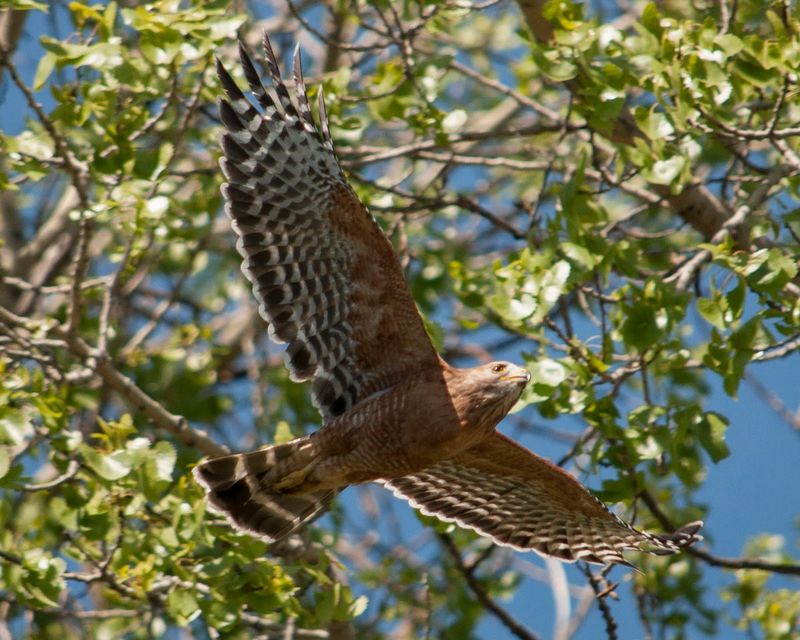
Frequent calling in late winter and spring is a strong clue that a nest sits nearby. In California, red-shouldered hawks often start courtship in winter, and many begin building or repairing nests by February. Egg laying usually follows in March and April.
Their nests are bulky piles of sticks, usually tucked against the trunk or in a sturdy fork. Many sit 35 to 65 feet up in oaks, sycamores, cottonwoods, eucalyptus, or even tall palms. Pairs often reuse and add to the same nest year after year.
You might spot fresh green leaves or bits of bark in the nest. Hawks add these linings, and some researchers think the greenery may help with freshness or pests.
Here is my favorite trick for finding one. Watch where an adult flies with a stick or a meal in its talons, then scan that tree with binoculars from a respectful distance.
If the calls get sharper as you approach, back off. Parents defend nests boldly, and they can swoop at people who linger. A little patience gives you a front-row seat without stressing the family overhead.
Spring And Summer Bring The Loudest Hawk Chatter
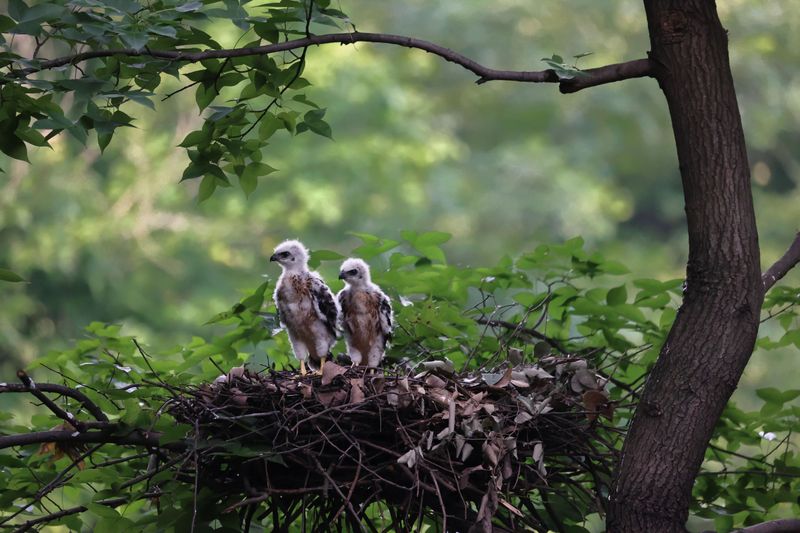
Timing tells you a lot. Red-shouldered hawks stay in much of California all year, yet their noise level rises and falls with the breeding calendar.
From roughly December through March, courtship ramps up. Pairs soar in circles, call to each other, and perform steep dives. Many people notice the hawks for the first time during these weeks.
April through June is the busy parenting stretch. Eggs take about a month to hatch, and young hawks usually leave the nest around six weeks later. Adults call often as they deliver food and chase off intruders.
Then summer adds a new voice. Fledglings beg loudly and repeatedly, sometimes for weeks, while they learn to hunt. Their calls can sound whiny and less crisp than the adults.
Fall and early winter tend to be quieter, though resident birds still call to defend territory. Young hawks also disperse in fall to find homes of their own.
So a July racket in your oak tree is not a mystery. It is likely a teenager hawk demanding lunch, and honestly, I think that is pretty charming once you know what you are hearing.
Gophers And Voles Have Good Reason To Worry
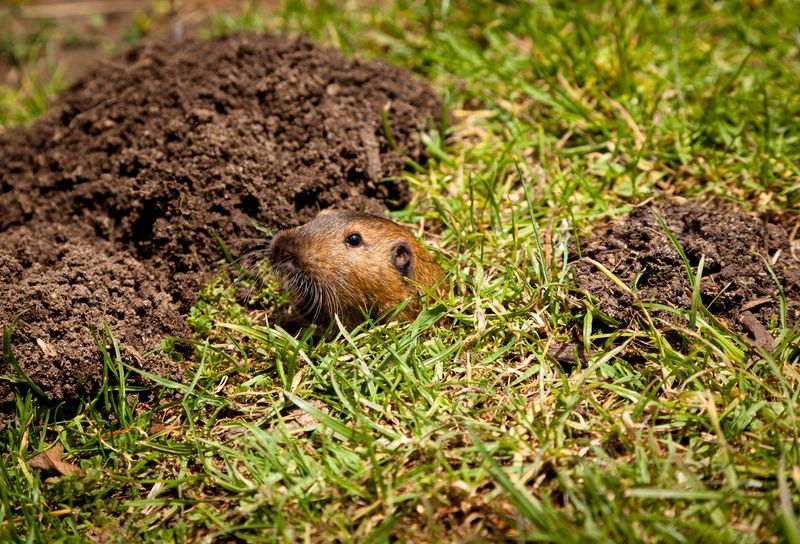
Gardeners, this part is for you. A red-shouldered hawk calling nearby is a sign that a skilled hunter is working your neighborhood.
Their menu is wide. They eat mice, voles, pocket gophers, ground squirrels, snakes, lizards, frogs, crayfish, and large insects. They mostly hunt by sitting quietly on a perch, then dropping onto prey below.
That makes them handy partners for anyone battling rodents in raised beds. One hawk family can catch a surprising number of small mammals while feeding hungry chicks in spring.
Give them help with a few easy moves:
Skip rodent poisons. UC Integrated Pest Management notes that anticoagulant baits can harm hawks and owls that eat poisoned prey. California has restricted many of these products for that reason.
Leave a few perches. A fence post, snag, or sturdy open branch gives hawks a lookout over open ground.
Keep some open lawn or low groundcover near beds so they can actually see prey moving.
Hawks will not fix a rodent problem alone. Still, pairing them with traps, gopher wire, and tidy compost areas makes a real difference over a season.
Blue Jays And Steller’s Jays Love To Fake That Hawk Call
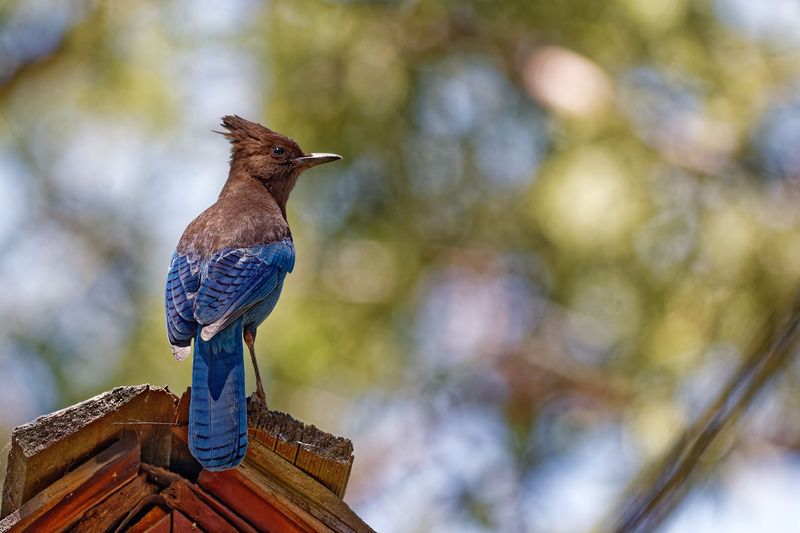
Ever hear the hawk but find only a jay sitting there? You may have been pranked.
Blue jays are famous for imitating red-shouldered hawk calls, and their version can be almost perfect. In California, blue jays are rare visitors, but Steller’s jays are common in forests, foothills, and wooded suburbs. Steller’s jays are well known for copying red-tailed and red-shouldered hawk screams too.
Scientists are not certain why jays do it. One idea is that the fake call warns other jays about a real hawk nearby. Another is that it clears competition from a feeder or food source. Some birders think jays mimic hawks simply because the sound is common around them.
Telling them apart takes a little detective work. A real hawk usually calls from a high perch or while soaring, with steady, ringing notes. A jay often adds its own harsh shack-shack calls before or after the imitation.
A free app like Merlin Bird ID from Cornell can help, though jays sometimes fool it too. Your eyes are the final judge. Spot the bird, and the mystery solves itself in seconds.
Rusty Shoulders And Striped Tails Help You Spot The Right Hawk
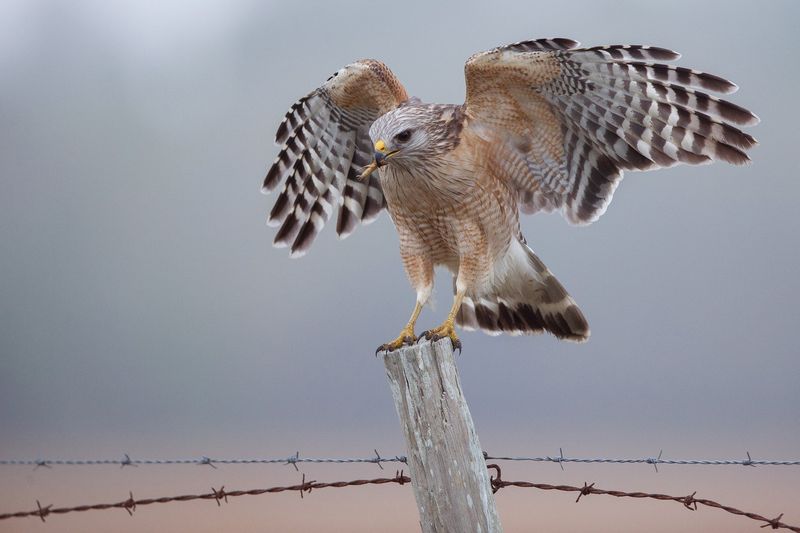
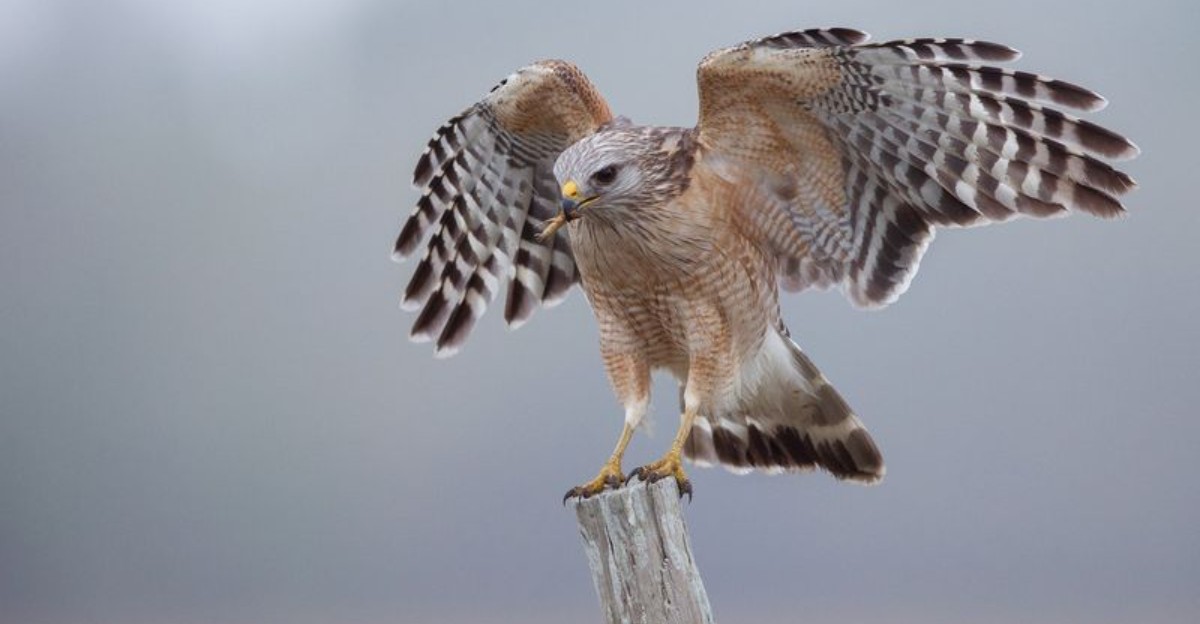
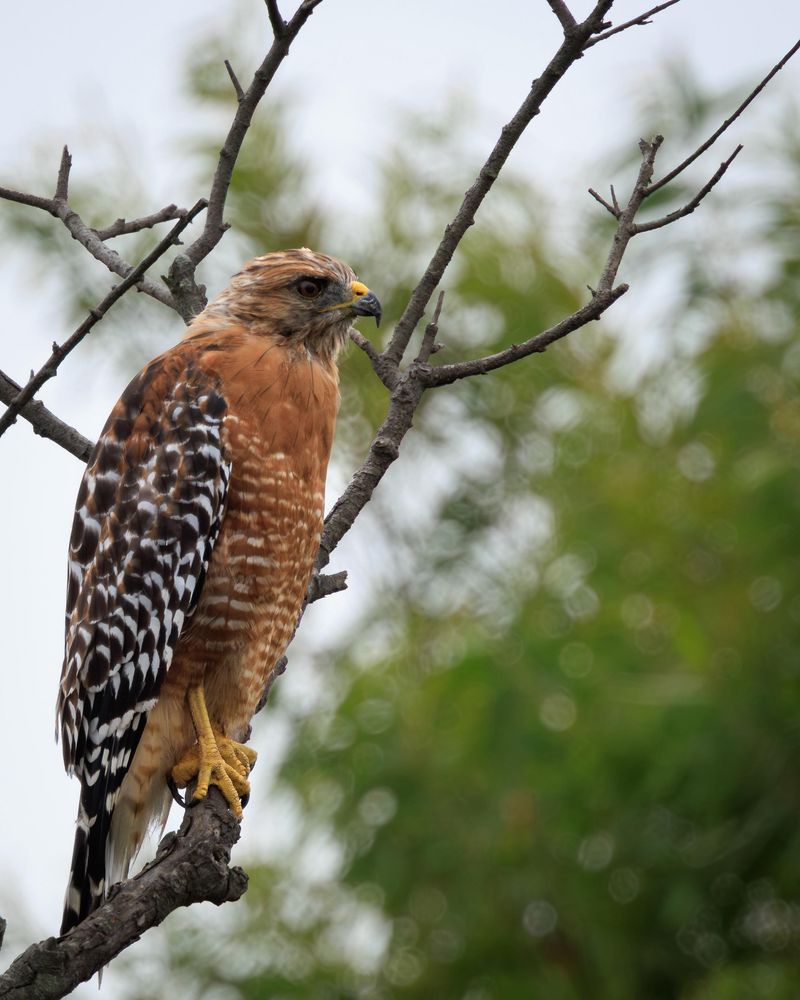
Once you know the field marks, this hawk is easy to pick out. California adults are especially colorful, with bright reddish-orange chests and bold barring.
Look for black-and-white checkered wings and a dark tail crossed with thin white bands. The rusty patch on the shoulder that gives the bird its name can be hard to see when it sits still. In flight, look for pale, crescent-shaped windows near the wingtips.
Size helps too. Red-shouldered hawks are mid-sized, a bit smaller and slimmer than the common red-tailed hawk. Red-tails usually have a pale chest with a dark belly band and a reddish tail in adults.
Fun detail: birds in California are a distinct western population. Some experts note they look brighter and more richly colored than many eastern birds.
Young hawks are trickier. They are brown and streaky and can be confused with juvenile red-tails or Cooper’s hawks. Check the tail bands and wing windows to sort them out.
Grab binoculars and a field guide app. Learning the bird by sight makes those backyard calls feel personal.
Small Pets And Backyard Chickens Need A Little Common Sense
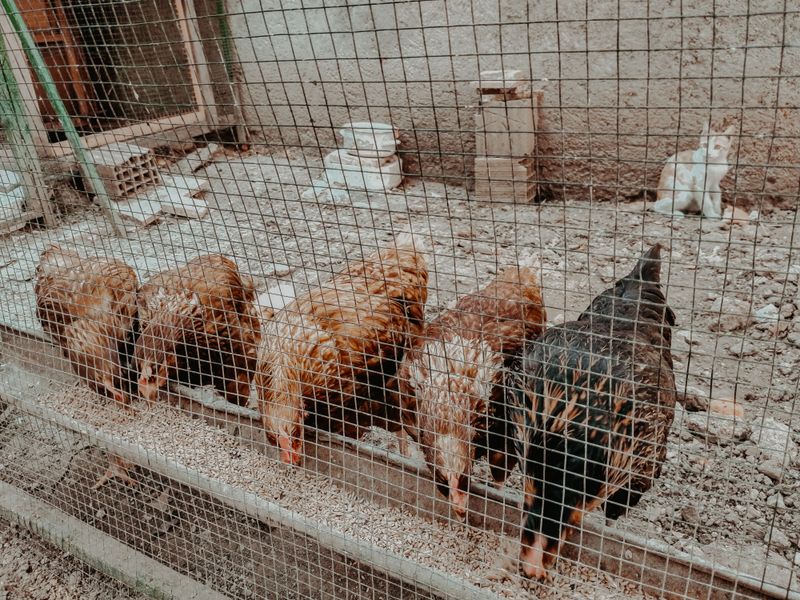
A calling hawk can make pet owners nervous. Calm down a bit, because the real risk is smaller than many people fear.
Red-shouldered hawks mainly target small prey like rodents, reptiles, and frogs. Grown cats and most dogs are far too big for them. Still, very tiny pets left outside alone, along with chicks or bantam chickens, can look tempting.
A few simple habits keep everyone safe:
Cover chicken runs with sturdy wire or netting on top, not just around the sides.
Supervise tiny dogs, rabbits, or guinea pigs outdoors, especially in spring when hawks feed hungry chicks.
Keep bird feeders near shrubs so songbirds have quick cover. Hawks rarely chase feeder birds compared to Cooper’s hawks, but shelter helps all small birds.
One thing you must not do is harm the hawk or its nest. Red-shouldered hawks are protected by the federal Migratory Bird Treaty Act and by California Fish and Game Code. Disturbing active nests can bring real penalties.
If a hawk becomes aggressive near a nest, give the area space for a few weeks. The defensive phase usually fades once young birds leave.