8 Winter Birds You’re Most Likely To See At A Pennsylvania Feeder
A songbird weighing about as much as two quarters can drop its body temperature to survive long winter nights. That tiny trick happens right outside many kitchen windows, while most of us sip coffee and grumble about the snow.
Some Pennsylvania backyard regulars even hide hundreds of seeds each fall and remember where most are tucked away. Others swap their bright summer feathers for a dull olive coat that makes them hard to recognize.
I used to think my garden went quiet after the first frost, until I hung one simple feeder. Within a week, the yard felt busier in January than it ever did during the lazy days of July.
A bag of seed and a little patience can turn any snowy Pennsylvania yard into a lively winter stage. So which feathered neighbors are most likely to show up first, and how do you spot them?
1. Northern Cardinal
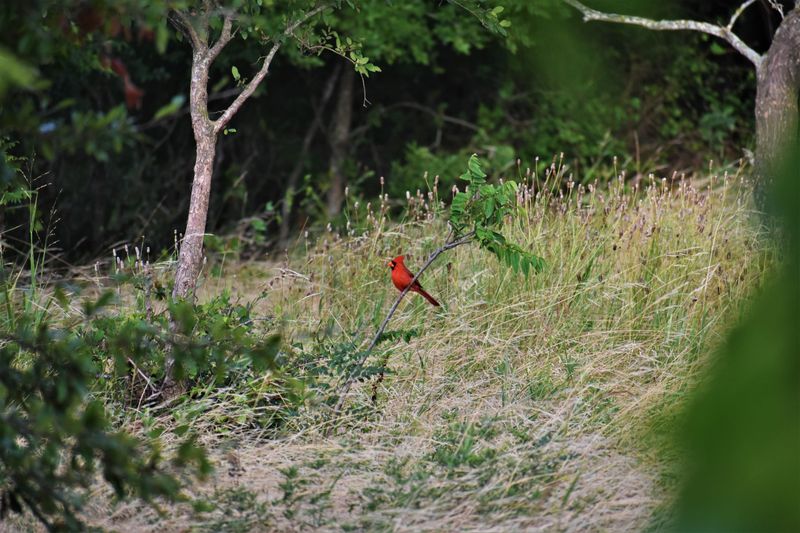
Nothing wakes up a gray January morning quite like a red bird glowing on a snowy branch outside. I swear the whole yard looks warmer the moment a bright male cardinal lands on my platform feeder.
The Northern Cardinal, Cardinalis cardinalis, lives here all year and does not migrate south when temperatures drop. It is also the state bird of seven states, which tells you just how widely people adore it.
Females wear soft tan feathers with warm reddish touches on their wings and on their pointed crest.
Both sexes share a thick orange bill that cracks open tough seeds with surprising ease and real strength.
Cardinals prefer to feed on wide, steady surfaces rather than swinging on small tube feeders with tiny perches. Personally, I keep a hopper or tray feeder stocked with black-oil sunflower and safflower seeds for them.
Timing matters too, because these birds often visit very early in the morning and again near dusk. Filling the feeder before bed means breakfast is ready when the first sleepy cardinal arrives right at sunrise.
Dense shrubs nearby give them a safe hiding spot from hawks and bitter winter wind between meals.
Native options like American holly or eastern red cedar work beautifully and offer cover through the coldest months.
Come late winter, you might catch a male passing a seed straight into a female’s waiting beak. Birders call it courtship feeding, and I think it is the sweetest thing happening at any feeder.
2. Black-Capped Chickadee
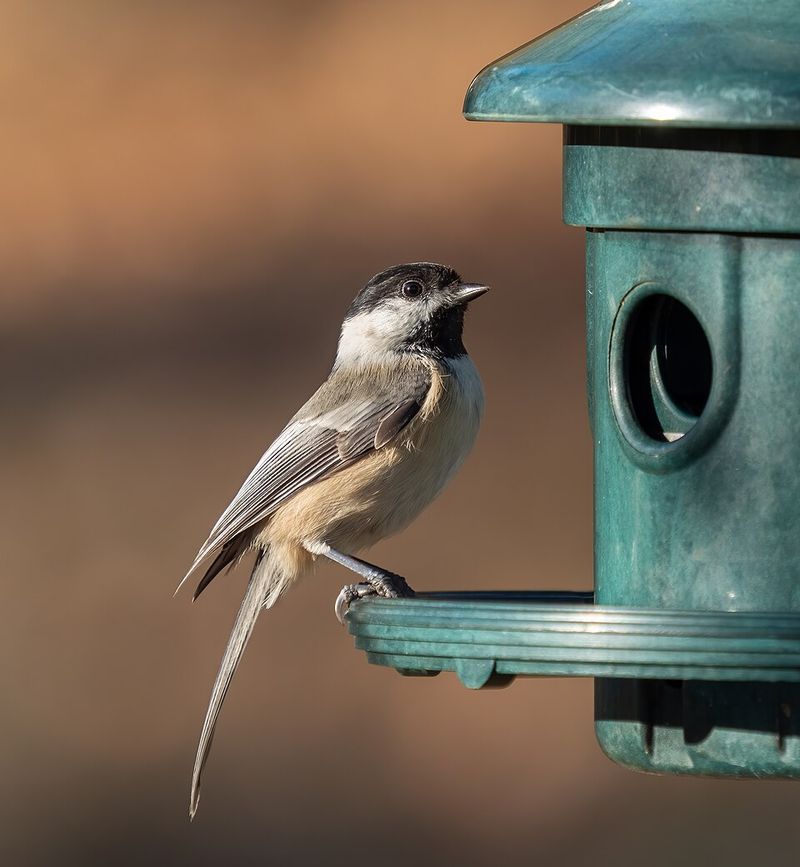
Fall turns this tiny acrobat into a memory champion, with part of its brain actually growing larger.
Scientists found the hippocampus expands while chickadees hide seeds, helping them recall thousands of secret pantry spots.
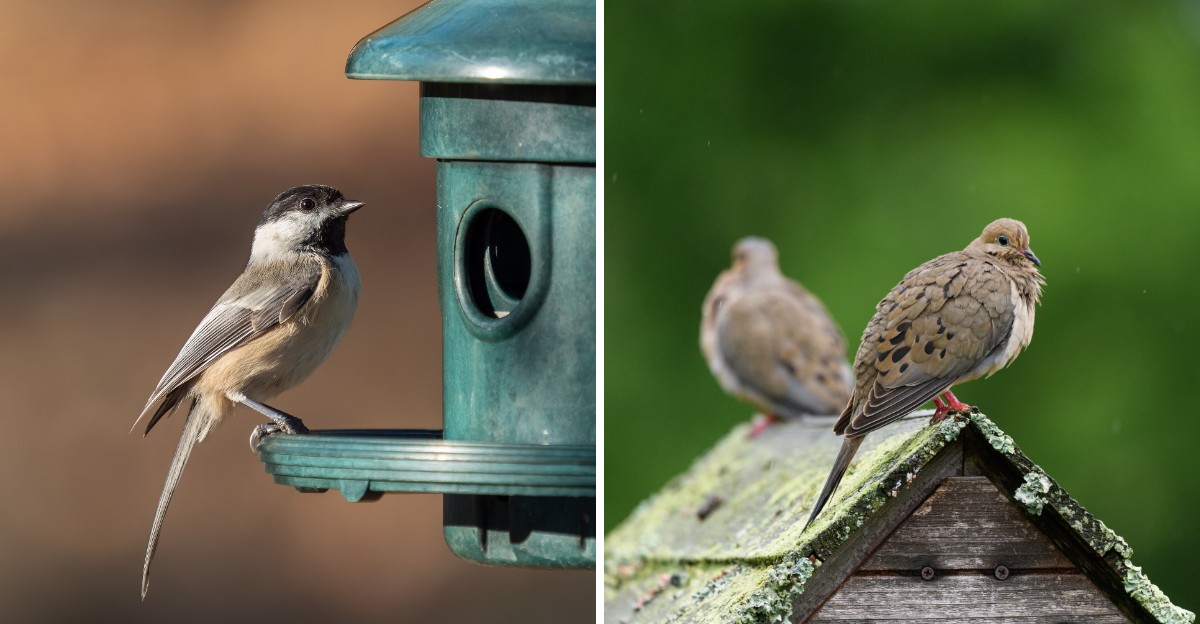
The Black-capped Chickadee, Poecile atricapillus, wears a black cap and bib with bright white cheeks between them. Its cheerful call sounds like its name, and the more dee notes you hear, the bigger the alarm.
In southeastern Pennsylvania, you may see the Carolina Chickadee instead, which looks almost identical to its northern cousin.
The two species even overlap and sometimes hybridize along a narrow band running across the middle of the state.
I love how fearless these little birds can be around people who move slowly and speak softly. With patience, some chickadees will even land on an open hand that holds a few sunflower seeds.
Black-oil sunflower seeds are a top choice because their thin shells are easy for small bills to open. Suet cakes and shelled peanuts also give them the rich fat they need to stay warm overnight.
Watch closely and you will notice a chickadee grab one seed, then fly off to eat or hide it. That quick back-and-forth routine can repeat dozens of times in a single busy morning at the feeder.
On bitter nights, chickadees can lower their body temperature several degrees to save precious energy until sunrise. A nest box or thick evergreen nearby gives them a sheltered spot to ride out the cold.
3. Downy Woodpecker
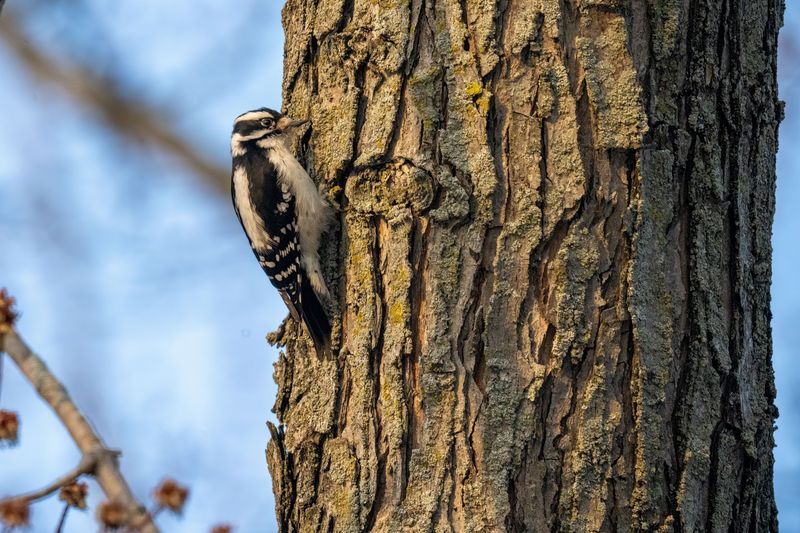
Small enough to sit inside your palm, this woodpecker still drums on trees like it owns the whole forest. I grin every time one hangs upside down on my suet cage, pecking away without a care.
The Downy Woodpecker, Dryobates pubescens, is the smallest woodpecker in North America and lives here year-round. Its black-and-white feathers look like a checkered coat, and males have a small red patch on the head.
Telling it apart from the nearly identical Hairy Woodpecker can feel tricky, even for experienced backyard birders. Look at the bill, which on a Downy is much shorter than the length of its head.
Suet is the easiest way to bring these birds in, especially when the ground stays frozen for weeks. They also nibble shelled peanuts and will even sip sugar water from hummingbird feeders in summer.
In the wild, they probe bark for insect larvae and eggs hidden in cracks during the colder months. Some even pick at goldenrod galls to pull out the fat little grubs tucked safely away inside.
That habit is a great reason to leave a few dried flower stems standing in your garden beds. I skip the fall cleanup in one corner, and the woodpeckers seem to thank me every winter.
Downies often travel with chickadees and titmice, joining mixed flocks that move through yards together in winter. When the chickadees show up, keep an eye out, because a little Downy is often close behind.
4. Dark-eyed Junco
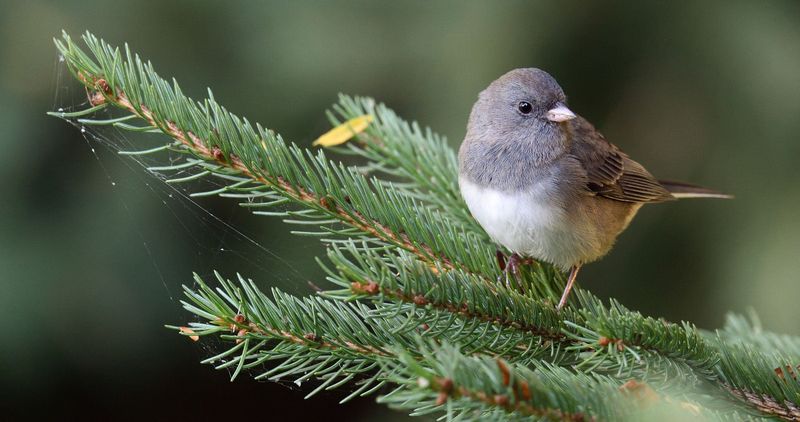
Folk wisdom says the first junco at your feeder means snow is coming, and they rarely seem wrong. That is why so many people across the country lovingly call these neat little gray birds snowbirds.
The Dark-eyed Junco, Junco hyemalis, is actually a type of sparrow with a slate-gray back and white belly. Its pale pink bill stands out clearly, almost like it was dipped in strawberry ice cream.
Many juncos spend summer in Canada, while others nest in the cool, forested northern mountains of Pennsylvania.
Come fall, large numbers drift south, and backyards across the state suddenly fill with hopping gray visitors.
Their travel habits hold a fun twist that surprised me the first time I read about it. Females tend to migrate farther south than males, so northern flocks often hold more males in winter.
Juncos mostly feed on the ground, scratching and hopping beneath feeders for seeds that other birds dropped. I scatter white proso millet and cracked corn on a low tray, and they show up within minutes.
After a heavy snowfall, sweep a small patch clear so they can still reach the food easily. A brush pile nearby also gives them a quick escape route when a hawk swoops into view.
Watch for the flash of white outer tail feathers each time a startled junco flutters up into a tree. That quick white wink is one of the easiest field marks to learn, even for beginning birders.
5. White-Breasted Nuthatch
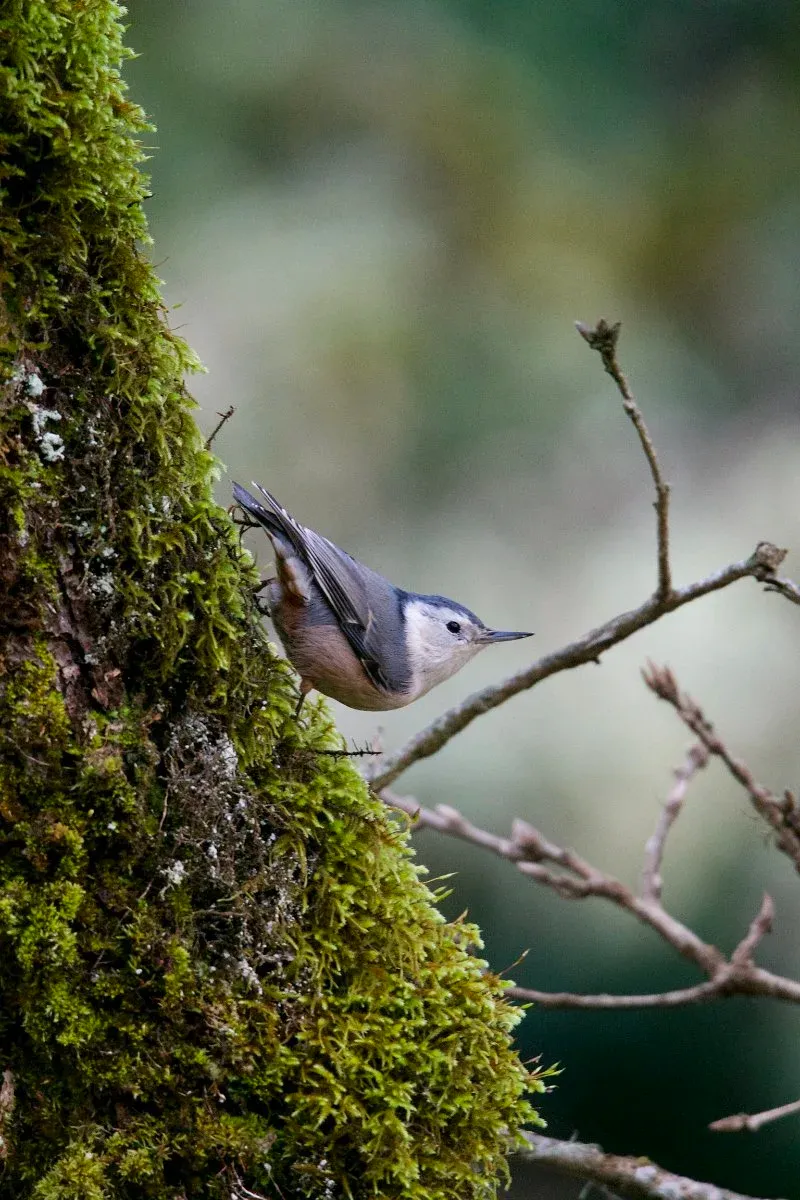
Gravity seems optional for the little bird creeping headfirst down the maple trunk outside my kitchen window. The first time I saw it, I honestly thought the poor little thing had somehow lost its grip.
The White-breasted Nuthatch, Sitta carolinensis, moves this way on purpose to spot insects other climbers miss.
Woodpeckers mostly climb upward, so a downward view likely helps the nuthatch find food hiding in bark crevices.
Look for a blue-gray back paired with a crisp white face below a neat dark cap on top. Males usually show a glossy black cap, while females often wear a slightly grayer version of it.
The name comes from an old habit of wedging big seeds into bark and whacking them open. Early observers called it a nut hack, and over many years the word slowly shifted into nuthatch.
At my feeder, they especially adore black-oil sunflower seeds and suet cakes studded with chopped peanuts. Many grab one seed and zip away to tuck it into a crack for a snack later on.
Listen for a nasal yank-yank call that sounds a lot like a tiny toy horn honking in the woods. Once you learn it, you will start hearing nuthatches in parks and woodlots almost everywhere you walk.
Pairs often stay together on their territory through winter, so you may see the same two daily. Leaving mature trees standing in your yard gives them natural foraging spots and safe future nesting cavities.
6. Tufted Titmouse
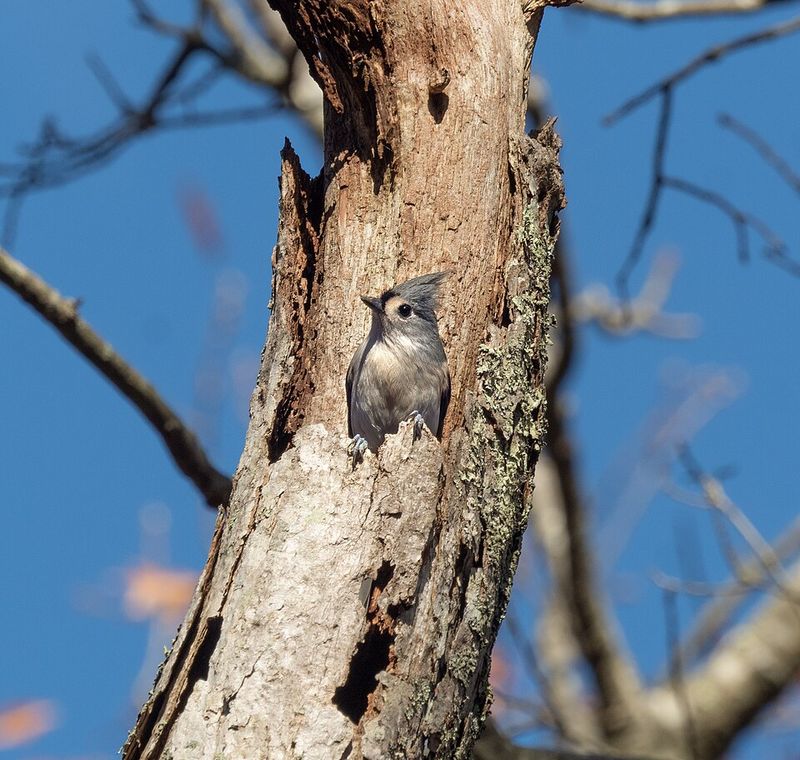
Few birds would dare pluck hair from a living dog, but this gray daredevil has been seen doing it. Researchers have documented titmice snatching fur from raccoons and even from people to line their cozy nests.
The Tufted Titmouse, Baeolophus bicolor, wears a soft gray coat with a perky pointed crest on top. Rusty orange flanks and big dark eyes give it a curious, slightly cartoonish look I find irresistible.
Over the past century, these birds have steadily expanded their range northward across much of the eastern states.
Many experts link that spread partly to warmer winters and the growing popularity of backyard bird feeders.
At the feeder, a titmouse acts like it owns the whole place, often nudging smaller birds aside. It usually grabs a single seed and carries it off to pound open on a nearby branch.
Sunflower seeds and unsalted peanuts are favorites, and suet gets plenty of attention when winter temperatures suddenly plunge. Like chickadees, they hide extra food in bark cracks, so a full feeder helps them stock up.
Their loud peter-peter-peter whistle often rings out on bright late-winter mornings as the days slowly grow longer. I have to admit that sound lifts my mood faster than any cup of hot cocoa can.
Titmice nest in old woodpecker holes and nest boxes, since they cannot dig their own cavities. Hanging a box before early spring gives a resident pair a snug spot to raise their young.
7. American Goldfinch
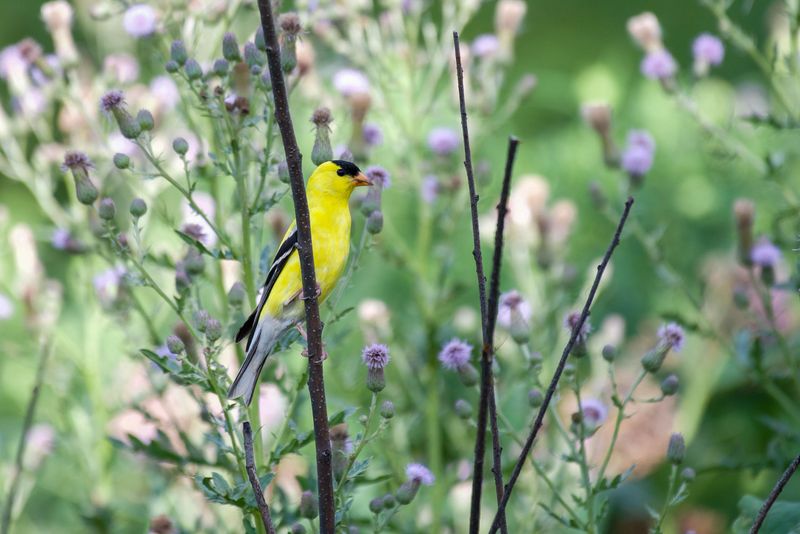
Those drab olive birds clinging to your feeder belong to the same species as last summer’s dazzling yellow goldfinches.
Nobody warned me about this disguise, and I spent a whole winter thinking they were some mystery bird.
The American Goldfinch, Spinus tristis, molts in fall, trading its bright plumage for soft brownish olive tones.
Black wings with crisp white bars stay visible, which makes identification much easier once you know the trick.
Goldfinches eat almost nothing but seeds, which is unusual among songbirds that often depend on insects. Even their babies are raised mostly on seeds, a fact that surprised me when I first learned it.
Nyjer seed in a tube or mesh feeder is a big favorite, along with tiny sunflower hearts. Nyjer goes stale quickly, so buy small bags and shake the feeder to check for clumps.
Winter flocks wander widely, so you may host twenty birds one week and only a few the next. That roaming habit is normal, so do not worry if your feeder suddenly feels a little lonely.
In flight, goldfinches bounce through the air in a roller-coaster pattern while calling out cheerful notes. Many birders say that call sounds like po-ta-to-chip, and honestly I hear it every single time now.
Leave coneflower and native sunflower seed heads standing in your garden until spring for extra natural snacks. By April, watch for the males slowly turning patchy then golden again as their bright breeding feathers return.
8. Mourning Dove
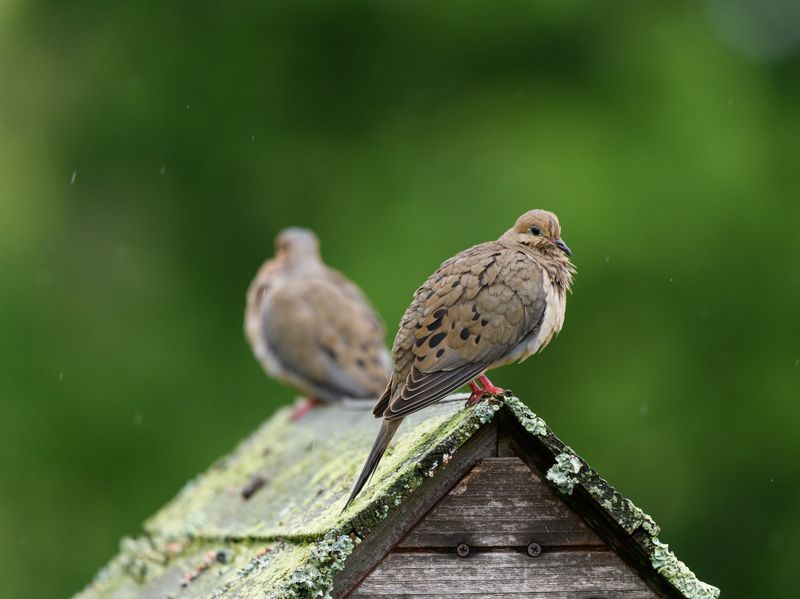
That soft, sad cooing drifting from the power line sounds like an owl to many people. I mixed them up for years, until I finally spotted a plump tan bird making the sound.
The Mourning Dove, Zenaida macroura, is one of the most widespread and abundant birds in North America. Many stay in Pennsylvania all winter, often gathering in small flocks near reliable food and shelter.
Their bodies are a smooth grayish tan, with a few black spots on the wings and long pointed tails. White tips flash along the tail edges when they take off, which makes them easy to identify.
Listen closely at takeoff, and you will hear a whistling whir made by their wing feathers. Scientists think that sound may help warn other doves nearby that something just startled the whole flock.
Seeds make up almost their whole diet, and they gulp them quickly to store in a pouch called the crop. Later, they fly to a safe perch and digest the meal slowly while sitting puffed up in the sun.
Scatter white millet or cracked corn on a low platform or a cleared patch of ground. Doves are too big for most tube feeders, so they prefer wide, open spaces where they can waddle.
Keep the feeding area near shrubs, because hawks such as Cooper’s Hawks often hunt doves around backyard feeders. A quick dash to thick cover gives these gentle birds a far better chance of staying safe.