The Cheap Kitchen Trick New Yorkers Use To Wipe Out Patio Moss And Algae
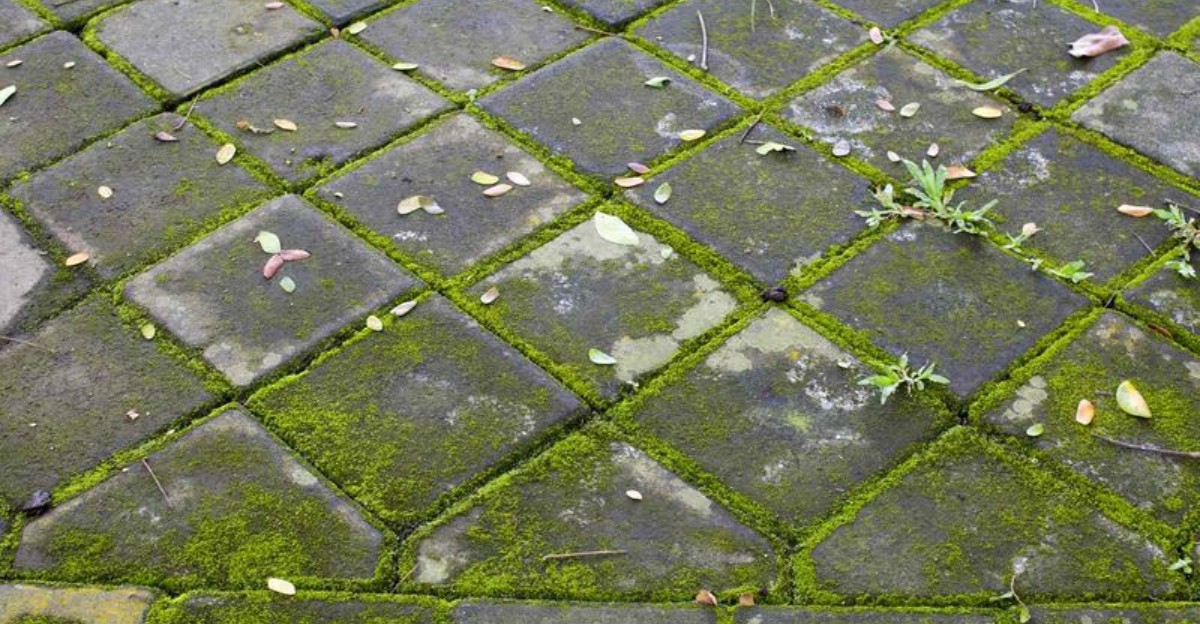
The same humble box that keeps your fridge smelling fresh is now getting dumped on backyard pavers. Yes, really. A box of it costs less than a slice of pizza at most grocery stores.
My shady patio once grew a green coat so slick that my dog refused to cross it. I tried scrubbing, rinsing, and grumbling, and the stuff came right back every spring.
Moss and algae love the cool, damp corners of a New York yard. Brownstone courtyards, maple-shaded slabs, and north-facing steps can stay wet for days after a rain. That steady moisture is basically an open invitation.
So can a pantry staple really help, or is it just another viral promise? Between you and me, the honest answer surprised me a little. The real secret involves more than one cheap item from your cupboard.
That Little Orange Box In Your Pantry Has A Patio Side Gig
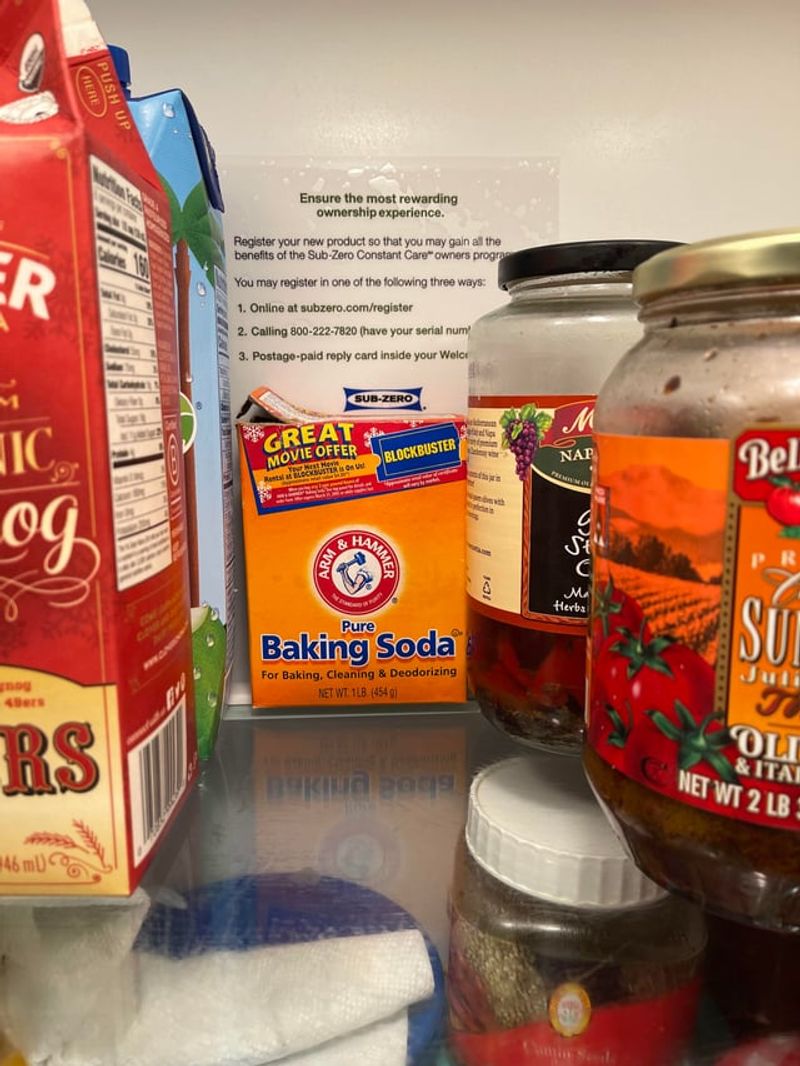
Most of us grab baking soda for cookies or a funky fridge. Lately, though, that cheap orange box has been showing up on patios, and the idea has spread fast through gardening forums and home pages.
The trick is simple. You sprinkle plain baking soda over moss and green algae on hard surfaces, wait a day or two, and sweep away the browned patches.
A one-pound box usually costs around a dollar or two, which beats most store-bought patio cleaners by a mile.
For what it’s worth, I was skeptical at first. Much of the online buzz comes from tabloid tips rather than lab studies, so it helps to keep expectations realistic.
Baking soda tends to work best on thin films and young, patchy moss, not thick green carpets that have been growing for years.
There’s a solid reason it does anything at all. Sodium bicarbonate has a long history as a mild fungicide in gardens, and salts like it pull moisture from small, shallow growth.
Moss has no true roots, so it sits right on top where the powder can reach it.
Treat it as a helpful first step, not a miracle cure.
Sprinkling Baking Soda On Mossy Pavers The Right Way
Timing makes or breaks this one. Pick a stretch of dry weather with at least two rain-free days in the forecast, since a sudden shower will wash your powder straight into the drain.
Start with a firm sweep using a stiff-bristled broom. Clearing leaves, grit, and loose clumps lets the baking soda touch the growth instead of sitting on debris.
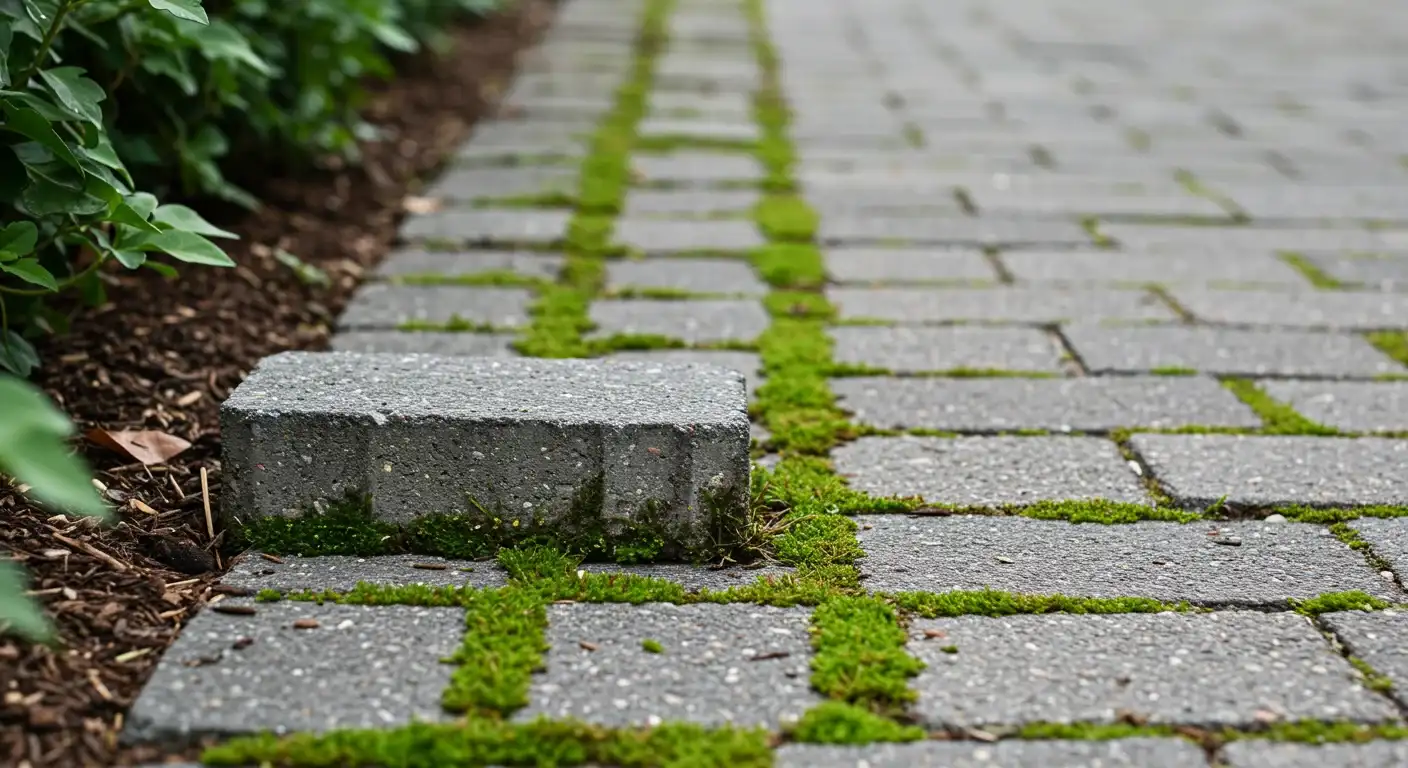
Pay extra attention to the joints between pavers, where moss loves to tuck itself in.
Next, shake a generous, even layer of dry baking soda over the green spots. A kitchen sieve or an old parmesan shaker gives nice coverage on small areas.
Some gardeners mist the surface lightly first so the powder sticks, but keep it to a fine spray.
Now comes the easy part. Leave it alone for 24 to 48 hours.
Moss and algae that react usually fade to yellow or brown during that time.
Finally, scrub the patches with your broom and rinse with a bucket of water or a garden hose. Take it from someone who rushed this step once, because leftover powder can leave a chalky haze.
A second round a week later helps with stubborn corners.
Why Baking Soda Makes Patio Moss And Algae Turn Brown
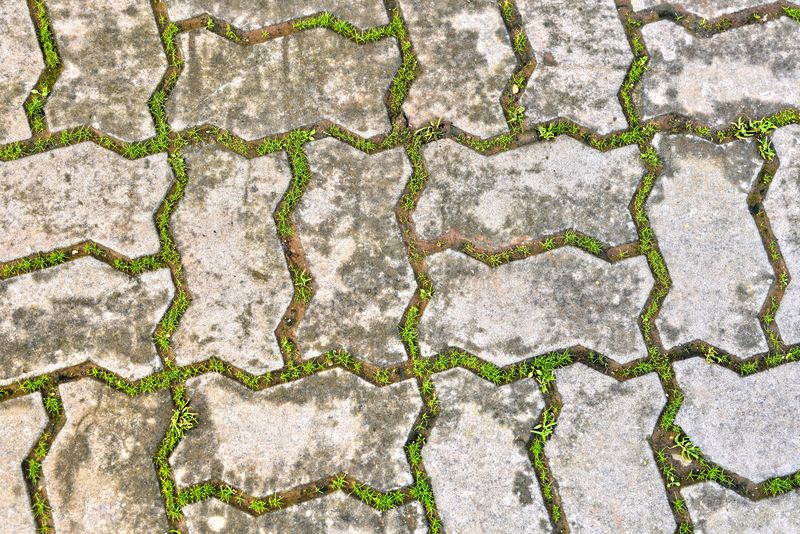
Plenty of viral posts claim baking soda works by making your patio too alkaline for moss. That explanation is only partly right, and I think you deserve the fuller story.
Many mosses do lean toward acidic, shaded, damp spots, and university extension services often list low pH as one factor in lawns. On concrete, though, the surface is already alkaline, and moss still grows there happily.
So pH alone can’t explain the browning.
A more likely culprit is the salt itself. Sodium bicarbonate draws water out of thin plant tissue, and moss and algae are only a few cells thick in places.
Without a waxy coat or deep roots, they dry out fast. Baking soda also disrupts the growth of many fungi and similar organisms, which is why gardeners have used it on mildew for decades.
Let’s just say the result is real, but limited. Treated growth often browns and loosens, yet spores and fragments stay in the cracks.
If the spot remains shady and wet, new green fuzz can return within a season.
That’s why the powder works best as part of a bigger plan that tackles moisture too.
White Vinegar Can Tackle Stubborn Green Film On Concrete
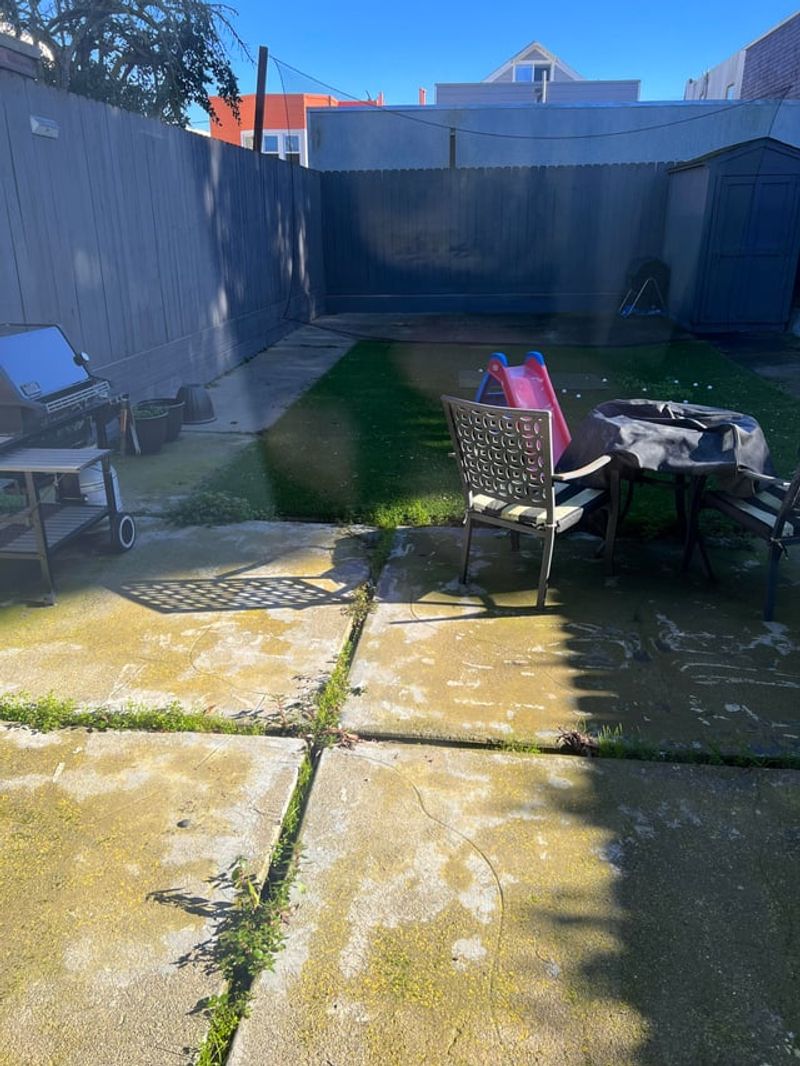
Sharp smell, big results. Plain white vinegar from the grocery store contains about 5 percent acetic acid, and that acid can break down thin algae films and soft moss on hard surfaces.
Many home cleaning guides suggest a 50-50 mix of vinegar and water in a spray bottle or pump sprayer. Wet the green areas well, wait 15 minutes to an hour, then scrub with a stiff brush and rinse.
Sunny, warm afternoons tend to speed things up.
Before you go spraying, test a hidden corner first. Acid reacts with calcium-based materials, so limestone, marble, travertine, and some sandstone can etch or lose their finish.
Older mortar joints and fresh concrete can also weaken with repeated soaking, which matters on century-old stoops and walkways.
Don’t make my mistake of skipping the test spot. I once dulled a lovely bluestone step, and the patch stayed noticeably lighter for months.
Vinegar also harms any plant it touches, including grass along the edges and creeping thyme between stones. Shield nearby beds with a piece of cardboard and spray on calm days.
Save this method for brick, granite, and sealed concrete, and use it as an occasional deep clean rather than a weekly habit.
A Bucket Of Dish Soap Suds Loosens Slimy Patio Algae
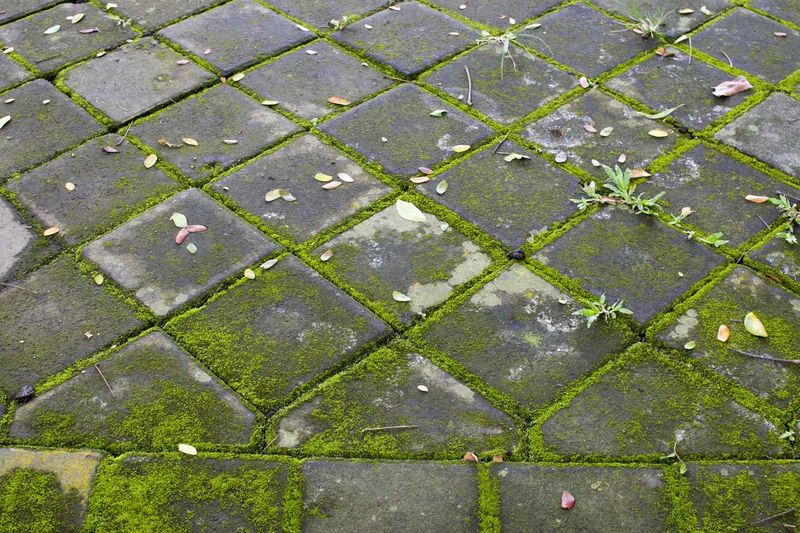
A quirky fact tickled me when I first learned it. Many commercial moss controls sold in garden centers use potassium salts of fatty acids as their active ingredient, which is a fancy way of saying soap.
Those soaps strip the protective outer layer from moss and algae, so the cells lose water and turn brown, often within hours on a warm day. Kitchen dish soap isn’t the same product, but a mild solution can loosen slimy growth and make scrubbing much easier.
Try this recipe. Stir about two tablespoons of a plain, dye-free dish liquid into a gallon of warm water.
Pour or brush it onto the green patches, let it sit for 10 to 20 minutes, then scrub with a stiff nylon or natural-bristle brush.
Rinse well afterward. Soap left on pavers can feel slick underfoot, which defeats the whole purpose of a safer patio.
If you ask me, this is the friendliest option for brick and natural stone. It won’t etch surfaces like acid can, and it’s easy on the wallet.
Skip degreasers or antibacterial formulas, since added chemicals can bother plants and soil life where the rinse water runs.
For larger areas, a garden pump sprayer saves your back.
Keep Kitchen Remedies Away From Your Lawn And Flower Beds
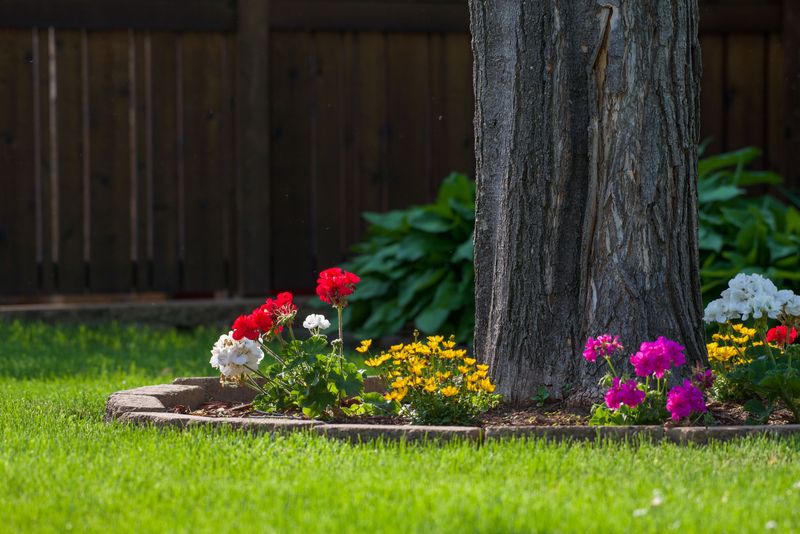
Every cheap fix comes with a catch, and this one involves runoff. Whatever you put on your patio eventually washes into the soil next to it.
Baking soda adds sodium, and sodium builds up in soil over time. Cornell and other extension programs warn that salty soil can harm root growth and break down soil structure, the same issue gardeners see along roads treated with winter de-icers.
A light, occasional treatment is unlikely to cause trouble, but heavy, repeated dumping near beds is another story.
Vinegar is even tougher on greenery. Acetic acid burns leaves on contact, so a stray spray can scorch hostas, ferns, or the shade plants you actually want.
My garden taught me a few habits that help. Treat only the growth you need to remove, sweep up leftover powder before rinsing, and steer water away from planting areas.
A strip of cardboard or a folded tarp works well as a shield along edges.
Keep pets and kids off treated areas until everything is rinsed and dry. And if you have a pond, fountain, or storm drain nearby, go easy, because concentrated salts and soaps don’t belong in water features or local waterways.
Shady, Soggy Patio Corners Are Where Moss Sets Up Camp
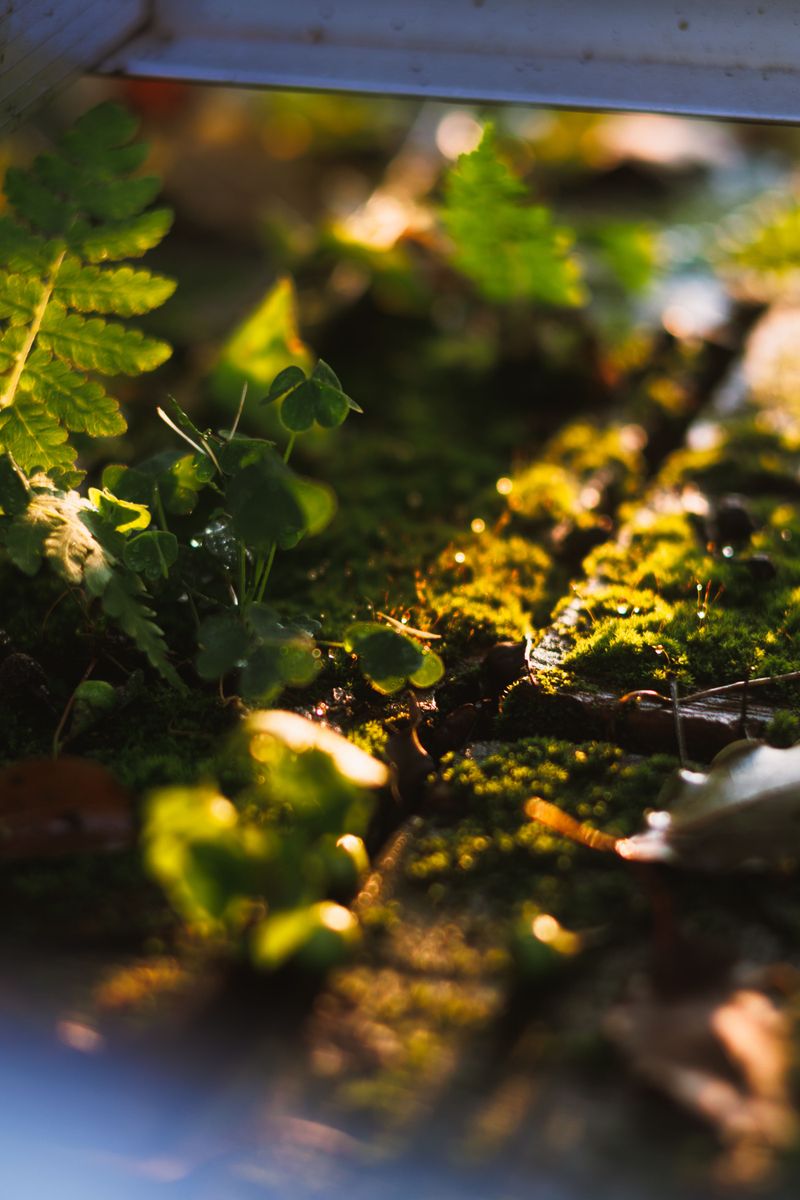
Moss is a little like a houseguest who loves damp basements. It thrives where surfaces stay cool, shaded, and wet, and many patios offer that cozy setup.
In New York, the climate gives these green films plenty of chances. Most of the state gets roughly 40 to 50 inches of precipitation a year, and spring snowmelt plus long, drizzly fall weeks keep pavers soggy.
Tight city backyards hemmed in by brick walls and tall neighbors rarely see full sun.
Look for patterns on your own slabs. North-facing sides of houses, spots beneath maples and oaks, and areas under decks or awnings usually turn green first.
Low spots where puddles linger after a storm are another giveaway.
Organic debris makes matters worse. Fallen leaves, pollen, and bits of soil trap moisture and feed algae, especially in the joints between stones.
Compacted, poorly draining ground beneath the patio adds to the problem.
Between you and me, figuring out the cause is half the battle. Upstate yards around Buffalo and Syracuse face long, gray winters, while Long Island patios deal with humid coastal air.
Either way, treating the moisture problem matters more than any powder you sprinkle.
A Stiff Broom And More Sunlight Keep Patio Slabs Clear Season After Season
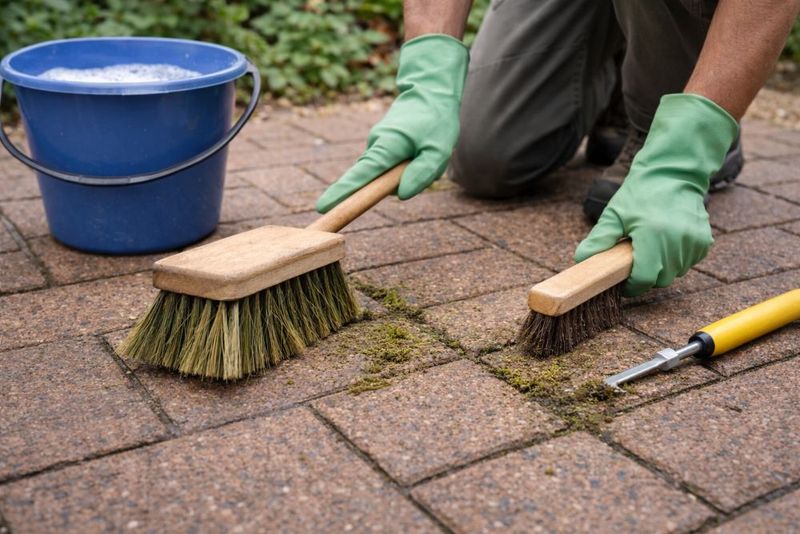
A five-minute sweep each week does more for your patio than any weekend scrub-fest. Regular brushing removes leaves and spores before they settle in, and it keeps joints from filling with soggy grit.
Sunlight and airflow are your best friends. Thin out low tree limbs or overgrown shrubs that shade the patio, ideally in late winter when branches are bare and easy to see.
More light helps slabs dry quickly after rain.
Drainage deserves a look too. Pavers should slope slightly away from your house, often about a quarter inch per foot, so water runs off instead of pooling.
Redirect downspouts that dump right onto the patio, and refill sunken joints with polymeric sand.
Shuffle planters, grills, and furniture now and then. Those shady footprints stay damp and turn green surprisingly fast.
Once the surface is clean and dry, a breathable masonry sealer can make concrete and stone less welcoming to algae. Spring and early fall are great times for this work across New York, when temperatures are mild and the ground isn’t frozen.
Looking back, I should have started with these habits years ago. Keep that box of baking soda handy for touch-ups, and let good maintenance handle the rest.