12 Fast-Spreading Perennials That Thrive in Florida Heat and Humidity
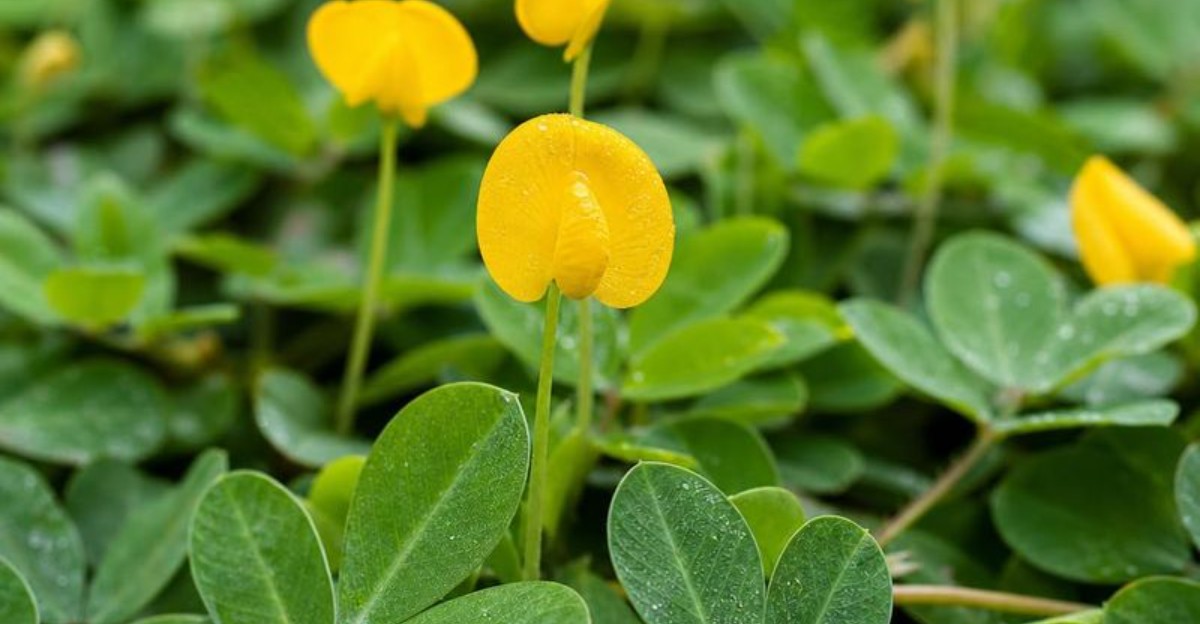
Florida’s state wildflower is not one single plant but an entire group of flowers that lawmakers picked in 1991. Several of its cousins can carpet a sunny roadside in one season and return again from dropped seed next year.
Our steamy summers send many garden favorites into a sulky slump by the middle of July. A handful of tough perennials actually speed up in that heat and race across beds while neighbors wilt.
I have to admit that I love plants that fill bare ground faster than I can pull weeds. You might notice the same thing once a single small pot turns into a sweeping patch of color.
My list mixes tough Florida natives with garden classics that are not listed as invasive here. Which one will claim the empty corner of your yard first, and how fast will it get there?
1. Bleeding Heart Vine
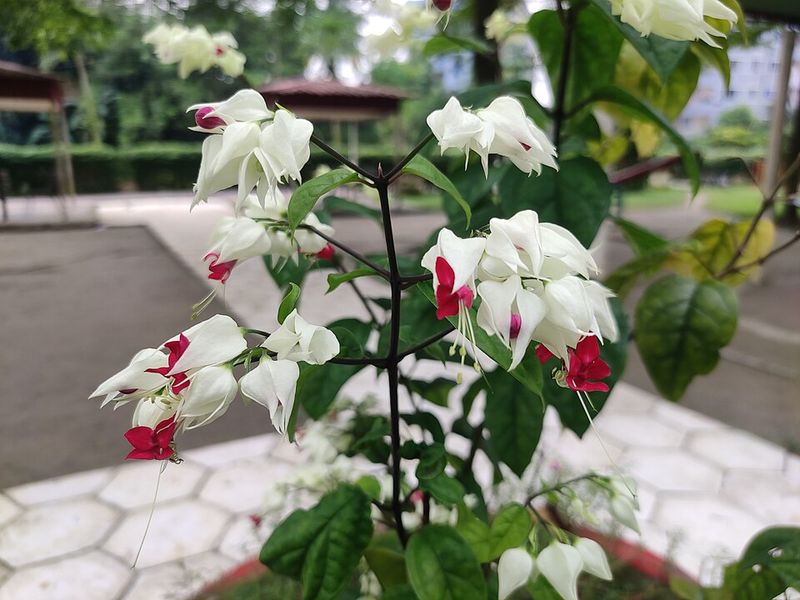
Bright red flowers poke out of puffy white bracts, like tiny drops of jam on fresh whipped cream. I can’t walk past one in bloom without stopping to stare at those odd little heart shapes.
This tropical twiner from West Africa can climb ten to fifteen feet when it has something sturdy to grab. It also spreads by sending up new shoots and rooting wherever a stem lies against moist soil.
Bright, filtered light suits it best, so a spot with morning sun and afternoon shade works beautifully. Too much harsh midday sun can scorch the leaves and leave them looking crispy along the edges.
Give it moist, well-drained soil mixed with compost or composted manure before you set it in the ground. Let the top layer of soil begin to dry before watering again, since soggy roots make it unhappy.
Feeding with granular fertilizer a few times during the warm months keeps the flowers coming in strong waves. Pinching the tips in summer pushes out side branches and makes the whole vine look fuller.
Hardy in Zones 9 and 10, it often freezes back in colder northern winters but usually returns in spring. A hard pruning in late winter resets the shape and keeps the vine from swallowing its trellis.
Keep curious pets and horses away, since sources list this vine as toxic to these animals. Personally, I like it best on a shady porch trellis, where its strange flowers greet visitors up close.
2. Plumbago
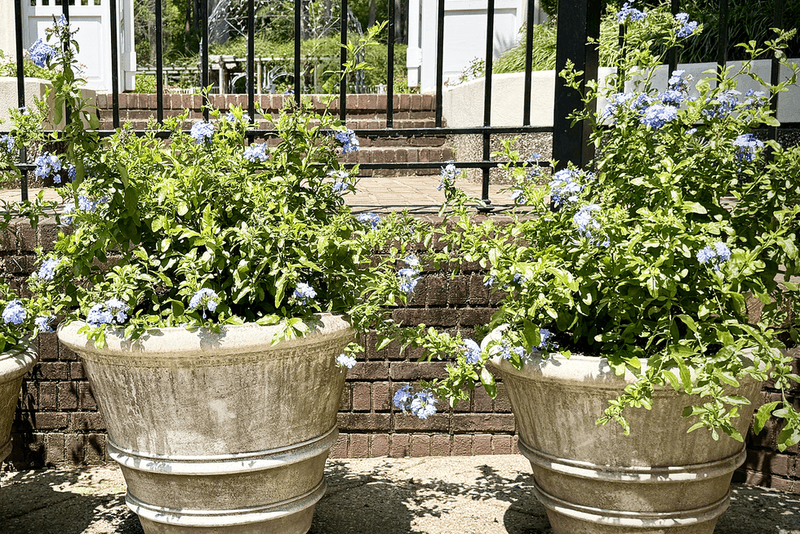
Sky-blue flower clusters cover this sprawling shrub for most of the year, and the color looks cool on scorching afternoons. I swear the whole yard feels a few degrees calmer when a big plumbago is blooming nearby.
Native to South Africa, Plumbago auriculata grows fast and can reach six to ten feet tall and wide. Its long arching stems give it a loose fountain shape that softens fences and bare walls.
Full sun brings the thickest growth and heaviest flowering, though it will put up with some partial shade. In shadier spots, you should expect more green leaves and noticeably fewer of those pretty phlox-like blooms.
Almost any well-drained soil works, from sand to clay, including spots that lean a little alkaline. Yellowing leaves on high pH soil can point to a missing mineral, so a soil test helps.
Water regularly until roots settle in, and after that the shrub handles dry spells fairly well. During the hottest stretch of summer, a little extra water keeps the flowers from slowing down.
Butterflies visit the blooms often, and deer tend to leave the plant alone, which many gardeners appreciate. One or two light feedings during the growing season are usually enough to support steady flowering.
Because it grows so quickly, you can trim back extra length at any time of year without worry. After a rare frost, wait until spring to snip off damaged stems, and new growth pushes out fast.
3. Beach Sunflower
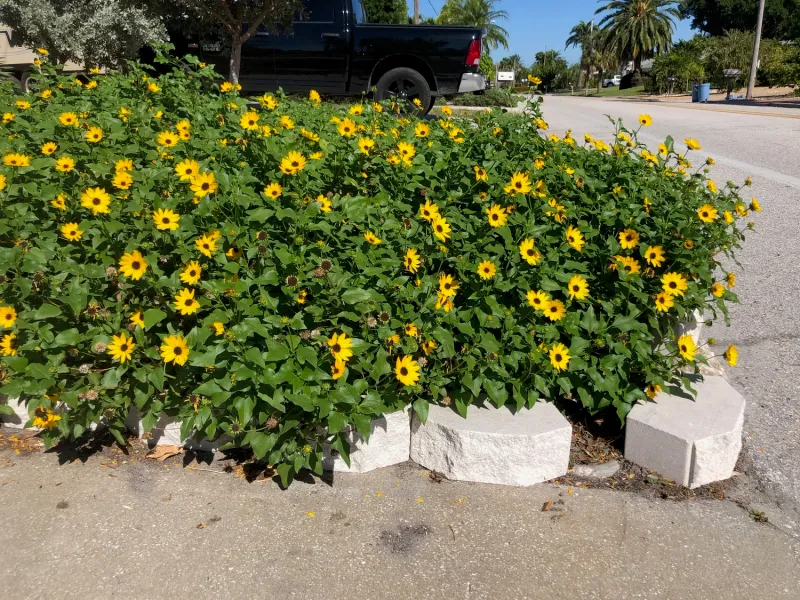
Cheerful yellow blooms on this native groundcover often turn to track the sun as it moves across the sky. You’re in for a treat when a whole sandy slope lights up like a bowl of lemon drops.
Helianthus debilis grows two to four feet tall and wide, spreading by runners and dropping plenty of seed. In frost-free areas it blooms nearly nonstop, and after a freeze it usually returns from roots or seed.
Salt spray and sandy soil barely bother it, so coastal yards and beachfront gardens are ideal homes. Give it a spot with at least six hours of direct sunshine every day for the best show.
Once established, it needs little or no extra watering, which makes it a smart pick for water-wise yards. Too much water can actually weaken growth and invite sunflower rust, a disease that spots the leaves.
Go easy on fertilizer, because one or two light feedings a year are plenty for this tough plant. Rich soil and heavy feeding mostly produce floppy stems instead of the tidy mounds you really want.
Butterflies flock to the flowers, and hungry birds pick at the seeds once the petals finally fade away. I love how that one patch can feed so many visitors with almost no help from me.
A good trim in late March or early April encourages fresh, full growth for the warm months ahead. Pull out older woody stems now and then, and edge the patch to keep runners out of walkways.
4. Liriope
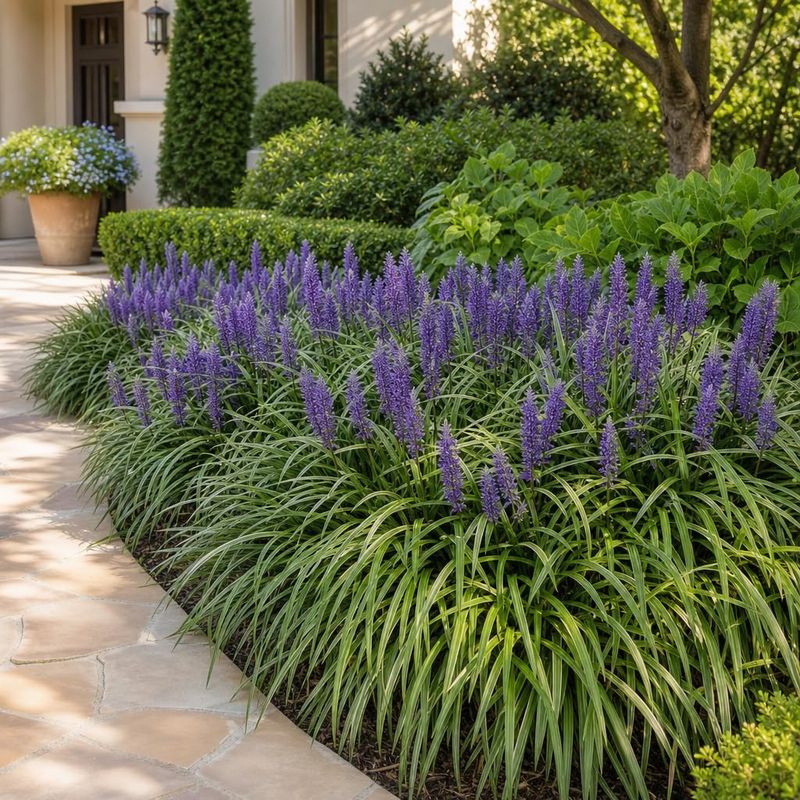
Grassy green fountains topped with purple flower spikes make lilyturf one of the easiest edging plants I know. Black berries follow the flowers and often hang on well into winter, adding a little extra interest.
Liriope muscari forms dense clumps twelve to eighteen inches tall and widens steadily by short rhizomes, so a row fills in within a few seasons. Vigorous cultivars like Super Blue fill in faster and can reach about twenty inches in height.
Skip creeping liriope, Liriope spicata, since it can run aggressively and is flagged as a plant to watch. Sticking with clumping muscari cultivars gives you steady coverage without the headache of an unruly spreader.
Lilyturf grows in full sun down to deep shade, which makes it handy under trees and beside buildings. Intense afternoon sun can brown the leaf tips, so a little midday shade keeps it looking fresh.
Sandy soil is fine, though mixing in compost at planting helps new clumps settle in quickly. Water regularly the first season, and afterward the roots handle dry weeks with surprisingly little fuss.
A slow-release balanced fertilizer two or three times a year keeps the leaves lush and green. Overfeeding rarely helps much, so resist the urge to give these clumps more food than they really need.
In late winter, cut old foliage back hard before the new leaves start poking up from the crown. Personally, I enjoy that yearly haircut, because the fresh growth comes back looking crisp and neat.
5. Pentas
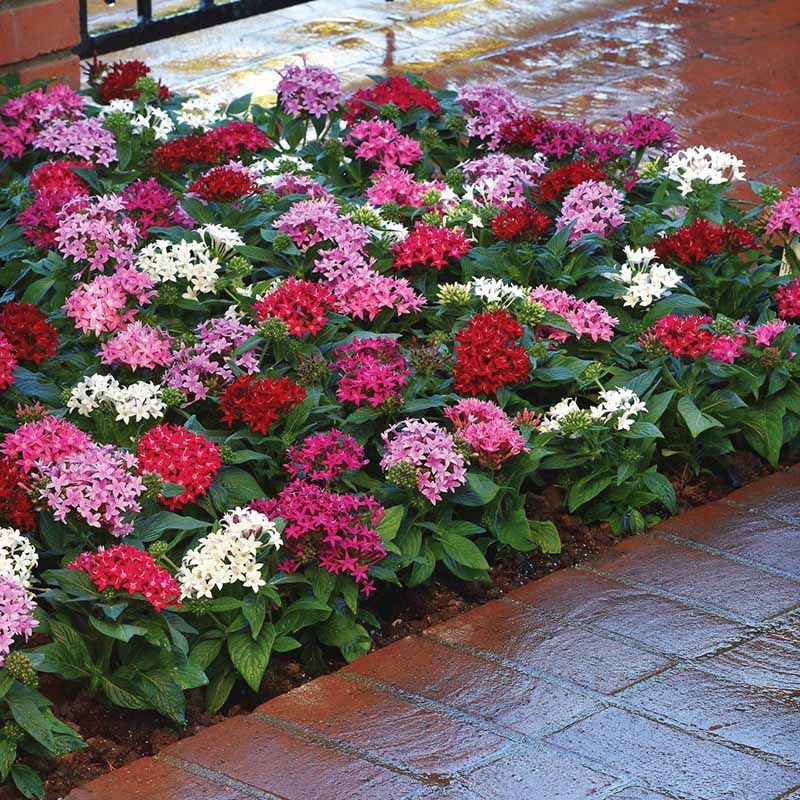
Butterflies seem to treat pentas like a busy roadside snack stand, landing on the starry clusters all day long. In a Florida study of nectar plants, pentas reportedly ranked first for the number of butterfly visits.
Pentas lanceolata grows upright to about two or three feet, branching out fifteen to twenty-four inches wide. Its star-shaped flowers come in red, pink, white, and lavender, blooming nearly year-round in warm zones.
Hardy in Zones 10 and 11, it may freeze back farther north but often regrows when warmth returns. Covering plants on frosty nights gives them a better chance of bouncing back quickly in spring.
Plant in full sun for the most flowers, since partial shade usually means a lighter show of color. Well-drained soil with some organic matter suits it, and it handles sandy ground better than many bedding plants.
Water whenever the top inch of soil feels dry, especially during long spring stretches without much rain. A balanced fertilizer every six weeks or so, or slow-release granules in spring, keeps new blooms coming.
Snip off faded flower clusters often, and the plant responds by pushing out fresh buds within weeks. Pinching young stems early on creates a bushier shape with more spots for flowers to form.
I can’t imagine a pollinator garden without them, especially when hummingbirds zip in for a quick sip. Pentas are also considered safe around dogs and cats, which makes me feel better about curious pets.
6. Mexican Bush Sage
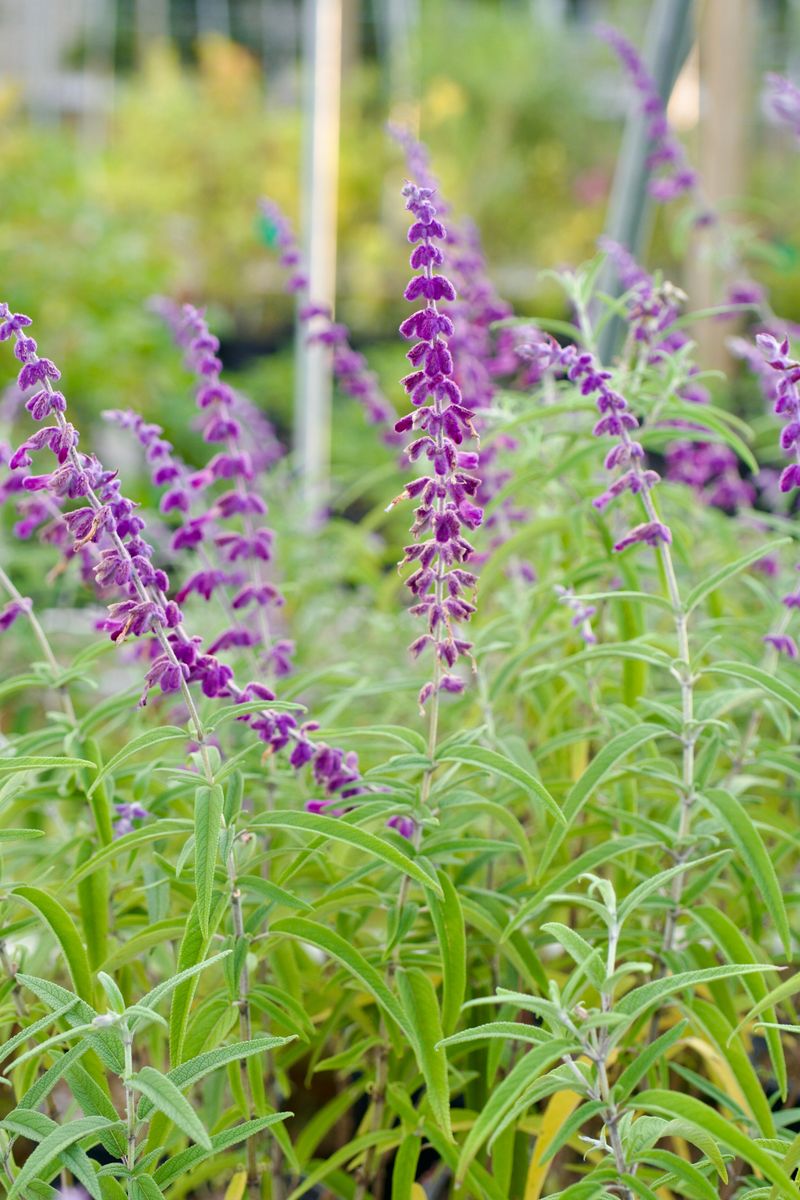
Velvety purple flower spikes on Mexican bush sage feel as soft as a stuffed animal when you brush them. Kids love petting them, and honestly, I do too whenever I walk past the bed in autumn.
Salvia leucantha starts small in spring but can build a mound three to four feet across by fall. Gray-green leaves arch outward in a fountain shape, setting off the fuzzy blooms that appear from late summer.
Hardy in Zones 8 through 10, it may freeze to the ground in a cold snap but usually resprouts. Leaving old stems standing over winter can help shelter the crown until the warm weather finally arrives again.
Full sun matters a lot here, because shaded plants get leggy and produce thinner, less impressive flower spikes. Lean, well-drained soil suits it better than rich ground, so feel free to skip heavy compost layers.
Water new plants through their first summer, and then let them handle most dry spells on their own. In our steamy climate, good drainage matters even more than extra water, since soggy roots cause trouble.
A light feeding in spring is enough, and heavy nitrogen mostly leads to floppy stems with fewer flowers. Hummingbirds and butterflies visit the nectar-rich spikes often, while deer usually avoid the strongly fragrant leaves.
Once new shoots appear at the base in late winter, cut the whole plant down to a few inches. You might notice it bounces back faster than you expect, filling its spot again before summer heats up.
7. Leavenworth’s Tickseed
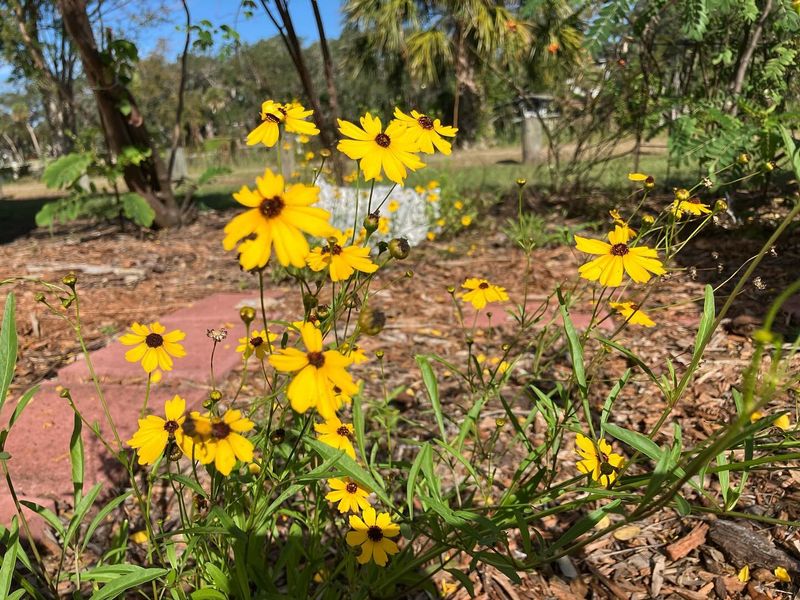
Lawmakers picked coreopsis as the state wildflower in 1991, and this native species shows exactly why. Bright yellow petals circle dark centers, bobbing on wiry stems like tiny cheerleaders waving pom-poms in the breeze.
Leavenworth’s tickseed grows one to three feet tall with fine, deeply lobed leaves and an open, airy shape. Each plant may last only three or four seasons, yet it reseeds so well that colonies keep going.
Wild plants grow naturally in wet prairies and pinelands, so this species actually enjoys a bit of moisture. It handles sand or clay, as long as the ground stays fairly moist between our summer rains.
Full sun produces sturdier stems and more flowers, though very light afternoon shade is usually fine. In the southern part of the state it can bloom year-round, while northern gardens see flowers spring through fall.
Fertilizer is rarely needed, and if you use any, a low rate of controlled-release product works best. Heavy feeding mostly encourages floppy growth, which is not the look anyone wants in a meadow patch.
Bees and butterflies crowd the blooms, along with plenty of helpful insects that keep garden pests in check. I believe a sunny patch of tickseed does more for local wildlife than almost any fancy hybrid.
Trim some faded flowers for more blooms, but leave others to drop seed for next year’s plants. Scatter a few seed heads into bare spots, and you may find a fresh crop sprouting the following season.
8. Frogfruit
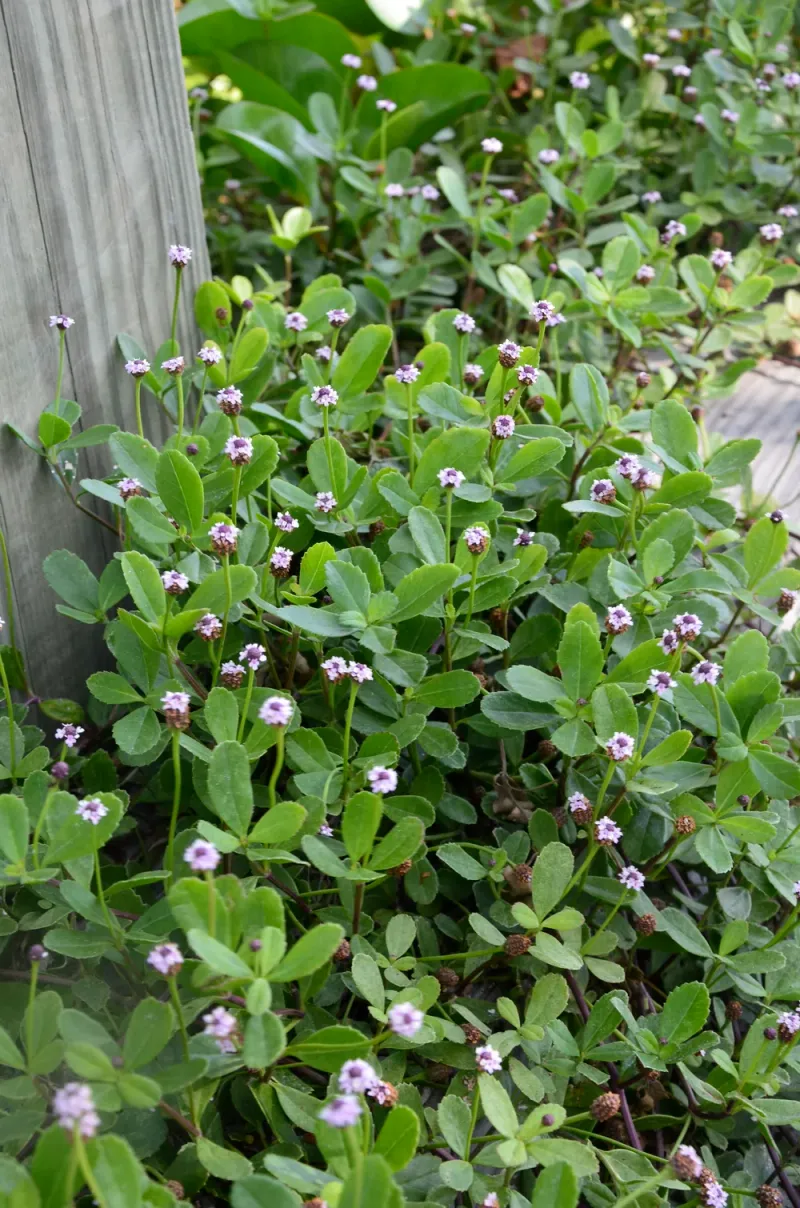
Frogfruit sounds like something from a fairy tale, but it is a real native groundcover with tiny lollipop flowers. Each bloom is a small purple cone ringed with white florets, like a miniature ice cream treat.
Phyla nodiflora creeps along the ground, rooting at its nodes and forming a low mat just a few inches tall. In good conditions, a single plant can stretch outward several feet in one warm growing season.
Butterflies adore it, and it serves as a host plant for phaon crescent and white peacock caterpillars. I have to admit, watching those little caterpillars munch away makes me happier than any perfect lawn.
Full sun gives the densest carpet, though it tolerates partial shade with a bit thinner growth. Sandy soil and salty breezes rarely bother it, and it can even handle short periods of wet ground.
Once established, frogfruit needs little extra irrigation and holds up surprisingly well during long, dry spring weeks. It tolerates light foot traffic, so many people use it between stepping stones or as a lawn alternative.
Fertilizer is seldom needed, because this tough little native is well adapted to poor, sandy ground. Mowing on a high setting a few times a year keeps the mat neat and encourages fresh flowers.
Its eager spreading means you should edge beds or borders where you want it to stop. You need to decide early where it belongs, because those creeping stems will gladly explore every open inch.
9. Flax Lily
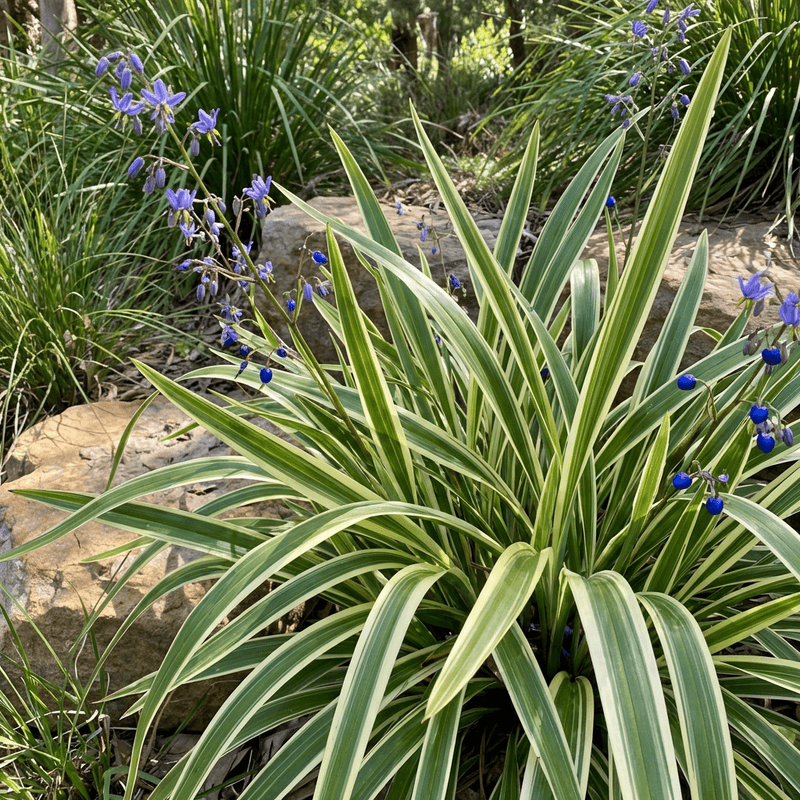
Glossy strap-like leaves with crisp white stripes make variegated flax lily look tidy even on the muggiest days. I like how it brightens a dull corner without needing constant attention or fussy watering schedules.
Dianella tasmanica forms grassy clumps one to three feet tall and fills in fairly quickly once established. Avoid Dianella ensifolia, which is considered invasive, and double-check plant tags before you buy any flax lily at all.
Small light-blue flowers with yellow centers may show up in winter and spring, followed by bright blue berries. Most gardeners grow it for the foliage, though, since the leaves carry the show all year long.
Sun or part shade both work, and variegated types handle full sun better than you might expect. Well-drained, sandy soil suits it nicely, and soggy spots should be avoided to keep roots healthy.
Water regularly while it settles in, letting the soil dry a bit between each deep drink. After that, it becomes moderately drought tolerant and asks for very little help during summer storms.
Hardy in Zones 8 through 11, it stays evergreen down to the mid-20s and regrows from roots after frost. A granular fertilizer a few times during the growing season keeps the clumps full and healthy.
In early spring, trim out old or damaged leaves before new growth emerges from the center. If striped leaves turn plain green, cut those clumps to the crown in late winter for a fresh start.
10. Perennial Peanut
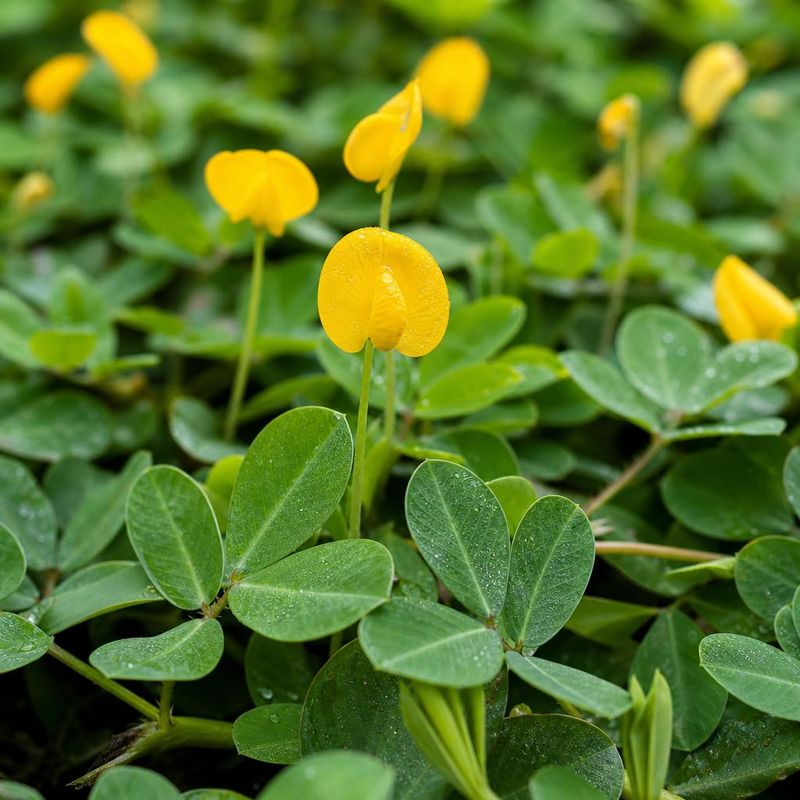
Golden flowers pop up across perennial peanut all year in warm spots, and you can actually eat them. Some folks toss the mildly sweet blooms into salads, but the plant does not produce peanuts for harvest.
Arachis glabrata stays about six inches tall and spreads by underground rhizomes into a thick, weed-resistant mat. It works statewide here, staying evergreen in frost-free areas and dropping leaves after colder winter nights.
Full sun with at least six hours of light gives the best flowering and fastest spread. Partial shade is tolerated, but you will likely see thinner patches and fewer of those sunny blooms.
Sandy, poor soil suits it well, because the roots pull nitrogen from the air and improve the ground. Skip low spots with standing water, since soggy conditions are one of the few things it dislikes.
Water daily for the first two or three weeks, then cut back to once or twice weekly. After it settles in, rainfall often handles most of its needs, which saves a lot on irrigation bills.
High-nitrogen fertilizer can actually reduce flowering, so most plantings do fine with no feeding at all. Mowing two or three times a year at three to four inches keeps it dense and full of flowers.
Install metal or fiberglass edging along beds, because those vigorous rhizomes travel farther than you might think. Personally, I think it is one of the best lawn swaps for a sunny, sandy yard.
11. Blue Porterweed
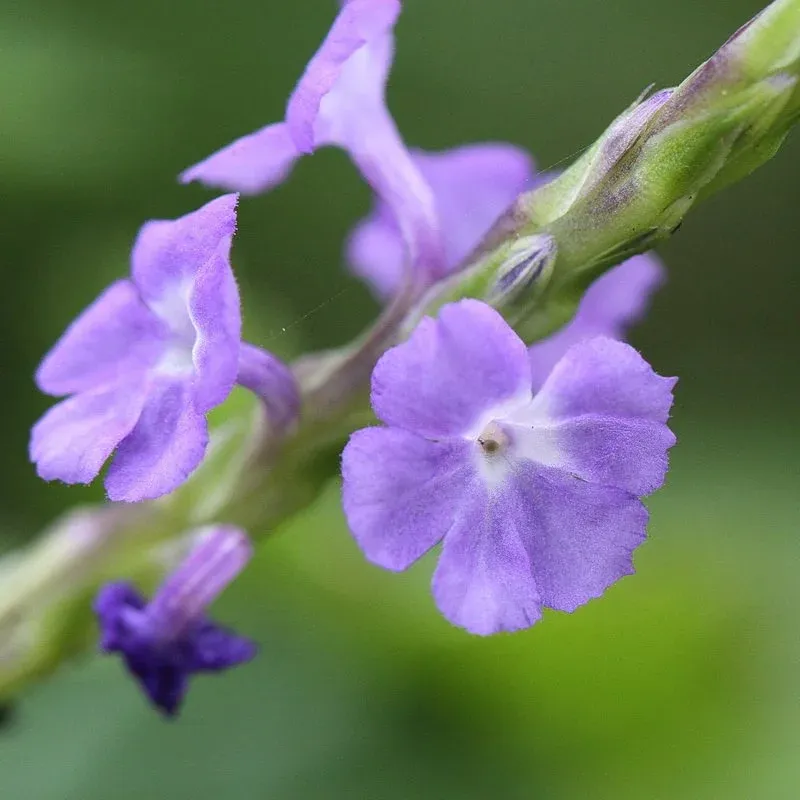
Butterflies seem to line up at blue porterweed, sipping from flowers that open just a few at a time. Those tiny blue blooms climb slowly up long, skinny spikes, so the show lasts for weeks.
Stachytarpheta jamaicensis is a native groundcover that sprawls low, usually staying around one to three feet tall. It grows quickly in warm weather and spreads wider than it grows tall, covering bare sunny patches.
Be careful at the nursery, because a taller non-native porterweed is sold too and can become weedy. Ask for the native species by its scientific name, and check the tag before you head home.
Full sun brings the most flowers, though plants handle a little light shade during hot afternoons. Sandy, well-drained soil suits it nicely, and it shrugs off salty breezes in many coastal yards.
Water regularly until the roots settle in, and afterward it handles moderate dry spells without much complaint. It is frost tender, so a cold snap can knock it back until warm weather returns.
Hummingbirds visit the flowers as well, and it serves as a host plant for tropical buckeye butterflies. I love how one small plant can draw that much wildlife to an ordinary flower bed.
Trim it back in late winter or early spring to keep the shape compact and full. Fertilizer is rarely needed, and too much feeding mostly produces leggy stems with fewer bright blue blooms.
12. Sunshine Mimosa
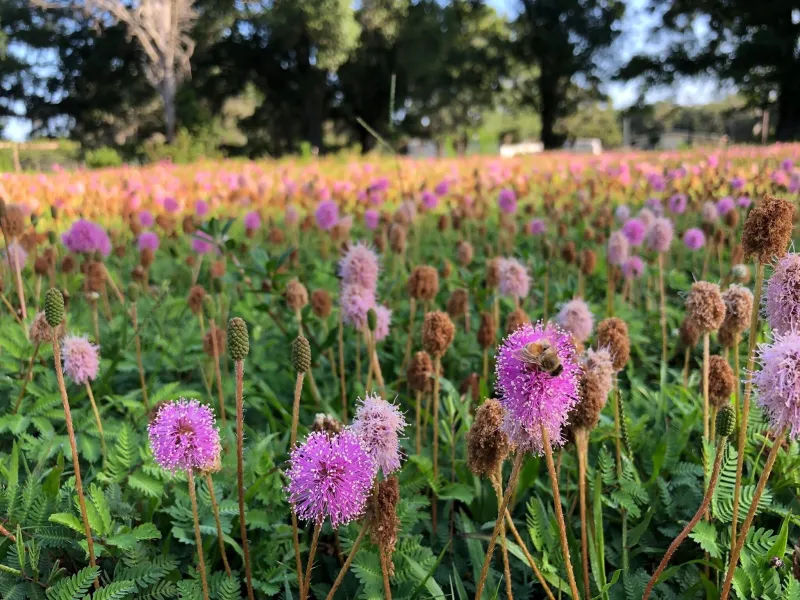
Brush your fingers across sunshine mimosa, and the feathery leaves fold up shyly right before your eyes. Kids think it is magic, and I still get a little thrill every time I see it happen.
Mimosa strigillosa is a native groundcover that stays about six to nine inches tall and spreads by rooting runners. Fluffy pink puffball flowers dot the mat in warm weather, looking like tiny cotton candy pom-poms.
Bees and butterflies visit the blooms often, which makes this plant a favorite for pollinator lawns. Many people mow it occasionally or walk across it, using it as a colorful replacement for turf grass.
Full to partial sun works well, and it adapts to both dry sandy ground and spots that stay damp. It also tolerates some salt, so coastal gardeners can usually count on it near the shore.
Once established, it is quite drought tolerant and seldom needs extra water beyond our normal summer rainfall. Keep new plantings moist for the first few weeks so the runners can root firmly into the soil.
Fertilizer is usually unnecessary for this tough native groundcover, which handles lean, sandy ground with real ease. Its dense mat helps hold soil on slopes and crowds out many weeds once it fills in.
Expect it to spread eagerly, so plan borders or edging where you want the carpet to stop. What surprises me most is how quickly a few plugs can turn into a soft pink floral lawn.