What Arizona Crape Myrtles Actually Need Before Winter Instead of a Hard Pruning
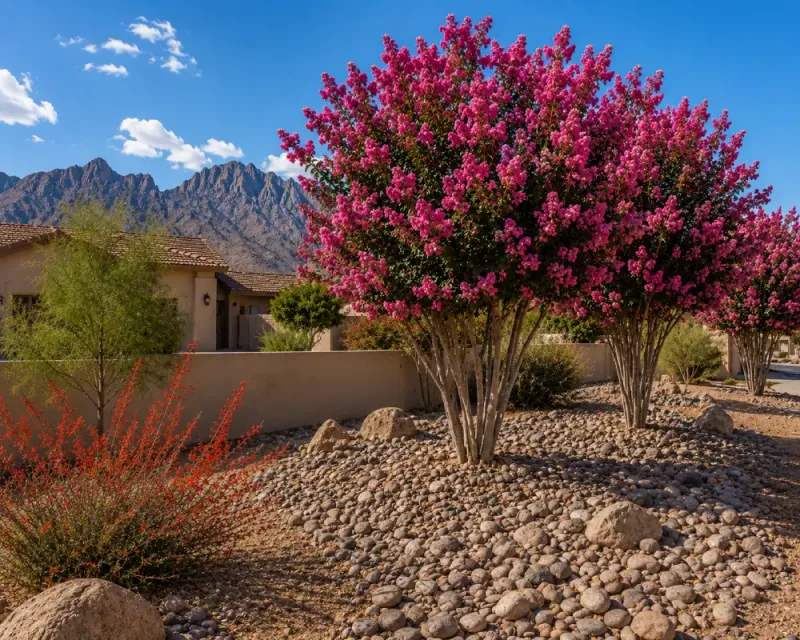
A crape myrtle that gets chopped to knobby stumps can still bloom, but it often blooms later. That surprised me the first time I read the research.
Many Arizona yards have these trees, and the fall chop is a habit passed from yard to yard. Let’s look at what your tree really wants before the cold arrives.
Why a Winter Chop Creates More Work
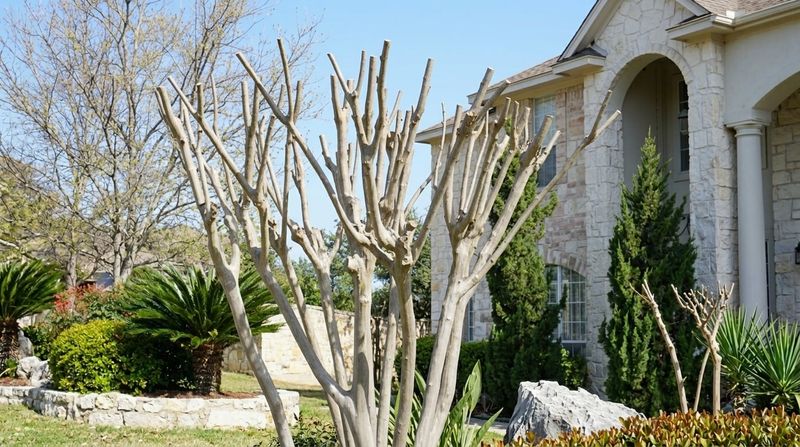
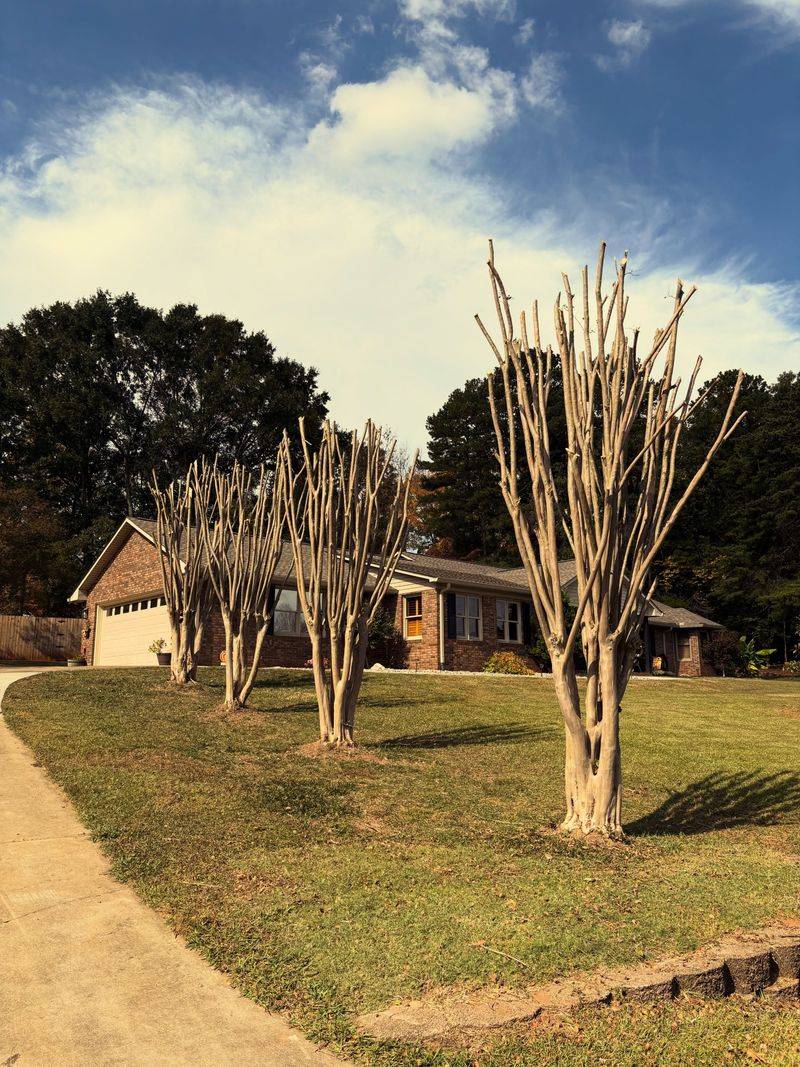
Skip the hard fall or winter chop and leave the canopy intact. Topping means cutting big limbs at random points, and that leaves stubs.
Arizona Cooperative Extension warns that topping encourages weak branching, water sprouts, and stubs, so you trade one afternoon of cutting for years of cleanup.
Topping and pollarding are not the same thing. Pollarding is a deliberate system that cuts new growth back to the same heads again and again, so it needs recurring work.
It is not a no-maintenance replacement for topping.
Here is the flowering piece. Crape myrtle blooms on new growth, but a severe chop does not make it bloom better.
University of Florida guidance says unpruned plants can flower well, and topping or pollarding typically delayed flowering by up to a month. Effects vary with how hard you cut and which cultivar you grow.
A four-year study of ‘Natchez’ crape myrtles found more decay behind topping cuts. It covered one cultivar, so it does not mean every topped tree will have the same outcome.
Still, it is a good reason to keep the saw in the shed.
What Should You Water Before Winter?
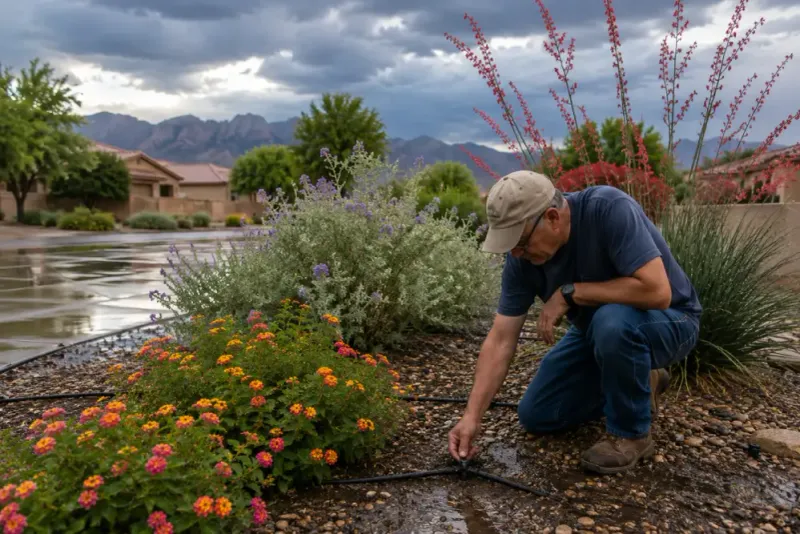
Before you touch the irrigation timer, check the soil. Push a screwdriver or soil probe into the ground and see how moist it is several inches down.
Water needs change with the weather, so a rigid schedule can miss the mark.
University of Arizona watering guidance advises seasonal adjustment and deep watering at the root zone. Plants use less water in winter than during hot, dry, windy stretches.
Roots absorb most actively at and beyond the drip line, so water there instead of right beside the trunk.
Arizona is a big state, and conditions shift with elevation and locality. A north-central Arizona fall and winter irrigation guide suggests watching rain and soil moisture through dry winter spells.
A Southern Arizona watering guide gives schedules for established landscape plants.
Treat those guides as reference points, not crape myrtle prescriptions. Plant age, soil type, and your own microclimate matter too.
Young trees usually need more attention than established ones.
Reserve Cuts for a Real Branch Problem
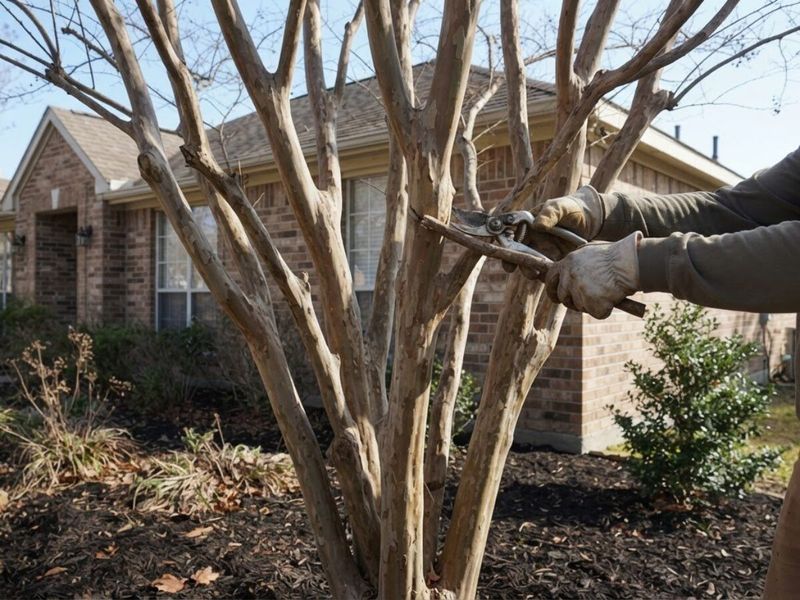
Some cuts are worth making. Remove a branch that is a safety concern, such as one hanging over a walkway or a cracked limb ready to drop.
Take out limbs that are damaged, that cross and rub other branches, or that grow toward the center of the canopy.
This is selective pruning, and it is very different from chopping the canopy. You remove a handful of specific limbs and the tree keeps its natural shape.
University of Florida guidance says a well-sited crape myrtle may need little or no pruning.
Make each cut at the branch collar, the slightly swollen area where the branch meets its parent limb. Leaving a stub invites trouble, so cut cleanly and do not leave a peg behind.
Ask yourself one question before each cut: what problem does this solve? If you cannot name one, put the pruners down.
Seasonal timing is the next section’s job.
The Right Window Depends on the Cut
Timing advice sounds like it argues with itself, but it makes sense once you know the goal. Arizona Cooperative Extension lists crape myrtle among summer-flowering shrubs to prune in spring before growth begins.
It does not give one calendar date for the whole state.
Florida guidance describes dormant-season pruning instead. It says structural cuts are easier to judge when the plant is leafless, and it reserves severe pruning for late dormancy.
You can read more at University of Florida IFAS.
So winter pruning is not automatically wrong. A safety cut can happen when the problem appears.
Bigger shaping is better saved for the stretch just before spring growth.
Your local conditions matter as well. A mild low-desert yard and a cold high-elevation yard reach that moment at different times.
Watch your own tree’s buds.
After Frost, Wait for Spring Growth
A cold snap can leave leaves blackened and limp, and the urge to grab pruners is strong. Hold off.
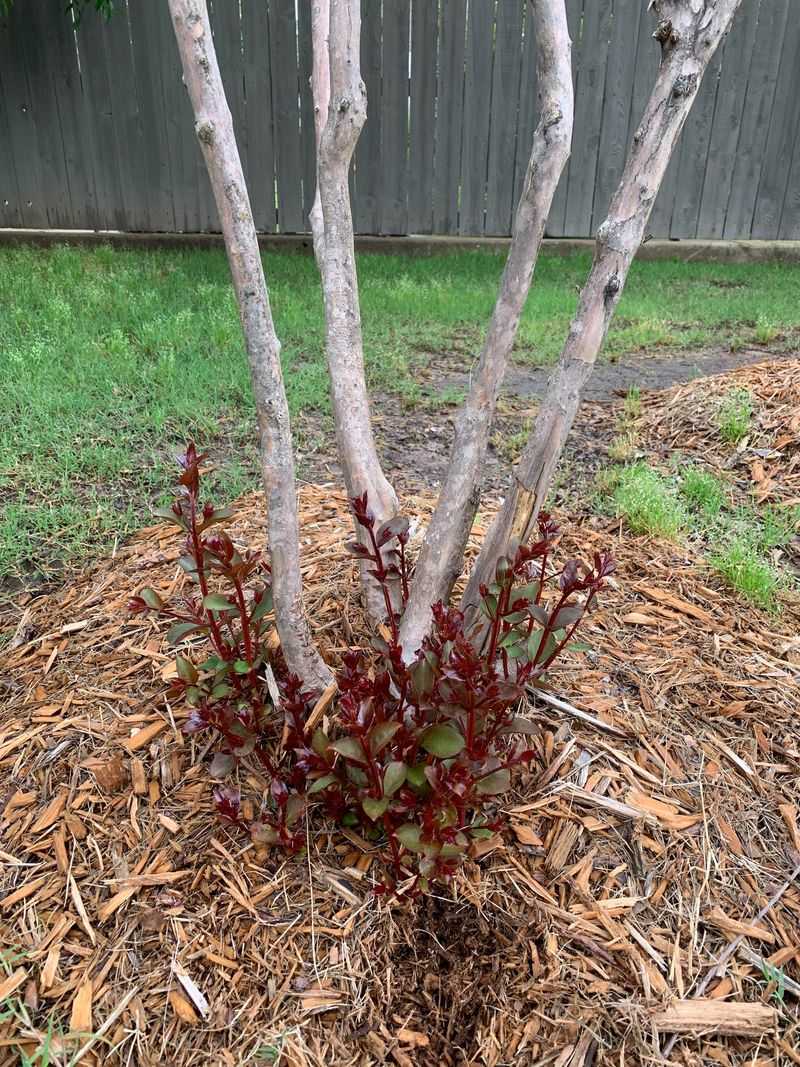
Suspected frost damage on woody growth is best left alone until spring growth begins.
University of Arizona Cooperative Extension explains that apparent damage may not show its full extent right away. Pruning early can also stimulate tender new growth that is vulnerable to the next cold night.
When buds swell and leaves emerge, the living wood becomes easier to tell from the damaged parts. Then you can cut back to healthy growth with a much clearer picture.
Keep this separate from routine shaping. Frost response is about waiting and watching, not about tidying.
Every plant and every winter is different, so do not assume how your tree will turn out.
Choose a Crape Myrtle That Fits Its Space

Many chopped crape myrtles started as a planting mistake. A tall cultivar tucked beside a window or a short fence keeps outgrowing its spot, so the owner keeps cutting it back.
That cycle is hard on the tree and on your weekends.
Size varies by cultivar and location. The University of Arizona Campus Arboretum describes crape myrtle as a small shrub that can be trained as a tree, with a broad potential size range.
It also lists China as its origin, so it is an introduced ornamental, not an Arizona native.
Fit matters more than force. Before you buy, read the plant tag for mature height and spread, then picture it in the space.
As Florida guidance suggests, a well-sited plant needs little pruning.
If you already own an oversized one, you have options beyond chronic cutting. Selective cuts can help manage it.
In some yards, moving to a better-fitting plant is kinder to everyone.
A Short Winter Care Checklist

Keep the canopy intact and put the loppers back on the hook. Walk the tree once and look for a specific safety or branch problem, like a cracked or rubbing limb.
Remove only what you can explain.
Check soil moisture before you change irrigation, using the approach from University of Arizona watering guidance. Save routine pruning for a suitable window, since Arizona Extension favors spring before growth.
Your local conditions shape both timing and watering.
A crape myrtle left alone often does just fine. Sometimes the best winter care is a little patience.