10 Native Shrubs To Plant In Arizona Now So Hummingbirds Feed In Your Yard All Winter
Winter in the Arizona low desert is busy season for hummingbirds, even when most of the country is frozen. Anna’s and Costa’s hummingbirds stick around Phoenix and Tucson all year, and they need steady nectar when cool months arrive.
Fall is the best time to plant desert shrubs here, because roots settle in while the soil is warm and the air is mild. Pick the right natives now, and your yard can turn into a winter feeding station that sips very little water.
1. Chuparosa
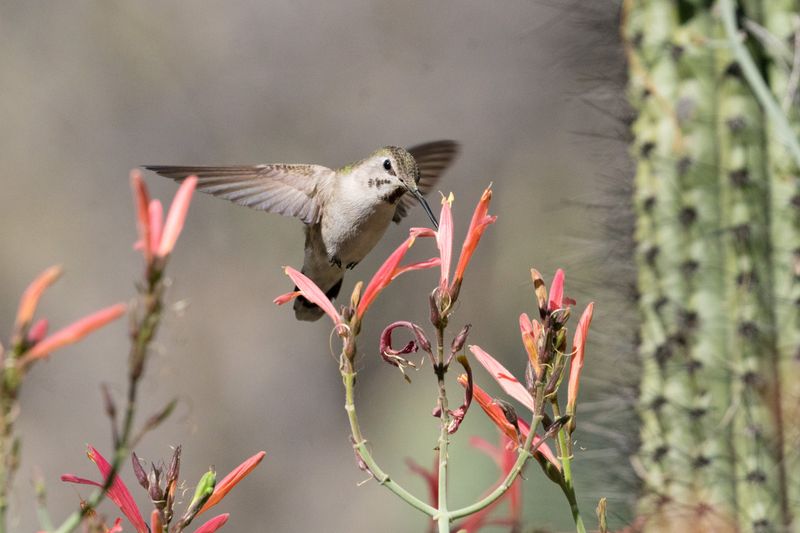
Ask any Tucson birder which shrub hummingbirds fight over in January, and chuparosa usually tops the answer. The name even comes from the Spanish word for hummingbird, which tells you how long these two have been partners in the Sonoran Desert.
Chuparosa grows into a loose, green-stemmed mound about 3 to 5 feet tall and wide. Its red-orange tubular flowers open from late winter through spring, right when Costa’s hummingbirds are building nests and need extra fuel.
Many plants start flowering in December during mild years.
Here is the best part for busy homeowners. Chuparosa shrugs off full sun, reflected heat from walls, and alkaline caliche soil.
Once established, it gets by on occasional deep watering, and it may drop leaves in summer to save moisture. That is normal, not a sign of trouble.
A hard frost can nip the tips, but the plant bounces back quickly in spring. Trim lightly after flowering if you want a tidier shape.
Plant it in October or November near a window or patio, so you can watch the feeding show up close. The dense stems also give small lizards and birds a shady place to rest.
2. Desert Honeysuckle
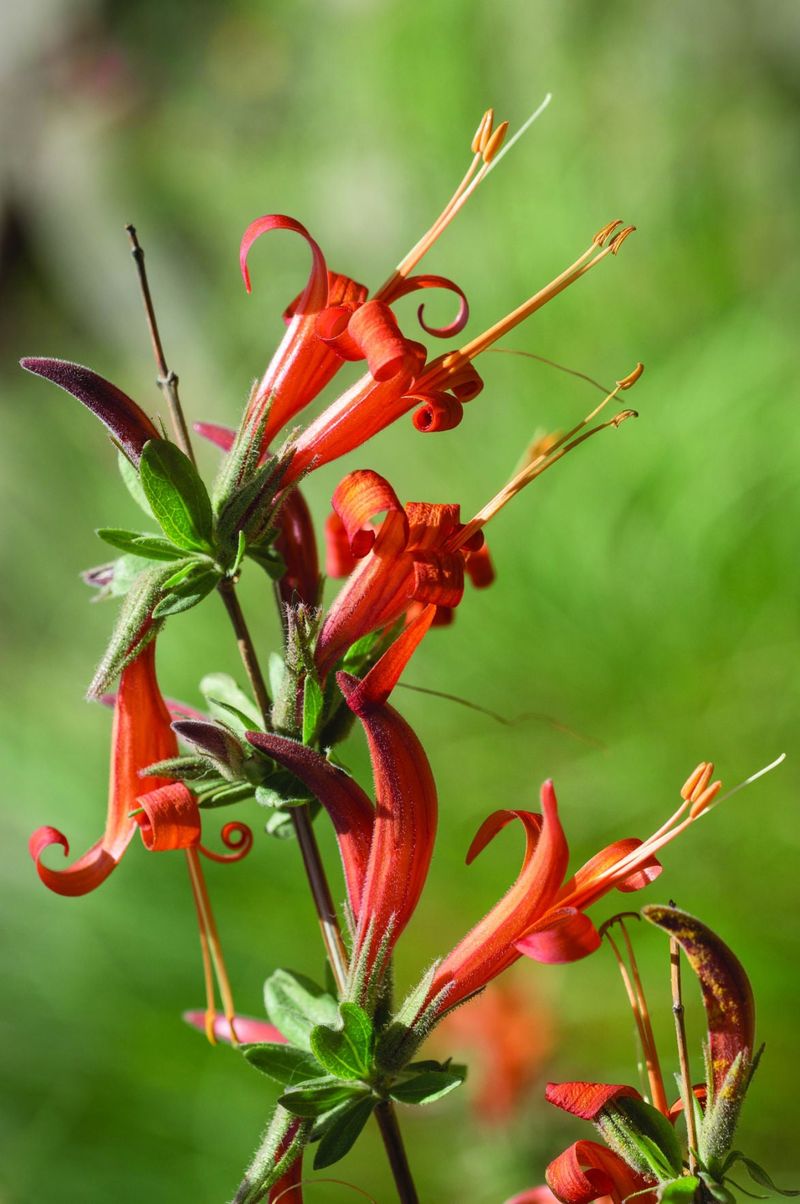
Picture a cool November afternoon with an Anna’s hummingbird zipping between bright orange-red tubes. That scene happens often around desert honeysuckle, one of the most dependable late-season bloomers for low-desert yards.
Desert honeysuckle, or Anisacanthus, grows about 3 to 4 feet tall with a fine, airy look. Flowers arrive in waves from late summer into fall, and in mild winters they keep coming well past Thanksgiving.
Its cousin, red justicia, fills a similar role with red blooms from fall through spring. Planting both can stretch your nectar season even further.
The shrub handles 110 degree days without fuss when it gets a deep soak every week or two in summer. In cooler months, watering every few weeks is usually enough.
It looks best in full sun or light afternoon shade, which makes it handy along a west wall.
Cut it back by about a third in late winter to encourage fresh growth and a heavier bloom flush. Little else is needed.
Bees and butterflies also visit the flowers, so the plant pulls double duty for pollinators in a water-wise landscape. Group three together for a bold patch that hummingbirds can spot from across the block.
3. Arizona Yellow Bells
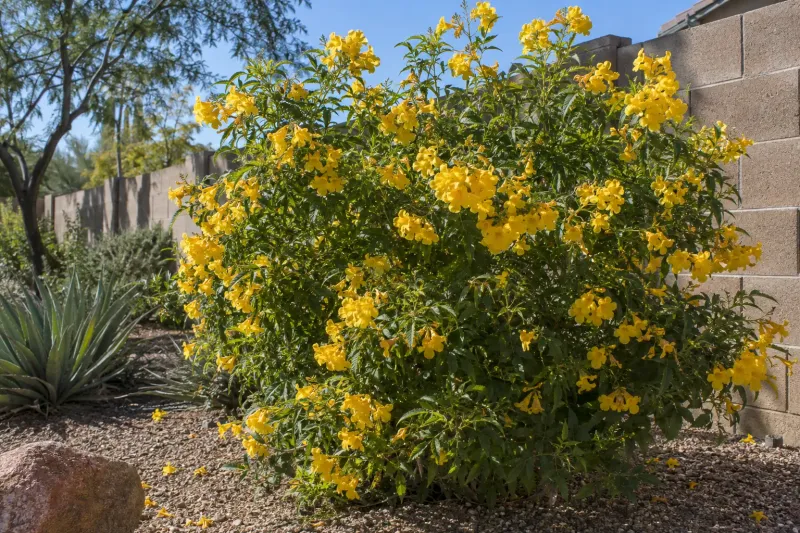
Golden trumpets by the hundreds, spilling over a backyard wall in late October, are hard to miss. Arizona yellow bells, also called Tecoma stans, puts on one of the longest flower parades of any native shrub in the state.
Your Arizona Garden Changes Every Week. Your Plan Should Too.
Gardening in Arizona changes quickly throughout the season. Every Friday you’ll receive a simple weekly plan showing exactly what to plant, prune, fertilize, harvest, and protect so you never miss the right timing.
Bloom season usually runs from spring through November, and in warm pockets of Phoenix it can push into December. That long run makes it a bridge plant, carrying hummingbirds from summer into the first cool weeks of winter.
Bees love it too, so expect plenty of buzzing traffic.
Growth is fast. A one-gallon plant can reach 6 feet in a couple of seasons, eventually stretching to 10 feet or more.
Use it as a living screen, a corner anchor, or a bit of filtered shade for a hot patio.
Fun fact: yellow bells is the official flower of the U.S. Virgin Islands, yet it grows wild in southern Arizona canyons too.
A hard freeze can knock it back to the ground, but it usually regrows from the roots in spring. Wait until frost danger passes, then prune out any damaged stems.
Deep, infrequent watering keeps roots strong and helps the shrub ride out summer heat without stress.
4. Pink Fairy Duster
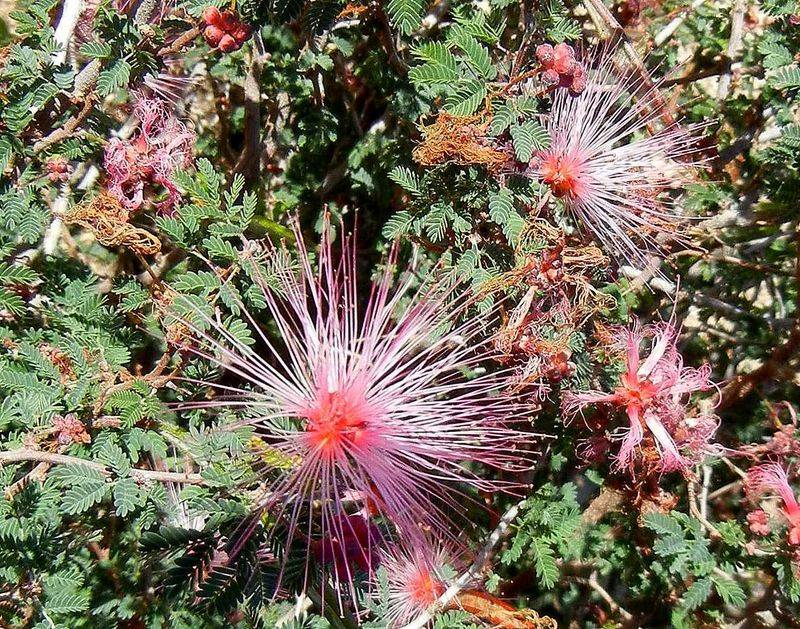
Small shrub, big personality. Pink fairy duster looks like someone glued tiny pom-poms all over a low desert bush, and hummingbirds seem just as charmed as people are.
Native across southern Arizona hillsides, Calliandra eriophylla stays compact at 1 to 3 feet tall. Its feathery flowers are made of long pink stamens rather than petals, and they appear mostly from late winter into spring, with scattered blooms through fall after rain.
In a planting plan, it fills the early gap before many summer flowers start.
Water needs are about as low as they come. After the first year, many fairy dusters survive on rainfall plus a monthly drink during the hottest stretch.
They tolerate rocky, poor soil and blazing sun, so they work well on slopes, along driveways, or tucked between boulders.
Quail and other ground birds often nibble the seeds, and the fine branches give small critters cover. Skip heavy pruning, since the natural airy form is part of its appeal.
If you have a tight front yard or a narrow strip by the sidewalk, this little native lets you add hummingbird food without taking over the space. Plant several for a soft pink haze.
5. Autumn Sage
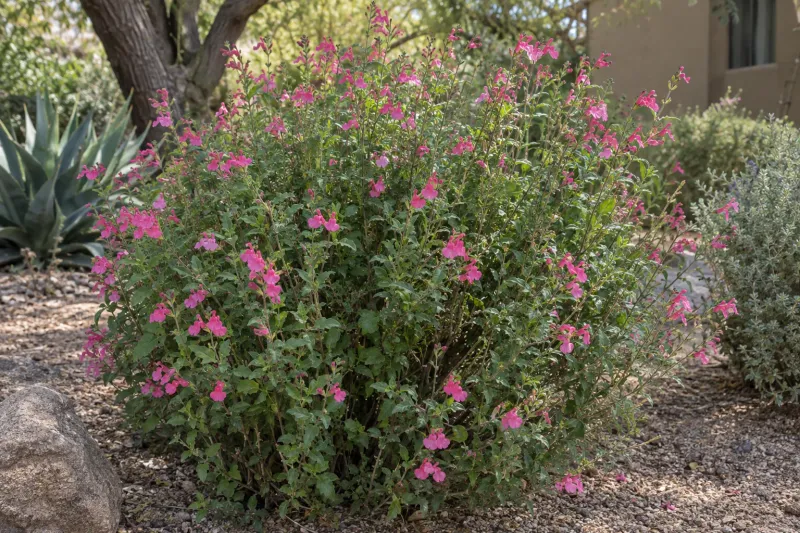
Not every great choice has to be born in Arizona. Autumn sage hails from Texas and northern Mexico, yet it has earned a permanent spot in desert gardens because it simply refuses to quit blooming.
Salvia greggii forms a tidy mound around 2 to 3 feet tall. Flowers come in red, pink, coral, purple, and white, and the season runs strong in spring and again in fall.
In mild Phoenix winters, many plants keep a scattering of blooms, giving hummingbirds a reliable snack between bigger flushes elsewhere in the yard.
The leaves have a pleasant minty scent when brushed. That fragrant foliage tends to be less appealing to rabbits and javelina, which is a real bonus in neighborhoods near open desert.
Give it full sun or light afternoon shade and well-drained soil. Overwatering is the main way gardeners lose it, so let the ground dry between drinks.
A light shearing in late winter and again after the spring bloom keeps the plant dense and flower-packed. Red varieties seem to draw the most hummingbird attention, so lean toward those if feeding birds is your top goal.
Tuck it near a feeder to create a busy hummingbird corner.
6. Baja Ruellia
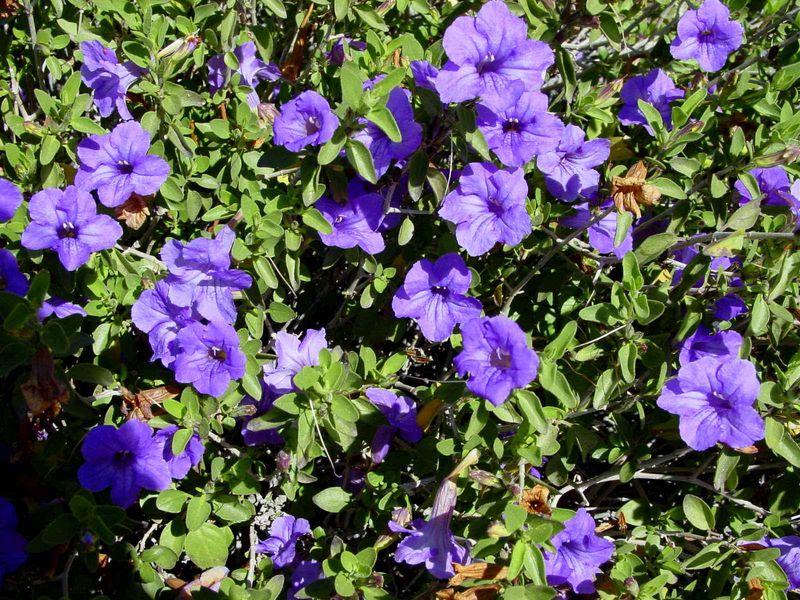
Some shrubs are divas. Baja ruellia is more like the friendly neighbor who shows up with flowers and never asks for anything back.
Native to the Sonoran Desert, including Baja California and southern Arizona, Ruellia peninsularis grows into a rounded 3 to 4 foot shrub with pale stems and small gray-green leaves. Lavender-purple bell flowers open across a remarkably long season, especially from spring through fall, and in warm spots they can linger into early winter.
Hummingbirds and bees both make regular rounds.
What really sets it apart is toughness. Baja ruellia handles reflected heat, rocky ground, and long dry spells with very little irrigation once roots are established.
It is a smart pick for that blazing strip along a block wall or driveway where other plants fry.
Frost may singe the tips in a cold snap. Wait until late February, trim off the damaged growth, and it usually rebounds within weeks.
Mixing it with red-flowered shrubs like chuparosa creates a colorful purple and red combo that keeps the nectar menu varied. Since its flowers and those of neighboring plants peak at different times, the pairing helps hummingbirds find food across more of the year.
7. Ocotillo
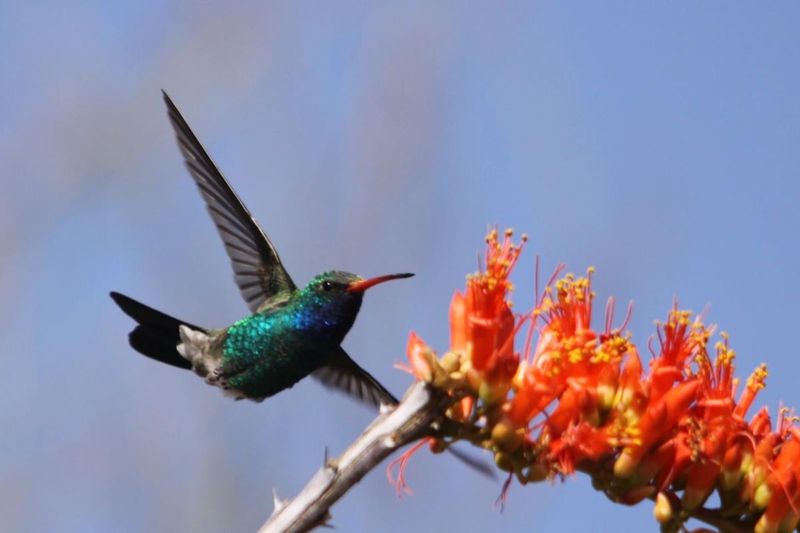
Tall, spiky, and a little wild, ocotillo looks like a bundle of green whips bursting from the ground. Hummingbirds treat it like a skyscraper buffet.
Fouquieria splendens is a true Sonoran native, often growing 10 to 20 feet tall. Its fiery red flower clusters crown the tips of the canes, usually in late winter and spring.
Timing matters here, because those blooms line up with the return of migrating hummingbirds heading north and with Costa’s nesting season. Tall perches also give birds a lookout point to guard their favorite flowers.
Ocotillo is famous for turning green within days after rain, then dropping its leaves when the soil dries. That trick lets it survive brutal heat and drought with almost no help from you.
Overwatering is the bigger risk, so plant it in fast-draining soil and go easy.
Buy plants from a licensed nursery with proper tags, since wild collection is regulated in Arizona. Newly planted bare canes may take months to leaf out, so be patient.
Many homeowners line them up as a living fence, which adds a spiny barrier, a striking silhouette, and a seasonal nectar boost all at once.
8. Desert Willow
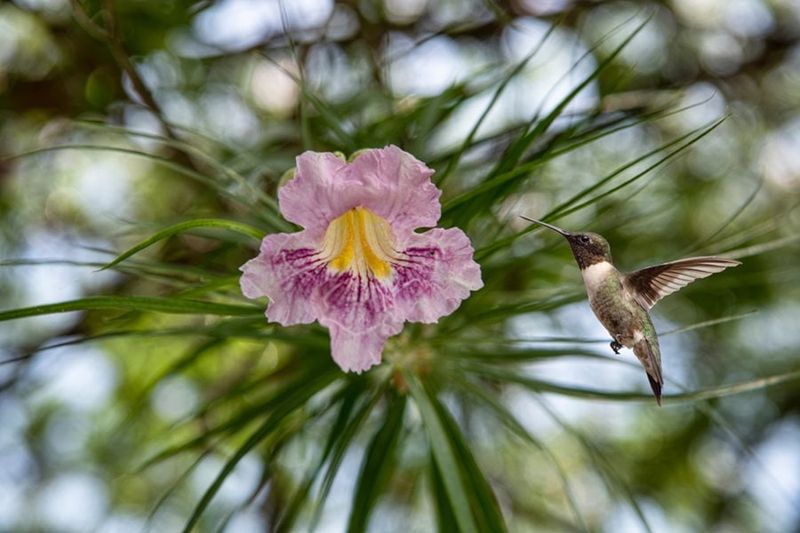
Shade and hummingbirds from the same plant? Desert willow delivers both, which makes it a favorite for Arizona yards that bake every afternoon.
Chilopsis linearis grows naturally along desert washes and can be trained as a multi-trunk tree or kept as a big shrub around 15 to 25 feet. Its orchid-like flowers come in pink, lavender, burgundy, and white, often with a sweet scent.
Blooms show up from late spring well into fall, sometimes running into October and early November.
Let’s be honest about winter. Desert willow drops its narrow leaves when cold weather hits, so it is not a December nectar source.
Its value is in carrying hummingbirds deep into autumn, then giving the yard filtered summer shade that cools patios and nearby plants.
That shade can actually help other winter bloomers on this list by protecting them from harsh summer sun. Plant chuparosa or penstemon at the edge of its canopy for a layered habitat.
Deep watering twice a month in summer is usually plenty once established. Choose a seedless variety like Bubba or Burgundy if you want less cleanup from the long seed pods.
It also attracts native bees and grows quickly.
9. Parry’s Penstemon
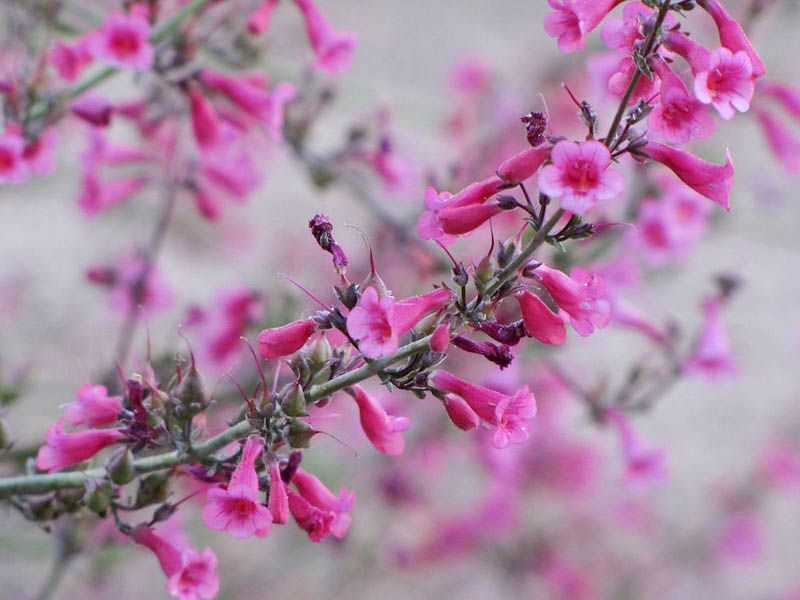
Think of Parry’s penstemon as the alarm clock of the hummingbird year. When its rosy pink spikes shoot up in late winter, the whole garden seems to wake up.
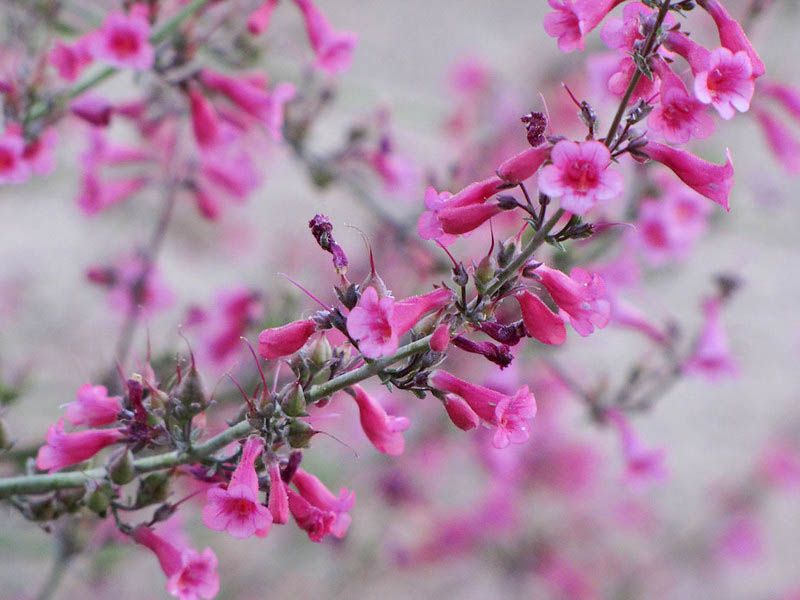
Penstemon parryi is native to southern Arizona and forms a low rosette of blue-green leaves most of the year. Then, from about February into April, flower stalks rise 2 to 4 feet tall, packed with tubular blooms shaped perfectly for a hummingbird’s bill.
It is often one of the first big nectar sources of the season.
Fall planting is the secret. Set plants in the ground in October or November, and roots grow all winter so you get flowers the very first spring.
Wait until March, and you may miss a full year of bloom.
Technically it is a perennial rather than a woody shrub, but it fits right in with shrub borders. Plants are short-lived, often three to five years, yet they reseed freely in gravel.
Leave a few stalks to drop seed, and you will find new babies popping up nearby. Little water is needed beyond winter rain.
Plant a dozen together, and the effect looks like a pink wildflower meadow.
10. Globemallow
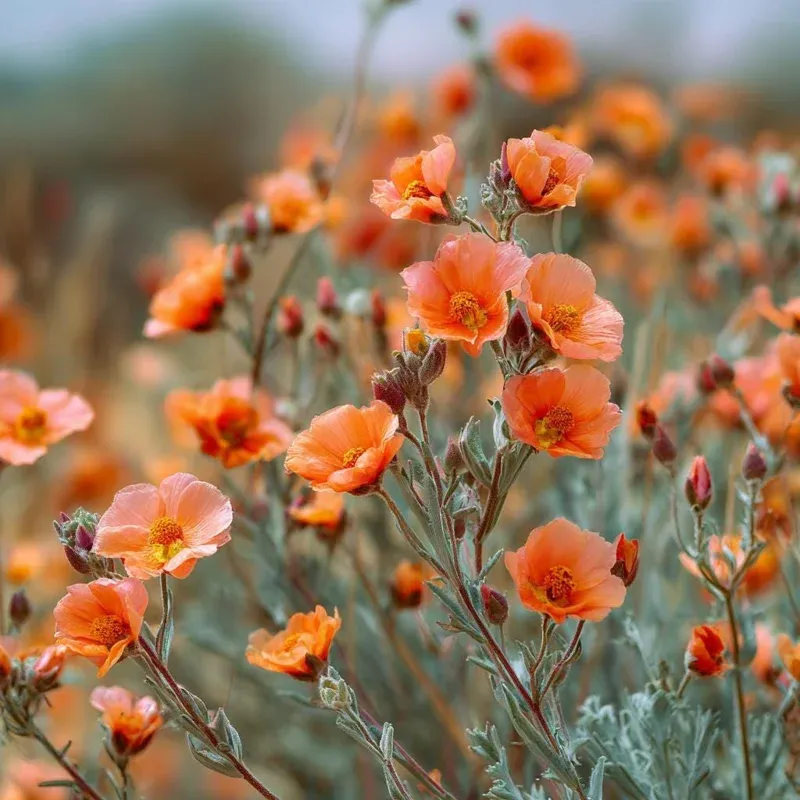
Apricot-orange cups on fuzzy gray stems make globemallow one of the cheeriest sights along Arizona roadsides in spring. Bringing it home adds a wild, natural touch to any yard.
Sphaeralcea ambigua grows 2 to 4 feet tall and wide and starts blooming in late winter in warm years, peaking from February through May. After good rains, it often reblooms in fall.
Hummingbirds visit, though the open flowers especially please native bees, so globemallow strengthens the whole pollinator community around your feeders and nectar shrubs.
Few plants need less care. Globemallow thrives on rainfall once established, tolerates poor alkaline soil, and handles summer heat without complaint.
In fact, too much water and rich soil can make it floppy and short-lived.
One heads-up: the fine hairs on its leaves can irritate sensitive skin and eyes, which earned it the nickname sore-eye poppy. Wear gloves when pruning.
Cut plants back by half in early summer after the main bloom to keep them full. They also reseed in open ground, filling bare spots naturally.
Pair globemallow with penstemon and fairy duster, and you get a low-water, late-winter flower patch that keeps hummingbirds coming as days warm.