Why Ohio Great Horned Owls Start Hooting Duets in November
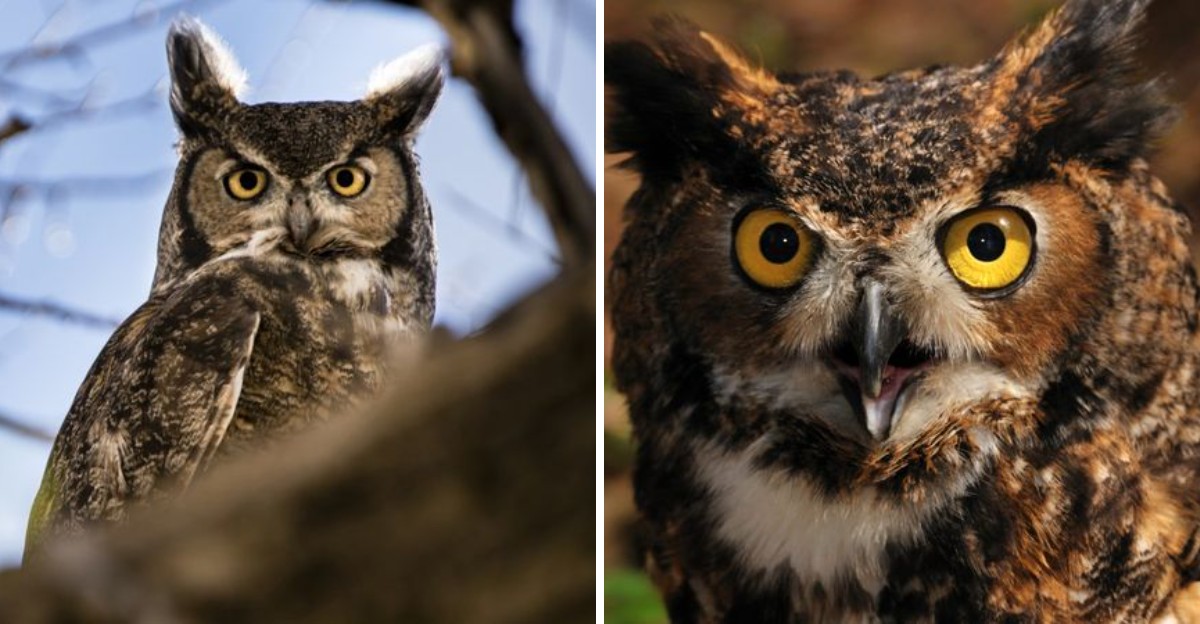
Some of the earliest nesting birds in the state lay eggs while snow still sits on the branches. That schedule means their romance kicks off months ahead, right when most of us are raking the last leaves.
What I find fascinating is how the plan shows up as sound. Step outside on a still November night in Ohio, and you may catch a deep hoot answered by a slightly higher one.
Two voices, trading lines like an old married couple.
You might be surprised by how much is packed into those calls. Property lines get drawn, partnerships get renewed, and young birds from last spring get a clear message to keep moving.
I never get tired of hearing it from my back porch. Once you know what the conversation is about, the dark garden feels a lot less quiet.
So who is talking out there, and what are they planning?
1. That Back-and-Forth Owl Hooting Has Perfect Timing
Owls that nest in January need to start dating early, and that simple fact explains most of the November noise. Great horned owls are among the first birds in Ohio to lay eggs, often in late January or February.
Courtship takes time, so pairs begin calling to each other in late fall. By the time cold snaps arrive, many partners already have their plans settled.
The duets you hear sound like a call and a reply. One owl gives its classic rhythm, often written as hoo-h’HOO-hoo-hoo, and its mate answers within seconds.
Biologists consider this exchange a key part of pair bonding and territory defense.
Calling does not suddenly switch on in November. Great horned owls hoot through much of the year, but activity climbs in late fall and peaks in winter, according to many wildlife sources including the Cornell Lab of Ornithology.
So when your evening walk starts to feel like a nature concert, you are hearing the opening act of nesting season. Spring songbirds get their turn later.
A practical tip from my own yard is to listen during the first hour after sunset. Calm, clear nights tend to carry the best performances.
Jot down the dates you hear them. Over a few years, you may notice your local pair keeps a surprisingly steady calendar, which makes the first duet of the season feel like an old friend checking in.
2. Great Horned Owl Partners Recognize Each Other by Voice
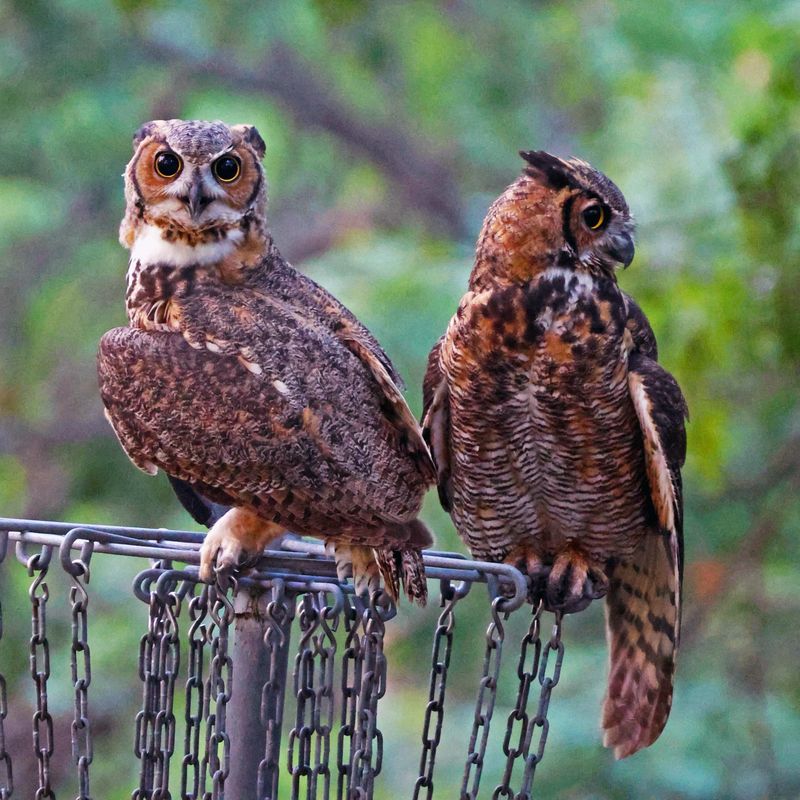
Listen closely and you can tell the couple apart. The female’s hoots are usually higher in pitch, even though she is the larger bird.
That size twist surprises a lot of people. In many raptors, including great horned owls, females outweigh males, yet the male owns the deeper voice thanks to a larger syrinx, the bird’s voice box.
When the pair duets, the calls often overlap or follow closely. Researchers believe the exchange helps mates confirm each other’s location and stay coordinated as they share a home range.
Great horned owls are generally thought to stay with the same partner for years. Many pairs remain on the same territory through the seasons, and the fall duets help refresh that partnership before the hard work of raising chicks.
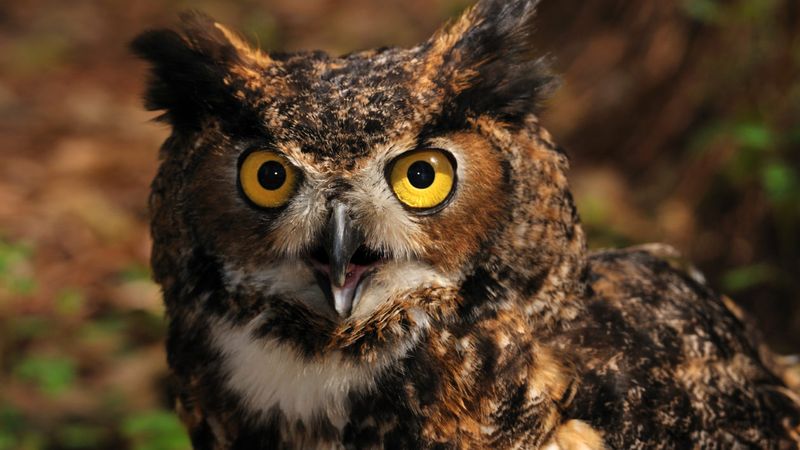
If you catch a calling owl in a flashlight’s edge, look for the white throat patch. It often puffs out while the bird hoots, a little like a balloon.
Want to try identifying the voices yourself? Note which call sounds lower and which comes first.
In my experience the male often starts and the female answers, though not every night follows the script. Recording the duet on your phone and comparing clips later turns a casual listen into a fun backyard science project you can share with kids or neighbors.
3. Every Hoot Marks a Patch of Ohio Woods as Taken
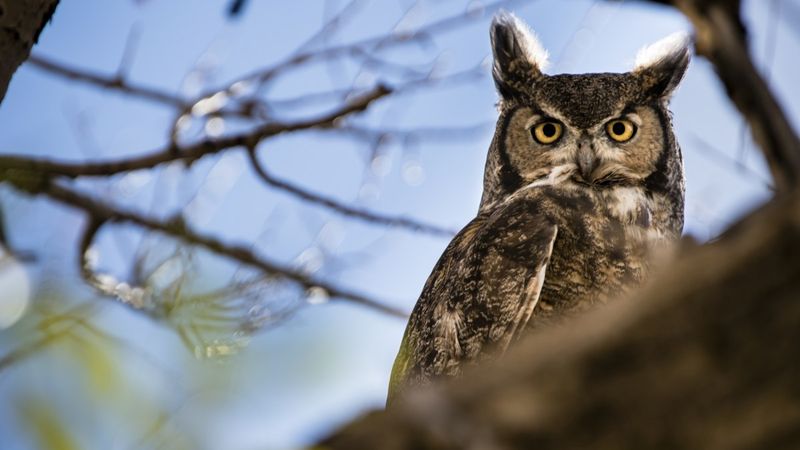
Think of a hoot as a fence you can hear. Great horned owls defend territories, and calling is one of their main tools for keeping neighbors out without a fight.
Territory size varies with habitat and food supply. In good farmland and woodland mixes, a pair may hold a range of roughly a square mile or more, and the hooting helps announce those borders across the dark.
Late fall raises the stakes. Young owls hatched the previous spring are wandering in search of their own space, and the resident adults make it clear the local spot is occupied.
Neighboring pairs sometimes call from opposite sides of a property line. You might hear a duet from the woodlot behind your house and a fainter reply from the next ridge.
These owls fit well across Ohio, from the farm country of the northwest to the wooded hills in the southeast. They use city parks, cemeteries, and suburban tree lines too.
A practical way to map your local owls is to note where calls come from over several nights. Big old trees, quiet woodlot edges, and open fields nearby are typical favorites.
Keep your distance from any spot you suspect they use. A respectful listener gets far more nights of music than one who goes poking around with a spotlight.
4. Last Spring’s Young Owls Are Wandering Through Your Neighborhood
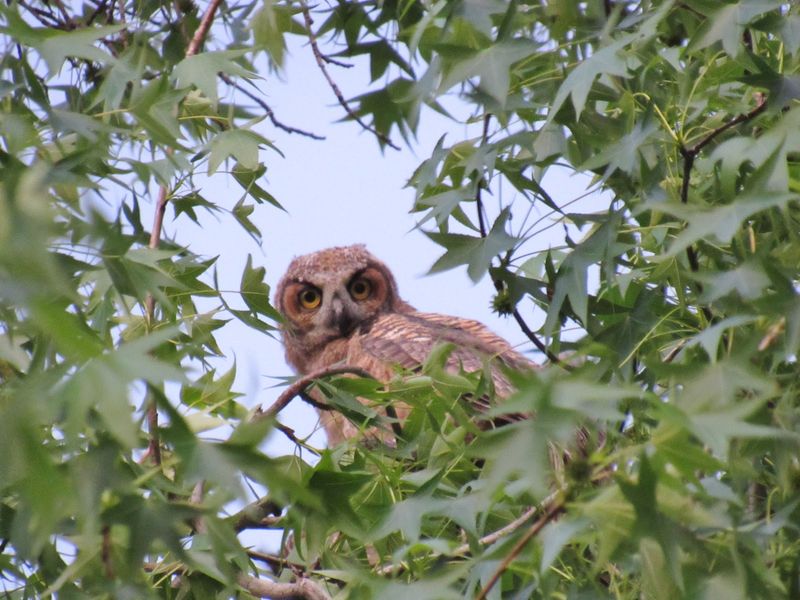
Teenagers move out eventually, and owls are no different. Young great horned owls usually stay near their parents through summer, then begin dispersing in fall.
That dispersal adds extra voices to the night. Some wanderers hoot, and young birds can also give raspy, screechy begging calls that confuse plenty of backyard listeners.
Resident adults respond firmly. Their duets and territorial hoots can increase when a stranger drifts through, which is one reason a quiet neighborhood can suddenly sound busy.
Dispersing owls may travel many miles before settling. Some find an open territory, while others struggle through their first winter as they learn to hunt on their own.
Here’s a helpful tip if you hear odd hissing or scratchy shrieks. Before assuming something is wrong, consider a young owl, a barn owl, or even a fox, since several night creatures make surprising sounds.
Free recording apps and the audio library from the Cornell Lab of Ornithology can help you sort out the voices.
I love this part of the season because it reminds me the owl story keeps rolling year after year. The duet you hear tonight may come from a pair that raised the very youngster flying past your rooftop, which feels like a small family reunion happening right over the garden shed.
5. Bare November Trees Help Owl Calls Travel Farther
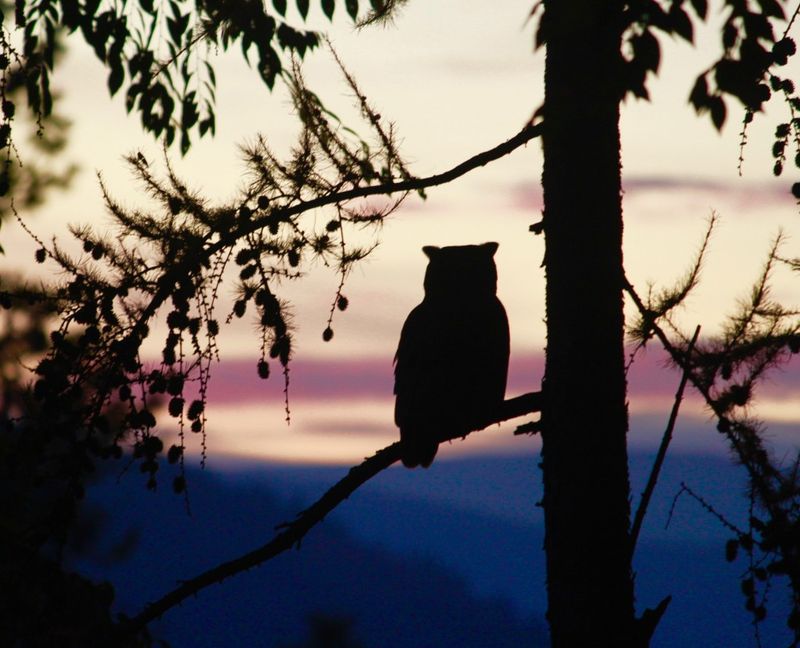
Part of the November surge might be your ears, not the owls. Once leaves drop, sound moves through the woods with fewer obstacles.
Cold, calm nights can also help. Sound often carries farther when air is still, and a layer of cool air near the ground can bend sound waves back down rather than letting them escape upward.
Fewer competing noises play a role too. Crickets, katydids, and tree frogs fill summer nights, but most fall silent by late autumn, leaving the owls with a much quieter stage.
So the increase you notice is real, but it is a mix of more calling plus better listening conditions. I think that combination is what makes November feel so special.
To catch the best performances, pick a windless evening. Stand away from humming air conditioners, busy roads, or leaf blowers and give your ears a minute to adjust.
A simple trick is to cup your hands behind your ears. It sounds silly, yet it noticeably helps you pick up faint, distant hoots.
Windows closed for the season can hide a lot. Try cracking one open for a few minutes before bed, and you might discover owls have been chatting near your garden all along, just out of earshot until now.
6. Borrowed Hawk Nests Set the Stage for Winter Eggs
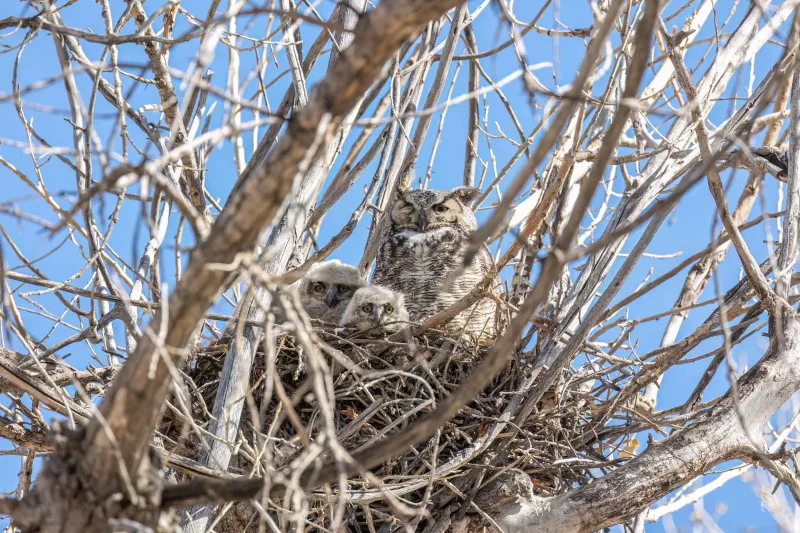
Great horned owls skip the construction business entirely. Instead, they typically take over old stick nests built by red-tailed hawks, crows, or herons, and sometimes squirrel nests, tree cavities, or ledges.
Choosing a nest site is a big part of what pairs settle during the late fall and early winter months. The duets help keep both birds focused on the same neighborhood and the same likely spots.
According to the Ohio Department of Natural Resources, these owls are early nesters. Eggs in Ohio often appear in late January or February, and the female may sit through snow and freezing nights.
A typical clutch is about two eggs, sometimes one to four. Incubation runs roughly a month, and the male brings food while the female keeps the eggs warm.
For gardeners, this is a gentle reminder about winter tree work. Before removing large trees or old stick nests, check for activity, since owls and other native birds are protected under federal law.
If you have a big old tree with a stick nest, watch it quietly from a distance in winter. Binoculars help a lot.
Spotting a pair of ear tufts poking above the rim of a nest in February is one of my favorite winter thrills. It turns a gray month into something to look forward to.
7. A Hungry Owl Pair Is a Gardener’s Quiet Pest Patrol
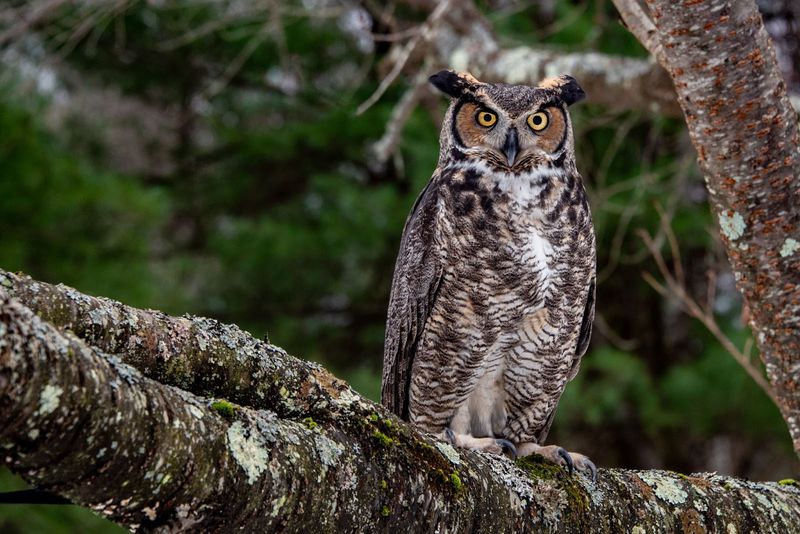
Rabbits nibbling your young shrubs, voles tunneling under mulch, and mice raiding the shed all appear on a great horned owl’s menu. That alone makes these birds worth welcoming.
Their diet is broad. They eat rabbits, rodents, skunks, and other birds, and they are among the few predators that regularly take skunks, so a resident pair can help keep small mammal numbers in check.
Courtship involves food too. Males often deliver prey to females as part of bonding, and a well-fed female is in better shape for winter egg laying.
One caution matters here for every gardener. Rodent poisons can move up the food chain, and owls that eat poisoned prey may suffer serious harm, so traps and habitat changes are safer choices.
Small pets and backyard chickens deserve some thought as well. Owls can take small animals, so keep cats indoors at night and close coops securely before dark.
Leaving a few large trees standing, along with brushy edges and open fields, gives these hunters what they need. You do not have to manicure every corner to support them.
I like to think of it as a trade. You give the owls a little wild space, and they give you rodent control plus a free concert most winter nights.
8. Grab a Warm Jacket and Listen for the Owl Duet Tonight
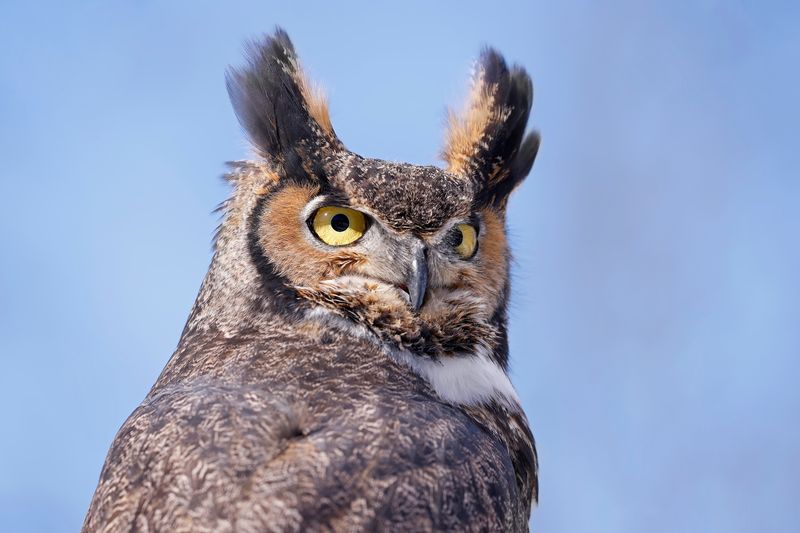
November evenings offer one of the easiest wildlife adventures around, and it starts right outside your back door. All you need is a warm coat, a little patience, and a quiet spot.
Head out within an hour or two after sunset, or try the predawn hours. Calm, clear nights tend to work best across Ohio, from Lake Erie shores to the southern hills.
Resist the urge to play recorded calls to attract owls. Playback can stress birds during this important season and may pull them away from defending territory or bonding with a mate.
Keep lights low and voices soft. If you spot an owl, enjoy it from where you stand rather than moving closer.
Consider joining local efforts too. Many Ohio metro parks and nature centers host owl prowls in winter, and community science projects like eBird welcome your sightings and sound notes.
Planting native trees such as oaks gives future owls perches and supports the prey they hunt. Leaving some leaf litter also feeds the whole food web.
My favorite takeaway is simple. The garden may look asleep in late fall, but the wild side of your yard is just getting busy, and those duets are proof.
Step outside tonight, listen, and let a pair of owls remind you that winter holds its own quiet magic.