The One Pennsylvania Place Where You Can See The Best Fall Foliage This Year
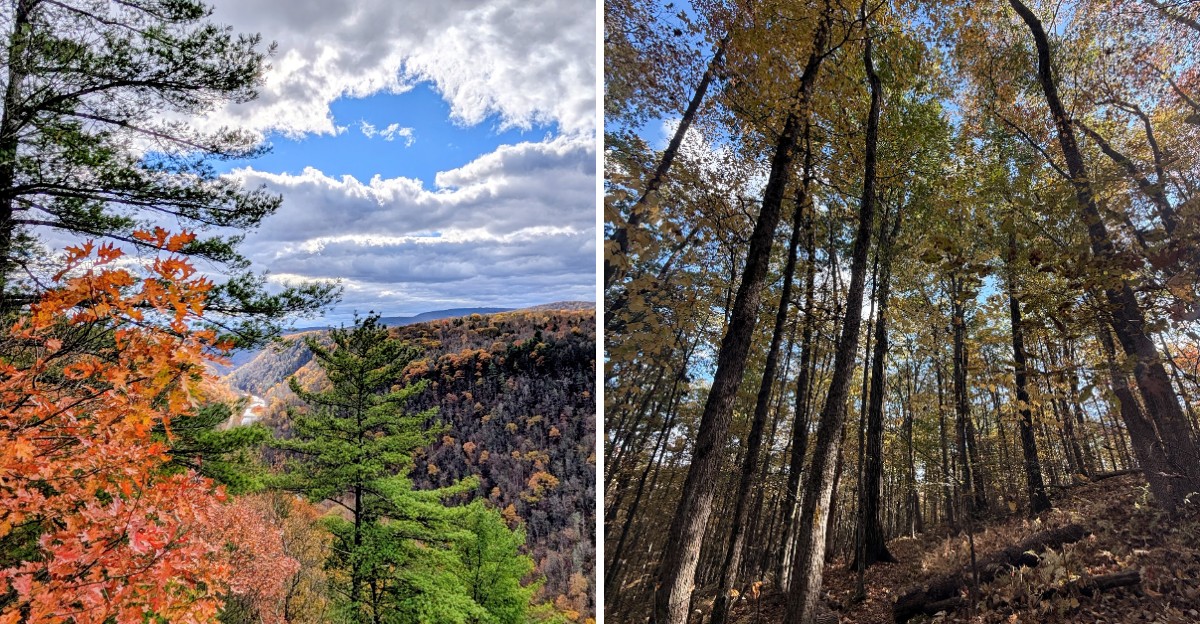
A gorge 800 feet deep sits quietly in the woods of north-central Pennsylvania. People call it the Pennsylvania Grand Canyon. That nickname is not an exaggeration.
In early October, the walls of that canyon fill with red, orange, and gold. Red maples and black cherries light up the slopes. Sugar maples and hickories add bright yellow.
Dark green hemlocks and pines break up the color like stitches in a quilt. You can see all of this from a stone overlook a few steps from the parking lot. No long hike is required.
Personally, I love a view that does not demand sore legs first. You also get a winding creek far below and sometimes morning fog in the valley. So which side of the canyon gives you the best seat in the house?
The Canyon Rim With The Best Seat In The House
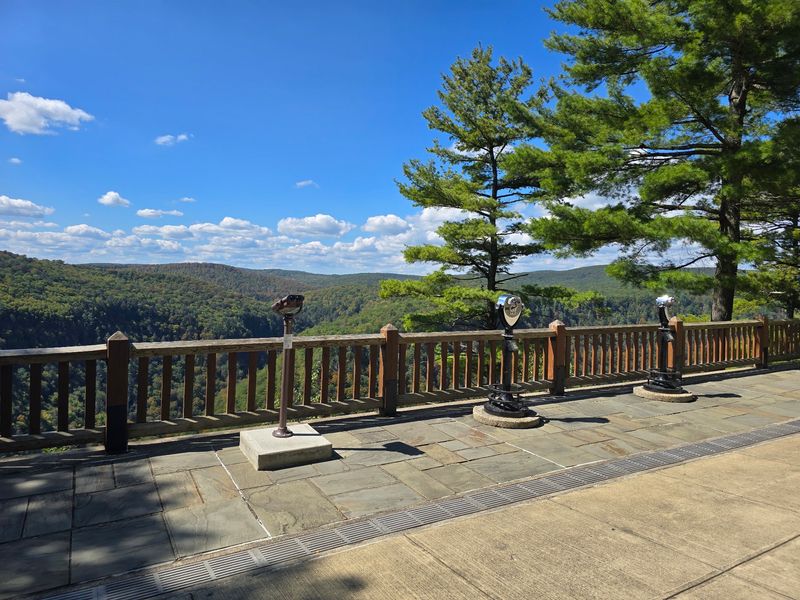
Leonard Harrison State Park sits right on the east rim of Pine Creek Gorge. That location is the whole secret. You park, walk a short distance, and the canyon simply opens up in front of you.
The park covers 585 acres in Tioga County, Pennsylvania. It offers the most developed viewing areas along the gorge. That means railings, stone steps, and platforms built for staring.
Plenty of famous views make you work hard for them. This one hands you a front-row seat almost for free. The main overlook sits just past the visitor center.
Families with small kids can enjoy the view without a big trek. Older visitors can take it in at their own pace. Hikers who want more can still find plenty of challenge later.
The nickname Pennsylvania Grand Canyon gets tossed around a lot here. It fits better than you might expect. The gorge stretches for miles, and the forest seems to roll on forever.
For anyone who loves trees, this rim works like a giant viewing balcony. You see whole hillsides at once instead of one tree at a time.
It is a gardener’s dream, except nobody has to do the weeding. The forest takes care of itself, and you just get to admire the results.
Eight Hundred Feet Down Changes How You See Color
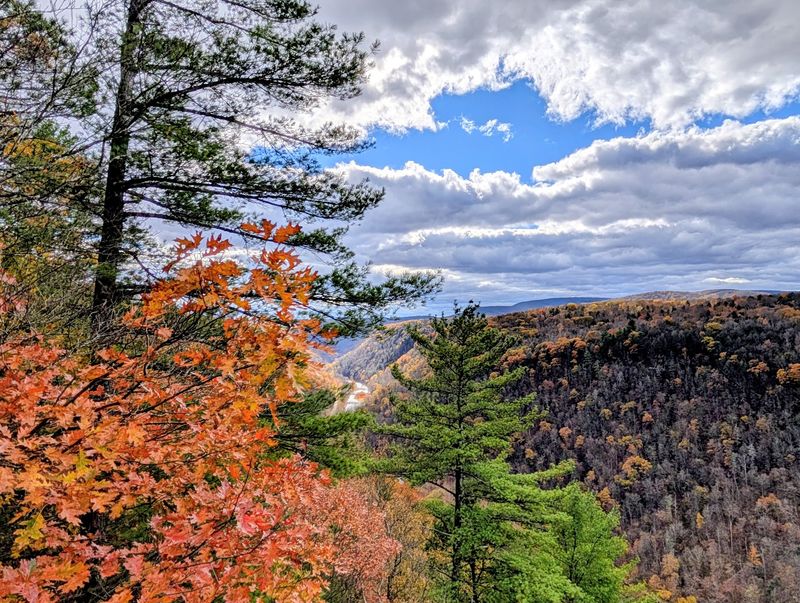
Depth matters more than most people realize. At this point, Pine Creek Gorge plunges about 800 feet. It also stretches nearly 4,000 feet across from rim to rim.
Why does that matter for fall color? A flat forest shows you the tops of trees. A canyon shows you layer after layer, stacked up the opposite wall like seats in a stadium.
From the overlook, you can see Pine Creek winding along the bottom. The water acts like a thin line tying the whole scene together. Every bend gives your eye somewhere new to land.
Light plays a big role too. As the sun moves, shadows slide across the slopes. The same hillside can look golden at one hour and deep copper at another.
Several viewing platforms connect by stone stairways. Each one gives a slightly different angle on the gorge. It is worth checking more than one before you leave.
Bring binoculars if you own a pair. They help you pick out single trees on the far wall. You might spot a lone scarlet maple glowing among the yellows.
Small details like that make the giant view feel personal, almost like you discovered your own favorite tree out there.
So Many Trees Are Painting This Canvas
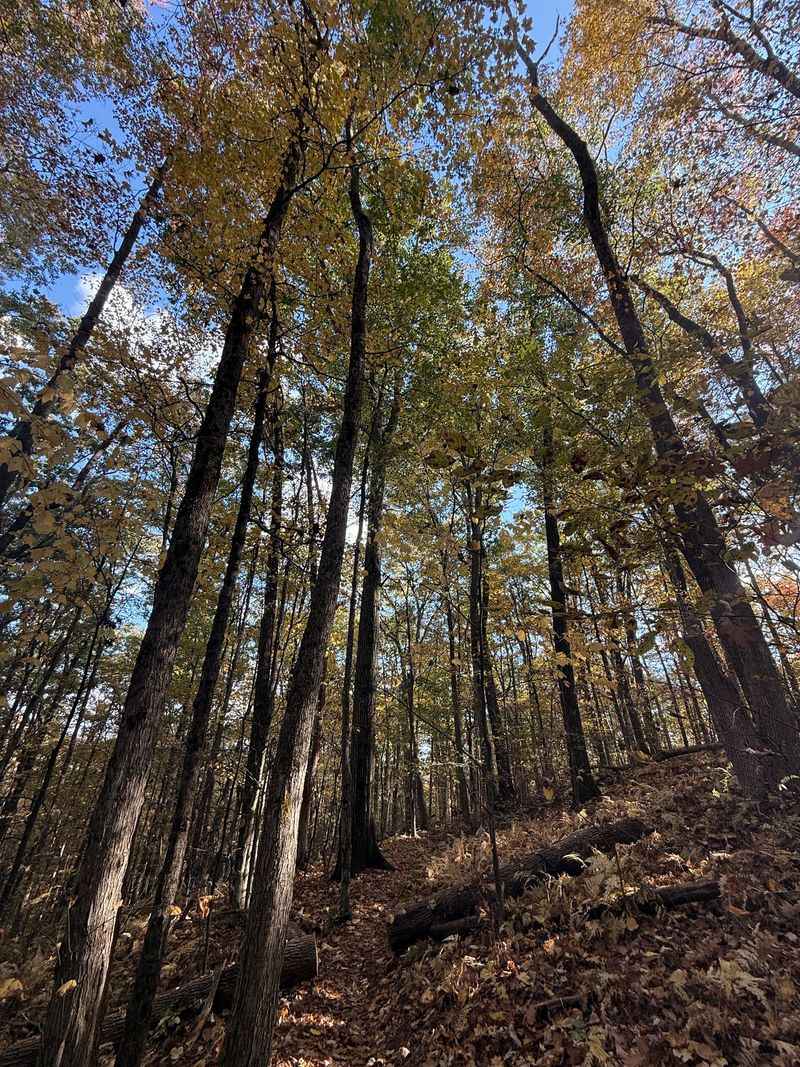
Variety is the real magic behind the color here. The slopes hold a huge mix of hardwoods. Each kind of tree turns its own shade.
Reds come from red maple, red oak, and black cherry. Yellows and oranges come from sugar maple, hickories, sycamore, and basswood. Aspen, tulip poplar, birches, and chestnut oak add even more golden tones.
Smaller players join in as well. Sumac and sassafras bring fiery accents along the edges. They are easy to miss but fun to spot.
Then come the evergreens. Pines and hemlocks stay green all year. Their dark patches make the bright leaves look even brighter.
Gardeners can learn a lot from this mix. A yard planted with only one kind of tree gives one color. Mixing maples, oaks, and a few evergreens creates layers and contrast.
Try a fun game while you stand at the rail. Pick one color and count how many patches you can find. Then switch to another color.
Kids usually love this challenge. Adults secretly do too. You will leave with fresh ideas for your own garden and maybe a short list of trees worth planting at home.
Your Legs Will Remember The Turkey Path
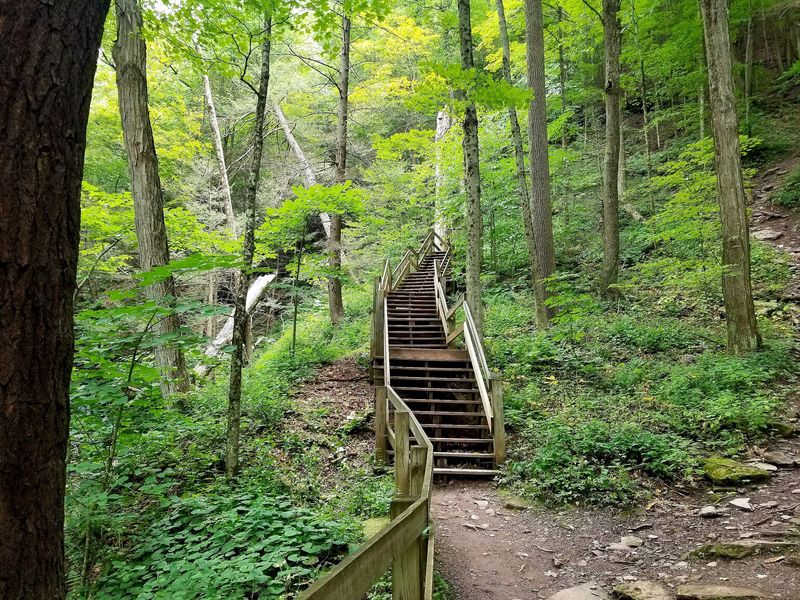
Some views come easy. The Turkey Path is not one of them. It drops roughly 800 feet from the rim to the canyon floor.
The trip runs about 2.2 miles down and back. You will meet hundreds of steps along the way. Going down feels pleasant, while coming back up feels like a stair machine with scenery.
Your reward starts early. Several waterfalls tumble along Little Fourmile Run beside the trail. They look especially lively after a good rain.
At the bottom, you reach Pine Creek itself. The Pine Creek Rail Trail runs along the water there. It is a long multi-use path built on an old railroad route.
Standing on the canyon floor flips your view upside down. Instead of looking across at colorful walls, you look up at them. The trees seem to tower over you.
Wear shoes with solid grip. Sandals are a poor choice on these steep, sometimes slippery steps. Carry water and a snack for the climb back.
Budget at least two hours. There is no bridge across the creek at the bottom. Take your time, rest often, and enjoy the leaves drifting past.
A Lumberman Gave Away The View
Leonard Harrison was a businessman and lumberman from Wellsboro. In the early 1900s, he bought 121 acres on this rim. He turned the land into a tourist spot called The Lookout.
Then he made a generous choice. In 1922, he donated the property to the Commonwealth of Pennsylvania. That gift became the start of the state park you visit today.
There is a nice twist in that story. The region was once known for heavy logging. Yet a man tied to that era helped protect one of its best views for everyone.
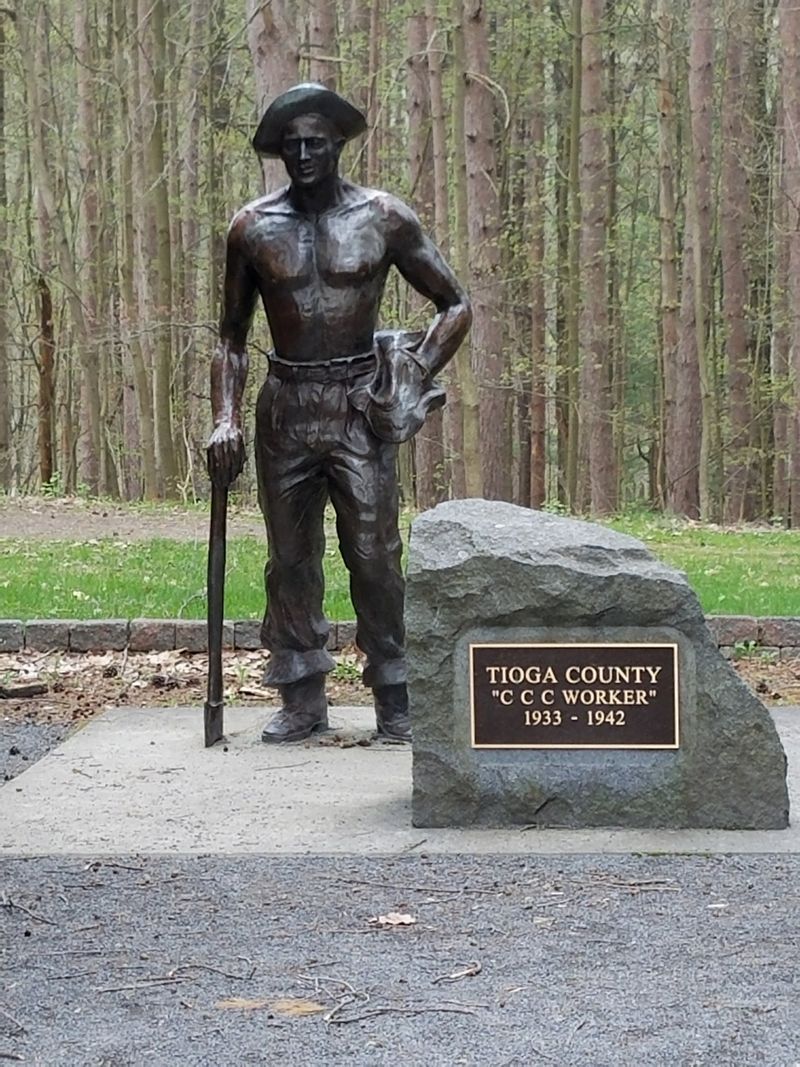
More work came during the Great Depression. From 1933 to 1941, the Civilian Conservation Corps built much of the park. Young workers created picnic areas, trails, and other facilities.
Look for the bronze monument at the overlook. It honors the CCC and the work those crews did. Their handiwork still shapes how you explore the rim.
The forests you admire now have regrown over many decades. That makes the autumn color even more meaningful. You are looking at a living comeback story. Every bright hillside is proof that patient care pays off over time.
Keep An Eye On The Sky And The Treeline
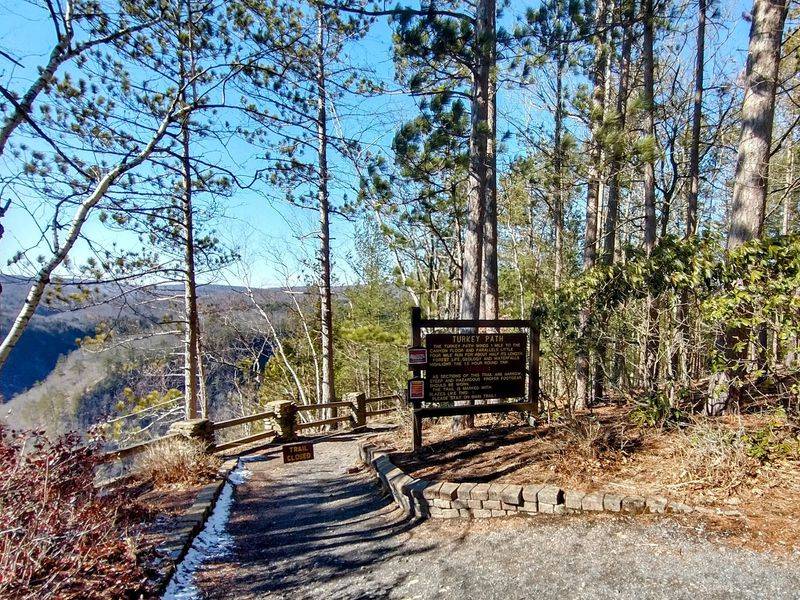
Bald eagles nest in this gorge. They have been raising young here since the late 1980s. Spotting one gliding over the color is a real treat.
Pine Creek Gorge is also recognized as an Important Bird Area. Warblers are a notable part of that bird life. Bring binoculars and scan the trees near the rim.
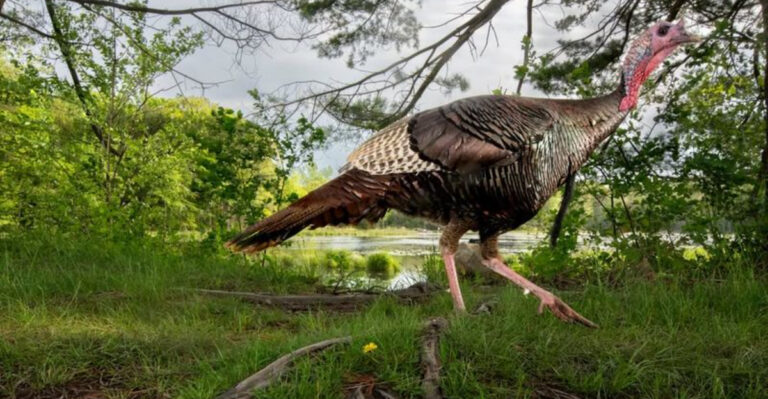
Bigger animals live here as well. White-tailed deer, black bears, and wild turkeys roam the surrounding forest. Keep a respectful distance and never feed wildlife.
Learning is a big part of the visit. The park offers environmental education programs, mostly in the warmer months. Topics have included lumber history, wildlife, and the geology of the canyon.
The visitor center has educational displays too. Visitors have mentioned staff showing animal furs and sharing bird facts. That kind of hands-on teaching sticks with kids long after the trip.
For gardeners, this matters more than it seems. A healthy forest supports birds, and birds help spread seeds. Everything you see from the overlook is connected.
Check the official park calendar before your trip. Program schedules change from season to season. Catching one can add a lot of meaning to your visit.
Settle In With A Picnic Or A Campsite
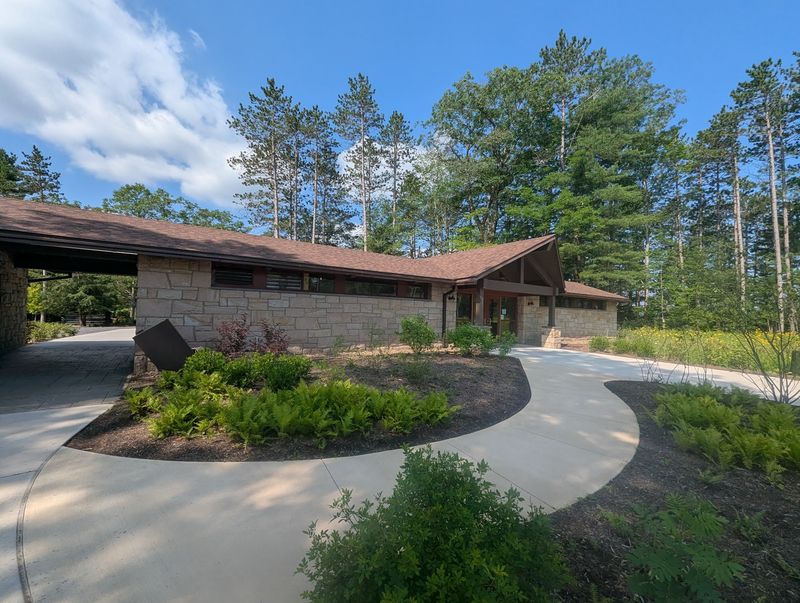
Good news for anyone who likes comfort with their scenery. The park has a modern visitor center near the overlook. Inside, you will find clean restrooms, displays, and a gift shop.
Next to the building sits a patio with tables and umbrellas. Picnic areas spread through the surrounding woods. There is also a playground for kids who need to burn energy.
The park is free to enter. It is open daily from sunrise to sunset. Parking includes upper and lower lots, and some visitors have noted electric vehicle charging spots.
Want to stay longer? The campground has about 28 sites, and some have electricity. It typically runs from spring into fall, so check reservations early for October.
You will find the park at 4797 Route 660, Wellsboro, PA 16901. It sits about 10 miles west of downtown Wellsboro. The park office phone number is 570-724-3061.
Cell service can be spotty here. Download maps before you leave home. Honestly, a little disconnection might be the best part. A quiet lunch under turning leaves beats scrolling a phone any day of the week.
The Other Rim Has A Story Too
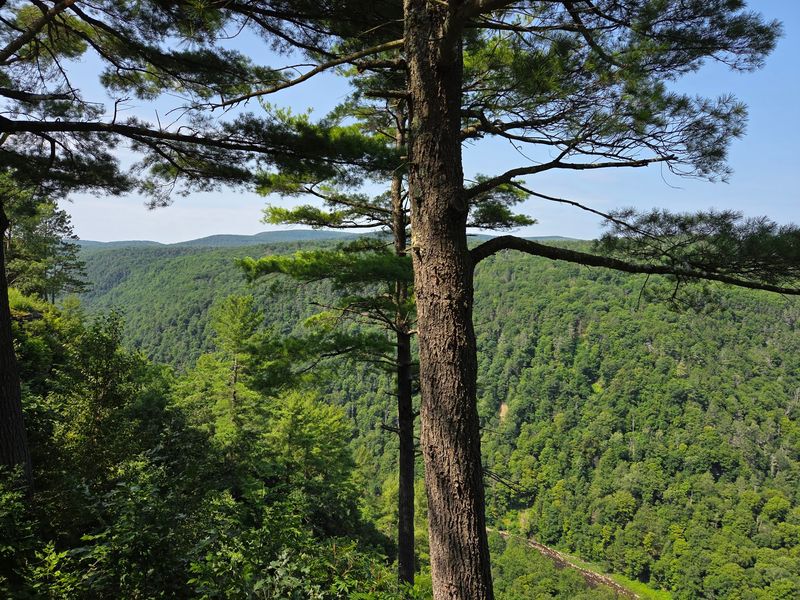
Across the gorge sits Colton Point State Park. It holds the west rim of the same canyon. Think of it as the quieter sibling.
Colton Point feels more rugged. The facilities are simpler, and the crowds are usually smaller. Its views look back toward the east side where you started.
Seeing both rims gives you the full picture. Morning light favors one side, while later light treats the other differently. Pairing the two parks makes a great fall day.
Getting there takes a drive around the gorge. The Turkey Path does not offer a bridge at the bottom. Crossing on foot would mean wading the creek, so most people drive.
Nearby, the Pine Creek Rail Trail invites biking along the canyon floor. Wellsboro, the closest town, sits just a short drive east. It makes a handy base for meals and supplies.
Leonard Harrison State Park still deserves your first stop. Its easy overlook and helpful visitor center set the stage.
Once you have seen the gorge from there, you will want more of Pennsylvania’s canyon country. Few autumn road trips pack this much color into one small corner of the state.