Christmas Cactus Leaves Going Limp in Your North Carolina Home? Here’s How to Fix It
In the wild, this famous holiday houseplant grows on tree branches high above the ground in the coastal mountains of Brazil. It lives in mossy forks and bark crevices, catching rain, fog, and leaf litter like a tiny sky garden.
So when its flat green segments turn soft and floppy on your windowsill, the plant is not being dramatic. It is reacting to a home that feels nothing like a misty mountain forest.
I know how frustrating it can be when a plant you have babied for years suddenly sags right before the holidays. One thing I love about this plant is how clearly it talks back once you learn its language.
Here’s something you might not expect, though. A droopy stem can mean too much water or too little, and both problems look surprisingly alike in a North Carolina living room. So which one is hiding in your pot?
1. Those Floppy Christmas Cactus Segments Are Sending a Signal From the Pot
Soft, bendy segments rarely start at the tips. The trouble usually begins down in the roots, where you can’t see it.
NC State Extension notes that holiday cacti are epiphytes, plants that grow on trees rather than in desert sand. Their roots are built for quick drinks followed by fast drying, so they handle soggy soil poorly.
Here’s the twist that confuses so many of us. A plant sitting in wet soil can look thirsty because rotting roots can’t move water up into the stems. A plant in bone-dry soil looks thirsty for the obvious reason.
So how do you tell the difference? Look closely at the segments themselves. Wrinkled, thin, flat pads that still feel firm usually point to dryness.
Mushy, translucent, or dark bases near the soil line lean toward too much water. A sour or musty smell from the pot is another big clue.
Give the stem a gentle wiggle, too. If the whole plant rocks loosely in the pot, the root system has likely weakened.
Once you know which direction the problem runs, the fix becomes much simpler. Guessing, on the other hand, often makes things worse, since adding water to a soggy pot only deepens the trouble.
2. Push a Finger Into the Christmas Cactus Soil Before Grabbing the Watering Can
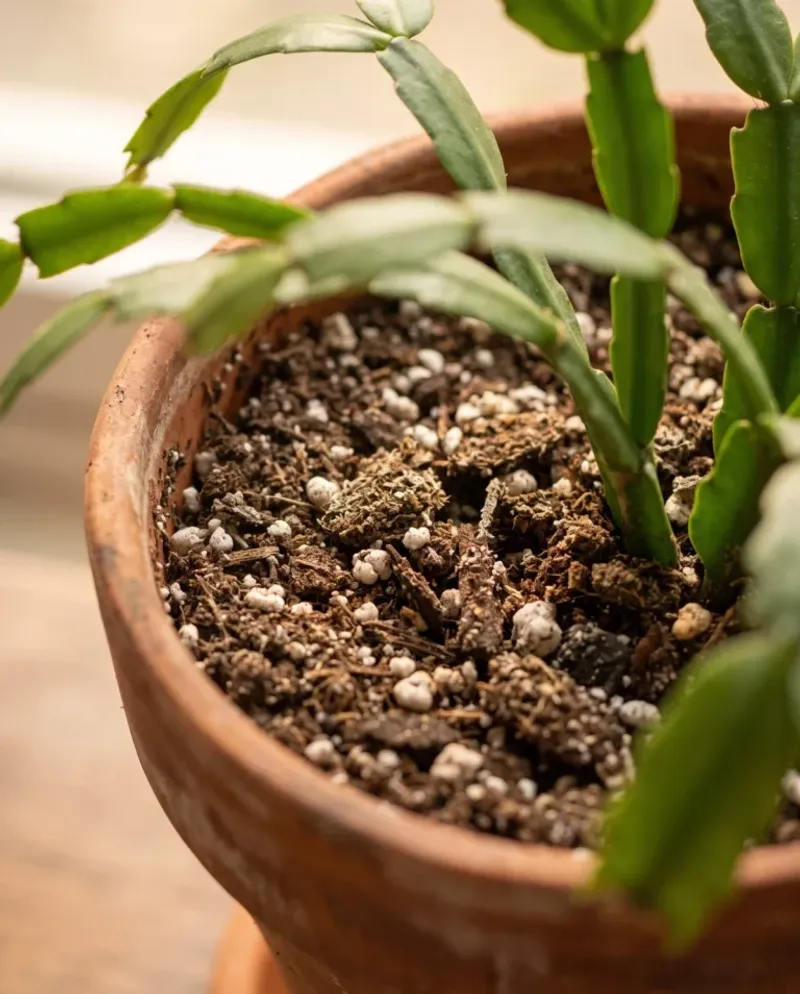
My favorite diagnostic tool costs nothing and comes attached to your hand. Slide a finger about an inch into the potting mix and pay attention to what you feel.
Dry all the way down? Water slowly until it runs out the drainage holes, then dump the saucer after about 15 minutes. Most limp, wrinkled segments plump back up within a few days.
Soggy and cold? Stop watering right away and let the top inch or two dry before the next drink. Move the plant somewhere bright with good air movement to speed things along.
If the mix stays wet for a week or more, slip the plant out of its pot. Healthy roots look white or tan and feel firm.
Brown, slimy roots signal rot. Trim them off with clean scissors and repot into fresh, fast-draining mix.
A blend of regular potting soil with perlite, orchid bark, or a cactus mix works nicely. Choose a pot with at least one drainage hole, since decorative pots without holes trap water at the bottom.
Going forward, water when the top inch feels dry, not on a fixed calendar. Your home’s heat and light change through the year, and so does thirst.
3. Rotting Christmas Cactus Roots Need a Fresh Start in Better Mix
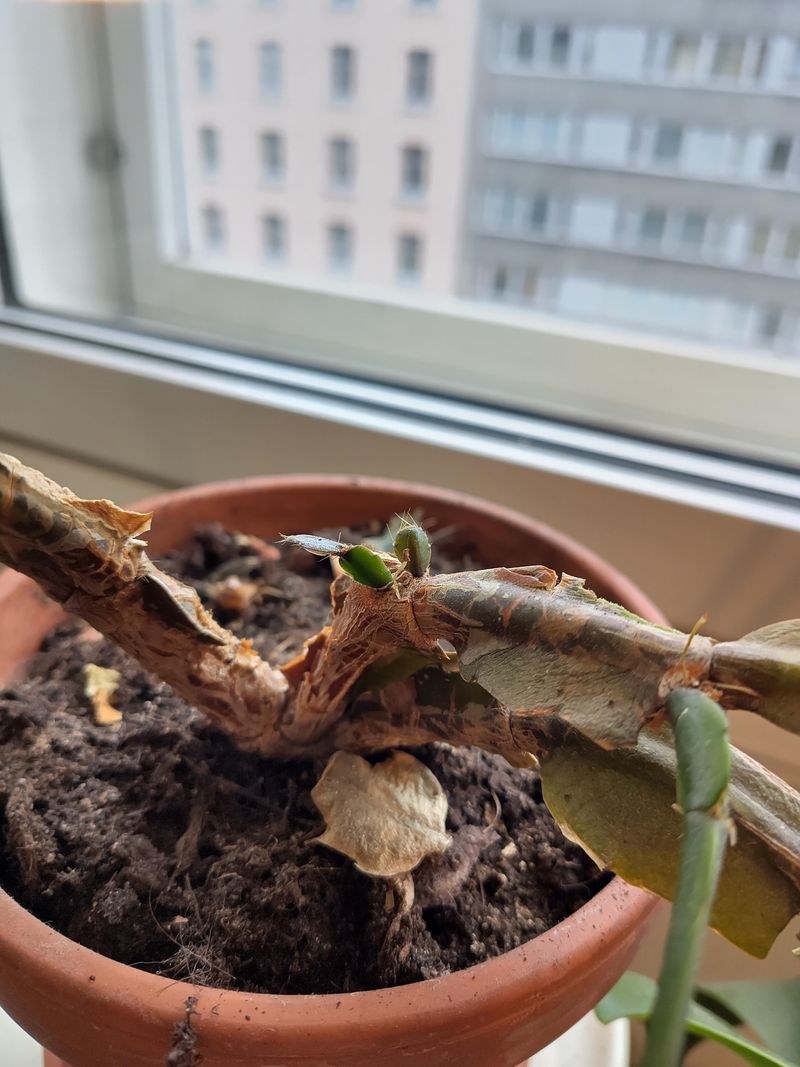
Root rot sounds scary, yet many plants bounce back if you catch it early. Fungi like Pythium and Phytophthora love waterlogged soil, and they move fastest when roots sit in standing water.
Start by laying newspaper on a table. Ease the plant out and gently shake or rinse away the old, heavy soil.
Snip every soft, dark root with clean shears. Wipe the blades with rubbing alcohol between cuts so you don’t spread the problem. If most of the roots are gone, don’t panic. Healthy stem pieces root easily.
Twist off a few sections that are two or three segments long. Let them sit a day or two so the cut ends dry, then tuck them upright about an inch deep in slightly moist mix.
Repot any surviving plant into a clean container only a little bigger than the root mass. Too much extra soil holds water the roots can’t use.
Wait several days before watering again so trimmed roots can seal over. After that, water lightly until fresh growth appears.
A rescued cutting makes a lovely gift, by the way. Plenty of family plants have been passed down this way for generations.
4. Winter Heating Pulls Moisture Right Out of Christmas Cactus Stems
Run the furnace or heat pump through a Carolina January and the air inside can turn surprisingly dry. Indoor humidity often sinks well below what a cloud-forest plant expects.
Holiday cacti handle typical household humidity better than many tropical plants. Still, very dry air plus a hot vent nearby can leave segments thin and wrinkled even when watering seems fine.
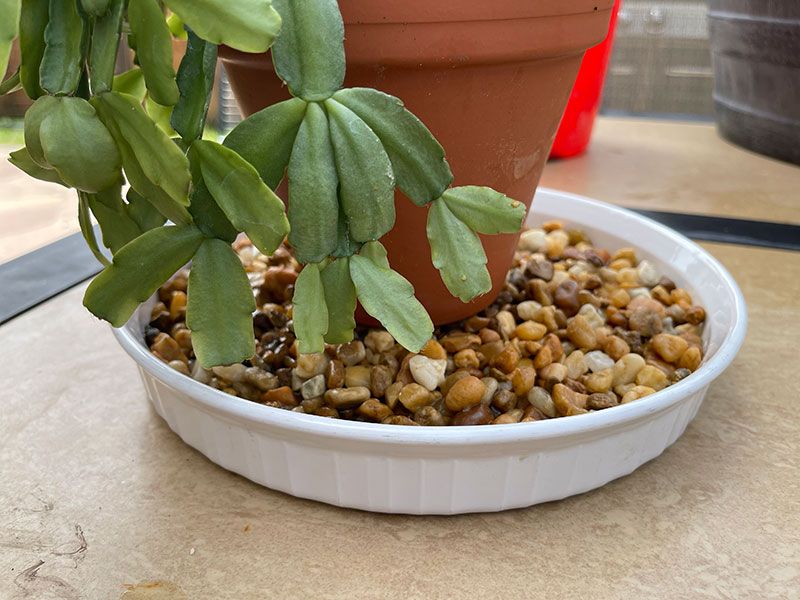
A pebble tray offers an easy boost. Fill a shallow tray with gravel, add water just below the top of the stones, and set the pot on top.
Grouping houseplants together helps as well. Plants release moisture through their leaves, creating a slightly damper pocket of air.
A small room humidifier works best of all if you have several tropical plants. Aim for roughly 40 to 60 percent.
Quick misting looks pleasant but fades within minutes, so it does little for the plant. Wet segments sitting in cool, still air can also invite fungal spots.
An inexpensive hygrometer tells you what’s really happening in the room. I was startled the first winter I tried one, and my plants perked up once I responded to the numbers.
5. Drafty Doors and Toasty Vents Can Leave a Christmas Cactus Sulking
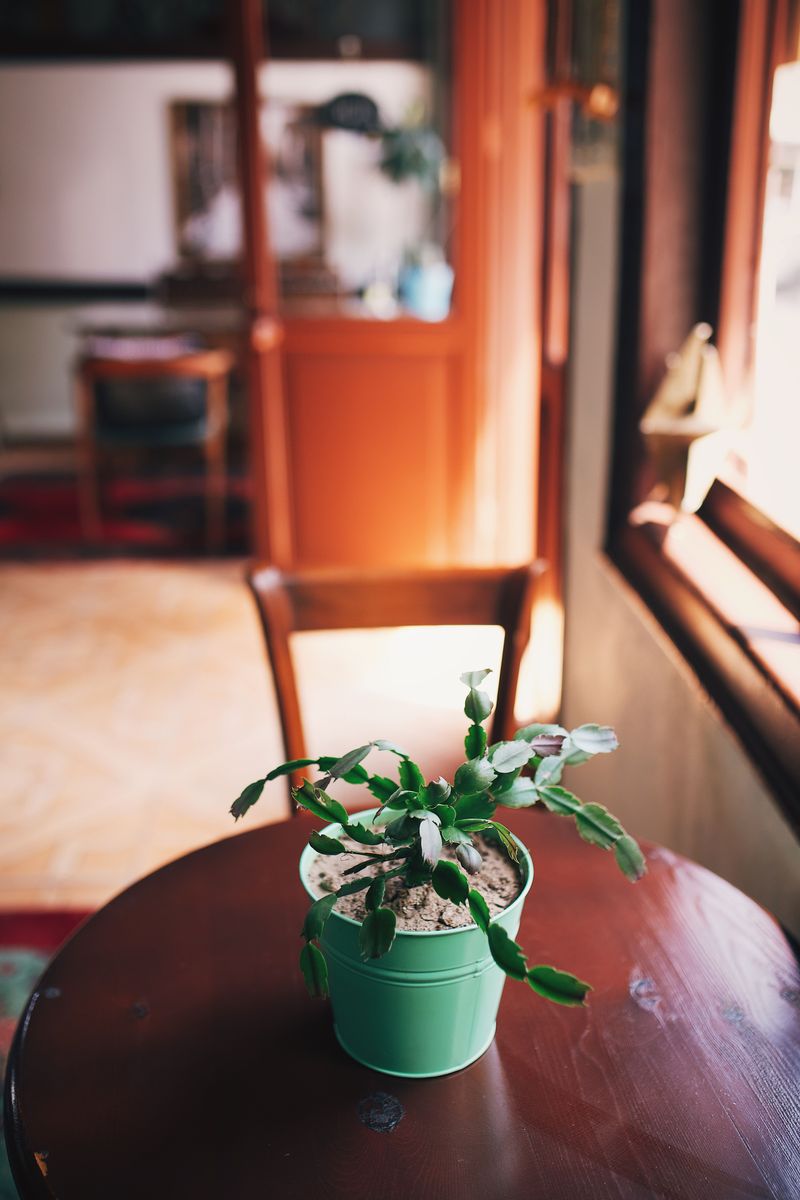
Moving a holiday cactus from a chilly porch into a warm den feels kind, but sudden swings stress it. Stems may droop, and buds often drop.
These plants feel happiest with daytime temperatures in the 60s to low 70s. Nights a bit cooler, around 55 to 65 degrees, actually help them set flower buds in fall.
Hot air blowing from a register dries soil and stems quickly. Cold blasts from a front door that opens all day can chill tender tissue just as fast.
Try to choose one steady spot and stick with it. Constant shuffling around the house, especially once buds form, invites trouble.
In summer, many North Carolina gardeners move these plants outdoors to a shaded porch. That works nicely, but bring them back inside before nights fall below about 50 degrees.
In the mountains, that can mean early September. Down east and along the coast, mid-October is often fine.
When the plant comes inside, set it in its winter home and leave it there. A few calm weeks let it adjust, and firm, perky segments usually follow.
6. Harsh Afternoon Sun Can Turn Christmas Cactus Pads Red and Wilted
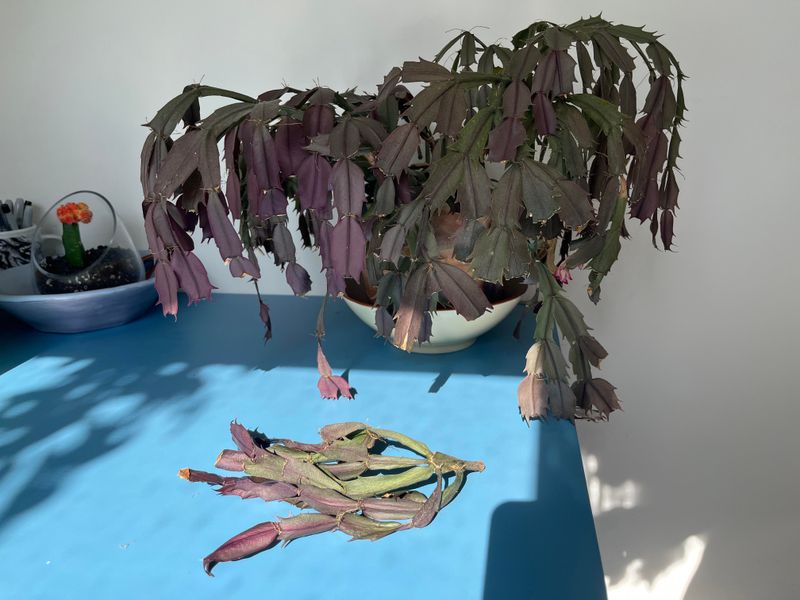
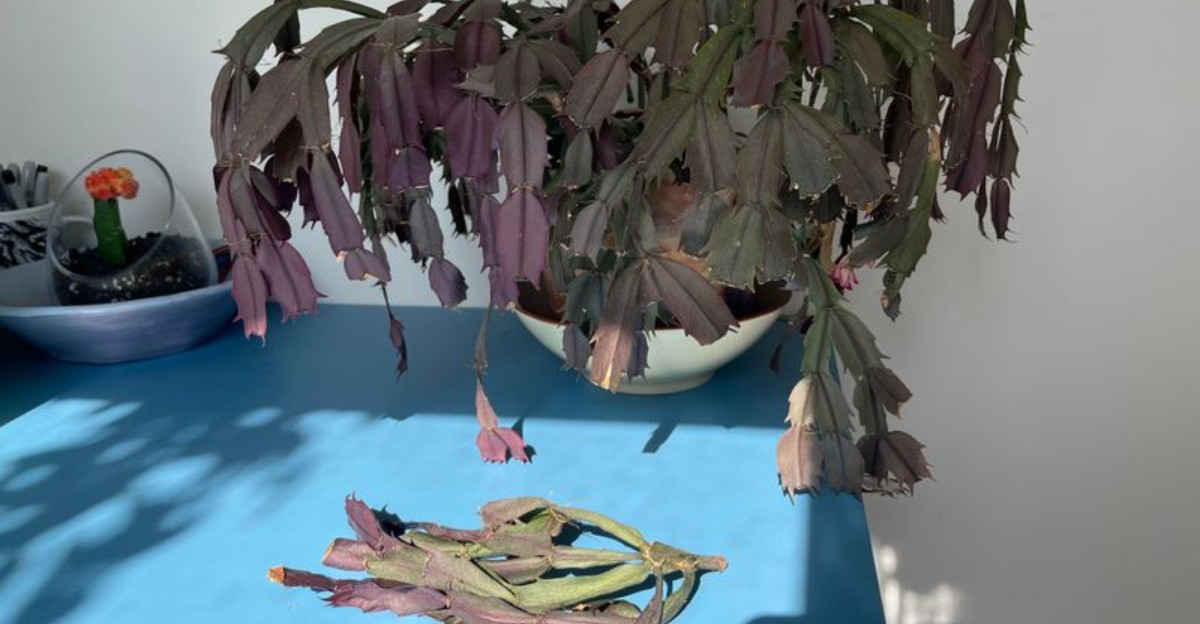
Have you noticed segments blushing red or purple? That color often means the plant is getting more sun than it likes.
Under a forest canopy, these cacti receive dappled light. Strong afternoon rays through a south or west window can bleach pads, redden them, and leave them limp from heat stress.
An east-facing window usually works beautifully. Morning sun is bright but gentle. Got only a sunny window? A sheer curtain softens the glare nicely, or you can set the plant a few feet back from the glass.
Too little light causes its own problems. Stems may stretch and weaken, and flowering often drops off.
Outdoors in a Carolina summer, keep the pot in bright shade. Our midday sun can scorch segments in a single afternoon, especially in the Piedmont and coastal plain.
Remember that light also controls blooming. Holiday cacti need long, dark nights in fall, roughly 12 to 14 hours of darkness, along with cool temperatures.
Keep the plant away from lamps that stay on late in the evening. A spare bedroom or quiet corner often delivers the darkness that sparks a full show of flowers.
7. Smart Repotting and Light Feeding Keep Christmas Cactus Stems Plump Year After Year
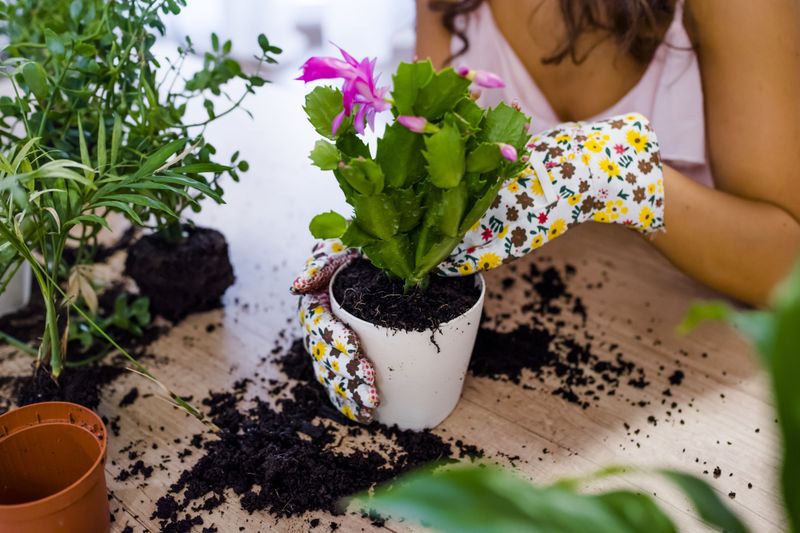
Long-term firmness comes from steady, simple habits. Once the immediate crisis passes, a little routine care keeps segments thick and glossy.
Holiday cacti bloom best when slightly snug in their pots. Repot every two or three years, ideally in late winter or spring after flowering ends.
Roots poking from the drainage holes or water racing straight through the pot suggest it’s time. Move up just one pot size, about an inch or two wider.
Feeding helps too, but timing matters. From spring through summer, apply a balanced houseplant fertilizer at half strength about once a month.
Ease off by late summer so the plant can shift its energy toward buds. Extra fertilizer in fall can interfere with flowering and may build salts in the soil.
Some growers add a little Epsom salt for magnesium during the growing season. Research is limited, so treat it as optional rather than a cure.
Write your plan on a sticky note inside a cabinet door. Check soil before watering, keep light bright but filtered, and hold temperatures steady.
Follow those basics and your cactus can live for decades. A few even outlive the people who first planted them.