Why Sphinx Moths Suddenly Visit North Carolina Gardens At Sunset
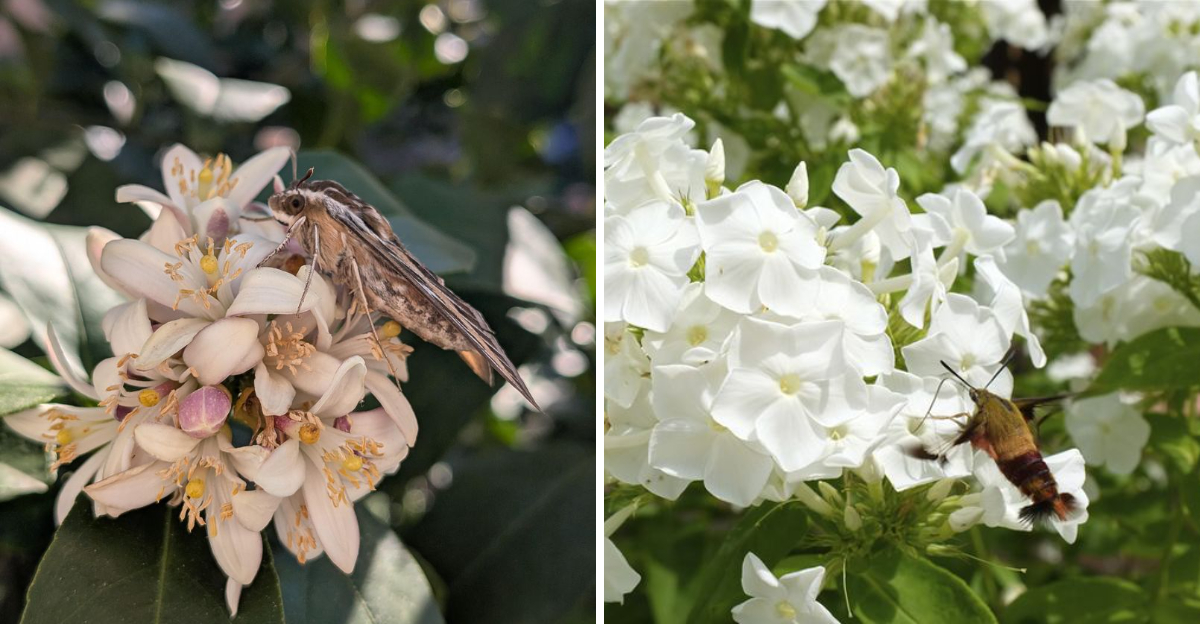
Just as the last sliver of sun drops below the Carolina pines, something remarkable happens in the garden.
Pale flowers seem to glow on their own, a sweet perfume drifts across the yard, and then, out of nowhere, a creature the size of a hummingbird hovers at the blooms.
Sphinx moths have arrived, and they are some of the most fascinating pollinators in North Carolina.
Most people never notice them because they show up right when daytime bees are heading home, making the whole experience feel like a secret the garden keeps until dusk.
The timing is not random. The flowers, the scent, and the moths are all operating on the same schedule, one shaped by thousands of years of evolution into something that runs like clockwork every warm evening across the state.
Understanding what pulls them in explains a lot about how gardens actually work after dark, and it gives you a real reason to stay outside a little longer before heading in for the night.
Seven reasons sphinx moths suddenly visit North Carolina gardens at sunset.
1. Dusk Blooms Open The Buffet
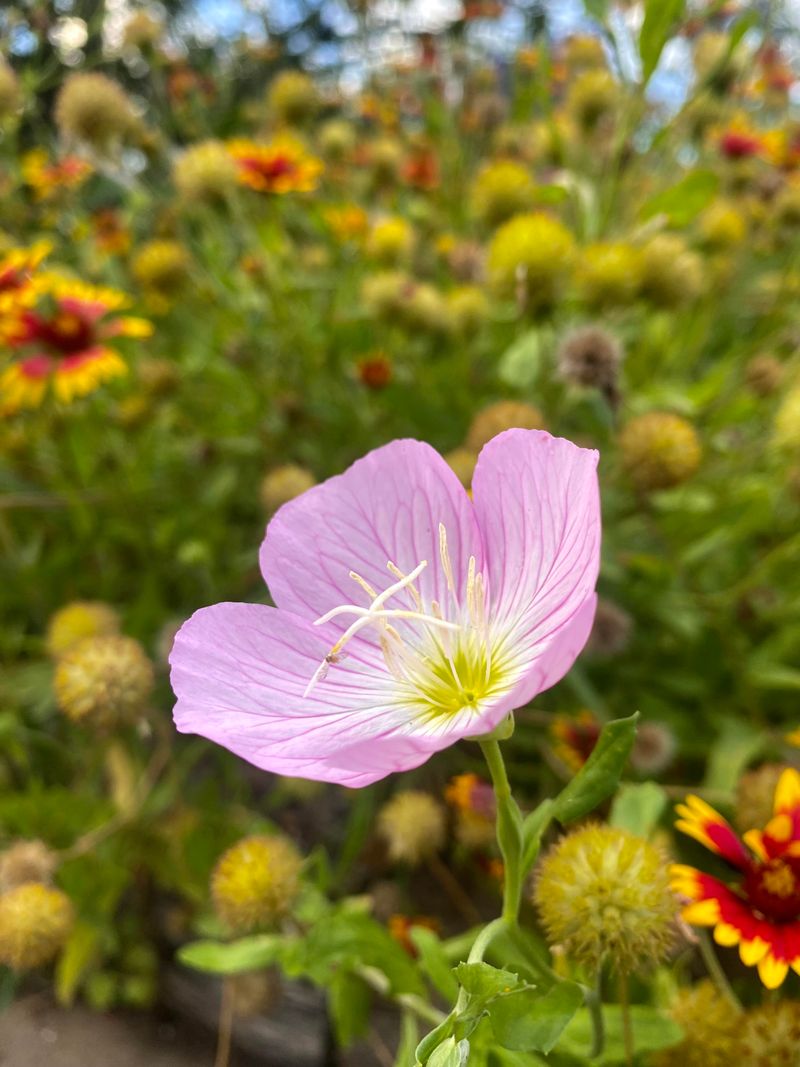
Sunset over a patch of evening primrose is something worth staying outside for.
The flowers seem to stretch open right on cue, releasing nectar that was locked away all day.
Sphinx moths time their arrival to match this moment almost perfectly, showing up like guests who always know when dinner is ready.
Several plants in North Carolina gardens are built for this exact schedule.
Evening primrose, moonflower, four-o-clocks, and flowering tobacco all shift into high gear as the sky turns orange and pink. Their nectar glands become more active in cooler evening temperatures, producing richer, more sugary rewards for night visitors.
Daytime pollinators like bumblebees and butterflies work the morning and afternoon shift, then head out as the light fades.
Sphinx moths step in to cover the evening hours, filling a role that keeps the garden productive around the clock. Think of it as a pollinator relay race, and the moths carry the baton from dusk until well past midnight.
Planting a mix of day-blooming and night-blooming flowers creates a garden that never really sleeps.
North Carolina gardeners who add evening primrose or moonflower vines near a fence or trellis will likely start seeing sphinx moths within the first warm week of blooms. The buffet is open, and word spreads fast in the moth world.
2. Pale Flowers Glow After Sunset
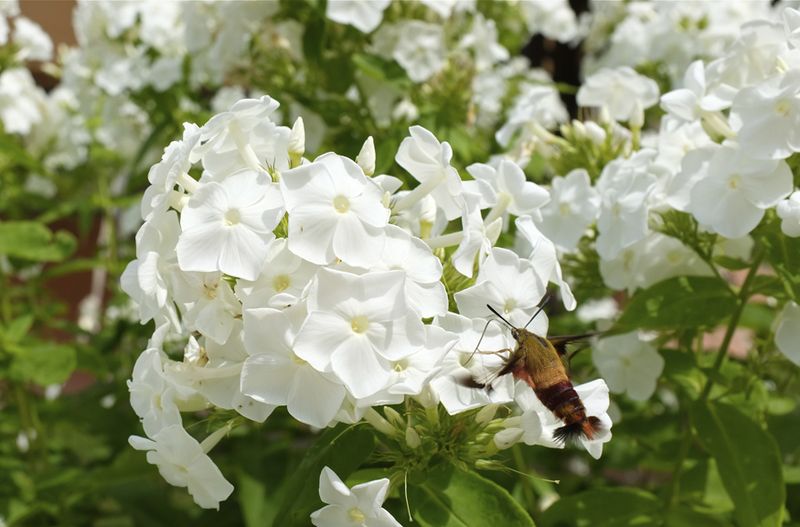
Color works differently after sunset, and sphinx moths figured that out long before any gardener did.
White, cream, and pale yellow flowers bounce back whatever light remains in the sky, making them surprisingly easy to spot in low light.
Darker flowers, like deep red roses or purple coneflowers, blend right into the shadows and become nearly invisible to a fast-flying moth.
This is why plants like white phlox, pale moonflower, and creamy flowering tobacco are such reliable moth magnets in North Carolina gardens.
Their petals act almost like tiny lanterns, reflecting moonlight and the soft glow of twilight. A sphinx moth navigating at speed needs that visual cue to zero in on a bloom before it passes.
Your North Carolina Garden Changes Every Week. Your Plan Should Too.
Gardening in North Carolina changes quickly throughout the season. Every Friday you’ll receive a simple weekly plan showing exactly what to plant, prune, fertilize, harvest, and protect so you never miss the right timing.
Botanists call this a co-evolutionary relationship, which is a fancy way of saying the flowers and the moths shaped each other over thousands of years.
The plants that reflected more light got visited more often, so they produced more seeds. The moths that found pale flowers more reliably survived better. Both sides won.
Gardeners can use this knowledge to their advantage.
Planting a cluster of white or pale-colored blooms near a garden path or patio creates a natural moth landing zone.
By the time full dark sets in, those pale blooms become the brightest spots in the yard, and the moths will find them without any help at all.
3. Sweet Evening Scent Pulls Them In
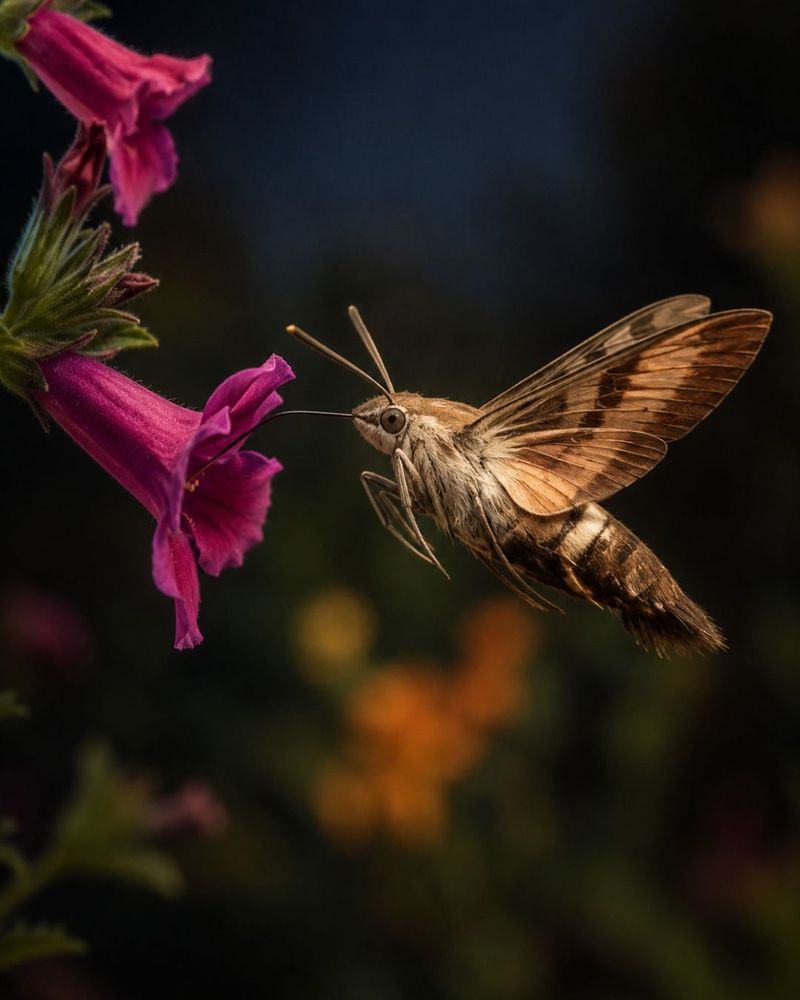
A sweet evening scent drifting across the backyard is not just pleasant for the person sitting on the porch.
For a sphinx moth flying several hundred feet away, that fragrance is a road map.
Evening-blooming plants release their strongest scent compounds after sunset, and those molecules travel far on warm, still Carolina air.
Flowers like flowering tobacco, night-blooming jasmine, and sweet autumn clematis pump out scent specifically during the hours when sphinx moths are active.
This is not a coincidence. Plants evolved this timing to attract the exact pollinators most likely to visit them.
Some sphinx moth species can detect certain floral compounds from over a quarter mile away.
The flower is essentially broadcasting a dinner invitation on a frequency only certain moths can pick up clearly.
Daytime bees rely heavily on color and pattern. Sphinx moths lean on scent, especially in the low-light conditions of early evening.
Gardeners who want to invite more sphinx moths can think of fragrance as the first hook.
Planting heavily scented evening bloomers near an outdoor seating area means you get to enjoy the perfume too, while also watching the moths arrive.
Flowering tobacco, also called Nicotiana, is one of the easiest to grow in North Carolina and releases an almost intoxicating vanilla-like scent right after sunset. Plant a row of it and wait. The moths will show up like clockwork.
4. Long Tubes Fit Long Tongues
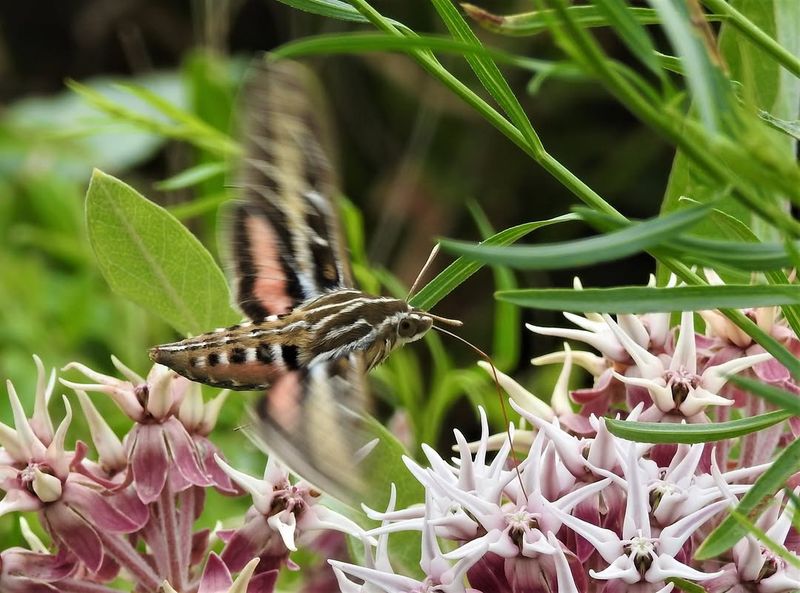
A moth hovering near bee balm with its tongue unrolled is a sight that stops most people in their tracks.
Sphinx moths have one of the longest feeding structures of any insect in North America.
That tongue, called a proboscis, can stretch to several inches in some species, which makes them perfectly suited for tubular flowers that other pollinators simply cannot reach.
Flowers like phlox, cardinal flower, bee balm, and petunias all have long, narrow tubes that protect their nectar deep inside.
A short-tongued bee cannot reach the bottom of those tubes no matter how hard it tries. A sphinx moth, hovering like a tiny helicopter, can extend its proboscis and sip from the very bottom without even landing on the flower.
This feeding style also makes sphinx moths highly efficient pollinators.
Because they hover rather than land, they move quickly from flower to flower. Pollen from one bloom sticks to the moth’s body and gets transferred to the next bloom in seconds.
The plant gets cross-pollinated, the moth gets a meal, and the whole exchange happens in a blur of wings.
North Carolina native plants like bee balm and wild phlox have tube lengths that seem custom-built for sphinx moths.
That match is not accidental. Over generations, the plants with deeper tubes were visited by moths with longer tongues, and both traits were reinforced together.
Planting tubular native flowers is one of the most direct ways to invite sphinx moths into a garden and keep them coming back season after season.
5. Native Plants Feed The Next Stage
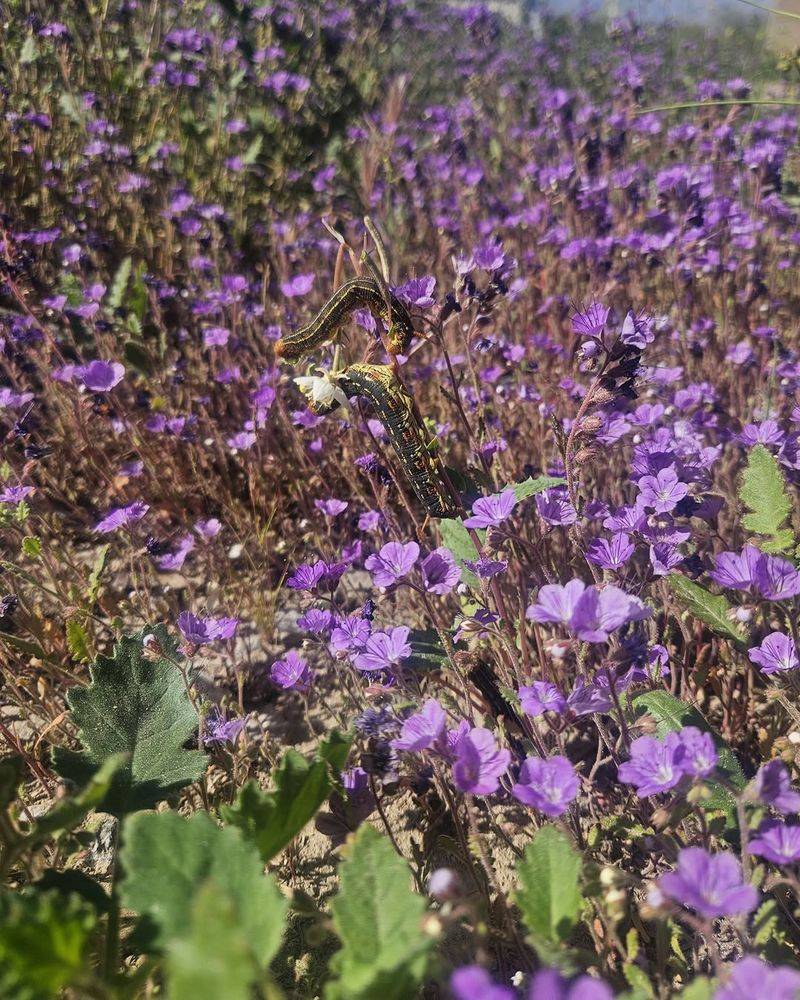
Nectar is only half the story.
Sphinx moths need native plants for their caterpillars too, and that part of the life cycle often gets overlooked by gardeners focused only on attracting adult moths.
The caterpillars, which are large and often bright green or yellow, feed on the leaves of specific host plants that are mostly native to North Carolina.
Common host plants in the Carolinas include wild cherry, viburnum, blueberry, and various species of native grape.
Caterpillars munch their way through the summer, growing quickly before they burrow into soil to pupate. The adult moths that emerge are the same ones visiting your phlox at sunset a few weeks later.
Removing all native shrubs and trees from a garden might look tidy, but it quietly removes the nursery that produces next season’s moths.
A garden full of nectar plants but short on host plants will eventually see fewer moth visits, because the local population has nowhere to grow up.
Keeping a few native shrubs tucked into a corner of the yard supports the full cycle.
NC State Extension recommends native plantings not just for moths but for the broader web of insects and birds that depend on them.
Even a small patch of native viburnum or a wild grape vine along a fence does real work.
The goal is not a perfectly manicured space but a living one, where every stage of the moth’s life has something to work with. That kind of garden rewards patience with pollinators every single evening.
6. Porch Lights Change Their Route
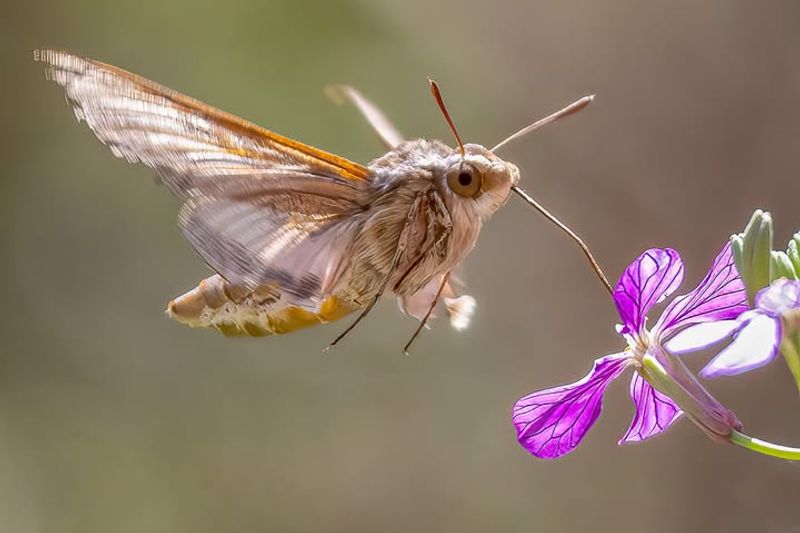
A porch light left on all evening is practically a detour sign for sphinx moths.
Like most moths, sphinx moths are sensitive to artificial light, and a bright bulb can pull them off their natural foraging routes and send them circling in confusion instead of visiting flowers.
It is one of the most common and least-noticed ways that outdoor lighting disrupts garden pollinators.
This behavior is called phototaxis, and researchers are still working out exactly why moths are drawn to artificial sources.
One leading theory is that moths use the moon and stars to navigate, so a bright fixed light scrambles their internal compass. Instead of flying in a straight line toward a fragrant flower, they spiral around the bulb and exhaust themselves.
The good news is that simple changes make a real difference.
Switching outdoor lights to warm amber or yellow bulbs reduces the disruption significantly. Motion-sensor lights that only turn on when needed are even better.
Red lights are the least disruptive to nocturnal insects and are sometimes used by wildlife researchers for exactly that reason.
A gardener who wants to watch sphinx moths in action without chasing them away can use a dim red flashlight to observe without interfering.
Turning off or dimming porch lights between dusk and around ten at night gives moths a clear, uninterrupted window to do what they do best: pollinate the garden one tubular flower at a time.
7. Hummingbird Moths Join The Show
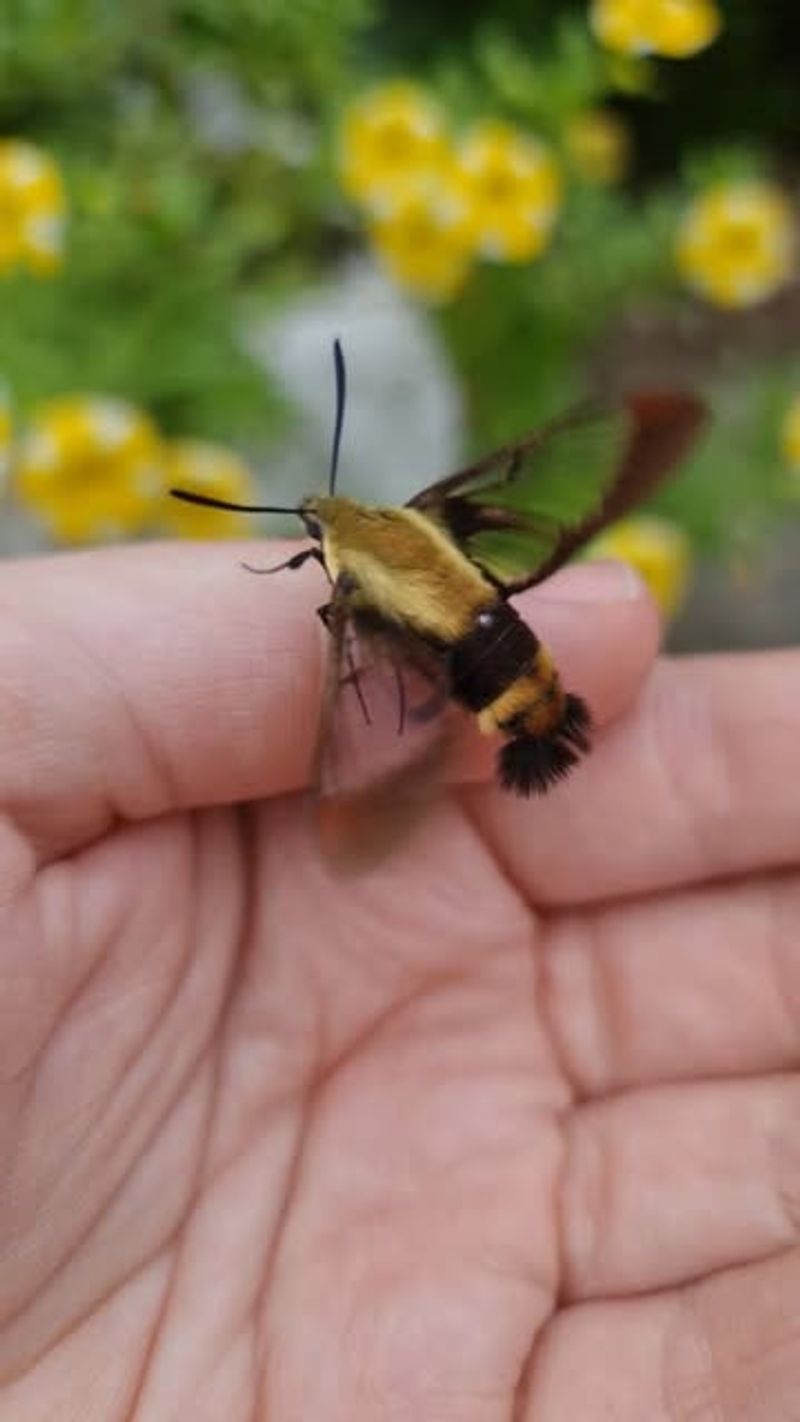
Spot a small creature hovering at your bee balm with transparent wings and a fuzzy striped body, and you might do a double-take.
Hummingbird moths, which are a group of clearwing sphinx moths, are so convincing that many North Carolina gardeners spend years thinking they are watching a tiny hummingbird.
The hovering, the speed, and the size are almost identical at first glance.
The most common species in North Carolina is the hummingbird clearwing, Hemaris thysbe.
It flies in broad daylight and into the early evening, making it one of the easiest sphinx moths to observe. Its wings lose their scales shortly after it emerges, leaving clear windows that flash in the sunlight.
What makes clearwing sphinx moths extra special is that they are active during the day as well as at dusk, bridging the gap between daytime and nighttime pollinators.
They visit many of the same flowers as actual hummingbirds, including bee balm, phlox, and native honeysuckle.
Watching one work a cluster of phlox is like watching a tiny acrobat in slow motion, darting from bloom to bloom with incredible precision.
Kids especially love spotting hummingbird moths because the mix-up feels like discovering a magic trick.
Planting native bee balm, phlox, or native azalea in a sunny border gives clearwing moths exactly what they need.
Once they find a reliable food source in your yard, they tend to return daily throughout the warm season, putting on a free show that no butterfly garden can match.
8. A Living Garden Keeps Them Returning
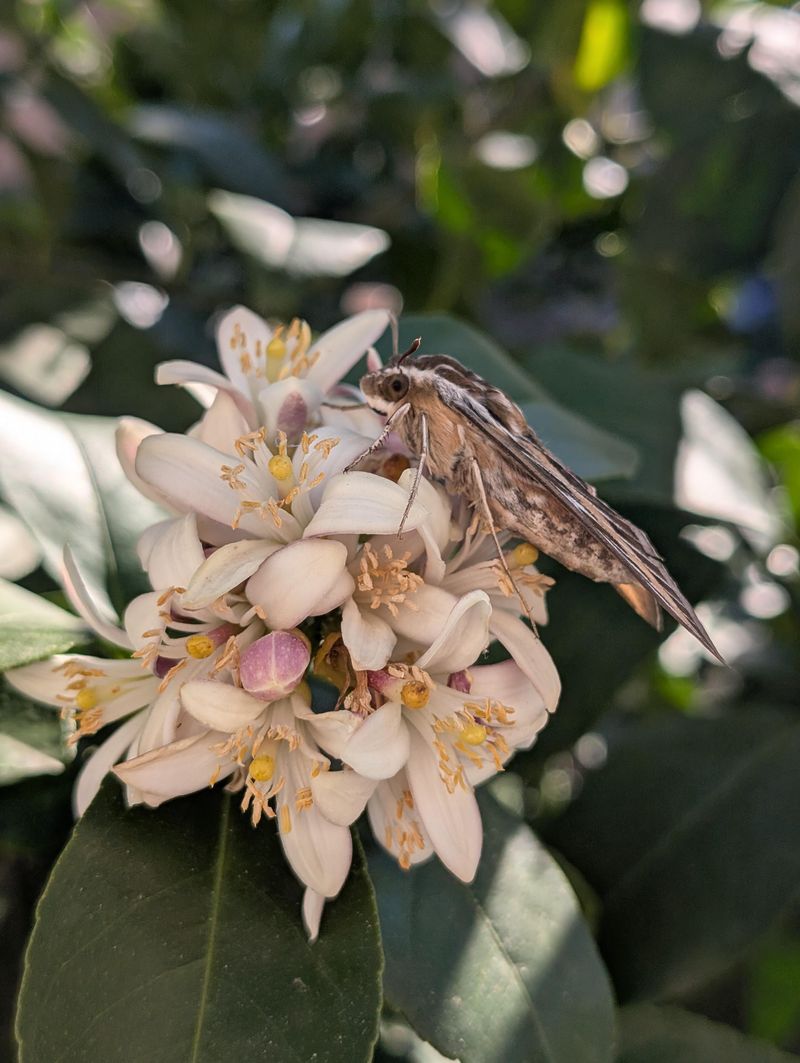
Evening primrose glowing at the edge of a mixed border, a patch of native bee balm buzzing with life, and a wild corner left a little rough around the edges: that is the kind of garden sphinx moths come back to night after night.
A garden that is too tidy, too uniform, or too reliant on pesticide sprays tends to feel empty by midsummer, because the insects that make it feel alive have quietly moved on.
Reducing or eliminating broad-spectrum insecticide sprays is one of the single most effective things a North Carolina gardener can do for sphinx moths and other pollinators.
Many common garden sprays do not distinguish between pest insects and beneficial ones. A sphinx moth caterpillar on a native shrub looks like a problem to a spray bottle but is actually next season’s pollinator in progress.
Diversity is the other key ingredient.
A garden with twelve different plant species in bloom at different times throughout spring, summer, and fall offers moths something to return to week after week.
Mixing native perennials with a few reliable evening bloomers keeps the buffet stocked from April through October in most parts of North Carolina.
Leaving a small patch of bare soil, a loose pile of leaf litter, or an unsprayed corner of the yard gives caterpillars and pupae somewhere safe to complete their cycle.
A living garden is not about perfection. It is about creating enough variety and stability that the moths, the fireflies, the bees, and the birds all find a reason to stay.