Who’s Responsible When A Neighbor’s Tree Crashes Onto Your Indiana Property
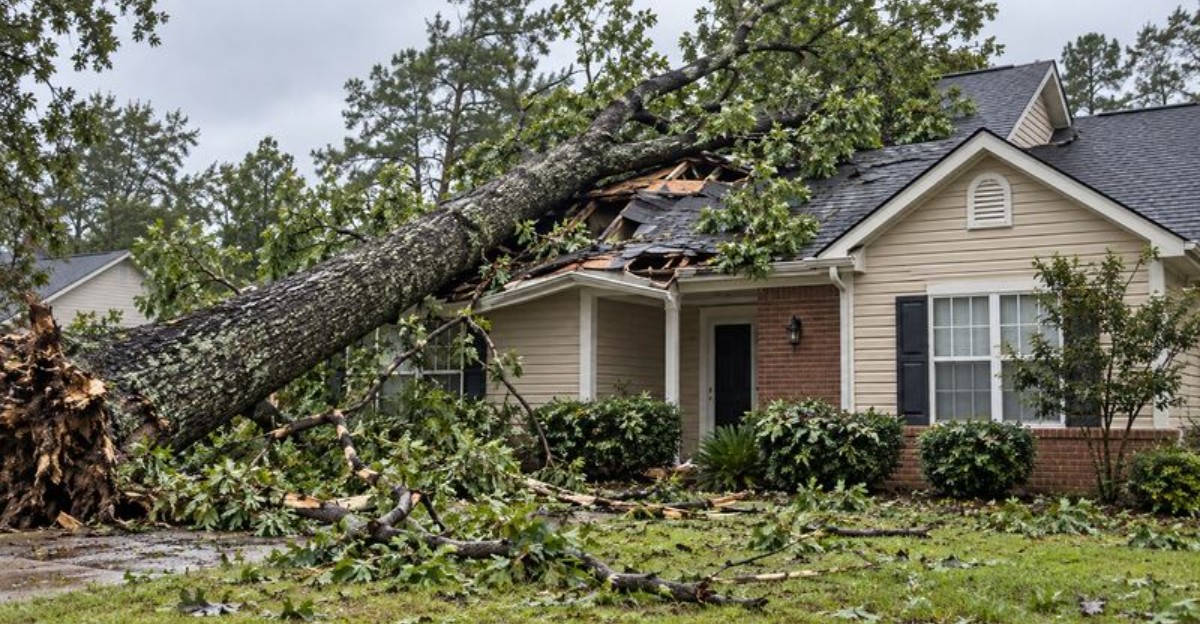
A healthy tree can flatten your fence, and the person who owns it may owe you nothing at all. I learned that one after a summer storm left a stranger’s branches tangled in my tomato cages.
Truth is, I used to think the tree owner paid for every mess their tree made. Indiana courts see it differently. The answer often hinges on what the tree looked like before it ever fell.
Was it leafy and strong, or hollow with mushrooms sprouting from the bark? That single detail can decide who writes the repair check. Your camera roll and a polite note might matter more than you realize.
I get it, nobody wants to read about insurance and property lines on a sunny weekend. Still, one windy night can change your plans fast. So who really pays when that giant limb lands on your roof?
A Sound Tree Toppled By Wind Changes Who Pays
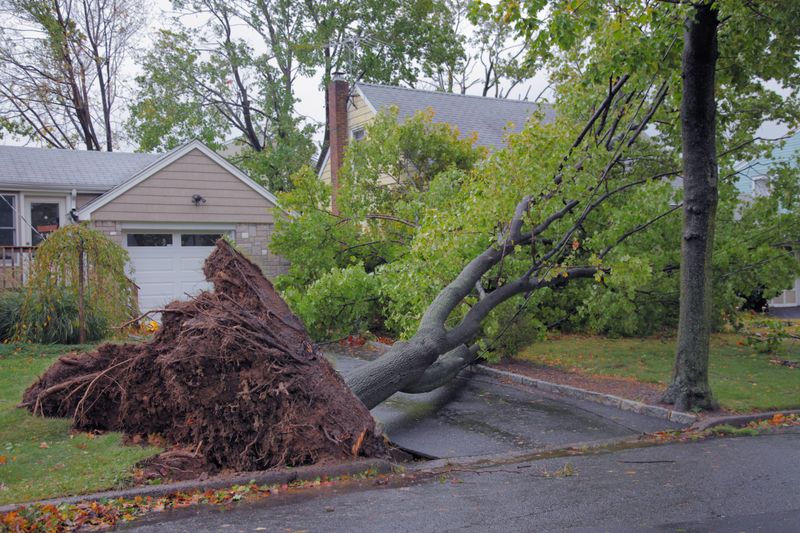
Storm damage feels personal, but the law usually treats it as nobody’s fault. When a healthy tree falls during a sudden windstorm, ice storm, or tornado, Indiana courts often call it an act of God.
That phrase simply means nature caused the problem, not a careless neighbor. If the tree was sound and nobody had reason to worry about it, the owner generally is not liable for the damage on your side.
So who pays? In most cases, you file a claim with your own homeowner’s insurance. Your policy usually covers damage to your house, garage, or fence, minus your deductible.
Not going to lie, that stings a little. You did nothing wrong, and you still pay the deductible. But your neighbor did nothing wrong either, and the law tries to be fair to both sides.
A quick tip: take photos right away, before anything gets moved. Snap the trunk, the broken spot, the roots, and the damage to your property.
Those pictures help your insurer understand what happened. They also show whether the tree looked healthy or had hidden rot. That detail can matter a lot later on, especially if the cause of the fall becomes a question.
Rotten Trunks And Ignored Warnings Put The Owner On The Hook
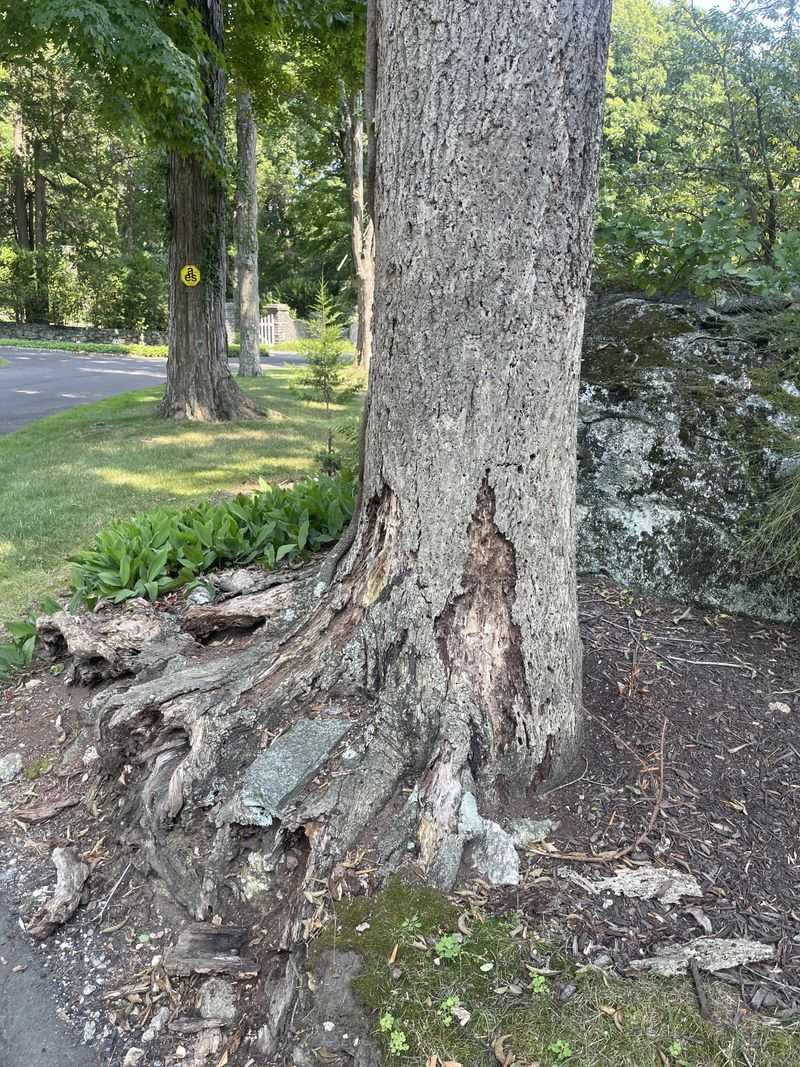
Here is where the story flips. A neighbor who ignores a sick, cracked, or hollow tree may be responsible when it comes crashing down.
Lawyers call this negligence. It means the owner knew, or reasonably should have known, the tree was dangerous and did nothing about it.
Picture the clues a reasonable person would notice. Mushrooms growing from the base, big dead limbs, deep cracks, a hollow trunk, or a tree leaning more each year all point to trouble.
If a tree like that falls, the owner can be held accountable for the damage. Your insurance company may pay you first and then go after the neighbor’s insurer to recover costs. That process is called subrogation, and it can even help you get your deductible back.
Proof matters here. Old photos, emails, texts, or letters showing you warned your neighbor can make a huge difference.
A report from a certified arborist after the fall can also help explain how long the decay had been building. Wood rot rarely happens overnight, so an expert can often show the problem was visible for months or years.
Keep every record in one folder. You will thank yourself later.
The Spot Where The Trunk Meets The Ground Decides Ownership
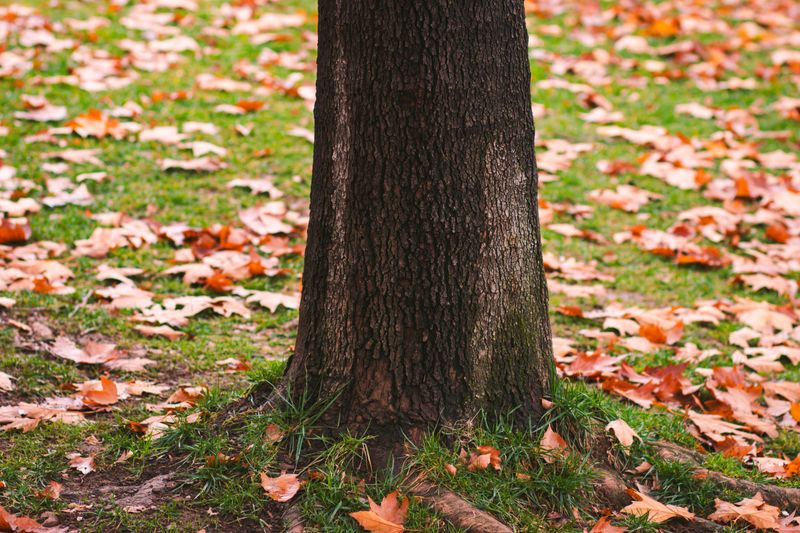
Branches can wander anywhere they please, but the trunk tells the real story. Ownership of a tree usually depends on where the trunk sits at ground level.
If the trunk is fully on your neighbor’s side, the tree belongs to them. That stays true even if half the canopy hangs over your patio.
Things get trickier when the trunk straddles the line. These are called boundary trees, and both owners generally share them.
That shared status means neither of you should cut one down without the other’s agreement. Removing a shared tree on your own could land you in a dispute, or worse, a lawsuit over its value.
Not sure where your line actually runs? Fences are not always placed exactly on the boundary.
Check your property survey or plat map, which you may have received at closing. Many Indiana counties also offer online GIS maps that show approximate lot lines, though a licensed surveyor gives the most reliable answer.
Knowing ownership before a storm hits saves a lot of confusion. It also makes conversations with your neighbor easier, since you both start with the same facts instead of guesses about whose tree is whose.
Your Homeowner’s Policy Handles More Than You Expect
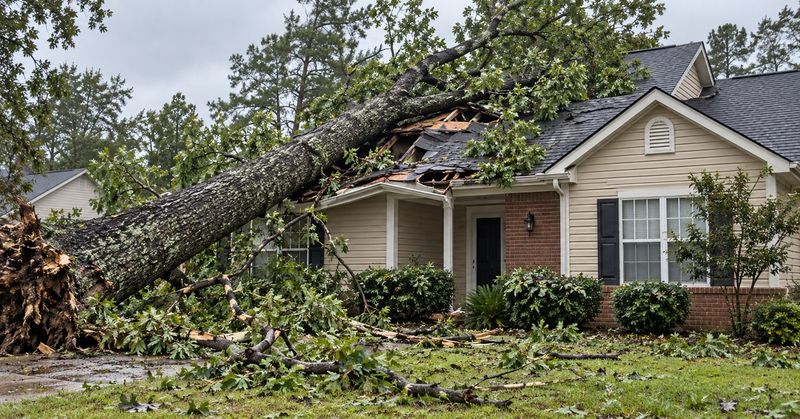
Insurance paperwork is nobody’s favorite hobby, yet it becomes very interesting after a tree hits your roof. Most standard homeowner’s policies cover damage to your house when a tree falls on it, no matter whose tree it was.
Many policies also pay to remove the tree from your home, often with a set limit. That limit is frequently around 500 to 1,000 dollars per tree, though policies vary.
Fences, sheds, and detached garages usually fall under a section called Other Structures. That coverage is separate from the main house portion.
Fair warning, though. If a tree lands in your open yard and hits nothing, many policies will not pay for cleanup. You may be paying a tree service yourself.
Call your insurer soon after the damage happens. Ask what is covered, what your deductible is, and whether they want an adjuster to look before you remove anything.
Keep receipts for tarps, emergency repairs, and hotel stays if your home becomes unsafe. Those costs may be reimbursed.
One more smart move is reading your policy before storm season. A few quiet minutes now can prevent a nasty surprise later.
Overhanging Limbs Can Be Trimmed With A Little Care

Branches poking over the fence can feel like uninvited guests. In Indiana, you generally have the right to trim limbs and roots that cross onto your property, up to the property line.
There are limits, and they matter. You cannot go onto your neighbor’s land without permission, and you should not cut so much that you harm or topple the tree.
Heavy cutting on one side can weaken a tree or unbalance it. If your trimming damages the tree, you could end up paying for it.
I’m the first to admit I once got a little too eager with loppers. A chat over the fence first would have saved me an awkward apology.
For big limbs or anything near power lines, call a professional. Certified arborists know how to make proper cuts that heal well.
Never trim branches touching utility lines yourself. Contact your electric company instead, since they often handle that work.
Also check your city rules. Some towns protect certain trees or require permits for street trees in the strip by the sidewalk, which may belong to the city rather than either homeowner.
Cracks, Leans, And Mushrooms Are A Tree Asking For Help
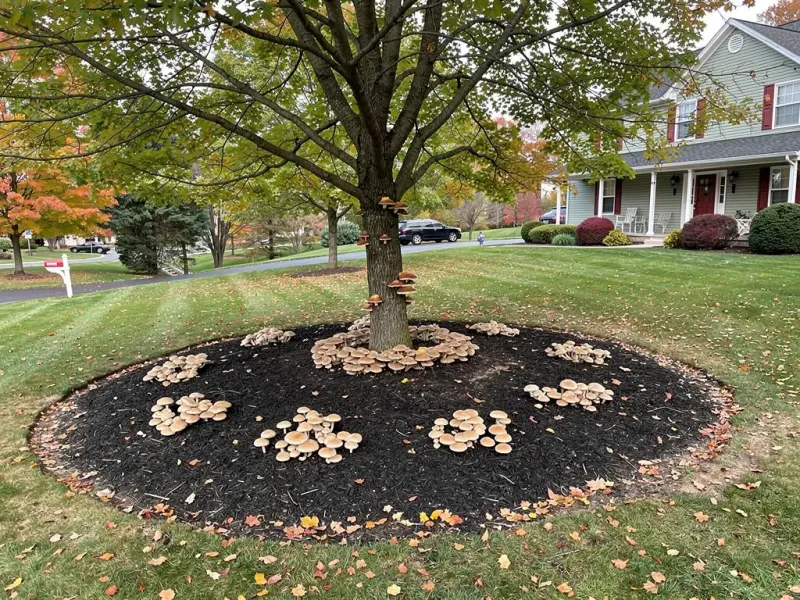
Trees rarely fall without dropping hints first. Learning to read those clues protects your home and helps you build a record if a neighbor’s tree looks risky.
Start at the bottom. Mushrooms or shelf fungi near the base can signal root or trunk decay, and soil heaving up on one side may mean the roots are shifting.
Move up the trunk. Look for deep cracks, oozing wounds, missing bark, and hollow spots you can tap and hear echo.
Then scan the canopy. Large dead branches, often called widowmakers by tree workers, can drop without warning. Sparse leaves during summer may point to a tree in decline.
Ash trees deserve extra attention in Indiana. The emerald ash borer has hit ash trees across the state, and infested trees can become brittle and unpredictable.
A sudden new lean after a storm is a red flag. Slow leans over many years are sometimes fine, but fresh shifts are not.
When in doubt, bring in an ISA certified arborist for an assessment. Purdue Extension also offers helpful guides on tree health and hazards for homeowners who want to learn more.
A Friendly Letter And A Few Photos Can Protect You Later
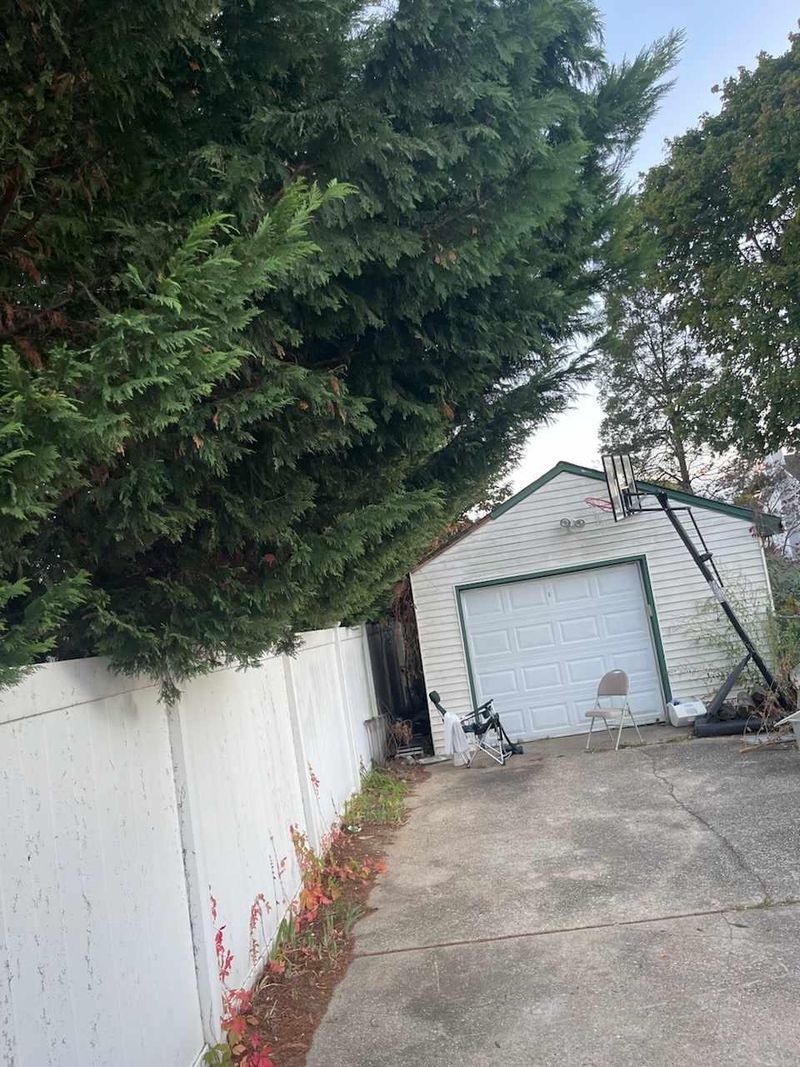
Nobody enjoys being the neighbor who complains. Still, a polite heads-up about a scary tree can protect both of you.
Begin with a simple conversation. Many people honestly have no idea their tree is in trouble, especially if the decay sits on the side facing your yard.
If talking does not lead anywhere, follow up in writing. A short, kind letter or email describing what you see creates a clear record that the owner was informed.
That record matters. If the tree later falls, written notice makes it much harder for anyone to claim they did not know about the hazard.
Take dated photos from several angles. Capture cracks, fungi, dead limbs, and how close the tree sits to your house or fence.
You might even offer to split the cost of an arborist visit. A neutral expert opinion can calm tempers and point everyone toward a fix.
For trees on city property, such as those near sidewalks, contact your local parks or street department. Cities like South Bend have programs for reporting hazardous public trees, so check your town’s website for the right office.
Clearing Branches Off Your Side Of The Fence Is Your Next Move
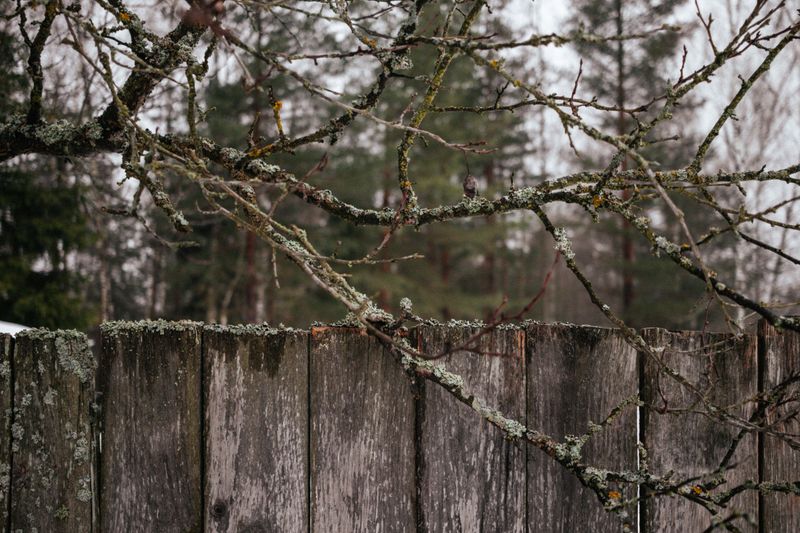
Once the wind calms down, the real work begins. Safety comes first, so stay away from any branches touching power lines and call your utility right away.
Next, photograph everything before cleanup starts. Then contact your insurance company to report the damage and ask about next steps.
In general, each owner handles cleanup on their own side of the line after a healthy tree falls. That means the portion in your yard is usually yours to clear, even if the trunk sits next door.
Hire a licensed and insured tree service for big jobs. Chainsaw work on tangled, tense limbs is risky, and pros have the gear to handle it safely.
Watch out for storm chasers who knock on doors offering cheap, fast cleanup. Ask for proof of insurance and get a written estimate first.
If you suspect negligence and damage is costly, a short consultation with an Indiana attorney can help. Small claims court handles many tree disputes, and the limit is 10,000 dollars.
Above all, keep the friendship intact when you can. Trees eventually come down, but neighbors usually stick around for years.