How to Tell a Black Widow Egg Sac from Other Spider Sacs in Your Florida Yard
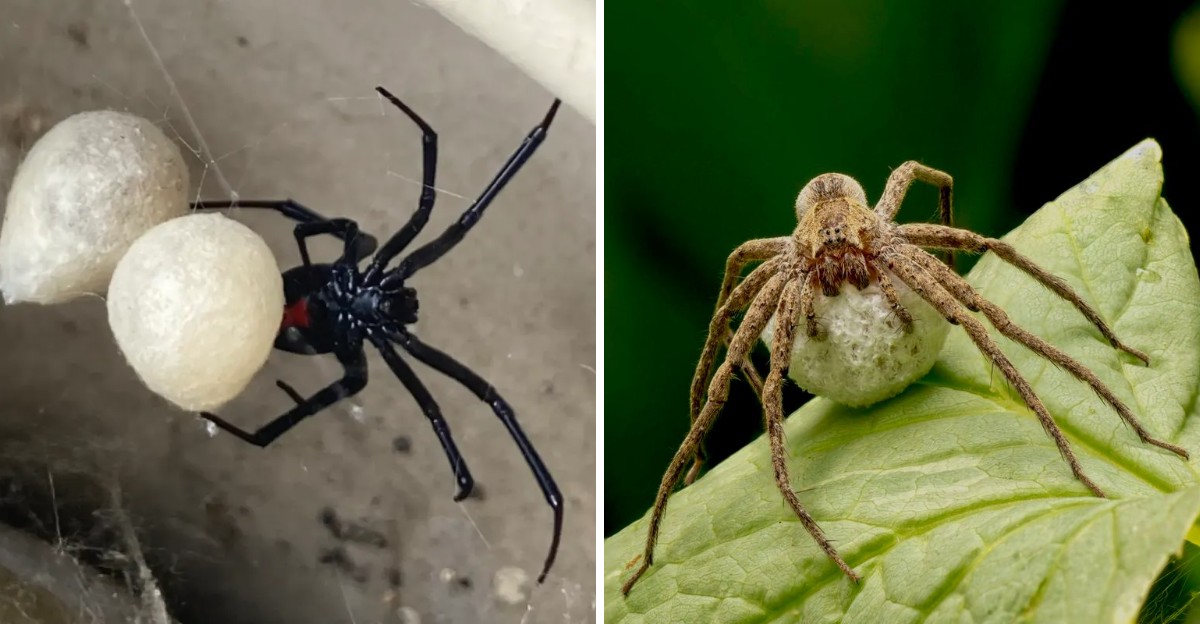
A single silk ball about the size of a pea can hold a few hundred tiny spiders. Some mothers make several of these little nurseries in one summer.
I found my first one tucked under the lip of an old clay pot. It was pale, smooth, and oddly pretty, like a pearl someone forgot.
My first thought was simple. Who made this, and should I worry?
Here in Florida, our yards host a surprising crowd of spider moms. Some weave spiky sacs, some hang them in shrubs, and some carry them around like a backpack.
You need sharp eyes and a little patience to sort them out.
I keep falling for a good backyard mystery, especially one that teaches me something useful. The clues are hiding in shape, texture, color, and location.
One of those silk bundles belongs to the spider everyone warns you about, and spotting it is easier than you’d think.
1. That Smooth Papery Silk Ball Under Your Patio Is Worth a Closer Look
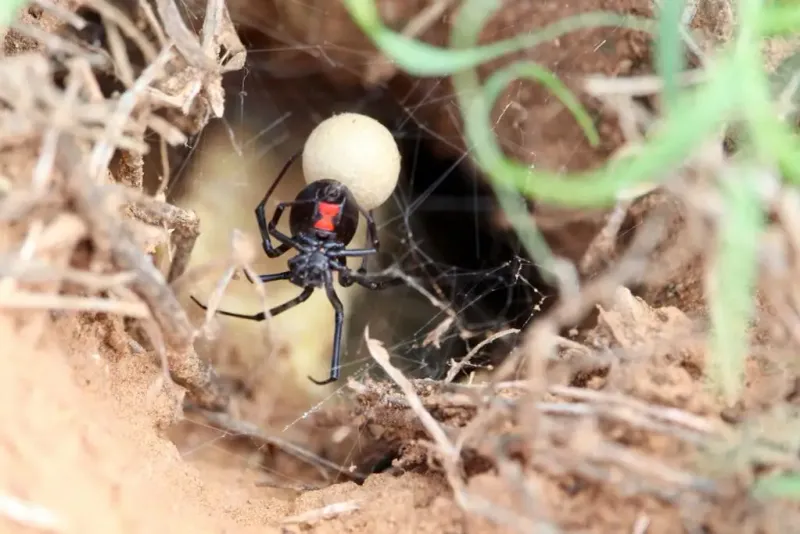
Smooth is the word to remember. A black widow egg sac feels papery and firm, with a tidy outer skin and no fuzz or spikes poking out.
Most sacs are round or a little pear-shaped. They come in cream, pale yellow, light tan, or grayish white.
Size runs about one-third to one-half inch across, close to a garden pea.
Florida has more than one widow species, including the southern black widow and the northern black widow. Both make these neat, smooth sacs.
The northern species sometimes makes slightly pear-shaped ones, but the texture stays sleek either way.
I like to think of it as a tiny paper lantern. If you can picture a lantern with no decorations, you have the right idea.
Anything bumpy, starry, or wrapped in loose fluff points somewhere else.
One sac can hold a few hundred eggs, according to university extension sources. A single female may produce several sacs over a season.
That means spotting one is a good reason to check nearby spots too.
Look without poking. Use a flashlight and keep your hands clear, since the mother often waits close by.
A good look usually tells you more than a touch ever could.
2. Spiky Egg Sacs Usually Mean a Brown Widow Moved In
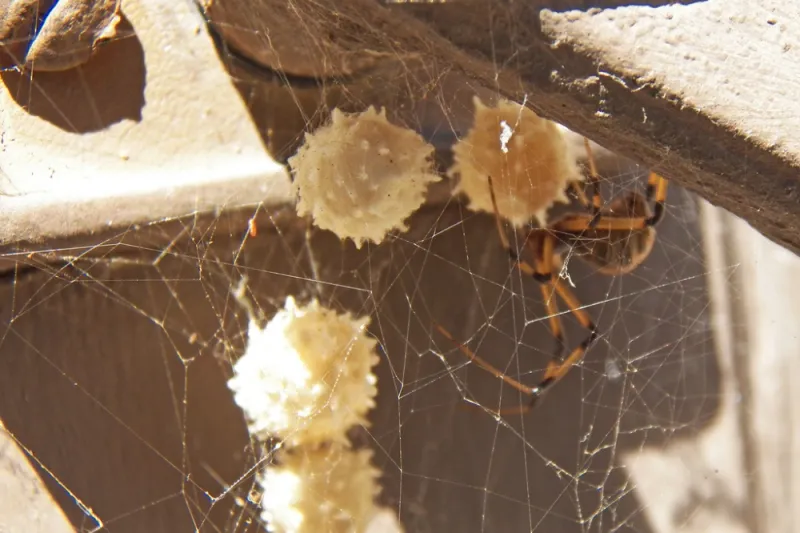
Sandspurs made of silk. That is how many Florida gardeners describe brown widow egg sacs the first time they see them.
These sacs are covered in little pointed tufts that stick out in every direction. Some people say they look like tiny old sea mines.
They are usually tan, cream, or light yellow, and about the same size as a black widow sac.
Brown widows are not native here, but they have spread widely across Florida since they were first reported decades ago. University of Florida researchers note that they often outnumber black widows around homes.
In many suburban yards, the spiky sac is the one you will find most.
You will spot them under patio chairs, inside mailboxes, along railings, and in the rims of flower pots. Brown widows love tidy human spaces with lots of hidden corners.
Their bite is generally considered much milder than a black widow’s, though gloves still make sense. Bites are rare because these spiders tend to be shy.
Texture is your fastest test. Smooth leans black widow.
Spiky leans brown widow. It is honestly one of the easiest calls in backyard spider sorting, and it gets quicker every time you practice.
3. Messy Cobwebs in Dark Corners Give the Widow Away
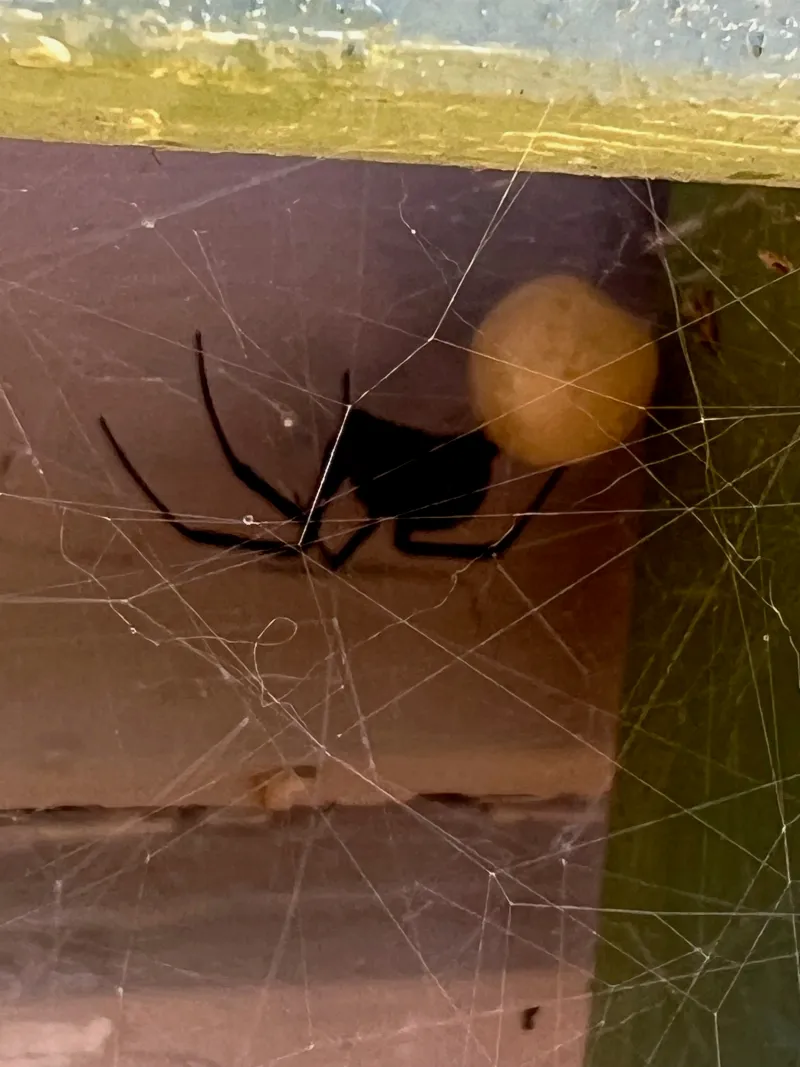
Location tells a story all by itself. Black widows build tangled, uneven cobwebs instead of the pretty spiral webs you see stretched between shrubs.
These webs feel strong and a bit sticky. They often sit low to the ground in quiet, dark places.
Think woodpiles, meter boxes, sheds, garages, hollow concrete blocks, and the undersides of outdoor furniture.
The egg sac usually hangs right inside that messy tangle. You may also see the shiny black female nearby, often with a red hourglass on her belly.
She tends to hide in a little retreat deeper in the web.
Personally, I check my irrigation boxes with extra care. They are dark, rarely disturbed, and full of tiny insects.
That combination is basically a widow welcome mat.
Brown widows build similar tangled webs, so the web alone does not settle the case. Combine it with the sac’s texture, though, and you get a strong answer.
Orb weavers, by contrast, make big wheel-shaped webs in open, sunny spaces. If the sac is hanging near one of those tidy spirals, a widow probably is not the owner.
Tangled and tucked away is the widow style.
4. Wolf Spiders Carry Their Egg Sacs Around Like Backpacks
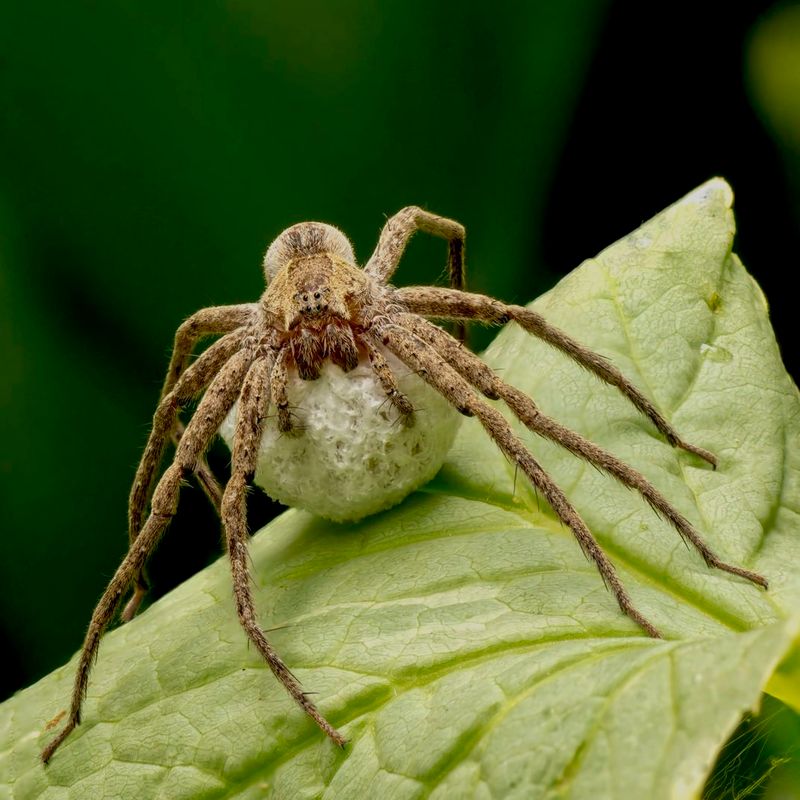
Some spider moms refuse to leave their eggs behind. Wolf spiders are the champions of this habit.
A female wolf spider attaches a round egg sac to the silk spinnerets at the tip of her body. Then she drags it everywhere she goes.
The sac often starts out white and darkens to tan, brown, or grayish as it ages.
The show gets even better after hatching. The spiderlings climb onto their mother’s back and ride along for a while.
I once watched one cross my sidewalk looking fuzzy and lumpy, and it turned out to be dozens of babies.
Wolf spiders do not build webs to catch food. They hunt on the ground, so you will see them in mulch, leaf litter, and lawns, especially at night with a flashlight.
Their eyes shine back like little green sparks.
That makes them easy to separate from widows. A widow sac stays put in a web.
A wolf spider sac travels on a running spider.
These hunters are helpful pest eaters in Florida gardens. Bites are uncommon and usually mild.
Most of the time, letting them roam is the kindest choice for your yard.
5. Fishing Spiders Hold Their Egg Sacs in Their Jaws
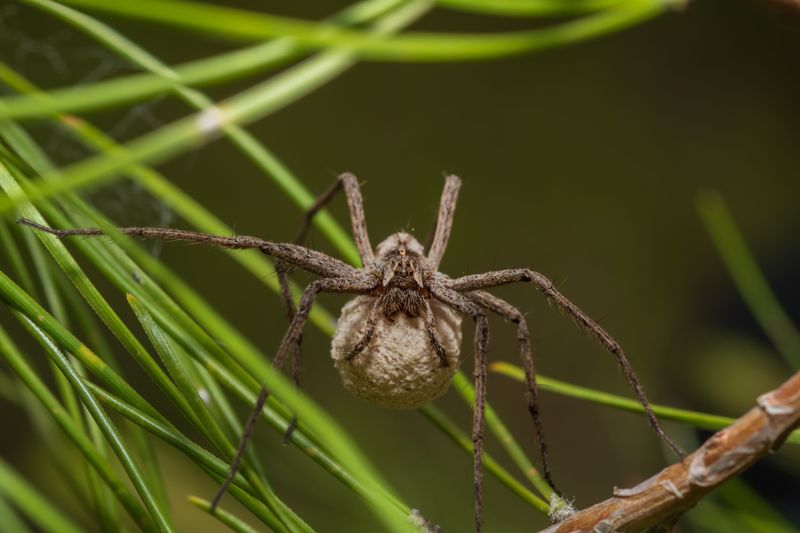
Near ponds, docks, and damp shady spots, you might bump into a big brown spider holding a round ball in its mouth. Meet the logic of the fishing spider mom.
Fishing spiders belong to the nursery web spider family. Instead of hanging the sac in a web, the female carries it in her jaws, called chelicerae.
The sac is often white to pale tan and can look surprisingly large for its size.
When the babies are nearly ready to hatch, she builds a small silk tent in vegetation. She tucks the sac inside and stands guard nearby.
That tent is the nursery web the family is named after.
These spiders are big and can look scary, with a leg span that may reach a few inches. Still, they are not considered dangerous to people.
They mostly want to be left alone near the water.
So if you see a sac being carried in the jaws, cross widows off your list right away. Widows do not carry their sacs around.
A folded leaf tent woven over shrubs near a pond is another nursery web clue. Lake edges and shady creek banks are classic places to find them.
6. Garden Orb Weavers Hang Fancier Egg Sacs on Your Shrubs
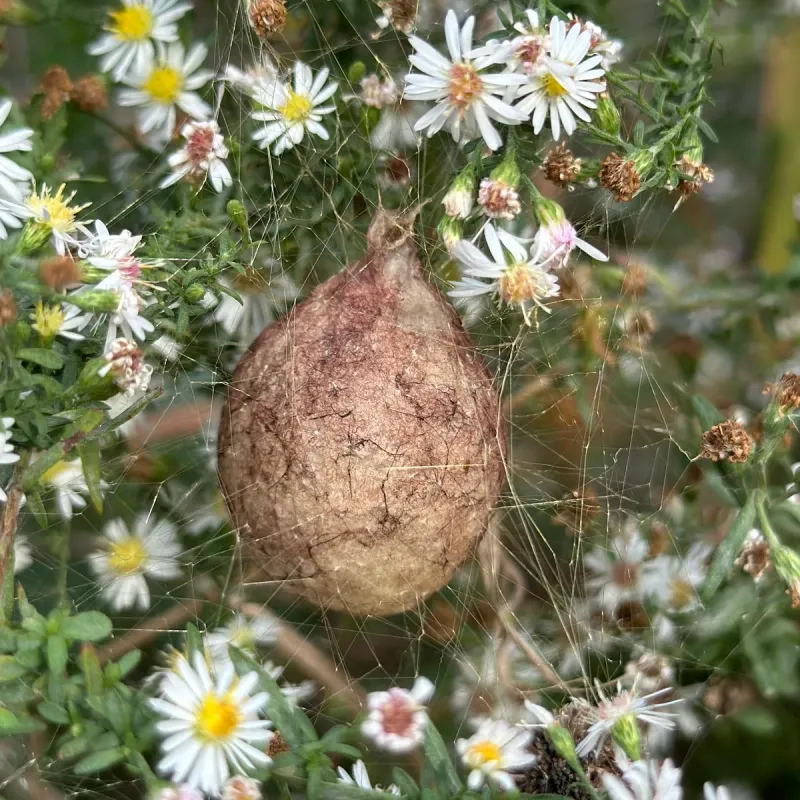
Orb weavers are the artists of the garden, and their egg sacs often match that style. You will usually find them stuck to stems, fences, or eaves rather than inside a tangled web.
The yellow garden spider, also called the black and yellow argiope, makes a tan, papery sac about the size of a large marble or a bit bigger. It is often pear-shaped, with a narrow neck at the top.
It is noticeably larger than a widow sac.
Spiny-backed orb weavers, those tiny spiders with crab-like spiky shells, get creative. Their small oval sacs often show streaks of dark green and yellow silk.
They are usually tucked on the underside of leaves.
Golden silk orb weavers, famous for their huge golden webs, wrap their eggs in a fluffy yellowish silk mass. It often sits on bark or leaves near the big web.
I find these the most fun to discover because they look so decorated. None of them look like the plain, smooth widow sac.
Bigger size, colored threads, and a spot glued to a plant all point to orb weavers. These spiders eat plenty of garden pests, so they are great guests.
7. Green Lynx Egg Sacs Look Spiky but Play by Different Rules
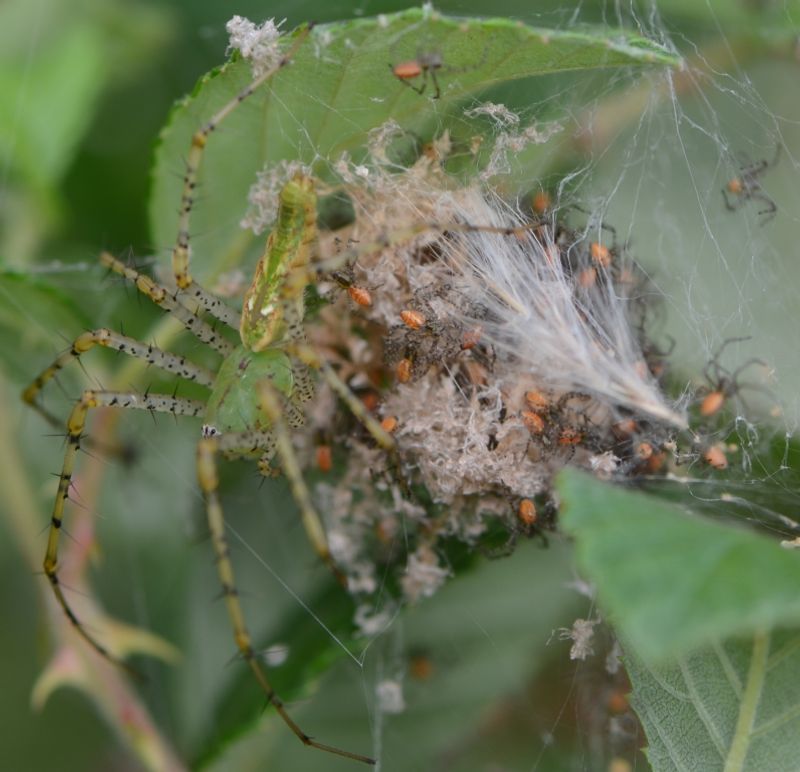
Not every spiky sac belongs to a brown widow. The green lynx spider likes to keep gardeners guessing.
This bright green hunter is common in Florida shrubs and flowers. Its egg sac is usually tan or straw colored and covered with small bumps or points.
It tends to be larger than a widow sac, often about two-thirds of an inch to an inch across.
The sac is often slightly flattened on one side. The mother attaches it to plants with a loose tangle of threads, then sits right on or beside it.
Her lime-green body is a clear sign that you are not dealing with a widow.
Size and setting matter most here. A brown widow sac sits in a cobweb near furniture or pots.
A green lynx sac sits out on leafy shrubs, guarded by a long-legged green spider.
One fun bit from entomologists is that the mother can spray venom droplets when she feels threatened. Give her space and protect your eyes, especially while pruning.
Personally, I let these spiders stay. They hunt many insects on flowers, though they will grab a bee now and then too.
8. Found a Widow Egg Sac? Gloves and a Calm Plan Work Best
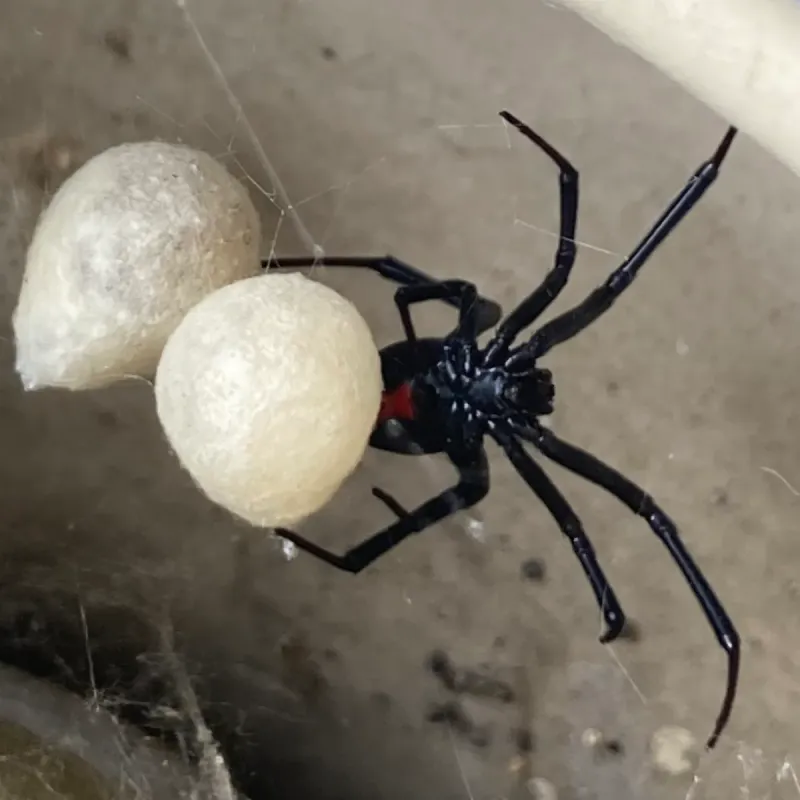
Spotting a black widow sac is no reason to panic. A slow, simple plan keeps you safe and your yard balanced.
Put on thick gloves and long sleeves first. Then use a stick or long tool to remove the sac and web.
Drop the sac in a sealed bag or crush it inside the bag, then throw it away outside.
Check nearby corners, since one female often makes several sacs. A vacuum with a disposable bag works well around sheds and garages.
Seal that bag and toss it right away.
Prevention helps even more. Clear woodpiles and clutter, trim plants away from walls, and shake out shoes, gloves, and pots stored outside.
Fewer hiding spots usually means fewer widows.
Spraying the whole yard is rarely needed and can harm helpful spiders. Spot removal is usually enough for homeowners.
If someone gets bitten and has strong pain, cramps, or sweating, seek medical care quickly. Florida Poison Control is available at 1-800-222-1222.
My favorite takeaway is simple. Learn the smooth sac, respect it, and leave the spiky, carried, and decorated sacs to do their pest control work in peace.