8 Harmless Bugs Georgia Homeowners Mistake For Kissing Bugs As The Weather Cools
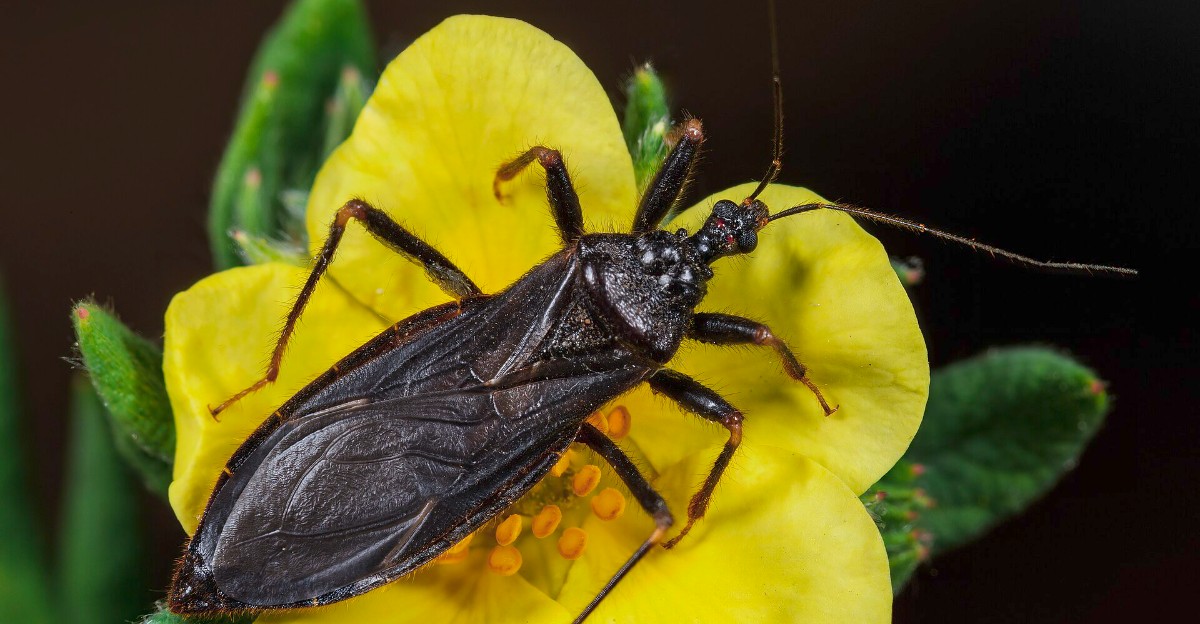
University researchers have received thousands of bug photos and mailed specimens from worried people across the country.
Many of those nervous submissions turned out to be harmless look-alikes that simply wandered too close to home.
Here in Georgia, the true culprit does live in our woods, and it can carry a parasite causing Chagas disease. Cases from local bugs are rare, yet one dark shape on a porch screen can still spark panic.
I have to admit my own heart skipped when a long-legged stranger landed beside my October tomato cages.
You might notice more of these visitors as cooler nights push insects toward warm siding and glowing porch lights.
Some of the bugs you spot around your home deserve a closer look, while others are harmless visitors that even help control garden pests. Knowing the difference could save you a lot of unnecessary worry.
1. Wheel Bugs With A Spiky Cogwheel Crest
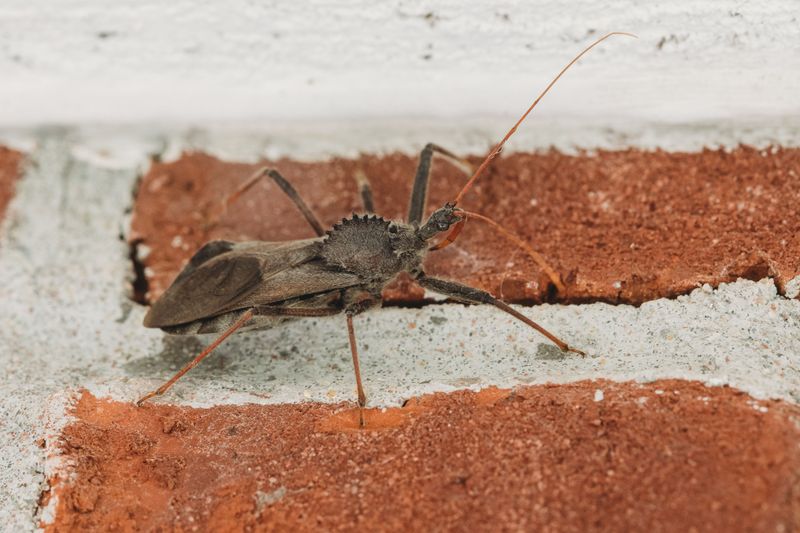
Nothing else in North America wears a spiky half-gear on its back quite like the wheel bug.
That strange crest looks like a tiny saw blade, and it makes this gray hunter easy to spot.
Adults stretch to roughly one and a quarter inches, which is big enough to make anyone jump. Their long narrow head and curved beak give them a kissing bug vibe at first sight.
I love how this predator spends summer gobbling caterpillars and beetles that chew on our vegetable beds. Fall brings the adults out on porches and tree trunks, where they look surprisingly slow and clumsy.
Kissing bugs feed on blood, but wheel bugs only hunt other insects and do not seek out people. The crest on the back remains the easiest clue, since kissing bugs have a smooth, flat thorax instead.
Please keep your fingers away, because a wheel bug bite is famously painful and can stay sore for days.
Most bites happen when people grab them barehanded or accidentally press one against bare skin.
If one wanders indoors, avoid handling it directly and carefully trap it under a container before releasing it outside. Your garden will thank you next summer when those hungry youngsters hatch from egg clusters on twigs.
Personally, I watch for their bright red and black nymphs each spring as a sign of healthy balance. Leaving them alone saves money on sprays and keeps plenty of free pest control working in your yard.
2. Leaf Footed Bugs With Flattened Hind Legs
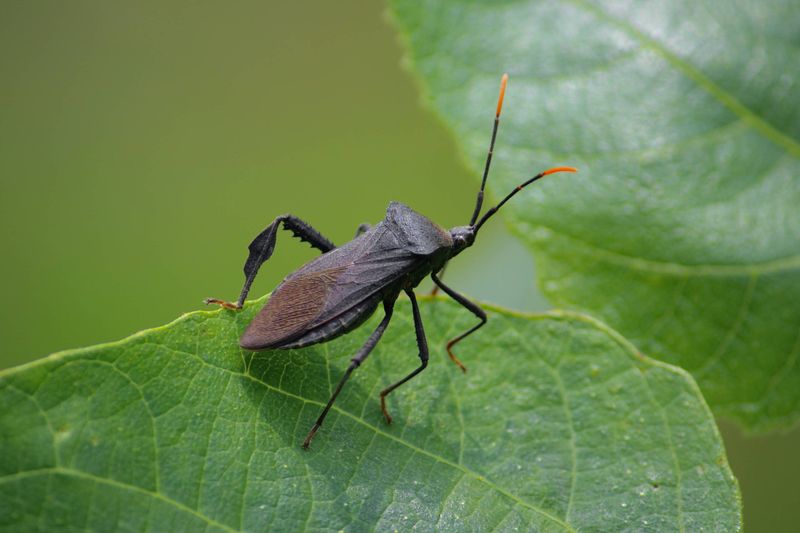
Look closely at the back legs, and you will find little flat flaps shaped like tiny leaves.
Those odd decorations earned leaf-footed bugs their name, and they make a handy clue for nervous homeowners.
Several Leptoglossus species live in the Southeast, and most are brown, slender, and close to an inch long. Many show a thin pale zigzag line across the back that looks like a faded stitch.
Late summer tomatoes and ripening pomegranates are their favorite snacks, so gardeners often meet them near the fruit. They poke holes with a straw-like beak and sip plant juices, which leaves fruit spotted and sometimes misshapen.
Unlike kissing bugs, leaf-footed bugs have no interest in your blood and are not known to bite people. A kissing bug also lacks those leafy leg flaps and carries orange or red bands along its body edge.
As nights cool, adults huddle together in woodpiles or tucked into the corners of sunny porches. I have found whole clusters under my old garden bench, looking like a gathering of tiny brown umbrellas.
Hand-picking into a bucket of soapy water works well, especially in the cool early morning hours.
Clearing weeds and fallen fruit after harvest also leaves fewer cozy spots for them to spend winter.
You might hear a surprising buzz when they fly, which can startle you more than the bug itself. Take a breath, check those leafy legs, and you will know your guest is just a plant sipper.
3. Western Conifer Seed Bugs Crawling Near Windows
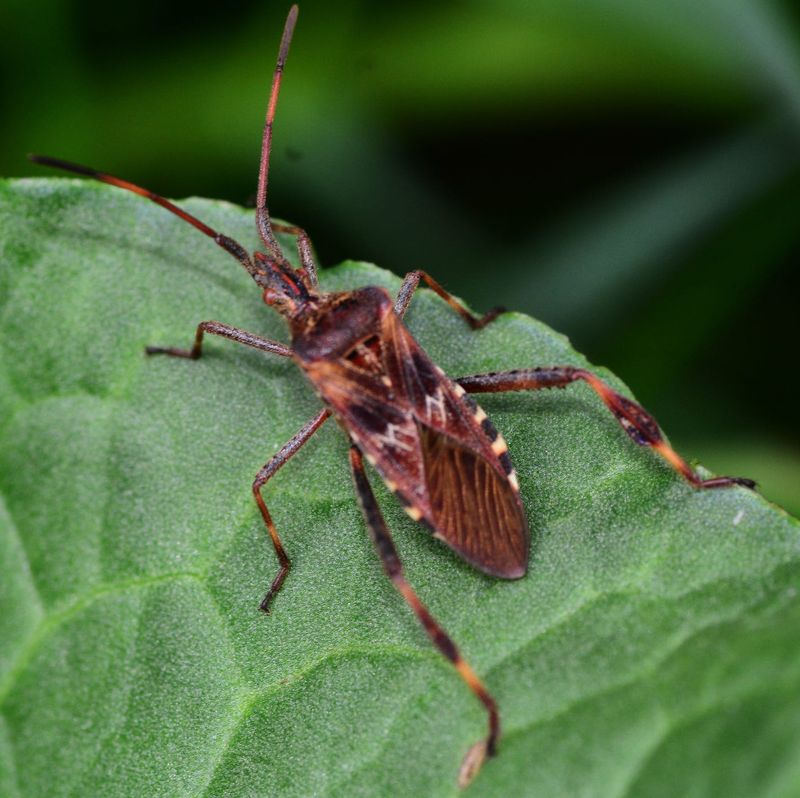
A sharp piney smell drifting from your curtains might be the calling card of an uninvited winter guest. Western conifer seed bugs release that scent when bothered, and some people say it reminds them of apples.
Despite the western name, this bug has spread across much of the eastern United States over recent decades.
It belongs to the leaf-footed family, so it shares those slightly flattened hind legs with its cousins.
Adults are reddish brown, about three quarters of an inch long, with a white zigzag across the wings. Flying ones flash a yellow and black patterned belly that looks surprisingly fancy for a household nuisance.
Pine trees are their dinner table, because they sip sap from developing cones and seeds during the summer. They cannot bite you for a blood meal, and they carry no disease that affects people or pets.
Cool fall days push them toward sunny walls, where they slip through gaps around windows and attic vents.
Indoors, they mostly bumble around lamps and wait for spring warmth before heading back outside to the pines.
I like how easy they are to tell apart from kissing bugs once you notice that pale zigzag. Kissing bugs have a cone-shaped head and orange edge bands, but no wing zigzag and no flattened legs.
A handheld vacuum makes cleanup simple, though you should empty the bag outside to avoid that piney smell. Sealing cracks with caulk before chilly weather arrives is the best way to keep them out next year.
4. Boxelder Bugs Sunning On Warm Walls
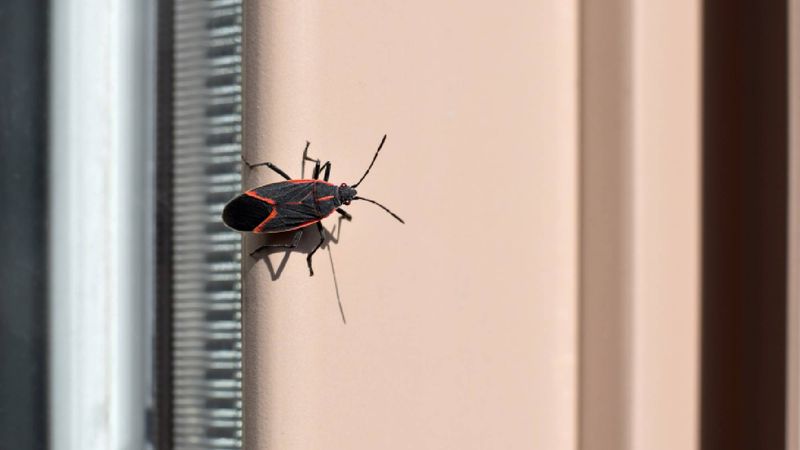
On a bright fall afternoon, a sunny wall can suddenly look covered in crawling black and red confetti.
That busy crowd is usually boxelder bugs, soaking up warmth before they search for a cozy winter hideout.
Adults measure about half an inch, with black bodies and bright red-orange lines along the edges and back. Their young nymphs are mostly bright red, which makes a cluster on tree bark look like spilled berries.
Those red stripes can trigger a kissing bug scare, since both insects share dark bodies and colorful trim. Kissing bug markings sit along the flat belly edge, while boxelder lines run down the back and wings.
Boxelder bugs feed mainly on seeds of boxelder and maple trees, so homes near those trees see more visitors. They do not bite people for food, and they rarely harm healthy trees or garden plants in any serious way.
Personally, I find them more amusing than alarming when they line up along my window trim like sunbathers. Still, you should avoid squishing them indoors, since they can leave reddish stains on curtains and walls.
A shop vacuum gently clears large groups, and soapy water sprayed outdoors helps reduce gatherings on siding.
Repairing torn screens and sealing gaps around doors keeps most of them from slipping inside for the winter.
Indoors, they mostly sit still and wait for spring, since the dry air in heated homes does not suit them. Come warmer days, the survivors head back outside, and your walls return to their usual quiet selves.
5. Brown Marmorated Stink Bugs Shaped Like Shields
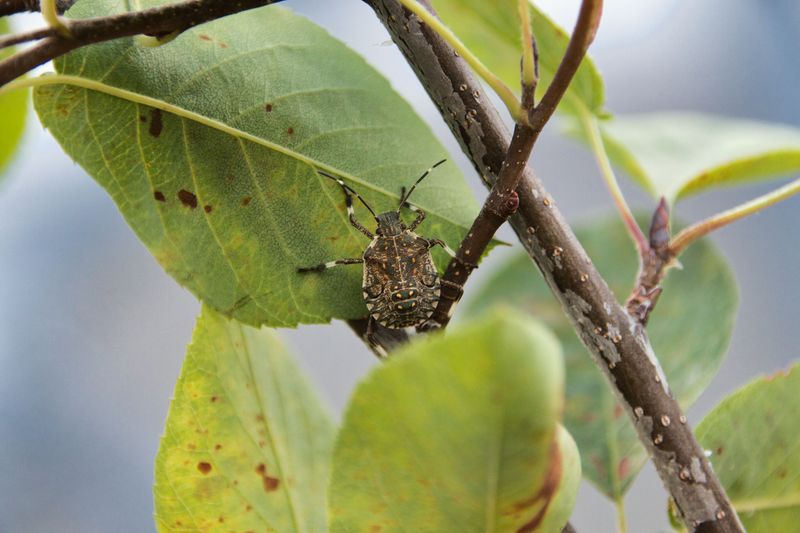
Few bugs pack as much smell into such a small, flat body as the brown marmorated stink bug. Its shield shape and mottled brown coat make it look like a tiny piece of tree bark with legs.
This species arrived from eastern Asia and was first confirmed in Pennsylvania during the late 1990s.
It has since spread through many states, including parts of Georgia, where gardeners now spot it each fall.
Look for white bands on the antennae and alternating light and dark triangles along the outer body edge. Kissing bugs have a narrower body and a long cone-shaped head, with no pale bands on their antennae.
Stink bugs feed on plant juices, so they cannot bite you for blood and do not spread disease. They can, however, scar ripening peaches and tomatoes, leaving hard corky spots hiding just under the skin.
As days shorten, adults gather on sunny siding and squeeze through gaps to spend winter inside walls. Once indoors, they do not breed or chew on wood, though they may clumsily buzz toward your lamps.
I have to admit, their stubborn knack for finding tiny cracks is almost impressive in an annoying way. You can knock them into a cup of soapy water, which avoids the smell that crushing them releases.
Sealing window frames and checking screens before cold weather arrives makes a noticeable difference in their numbers.
A few might still sneak in, but they are simply a smelly nuisance rather than a health threat.
6. Squash Bugs Hiding Under Pumpkin Leaves
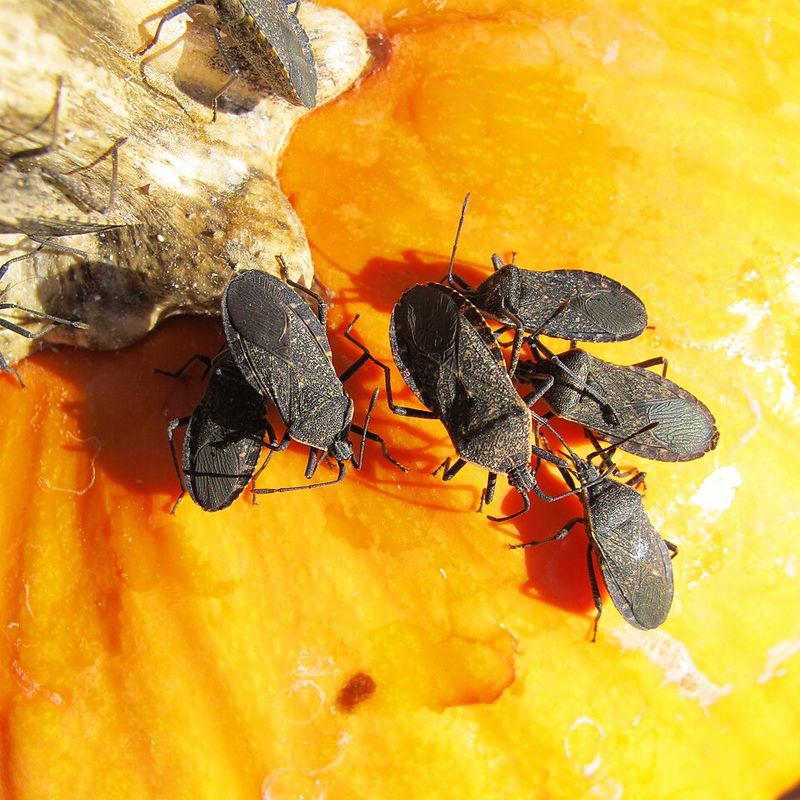
Any gardener who has lifted a pumpkin leaf and seen gray bugs scatter knows this pest by heart. Squash bugs love cucurbits, and their flat dark bodies cause plenty of mistaken identity once fall arrives.
Adults reach about five eighths of an inch, with grayish-brown backs and faint orange stripes along the edges. Their shiny bronze eggs sit in neat clusters on leaf undersides, often tucked between the larger leaf veins.
Kissing bugs show bold orange bands around the abdomen edge, so that faint trim can fool a worried eye.
Squash bugs have a shorter head, though, and they stay focused on vines instead of hunting for people.
These insects suck sap from squash and pumpkins, which can leave leaves wilting and turning crispy brown. They can also spread a disease called cucurbit yellow vine, but only to plants, not to humans.
As temperatures drop, adults search for shelter under boards, mulch, or old vines, and sometimes inside sheds. A few may wander toward homes, which is often when worried neighbors start snapping blurry photos.
Personally, I clean up spent squash vines right after harvest so these bugs have fewer winter hideouts.
A flat board placed near plants overnight works as a trap, letting you collect them each morning.
You need to check leaf undersides often next season and scrape off egg clusters before they hatch. A bucket of soapy water and a little patience will handle most of them without heavy sprays.
7. Orange Milkweed Assassin Bugs On Flowers
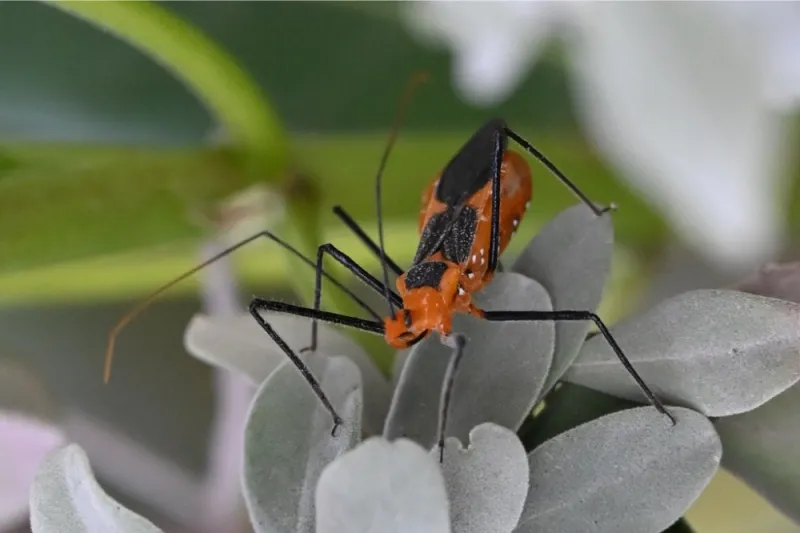
Bright orange with long spindly legs, the milkweed assassin bug looks like it walked out of a cartoon.
You might spot one perched on a flower head, waiting for a careless fly to land nearby.
This hunter, known scientifically as Zelus longipes, ranges across the southern United States, including Georgia gardens. Adults reach about three quarters of an inch, with black markings on a slender orange and black body.
Its long narrow head and curved beak can resemble a kissing bug, especially in a quick phone photo.
Kissing bugs are wider and darker, though, and they rarely hang out on blooming flowers during the day.
I love how this bug uses sticky front legs to snag aphids and small caterpillars visiting your flowers. Unfortunately, it may also grab a few bees, so it plays both sides of the garden story.
Despite the dramatic name, it does not seek out people, and it does not feed on human blood. Handle it carelessly, though, and you may earn a painful bite that stings like a bee for a while.
These bugs stay active late into fall across warmer parts of the South, often on asters and goldenrod. They usually remain outdoors, so finding one inside your home is less common than with stink bugs.
Leave them on the flowers and enjoy watching a tiny predator patiently hunt among your fall blooms. A soft brush and a jar can relocate one if it ends up on your porch furniture.
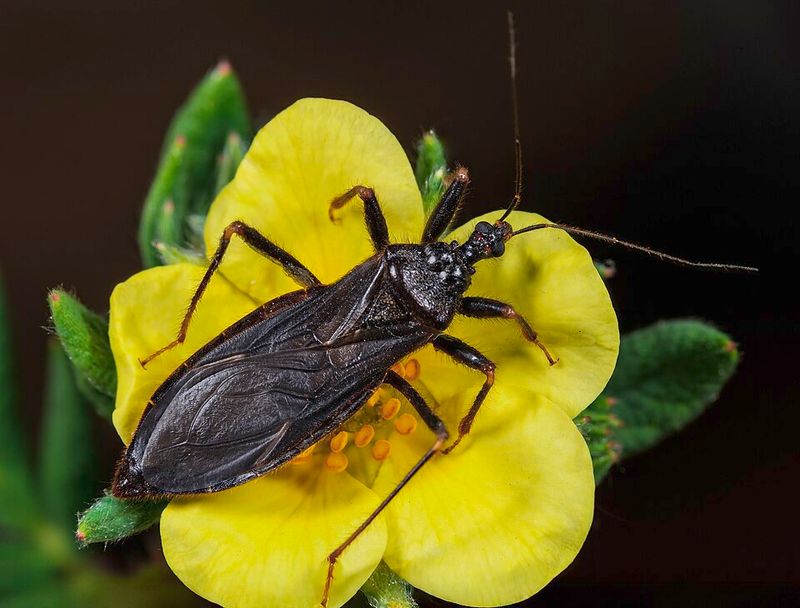
8. Masked Hunter Bugs Coated In Dust
A walking clump of lint is one of the strangest sights you might find under a bed.
That fuzzy wanderer is likely a young masked hunter, which coats itself in dust and fibers for camouflage.
Adults look very different, with dark brown to black bodies and a length of roughly three quarters of an inch. Their narrow head and slim shape make them the closest kissing bug look-alike on this whole list.
Kissing bugs show orange or red bands along the abdomen edge, while adult masked hunters stay plain and dark. That color difference matters, so take a clear photo before tossing any suspicious bug in the trash.
Masked hunters prey on other insects, including bed bugs and carpet beetles, rather than feeding on people.
They do not spread Chagas disease, but a defensive bite can hurt and cause swelling for several days.
These bugs are attracted to lights at night, which explains why some show up indoors as weather cools. Finding several inside could hint that other insects are living nearby, giving them plenty to eat.
I believe a little caution goes a long way, so use a cup or tissue rather than bare hands. Regular vacuuming under furniture removes the dusty nymphs and the small pests they hunt in quiet corners.
If you are unsure about any bug, the UGA Extension office can help identify it from a photo. Sealed specimens in a bag or jar also help experts confirm whether you need to worry at all.