This Is Your Last Chance To Plant Spring-Blooming Bulbs In Georgia Before Thanksgiving
Some Georgia gardeners stash flower bulbs in the refrigerator for six weeks, right beside the lettuce and leftover pie. Our mild winters often skip the long chill that certain spring bloomers need before they will wake up properly.
The soil usually stays warm well into October, so autumn planting can feel backward to newcomers from colder states.
Cooler November ground actually suits many bulbs better, because roots grow steadily while the tops stay quietly tucked underground.
I love how a handful of papery lumps can turn into a bold patch of color by March. You mostly need a sharp trowel and a patch of soil that drains well after a heavy rain.
I think the turkey can wait an hour while a few last bulbs slip into the cool ground. Which of these eight favorites already has a sunny spot waiting in your yard this weekend?
1. Daffodils
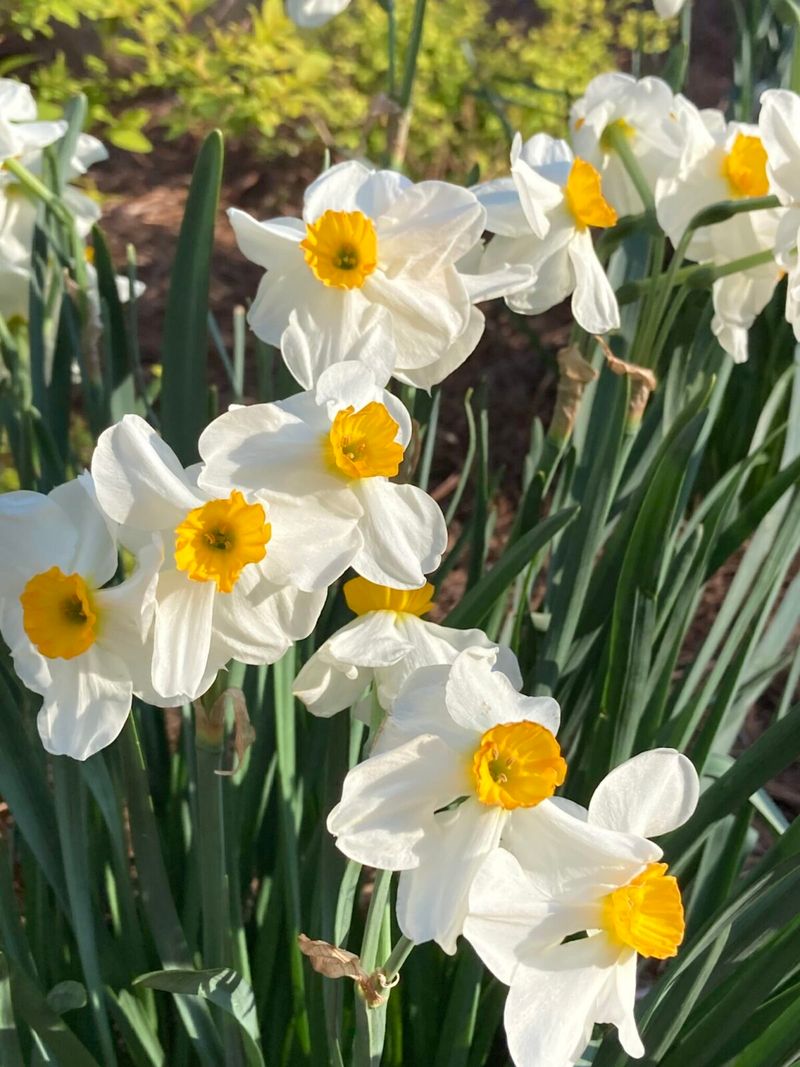
Squirrels and deer usually leave daffodils alone, since every part of the plant contains bitter, toxic compounds called alkaloids. I love planting them along the woodland edge, where hungry visitors have nibbled every tulip I ever tried.
Daffodils belong to the genus Narcissus, and they rank among the most dependable perennial bulbs for Southern yards.
Many clumps keep returning for decades, especially old heirloom types found blooming around abandoned farmhouses across the countryside.
Planting before Thanksgiving works well because the soil has cooled, giving roots several weeks to settle before winter arrives. Set each bulb about six inches deep, with the pointed tip facing up toward the sky.
Choose a spot with at least half a day of sun, since shady daffodils often produce leaves without flowers. Spaces under oaks work nicely, because the bulbs bloom and soak up light before the tree leafs out.
Drainage matters more than fancy fertilizer, so loosen heavy red clay and mix in compost before you plant.
Soggy winter ground can rot bulbs quickly, which is the most common reason they fail to come back.
For warmer southern counties, look for varieties like ‘Ice Follies’ or sweet-scented jonquils that need less winter chill. Tazettas such as paperwhites also perform beautifully near the coast, where cold winters are rare and short.
After the flowers fade next spring, leave the leaves standing until they turn yellow on their own. Those green blades feed the bulb, so cutting them early means fewer blooms the following year.
2. Tulips
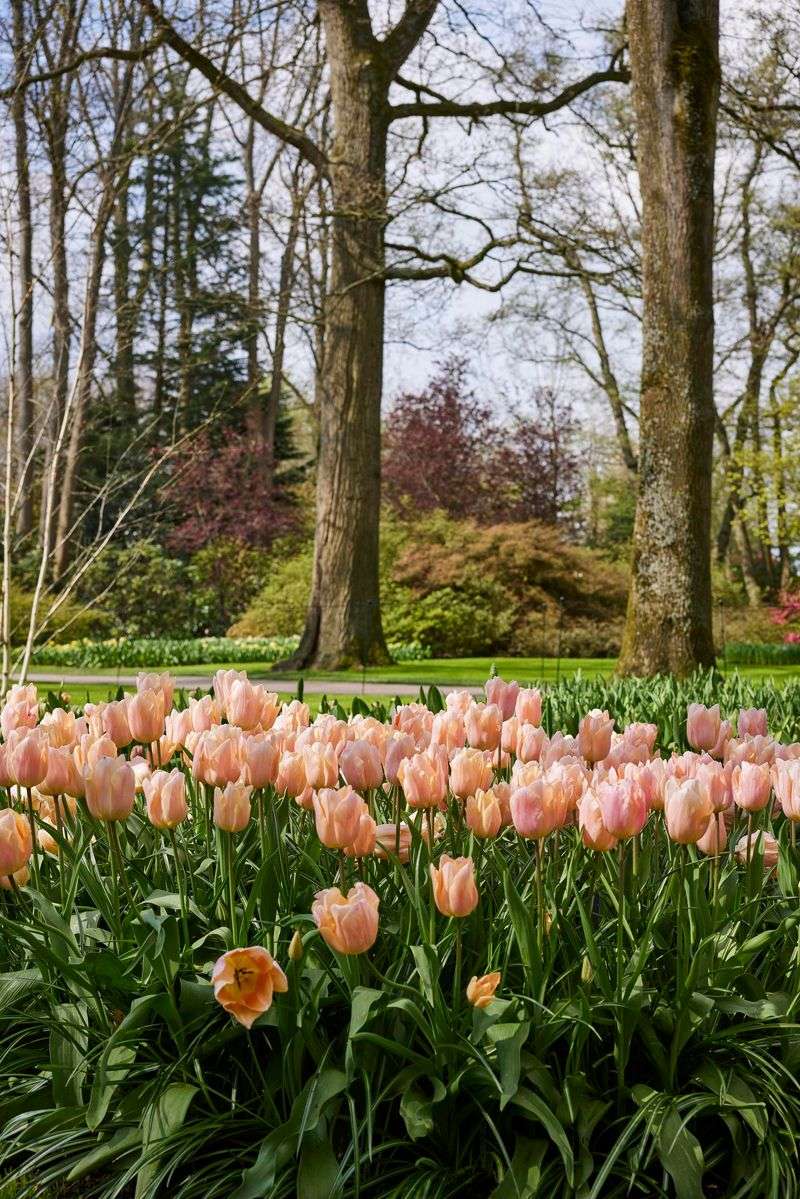
Tulips in the Deep South often behave like a gorgeous one-season fling rather than a long-term relationship.
I happily accept that deal, because a single spring of those glossy cups feels worth every penny.
Our winters rarely stay cold long enough, so most hybrid tulips bloom once and then fade out afterward. Treat them as annuals, much like pansies, and you will enjoy them without any disappointment next year.
Remember the refrigerator trick from the introduction, which University of Georgia Extension experts recommend for many warmer areas. Chill bulbs for at least eight weeks in a paper bag, kept far away from ripening fruit like apples.
Many garden centers sell bulbs already pre-chilled, which saves fridge space and gives you a head start. Plant them in late November or December, once the soil feels cool against your bare hand.
Dig holes about eight inches deep, since deeper planting helps keep bulbs cooler as spring days warm up. Full sun gives the strongest stems, though a little afternoon shade can stretch the bloom season nicely.
Species tulips such as Tulipa clusiana sometimes return for several years in well-drained, sunny Southern beds.
Their small starry flowers look less showy, yet I find their tough, easygoing personality really charming.
Deer adore tulips, so tuck them near the house or inside a fenced vegetable patch for safety. A large pot by the front steps also works well and keeps the show right where guests notice.
3. Hyacinths
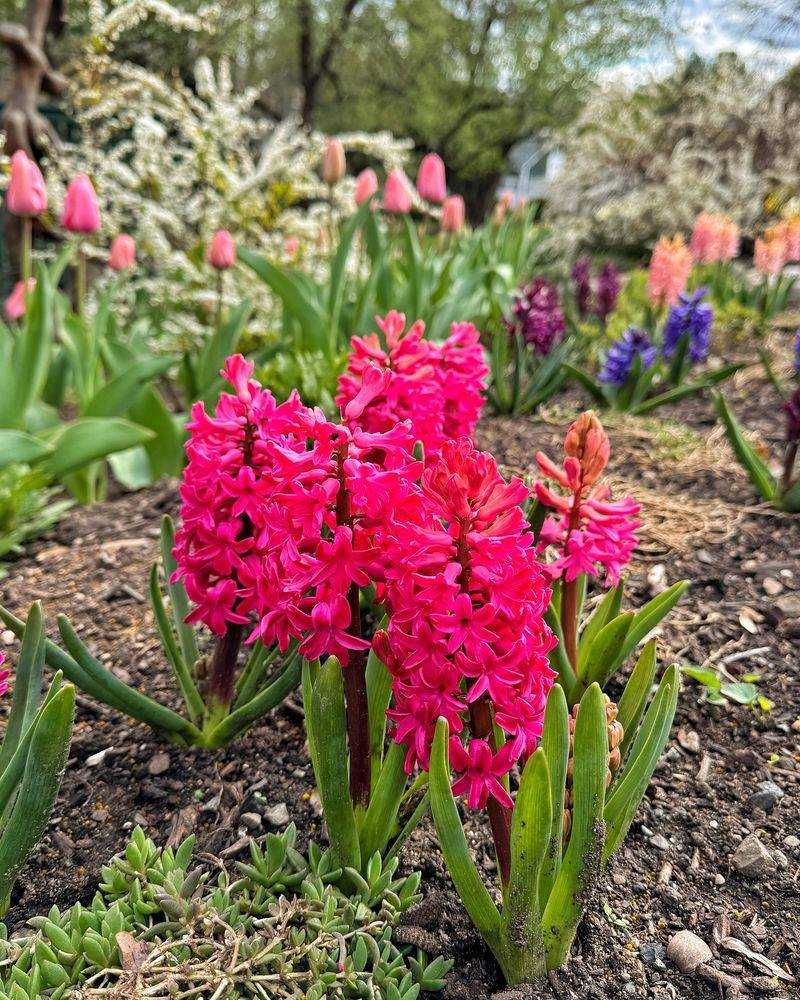
One potted hyacinth can perfume an entire room, and a row outdoors greets you before you reach the gate. I have to admit, I bend down to sniff them every single time I pass by in spring.
Hyacinthus orientalis originally comes from the eastern Mediterranean, where Ottoman gardeners prized it centuries before Dutch growers made it famous.
The thick flower spikes pack dozens of starry florets in shades like deep purple or soft pink.
Like tulips, hyacinths need a decent winter chill, so warmer gardens benefit from refrigerating bulbs before planting. Cooler northern areas can skip that step and plant straight from the bag once November arrives.
Set bulbs about six inches deep and roughly five inches apart, with the pointed end facing upward. Wear gloves while handling them, because the papery skins can make sensitive hands itch and turn red.
Pick a sunny spot with loose soil, because hyacinths sulk and rot when water lingers around them. Raised beds and containers both offer the sharp drainage these fragrant bulbs really appreciate during wet winters.
Expect the biggest, fattest flower spikes during the first spring, with looser and smaller clusters in later years.
Many gardeners actually prefer those relaxed second-year blooms, since they look more natural in mixed borders.
Plant a few close to the porch or a walkway, where their scent reaches you without any effort. Pairing them with pansies fills the gap nicely before the hyacinth buds open in early spring.
4. Grape Hyacinths
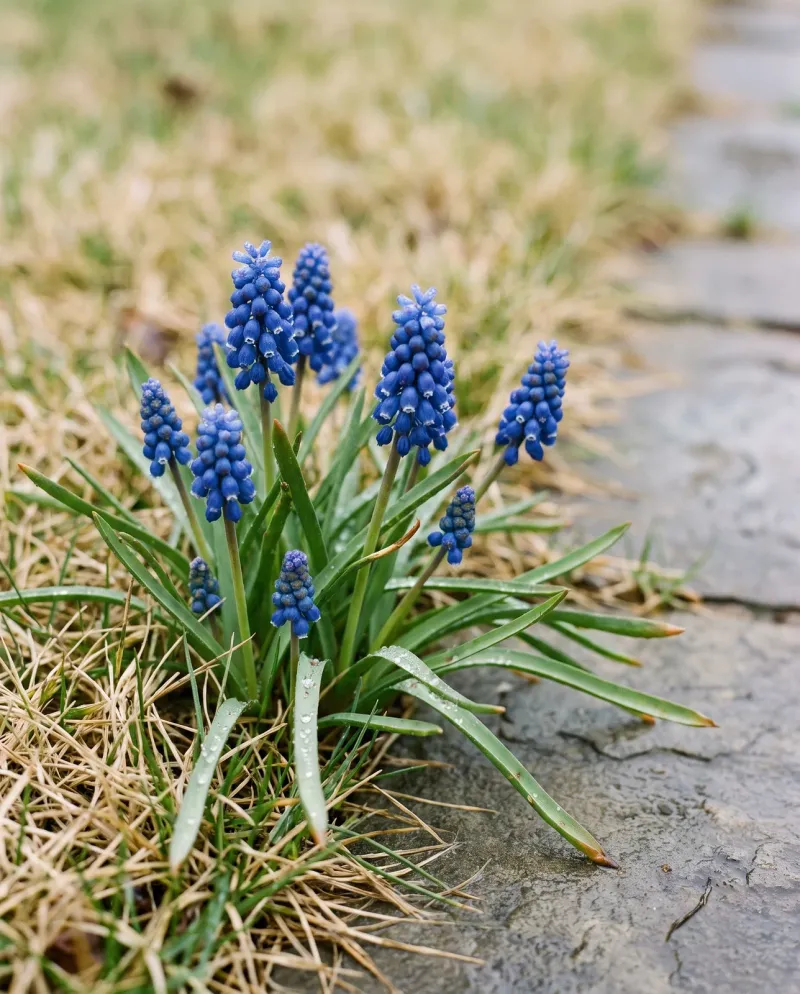
Tiny cobalt bells crowd each grape hyacinth stem, and they really do look like miniature clusters of grapes. Kids love them, and honestly, so do I, especially when they pop up along a garden path.
Muscari armeniacum is not a true hyacinth at all, even though the two plants are relatives in the asparagus family.
Their light, musky scent drifts low to the ground, so you notice it most while kneeling to weed.
Grassy leaves often appear in fall, which surprises many beginners who think something went wrong with the planting. Those early leaves are normal, and they handle frost easily until flowers arrive in late winter or spring.
Plant bulbs about three inches deep and three inches apart, grouping twenty or more for a bold splash.
Small bulbs disappear visually in single rows, so wide drifts or rivers through a bed look much better.
Sun or light shade suits them, and they tolerate average soil as long as water drains away. Under deciduous trees, they finish blooming before the leafy canopy fills in and blocks the light.
Clumps multiply over time, and the plants also reseed, so give them room where spreading feels welcome. Keep them out of tidy rock gardens if you prefer neat edges and carefully controlled spaces.
Early bees visit the blue flowers on mild days, and deer usually leave the plants alone. I like edging daffodil beds with them, since blue and yellow make such a cheerful spring pairing.
5. Dutch Iris
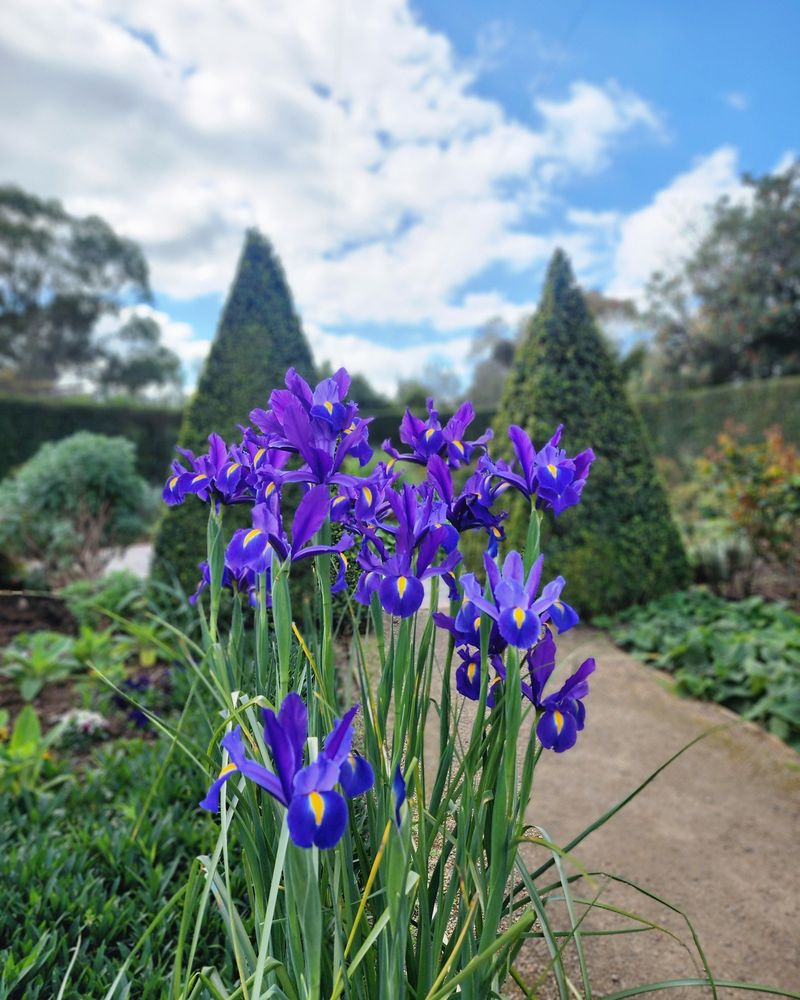
Florists love Dutch iris for its long, straight stems and blooms that last about a week in a vase.
Growing your own means cutting armloads for the kitchen table without paying shop prices every spring.
Iris x hollandica is a hybrid group bred in the Netherlands from several wild Mediterranean bulb irises. The silky blooms come mostly in blues and purples, often with a bright yellow blotch on each lower petal.
Like grape hyacinths, Dutch iris often sends up slender leaves in fall, and that early growth is perfectly normal. Light frost rarely harms the foliage, though a layer of pine straw helps during hard freezes.
Plant bulbs about four inches deep and three to four inches apart, with the pointed ends facing up. Full sun matters here, because shady spots produce floppy stems and noticeably fewer flowers each spring.
Soil should drain quickly, so amend heavy clay with compost or plant along a slightly raised bed.
Wet, warm summers can rot the bulbs, which is why many Southern gardeners replant them every fall.
Expect flowers in mid to late spring, filling the gap after daffodils finish and before summer perennials start. I like tucking them between daylilies, since the iris foliage fades just as daylily leaves fill in.
For cut flowers, snip stems when buds show color but before they open fully into big blooms. Leave some foliage on each plant, because the leaves recharge the bulb for another possible spring show.
6. Summer Snowflake
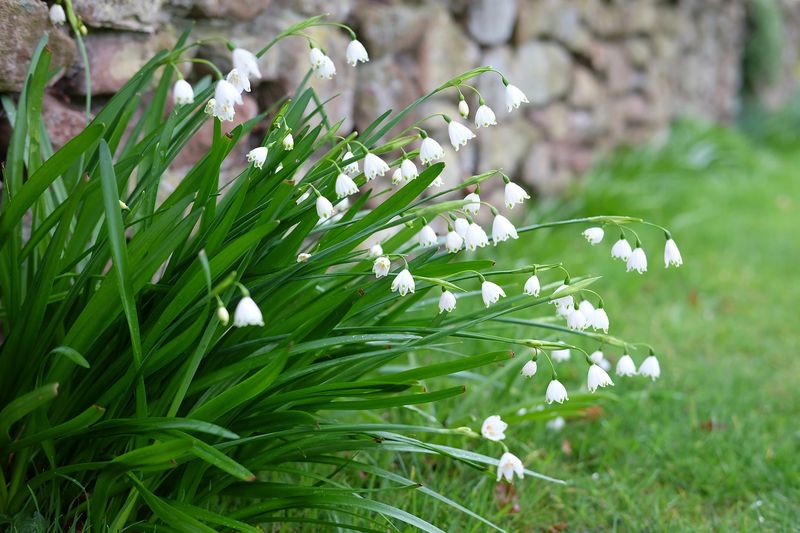
Despite the name, summer snowflake usually blooms in early spring across the South, not during hot summer months. I chuckle every March when these white bells nod beside my daffodils, ignoring their own confusing label.
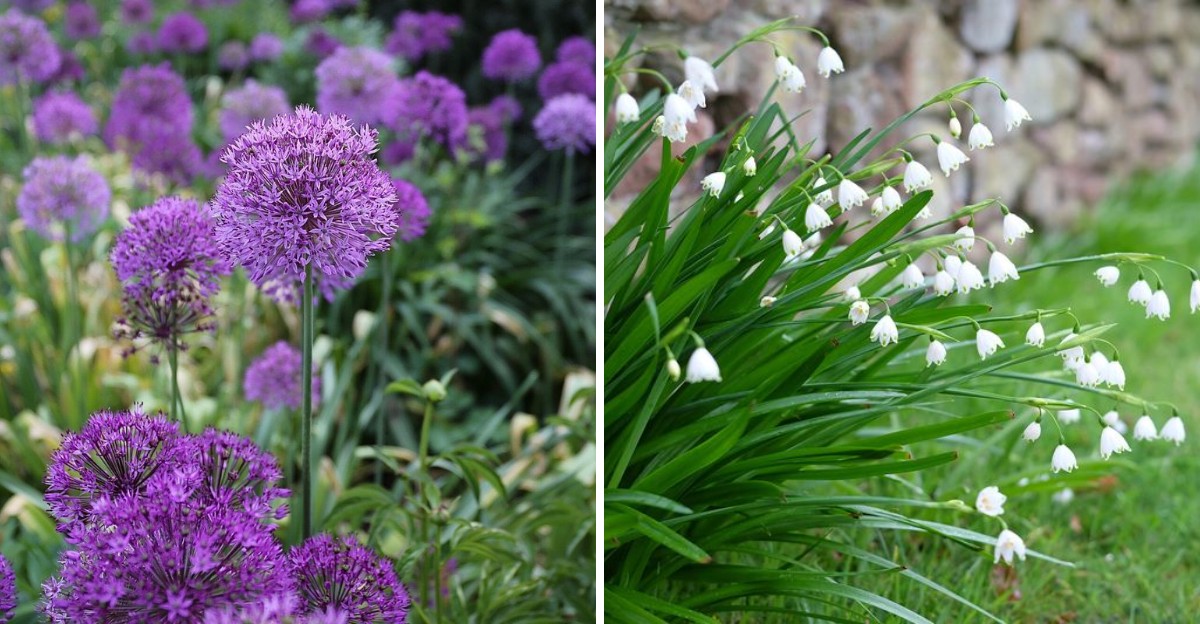
Leucojum aestivum produces dangling white flowers with a neat green dot on the tip of each petal.
Those dots make it easy to tell apart from snowdrops, which rarely thrive in warm Southern gardens.
Heavy clay and damp spots that rot other bulbs rarely bother this tough plant, which tolerates wetter soil. That makes it a smart choice for low areas near downspouts or the soggy edge of a lawn.
Plant bulbs about four inches deep and four inches apart, in full sun or partial shade. Fall planting works best, and the green leaves may appear in winter well before any buds show.
Clumps spread slowly into bigger colonies, and old ones often mark the sites of long-gone farmhouses. Gardeners commonly share divisions, so ask a friend with a large patch if they could spare some.
Deer and voles typically ignore summer snowflake, since the plant contains bitter compounds that discourage nibbling by hungry animals. Rabbits usually pass it by as well, which makes it handy near woodland edges with plenty of wildlife.
Divide crowded clumps after the foliage yellows next spring, replanting them right away in fresh soil.
Clusters of twelve or more look best, especially beneath shrubs where their white bells brighten dim corners.
7. Alliums
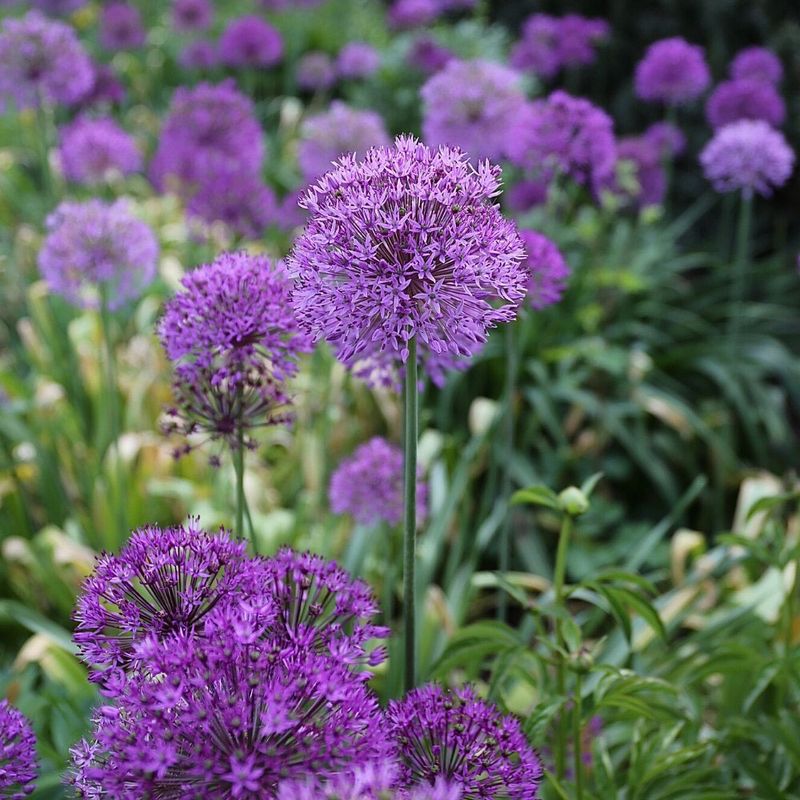
Purple globes the size of softballs bobbing on tall stems look almost cartoonish, and bees swarm them happily.
Ornamental onions bring that playful drama, and I can’t imagine a late-spring border without at least a few.
Alliums are cousins of kitchen onions and garlic, so crushed leaves give off a familiar savory smell. That oniony scent helps keep deer and rabbits from bothering the bulbs in most backyard gardens.
Heat-tolerant choices for our climate include drumstick allium and ‘Purple Sensation,’ which handle Southern springs well.
Giant types such as Allium giganteum often struggle here, so start with smaller, tougher varieties first.
Plant bulbs about three times as deep as they are tall, usually five to six inches down. Space larger bulbs eight inches apart, giving each round flower head room to show off its shape.
Full sun and sharp drainage keep bulbs healthy, since heavy wet clay invites rot during rainy winters. Gravelly beds or slopes work beautifully, and they help the soil dry quickly after storms roll through.
Allium leaves often turn yellow and floppy right around bloom time, which looks a bit messy. Plant them behind leafy perennials like catmint, so neighboring foliage hides the fading leaves nicely in late spring.
Leave the dried seed heads standing after the petals drop, since they look like starbursts in summer. Some gardeners even spray them silver or gold for festive holiday arrangements later in the year.
8. Crocus
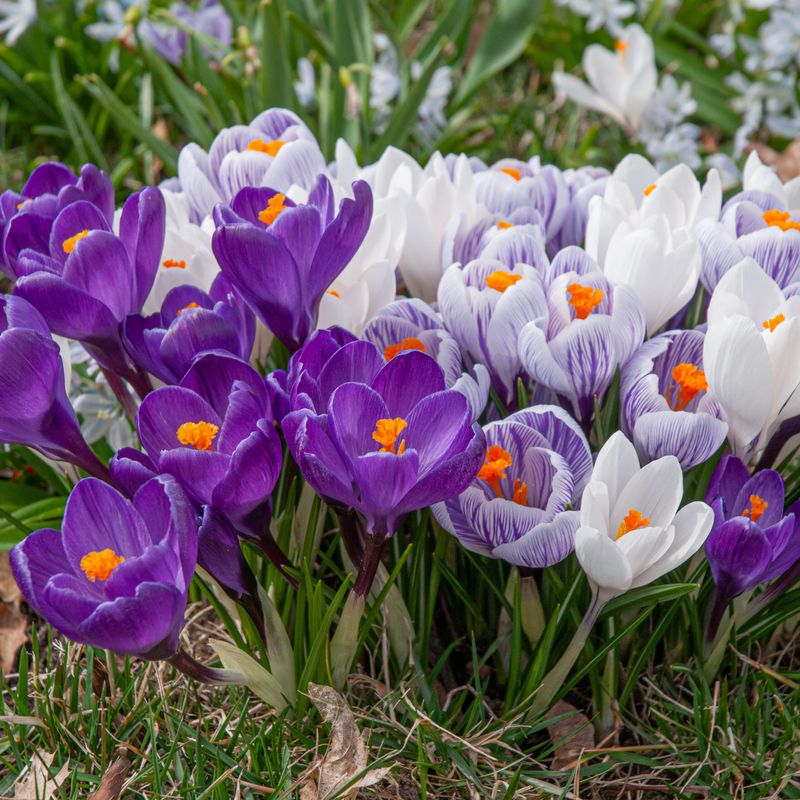
Crocus flowers open wide on sunny afternoons and close again at night, like tiny umbrellas folding up. You might notice bees crawling inside the cups on the first warm day of late winter.
Most crocuses prefer colder climates, so they perform best in the northern and central parts of Georgia.
Gardeners farther south can still try them, though results are usually less reliable in the warmest coastal counties.
Corms go about three to four inches deep, spaced a few inches apart, in sunny well-drained soil. If you cannot tell which end is up, plant them sideways and let the shoots figure it out.
Squirrels love digging up fresh crocus corms, so cover new plantings with chicken wire or hardware cloth.
Remove the wire in late winter, before shoots poke through, or simply plant deeper with gravel mixed in.
Tucked into a lawn, crocuses bloom before the grass needs cutting, creating a carpet of purple and gold. Wait to mow until their leaves turn yellow, usually about six weeks after the flowers fade.
Try snow crocus species, such as Crocus chrysanthus, for the earliest show, often in February around here. Large Dutch crocus types bloom a little later, with bigger cups that stand up better to rain.
Did you know saffron comes from a different crocus that blooms in fall rather than spring? Those spring corms you plant now will not give you spice, but they bring plenty of early cheer.