When Is It Too Cold for Desert Rose in Florida? Don’t Wait for Frost to Find Out
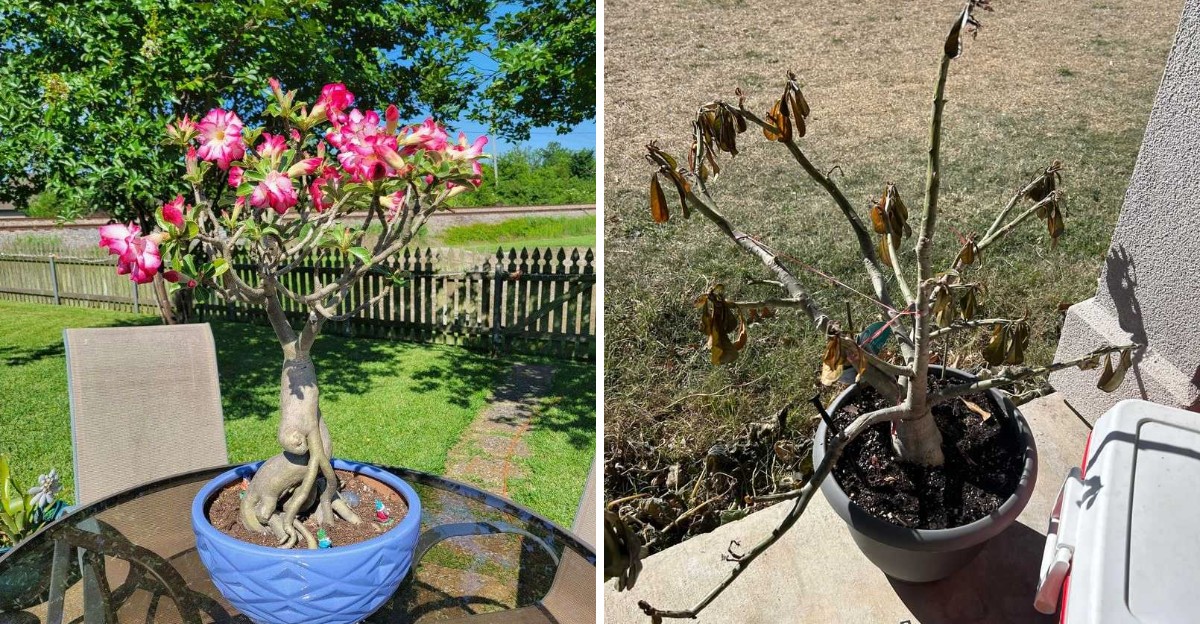
A plant can suffer serious cold damage on a night when no frost shows up at all. That surprised me the first time I learned it. My potted beauty looked fine at sunset and sulked for weeks after a damp 45-degree night.
This succulent comes from dry, hot corners of Africa and the Arabian Peninsula. It stores water in a fat, swollen trunk that looks tough as a stone. Yet that same stored water makes the stems prone to rot when cold and wet arrive together.
I believe most gardeners in Florida watch the wrong number on the forecast. You need to care about chilly, rainy stretches as much as the rare freeze. A mild winter in Miami feels very different from a January cold front in Gainesville.
So where exactly is the line between a cool night and real trouble?
1. The Number on Your Thermometer Matters Long Before Ice Forms on Desert Rose
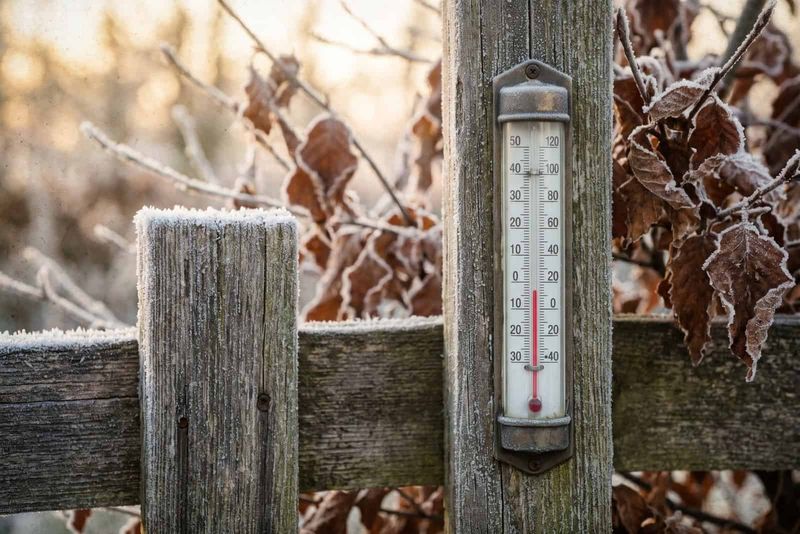
Frost gets all the attention, but desert rose starts complaining much sooner. Research and grower guidance agree that this plant grows best in warm weather, roughly 75 to 90 degrees Fahrenheit.
Once nights slip into the 50s, growth slows down and leaves often begin to yellow.
Below about 50 degrees, many experienced growers start moving pots to shelter. Below 40 degrees, the risk of real tissue damage rises quickly.
A freeze at 32 degrees or lower can turn branches soft and mushy within days.
I like to think of it as three warning zones. The 50s are a yellow light, the 40s are a red light, and freezing is a full stop.
Your plant may survive a short dip, but repeated cold nights add up.
Wind and rain make every number feel worse for the plant. A dry 45-degree night is far easier on it than a soggy, breezy 45-degree night.
Cold soil holding water around the roots is often what tips a healthy plant into trouble.
So keep an eye on the forecast once fall arrives. Watch the overnight lows, not the afternoon highs.
That small habit gives you time to act before the plant shows any damage at all.
2. Bring Potted Adenium Inside When Nights Hit the Low 50s
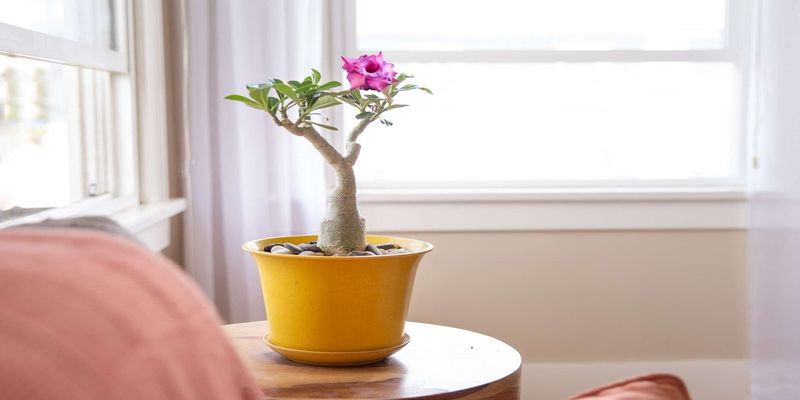
Container growers have a big advantage here, and you should use it. A pot on wheels or a sturdy plant caddy turns a cold front into a minor chore.
Most of the state north of Zone 10 benefits from keeping desert rose in containers for this reason.
My rule is simple. When the forecast shows overnight lows in the low 50s for several nights, the pots come inside or go into a garage with a window.
Waiting until the 30s means hauling heavy pots in the dark and the wind.
Choose a bright spot near a south or west window if you can. A sunroom, enclosed lanai, or cool spare room works well too.
Keep the plant away from heating vents, since blasts of hot, dry air stress it in a different way.
Short cold snaps in South Florida may only need a night or two indoors. In North Florida, plants often stay sheltered from late November into March.
Moving them back outside is easy once nights stay above the mid 50s.
Give the pot a quick check for ants or mealybugs before it comes inside. Nobody wants surprise guests on the kitchen windowsill.
3. Florida Zones Change the Desert Rose Game From Key West to Pensacola
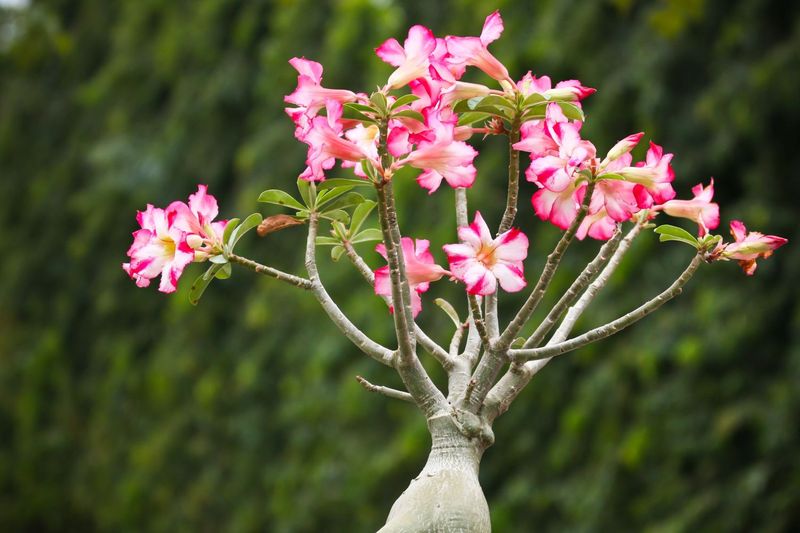
Geography plays a huge role in how you grow this plant. The Missouri Botanical Garden lists desert rose as winter hardy in USDA Zones 11 and 12.
UF/IFAS notes it can grow outdoors in the warmest parts of the state, mainly South Florida.
The Keys and coastal Miami-Dade sit in Zone 11, where in-ground plants usually do well year round. Much of South Florida, including Fort Lauderdale and Naples, falls into Zone 10b.
Plants there often thrive outside but still need protection during the occasional cold snap.
Central Florida, around Orlando and Tampa, is mostly Zone 9b to 10a. Temperatures there can drop into the 30s on a few winter nights.
Pots are the smarter choice for most gardeners in this region.
North Florida and the Panhandle sit in Zones 8 and 9. Freezes happen there most winters, sometimes in the low 20s.
Desert rose in those areas should spend the cold months indoors without question.
Check your exact zone on the USDA map using your ZIP code. Neighborhoods can differ too.
A spot near a lake or the coast often runs a few degrees warmer than a low, open inland field.
4. That Soggy Desert Rose Pot Is a Bigger Threat Than the Chill
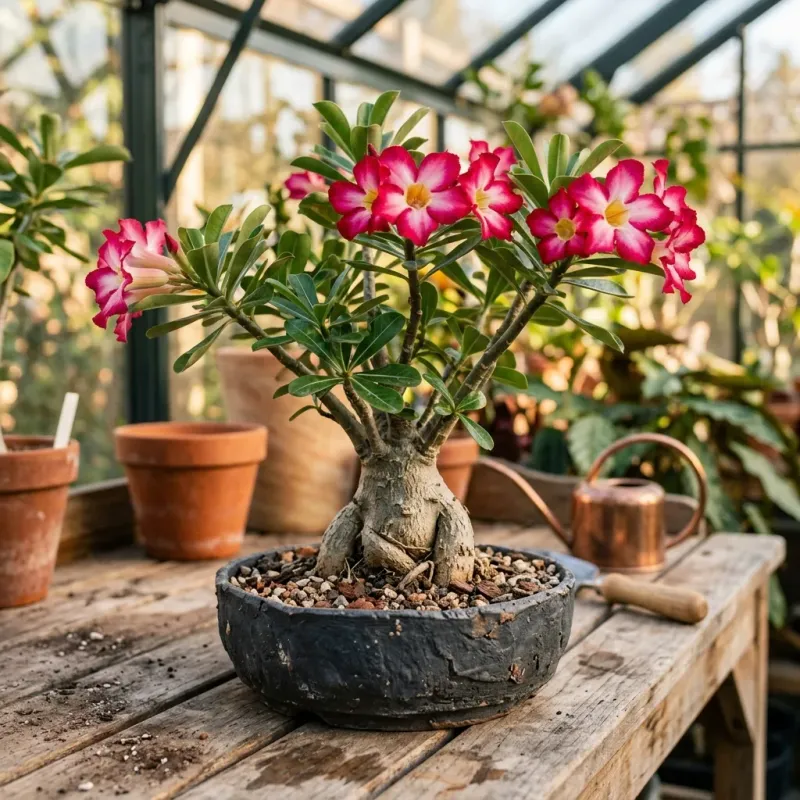
Ask any longtime grower what ruins more winter plants, and many will say water. Cool weather slows the plant down, so roots drink very little.
Soil that stays wet for days invites rot in the roots and the swollen base.
During cooler months, desert rose often slips into a semi-dormant state. It may drop leaves and stop growing for a while.
That is normal, and it means the plant needs far less water than in summer.
Personally, I water sparingly once nights stay in the 50s. Many growers wait until the soil is dry several inches down, and some barely water at all through midwinter.
A light drink every few weeks is usually plenty for a sheltered plant.
Soil mix matters as well. A gritty, fast-draining cactus blend with perlite or pumice helps excess water escape quickly.
Terracotta pots breathe better than glazed ones and dry out faster.
Outdoor plants face a sneaky risk during rainy cold fronts. Moving pots under a covered porch keeps them from sitting in chilly puddles.
Empty any saucers underneath, too, since standing water keeps the roots cold and wet for far too long.
5. Mushy Stems and Blackened Leaves Signal Cold Damage on Adenium
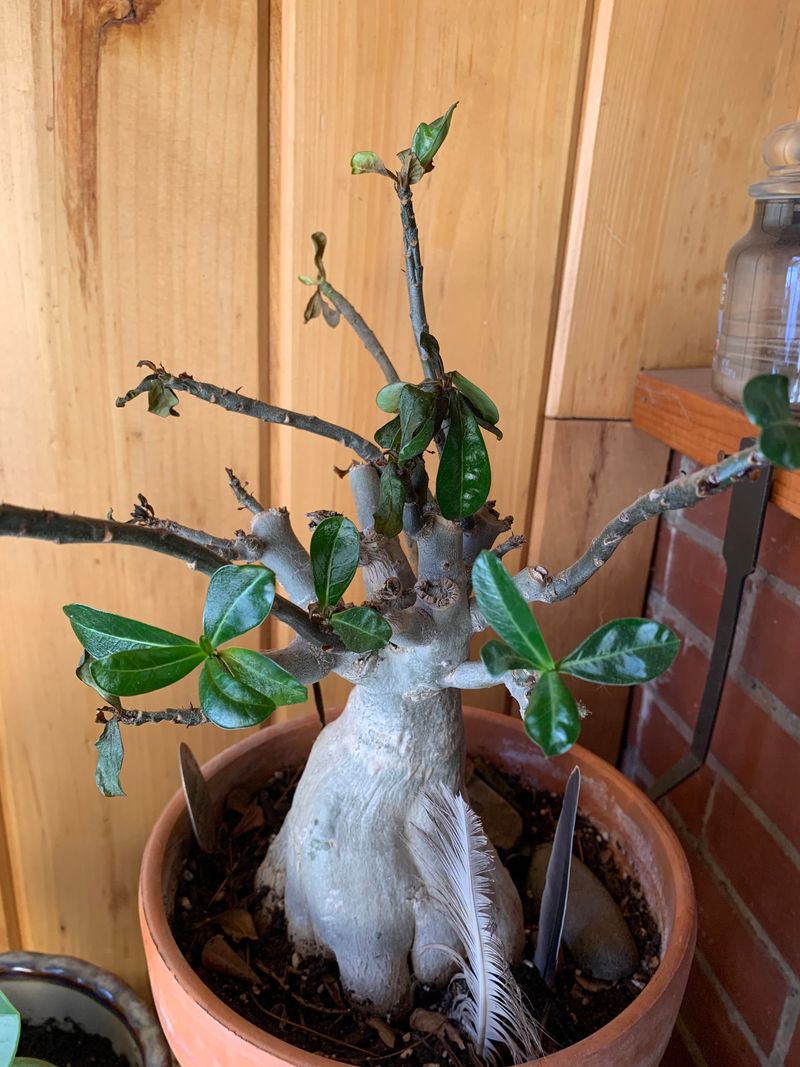
Yellow leaves dropping in December can look scary, yet often it is just winter rest. Desert rose naturally sheds foliage when days get shorter and cooler.
The trunk and branches should still feel firm and plump.
Real cold injury looks different. Leaves may turn dark, translucent, or blackened, almost like they were boiled.
Branch tips can wrinkle, shrivel, or feel soft when you squeeze them gently.
The most worrying sign is a mushy spot on the caudex or lower stems. That squishy texture usually means rot has started inside the tissue.
It can spread downward if nobody steps in.
Give your plant a quick squeeze test once a week during winter. Start at the tips and work toward the base.
Firm stems are a happy sign, while soft ones need attention soon.
Sometimes damage appears days after the cold night itself. A plant can look fine on Monday and show dark patches by Friday.
Keep checking for about two weeks after any chilly spell.
Fun fact for curious gardeners: the sap of this plant is toxic. Wear gloves when you handle damaged branches, and keep curious pets and kids away from the cuttings.
6. Frost Cloth Over In-Ground Desert Rose Buys You Precious Degrees
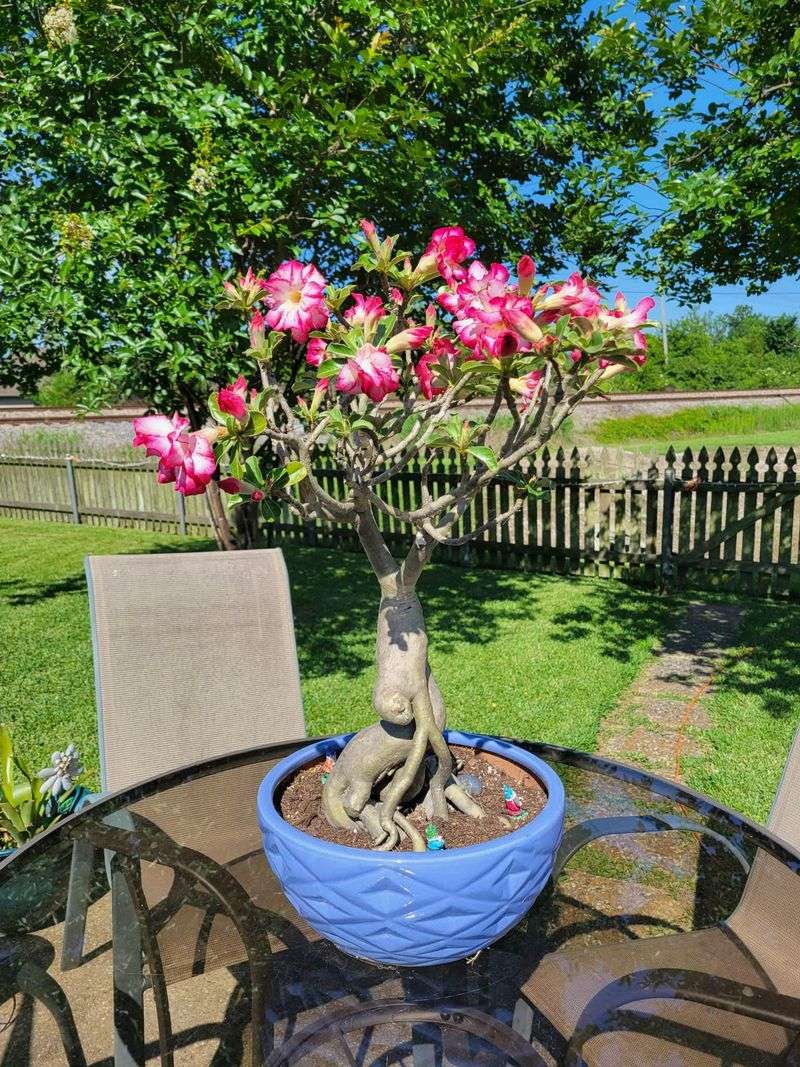
South Florida gardeners with in-ground plants have a different job when a cold front rolls in. You cannot carry a five-foot shrub into the house.
A good cover can still make a real difference on a chilly night.
UF/IFAS cold protection guidance recommends covers that reach all the way to the ground. That traps warmth rising from the soil overnight.
A cover that only drapes over the top lets that heat slip away.
Frost cloth, old bedsheets, or blankets all work. Avoid plastic touching the leaves, since it can transfer cold directly to the plant.
Remove covers the next morning once it warms so the plant does not overheat.
Watering the soil a day before a freeze, not the plant itself, can help the ground hold heat. Keep it moderate, though.
Desert rose still dislikes soggy roots.
Some gardeners place a string of old-style incandescent holiday lights under the cover for gentle warmth. Use only outdoor-rated lights and keep them away from fabric folds.
Planting near a south-facing wall gives extra protection year round. That spot soaks up sun all day and releases warmth after dark.
7. Pruning Back Cold-Damaged Desert Rose Branches the Right Way
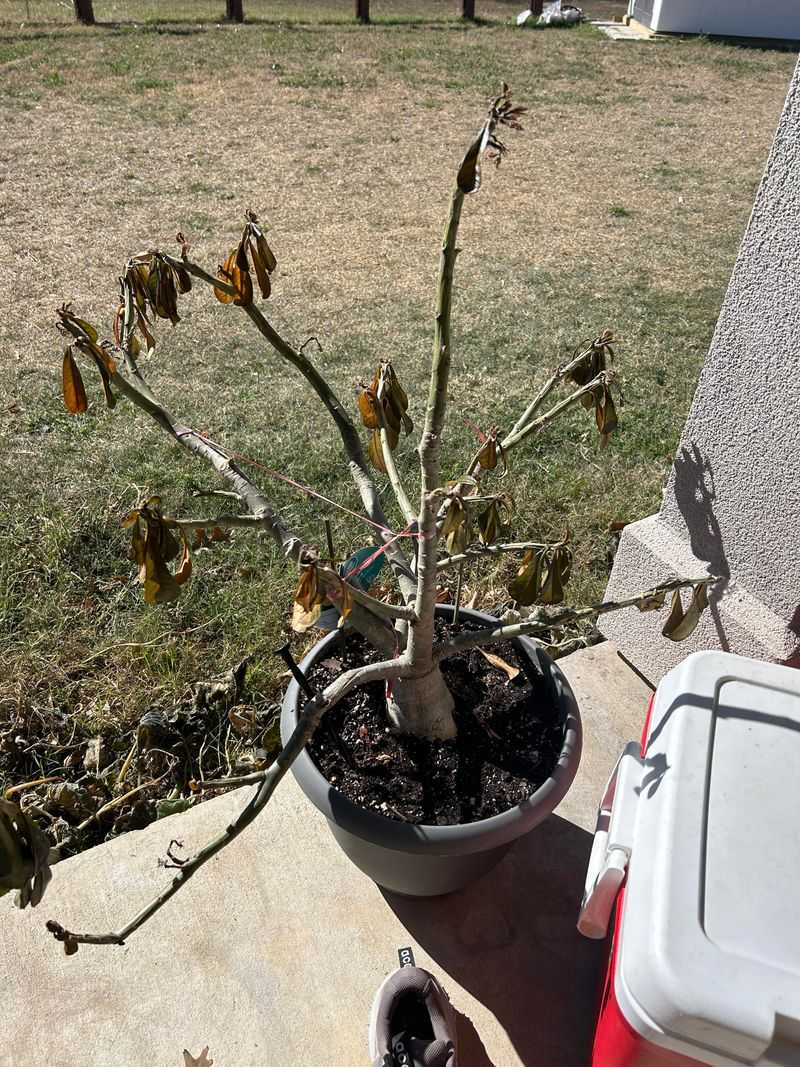
Patience is the hardest part after a cold scare. Your first instinct may be to grab the pruners right away.
For many plants, waiting a little helps you see exactly where healthy tissue begins.
Soft, mushy, or rotting stems are the exception. Those should come off soon, because rot can move toward the caudex.
Cut back until you reach firm, pale, healthy tissue inside.
Wipe your pruners with a household disinfectant before you start and between cuts. Clean tools reduce the chance of spreading disease from one branch to another.
Let the cut ends dry in a warm, shaded spot.
Some growers dust fresh cuts with sulfur or cinnamon. Evidence for cinnamon is mostly anecdotal, so treat it as an optional step rather than a cure.
Skip fertilizer and heavy watering right after the trim. A stressed plant needs time, not a push.
Feeding can start again once new leaves appear in spring.
I find this part oddly hopeful. Desert rose often pushes fresh branches from below a cut, sometimes making the plant fuller than before.
A rough winter can lead to a bushier, better-shaped specimen by early summer.
8. Spring Wake-Up Time Brings Desert Rose Blooms Back Outside
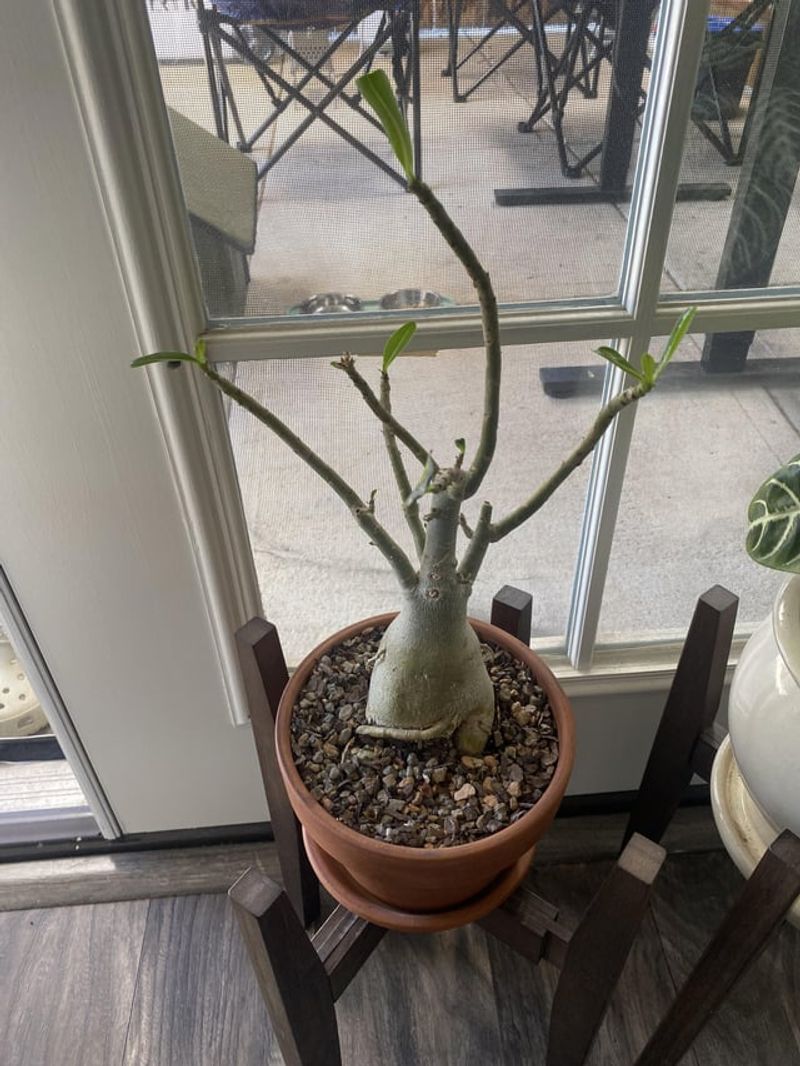
Few garden moments feel better than spotting the first new leaf buds after winter. That tiny green tip tells you the plant made it through.
Now the goal is a smooth transition back to the outdoors.
Wait until nights stay above about 55 degrees before moving pots out for good. In South Florida, that can happen in February.
North Florida gardeners often wait until late March or April.
Ease the plant back into full sun over a week or two. Start with morning sun and add more hours gradually.
A sudden jump from a window to blazing afternoon light can scorch tender new leaves.
Resume regular watering as leaves fill out and growth speeds up. Let the soil dry between drinks, just as you would in summer.
A balanced fertilizer at half strength gives the plant a gentle boost.
Write down the dates you moved plants in and out this year. That simple garden journal becomes your best tool next fall.
You will know your yard’s patterns instead of guessing.
Follow the forecast, respect the 50-degree line, and keep the roots on the dry side. Your desert rose will reward you with plenty of blooms.