Eastern Coral Snakes And Scarlet Kingsnakes Look Alike In Georgia But One Detail Sets Them Apart
One snake in Georgia carries venom related to that of cobras, and it often hides in the same leaf piles where gardeners pull weeds. Its harmless twin wears almost the same outfit of red, yellow, and black bands.
I still remember freezing over a mulch bed when a tiny striped tail slipped under a pine log. My trowel stayed in the air for a long moment.
Was that a garden helper or a serious problem?
You don’t need to be a biologist to learn the differences. A few details in their colorful patterns can help you recognize them, although you should never rely on color alone or approach a snake to identify it.
I believe every gardener in the South should know that.
The trick fits inside a rhyme your grandparents might have recited on the porch, but nature doesn’t always follow the rules we remember. Knowing what separates these lookalikes can help you stay safe without getting close enough to find out the hard way.
1. Those Red, Yellow, And Black Snake Bands Hide A Simple Clue
Colors are the whole story here, but not in the way most folks expect. Both snakes wear red, yellow, and black rings, so simply spotting those three shades tells you almost nothing.
What matters is the order of the bands. Biologists at the University of Georgia and the Georgia Department of Natural Resources point to one detail above all others, and it sits right where two colors meet.
Look at the red bands on the snake in front of you. Then check which color lines up against the edge of each red ring.
That tiny border is the dividing line between a harmless rodent hunter and a venomous elapid.
I like how simple this is once you know it. You don’t need to count scales, measure the snake, or get anywhere close.
A quick glance from a safe distance, maybe six feet or more, usually works fine on a sunny day.
Of course, a nervous moment in the garden can make colors blur together. Take a breath, step back, and let your eyes settle on the pattern.
The snake is rarely in a hurry to bother you, and most of the time it simply wants to slip back under cover and vanish into the pine straw.
2. Red Touching Yellow Points To The Coral Snake
Southern families have passed down a little rhyme for generations: red touches yellow, harmful fellow. Red touches black, friend of Jack.
Corny? Sure, but it holds up well for snakes found in the southeastern United States.
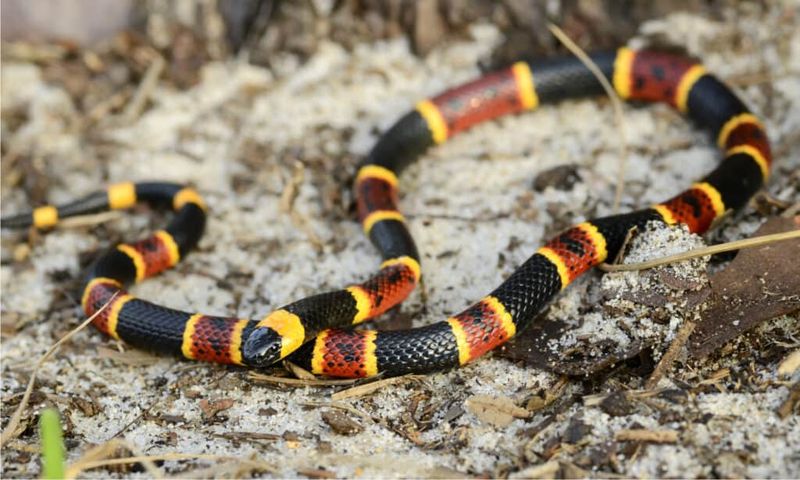
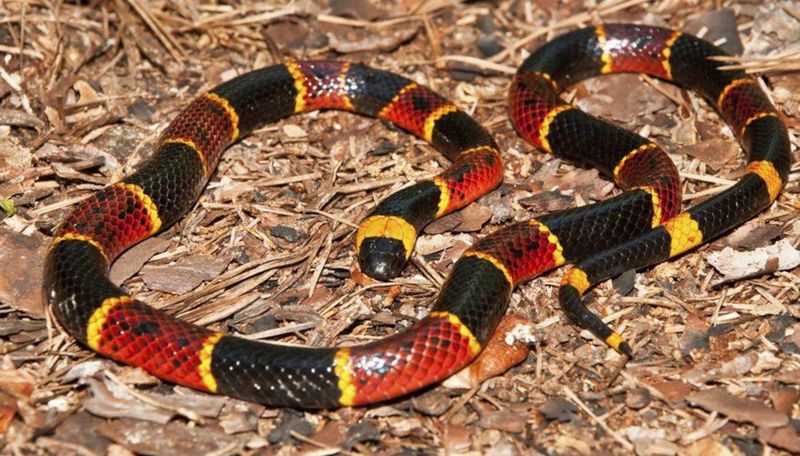
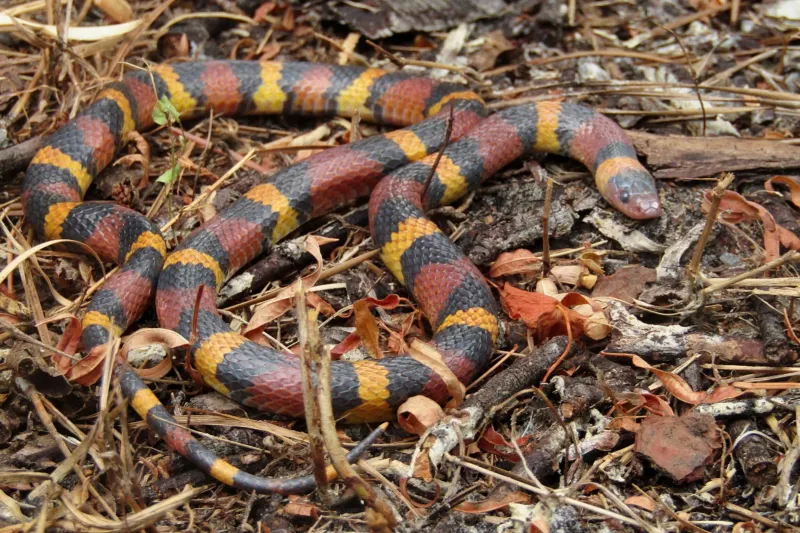
On an Eastern Coral Snake, wide red bands sit right next to narrow yellow bands. The yellow rings then separate the red from the black.
So if you see red snuggled up against yellow, treat that snake with real respect.
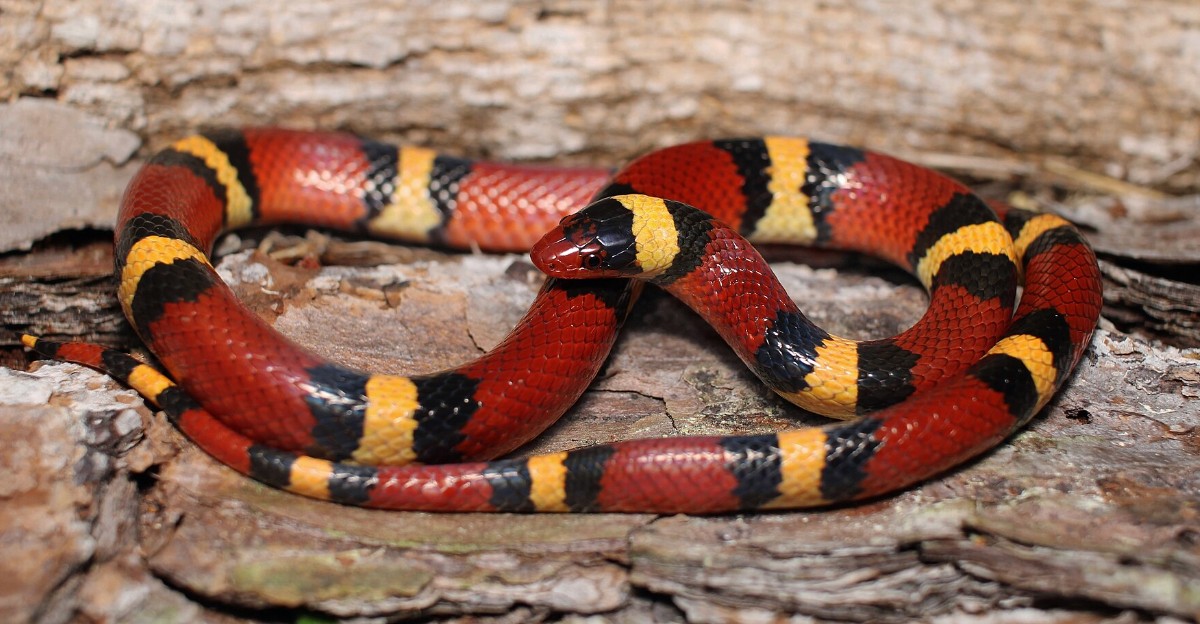
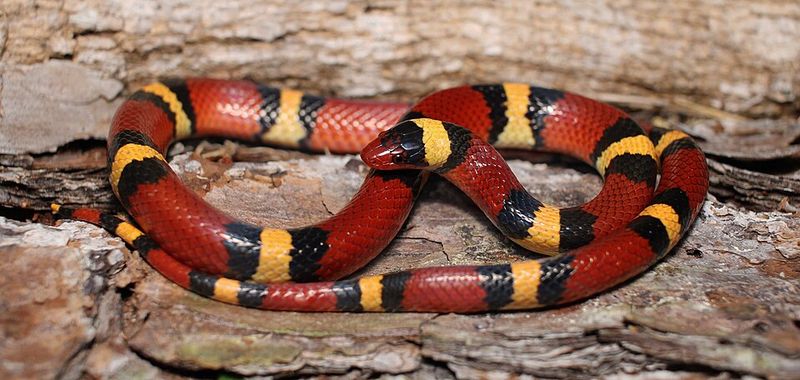
On a Scarlet Kingsnake, each red band is bordered by black on both sides. The yellow, which can look cream or almost white, sits between two black rings and does not touch the red at all.
Personally, I find it easiest to focus on just one red band. Follow its edge with your eyes and ask a single question.
Is the neighbor yellow or black?
Herpetologists note that this rule works for the native species in Georgia, but it does not carry over to coral snakes in Central and South America. For a backyard in Macon or Valdosta, though, the rhyme is a trusty starting point.
Just pair it with a healthy distance and you will be in good shape.
3. Check The Snout For A Black Cap Or A Red Nose
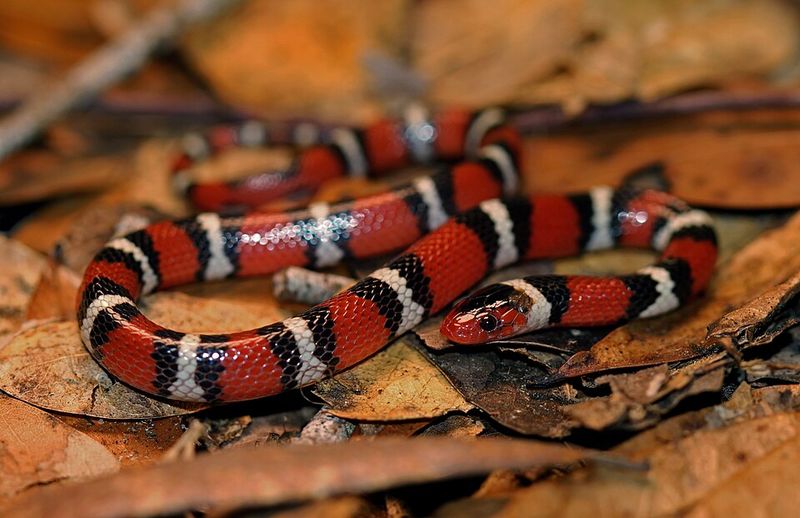
Here is a bonus clue that backs up the rhyme nicely. Take a look at the snake’s face, from a respectful distance of course.
An Eastern Coral Snake has a short, blunt head with a shiny black snout. That black cap runs from the nose to just past the eyes.
Right behind it comes a wide yellow band, almost like a collar.
A Scarlet Kingsnake usually shows off a red snout. Its head looks a bit more pointed, and the red nose often stands out against the black band that follows.
So, a black nose with a yellow collar suggests the venomous species. A red nose suggests the harmless one.
When both the head and the band order agree, you can feel much more confident.
I love having two checks instead of one. Sometimes the body is half buried in mulch, and only the head peeks out.
Other times, the tail is showing while the head is tucked under a board.
Fun fact: coral snakes often hide their heads and wave their tails when threatened. That trick can fool predators into striking the wrong end.
Keep that in mind, because the end you see first might not be the face at all.
4. Eastern Coral Snakes Pack Strong Venom In A Shy Package
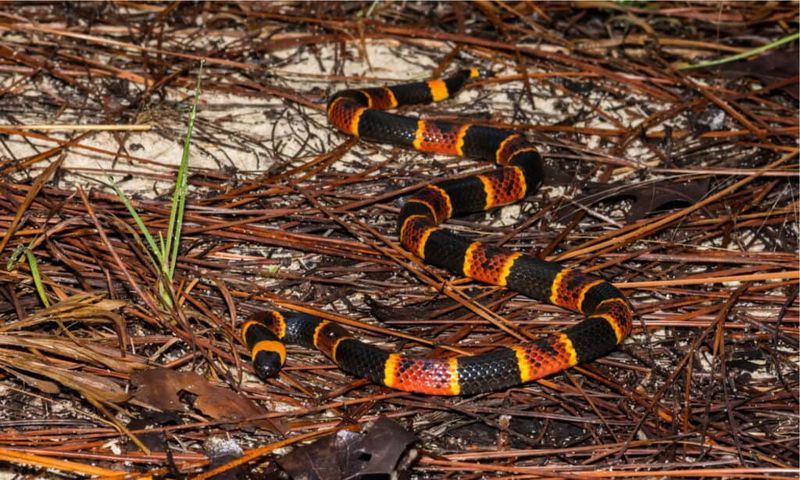
Few snakes in North America carry venom as potent as this one. The Eastern Coral Snake belongs to the Elapidae family, the same group that includes cobras and mambas.
Its venom is neurotoxic, which means it affects the nerves. Medical sources explain that a serious bite can lead to muscle weakness, trouble breathing, and paralysis.
Symptoms may be delayed for hours, so a bite that looks minor still needs a hospital visit right away.
That sounds scary, and it should earn your respect. Still, bites are rare.
These snakes are secretive, spend much of their time underground or in leaf litter, and usually try to escape rather than defend themselves.
Most bites happen when someone picks one up or grabs it by accident. Wearing gloves while clearing brush and using a rake instead of bare hands helps a lot.
Adults typically measure 18 to 30 inches and stay quite slender. Their mouths are small, and they don’t have the big hinged fangs of a rattlesnake.
If you or a pet are bitten, call 911 and head to the nearest emergency room. Skip ice, tourniquets, and cutting the wound, since those old tricks cause more harm than good.
5. Scarlet Kingsnakes Earn Their Spot In Your Garden
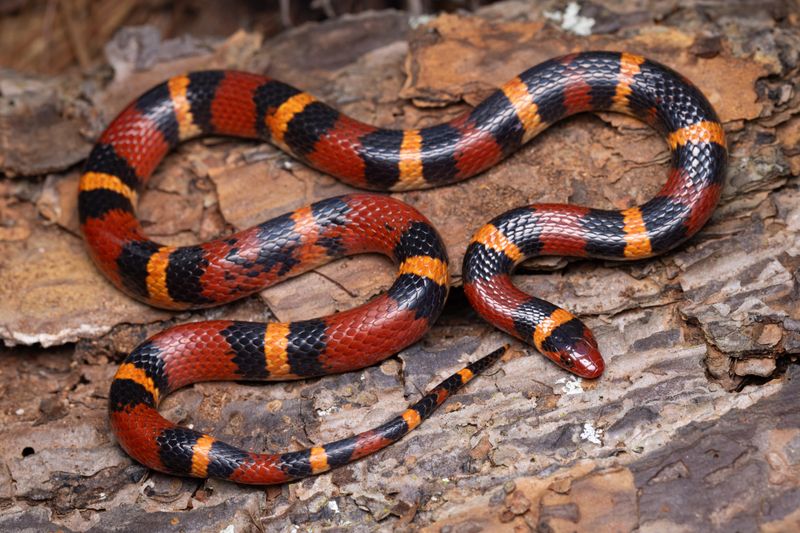
Talk about a misunderstood neighbor. The Scarlet Kingsnake has no venom at all, yet its bright costume gets it chased out of more gardens than it deserves.
These little snakes usually reach only 14 to 20 inches long. They subdue prey by constriction, which means squeezing instead of biting with venom.
Their menu includes lizards, small rodents, and other snakes.
Scientists believe the coral snake look-alike pattern helps protect them. Hawks and other predators that have learned to avoid the venomous version may skip the copycat too.
That kind of borrowed warning is called Batesian mimicry.
You’re most likely to find one under loose bark, rotting logs, or old boards. They are excellent climbers and sometimes tuck themselves inside hollow pine snags.
Many sightings happen at night or after a warm spring rain.
I can’t imagine a better low-key helper for a woodsy yard. A kingsnake asks for nothing but a few hiding spots and some peace.
Like all of Georgia’s native nonvenomous snakes, it is protected by state law. That means you shouldn’t harm it, keep it, or sell it.
Admire the colors, snap a photo, and let it get back to work.
6. Sandy Pinewoods And Leaf Litter Are Where Both Snakes Hide
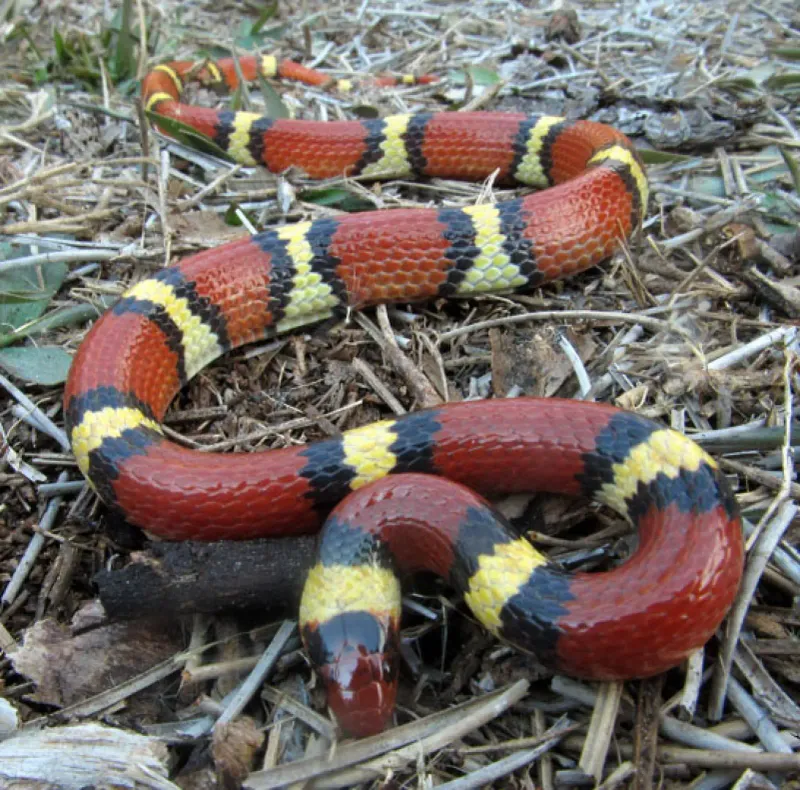
Geography gives you another useful hint. In Georgia, Eastern Coral Snakes live mostly in the Coastal Plain, below the fall line that runs roughly through Columbus, Macon, and Augusta.
They favor well-drained, sandy soils, especially longleaf pine stands, sandhills, and dry hammocks. If you garden in Atlanta or the mountains, your odds of meeting one drop a great deal.
Scarlet Kingsnakes cover more ground. They show up across much of the Coastal Plain and into parts of the Piedmont, usually in pine woods with plenty of logs and loose bark.
So a red, yellow, and black snake in a north Georgia backyard is more likely something harmless. Still, location is only a helpful nudge, not proof.
Always check the bands before deciding anything.
Both species spend lots of time hidden. Coral snakes burrow through soil and leaf litter, while kingsnakes slide under bark and boards.
That’s why gardeners often bump into them while turning compost, lifting stepping stones, or clearing old mulch.
Spring and fall tend to bring more sightings, when temperatures are mild and the snakes are moving around. A pair of sturdy gloves and a long-handled tool make those chores much safer.
7. Faded Colors And Muddy Scales Can Fool The Old Rhyme
Rhymes are handy, but they come with fine print. Real snakes in real gardens don’t pose under perfect lighting.
Dirt, shade, and a dusty coat right before shedding can dull the colors. The yellow on a kingsnake may look pale cream or even white.
On some coral snakes, the red bands carry black speckles that make the edges harder to judge.
Odd individuals turn up now and then too. Experts have documented coral snakes with unusual color patterns, including rare dark or reduced-red forms.
Those are uncommon, but they’re a reminder that one rule can’t cover every case.
Young snakes and fast-moving snakes also make the job tricky. A quick flash of color as something slips under the porch rarely gives you a fair look.
My advice is simple. If you can’t clearly see which color touches red, treat the snake as venomous and give it room.
Guessing wrong in the cautious direction costs you nothing.
And please skip the internet trend of trying to prove the rhyme up close. A phone camera with zoom does a far better job than a curious hand.
You can always send a photo to an expert later.
8. Give Any Banded Snake Room And Let Georgia Experts Help
Calm feet beat quick hands every time. Most snake bites happen when people try to move, catch, or harm a snake, so simply backing away is your best safety move.
Keep at least a few body lengths of space and let the snake leave on its own. Keep kids and pets indoors or leashed until it moves along.
Snakes don’t chase people, and they usually head for the nearest hiding spot.
To make your yard less inviting, keep grass trimmed near the house and store firewood off the ground. Clear piles of boards and junk close to doors.
Leave wilder habitat at the edges of your property instead.
Wear gloves and closed shoes when weeding, mulching, or reaching under shrubs. A flashlight helps on evening walks during warm months.
For identification help, snap a clear photo and contact your local UGA Extension office or the Georgia Department of Natural Resources. Many herpetology groups online also love identifying snake photos.
In the end, both of these colorful snakes belong here. One deserves caution, and one deserves a thank-you for eating pests.
Knowing which color touches red lets you share your garden with both, peacefully.