9 Illegal Backyard Plants Indiana Gardeners Could Get In Trouble For If Planted
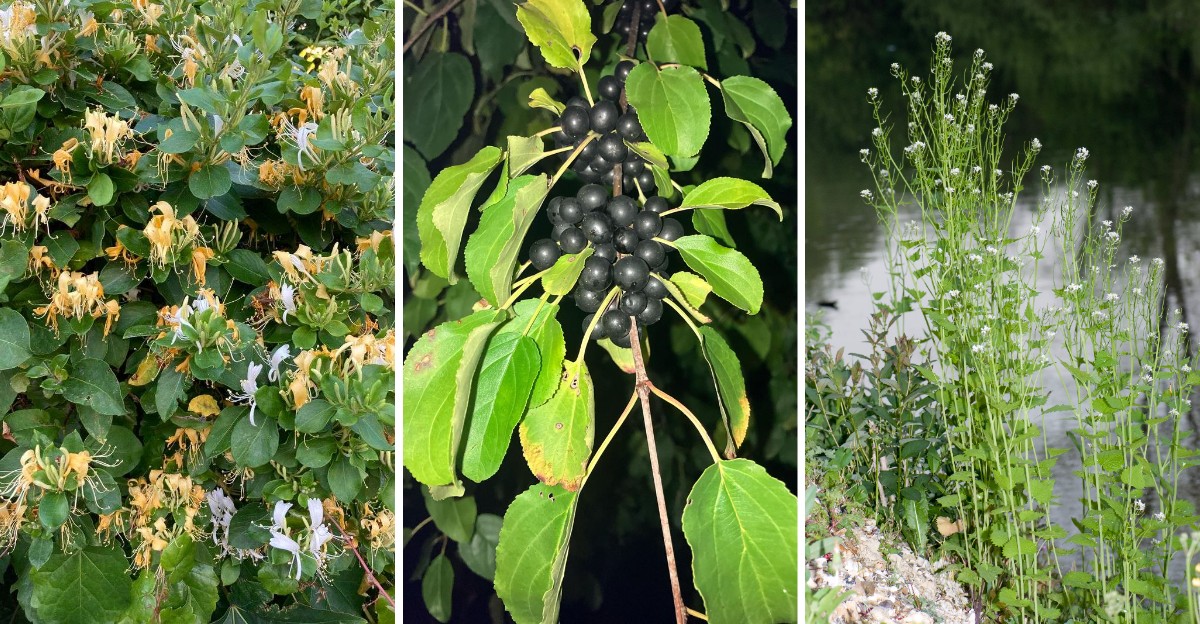
Dozens of plants, many of them sold at garden centers for decades, became illegal to sell or plant in Indiana in 2020. The list holds forty-four species, and a few of them probably shade a fence line near you right now.
Officials call it the Terrestrial Plant Rule, and it covers selling, gifting, trading, and moving these plants around. Some of these escapees came from tidy hedges, while others arrived as wildlife food or erosion control.
I’m the first to admit that two of these once grew happily along my own back fence. Birds gobbled the berries every fall, and I honestly thought I was running a tiny nature preserve.
Truth is, those birds were planting seedlings in Indiana woods miles and miles away from my yard. Curious which familiar favorites made the banned list, and whether one is growing behind your house today?
1. Purple Loosestrife
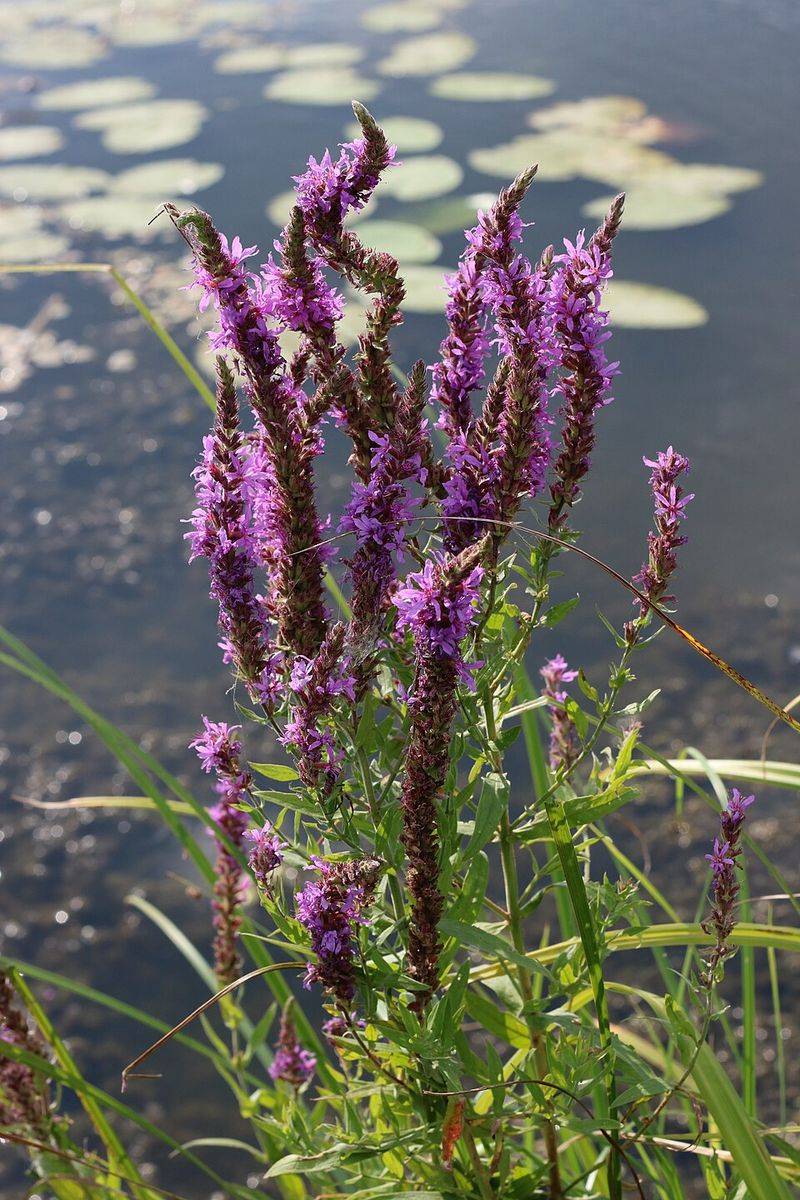
Those tall magenta spikes look like something from a fancy seed catalog, and that charm is exactly the problem. A single mature plant can release more than two million tiny seeds in one growing season.
Purple loosestrife, Lythrum salicaria, arrived from Europe in the 1800s, partly through ship ballast and partly through admiring gardeners. It settles into marshes and pond edges, then slowly crowds out native cattails and sedges.
Indiana has banned selling or planting any Lythrum species without a permit since 1996 under a separate law, so this ban is hardly new. That includes the so-called sterile cultivars, because they can still cross with wild plants and produce seeds.
I get the appeal, since it blooms for weeks in midsummer when many perennials take a break. Dense stands offer poor food and shelter for turtles and marsh birds that need open, varied wetlands.
If you inherited a clump near a pond, snip the flower spikes before the seeds ripen in late summer. Bag those spikes for the trash instead of the compost pile, because the seeds can stay viable for years.
Small plants can be lifted with a garden fork, so take care to remove as much root as possible. Larger patches near water may need professional help, so call your county Soil and Water Conservation District first.
For that same purple punch, try native blazing star or swamp milkweed along damp spots in your yard. Pollinators will happily visit, and you can enjoy summer color without worrying about breaking state rules.
2. Multiflora Rose
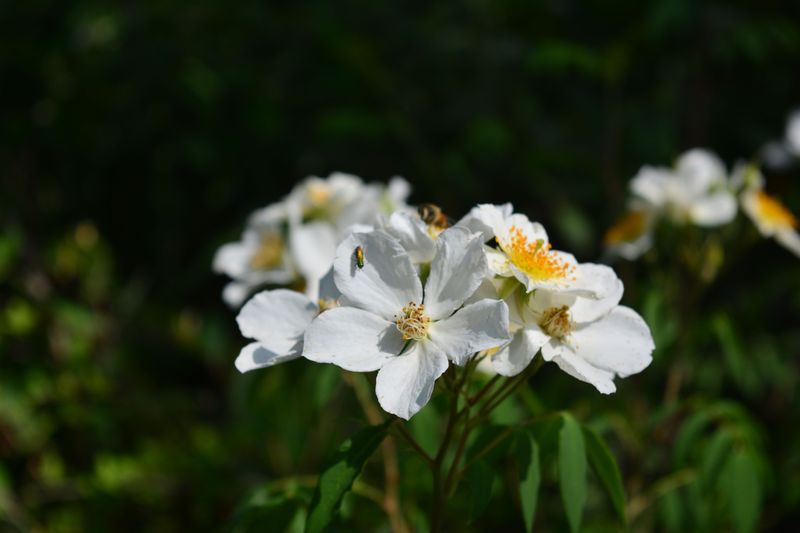
Government experts once handed out multiflora rose to farmers and called it a living fence, which sounds charming today. Back in the 1930s, it was praised for stopping soil erosion and keeping cattle inside pasture boundaries.
Rosa multiflora came from eastern Asia, and it first served as hardy rootstock for fancier garden roses. Those arching canes can reach ten to fifteen feet, then root wherever their tips touch the ground.
Not going to lie, the June bloom is lovely, with clusters of small white flowers that smell sweet and honeyed. Each plant may produce hundreds of thousands of seeds a year, and birds scatter them through every hedgerow.
Those seeds can wait in the soil for many years, which explains why cleared patches keep sprouting fresh roses. The thorny thickets grow so tight that hikers and deer often struggle to push through them.
Want a quick way to identify it? Look at the base of each leaf stem for stipules with feathery, comb-like fringes, because native roses have stipules without that fringe.
Wear thick leather gloves and long sleeves before you start pulling or cutting, because those curved thorns grab everything. Young plants pull easily from moist soil, while older shrubs need repeated cutting or careful herbicide treatment on fresh stumps.
Native Carolina rose or swamp rose offers pink blooms and bright red hips without the runaway habit. Birds still get winter snacks, and your fence line keeps its old-fashioned country charm for many seasons.
3. Asian Bush Honeysuckles
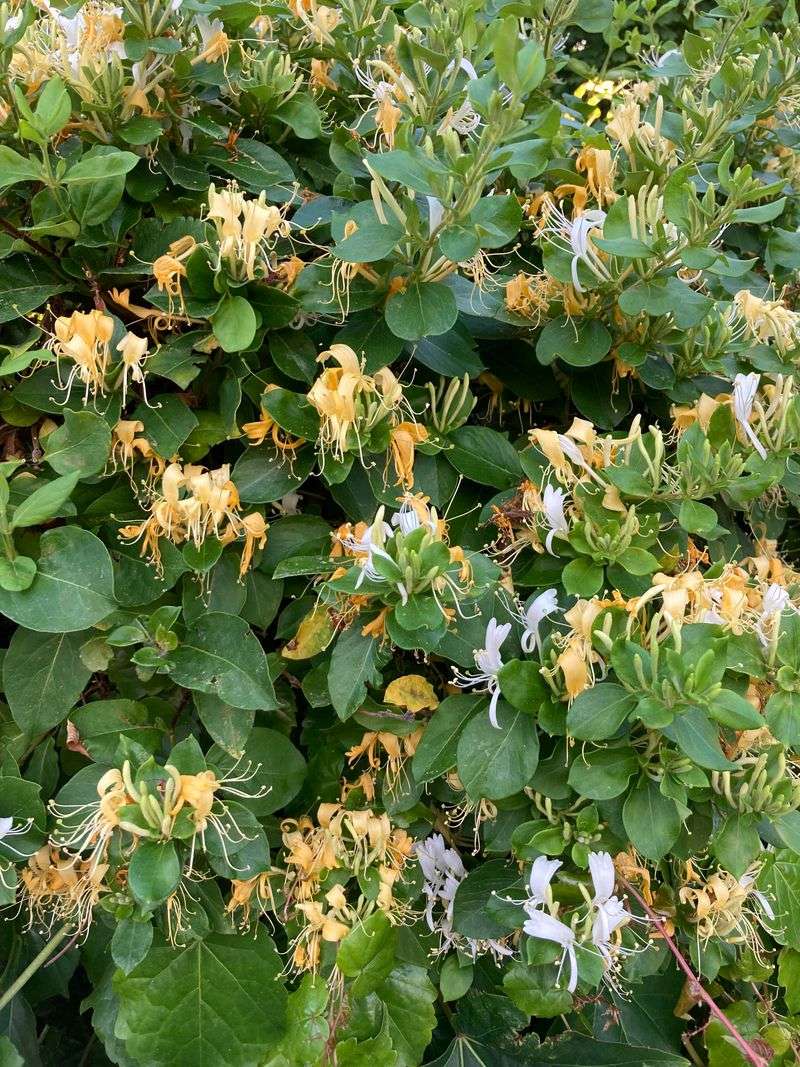
Walk through a Hoosier woodlot in November and you may spot one shrub still wearing bright green leaves. That stubborn holdout is often Amur honeysuckle, and its long season gives it a sneaky advantage over native plants.
Amur, Morrow, and Tatarian honeysuckles all appear on the state list, and their cousins count too. These Eurasian shrubs leaf out early in spring, shading wildflowers before most native trees have even opened their buds.
I used to think the glossy red berries were a gift for songbirds, but research tells a different story. The fruit carries fewer fats than many native berries, so migrating birds get less fuel for their long trips.
Telling them apart from native shrub honeysuckles is easier than you might expect, so grab a pocketknife. Snip an older stem, and a hollow brown center usually means an invasive bush honeysuckle is growing there.
Late fall is a smart time for removal, since these shrubs stand out clearly against bare native branches. Small seedlings pull right up after a soaking rain, while larger trunks may need a weed wrench or cut-stump treatment.
The rule does not require you to remove plants already growing on your property, but removal helps nearby woods. Selling, trading, or replanting them is the part that can land you in hot water with state officials.
Native spicebush or gray dogwood can fill the same spot with berries that birds genuinely need. Both handle partial shade well, and spicebush even feeds the striking spicebush swallowtail caterpillar.
4. Autumn Olive
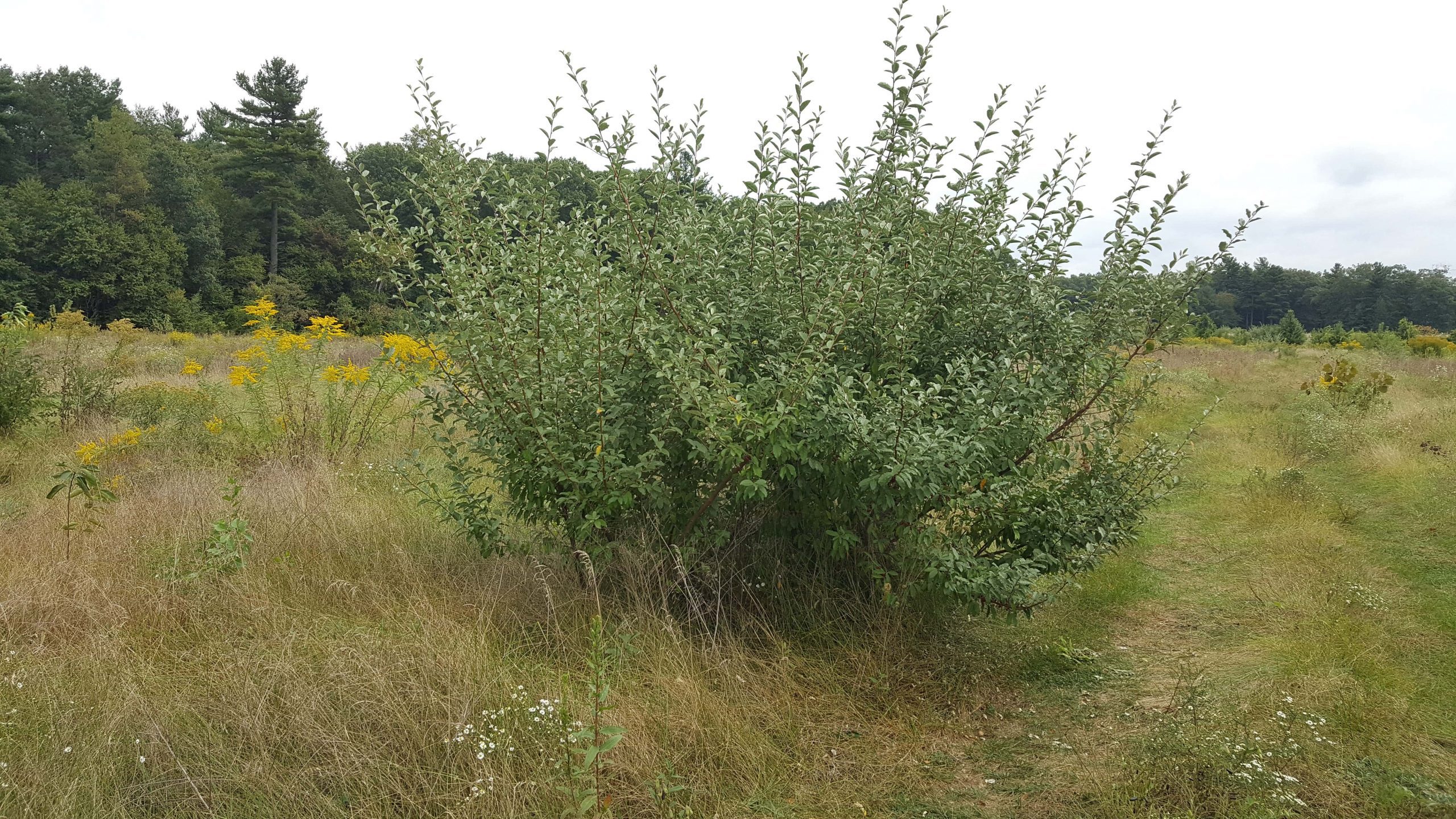
Flip an autumn olive leaf over, and the underside shimmers silver like it was dusted with tiny metal flakes. Those speckled scales catch the breeze beautifully, which is partly why so many landowners planted it.
Elaeagnus umbellata arrived from Asia in the 1830s and later spread widely for wildlife cover and strip mine reclamation. It can grow around twenty feet tall, and older stems sometimes carry sharp thorny spurs.
Spring brings small creamy yellow flowers with a sweet scent that drifts across entire fields. By fall, branches sag under heavy loads of red berries freckled with silver dots.
Don’t laugh, but I once made jam from those berries, and it tasted tart and surprisingly good. They are edible and rich in lycopene, so foraging the fruit beats letting birds spread the seeds.
Like legumes, this shrub hosts root bacteria that pull nitrogen from the air and enrich the surrounding soil. That sounds helpful, yet native prairie plants often prefer leaner ground and decline when nitrogen levels climb.
Cutting autumn olive alone usually backfires, because the stump sends up a crowd of fresh sprouts. Experts often recommend treating fresh cuts with herbicide, and pulling young seedlings while the soil stays soft and damp.
Serviceberry makes a lovely swap, with white spring blossoms and sweet June berries that rival blueberries. American plum offers another native option for sunny spots, providing fragrant flowers and fruit for wildlife.
5. Wintercreeper
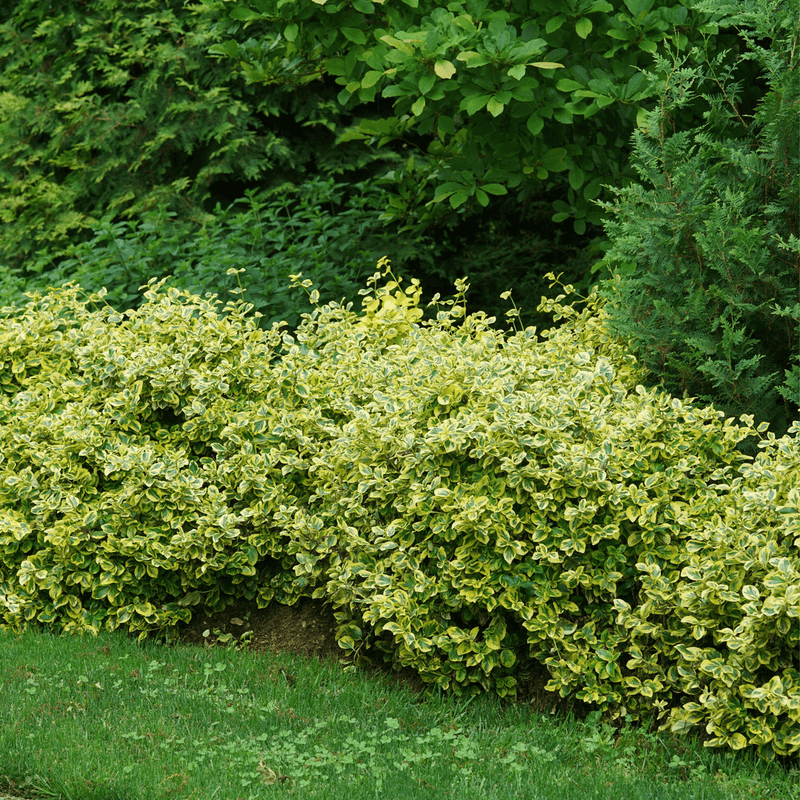
Few groundcovers look this polished in January, with glossy leaves staying green while everything else turns brown. Wintercreeper earned its spot in countless foundation beds because it shrugs off cold weather and poor soil.
Euonymus fortunei comes from eastern Asia and grows as a sprawling groundcover until it finds something vertical. Then tiny rootlets grip tree bark and brick, letting the vine climb dozens of feet upward.
Trust me on this one, the climbing stage is where trouble starts, because mature vines finally flower and fruit. Birds eat the orange-coated seeds and drop them in woodlands, where thick green carpets slowly smother wildflowers.
Those dense mats block sunlight from trillium and spring beauty that bloom close to the forest floor. Heavy vines can also weigh down tree limbs and shade the lower canopy for years.
Variegated cultivars with gold or white edges look harmless, but they still fall under the state rule. Many Hoosier homes have old patches, so keeping them trimmed below fences and trees reduces seed production.
Pulling wintercreeper works best after rain, since the runners slide out of moist soil with steady tugging. For vines on trees, cut the stems at waist height and let the upper growth wither naturally.
Native wild ginger makes a charming replacement for shady spots, with heart-shaped leaves that hug the ground. Golden ragwort is another strong choice, providing cheerful yellow spring flowers and leaves that stay green through mild winters.
6. Japanese Barberry
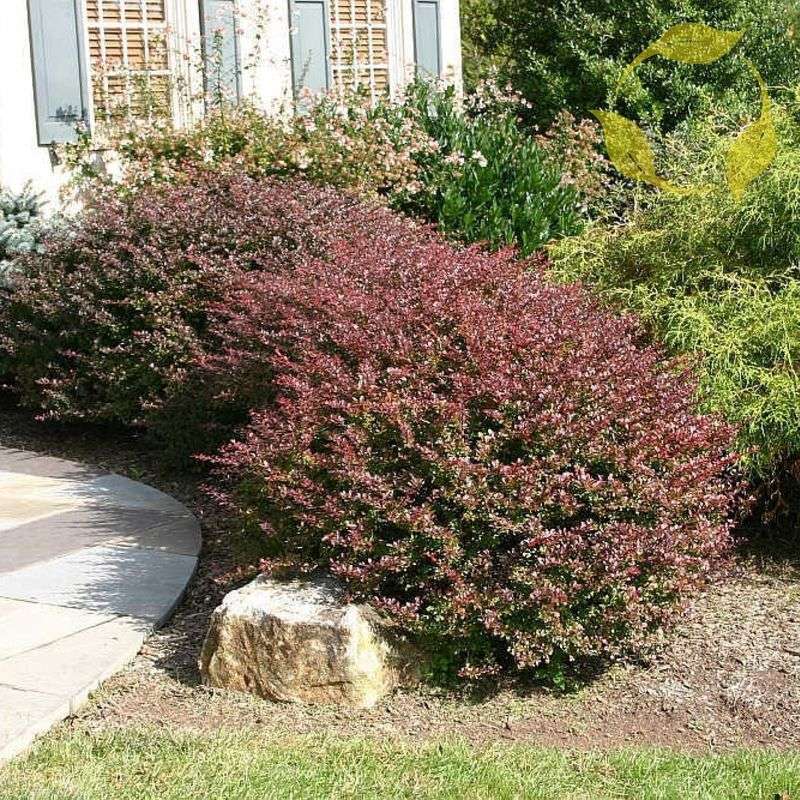
Here’s a twist few gardeners expect, because a tidy little barberry hedge might be helping ticks multiply nearby. Studies in Connecticut found more blacklegged ticks living in dense barberry thickets than in nearby native woods.
The shrub creates a humid, sheltered space close to the ground, which ticks and white-footed mice both enjoy. That combination matters, since blacklegged ticks can carry Lyme disease to people and pets.
Berberis thunbergii arrived from Japan in the 1800s and became a landscaping staple for its burgundy and golden foliage. It stays compact, handles drought, and deer mostly leave it alone thanks to those needle-sharp spines.
Guilty as charged, I planted a purple one by my front steps years ago and loved its fall color. Birds kept eating the red berries, though, and seedlings popped up in a wooded lot across the road.
This species now appears on the state’s prohibited list, and colorful cultivars are included in that rule. Check old landscapes carefully, since barberry often hides beneath taller shrubs near foundations and walkways.
Removal is easier than it looks if you use a garden fork and thick gloves. Barberry roots grow fairly shallow and bright yellow, so lift the whole crown to prevent fresh sprouts later.
Ninebark makes a fantastic stand-in, offering burgundy leaf cultivars and peeling bark that adds winter interest. Native fragrant sumac also brings fiery fall color, with low growth that fits neatly along walkways and slopes.
7. Common Buckthorn
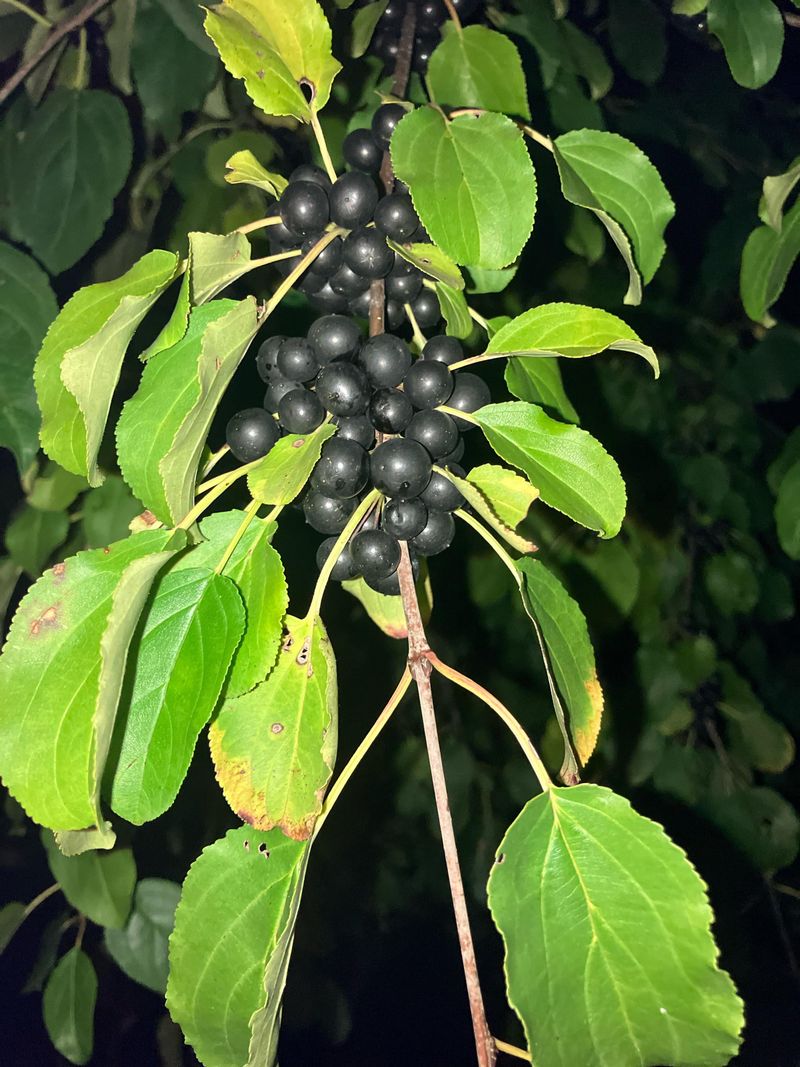
Scrape the bark of a buckthorn branch, and you will find bright yellow wood hiding underneath. Cut deeper into an older trunk, and the heartwood glows a surprising shade of orange.
Common buckthorn, Rhamnus cathartica, came from Europe and western Asia as a sturdy hedge for farms and yards. It grows into a large shrub or small tree, often reaching twenty feet with a spreading crown.
Look closely at the branch tips, and you may notice a small thorn tucked between the final pair of buds. The leaves have curved veins that sweep toward the tip much like native dogwoods, but buckthorn leaves have finely toothed edges while dogwood leaves are smooth.
Birds devour the shiny black berries, yet those fruits act as a strong laxative for them. That speedy digestion scatters seeds across fields, and the species name cathartica actually hints at this unpleasant effect.
I’ll say this much, buckthorn makes fall cleanup easy, because it stays green long after native shrubs turn bare. Use that window in late October or November to flag every plant you want to remove.
Small seedlings pull out by hand, while thicker stems need cutting and stump treatment to prevent resprouting. Covering cut stumps with a tin can or black plastic bag can also discourage new shoots.
For a native hedge that fills the same role, try American hazelnut or black chokeberry instead. Both feed wildlife properly and give you a living screen that will not cause legal headaches.
8. Garlic Mustard
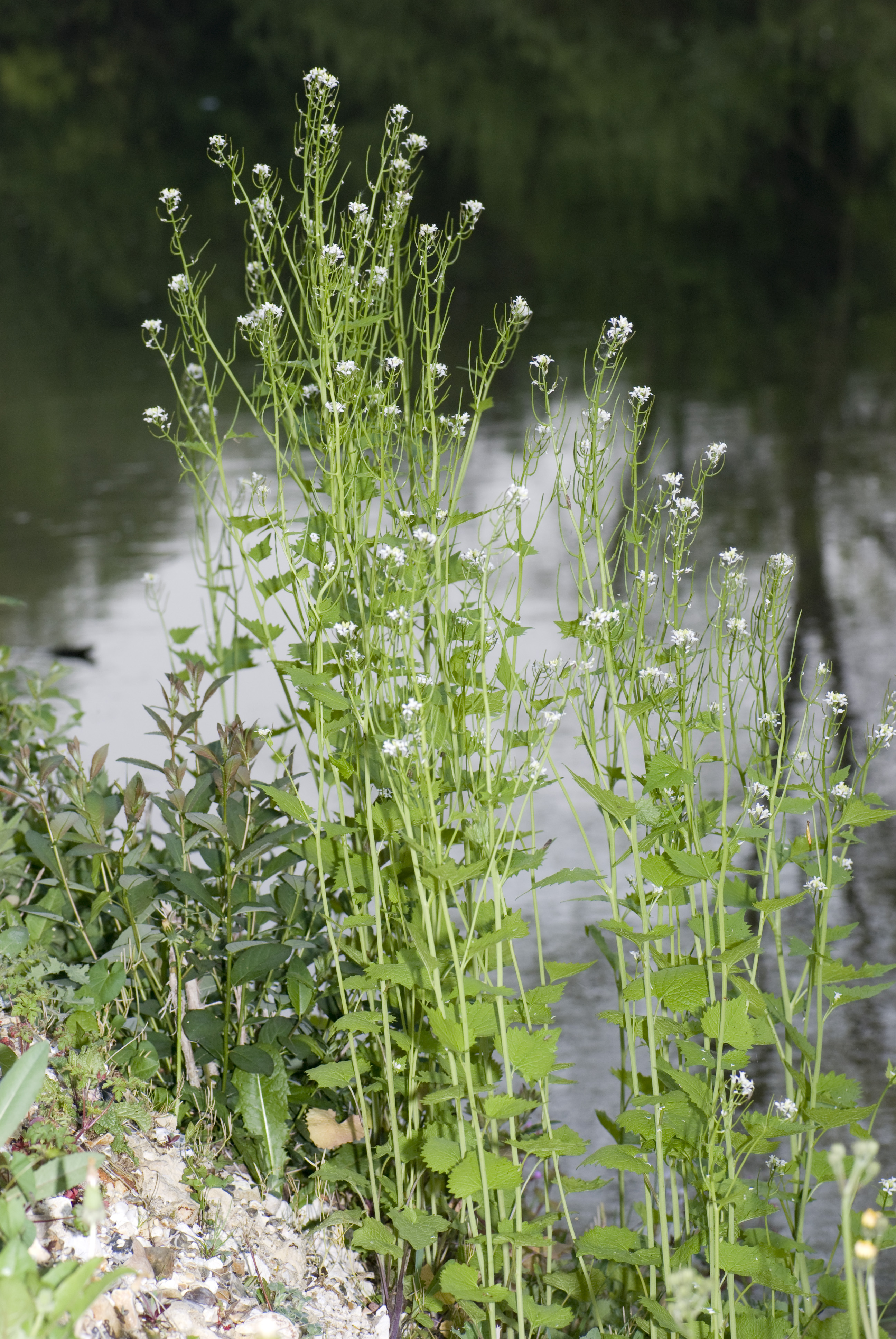
Crush a garlic mustard leaf between your fingers, and your kitchen-smelling hands will tell you its name instantly. That garlicky scent is strongest in spring and fades as the leaves age through summer.
Alliaria petiolata came from Europe in the 1800s, likely as a culinary herb and folk medicine plant. Early settlers valued it for flavor, but it slipped into woodlands and spread along trails and stream banks.
The plant takes two years to finish its life, starting as a low rosette of rounded, scalloped leaves. In its second spring, it sends up a flowering stalk topped with tiny white blossoms that have four petals.
Each plant may produce hundreds of seeds, and they can stay viable in the soil for roughly a decade. Garlic mustard also releases chemicals that interfere with helpful soil fungi that native trees and wildflowers depend on.
Butterfly fans have another reason to care, because the West Virginia white sometimes lays eggs on it. The caterpillars rarely survive on this plant, so the butterfly struggles where garlic mustard has taken over.
Hand-pulling works well in moist spring soil, as long as you grab low and remove the white taproot. Bag flowering plants for the trash, since seeds can still ripen on stems that sit in a compost pile.
Fun fact, those tender spring leaves make a tasty pesto, so your weeding session can become dinner. Just pick from areas free of pesticides and road salt before you start blending.
9. Tree Of Heaven
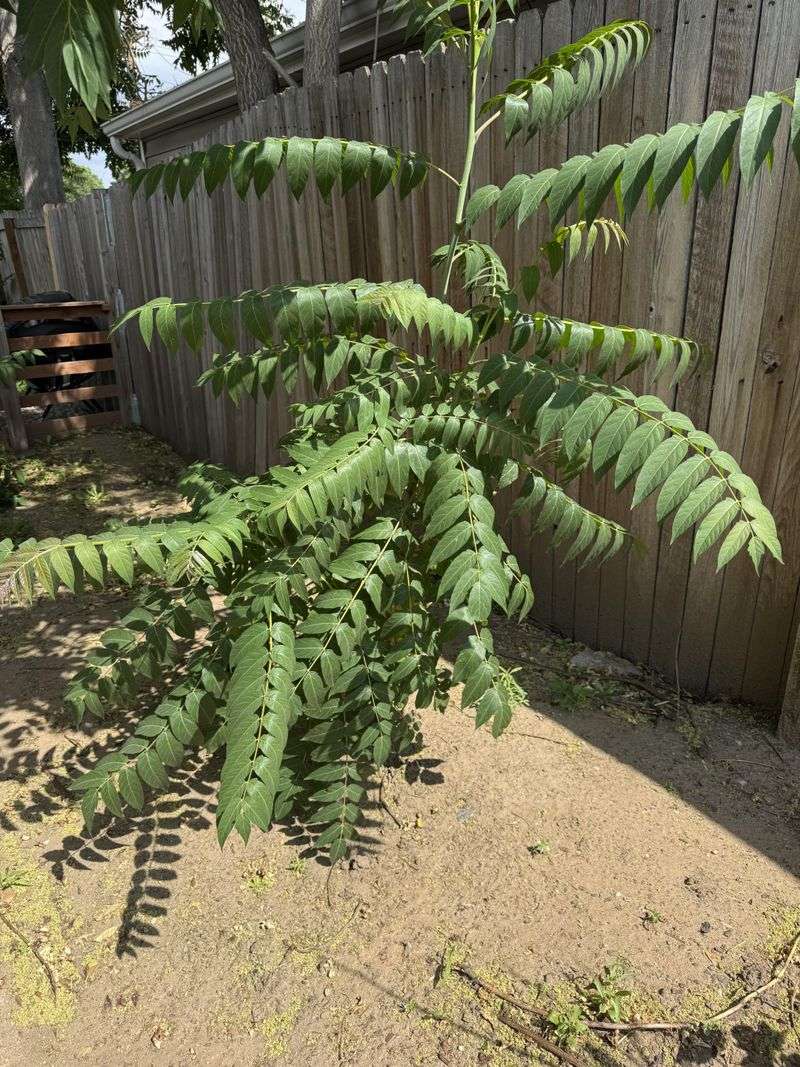
Bruise a leaf from this tree, and the smell is often compared to rancid peanut butter or burnt popcorn. Somebody still named it tree of heaven, which might be the most generous plant name ever given.
Ailanthus altissima came from China in the late 1700s and was once planted along city streets for quick shade. It grows astonishingly fast, sometimes gaining several feet a year, and can eventually top seventy feet.
Many people confuse it with black walnut or staghorn sumac, so check the leaflets closely before deciding. Tree of heaven has smooth leaflet edges with one or two small notched teeth near each base.
Female trees can release hundreds of thousands of winged seeds every year, and they travel easily on the wind. Roots also send up suckers, so one tree can turn into a dense grove along fences and alleys.
Fair warning, this tree is the favorite host of spotted lanternfly, which has already been detected in Indiana. These insects feed on grapes and many hardwood trees, so removing tree of heaven helps reduce their numbers.
Simply cutting a mature trunk often triggers a burst of root suckers across your yard. Extension specialists usually suggest treating the standing tree with herbicide in summer, then cutting it down after the roots weaken.
For speedy native shade, consider a red maple or tulip tree in its place. Both grow quickly, handle Hoosier winters well, and support far more caterpillars and birds.