How Far Apart Should You Plant Pansies for a Full Winter Display in North Carolina?
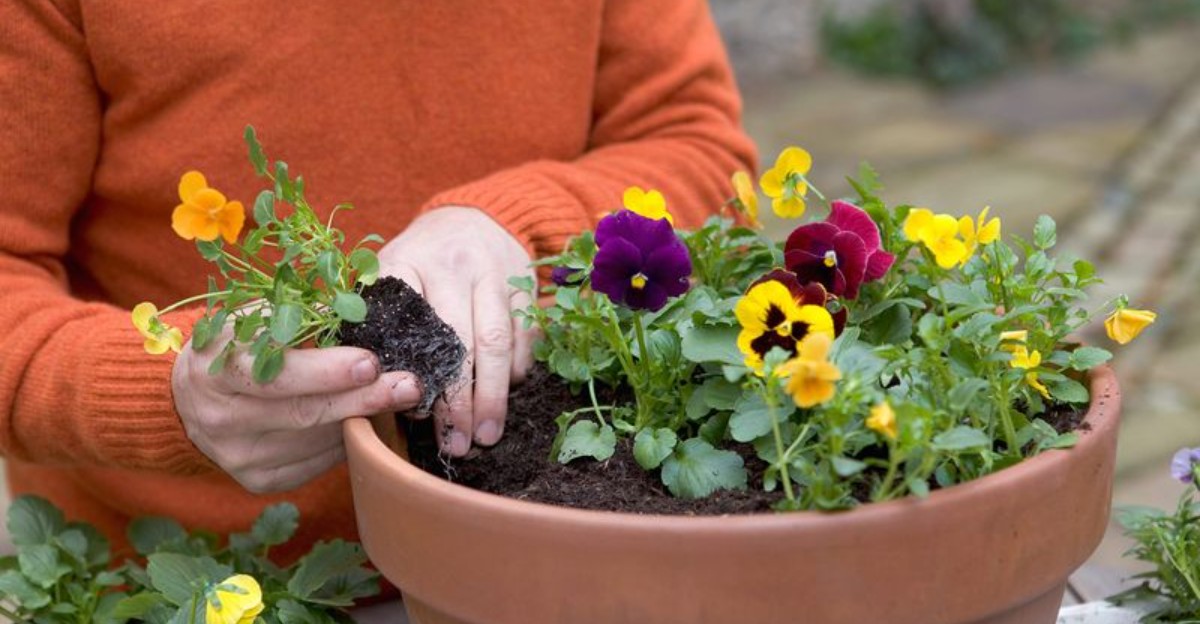
A single winter flower can freeze solid overnight, droop like wet laundry, and perk right back up by lunch. I didn’t believe it until I watched it happen in my own front bed.
That toughness is exactly why so many of us plant this cheerful little bloomer every fall. Here in North Carolina, it carries color through months when most yards look tired and brown.
I’m the first to admit my early beds looked patchy. I gave each plant plenty of elbow room, thinking more space meant bigger, happier plants. Instead, I got bare soil, lonely clumps, and a display that never quite filled in before the cold slowed everything down.
Truth is, the gap between a sparse bed and a lush winter carpet can come down to a few inches. So how close is close enough, and when does snug turn into crowded?
Those Pansy Gaps Shrink Slower Than You Expect in Cold Soil
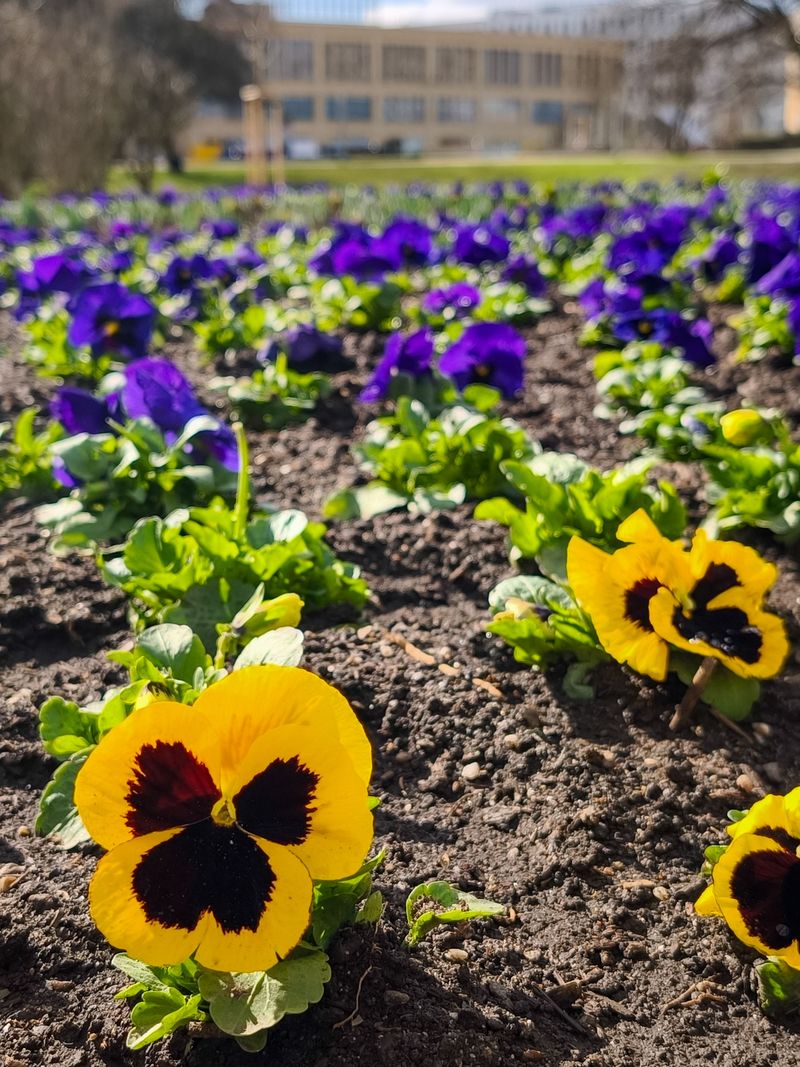
Fall planting has a sneaky time limit. Pansies grow quickly while the soil is still warm, then slow way down once winter settles in.
That slowdown is the heart of the spacing question. Whatever size your plants reach before the cold arrives is pretty much the size they stay until late winter. If you leave big gaps in October, those gaps often stick around until March.
NC State Extension points out that pansies need time to settle their roots before hard freezes. Plants that go in on time fill out more and handle cold better. Plants that go in late stay small and tight, which makes wide spacing look even emptier.
I learned this one the hard way. My first bed looked charming on planting day and still looked like polka dots in January.
So think of fall as a short growing season, not a long one. The goal is to space plants so the leaves can touch, or nearly touch, before the weather turns. Once you see spacing this way, the right number starts to make a lot more sense.
Six to Eight Inches Apart Gives Pansies a Lush Winter Carpet
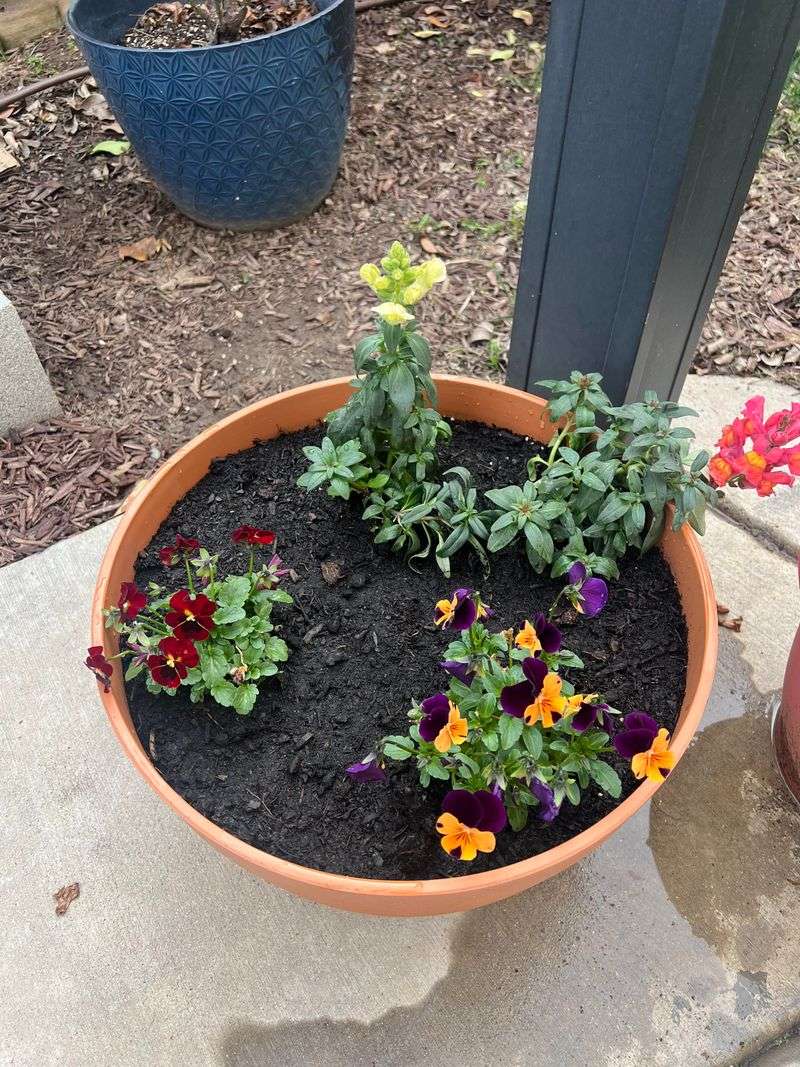
Grab a ruler, because this is the number that matters most. Most extension guidance, including NC State and University of Georgia, recommends spacing pansies about 6 to 8 inches apart.
For the fullest winter look, lean toward the tighter end. Six inches lets neighboring plants knit together into one mass of leaves and blooms. Eight inches works well if you plant early in the season and have strong, healthy transplants.
Some gardeners squeeze plants to 4 or 5 inches for an instant pop of color. That can look great in containers or small beds, but it costs more and can crowd the plants by spring.
Here’s a simple rule I use now:
Plant in late September or early October? Go with 7 to 8 inches. Planting in late October or November? Stick closer to 6 inches, since the plants have less time to spread.
A staggered, triangle pattern also helps. Offsetting each row covers ground more evenly than straight lines. It looks natural, too, more like a quilt than a parking lot.
A Staggered Triangle Pattern Makes Pansy Beds Look Fuller Fast
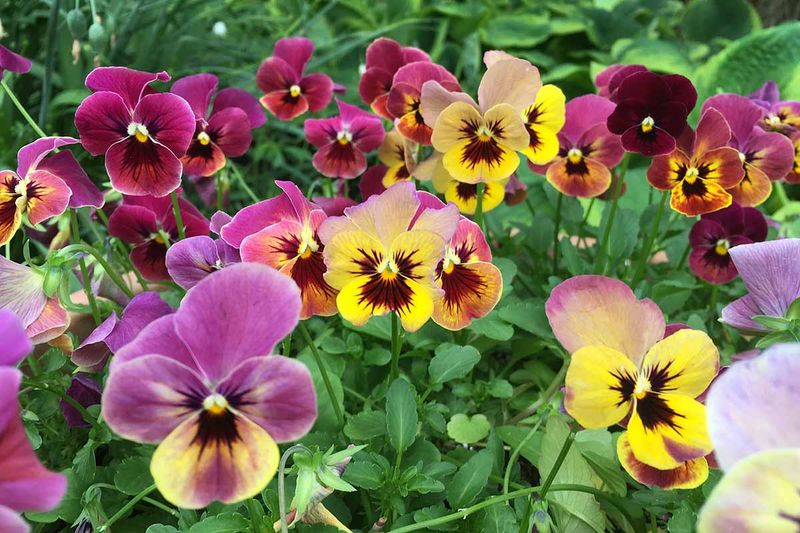
Rows are for cornfields. Pansy beds look much fuller when every plant sits in a zigzag instead of a neat line.
The idea is easy. Plant your first row at your chosen spacing, maybe 6 inches. Then start the second row halfway between the plants in front of it. Each pansy ends up surrounded by neighbors in a little triangle.
This layout covers more soil with the same number of plants. It also hides small gaps, since your eye no longer travels down an open lane between rows.
Need to know how many plants to buy? At 6 inches apart, plan on about four plants per square foot. At 8 inches, you need a bit more than two per square foot. A 4 by 8 foot bed at 6 inches takes roughly 128 plants, so flats are your friend.
I’m a sucker for mixing a few colors, but blocks of one shade often read better from the street. A sweep of yellow along the walk catches the eye even on a gray morning.
Fun bonus: edges look sharper when the outer row sits about 3 to 4 inches from the border.
Squeezing Pansies Too Tight Invites Leaf Spots and Root Rot
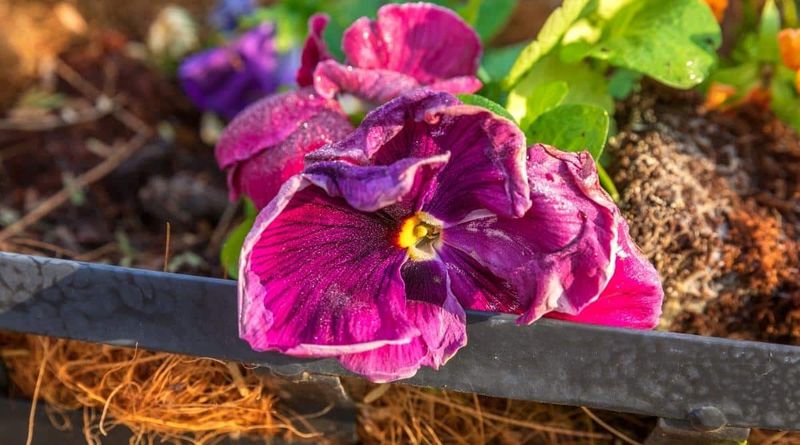
More plants per foot sounds like more color, right? Up to a point, sure, but crowding has a price.
When pansy leaves pile up on each other, air stops moving through the bed. Damp foliage stays wet longer after rain or morning dew. That is just what fungal problems like leaf spot and botrytis gray mold enjoy.
Crowded roots also compete for water and nutrients. In heavy clay, which is common across the Piedmont, packed plantings can stay soggy and lead to root rot. NC State specialists list black root rot as a frequent pansy problem, especially in poorly drained beds.
Not going to lie, I once crammed plants 3 inches apart for a party. They looked amazing for two weeks, then started yellowing from the center out.
Watch for clues like these:
Leaves turning yellow low in the plant, gray fuzz on old blooms, or stems that feel mushy at the soil line. If you see them, thin a few plants and clean up debris so air can flow again.
A little breathing room keeps your display going until spring instead of fizzling out in January.
Mountain, Piedmont, and Coastal Pansies Need Slightly Different Timing
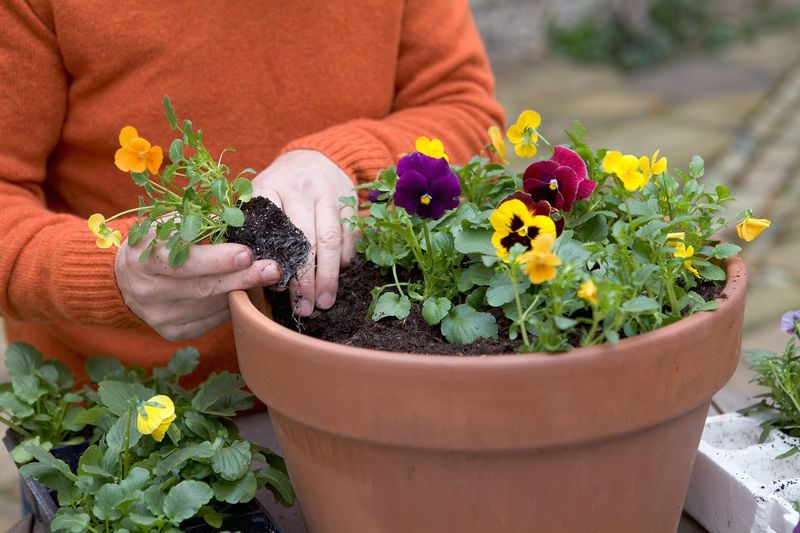
North Carolina stretches from chilly mountain ridges to mild sandy coastline, and your pansies notice the difference. USDA zones run from about 6 in the high mountains to 8 along the coast.
Timing affects spacing more than most folks realize. NC State Extension suggests planting pansies when soil temperatures drop to roughly 45 to 65 degrees. That usually means mid to late September in the mountains, late September through mid October in the Piedmont, and October into early November near the coast.
Mountain gardeners face the shortest fall growth window. Tighter spacing, around 6 inches, helps beds look full before deep cold slows the plants.
Piedmont growers sit in the sweet spot. Plant on time and 6 to 8 inches works beautifully.
Coastal beds keep growing through much of the winter, so spacing of 7 to 8 inches gives plants room to spread as spring warms up, as long as they go in by mid October.
One caution for the warm end of the season. Planting too early in a hot September can stress pansies and encourage stretched, floppy growth. Waiting for cooler nights pays off with sturdier, more compact plants that fill space evenly.
Raised Beds and Rich Soil Help Pansy Roots Spread Out
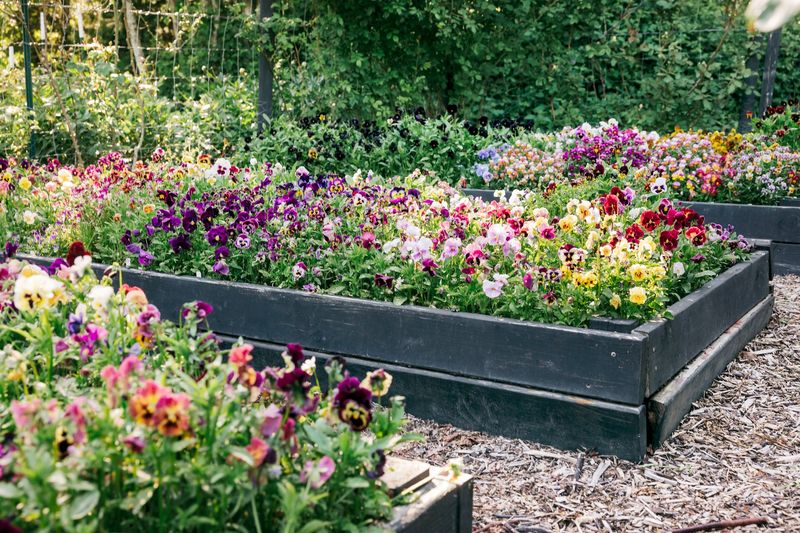
Perfect spacing won’t rescue a bed with poor soil. Roots need loose, well-drained ground to stretch out and push leaves toward their neighbors.
Pansies prefer slightly acidic soil, with a pH around 5.4 to 5.8 according to NC State. A soil test through the NC Department of Agriculture is inexpensive and takes the guessing out of lime and fertilizer.
Clay is the big challenge in much of the state. Mix 2 to 3 inches of compost or pine bark soil conditioner into the top 6 to 8 inches. Raising the bed a few inches above the surrounding ground improves drainage even more.
Sunlight matters, too. Pansies bloom best with at least six hours of sun during winter. In shady spots, plants stay smaller, so tighter spacing near 6 inches helps make up the difference.
I used to plop transplants straight into hard dirt and hope for the best. Guilty as charged. Once I started loosening the soil and gently teasing apart circling roots, my beds filled in noticeably faster.
Finish with a thin layer of pine straw or shredded bark between plants. It holds moisture and keeps winter rain from splashing soil onto those pretty faces.
Cold-Weather Fertilizer Plus Spent Bloom Removal Keep Pansy Beds Full of Color
Spacing gets the bed full. Care keeps it that way.
Pansies are moderate feeders that need food in a form they can use in cold soil. Extension specialists recommend fertilizers with nitrate nitrogen rather than mostly ammonium forms, since cold soil limits how plants take up ammonium. A balanced fertilizer at planting while the soil is still warm, plus a nitrate-based liquid feed every couple of weeks once the soil cools below 60 degrees, works nicely.
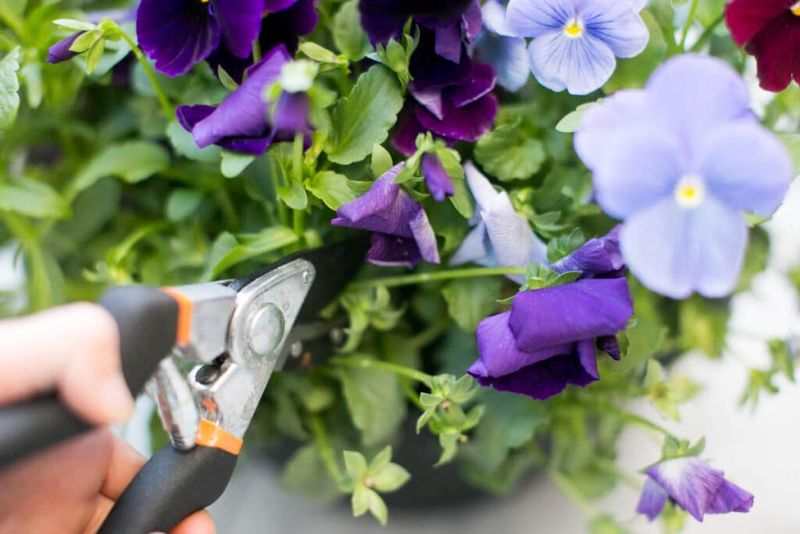
Removing spent blooms is the other secret. Pinch faded blooms down to where the flower stem meets the plant. This keeps energy going into new buds instead of seeds, and it tidies the bed so blooms look dense.
Fair warning, it becomes oddly addictive. I catch myself plucking spent flowers every time I walk to the mailbox.
Water deserves a little thought as well. Give plants a good drink when the top inch of soil feels dry, and water in the morning so leaves dry before night. Watering ahead of a hard freeze helps, too, since moist soil holds warmth better than dry soil.
When temperatures plunge into the teens, a light frost cloth can protect blooms. Leaves bounce back quickly, and flowers return as soon as the weather softens.
Plan Next Fall’s Pansy Bed With a Simple Spacing Cheat Sheet
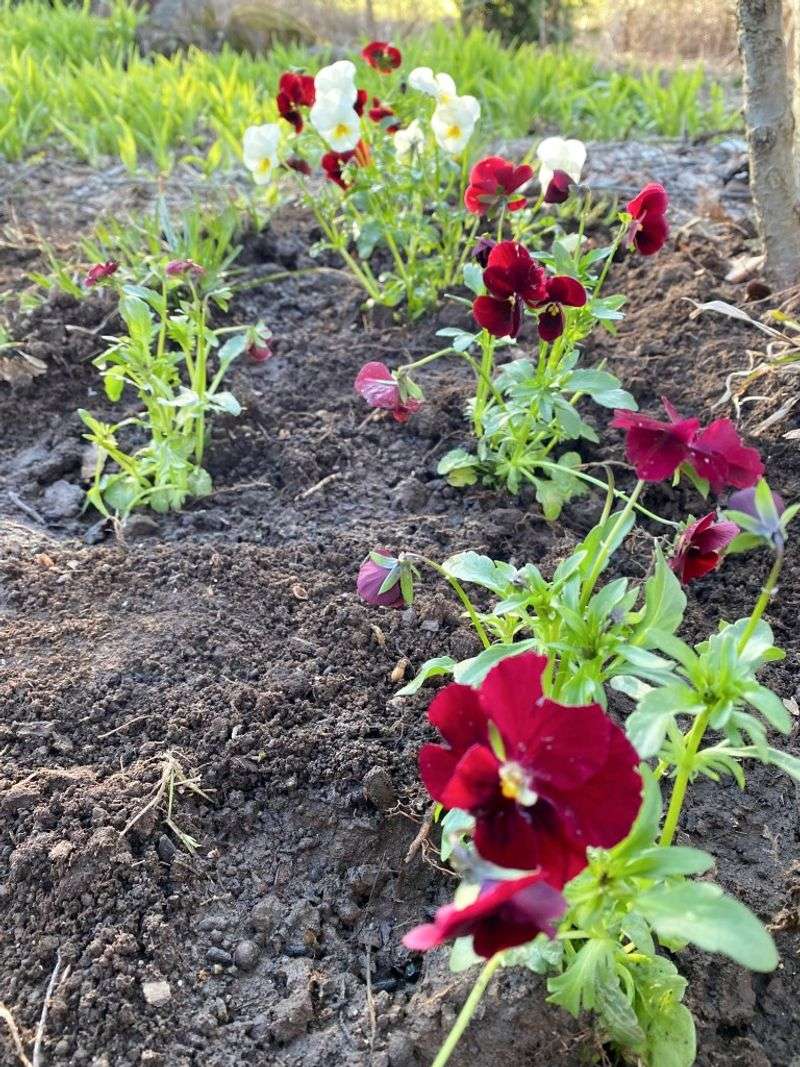
By March, a well-spaced pansy bed looks like someone rolled out a rug of color. That’s the moment I start scribbling notes for next year.
Here’s the cheat sheet I keep taped inside my garden shed:
Plant when soil cools to about 45 to 65 degrees. Space plants 6 to 8 inches apart, with 6 inches for late planting, shady spots, or the mountains. Use a staggered pattern and keep outer plants a few inches from the edge.
Buy compact, healthy transplants with white roots and plenty of leaves. Stretched, leggy plants from a warm store shelf take longer to fill in. Small cell packs often settle in faster than big blooming pots.
Take a quick photo of your bed in December and again in March. Comparing them shows exactly where gaps appeared and where plants got crowded.
Trust me on this one, those photos teach more than any plant tag. After a season or two, you’ll know just how your own yard behaves.
And when spring heat finally tires your pansies in May, pull them out and refresh the soil. Next fall’s carpet starts right there.